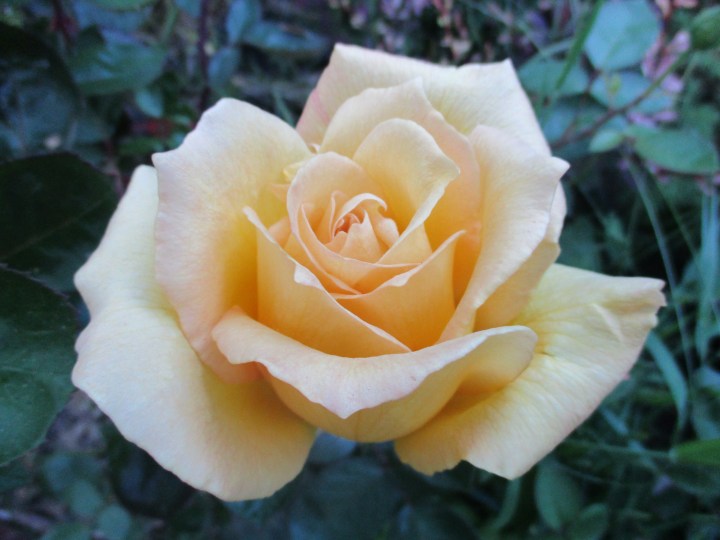
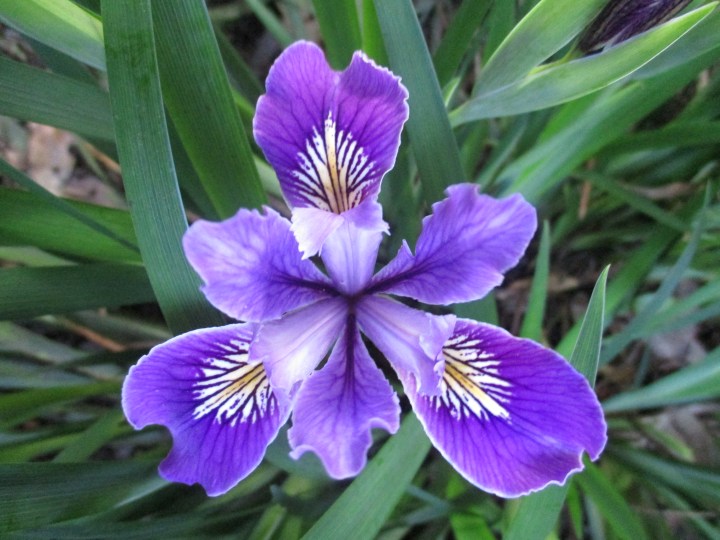
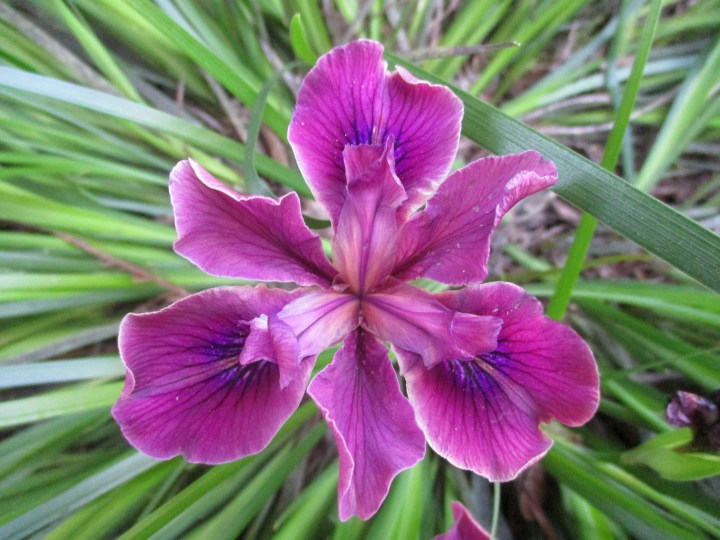
This picture of a yellow Pacific Coast iris probably should have been incorporated into the Six on Saturday post earlier today. I omitted it because I was not so impressed with how the color showed up. It is really more yellow than it looks. In this picture, it looks more like a discolored version of the white Pacific Coast iris. This sort of variation, that might have been normal for old fashioned photography, is not expected of digital imagery.
It sort of reminds me of how some insects and other pollinators see flowers so differently with infrared or ultraviolet. Are infrared or ultraviolet faded in digital imagery as well? It would make sense, since there is no need for normal cameras to record colors that we can not see. Nor is there need for computer monitors to display such invisible colors. Ironically, modern technology can modify color to make that which in invisible to us visible.
Modern technology is always improving the quality of stored data, and the presentation of such stored data. Perhaps there really are ways to take pictures that record infrared and ultraviolet, although I can not imagine why there would be a use for such technology. Video is good about recording and presenting motion. Audio records and presents sound. Regardless, none of it is good enough to keep us from actually enjoying our real gardens.
Pacific Coast iris blooms in all sorts of weirdly bright colors now. Modern technology has certainly had its way with them as well. The flowers are bigger and bolder than they naturally were. The foliage is greener and fluffier. Yet, to me, the best are still those that grow wild and bloom on the coast of San Mateo County, with unassuming flowers in subdued shades of greyish blue, like faded denim.
Six on Saturday: Above And Below
Flowers are almost everywhere this time of year. Even some of the lawns are blooming with English daisy. Warm season annuals are starting to bloom nicely while a few cool season annuals that have not yet been replaced are still going. Although those that were established before this spring finished a while ago, a herd of daffodils that got planted very late last winter are just now finishing bloom. New flowers start bloom as old flowers fade.
I got these pictures of some of the more perishable blooms while I could, so some are already outdated. #1 was actually already fading before last Saturday, but I had other pictures to show at the time. #2 lasted only a few days because it is still recovering from getting relocated in the warmth of last spring, after it had already foliated. Of these only #3 and some of 4, 5 and 6 are in good bloom now, but they do happen to be quite spectacular.
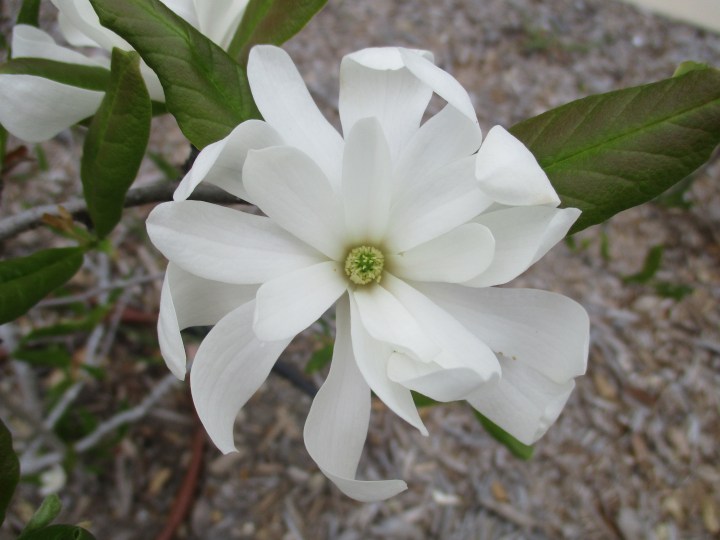
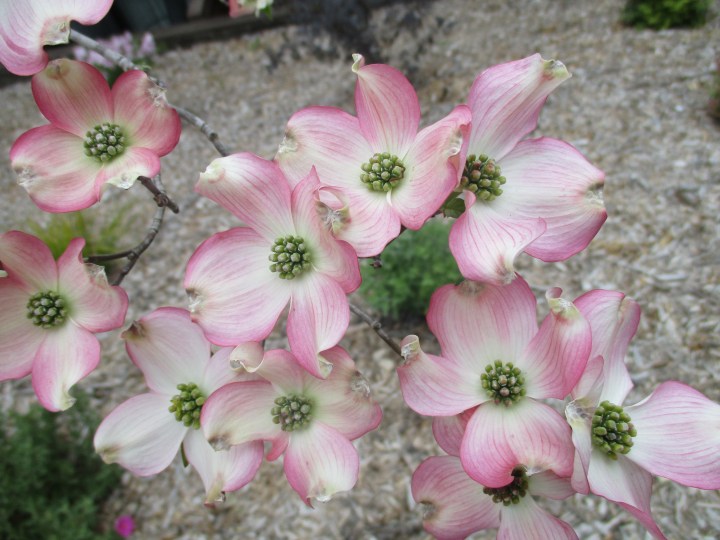
Flowering cherry, star magnolia and flowering dogwood are small or mid sized trees that are above the low Pacific Coast iris below; hence ‘Above and Below’. (However, this particular star magnolia is only about four feet tall so far.) I can only identify the cultivar of the ‘Kwanzan’ flowering cherry. The rest are identified only by species.
Incidentally, there is far more above all of this that is not seen in these pictures. Almost all of the ‘biomass’ here is suspended by the grand but remarkably blandly blooming redwoods.
1. Prunus serrulata ‘Kwanzan’ – ‘Kwanzan’ flowering cherry
2. Magnolia stellata – star magnolia
3. Cornus florida – flowering dogwood
4 + 5 + 6 Iris douglasiana – Pacific Coast iris


This is the link for Six on Saturday, for anyone else who would like to participate:
https://thepropagatorblog.wordpress.com/2017/09/18/six-on-saturday-a-participant-guide/
Horridculture – That’s Just Swale
Building and environmental codes are so ridiculous. So much of what I would want in my home is now illegal. So much modern technology that I do not want is now required. Fireplaces and wood stoves are not allowed. Overly elaborate electrical systems to serve every room are necessary. I would prefer a technologically simple home comparable to those built more than a century ago, but am prohibited by law from ever constructing one.
The area outside of a home is no easier to work with. Dead trees inhabited by the wrong sorts of woodpeckers can not be cut down. Excavation can be prohibited if a particular beetle happens to be in the way. Even some of the increasingly combustible trees and overgrown vegetation have more rights on my land than I do. Now, I am a horticulturist; so I know more about vegetation management than the treehuggers formulating these laws.
Even some of the weather has more rights than people do. In some municipalities, rain that falls onto a property has the right to percolate into the soil. Rain water that drains from roofs and pavement must be provided with ‘swales’ or basins where it can do so. It can not be evicted into old drainage systems that drain into local creeks and rivers. However, such rain water must not be detained in tanks for use in the landscape through summer.
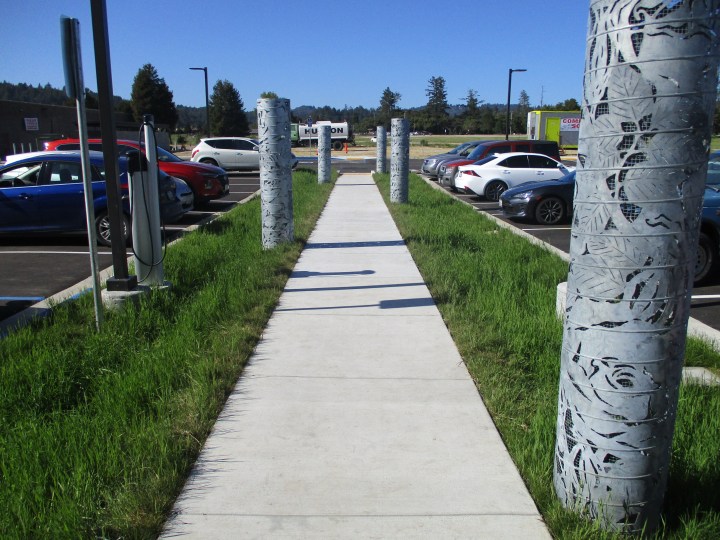
The picture above shows part of a new landscape in the middle of a new parking lot at a newly constructed building. It looks simple for a reason. It is a pair of swales. The meadow grasses conceal a pair of surprisingly deep ditches on either side of the central walkway. Rain water drains here to percolate into the ground. The soil below the walkway might have been replaced with coarse gravel to promote drainage into that area as well.
Do not park a car at the curb and try to step from the curb into a swale to get to the walkway! You could get hurt. As I mentioned, that grass is concealing ditches that are deeper than they look. It is safer to walk through the parking lot to a large paved patio like area that is out of view behind where the picture was taken from. The other option is to walk away from the building to the far end of the walkway, but really, who would do that?
Why is the walkway even there? I really don’t know. There are no curbs on it, so anyone in a wheelchair who feels so compelled to go to the far end to use it could get seriously hurt by tumbling off the edge while trying to get out of way of someone going the opposite direction! The swales are snares for walkers and baby buggies too. Perhaps the walkway is merely bait. What are the surveillance cameras really for? What sick entertainment!
Banana Slug
They are not as dangerous as they look. Really. If they were, just one could do more damage than an entire herd of average slugs. The fortunate truth is that banana slugs consume only decaying plant parts and fungus. Yes, they literally cruise about the garden eating bits of decomposing debris that we may not want there anyway, and converting it into a very nutritious and nitrogen rich ‘fertilizer’. They are actually beneficial to home gardening.
Of course, this does not necessarily mean that we ‘want’ them in our gardens. They really do look scary. This one is only about four inches long, but larger ones can get nearly twice as long! Some rats are not that big! Their bright yellow color, which is typically brighter yellow than this one is, is an expression of defiance. They only stay out of the way because they prefer damp and shady situations. Otherwise, they do not care if we see them.
Contrary to popular belief, they do not really taste like chicken. They taste more like the blandest of escargot. If not purged with corn meal and partly deslimed with vinegar, they can taste much worse. Even if the myth about the slime on their undersides containing more vitamin C than a bucket of oranges is true, it does not justify licking them. It is more degrading to you than it is to them; and no one needs that much vitamin C anyway!
As revolting as they are, they are not completely disdainful. It is fun to point them out to friends who have never seen them before, but only after they have gotten close enough to be startled, and jump away as if being chased by something that can actually move . . . quickly. Banana slug races are also fun.
If Mushrooms Could Fly

If mushrooms could fly, they might look like this. Doesn’t it look like it is ready for take off? Maybe it looks like it is dressed up as a ghost for Halloween. I thought it looks something like the flying nun. Regardless of what it looks like, it was so weird that I took its picture.
I can not explain why it is in this weird position. It appeared just as the weather was warming up, and most of the earlier mushrooms were already gone or deteriorating. Perhaps the upper surface dried out a bit in the sunlight, and tightened up on the lower surface that remained more hydrated. Since I did not go back after getting this picture, I do not know what it did afterward, or how long it lasted. Perhaps it really did fly away!
This mushroom was just a few yards from where I got the picture of those associated with oak root rot fungus, Armillaria mellea,which many of us know as honey fungus. https://tonytomeo.com/2018/12/02/the-humongous-fungus-among-us/ Those mushrooms grew and deteriorated back in December. The other five types of mushrooms that I got pictures of to post along with a later picture of the oak root rot fungus mushrooms for a ‘Six on Saturday’ post were found just a few more yards away in another direction. https://tonytomeo.com/2018/12/29/six-on-saturday-shrooms/ They did their thing later in December, but still a few months ago.
There are always some sort of mushrooms out and about in riparian environments closer to the creeks and streams. They are just not as abundant now as they were during the rainy weather late in winter. Those out in drier and warmer spots that do not get watered regularly do not often develop so late into spring. They seem to know how to exploit the favorable weather.
Six on Saturday: Azaleas
As the flowering cherry trees fade, the azaleas get their turn. Like the flowering cherry trees, the azaleas are not as spectacular as they were last year. I know it is relevant to the weather, although I do not know what the weather did to inhibit so much bloom with so many of the early spring bloomers. I know there was a lot of rain, but that should not have been a major problem. There was not much chill, but there should have been enough.
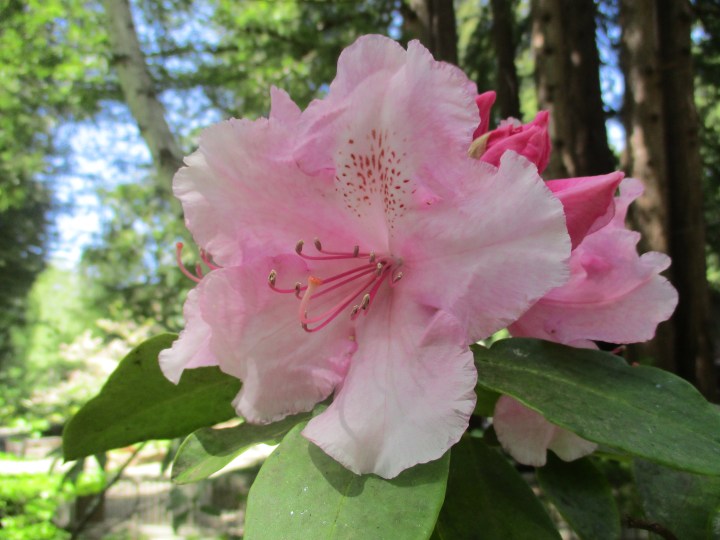
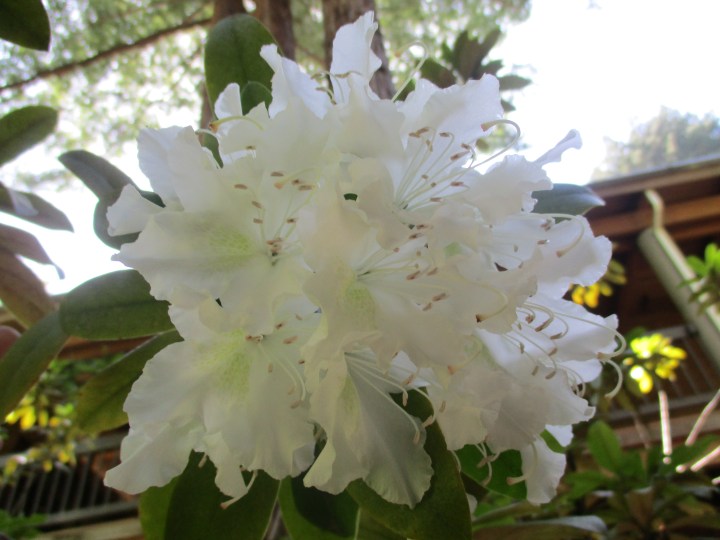
I do not know if this will be the most subdued bloom ever witnessed here, but the limited color might be more apparent because the azaleas and rhododendrons were more spectacular last year than they had ever been. According to their bud set, the rhododendrons will be even less impressive than the azaleas. The dogwoods might have had the potential to be as spectacular as last year, but some were disadvantaged by structural pruning.
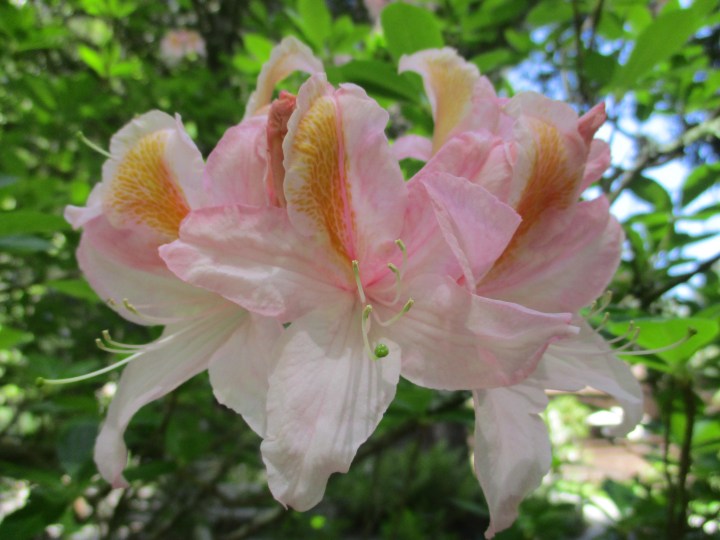
These six azaleas were the best of what was blooming here this year. The pictures were taken about a week ago. I should know the names of all the cultivars, but I don’t. They do not look the same in landscape as they do on the farm where they grow. I could guess on a few. The only one that there is no mistake about is #4, which is ‘Coral Bells’. Color is a bit off in this picture. #5 looks like ‘Hino Crimson’, but without bronzed new foliage.
Rhododendrons are coming along slowly but surely. They will not be ready for next week. Fortunately, as wimpy as our bloom is this spring, there is plenty to get more pictures of for next week.
1.
2.
3.
4.
5.
6.
This is the link for Six on Saturday, for anyone else who would like to participate:
https://thepropagatorblog.wordpress.com/2017/09/18/six-on-saturday-a-participant-guide/
Horridculture – Pale Clivia Syndrome
Back in the good old days, Kaffir lily, Clivia miniata, which is probably most popularly known simply as ‘clivia’, bloomed with big round trusses of exclusively bright reddish orange flowers. It was such an excellent color that no one thought to change it. Flowers of feral plants that sometimes grew from seed were potentially more orange and less red, but were flashy nonetheless. There was no need, and minimal potential, for ‘improvement’.
Then the allure of the ‘rare’ happened. Yellow Kaffir lilies had previously been so rare that very few had seen them. Once the rest of us became aware of their existence, many of us wanted them, only because they were so rare. However, after seeing them, some of us came to the conclusion that they were rare because no one wanted them when the species was first introduced, and cultivars with the best color were selected and perpetuated.
Regardless, yellow Kaffir lily suddenly became a fad. Traditional bright reddish orange Kaffir lilies became passe. All the while, those subscribing to the fad seriously believed that yellow was better and more desirable than reddish orange simply because it was so very rare. All the while, yellow became increasingly popular, increasingly available . . . and no longer rare. All the while, reddish orange became unpopular, uncommon . . . and rare.
So now what? Why is yellow more popular than reddish orange now? Yellow is insipid and pale. Reddish orange is vibrant and bright. Furthermore, yellow is so dreadfully common. Reddish orange is quite rare. According to the previous justification for the popularity of insipid pale yellow Kaffir lily, bright reddish orange Kaffir lily should be popular now, not because they are so much more colorful and appealing, but because they are RARE!
These are in Brent’s garden.
See Anemone
This really is something that I did not expect to see. It may not look like much. It is just a raspy anemone with bites taken out of it, blooming later than it should. What is so impressive about it is that it was not planted here last year. It was planted during the previous year, then bloomed on time last year, and then died back like anemones normally do. I did not plant it, of course. It is in a planter where volunteers contribute whatever they like.
In case you are wondering why I am writing about it as if I did not expect it to bloom again, I didn’t. For whatever reason, anemones typically bloom well only once here, in their first season after they get planted. They may produce foliage for the following season, or maybe even several seasons, but very rarely bloom again. It annoys me that they are even sold locally. Nurseries should know better than to sell bulbs that do not perform well here.
I have always believed that anemones, like a few other types of bulbs, do not get enough chill in winter to bloom again. This is a rather mild climate. There are certain cultivars of apple that do well where winters are cooler that would be dissatisfied with the minimal chill they would get here. (Incidentally, this last winter was not unusually cold.)
There is also the possibility that anemones can not maintain their foliage long enough through the arid spring and summer weather to sufficiently regenerate their resources to bloom again. The foliage begins to appear in conjunction with bloom, then grows more as bloom finishes, but then dies back as the weather gets warm in spring and summer. The weather is not hot here, but it is rather arid.
Knucklehead
This is the beginning of one of several new knuckles on a pollarded crape myrtle tree that was pollareded for the first time just this past winter. It was quite a mess of thicket growth that was too congested to bloom well. It is also located in a confined situation where it could not just be groomed, pruned up for clearance, and then just left to develop a larger canopy higher up. Pollarding will both contain it, as well as invigorate healthier growth.
New shoot growth now emerging from the ends of limbs that were pruned back last winter will elongate and eventually bloom through spring and summer. Next winter, after all the colorful autumn foliage has defoliated, the tree will get pruned back to these same knuckles to repeat the process. Stems will get cut back as neatly as possible, leaving no stubs, but such pruning causes knuckles to become slightly more distended as the develop.
Minor shoot growth that develops elsewhere on the mature stems below the developing knuckles should be removed as it appears. It is easy to knock off now, before it gets big enough to need to be pruned off. Knocking it off or ‘peeling’ it off, as drastic as it sounds, is actually better than pruning it off. It removes more of the callus growth that is likely to develop more stem growth later. New growth should be concentrated into the knuckles.
Pollarded crape myrtles bloom later than those that are not pollarded, but they bloom more profusely. They are also more resistant to mildew, and develop better foliar color in autumn.
The picture below shows the same crape myrtle that I got the picture of the single knuckle above from, shortly after it was pollarded. This picture was used another article at:
https://tonytomeo.com/2019/03/16/six-on-saturday-picture-dump/
Six on Saturday: Spring Flowering Trees – With Problems
You probably do not notice the problems while distracted by the profuse bloom. That is just swell. It is gratifying that the trees that I work with are appealing to those who see them. Since I work with them, I notice their problems. I would have posted just close up pictures of the flowering cherries and flowering crabapples, but because they are blooming at different times this year, I got only these three.
1. The shade of the big redwood trees is a bit too dark for this flowering cherry tree. It is always this sparse. What is worse is that the upper layer of bloom is suspended on a single horizontal limb that extends from the right, out the backside, back in toward the center and off to the left as it is seen here in the picture. What looks like supporting limbs is actually trunks of birch trees in the background. I would prefer to cut the awkward limb off, but you can see how flat topped the remaining portion of the tree would be without it.
2. This is the main reason the tree remains. These double white flowers are the whitest of the trees here.
3. My absence at a previous work day at the Presbyterian Church was the problem with this ‘Prairie Fire’ flowering crabapple. I had worked with this tree for a few years to thin out the thicket growth, and repair structural damage. Then, because I was not there, someone else pruned it indiscriminately with hedge shears and loppers! What a mess! It is best that you can not see the damage within the canopy. I don’t know why this was done. The tree only needed minor trimming for clearance above parked cars. After bloom, I will start the process of structural repair all over again.
4. These rosy pink flowers make it all worth it though.
5. This flowering cherry actually looks better than I expected it to this year. I pruned out so much necrosis last years that I figured that the tree was deteriorating. I expected a bit more new necrosis to develop this years. As you can see, that did not happen so much. I am not disappointed. Actually, I am impressed that there is no necrosis worth noticing. The worst problem with the tree right now is that it is disfigured by the unexplained necrosis. Well, that will not prevent us from appreciating the bloom.
6. This is the bloom close up. It is very similar to the other two old cherry trees that I will be cutting down this year. I wrote an article, and perhaps others, about them earlier. https://tonytomeo.com/2019/03/31/the-end-of-the-cherry-blossom-festival/
This is the link for Six on Saturday, for anyone else who would like to participate:
https://thepropagatorblog.wordpress.com/2017/09/18/six-on-saturday-a-participant-guide/