Although they will not bloom until summer or autumn, gladiolus are in season now. Their corms, which are like bulbs, are now available from nurseries, and are ready for planting. Unlike earlier spring bulbs, they need no chill, and should not generate new foliage until warmer spring weather. Corms prefer to be at least four inches deep, in sunny situations.
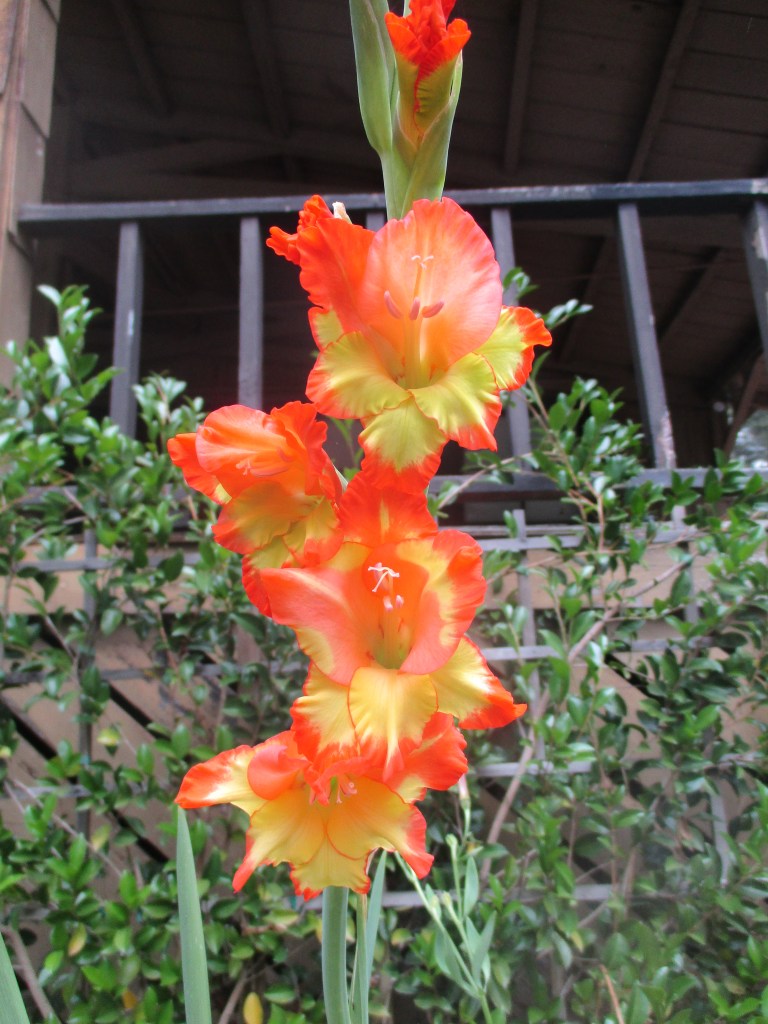
The most popular and common gladiolus, Gladiolus X hortulanus, are hybrids of several species. They bloom more impressively than their simpler parents, but are not as reliably perennial. Most corms bloom for only a single season, although some within each group may bloom for a second season or more. Blooms can get heavy enough to need staking.
Bloom can be bright or pastel hues of any color except true blue, perhaps combined with another related color. Individual florets are not large, but they share their floral stalks with several similar florets that bloom upward from the bottom. Long and pointed leaves stand upright, flaring only slightly to the left and right. The tallest gladiolus can get six feet high.