
It is difficult to document the lineages of the countless modern garden varieties that have been hybridized from ten species of Canna. Straight species that are popularly grown within their native ranges are rare here. Some species are grown for their thick edible rhizomes. Many are grown for edible foliage. Some are employed to absorb toxins from contaminated riparian environments.
Garden varieties that are popular here are grown merely for their aesthetic appeal. The lushly big leaves are typically rich green, but might be bronzed, dark purplish bronze, or striped with yellow, bronze, creamy white or peachy pink. Large varieties get taller than eight feet. Compact types stay less than three feet tall. All foliage dies to the ground after frost, and grows back fast in spring.
The flashiest parts of canna flowers are actually very specialized stamens known as staminodes, which mostly obscure the very subdued petals and sepals. Red, orange, yellow, pink, salmon or very pale yellowish white bloom may be spotted or blotched. Flowers might be thin and wispy, or rather floppy and lush. Canna are popularly known as canna lilies, but are not at all related to lilies.


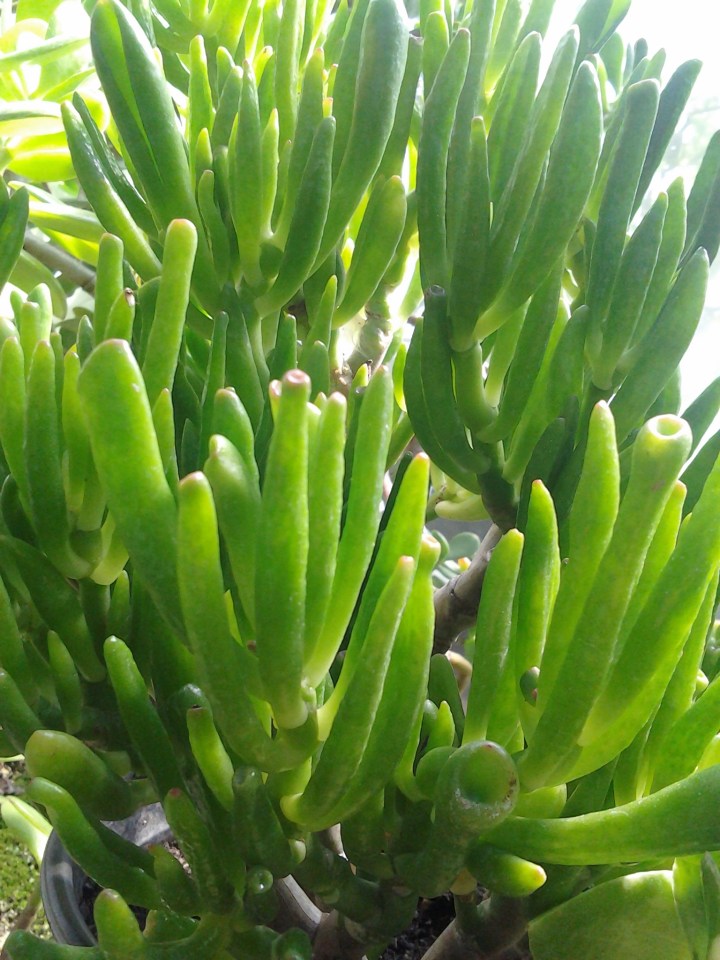

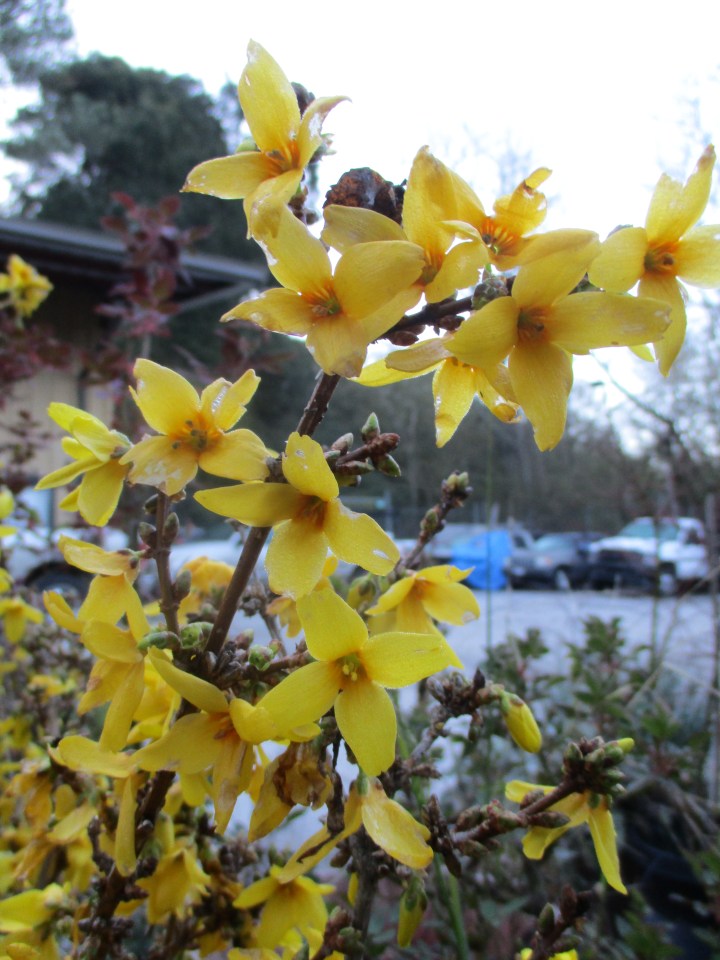 This may seem to be three months early, or an entire season out of season; but this is when bare root forsythia, Forsythia X intermedia, gets planted. Even so, the smaller of new bare root plants will bloom with only a few flowers early in their first spring, so will not produce their famously profuse and garishly bright yellow bloom for another year and three months. They will be worth the wait.
 The simple pink and white of ‘good & plenty’ candy is what fairy primrose, Primula malacoides, is known for. Pastel purple is also popular. Rosy reddish pink and deeper pinkish purple are somewhat rare. The small flowers are arranged in circular trusses that stand as tall as one foot, just above the softly mounding light green foliage. The rounded leaves are slightly fuzzy. All parts of fairy primrose are toxic, and to those who happen to be allergic to it, can be as severely irritating to the skin as poison oak!
