 Those outside California sometimes envy our ideal climates and soils. More of a variety of plants can be grown here than in most other places in America. There are not many plants that can be grown elsewhere that will not grow here. However, phlox, Phlox paniculata, is an example of a plant that can do well here, but for some reason or another, is much more popular everywhere else.
Phlox is native to much of the eastern half of North America, and has naturalized in other areas where it escaped cultivation in home gardens. Locally, it needs to be watered regularly to bloom on time in late summer. It is quite happy out in the open but might prefer a bit of partial shade in the afternoon here where summers are warm and dry. Powdery mildew can sometimes be a problem.
Bloom can be various hues of pink, purplish pink, red or white. The inch wide flowers are neatly arranged on conical terminal panicles about four to six inches wide. Blooming stems stand almost three feet tall and spread almost as wide. The somewhat narrow leaves are about four inches long. Phlox is mostly grown from seed, and can be propagated by division of perennial basal growth.
 Good old fashioned busy Lizzie is hard to find nowadays, if it can be found at all. The nasty mildew that kills it so quickly might not be prevalent everywhere, but happens to be a serious problem where most of the bedding plant farms are located. Now, the formerly uncommon New Guinea impatiens, Impatiens X hawkeri, which is somehow resistant to the mildew, is becoming popular.
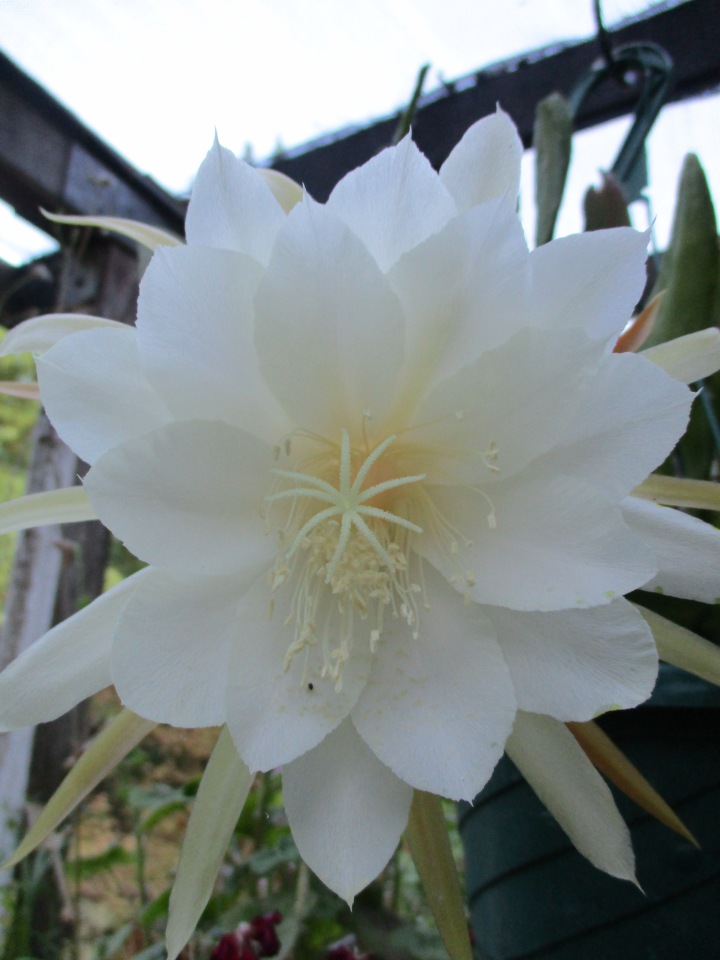 The common names of ‘Dutchman’s pipe’ and ‘queen of the night’ are not much less awkward the the Latin name of Epiphyllum oxypetalum, which might be why the Latin name is more common than the common names are. Some know it as ‘white ephiphyllum’ or even more simply as ‘white epi’. It is one of the more popular of the epiphyllums; and it is the most popular with white flowers.
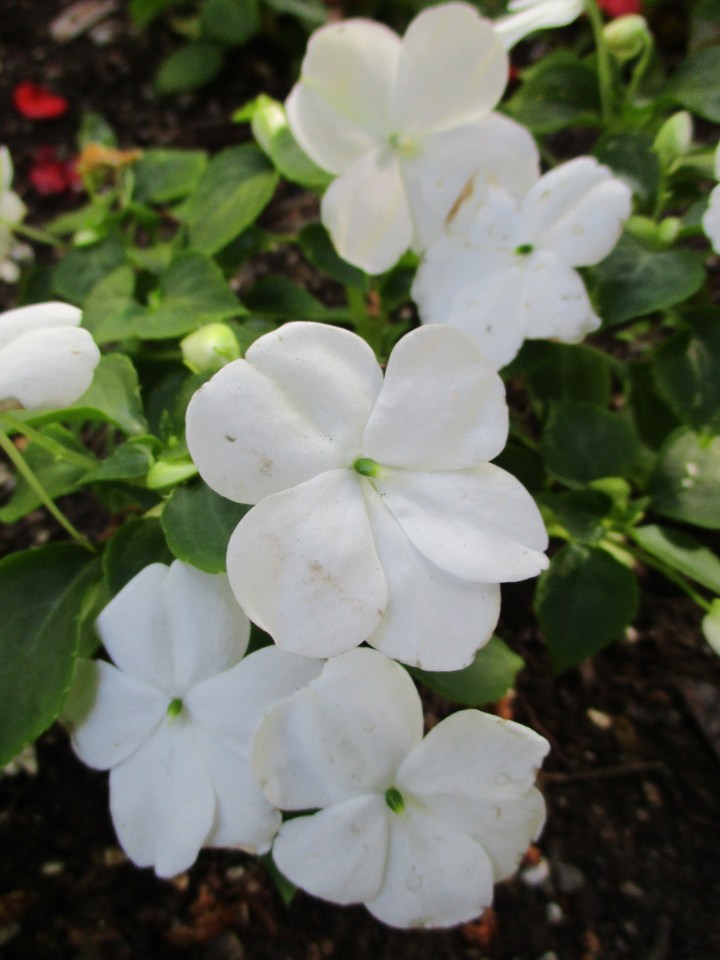 In only a few years, busy Lizzie, Impatiens walleriana, went from being one of the most popular warm season annuals to being unavailable in nurseries. It is now making a slight comeback. Most of those planted during their planting season last spring are now so profuse with bloom that their rich foliage is mostly obscured. Although they can be perennial, almost all get replaced in autumn.
 This one is no fun to handle. It is just as prickly as it looks. Yet, it is the spiny foliage and blooms that make ‘Big Blue’ sea holly, Eryngium X zabelii ‘Big Blue’, so appealing. The knobby blue thistle flowers are centered on prominently flaring grayish blue bracts that look like metallic snowflakes. The intricately lobed grayish foliage contrasts splendidly with just about any darker green foliage.
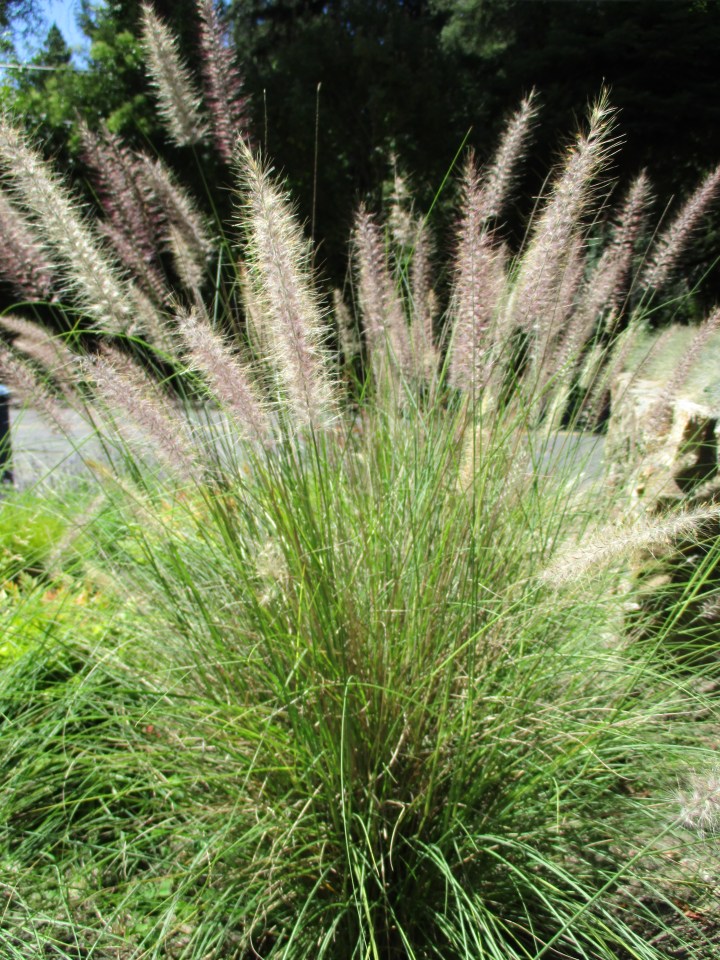 It was probably a good idea when it was introduced to California, but fountain grass, Pennisetum setaceum, became too much of a good thing for a few temperate regions in which it naturalizes and displaces native vegetation. Although it now works to inhibit erosion where it grows wild on the embankments of highway interchanges, it must sometime be mown because it is combustible.
 The delightfully clear sky blue flowers of blue plumbago, Plumbago auriculata, seem like they belong with colorful annuals or in a tailored border of colorfully blooming perennials. However, the rampant canes of mature plants are really best in the background where they have room to grow wild. The canes do not climb like vines, but can flop over other shrubbery as high as fifteen feet.
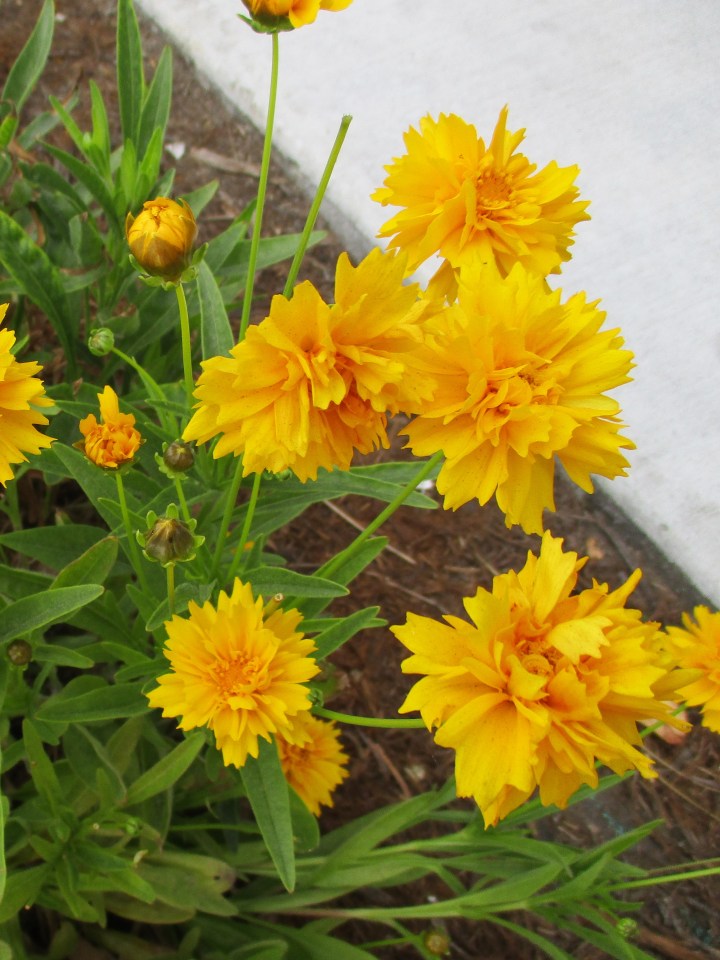 It is a common theme. Coreopsis was a much simpler group of only a few specie and cultivars in the 1980s. There are now too many hybrids and cultivars to keep track of. They have been bred so extensively that they do not produce viable seed like the old fashioned types that can self sow so nicely, and were more closely related to the unimproved specie that would be found in the wild.
 Once it gets started in late spring, ‘Mystic Spires Blue’ salvia has potential to bloom until autumn. It only needs older floral spikes pruned away as they fade (deadheading) to stimulate new bloom. If it gets overworked and lanky without deadheading, it can be cut back in the middle of summer to start a new bloom cycle all over. It can get more than three feet tall and almost three feet broad.
