As excellent as the weather has been, it is difficult to imagine that the San Lorenzo River was so high at about this time three years ago when this article posted.
It really is as big and ugly as it looks. That is a size 11 boot next to it to demonstrate how big it is. We can not eat it. There is no need to put it back into the river. It is not moving. It was alive, and still is. It is the distended tuberous root of a wild cucumber, of the genus Marah, which is also known as ‘manroot’ because of how big it can get. That stub protruding from the top (toward the top of the picture) is the remnant of a stem. A few thin roots protrude from the lower half, with thicker root stubs at the bottom.
It showed up in a conference room at work, and needed to be removed. The young lady who found it motionless on the floor did not want to handle it, so I took it outside and laid it on top of a utility panel, hoping that it might fly away. After only a few minutes, it was gone. I did not see a cat or anyone else who would have eaten it; so I am hopeful that it flew into a nearby riparian area to find some insects to eat, and to recover from being trapped inside.
I have no idea what happened to it, or how it ended up in such a bad situation. It was on the floor below a skylight…
Gads! I have not inspected such landscapes for several years, but they still make me cringe. This recycled article most definitely conforms to the Horridculture meme for Wednesday.
Medians are nice on the widest of boulevards. They break up the expansiveness of otherwise contiguous lanes. They make a four lane boulevard seem more like a pair of two lane roadways. Berms and other obstacles within medians limit the potential for head on collisions with traffic from opposite sides of the medians. Trees shade and cool some of the pavement when the weather gets warm. Besides all that, medians that are modestly landscaped simply look nice.
Notice that I said ‘modestly’ landscaped. There really is no need to get carried away with landscapes in medians. No one is really looking too closely at them anyway. People are driving past them, and really should be paying more attention to the road ahead rather than what is blooming to the side. Even passengers who are not driving probably are not seeing much of what goes into median landscapes. Color in such…
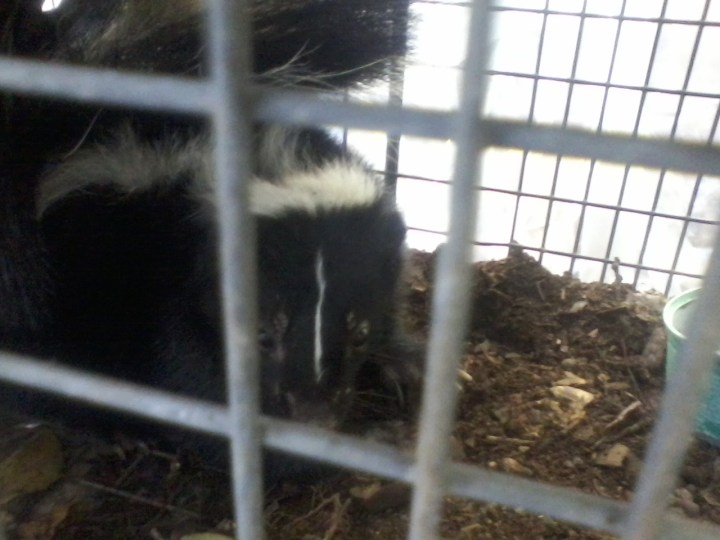
Coons are not much of a problem in the garden; but they can be a problem around the home. They scatter trash, eat dog and cat food, and can be dangerous to dogs and cats. They get into places we do not want them, including basements, attics, and even our homes. Once inside, they can cause significant damage.
That is why they sometimes need to be trapped. No one wants to do it, but it is sometimes necessary.
One problem that we did not consider when putting out a trap for a coon who was getting into the trash was that we might not actually catch the offending coon. Actually, not catching the coon was not as much of a problem as who we caught instead.
There really is such a thing as too much grapefruit. I know; I have witnessed it more than once.
The most recent occasion was two years ago. We were pruning a few fruit trees for a client in San Jose. One of the trees was an old fashioned ‘Marsh’ grapefruit, which happens to be my all time favorite grapefruit.
As we were pruning, the client was dragging brush away to curbside recycling. Most of our clients prefer to do the ‘cleanup’ to save money. The client asked me if I would like some of the fruit. Of course, surplus fruit is one of the many benefits of our work; and of course, I told the client that I would be pleased to take some of the excellent grapefruit. I then went back to work on a nearby persimmon tree.
While busy with the persimmon tree, I was unaware of what…
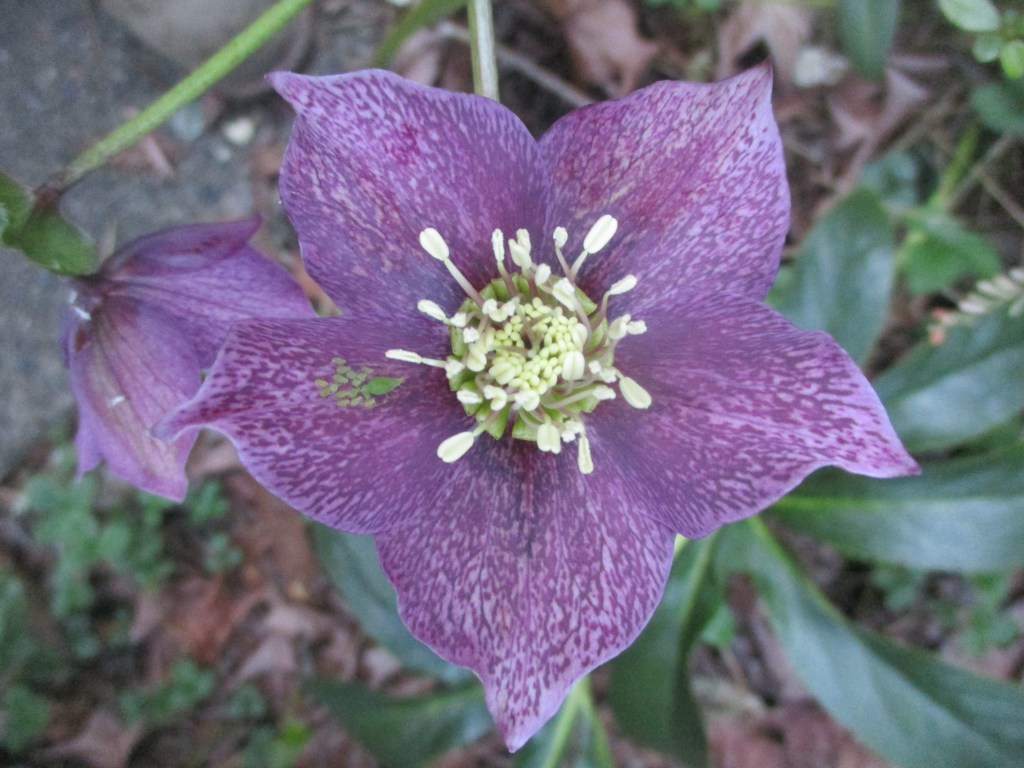
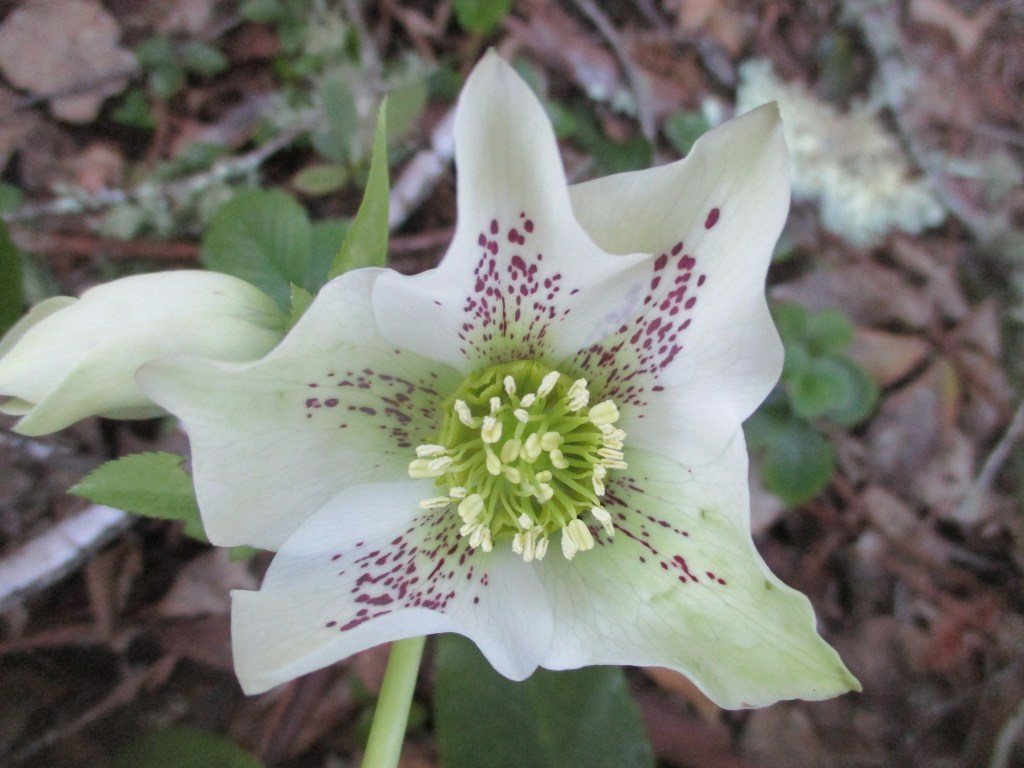
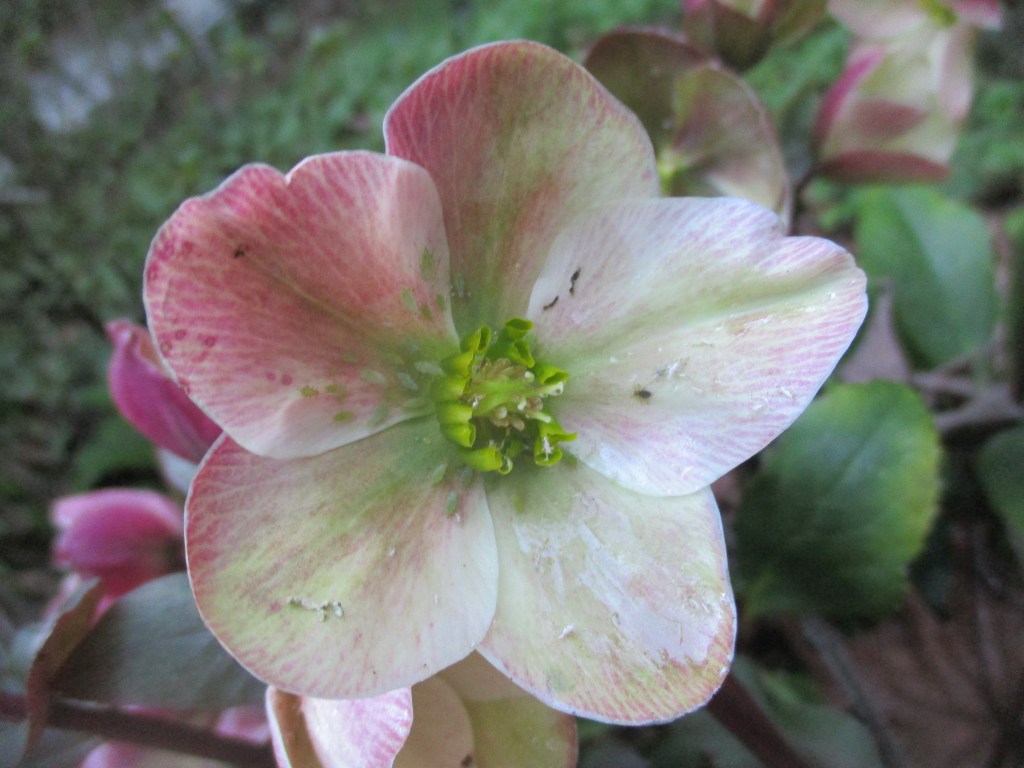
This is certainly not my favorite topic. It is a long story, but to be brief, hellebores do not do so well in the chaparral climate of the Santa Clara Valley. They are happier here, just a few miles away, in the Santa Cruz Mountains. By our regional standards, they performed remarkably well this year.
1. Is this Corsican hellebore? There are only a few. They are all the same. Their neat spacing suggests that they were planted intentionally. I find this pale greenish white to be rather boring.
2. Most of the feral hellebores look like this. It is like a spotty pink, with a bit more white around the edges. The individual plants are more numerous than I remember them being last year.
3. This one is more purplish pink or perhaps pinkish purple, with those same spots. I did not notice the herd of aphid to the left. Otherwise, I would have found a more exemplary specimen.
4. Color does not seem to be represented well by this picture. I really thought that this one was more reddish purple than it seems to be, perhaps like burgundy red. I am no good with color.
5. White is, of course, my favorite, even with the reddish purple spots. This one seemed to stand upright better than most of the others. I remember it from last year, but it was not so pretty.
6. If this one did not live right on the edge of a walkway, I would guess that it is one of the cultivars that was originally planted intentionally, and produced some of the seedlings for all these feral hellebores. It is doubtful than it would have been planted there though. It is the most profuse in bloom, although that blushed white color is rather bland. It is very popular with aphid. (This is the same hellebore that was the first of my Six on Saturday for last Saturday.)
This is the link for Six on Saturday, for anyone else who would like to participate:
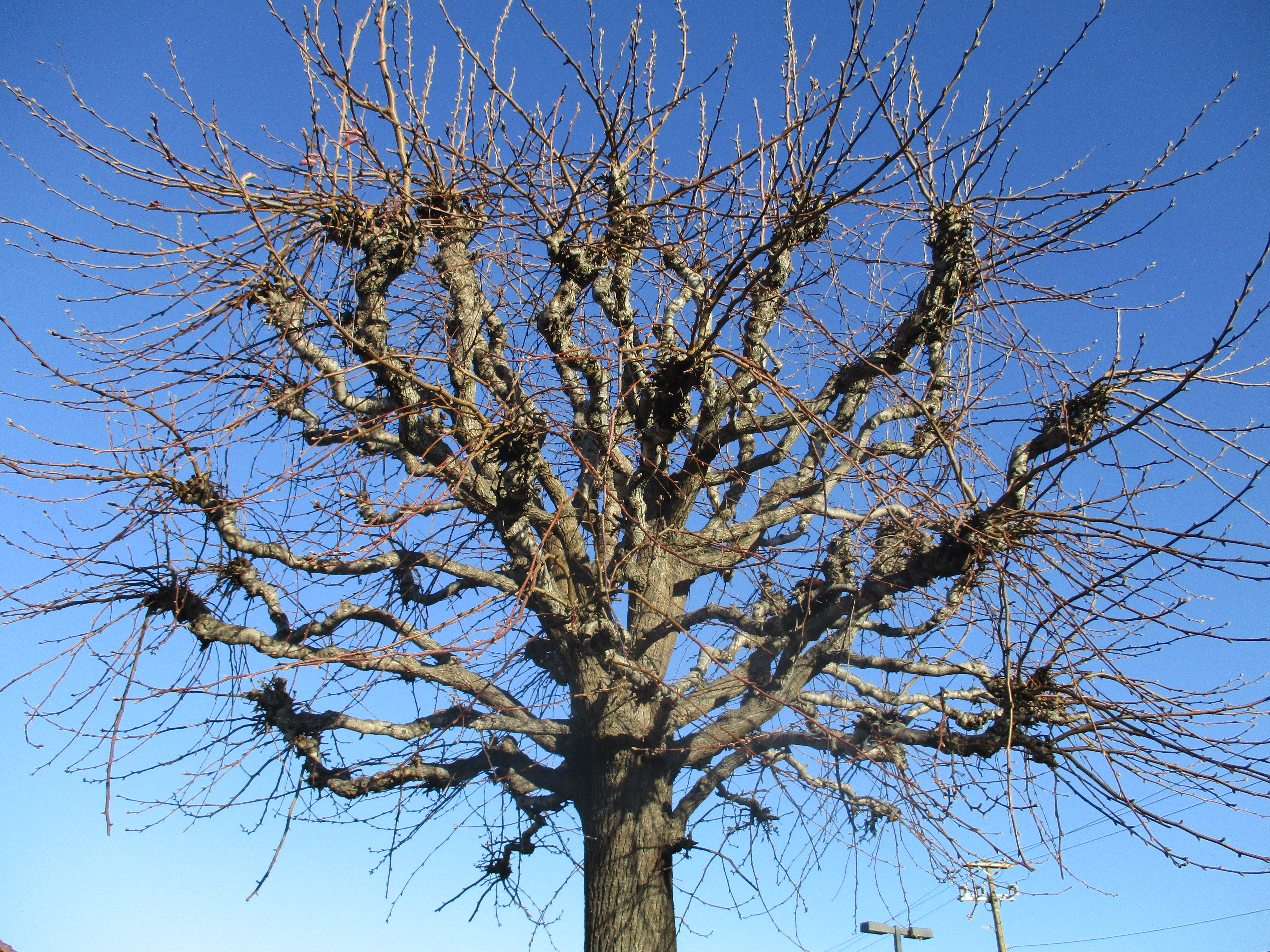
Extreme Horridculture warning! This recycled article most definitely conforms to the meme. It is amazing that such hack jobs are tolerated and actually payed for. Believe it or not, these are not the worst examples.
There is at least one arborist in the region who performs exemplary pollarding, and maintains the sycamore that provided the illustration for the articles that I wrote about the topic earlier. It must be incredibly frustrating for such qualified professionals to see such mutilated trees!
Pollarding and coppicing are bad words to most American arborists. These extreme pruning techniques are considered to be synonymous with topping. Yet, both have been around for centuries, and have actually kept some trees alive and productive significantly longer than they would naturally live.
I am one of the rare American arborists who not only condone pollarding and coppicing, but I also use these techniques when necessary. I will be coppicing red twig dogwood soon so that it produces more vigorous red twigs next year, and also because we can not allow it to grow wild as a thicket. Some of my fig trees will get pollarded to make vigorous shoots for cuttings, and also to keep them contained in…
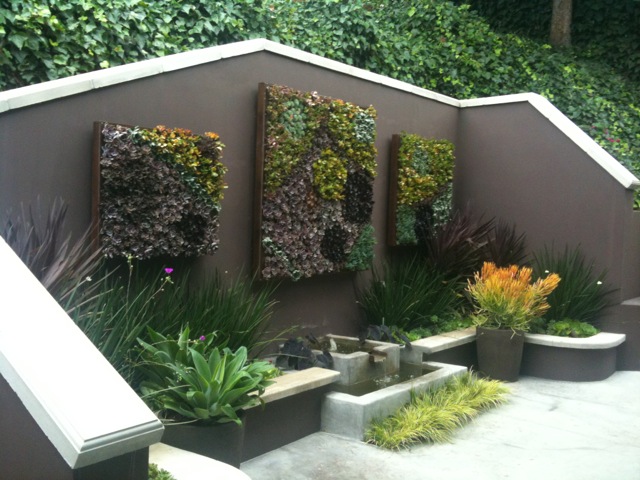
Succulent foliage is remarkably variable, even without bloom. There are so many unusual colors, textures and patterns to choose from. Many are complimentary to others. Many contrast exquisitely. What better way to display some of the favorites than to assemble them into a succulent foliar tapestry!?
This is actually old technology that started to become a fad again only somewhat recently, after these foiar tapestries were installed on a retaining wall in North Hollywood a few years ago by GreenArt Landscape Design. Small cuttings of succulent plants were plugged into rigid mesh panels that hold growing medium vertically against another flat panel of the same size. The whole contraption was suspended against the concrete wall, with a bit of space in between to limit staining and bleeding onto the wall.
With the fountain, potted plants and other features, the limited space was insufficient for a hedge to obscure the retaining…
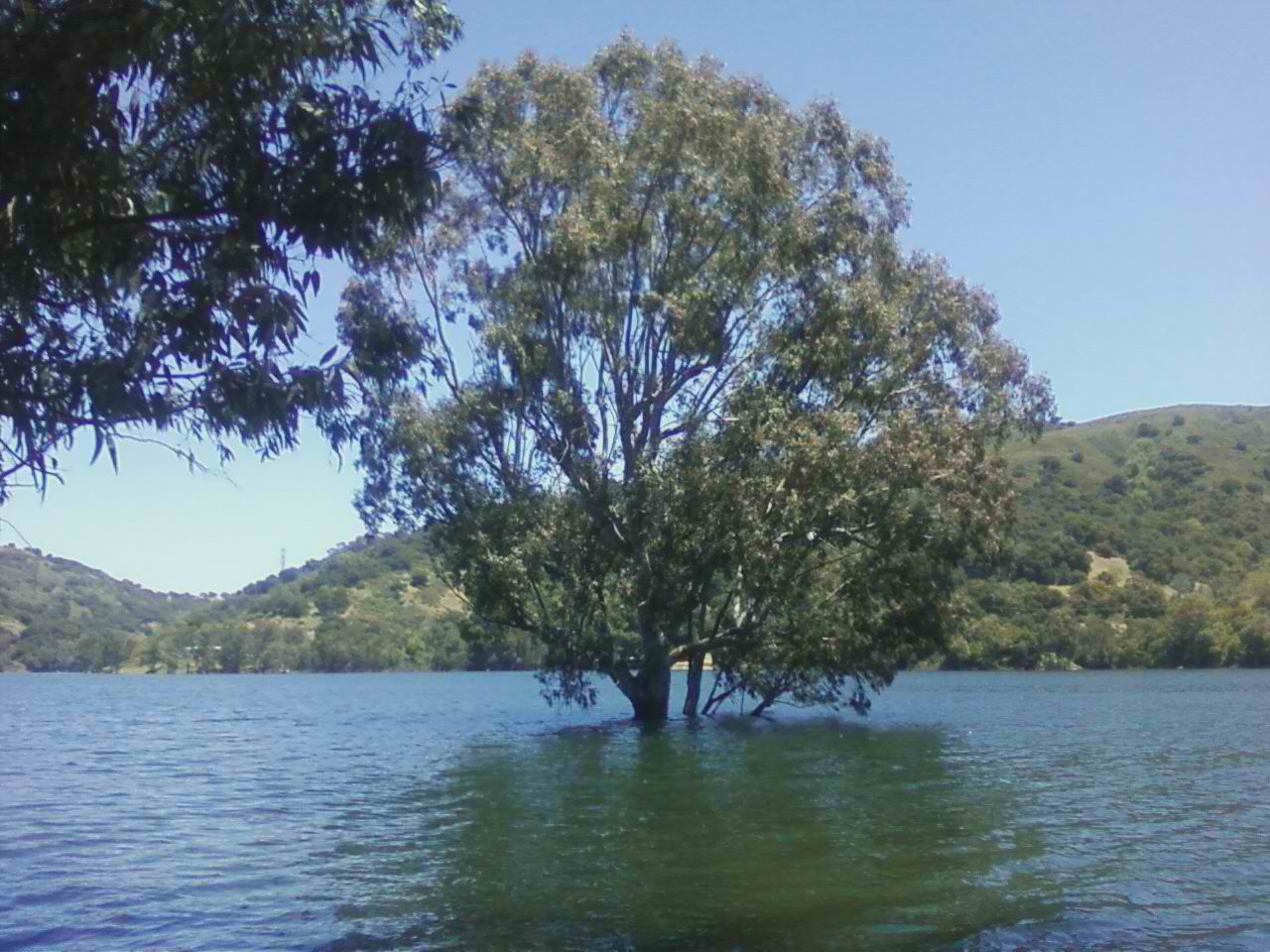
Although not a sequel to the old article that was recycled an hour ago, this old article seems to naturally follow it. (It mentions that it posted a day later, which it did when it originally posted, but it is just an hour later now. It also mentions one of the old recycled articles from the gardening column that posted earlier that morning, which was three years ago. Hey, it made sense at the time.)
Nor is it a sequel to any of the other brief article about rain in the past.
I just recycled the picture because I still find it to be amusing.
If you are a native of California like I am, and are wondering what ‘rain’ is; I have already explained it sufficiently in previous articles. Basically, it is those unfamiliar droplets of water that fall mysteriously from the sky and get everything wet. Look it up if you must.
The article that I posted earlier this morning was recycled from this time last year, long before I started posting articles here. Our rain has actually been very deficient. It has rained only a few times this season.
We tend to talk about rain often here because it is so important to us. So much of California gets such a limited supply. Although…
Perhaps this recycled article from 2017 will partly compensate for the lack of a picture of Rhody this morning; although this little terrier is Bill (Willow), not Rhody.
If you do not know what it is, ‘snow’ is like frozen rain.
If you do not know what rain is, I wrote about it earlier for those of us who are native to the drier parts of California. If you notice strange drops of water falling from the sky tonight, that would be rain. There is no need to be alarmed. It is expected to happen here tonight, and a few times for the next few days. Contrary to former experience, it is normal for this time of year.
Anyway, getting back to snow. Unlike rain, which sometimes happens here, snow does not happen here.
Well, perhaps that is not entirely true. It might have happened as recently as 11,700 years ago, as the Ice Age ended, and again in more recent history, in February of 1976, when an epically humongous snowstorm deposited as much as half an inch…

 What is it?!?
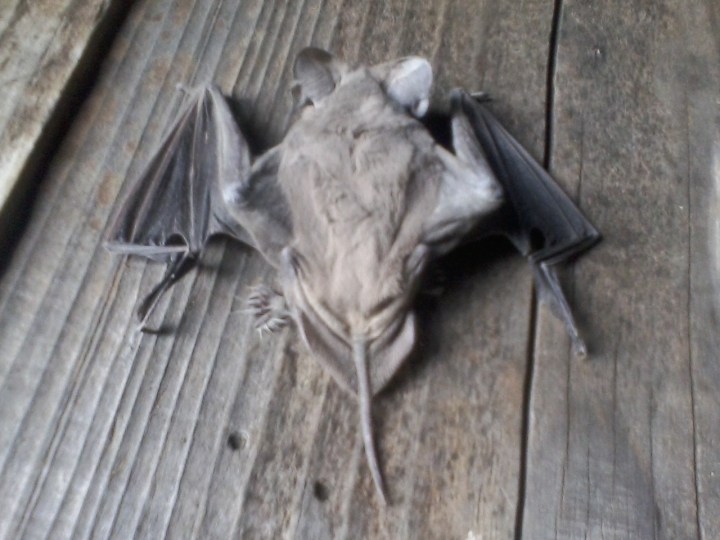 He or she; let’s just go with ‘it’ – has no name that I am aware of. It might be an acquaintance of Pepe. (
  Medians are nice on the widest of boulevards. They break up the expansiveness of otherwise contiguous lanes. They make a four lane boulevard seem more like a pair of two lane roadways. Berms and other obstacles within medians limit the potential for head on collisions with traffic from opposite sides of the medians. Trees shade and cool some of the pavement when the weather gets warm. Besides all that, medians that are modestly landscaped simply look nice.
 Coons are not much of a problem in the garden; but they can be a problem around the home. They scatter trash, eat dog and cat food, and can be dangerous to dogs and cats. They get into places we do not want them, including basements, attics, and even our homes. Once inside, they can cause significant damage.
 There really is such a thing as too much grapefruit. I know; I have witnessed it more than once.


 Pollarding and coppicing are bad words to most American arborists. These extreme pruning techniques are considered to be synonymous with topping. Yet, both have been around for centuries, and have actually kept some trees alive and productive significantly longer than they would naturally live.
 Succulent foliage is remarkably variable, even without bloom. There are so many unusual colors, textures and patterns to choose from. Many are complimentary to others. Many contrast exquisitely. What better way to display some of the favorites than to assemble them into a succulent foliar tapestry!?
 This is not sequel to ‘SNOW!?’ from yesterday.
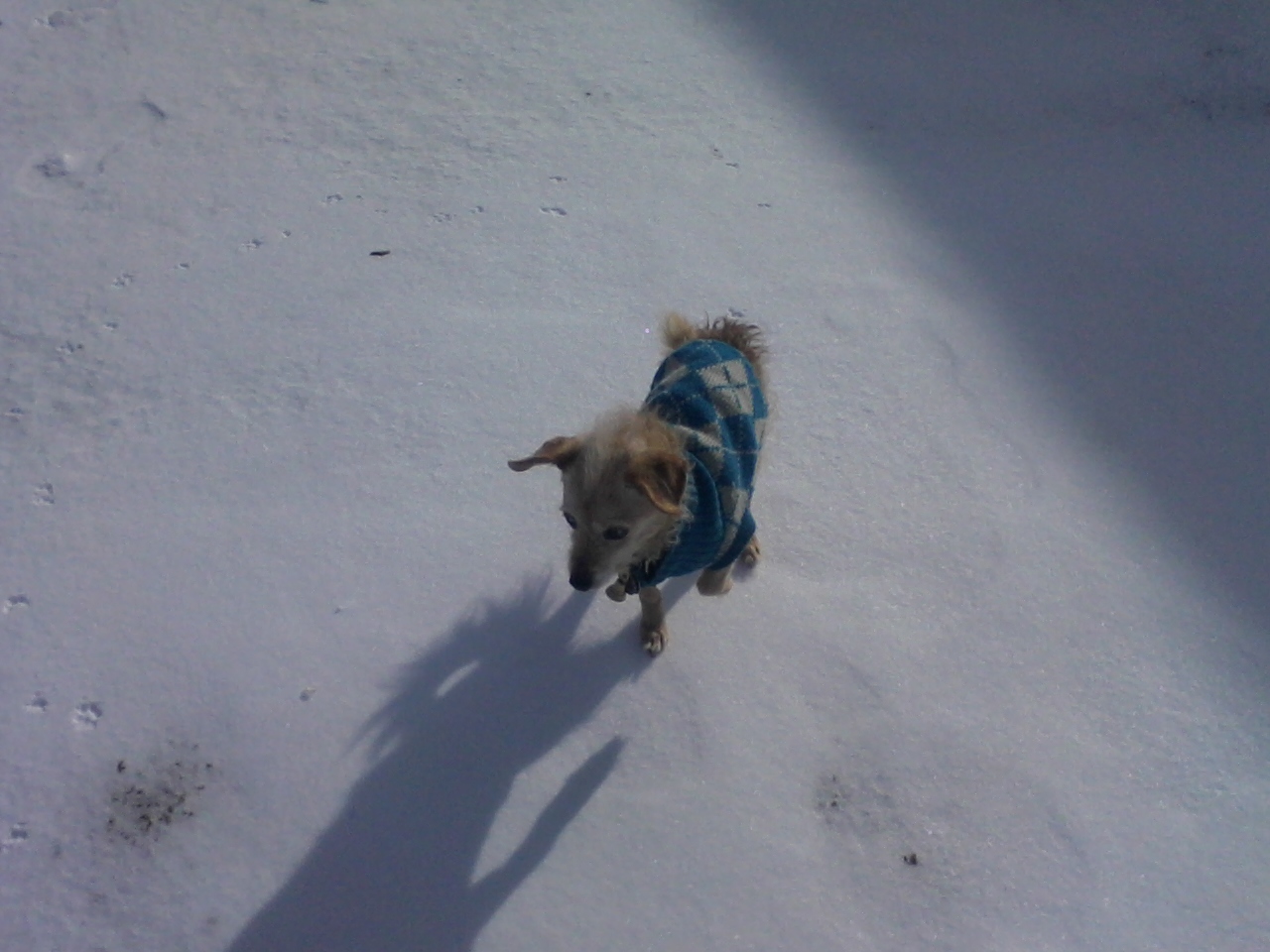 If you do not know what it is, ‘snow’ is like frozen rain.
