Autumn Foliar Color Begins In October

After blooming so colorfully for summer, crape myrtle foliage turns bright orange and red for autumn.

Why do so many from other regions comment on the mild climates of the west coast of California as if pleasant weather is a deficiency? If horrid summer heat and frigid winter cold were worth bragging about, not so many people would have been so eager to migrate here.

Contrary to popular belief, the four seasons, although considerably milder than in other regions, are enough to keep our gardens productive, dynamic and even colorful in all seasons. All sorts of deciduous plants and fruit trees get just enough chill in winter to bloom reliably in spring. The warming weather between winter and summer that gets most plants to bloom is what spring is all about. Summer is then warm enough for fruit and vegetables to develop. Then there is autumn, when so many deciduous plants turn flashy colors before winter dormancy.

Although the mild weather limits the choices, there are still a few plants to provide autumn foliar color. Actually, autumn is not so colorful locally primarily because the potential for color is not exploited like it is elsewhere. There are just so many other plants that do not turn color in autumn to choose from. Really, Vermont would be less colorful if palm trees grew there!

Sweetgum, Chinese pistache, flowering pear and maidenhair tree are the most reliable trees for autumn color. Maidenhair tree turns remarkably bright yellow. The others get the whole range from yellow to orange to red. Sweetgum also gets burgundy, and has the added advantage of holding foliage until it gets knocked off by wind or rain. Where the big, bright orange (and yummy) fruit that hangs through winter is desirable, Japanese persimmon is as colorful as Chinese pistache. (Persimmons are horribly messy if not harvested.) Various poplars, tulip tree and black walnut can almost get as bright yellow as maidenhair tree.

Crape myrtle and redbud are shrubby plants that provide good autumn color. Redbud turns clear yellow. Crape myrtle though, can also get bright orange and brownish red. Several of the Japanese maples, although not always as reliable, can actually get even more colorful if the weather is right. Boston ivy (which is actually related to grape) is the most colorful of climbing vines, but because it attaches directly to whatever it climbs, it is best on concrete walls that it will not damage.

Horridculture – Halloween

Goodness! I did not remember that the last paragraph of this three year old article was so . . . naughty.

tonytomeo's avatarTony Tomeo

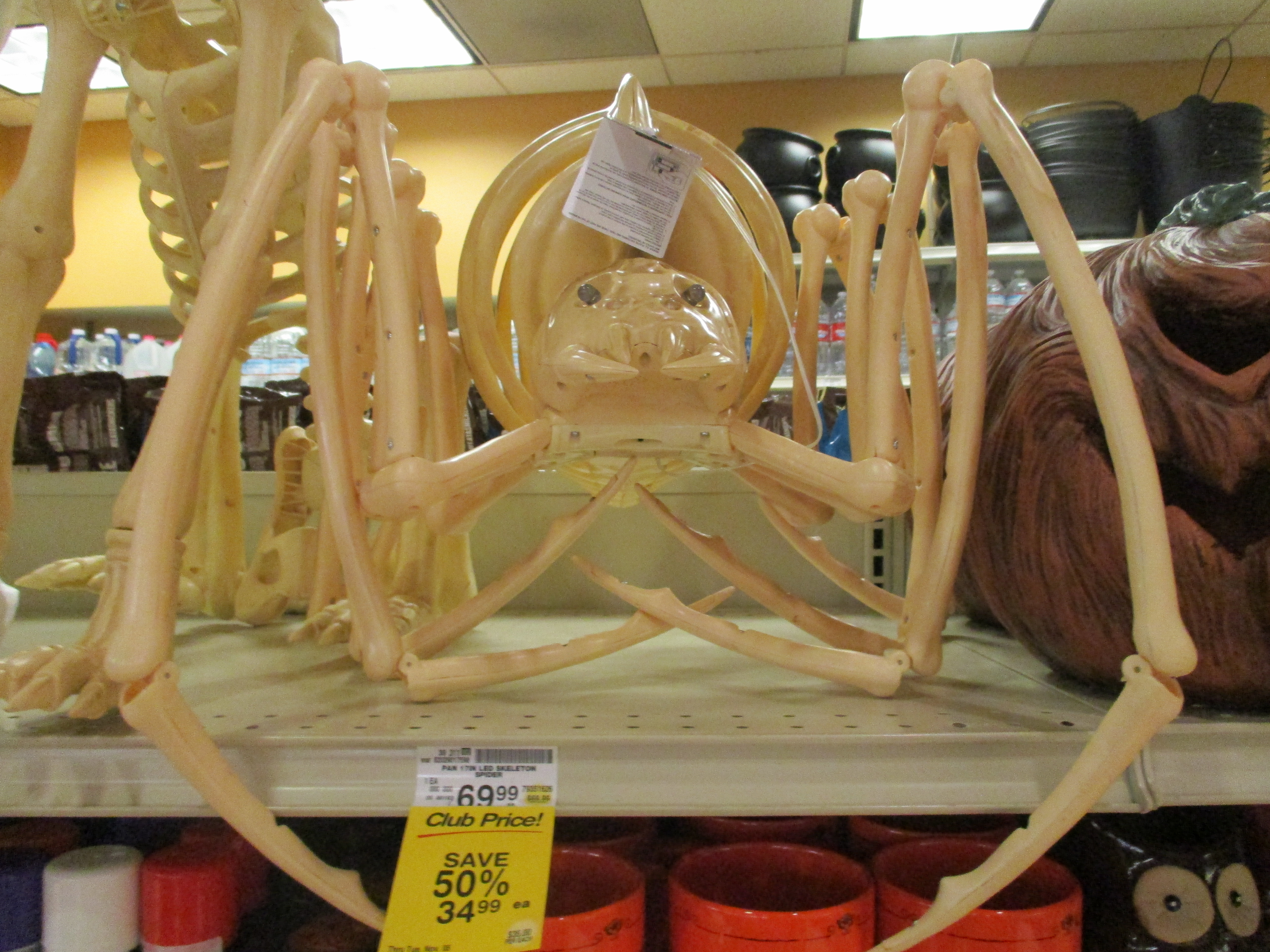
P91009Halloween is a topic that I could rant about for days. Seriously. I loathe it. I dislike any formerly respectable holiday that has been ruined by excessive commercialization. We all know what happened to Christmas. For me, Halloween, in some regards, is even worse. Christmas is at least pretty. Halloween is intended to be morbid and grotesque and creepy and . . . just plain bad.
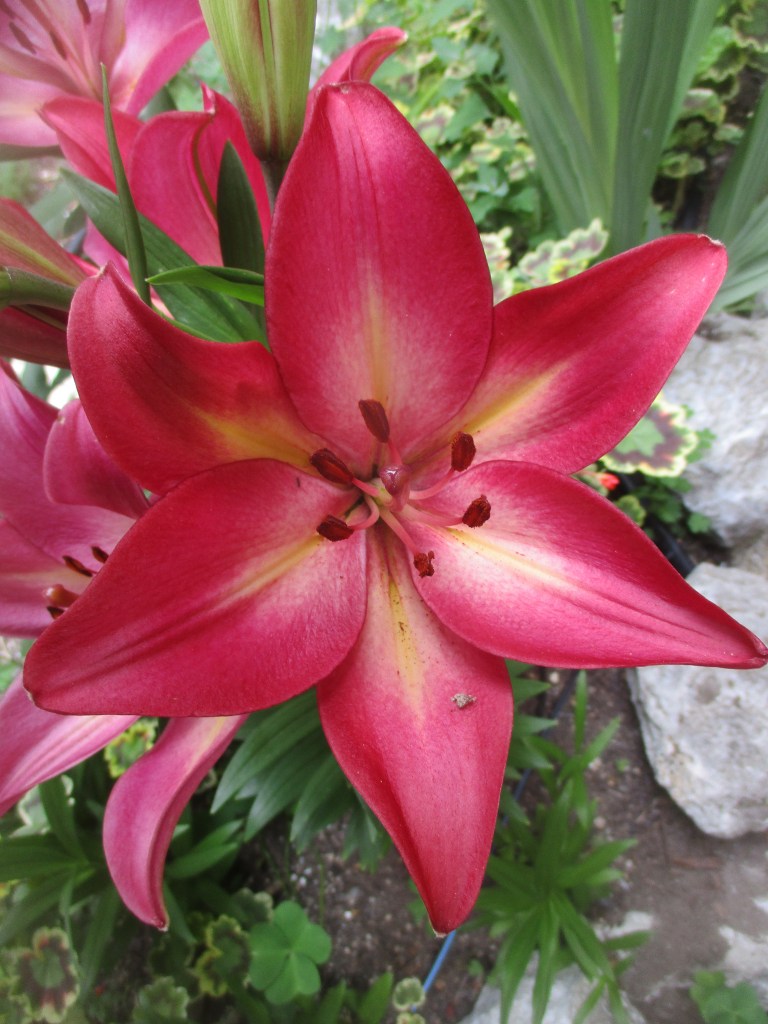
This should be about gardening though. Yes, there is always that guy who gets too drunk at the Halloween party down the road, but manages to stagger just far enough to vomit on my lawn. Then, I need to figure out how to get all the toilet paper out of the redwoods. The nasturtiums that get trampled by hasty brats who are too old for trick-or-treating will eventually recover.

The worst, though, are the Halloween ‘decorations’ in the front yard! We put too much…

View original post 150 more words

Dracaena Palm

Dracaena palm is a foliar plant.

By the end of the Victorian Period, dracaena palm, Cordyline australis, had become very popular, both as small trees and as foliar plants. The largest specimens were only about twenty feet tall and half as wide. Removal of trunks that grew too tall for short foliar plants induced fresh basal growth. The drab leaves grew three feet long and three inches wide.

Cultivars with bronzed foliage became more popular after the Victorian Period, although not as common as the original. They grew slower and stayed smaller. The many modern cultivars of the past few decades stay even smaller, with even more impressively colorful foliage. Most are purply bronze or variegated with creamy white, pale yellow, pink or tan.

Modern cultivars generally mature efficiently, but then attain height too slowly to function as small trees. Some do not develop substantial trunks. They are therefore more popular for their delightful foliar color and texture. Many generate appealingly pendulous foliage. However, a few eventually develop sculptural form with exposed corky trunks and limbs. Removal of unimpressive floral panicles prior to bloom removes floral frass before it gets messy.

Common Names Are Potentially Uncommon

Lily is neither calla nor canna.

Nomenclature is simply a structured technique of naming. Botanic nomenclature assigns universally precise general or genus names with specific or species names to all plants. Such botanical names are also scientific and Latin names, but not common names. They are binomial with their uncapitalized species names after their capitalized genus names.

Latin, scientific or botanical names are the same for everyone everywhere, regardless of regional language. They simplify documentation and distribution of botanical information for plants that have different regional common names. Even if all other information needs translation, botanical names do not. They are really more common than common names.

Realistically, common names are no more common than common sense. Many regional names are common only within isolated or contained regions, such as individual islands of Polynesia. Aloalo of Hawaii are simply familiar hibiscus here. Lily of the Nile seems to be the only common name for Agapanthus, but is more familiar as thanh anh in Vietnam.

Acer platanoides is Latin for ‘maple which resembles a sycamore’. Acer pseudoplatanus is Latin for ‘maple which is a false sycamore’. Both are maples here, but also sycamores in England. Conversely, Platanus X acerifolia, which translates to ‘sycamore with maple foliage’ is a sycamore here, but a plane in England. Common names might be confusing.

This is why botanical names are so important. Arborists and horticulturists both here and in England recognize them regardless of possible inconsistencies with common names. Of course, common names are useful regionally. They may be easier to remember, more appealing or merely amusing. Pigsqueak and sticky monkey flower are difficult to forget.

Nonetheless, it might be helpful to be aware that some common names are inaccurate. A rose by any other name would smell as sweet, unless of course, it is a Confederate rose, Lenten rose, rose of Sharon or rock rose. None of such roses are actually roses. Neither calla lily nor canna lily is a real lily. Neither dracaena palm nor sago palm is a real palm.

The Wrath Of Grapes

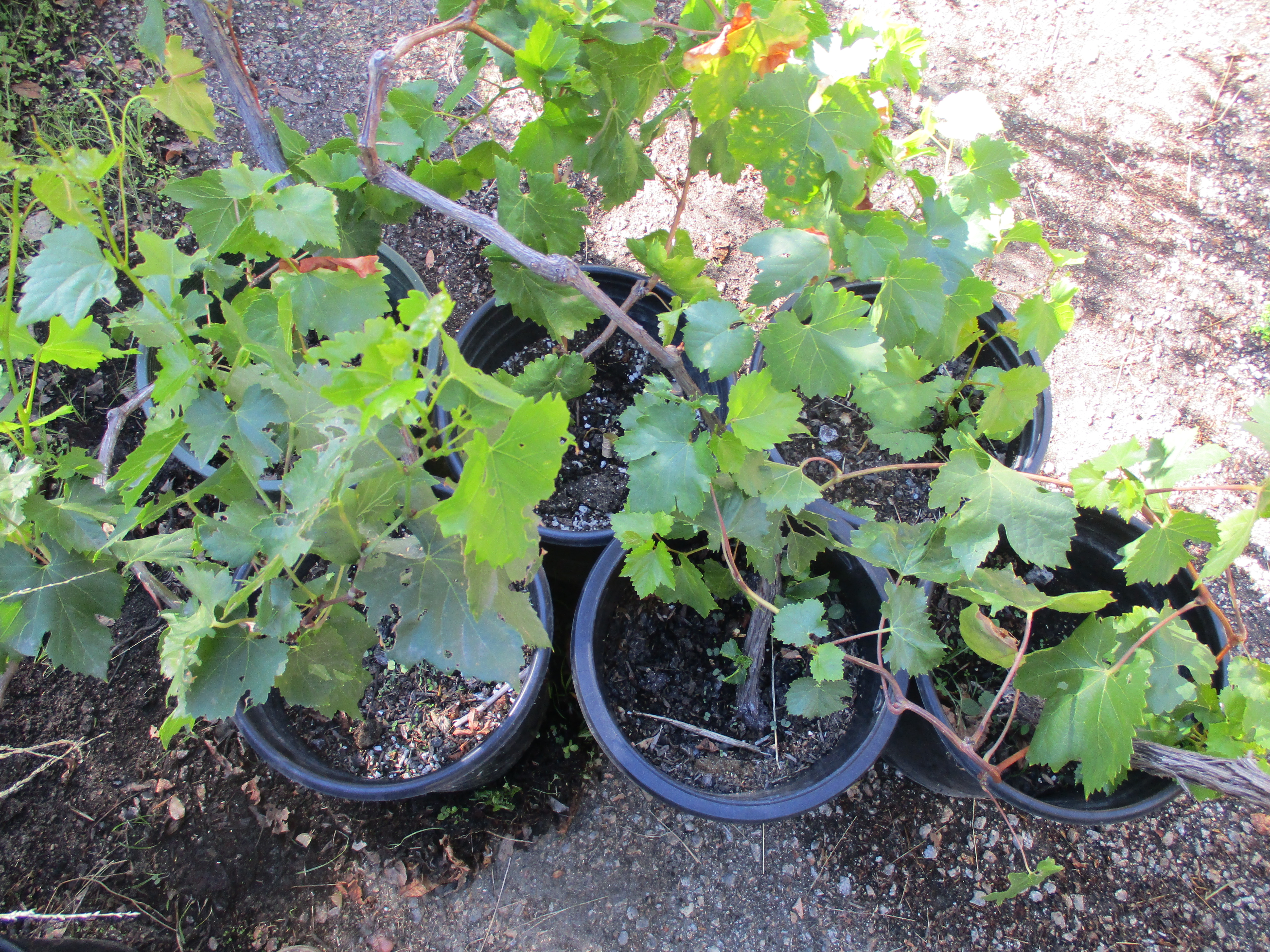
All of these grapevines have procured homes since this article posted three years ago. Some are quite large now.

tonytomeo's avatarTony Tomeo

P91006Jocular reference was made to ‘The Grapes Of Wrath’ on our our backward version on the way to Oklahoma several years ago. We happened to drive through Salinas, where author John Steinbeck was from, and Bakersfield near Weedpatch, where the migration from Oklahoma in the story ended. From there, we literally drove the same route from Oklahoma, but in reverse.
I never read ‘The Grapes Of Wrath’.

I do enjoy growing the sort of grape vines that some of us grow in our home gardens for fruit that can be eaten fresh. (I loath wine grapes and vineyards, but that is another topic for later.) There happens to be a nice big unidentified grapevine at work that needed major pruning last winter. It was a sloppy and formerly unpruned mess, with rampant long canes strewn about.

Some of these canes developed roots where they had been laying on the ground…

View original post 150 more words

Herbaceous Trees

Coincidentally, I am hastily recycling this article while in Los Angeles, where palms are more prominent.

tonytomeo's avatarTony Tomeo

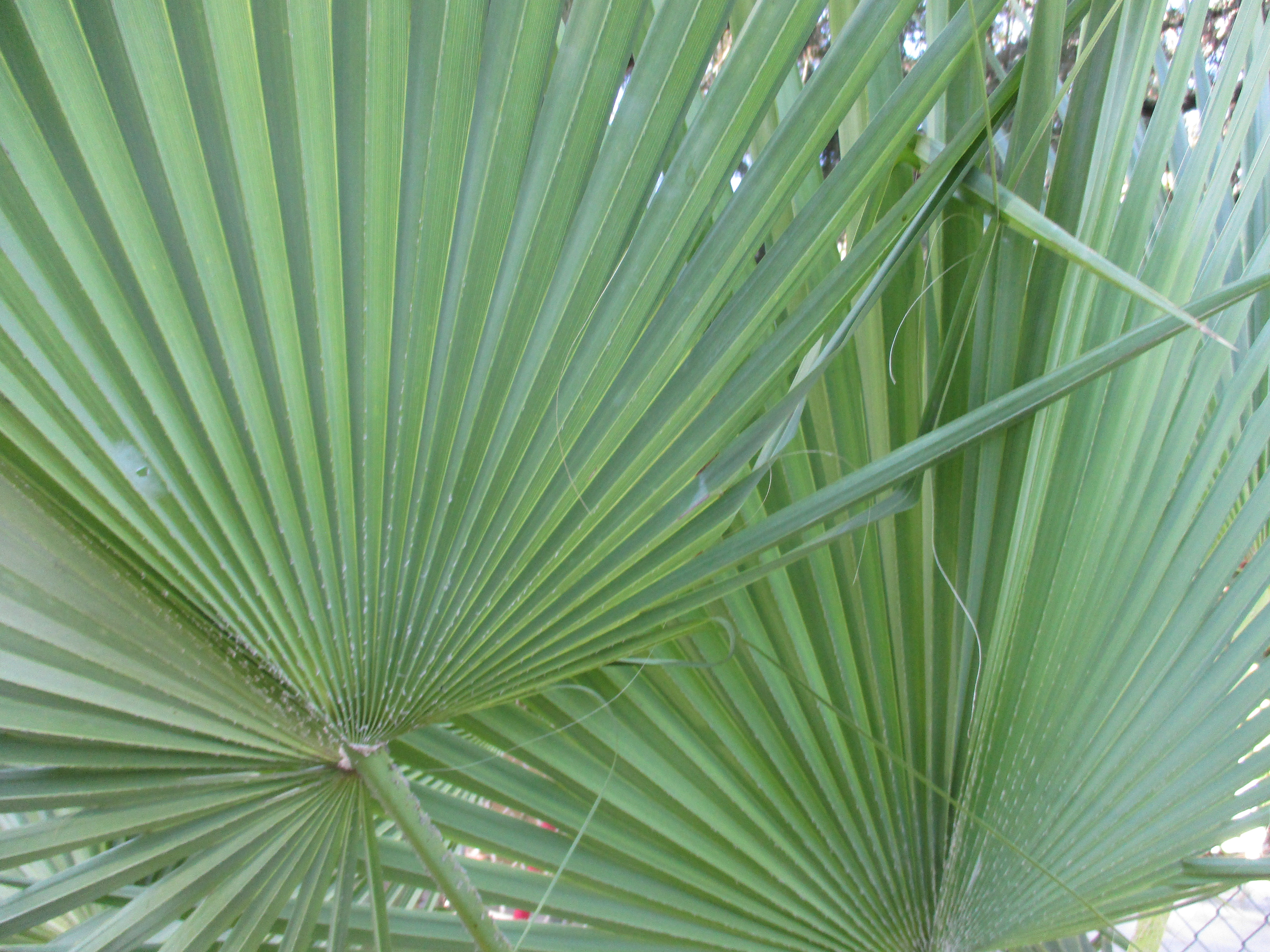
P91005KPalms are like ‘Red Delicious’ apples. It seems that most people dislike them; but they also seem to be very popular. Seriously, if only a few people like ‘Red Delicious’ apples, why are they so common in supermarkets? If most of us dislike palms, why are they so common in the San Jose Skyline?

I suspect that palms really are as unpopular as they seem to be, but that they are also very conspicuous within their situations. Not only are they focal points of the landscapes in which they live, but most types eventually stand as tall as the tallest trees in the neighborhood, and some get significantly taller. They are innately the most prominent trees within their neighborhoods.

Palm are not like other trees though. Arborists may classify them as ‘herbaceous trees’. They are foliar plants while young, producing increasingly large leaves from terrestrial rosettes. They only ‘launch’ and…

View original post 150 more words

Six on Saturday: L. A.

Los Angeles is commonly abbreviated as ‘L. A.’ or simply ‘LA’, which is not only insolent, but can be mistaken for Louisiana. I must spell it out. Anyway, I am in Los Angeles now. After postponing this trip for months, I left hastily without much of a plan. I am camped out in the backyard at Brent’s home, not only because it is the best place to stay here, but also because I did not bother to make reservations at the eccentric Hotel del Flores. I did not do much of what I wanted to do, and will not before I leave, but I do not mind. It has been good to simply relax and grab a few oddities from Brent’s garden, including #1, #2 and #5. Some of these shared earlier.

1. Platycerium bifurcatum, staghorn fern grew into a suspended colony that is about six feet wide. I may have mentioned earlier in Six on Saturday that it looks like coronavirus.

2. Platycerium grande, giant staghorn fern, which Brent and I refer to as moose antlers, flares out too much on top to form more spherical colonies like Platycerium bifurcatum.

3. Monstera Deliciosa ‘Albo Variegata’, variegated split leaf philodendrons is supposedly rather rare. I thought that it was more common years ago, but no one else remembers it.

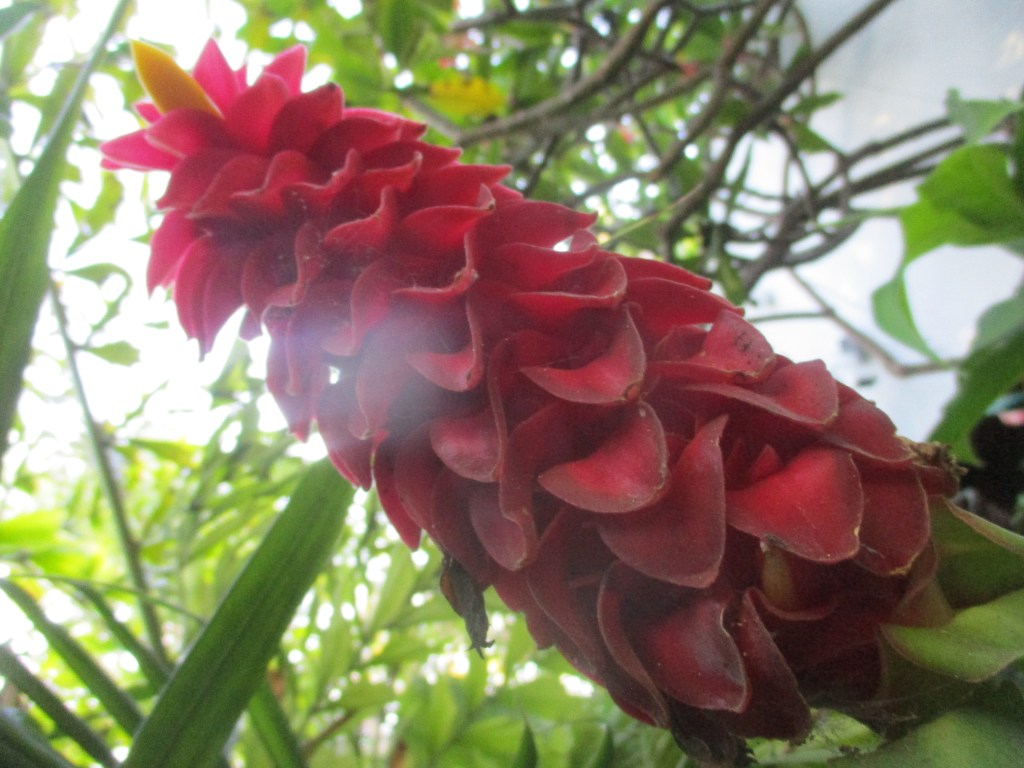
4. Costus comosus, red tower ginger should bloom between late winter and early spring, rather than between later summer and early autumn. Maybe its bloom lasts for months.

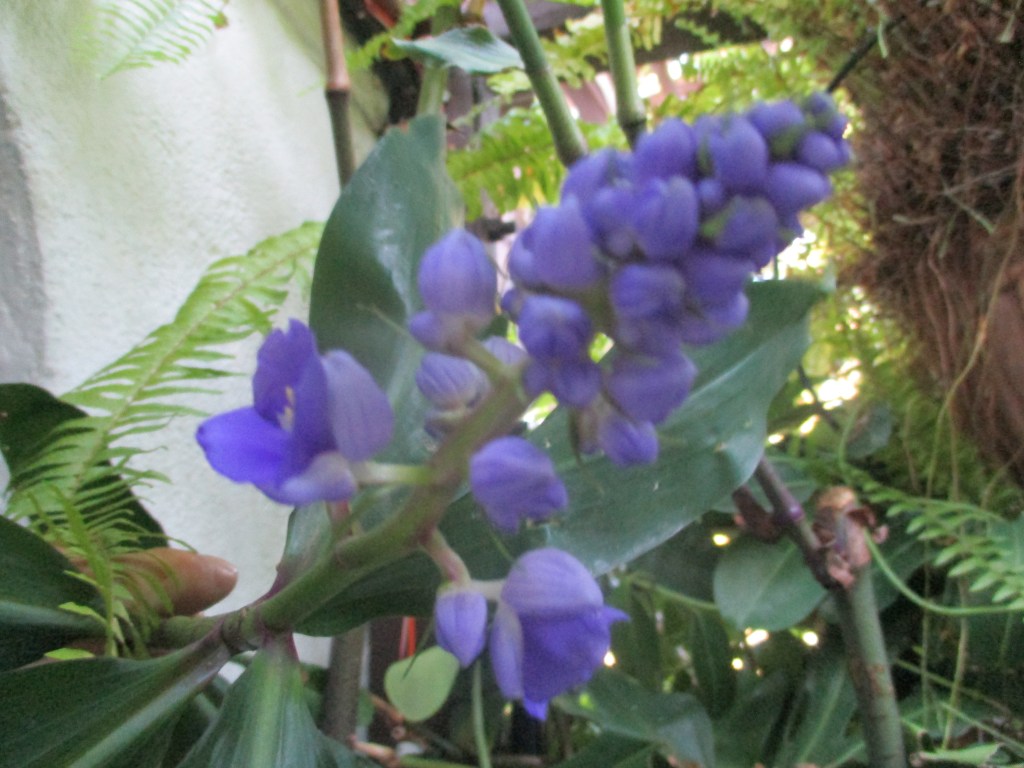
5. Dichorisandra thyrsiflora, blue ginger, which is not actually related to ginger, should bloom about now, but is not blooming as spectacularly now as it did several months ago.

6. Aechmea fasciata, silver vase bromeliad should have bloomed half a year ago like red tower ginger. Likewise, bloom can last for a long time. However, this bloom looks young.

This is the link for Six on Saturday, for anyone else who would like to participate: https://thepropagatorblog.wordpress.com/2017/09/18/six-on-saturday-a-participant-guide/

Bower Vine

Bower vine bloom sporadically until cooler autumn weather.

Autumn needs to get a bit cooler before bower vine, Pandorea jasminoides, will be ready to stop blooming. It may not always bloom profusely, but it does bloom for a long time, beginning with warming spring weather. Flowers can be white, pink or white with pink throats, but are most often pink with burgundy throats. Even through late autumn and winter, the glossy evergreen foliage is appealing without bloom. Mature vines can climb more than fifteen feet high. Those with variegated foliage might stay somewhat smaller.

Cool Season Vegetables Eventually Replace Warm Season Vegetables

Peppers do not grow in cooling autumn weather.

Just as warm season annual flowers that bloomed through spring and summer get removed to relinquish their space to cool season annuals, summer vegetable plants need to vacate the garden for cool season vegetables. Fortunately, removing vegetable plants is not as unpleasant as removing the pretty flowers might have been, because most have finished producing whatever it is that they were grown to produce.

Besides, cool season vegetables are even cooler than warm season vegetables, since some have distinctive foliage that is appealing beyond the vegetable garden, in borders, pots and mixed plantings, out in the landscape. Swiss chard is a striking foliar plant, whether it gets eaten or not. The outer leaves can get eaten without compromising the appeal of the inner leaves that continue to grow and fluff outward to replace them. Arugula, kale, mache, loose lettuce (non heading) and collard, mustard and turnip greens do the same.

This ability to function in more places in the landscape is a definite advantage since cool season vegetables are not quite as productive as warm season vegetables are. They would certainly like to be as productive, but grow slower through cool weather.

Most cool season vegetables should be sown into the garden as seed. Root vegetables, like beet, carrot and radish, might be available as seedlings in cell packs, but do not recover very well from transplanting. Besides, seedlings of such plants in cell packs are either too abundant and crowded, or to sparse to produce much. Leek, loose leaf lettuce and most of the greens likewise grow best if sown as seed in rows instead of planted in tight clumps as they are grown in cell packs.

Only greens that are grown as individual big plants, like chard, kale and collard green, can be as productive from cell pack seedlings as from seed. However, each cell pack produces only six plants, maybe with some extras. A package of seed costs about the same, but contains more seed than most gardens can accommodate.

Actually, the only cool season vegetables that might be more practical to grow from cell pack seedlings than from seed are broccoli, cauliflower, cabbage and Brussels sprout. These vegetables grow as even larger plants, so minimal quantities, like one or two or perhaps three cell packs, are sufficient.

Like so many of the warm season vegetables, many cool season vegetables should be planted in phases every two to four weeks to prolong harvest. By the time the first phase finishes, the next phase will be ready. The frequency of phases depends on the growth rate and duration of production of the particular plants. For example, chard has a long duration of production, so does not need many phases.

Horridculture – PPE

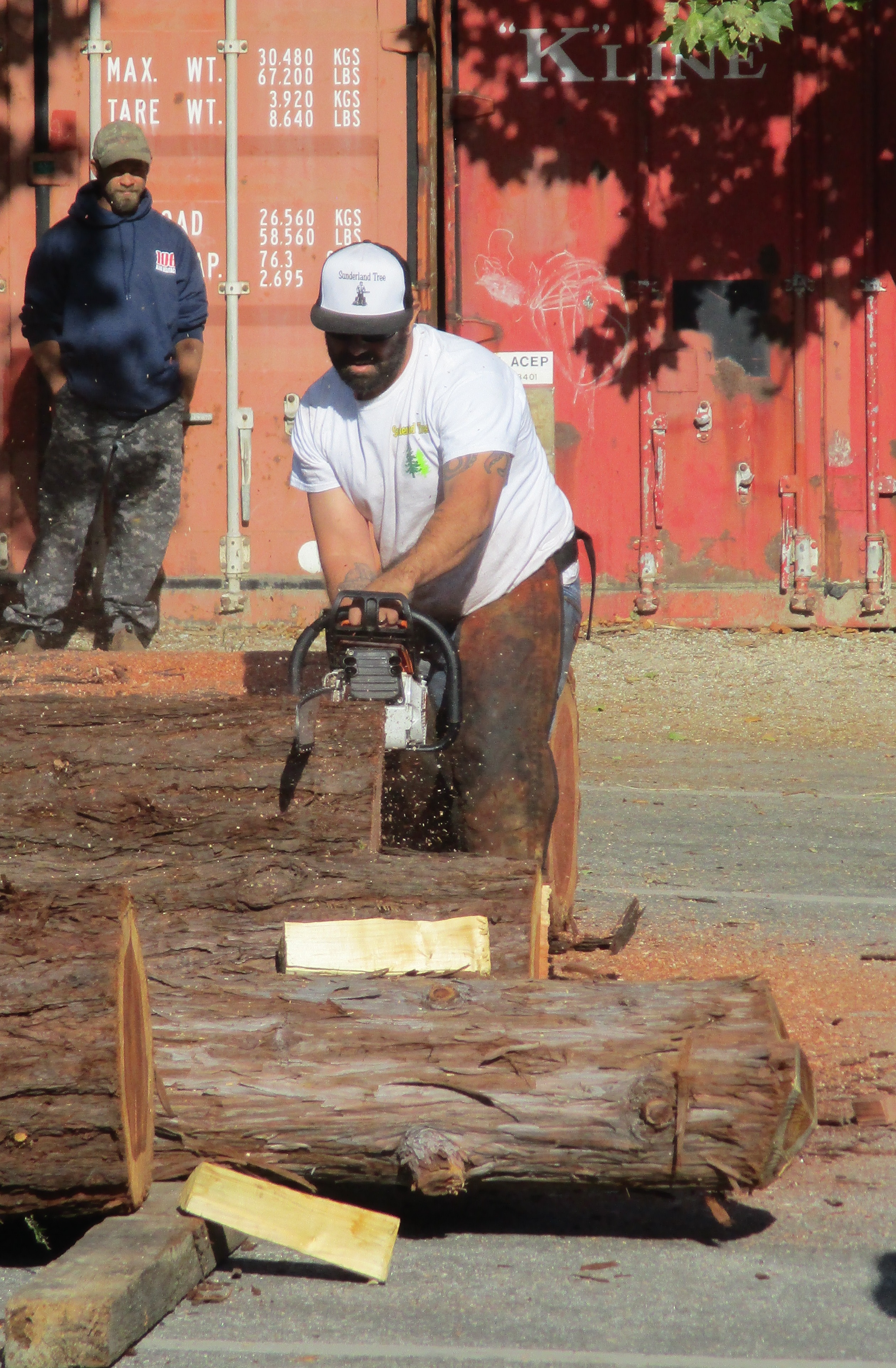
The Lumberjack Contest at which I procured this picture was three years ago, at the Santa Cruz Mountains Harvest Festival. The Santa Cruz Mountains Harvest Festival for this year will be this weekend!

tonytomeo's avatarTony Tomeo

P91002Personal Protective Equipment. That is what PPE is for. Acronyms can be so vague. PPE could be for Purple People Eater for all we know. That movie just happened to be released to cinema at the end of 1988, just a few months after my summer internship with an exemplary crew of arborists who instructed be about the importance of PPE. I am glad to have missed the movie.

In 1988, the machinery used by arborists as well as lumberjacks was more dangerous, and PPE was more primitive. Hearing protection was only beginning to be standardized. Many of us were not even using it back then, even though the chippers were terrifyingly loud. For some of us, cheap sunglasses sufficed as eye protection. Chaps had been available, but were quite rare.

From the beginnings of their respective careers, younger arborists and lumberjacks learn to use safer machinery and standardized PPE…

View original post 209 more words