Camellia

Many camellias have already finished bloom.

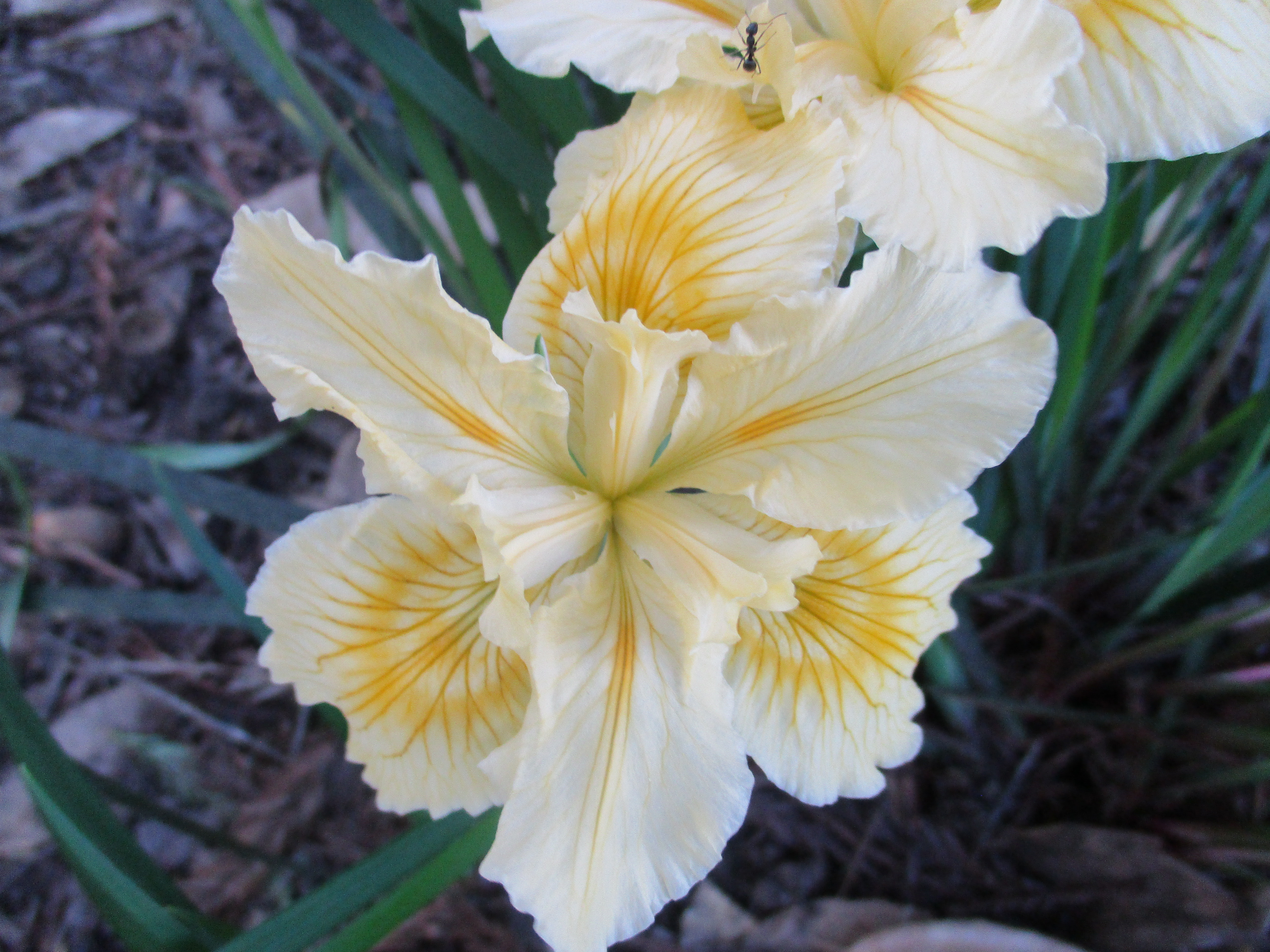
While other bloom might be lacking through late winter, camellia, Camellia japonica, can help compensate. Although generally not as profuse as spring and summer bloomers, its individual flowers display elegantly against luxuriantly glossy evergreen foliage. Lack of sturdy stems for cutting is no problem for a few flowers simply floating in a shallow bowl.

Centuries of breeding has produced more than two thousand cultivars of camellia. Floral form can be single, semi-double, double, formal double, paeony, anemone or rose, so is quite variable. Floral color ranges from pure white to deep red, with many hues of pink in between. Stripes, speckles, blotches or picotee margins are within the same color range. 

Camellia generally develops as nicely dense shrubbery that stays lower than the eaves. Some cultivars stay even lower. A few slowly mature as small and perhaps sparse trees. Individual flowers are about three inches wide. Some are smaller. A few are comparably bulky. Camellia sasanqua is a separate species with smaller but more abundant flowers.

Late Pruning For Early Bloomers

Deciduous magnolias get pruned after bloom.

Winter is generally the best season for pruning. Obviously, it is when a majority of plants are dormant, and therefore most complaisant to such potentially invasive procedures. Of course, there are exceptions to this generalization. A few plants are dormant during other seasons. Some simply prefer late pruning to accommodate their bloom or fruiting cycles.

Late pruning is important for some of the same reasons that dormant or winter pruning is important. It controls growth and directs resources. Removal of superfluous or unwanted growth reallocates resources that such growth would otherwise consume, to more useful or productive growth. The primary difference is that late pruning happens after dormancy. 

Flowering cherry trees are very similar to fruiting cherry trees, but generate only copious bloom without fruit. Flowering crabapple trees likewise produce only their unique bloom, but without much fruit. Technically, both would prefer dormant pruning during winter. Yet, late pruning immediately after bloom allows them to first bloom as profusely as they can.

Fortunately, flowering but fruitless counterparts of fruitful trees require pruning that is less severe than what their fruitful relatives require. Comparably severe pruning would be too stressful for them after dormancy. However, flowering peach trees can endure harsh late pruning to stub their bloomed shoots. Stubs generate more shoots for bloom next spring.

Late pruning begins as early as spring blooming trees and shrubs finish bloom. Because of warm weather this winter, many are blooming early. Stems of some types work well as cut flowers, either while in bloom or immediately prior to bloom. Once the first few flower buds begin to show color, most buds on the same stem should continue to bloom inside.

Camellias supposedly prefer pruning during their bloom cycle, since they resume growth immediately afterwards. Because such pruning would ruin some of the bloom that is their primary asset, most camellias must tolerate late pruning after bloom. Dogwood, forsythia, redbud, and flowering quince, as well as flowering cherry and flowering crabapple, are likewise tolerant of these technically untimely techniques.

Redwoods Are Family Oriented

Redwoods really are very remarkable trees. We are so fortunate to be able to work with them here.

tonytomeo's avatarTony Tomeo

P90223KCoastal redwood, Sequoia sempervirens, are remarkable stable trees. They rarely fall, which is how they get to be thousands of years old. They prefer to live in groups, where they mesh their roots together, and shelter each other from wind. Those that live outside of a group stay shorter than forest trees, and typically develop multiple trunks that function as a group.

However, they are also remarkably weak in regard to their structural integrity. Limbs are easily broken away from their vertical trunks by wind. Snow, which is rare within their natural range, causes significantly more damage than wind, which is probably why their natural range does not extend into snowy climates. Trees with co-dominant leaders (double trunks that divide from single trunks above grade) have potential to split at the union of the double trunks. Such unions are typically at such acute angles, that the trunks press against…

View original post 223 more words

Wild Turkey

Three years later, these wild turkeys have not become a major problem as we were concerned they might. Their population seems to have reached an equilibrium.

tonytomeo's avatarTony Tomeo

P90224This is a relatively new development. The first few arrived here only two years ago. By last year, a few more arrived to make a significant herd that split into two smaller herds. Now these two smaller herds are quite significant. If they continue to proliferate as they have been, they will become more of a problem. They are already shredding flowers and colorful berries that are within their reach, and digging up flexible irrigation hoses.
They are not really wild turkeys, since they are not native here. They are actually feral turkeys that escaped into the wild and naturalized. They may have moved in from surrounding areas, or they may have escaped locally. Turkeys have been roaming parts of Scott’s Valley and my neighborhood in the Los Gatos Hills for a few years. Much larger herds roam other regions, particularly the Diablo Ranges east of the San Francisco Bay…

View original post 150 more words

Six on Saturday: Brent’s Pointless Pictures III – Watts Towers

Only two or perhaps three of these six pictures were taken in Watts. Furthermore, those towers in the backgrounds of pictures #3 and #4, although only a few blocks west of the Watts Towers, and supporting massive volumes of wattage, are merely electricity pylons. It is unimportant. Actually, these five images and one video are assembled together here only so that I need not discard them unused. Brent will not stop sending them. Now that these are the last for the moment, I can post more interesting or at least relevant images next week. I must share pictures of the esperanza and poinciana seed getting sown. Also, we moved a Mediterranean fan palm.

1. Brent can not stop taking selfies. Carly Simon sang about this sort of behavior in 1972; ‘You’re so vain.’ Here, he wants to be seen in a hard hat like my arborist colleagues wear. 

2. Old sycamores that Brent saved from certain doom are a much more important topic. Developers who want them out of their way said that the bare deciduous trees had died.

3. Tristania laurina is an exemplary small street tree for many of the narrow streets that Brent installs street trees on. This matured crop are exemplary #5 (5 gallon) specimens.

4. Minor lower growth that got pruned away promoted caliper growth. Those are not the Watts Towers, although they are only a few blocks to the west, and support many watts.

5. Brent wants to show off a new publication that features his home garden, or his work, or some such nonsense. I did not write the particular article, so it must not be very good. 

6. Brent’s home garden is SO crowded with SO much vegetation and other ‘stuff’. What a mess! It could be a hazardous situation during an earthquake. This one was very minor.

This is the link for Six on Saturday, for anyone else who would like to participate: https://thepropagatorblog.wordpress.com/2017/09/18/six-on-saturday-a-participant-guide/

Ranunculus

These potted ranunculus in a nursery are already blooming. Those planted while dormant last autumn may not have started yet.

If their dormant bulbs were planted back in October or November, ranunculus will soon be blooming. Those of us who missed the bulbs last autumn can already find blooming plants in nurseries. The bright yellow, orange, red, pink or white flowers are about three inches wide and seem to be outfitted with too many petals. They stand about a foot to a foot and a half tall, a few inches above the basal foliage that can get half a foot to a foot deep. The light green leaves resemble parsley, but are not as finely textured. Although perennial, ranunculus are most popularly grown as annuals because they tend to rot soon after bloom. They perform best with no more than a bit of shade, and rich but very well drained soil. They are more likely to survive as perennials if allowed to get rather dry as their foliage deteriorates after bloom.

Vegetable gardening is still cool.

If leafy lettuces are running out, there is still a bit of time to sow some more seed before spring.

Last autumn, it was unpleasant to remove warm season vegetable plants to relinquish space for cool season vegetables, particularly since some still seemed to be productive. Now the cool weather that the cool season vegetables crave will soon be getting warmer. It is still too early for warm season vegetables, but it is time to get ready for them.

If space allows, seed for a quick last phase of certain fast growing cool season vegetables can be sown. Radishes, carrots and beets still have time to mature before the weather gets too warm, although the beets will be the small tender sort. There probably is not enough time to grow big beets for canning. Leafy lettuces can still be sown to replace what might be running out early. Large vegetable plants like broccoli, cauliflower and cabbage grow too slowly to mature before spring weather gets too warm, so will need to wait until next autumn.

Peas are odd vegetables that like to grow in autumn and spring, in between warm and cool (or cool and warm) season vegetables. The first phase of peas can be sown now, and followed by subsequent phases every two weeks or so until the weather gets too warm for them.

Even though it will soon be getting too warm for cool season vegetables, it is not yet warm enough to sow seed for warm season vegetables directly into the garden. Fast growing vegetable plants that get sown directly, such as beans, corn and most squash, will need to wait until the weather is warm enough for them to grow efficiently, and the cool season vegetables finish and get out of their way. However, seed for vegetable plants that can get planted as seedlings, such as tomatoes, peppers and eggplants, can be sown into flats or cell packs in greenhouses or cold frames.

Tomato, pepper and eggplant seed sown directly into the garden when the weather gets warmer will be more likely to get eaten by snails or succumb to rot as they germinate than seedlings that got an early start in a greenhouse or cold frame (although snails and rot are not problems in every garden). For those who do not want to start growing seedlings at home now, seedlings will certainly be available in nurseries when it is time to put them out into the garden. However, the advantage to growing them at home is that there are many more varieties of seed available from catalogs and online than any nursery could stock with seedlings.

Horridculture – Instant Hedge

Dang! The horticultural industries attract more people who are not at all concerned about their work than any other industry.

tonytomeo's avatarTony Tomeo

P90220Back when horticulture was still respected, a very long time ago, dense shrubbery with finely textured foliage, such as Japanese boxwood, could be purchased already shorn into cubes that only needed to be installed in a closely set row to become an ‘instant hedge’. For some small hedges composed of small plants that recovered efficiently from transplant, it actually worked reasonably well, even if they did not look so great at first. It also worked for a few larger shrubs that happened to transplant very easily, such as glossy privet. Tall arborvitaes happen to work exceptionally well as instant hedges, although the best spacing for them leaves temporary gaps in between.
However, most of the best of the bigger shrubbery should not be planted as instant hedges. The taller specie of Pittosporum get too distressed from transplants when mature, so should instead be planted while small, and allowed to grow…

View original post 344 more words

Alyssum

Alyssum can self sow quite freely.

Without becoming invasive, common alyssum, Lobularia maritima, can almost naturalize in favorable situations. It disperses seed profusely, so often appears where it is an asset to the garden. Since it is so docile, it subordinates to more vigorous plants that it mingles with. It does well on loosely set stone walls. If necessary, it is easy to remove or relocate. 

Common alyssum blooms with tiny but profuse white flowers. If they naturalize, varieties with pink or purple bloom eventually revert to white bloom after a few generations. Some varieties revert slower than others. Although popular as a warm season annual, alyssum can continue to bloom through next winter. Individual plants may survive for a few years.

Mature alyssum plants might get a bit higher than half a foot, but will get no higher than a foot. If they perform for more than a year, their progeny may begin to replace them before they get shabby. After removal, shabby plants, with a bit of shaking over bare spots, may share their last seed. Alyssum grows easily from seed, and is available in cell packs too.

Warm Season Annuals Are Hot

Petunia will enjoy warming spring weather.

Cool season annuals were cool just a few months ago. Now, it is getting to be about time to warm up to warm season annuals. They will become a hot commodity as winter yields to spring. Many begin to bloom with warming spring weather, and continue to bloom until autumn. Then, as the weather cools, they relinquish their space to cool season annuals.

Warm season annuals, or summer annuals (or warm season or summer bedding plants), are technically a bit early for a few regions. They should wait until after the last frost date, which might be later in the month for some climates. Even where frost is no threat, it may be too early to replace cool season annuals that continue to perform until spring weather. 

Warm season annuals only seem to be seasonable now because the weather has been so pleasantly mild and even warm. Some cool season annuals are already beginning to deteriorate, which facilitates their replacement. Warm season annuals might dislike cool nights and short days, but should appreciate the opportunity to disperse their roots early.

However, some degree of risk is associated with early planting of warm season annuals. Mild frost, although unlikely, is still possible in some climates, and could necessitate frost protection for vulnerable plants. Resumption of rainy and more typically wintry weather is more likely. Heavy rain can thrash fresh bloom. Sustained dampness can cause mildew.

Like warm season vegetable plants, warm season annuals can grow from seed or small plants from cell packs or little pots. Some prefer to grow directly from seed. Others prefer transplanting. Nasturtium, for example, prefer direct sowing. Petunia, which perform well after transplant as seedlings or small plants, are likely to languish if they grow from seed. 

Because seed take a bit of time to germinate, they can go into the garden slightly prior to the last frost date, and earlier than vulnerable seedlings. Similarly, they can start within a greenhouse early for later transplant. With proper scheduling, frost should no longer be a problem by the time seedlings emerge above the garden soil, or are ready for transplant. More variety is obtainable as seed.