Scarlet Pimpernel

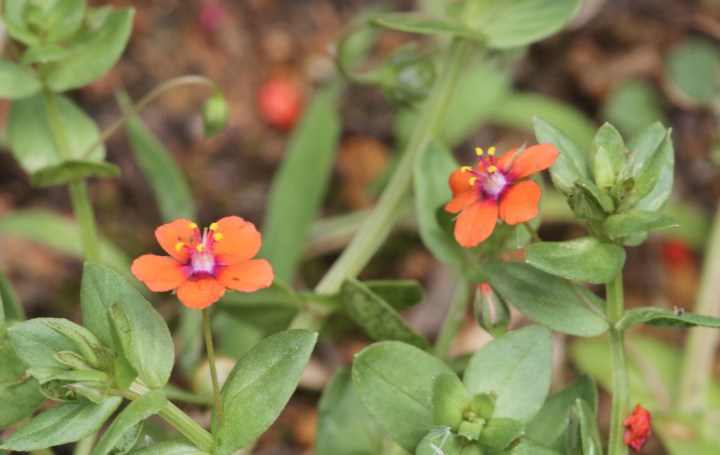
Up close, these flowers are rather pretty. They seem like they would be nice wildflowers. They really just sprawl on the ground though.

tonytomeo's avatarTony Tomeo

P80826It is pretty but pervasive. Actually, I do not really find scarlet pimpernel to be all that appealing, but this is how someone who reads my gardening column in the Santa Ynes Valley News describes it. Embarrassingly, she requested that I discuss scarlet pimpernel while it was more of a problem back on June 7, but I only recently read the message. By now, it is already dying back for autumn, and is completely deteriorated in dry and hot exposed areas. It will be back next spring, and will bloom with tiny peachy orange flowers so that it can throw tiny but ridiculously abundant seed by summer before anyone notices. Flowers can be other colors in other regions. The sprawling stems can spread more than a foot wide, and can get up to about ten inches high if sprawling over other weeds. The tiny and soft leaves are arranged in…

View original post 270 more words

Six on Saturday: Eucalyptus

Blue gum earned a bad reputation for all species of the genus decades ago. It really is as massive, messy, combustible, unstable and structurally deficient as reputed. Some find its foliar aroma to be objectionable. Fortunately, it is not as invasive as formerly alleged. It is common only because it was planted so extensively a long time ago, and is somewhat naturalized in some regions.

Other eucalypti are more appropriate to landscape situations than blue gum, which is #6 below. #3 and many others are now classified as Corymbia, rather than Eucalyptus. Genus is omitted for these Six.

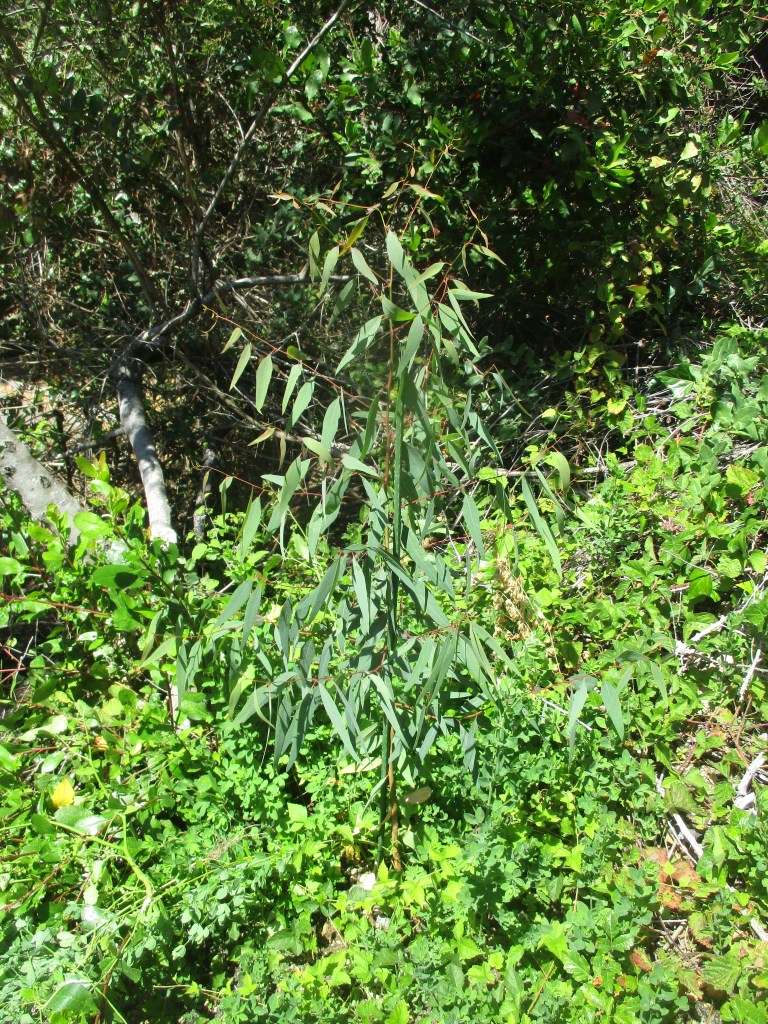
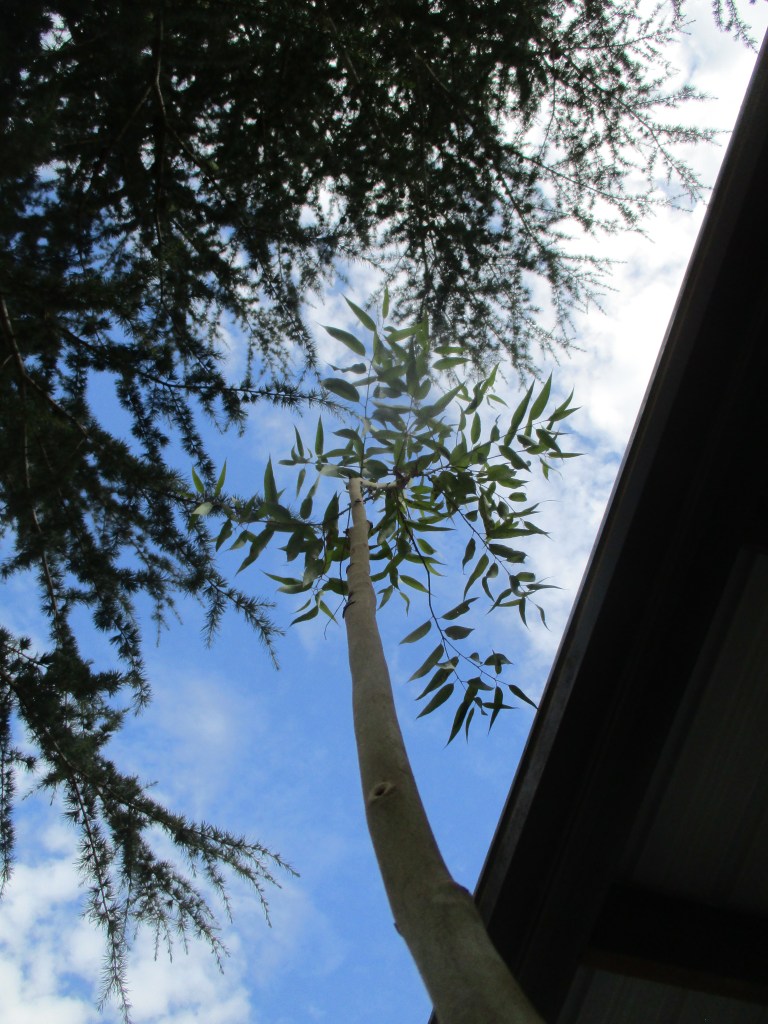
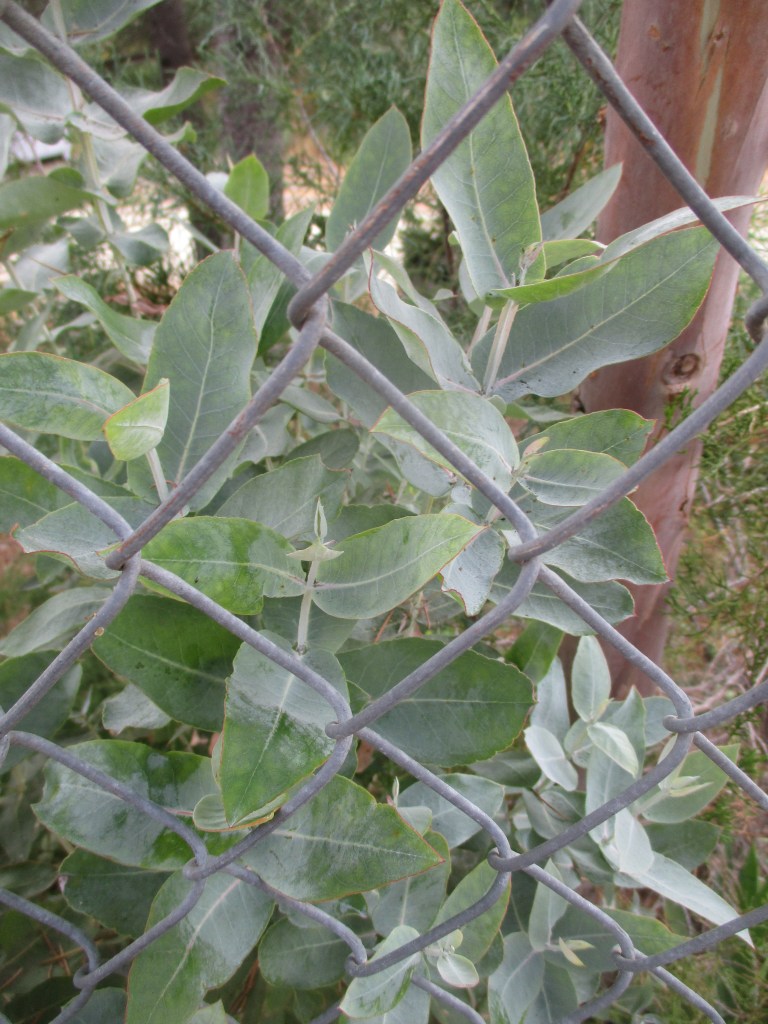
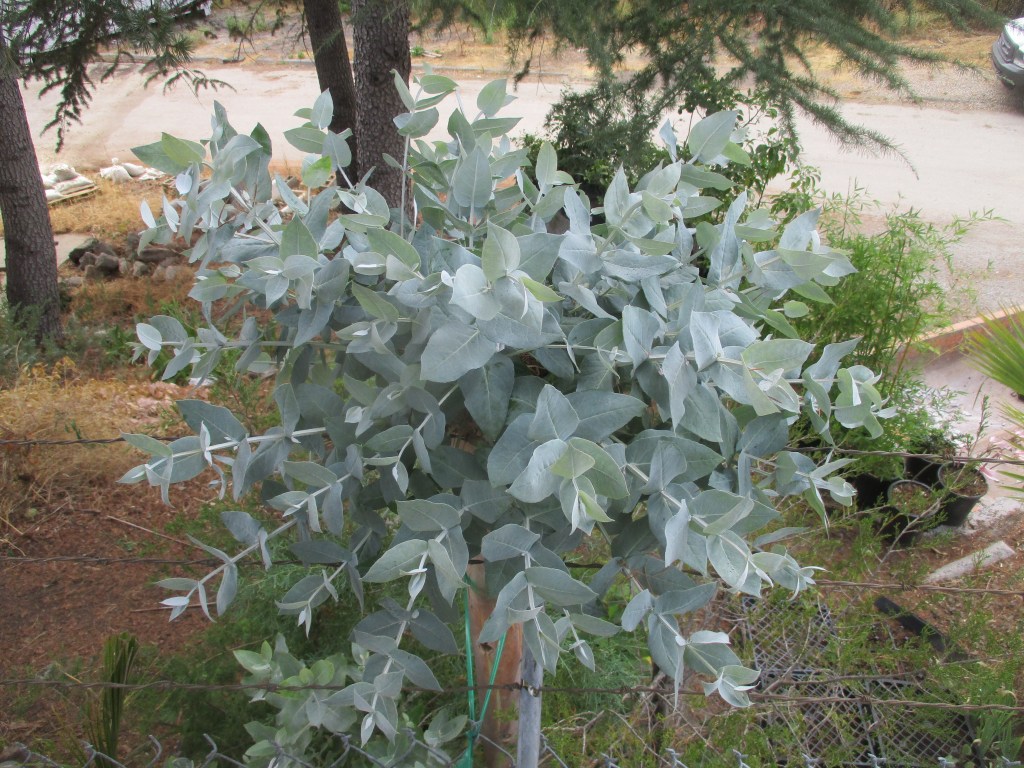
1. pulverulenta or cinerea is the only eucalyptus that was here when I arrived. I learned this species as ‘cinerea’. However, the correct designation seems to be ‘pulverulenta’. #2 should match.

2. cinerea or pulverulenta, as mentioned above, was supposed to match #1. It was labeled as cinerea. I thought that #1 is cinerea. I still do not know which is cinerea and which is pulverulenta.

3. sideroxylon is the first tree I planted in 2021. For such a dinky tree, it already has quite a history. I gave it to my colleague who appreciates the distinctively dark and coarsely textured bark.

4. citriodora is as goofy as it looks. It is about fifteen feet tall, with just a few leaves at the very top. Its smooth white bark contrasts with that of #3, which it will be planted close to this winter.

5. globulus ‘Compacta’ gets coppiced to produce aromatic juvenile foliage, but is less aromatic than the straight species, #6. It might be my least favorite eucalyptus, although I am fond of #6.

6. globulus gets pollarded to produce aromatic juvenile foliage, like #5, but on a trunk. It is the eucalyptus that gives all other eucalyptus a bad reputation. Nonetheless, I like its grand stature.

This is the link for Six on Saturday, for anyone else who would like to participate:

https://thepropagatorblog.wordpress.com/2017/09/18/six-on-saturday-a-participant-guide/

Giant Yucca

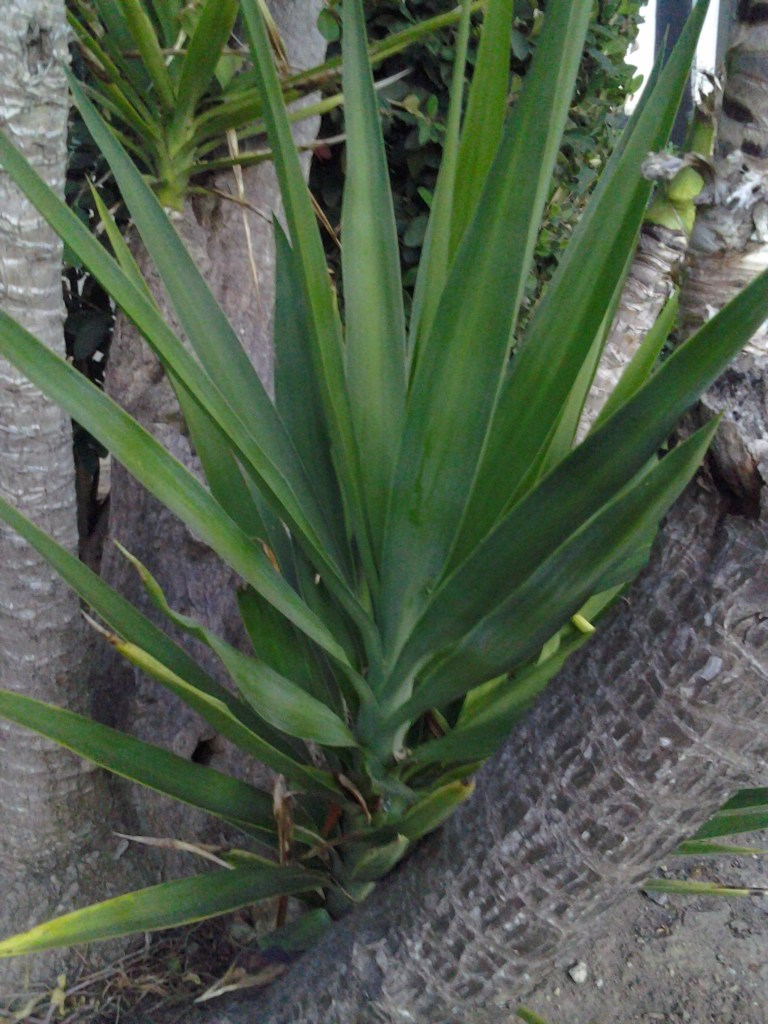
Common giant yucca is uncommonly bold.

Like so many of the plants that became too trendy at one time or another, giant yucca, Yucca elephantipes, had gotten a bad reputation. Some people still consider it to be cheap and common. The real problem though, is that some of the countless giant yuccas planted over the years went into situations that can not accommodate their massively distended trunks. Only a few of the largest specimens are taller than a two story house, and not many get broader than tall. However, their several sculptural trunks are remarkably bulky and flared at the ground.

The somewhat rigid and narrowly pointed leaves can get as long as three feet, and as wide as three inches. Foliage is typically slightly yellowish green, or richer green and a bit floppier in partial shade. Spikes of white flowers that bloom in spring are tall enough to stand just above the foliage, but are usually too high up to be too flashy. Individual flowers are actually only about an inch and a half wide. The bold form and texture of giant yucca work will with other bold plants like giant philodendron, various agaves and various cacti. Shoots and stems of any size that need to be pruned away can be stripped of lower leaves and ‘planted’ wherever new plants are wanted. They only need to be watered regularly until they develop roots like really big cuttings.

Online Plant Purchases Have Certain Risks

Many seeds can be found online.

So many plants that were difficult to obtain years ago are now much more available online. The internet does more than give everyone access to nurseries and seed suppliers that sell online. It also makes it possible to communicate with others who might want to share plants and seeds from their own gardens. The advantages are obvious, but there are innate problems with so many plants being too available.

Before humans started to relocate plants all over the world, plants were much more confined to certain regions. Once relocated to new regions, some plants naturalized and became problematic for the plants that were already there. Exotic (non-native) plants often had the advantage because pests that troubled them back home had not come with them.

For example, pampas grass had been confined to the Pampas region of South America. It was imported to California and Oregon because its fluffy flowers and graceful texture are so appealing. The problem now is that it naturalized, and continues to proliferate and crowd out native plants in coastal ecosystems, without natural pathogens to slow it down. The availability of so many more plants from so many more regions seriously increases the potential for the importation of invasive exotic plants, as well as plant diseases and even insects!

Another potential problem is that common names of plants can be very different in different regions. Now, this can be an advantage when seeds from a common yucca in Lubbock, Texas might actually be from the very uncommon plains yucca (Yucca campestris, which I recently purchases on Ebay!). The problem is that the yucca known as ‘Adam’s needle’ in Georgia may be a completely different species from what is known as such in Pennsylvania, Oklahoma or anywhere else. A plant described as a ‘mimosa’ could be a silk tree, a jacaranda tree, or any of several different acacia trees!

Horridculture – Neapolitan

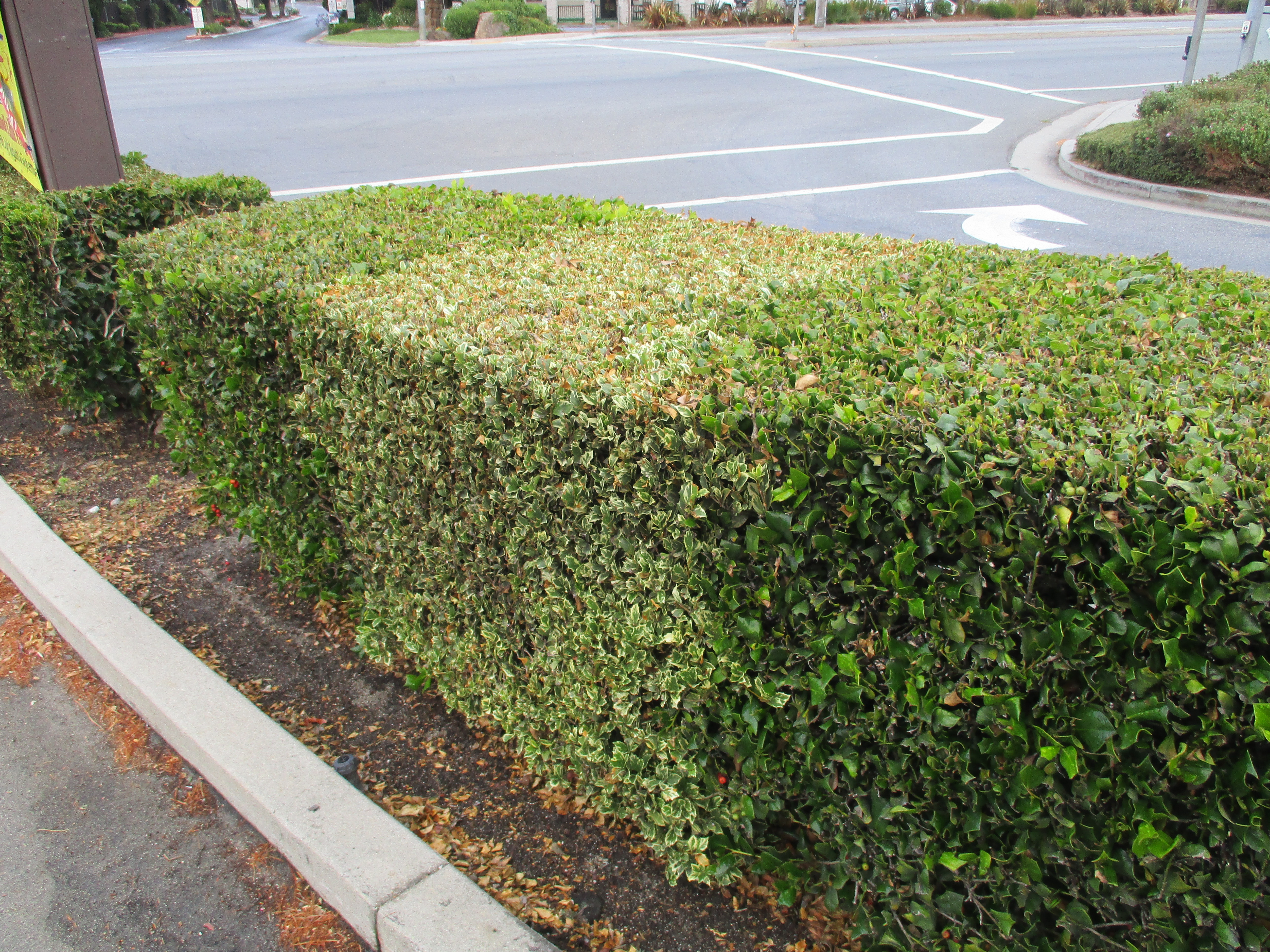
Oh, how cringeworthy. This hedge had not improved in three years, and was already many years old three years ago. So many so-called ‘gardeners’ just do not care.

tonytomeo's avatarTony Tomeo

P80801Baldness was not yet cool while Brent and I were studying horticulture at Cal Poly in San Luis Obispo back in the late 1980s. Nor were hairpieces yet tacky. Consequently, some middle aged men work toupees. As these men aged and grayed, their formerly well matched topees did not.

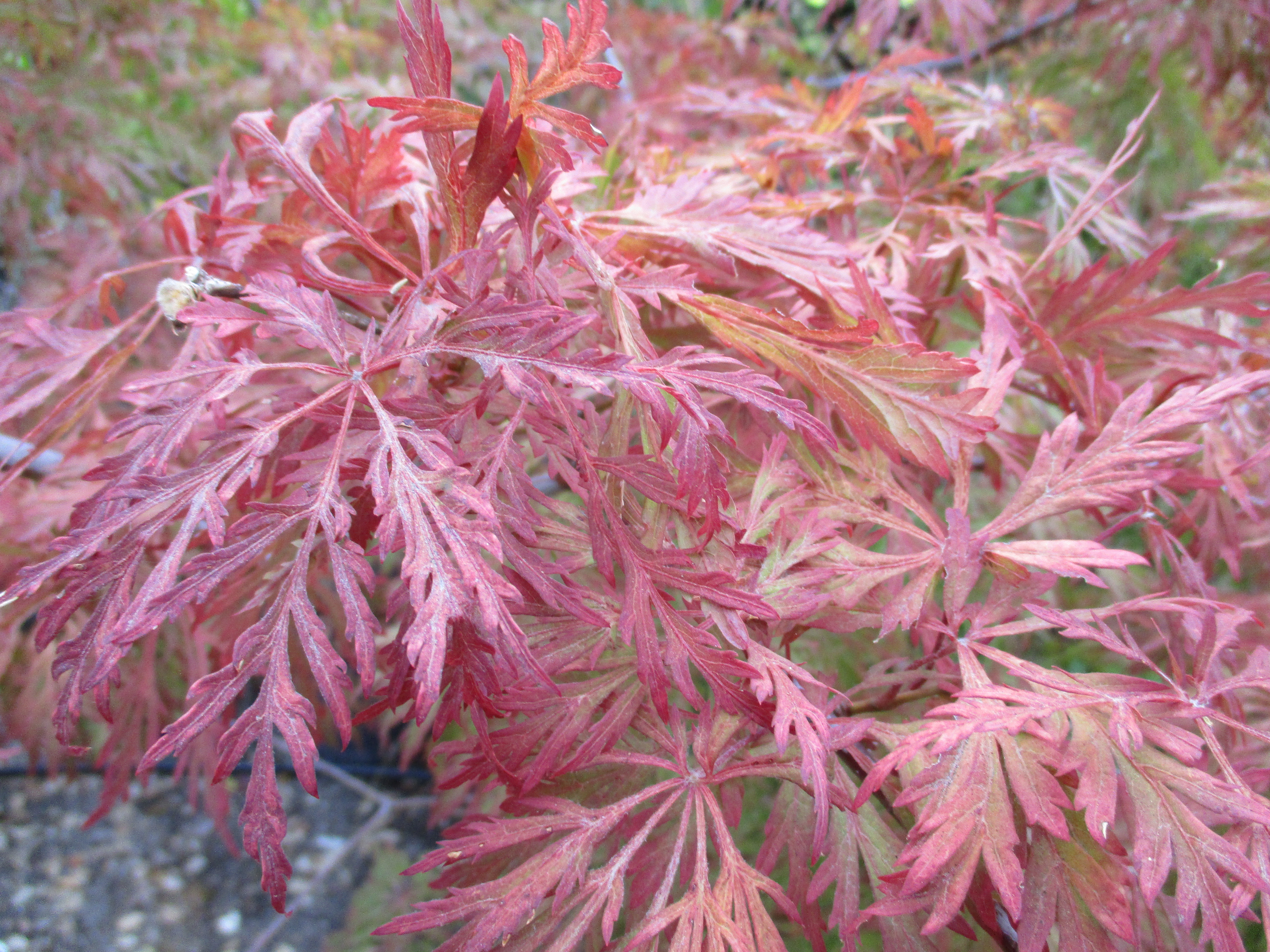
Hedges of Pittosporum tobira ‘Variegata’ are notorious for developing green sports (unvariegated mutant growth). https://tonytomeo.com/2018/07/04/horridculture-mutants/ Because gardeners do not prune these sports out, they become prominent green blotches in otherwise nicely variegated hedges. Pruning large blotches out would only leave big bald spots. That is why such hedges, as well as similarly blotched hedges of other variegated plants, are known as ‘bad toupee’ hedges.

‘Neapolitan’ hedges are a variant of that concept. They are not composed of formerly identical plants that later challenged their respective identities. ‘Neapolitan’ hedges are actually composed of different plant material that has been shorn together. They…

View original post 148 more words

Catmint

Catmint bloom is like faded denim.

Cats prefer catnip. It makes better tea too. Catmint, Nepeta X faassenii, is prettier though. It sprawls over the ground to get about three feet wide, without getting more than two feet deep. Where well exposed, it may not get much deeper than one foot. The aromatic gray foliage is denser than that of related catnip. Its individual leaves are small and furrowed.

Bloom begins with warming spring weather, and continues until cooling autumn weather. Individual flowers are tiny, and suspended on small floral stems. They just happen to be very abundant. Warmth stimulates phases of exceptionally profuse bloom. Floral color is light or pale blue, like faded denim. Shearing to deadhead enhances profusion of bloom.

Catmint works well as a rustic border or a ground cover for small areas. Alternatively, the blue bloom can be a delightful component of mixed perennials, in beds, planters or pots. Deer generally ignore catmint. Bees most definitely do not. They swarm it! ‘Walker’s Low’ is the most popular cultivar. It may be all that is available in some regions. Catmint is sterile, so generates no seedlings.

Mail Order Fakes And Realities

Succulent cuttings are readily available online.

Sea-Monkeys are one of the most famous of mail order scams. Their original $0.49 price was not cheap for children who made the first purchases in 1957. They were nothing like their playful portrayals in comic book advertisements. They were minuscule brine shrimp who were incapable of building castles, playing tennis, or even just smiling for a camera.

Nonetheless, Sea-Monkeys were lucrative for their enterprising inventor. For many such capitalists, profit is the priority. It is no different for the many mail order scams that involve seed and plants. They range from the rare monkey face orchid to multicolored tomatoes. Consumers get either nothing or random seed or plants that are nothing like they expect.

Most mail order scams that involve seed or plants are on e-commerce sites. They mostly include popular buzz words such as ‘rare’, ‘organic’ and ‘bonsai’, even in regard to plants that are not conducive to bonsai culture. Associated illustrations are obviously faked, but somehow convince enough consumers to sustain their deceptive mail order exploitation.

Fortunately, the vast majority of online seed and plant suppliers are very trustworthy and reputable. They provide precisely what they claim to provide. Their commodities become available prior to the season that is best for delivery. Then, delivery happens early during the regionally best season for planting. Products are not marketable out of their seasons.

Many seed catalogs and plant catalogs enact more than seasonal or climactic limitations to their sales. For various reasons, particular species are not admissible within particular states or counties. Some may be potential vectors of disease. Some may be too likely to naturalize and interfere with natural ecosystems. Species limitations are fortunately rare.

Much of the seeds and plants that are available from e-commerce sites such as eBay are from the home gardens of those selling them. The sellers are generally quite trustworthy and reputable, but can make mistakes. It is easy to misidentify some species, especially by common names. Also, such sellers are very often unaware of marketability limitations.

Premature Color

Like the recycled article from yesterday at noon, this article demonstrates how different the weather had been by this time in 2018.

tonytomeo's avatarTony Tomeo

P80819Halloween is my all time least favorite of the fake holidays. I will not elaborate on this now, but will say that the appearance of Halloween decorations as soon as the Fourth of July decorations were outdated on the fifth makes me dislike Halloween even more. Halloween is an autumn pseudoholiday. It is not meant for summer!
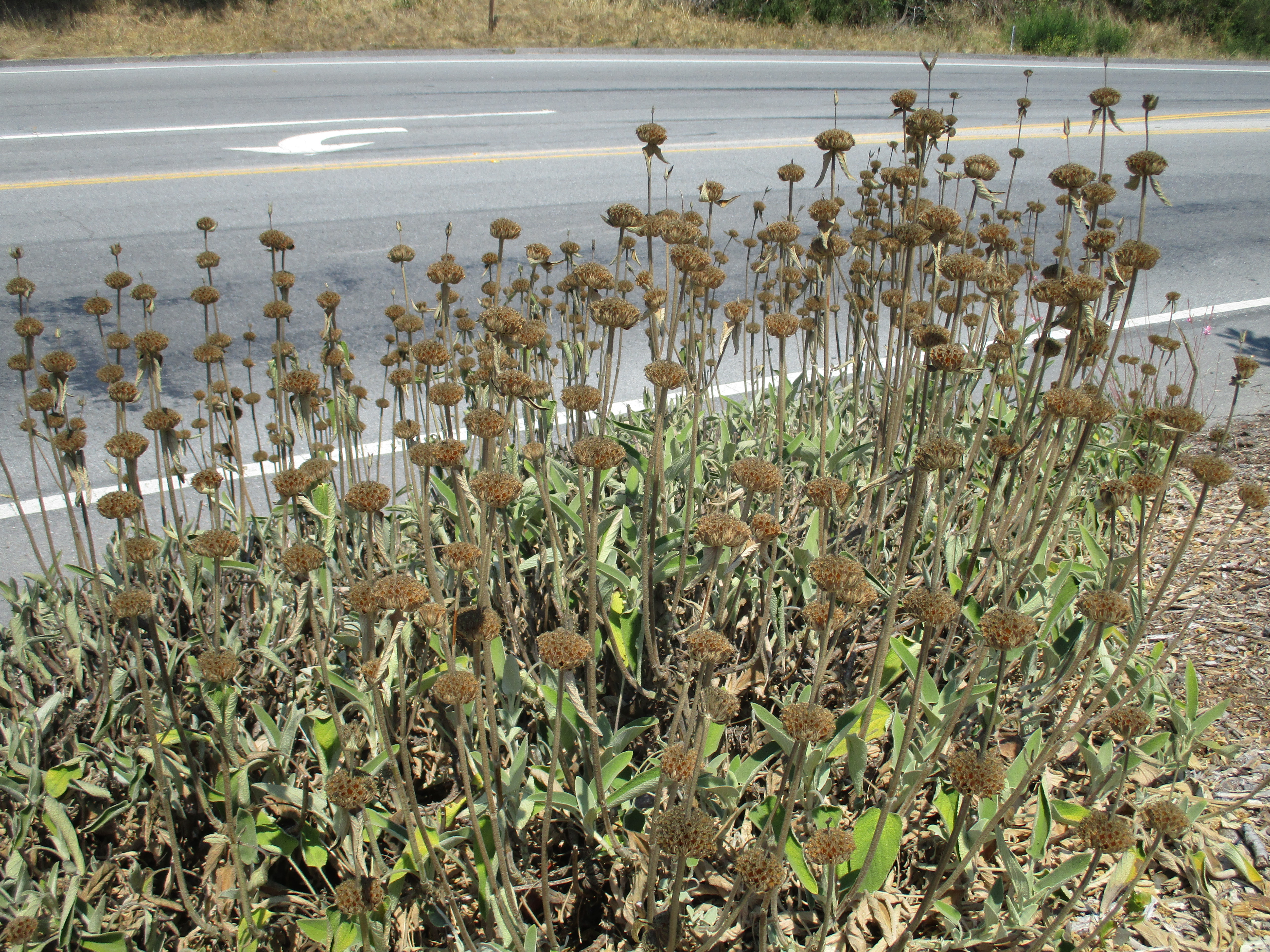
Autumn foliar color, or fall color, is known as such because it happens in ‘fall’ . . . or autumn. It is not meant for summer any more than Halloween is.
This little Japanese maple did not get the memo. Perhaps it thought that no one would notice if it got an early start. It was a nice bronze in spring and the early part of summer, and somehow managed to maintain good color without roasting when the mild weather so suddenly became more seasonably warm a while back, but is now turning…

View original post 148 more words

The Bad Seed

This recycled article happens to demonstrate how advanced the season was in 2018. Summer is lasting a bit longer this year.

tonytomeo's avatarTony Tomeo

P80818KThis salvia would probably look badder without it. Yes, that’s badder and not better. I mean, if all these slightly unsightly seeded stems were cut back, then the even more unsightly deteriorating foliage below would be more prominent. When one looks at it that way, the bad seed suspended above does not seem all that bad.
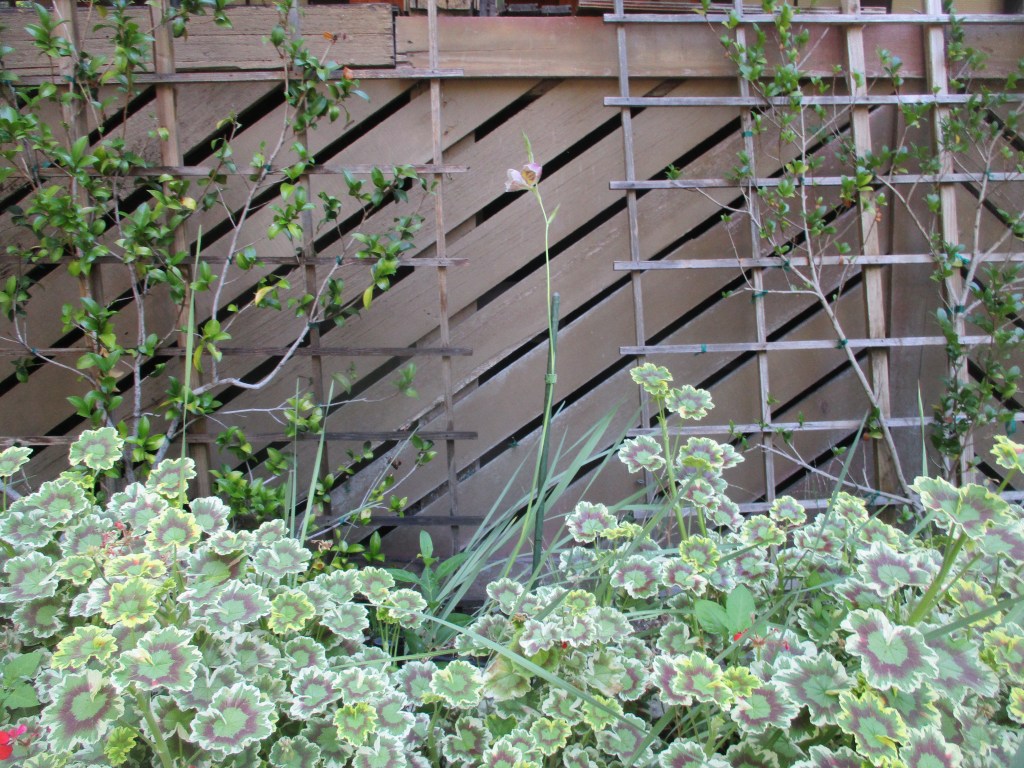
It is doubtful that the ‘gardeners’ who ‘maintain’ this site put that much thought into it. They are, after all, the same who ‘maintain’ the firethorn that is pictured in this article from June 27 (The Wrong Plant In The Wrong Place https://tonytomeo.com/2018/06/27/horridculture-the-wrong-plant-in-the-wrong-place/ ). There were probably too busy botching something else to notice that this salvia is in need of botching as well.

There is some unpruned black sage nearby that displays similar but smaller seeded structures on more irregular and arching stems, rather than vertical stems that stand upright. They too are…

View original post 147 more words

Six on Saturday: Gladiolus papilio

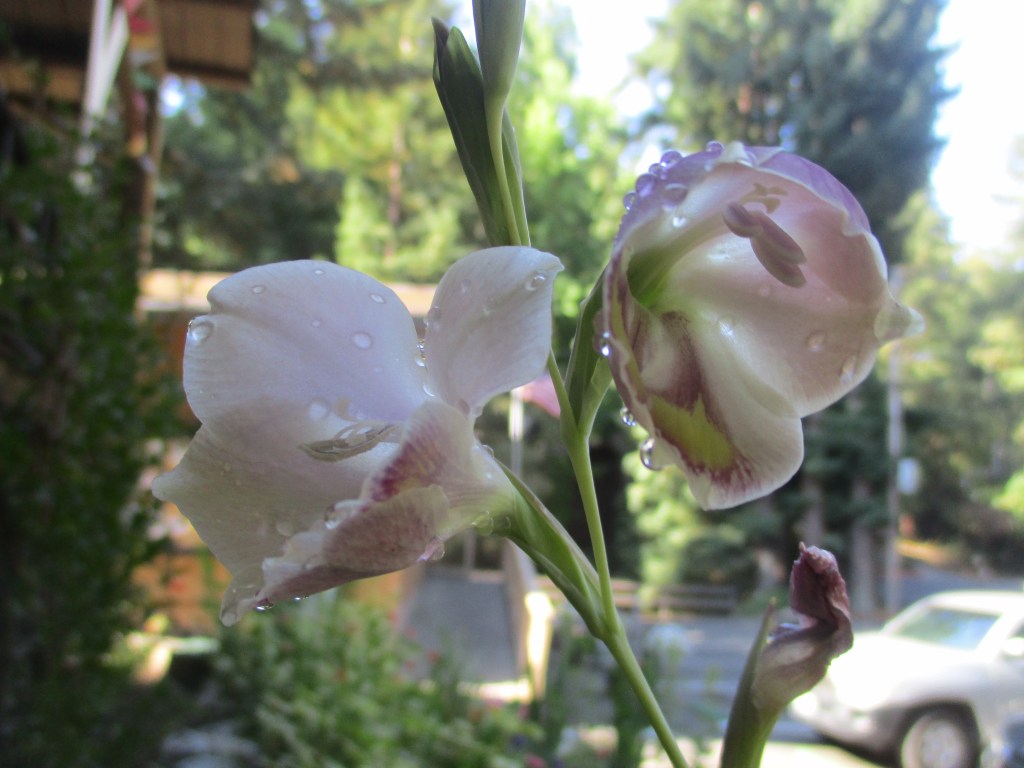
Gladiolus papilio was the topic of my Six on Saturday post for the tenth of November in 2018, when the author of Tangly Cottage Gardening Journal sent me bulbs from one of her landscapes. Embarrassingly, that was almost three years ago. They were properly installed into a landscape here, and grew well for their first season. However, they needed to be relocated as their bed got renovated. They had been in no mood to bloom during recovery. Then, while I was away, a colleague staked a single unfamiliar bloom.

1. Here it is! This is the first bloom of the RAD Gladiolus papilio since it was planted here almost three years ago! I know it looks silly staked like this, but it would not stand upright otherwise.

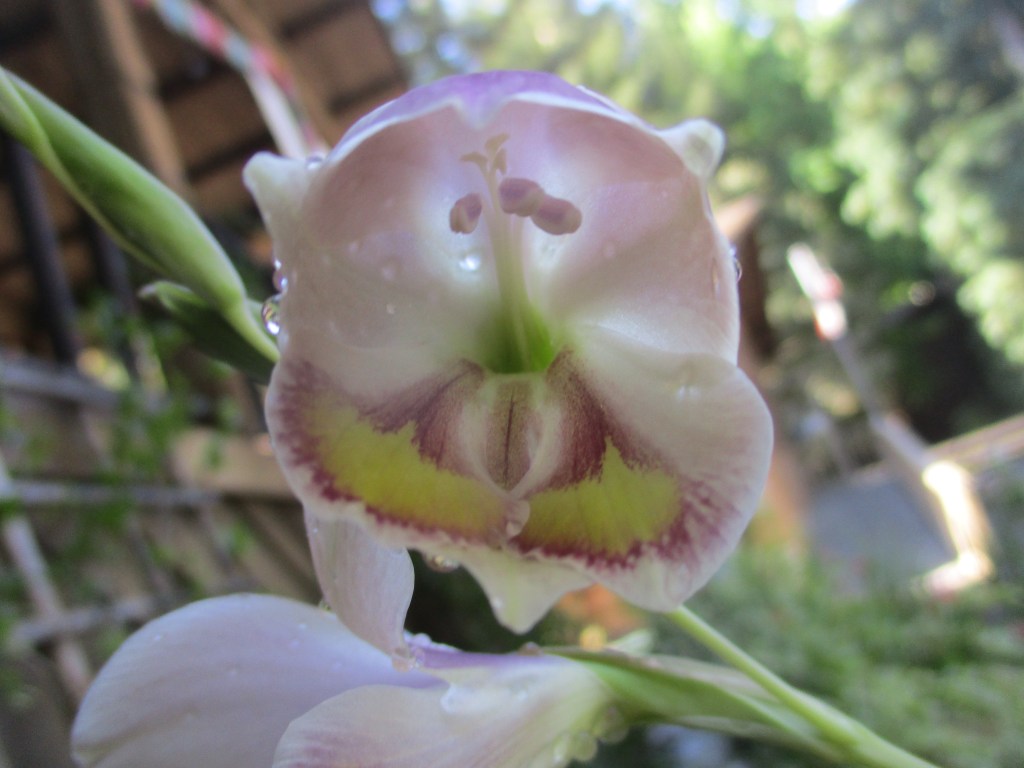
2. Bloom is exemplary. Well, I believe that it is. I am unfamiliar with this species, so studied it and pictures of it online. It would have been nice to get a picture before the first floret shriveled.

3. The exteriors of the florets seems to be almost light gray blushed with pale purple. Upon closer inspection, they seem to be pale purple with pale white. I am certainly not an expert on color.

4. The interiors exhibit a slightly more distinct pattern with the same colors, as well as a pair of yellow blotches in front where pollinators can see them. I do not know who the pollinators are.

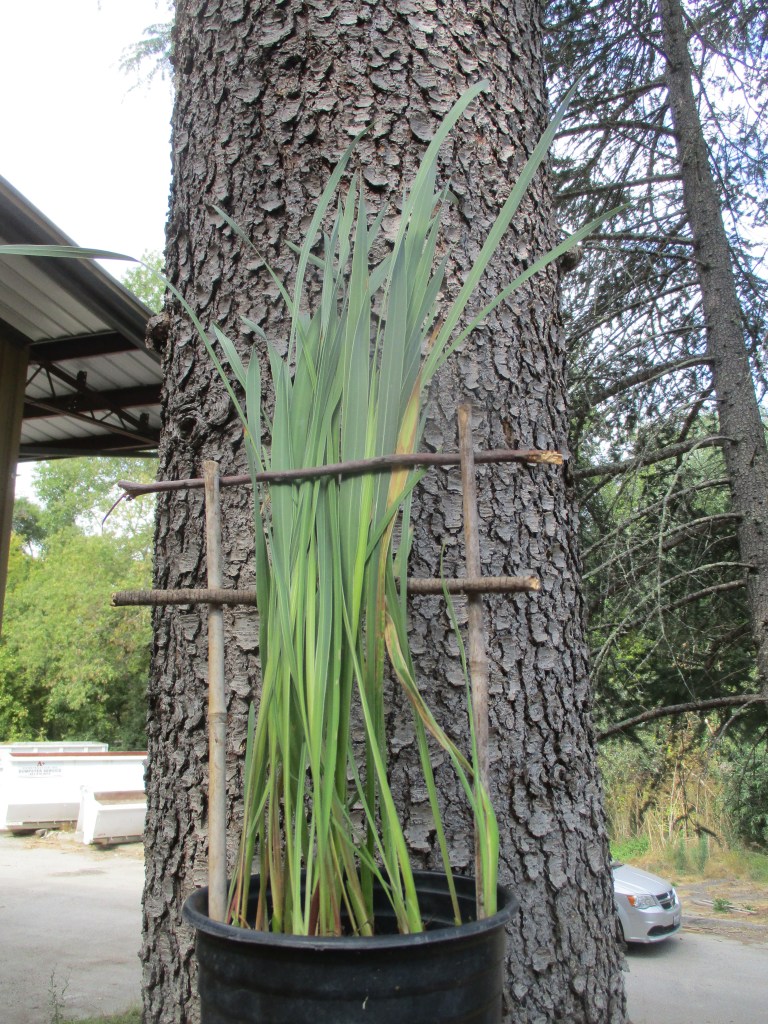
5. A few bulbs got canned so that they can eventually get planted directly into my garden, without getting dug from where the rest of them live. They were staked like this only for this picture.

6. Rhody does not understand what all this fuss is about. He would be more interested to read about the many other dogs, kitties and, of course, Skooter of Tangly Cottage Gardening Journal.

This is the link for Six on Saturday, for anyone else who would like to participate:

https://thepropagatorblog.wordpress.com/2017/09/18/six-on-saturday-a-participant-guide/