 Bare root fruit trees will be available in about a month. It is probably my favorite time of year for going to nurseries. (Since I grow just about everything I want from bits of landscape debris, I do not often go to retail nurseries.) It is also rather frustrating to see what sorts of bare root material are popular nowadays, and what sorts are not. Horticulture has gotten so ridiculous!
Most of the formerly common cultivars of fruit trees that I remember are no longer available. They were common for a reason. They perform well here. Retailers used to select cultivars for their respective regions, instead of pimping out weird new but unproven cultivars, or just taking the same faddish cultivars that get sent to other stores within a vast chain of big box stores.
One of the weirdest of fads are multi-grafted fruit trees and roses.
Multi-grafts are certainly not new technology. Back when horticulture was taken more seriously, fruit trees for home gardens (which might be the only ones of their kind in their respective gardens) were sometimes, if needed, outfitted with a secondary scion of a pollinating cultivar. The pollinator could be pruned low and subordinated, as long as it bloomed with a few flowers.
Most of us preferred to simply plant two separate trees that could pollinate each other. If one was less desirable than the other, it was just maintained as a smaller tree so that it would not occupy so much space that could be utilized by more desirable types. Each tree had its own uncrowded area. If one succumbed to disease, it did not necessarily affect those associated with it.
Multi-graft trees are not so easy. If the trunk of a multi-graft pear tree gets infested with fire blight, all the scions grafted to it succumb. Because almost no one prunes them properly, the most vigorous cultivars dominate and crowd the less vigorous. Even well pruned trees are always asymmetrical because each cultivar exhibits a different growth rate and branch structure.
Multi-graft rose standards (trees) just look weird and freakishly unnatural. Pruning must ensure that one cultivar does not crowd out the other, just like for fruit trees. The multi-graft rose in the picture above was planted with three others just like it. Two of them crowded out one of their two scions. It would have been easier to simply plant two in white and two in burgundy.
Multi-graft plants are useful only if ground space is very limited, but air space is not. For example, such a tree planted in a hole in a deck can extend limbs over the deck where other trees can not live. If maintained properly and separately, each part can produce its share of fruit in season. I once did this with a pear tree that was espaliered on a fence over a concrete driveway.
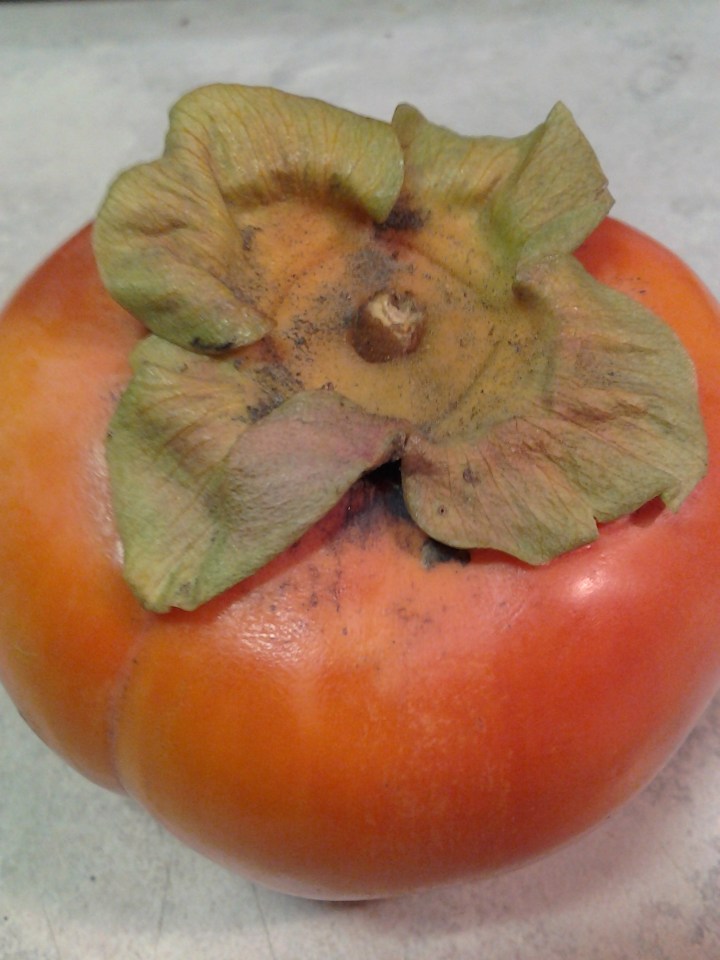 A mature persimmon tree, Diospyros kaki, is often too much of a good thing. The fruit is both big and abundant as it ripens this time of year. Much of the fruit in taller trees is out of reach. Nearly ripened but somewhat firm fruit can be picked and shared with neighbors for a while, but must be picked immediately once completely ripe. Otherwise, it falls and makes a squishy mess that can not be raked up! Nearly ripe fruit ripens easily off the tree. Individual fruits only need to be spread out in a single layer to limit molding.
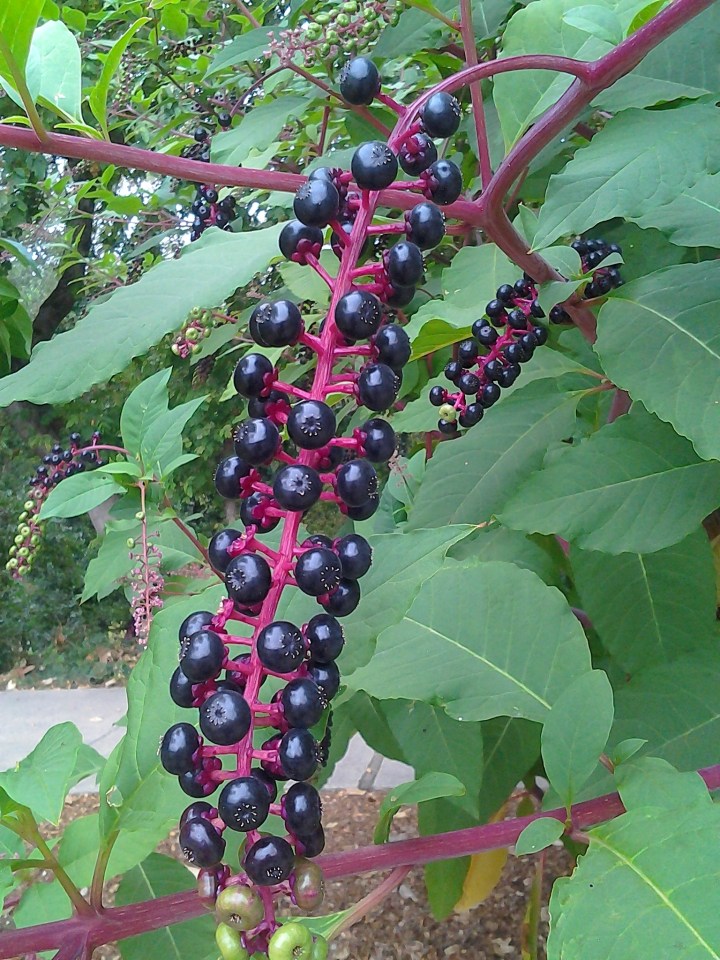 Before the colorful foliage of autumn falls and gets raked away, a few types of berries and fruit start to provide a bit of color to last into winter, or at least until birds and other wildlife eat them. Technically, the most colorful berries are actually intended for the birds, both those that overwinter and those that migrate south for the winter. The berries are designed by the plants that produce them to both entice birds, and to reward them for dispersing the seeds within.
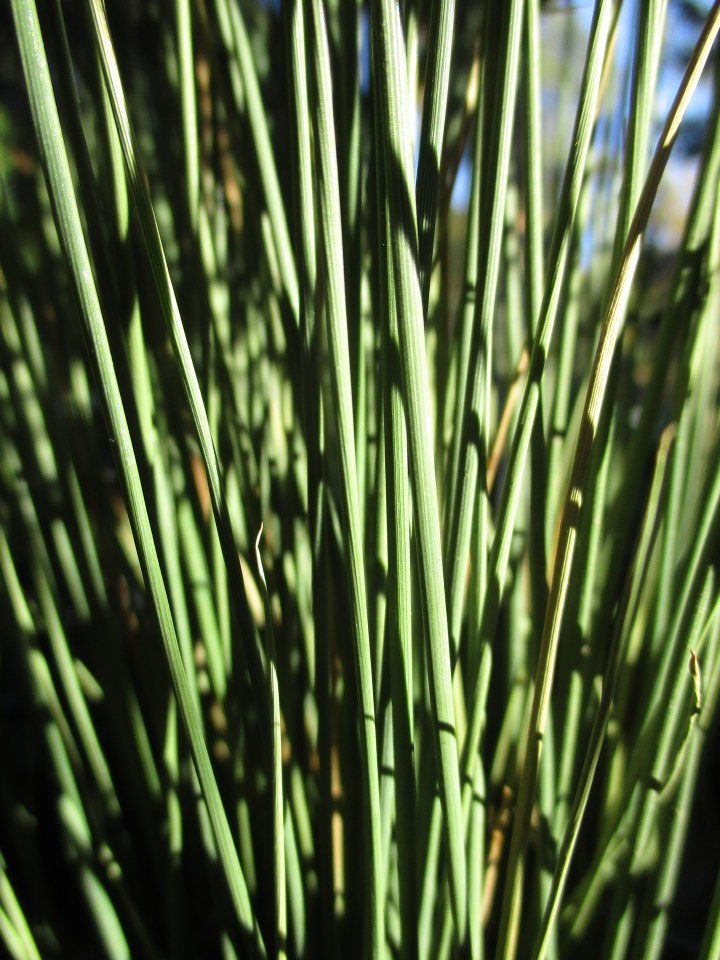 Not to be confused with the Canadian rock band from the 1970s, this rush, Juncus patens, is native to riparian areas between western Washington and San Diego County. It is also known as the common rush because it is, obviously, the most common species of the genus on the West Coast. It is only occasionally planted intentionally, but more often sneaks into well irrigated landscapes.
 Autumn is a time for planting partly because it is when many plants are beginning their winter dormancy. They are, or will soon be, less active than they would be at any other time of year. Some may not start to grow again until after winter ends. Others will want to secretly disperse their roots through the rainy winter weather, while merely appearing to be dormant from above the soil level.
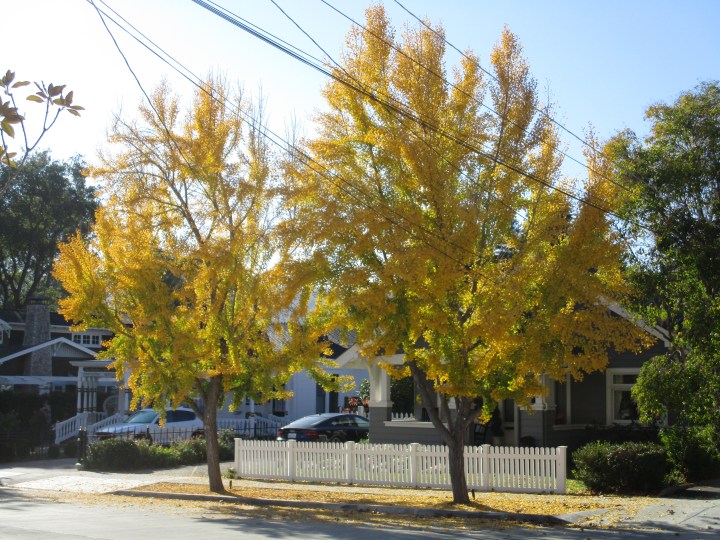 Much of my work involves street trees. They need more of my kind of attention than most other trees. They must conform to more restrictive limitations. They endure more abuse. They are the most prominent trees on urban properties. Because some are assets of their respective municipalities, they are more stringently protected by local ordinances than other trees are.
 There have been only three hints at precipitation since last spring.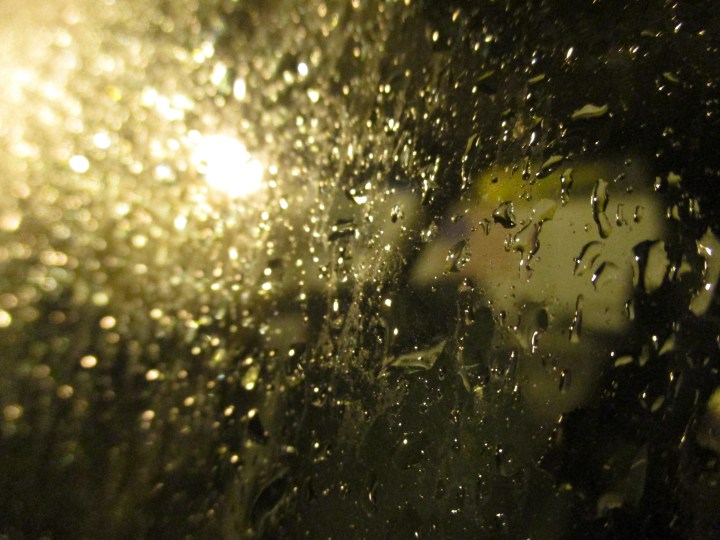




 Out in rural chaparral regions, where water is scarce, the big and bold California sycamore, Platanus racemosa, somehow seems to find the spots where groundwater is not too far below the surface of the soil. It is technically a riparian tree, that is just as comfortable competing with cottonwoods and willows along forested rivers and floodplains. It eventually get too big and messy for refined urban gardens, but is somewhat popular nonetheless.

