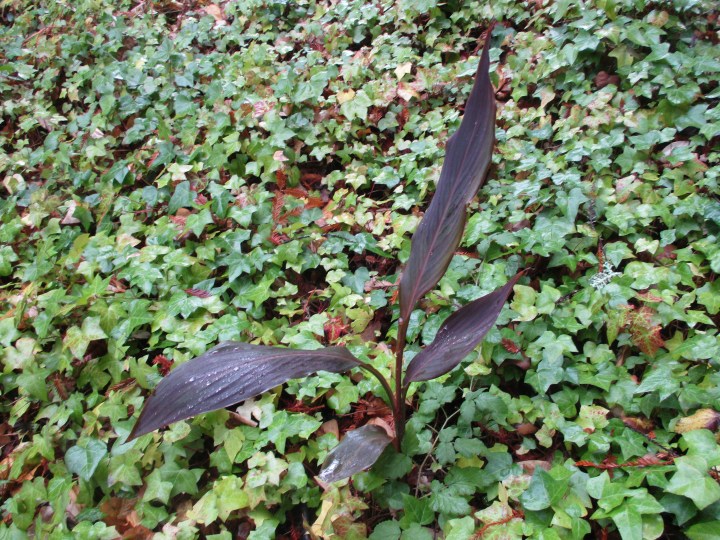
There is quite a bit of open space in some parts of the landscapes. It is not as if the landscapes are lacking much. There just happens to be a few spots where a bit more could be added. This expanse of healthy English ivy was already appealing, but lacked interest.
There is also quite a bit of spare plants out and about in the landscapes. It is not as if there is anything wrong with spare plants. There just happens to be too many of them. These cannas got overgrown and crowded within their original colony in another landscape, so needed to be divided and thinned out.
We are not a so-called ‘landscape’ company, which profits from the removal of some plants, and the installation of others. There is no incentive to dispose of as much vegetation as we could bill a client for. Nor is there any incentive to install as many new and expensive plants as we could fit into any available space. It is not a ‘business’.
To the contrary, it is in our own best interest to exploit resources that are already available to us. For example, when we thinned out these crowded cannas from one situation, we reassigned them to other situations where they could grow and become assets to their new landscapes. Also, viburnums that were removed from one site were reassigned as hedges in other situations.
We will be doing more of this sort of reassignment now that the weather is cooler and rainier, and the plants that will get relocated are dormant. Carpet roses that must be removed from the boundary of a playground because they are too thorny will be relocated to a broad roadside, where they can grow wild. They will be replaced with lily-of-the-Nile that is crowded elsewhere.



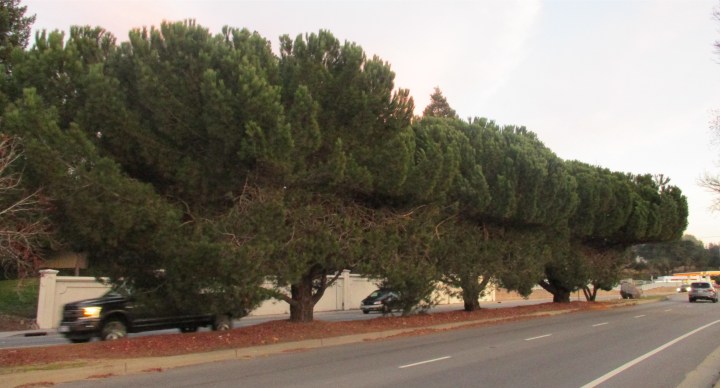 Even though it can get about fifty feet tall and wide, Italian stone pine, Pinus pinea, often gets planted as a small living Christmas tree into confined urban gardens. It gets so big so fast that it can get to be a serious problem, as well as expensive to remove, before anyone notices. It is really only proportionate to large public spaces such as parks or medians for big boulevards. The bulky trunks typically lean one way or another. The long limbs spread laterally to form an unusually broad and flat-topped canopy.
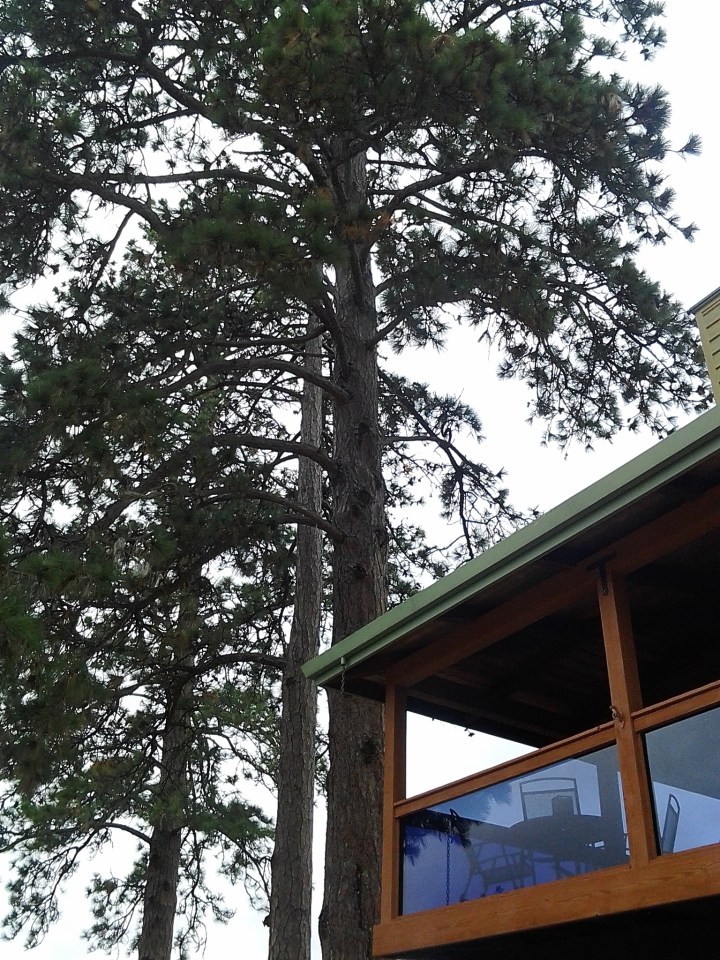 Christmas trees are like vegetables. Really, they are like big vegetables that do not get eaten. They are grown on farms, and then harvested and sent off to consumers. Although they smell like a forest, and they are descendents of trees that naturally grow in the wild somewhere, there is nothing natural about their cultivation. In fact, most are grown a very long way from where their kind are from. Therefore, bringing a cut Christmas tree into the home takes nothing from the wild, and does not interfere with nature any more than eating vegetables does.
 Cher explained a long time ago that a half-breed is nothing to brag about. Some of us just don’t get it. A few clients still introduce me to their weirdly bred stone fruit trees as if they are both justification for great pride, as well as something that a professional horticulturist of the Santa Clara Valley has not already encountered a few thousand times. I at least try to act impressed.
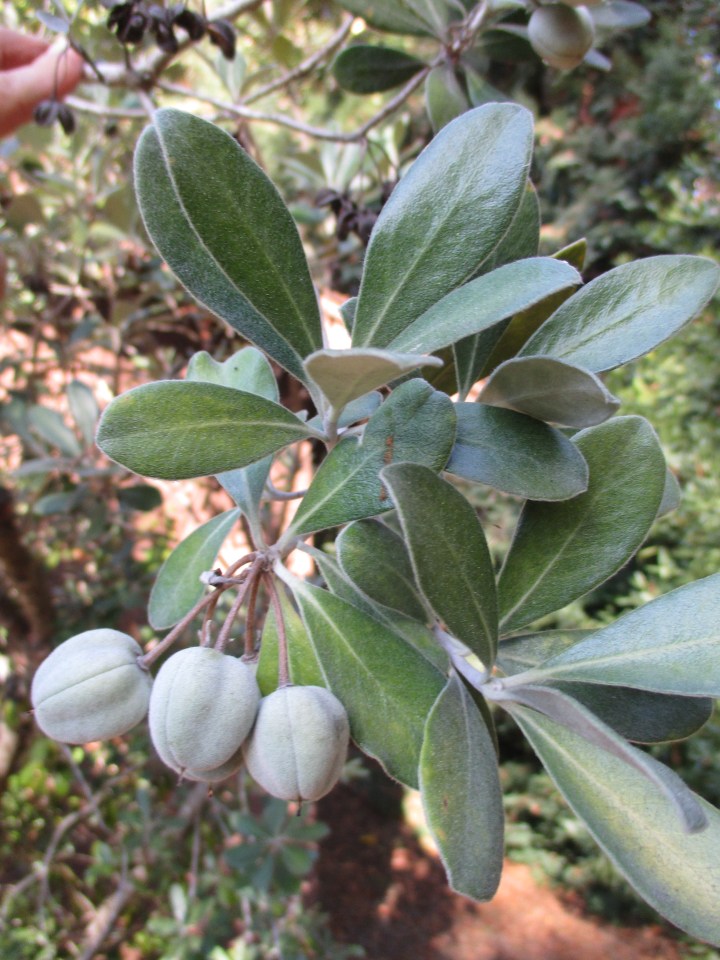 Of all the popular pittosporums in Western landscapes nowadays, the karo, Pittosporum crassifolium, is certainly not one of the most familiar. It might have been one of the earliest to have been popularized here though. Because of its resiliency to coastal climates, it was a common hedge in San Francisco during the Victorian Period. With minimal watering, it did well farther inland too.
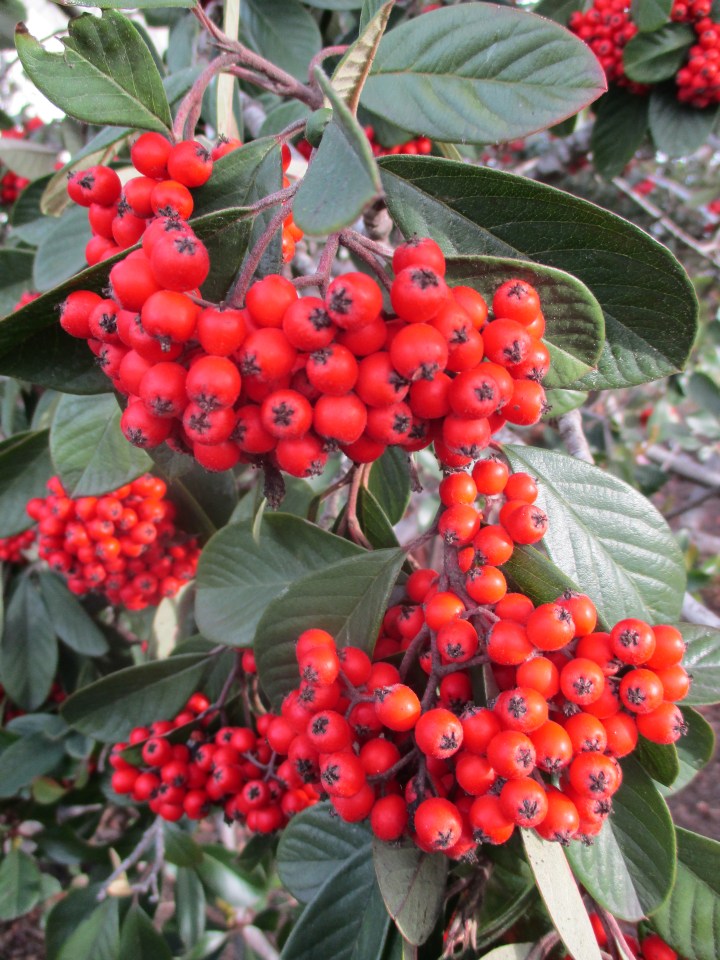 Nothing lasts forever. Spring flowers fade. Summer fruit gets eaten. Fall color falls from the trees and gets raked away. Berries and other small fruits that ripen to provide a bit of color through late autumn get eaten by birds and squirrels through winter. Every type of berry and every season is unique. It is impossible to predict how long particular berries will last through any particular season.
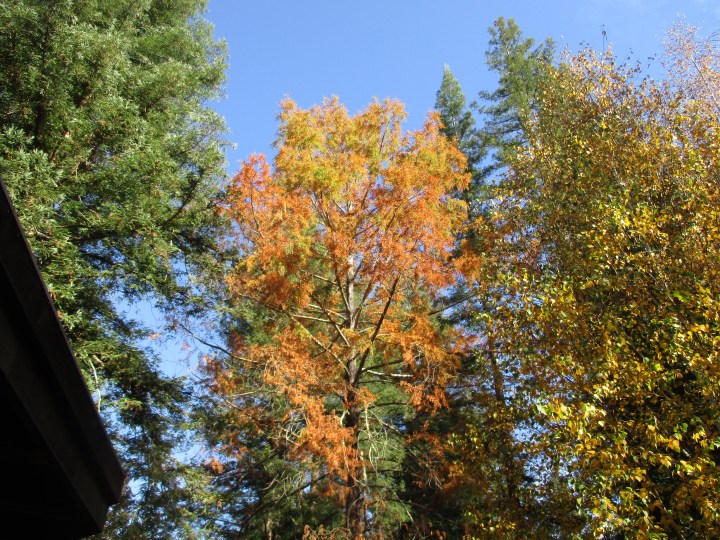 Well, that is certainly a contradiction of terms. One might say it is an oxymoron. Decades ago, it really was how we classified what we now know more simply as ‘deciduous conifers’. There are not many of them. Ginkgo is a gymnosperm like conifers are, but is not really a conifer. Otherwise, there are only five other types of deciduous conifers, which defoliate through winter.