John the Baptist did not really eat orthopteran insects out in the desert. The locust he ate were the beans of the carob tree, Ceratonia siliqua. They are actually quite nutritious. Supposedly, they are known as locust because they resemble the elongated abdomens of the insects with the same name. A few other related trees that also produce beans are collective known as such.
Robinia pseudoacacia happens to be known as black locust, even though there is nothing black about it, and the tiny and papery beans do not even remotely resemble insects. Supposedly, it arrived with Gold Rush prospectors who wanted something of their homes in Eastern North America. It naturalized aggressively, and is now an invasive exotic species in much of the West.
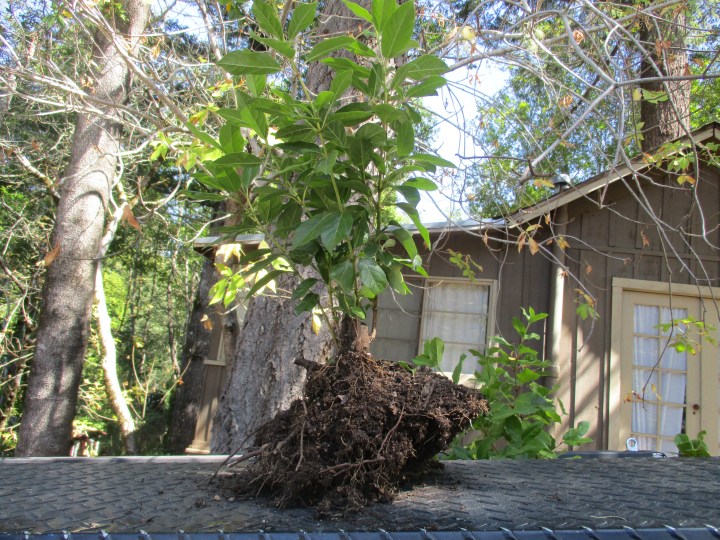
We tolerate a few at work. They are too pretty to cut down without a good excuse. However, one gave us a good excuse when it fell last winter. It was notably polite about it, by falling into a gap between two roofs that a cat could jump across. Damage was very minimal. Nonetheless, the tree and its destabilizing associates needed to be removed. They are gone but not forgotten.
1. Thorns of black locust only look blurry in this picture. They are wickedly sharp! The sharpest are on the most vigorous stems, which is exactly what the freshly cut stumps here generate.
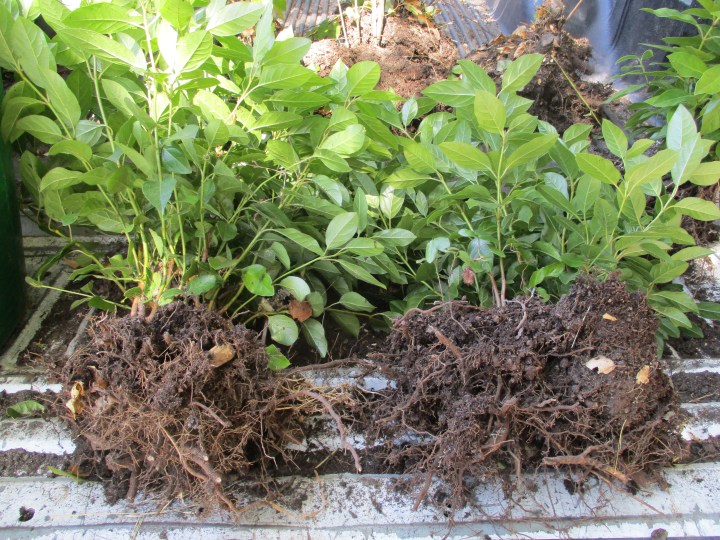
2. Thickets of suckers (or watersprouts) like these developed where black locust trees were cut down last winter. Most developed on freshly cut stumps. Many emerged from random roots.
3. More than half of the suckers from the formerly impenetrable thicket around the stump at the center of the picture were removed to relinquish space for the lauristinus in the foreground.
4. A few bay trees got cut down with the black locust trees. I wanted them coppiced, but was away when they instead got VERY badly pollarded. Oh, the shame! (I will coppice them later.)
5. As nasty as black locust is, it has a few attributes. Spring bloom resembles that of white wisteria, and is almost as fragrant. This finely textured pinnately compound foliage is quite elegant.
6. Their high and open canopies provide nice shade too. It is just enough for warm summer weather, but not too much to exclude turf grass and understory plants that tolerate partial shade.
This is the link for Six on Saturday, for anyone else who would like to participate:
https://thepropagatorblog.wordpress.com/2017/09/18/six-on-saturday-a-participant-guide/
 It seems that everyone who has ever experienced the seductive yet powerful fragrance of gardenia, Gardenia jasminoides, wants to grow it, but very few actually can. Gardenias like warmth, but prefer more humidity than they get here, which is why they seem to be happier in partial shade, in atriums, or in urns that can be moved out of harsh exposure during summer. In such sheltered spots, aphid, scale and sometimes whitefly can be problematic.
 Ready or not, it will be autumn in just a few days. Formal hedges can be shorn one last time if they need it. They will not grow much until spring. Actually, photinia and the various pittosporums should not be shorn much later than now if they exhibit any dieback. Some of the diseases that cause dieback are more likely to infest freshly cut stems during rainy weather. Citrus and plants that can be sensitive to frost should not be pruned later, since pruning can stimulate new growth that will be more sensitive.
 Where I lived in town, the backyard was surrounded on three sides by fences, with the house on the only unfenced fourth side. These were the sort of fences that were common in suburban neighborhoods. They kept children and dogs in or out of adjacent gardens, and probably provided some sense of privacy, although I never understood why we all needed such privacy there.
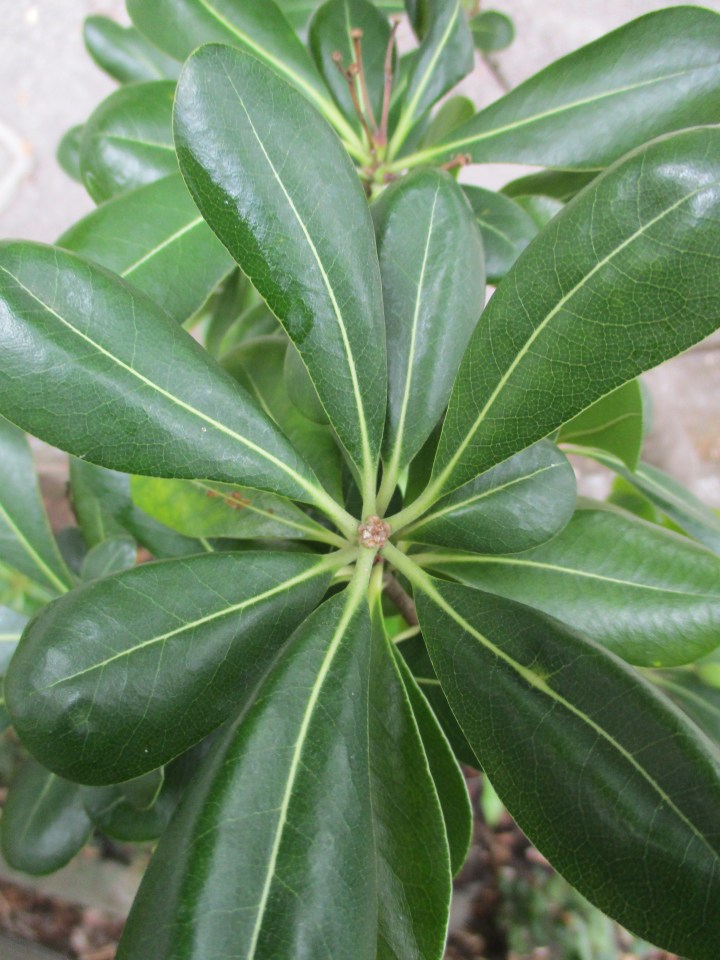 A surplus of common names seems to be a common theme for many plants that we thought we knew the names of. The simple Pittosporum tobira, which might be known here by its Latin name, might instead be known as mock orange, Australian laurel, Japanese pittosporum, and Japanese cheesewood. Its native range is about as diverse, including Greece, Japan, Korea and China.
 The climate here is pretty cool, at least in winter. Right now, it is pleasantly warm. It does not often get uncomfortably cold or hot, and when it does, it does not stay like that for too long. In between the warmest days of summer, the nights typically cool off nicely. In between the coolest nights of winter, the days typically warm up nicely. Humidity is normally minimal. Rain is adequate in season.
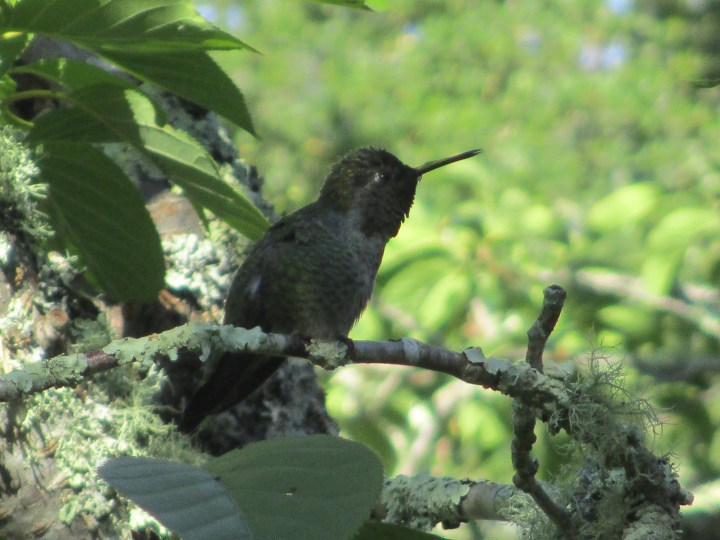 Wildlife is a topic that is notably lacking from my articles. I mention only that which must be ‘escorted’ out of the landscapes, like


 Not only does it start to bloom late in summer, but as the name implies, four o’clock, Mirabilis jalapa, blooms late in the afternoon to attract nocturnal moths for pollination overnight. By morning, the white, yellow, variable pink or rarely pastel orange flowers are closed, and their yummy fragrance is gone. Individual flowers often display irregular stripes or blotches of alternate colors, and can be divided into zones that are shaped like slices out of a pizza. Plants get nearly three feet high, but then die to the ground with the first frost. They regenerate from big tuberous roots as winter ends, and can seed profusely.
