 Urban homes are innately close to other urban homes. Newer homes are even closer to each other than older homes are, and are more imposing. Establishing or maintaining privacy can be a challenge, especially for high windows in narrow spaces. Even though home builders prefer to place windows strategically, some windows invariably face into neighboring windows or gardens.
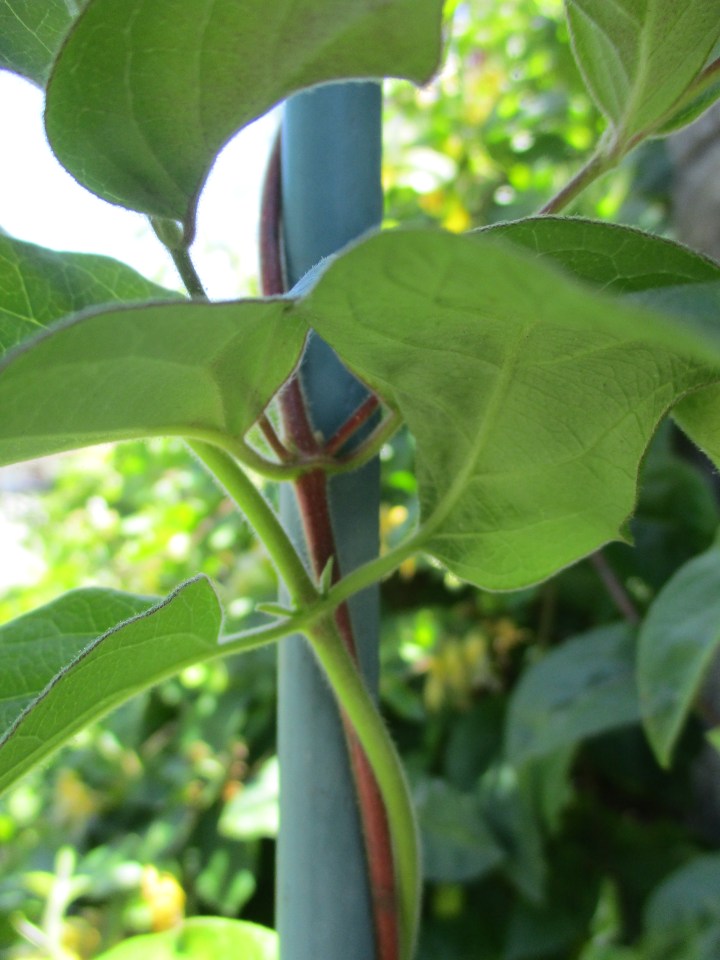
Trellised vines are a popular but rarely effective remedy to this dilemma. The narrow spaces between houses and below the eaves can be dark enough to inhibit growth. Consequently, vines are typically sparse or bunched on top of their trellises. Their most vigorous growth is often awkwardly long shoots trying to find a way out of the shade. Vines are not exactly easy to work with anyway.
There are of course exceptions. With regular maintenance, some finely textured vines that are reasonably tolerant of shade can be effective for downstairs windows. (Upstairs windows are out of reach.) If shorn very regularly, English ivy on lattice works almost like a hedge. (Ivy does not fill in on more open trellises.) Trellised star jasmine is even better, but needs more depth (front to back).
Yet, with few exceptions, big evergreen shrubs or small evergreen trees that tolerate shade are more practical. They support their own weight, so only need to be pruned for confinement and clearance from the houses that they provide privacy for. Some shrubs and trees should be pruned to stay at the desired height, so that superfluous upper growth does not shade out lower growth.
The various podocarpus are some of the better small trees for narrow spaces between houses because they are are somewhat tolerant to shade, and are so easily pruned into shape. Some of the taller and more upright pittosporums work nicely in sunnier spots. Arborvitae tolerates more shade, and naturally stays narrower. Since some of these better options might grow slowly, they can be planted with faster growing shrubbery that can be pruned back, and eventually removed as the preferred plants mature.
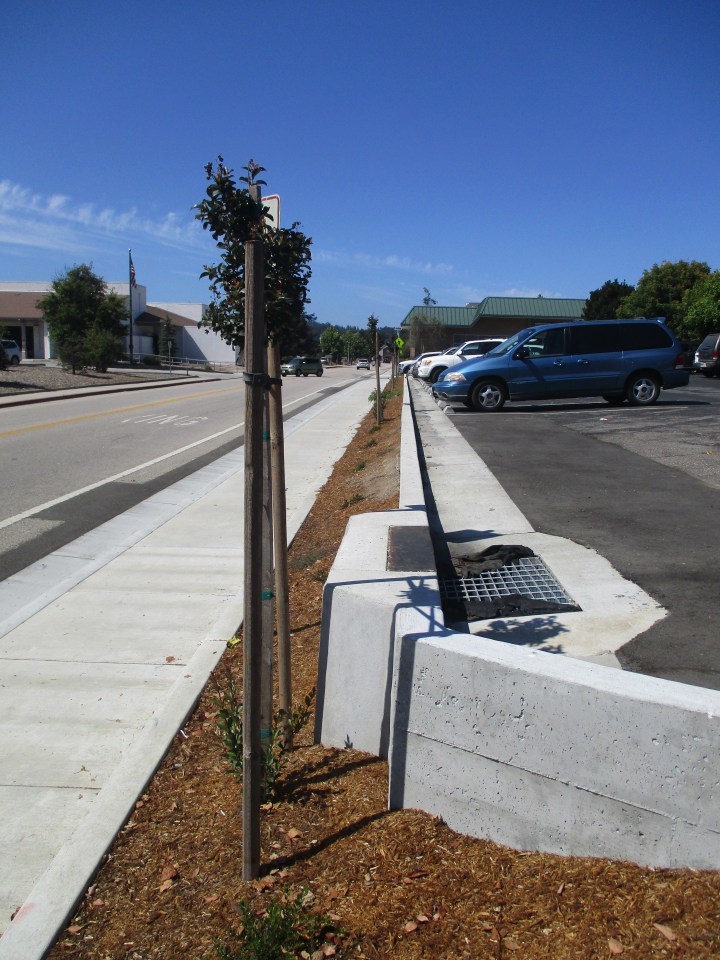 We arborists happen to like trees. That is why we are arborists. Most of us also understand that trees are not appropriate for every situation, or where they are not appreciated. There is no point in planting a tree where it will just get cut down by someone else who does not like it. We want trees to be happy. We also want those who live with them to be happy with their trees.
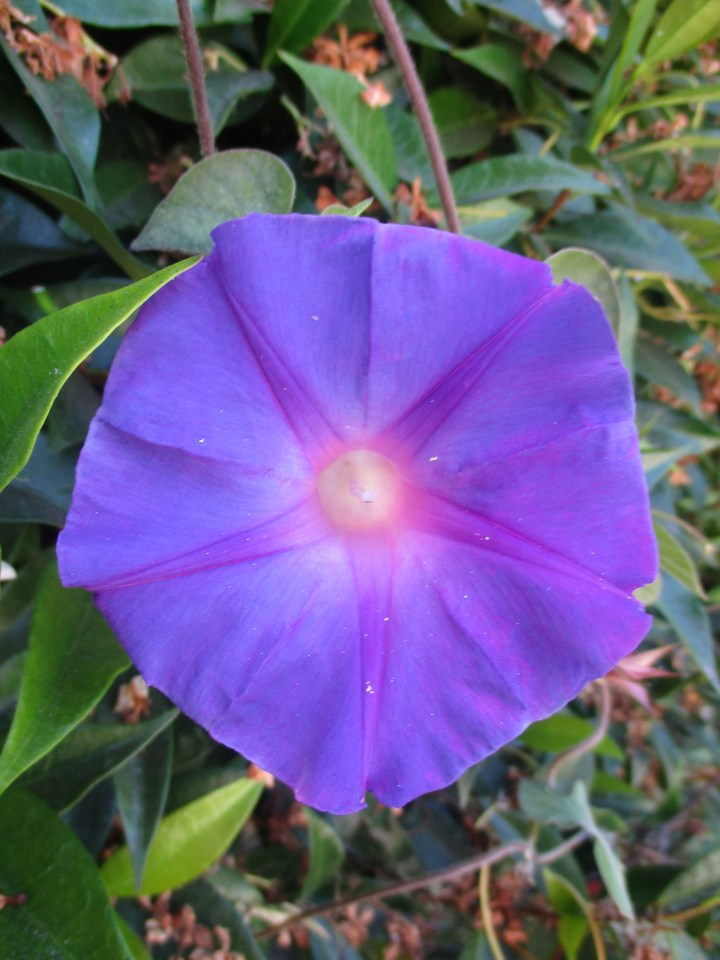 A landscape designer would have more fun describing both the modern and the good old fashioned varieties of morning glory. Their vivid colors are so resplendent. Their rich green foliage is so luxuriant. Their delicate vines are so elegant. Hey, perhaps this is not so difficult. Anyway, the popular garden varieties of morning glory are descendents of various species of the genus Ipomea.
 Most of the familiar vines really are exploitative bullies. They shade the same trees and shrubs that they climb for support. Some will even strangle and kill those who make it possible to get where they want to be. If they do not find trees or shrubs to victimize, they are likely to climb walls and ruin the paint, stucco or siding. Their aggressive nature can be a problem in landscape situations.

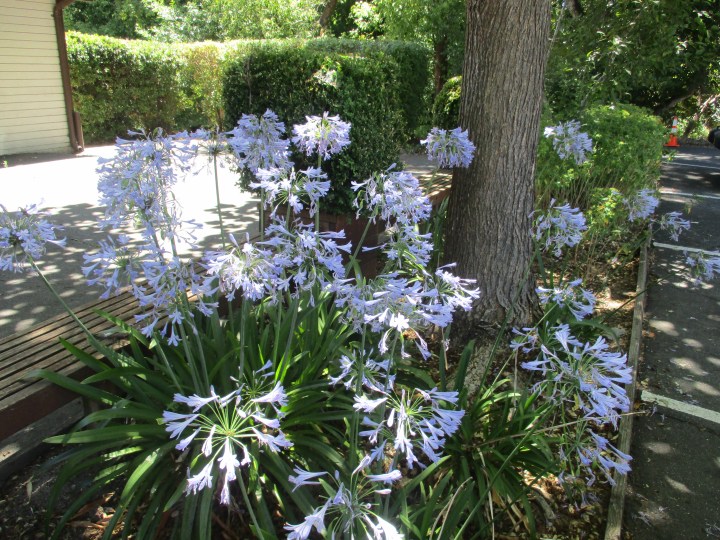 Without prior notice, I was informed on Friday morning of a workday on Saturday morning at Felton Presbyterian Church. That was yesterday. Since there was no time to get other chores done in advance, I was an hour late. Considering that we only work for four hours between eight and noon, one hour is rather significant. I felt compelled to attend regardless. A few friends who are parishioners of Felton Presbyterian Church appreciate it.


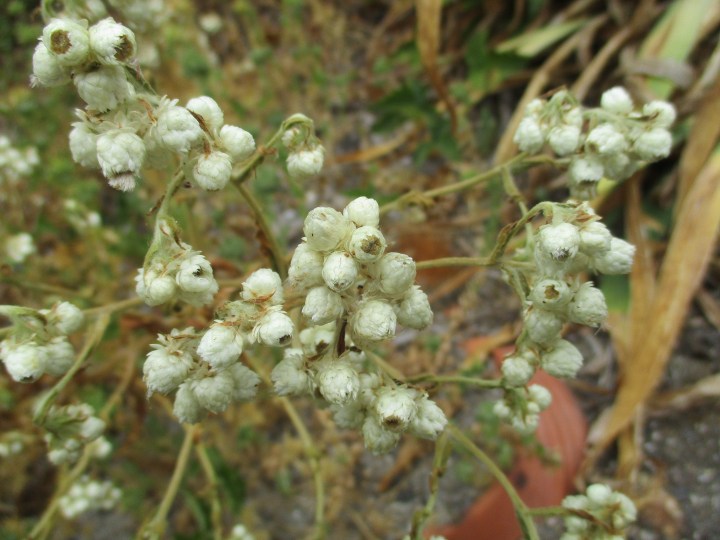

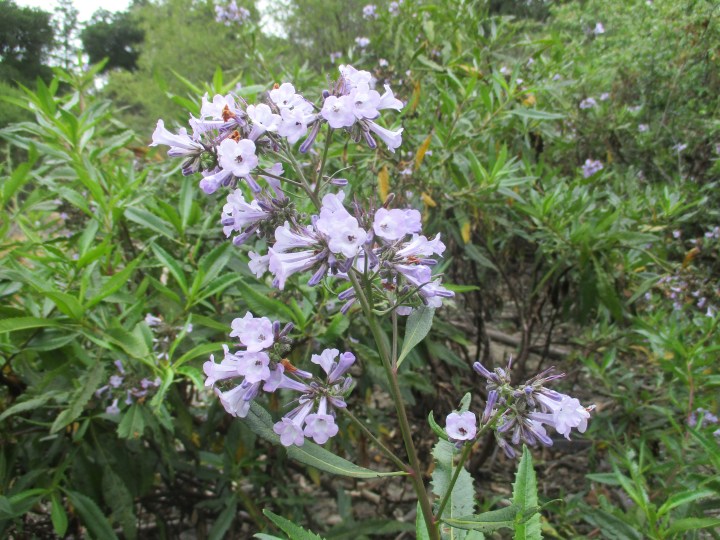

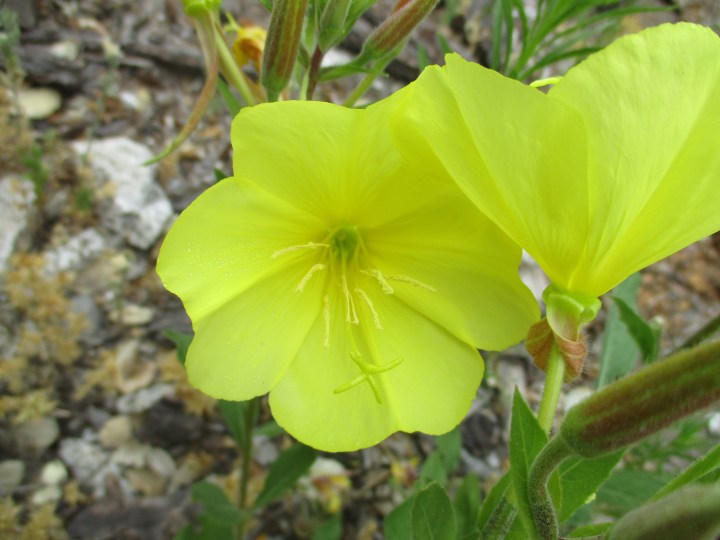
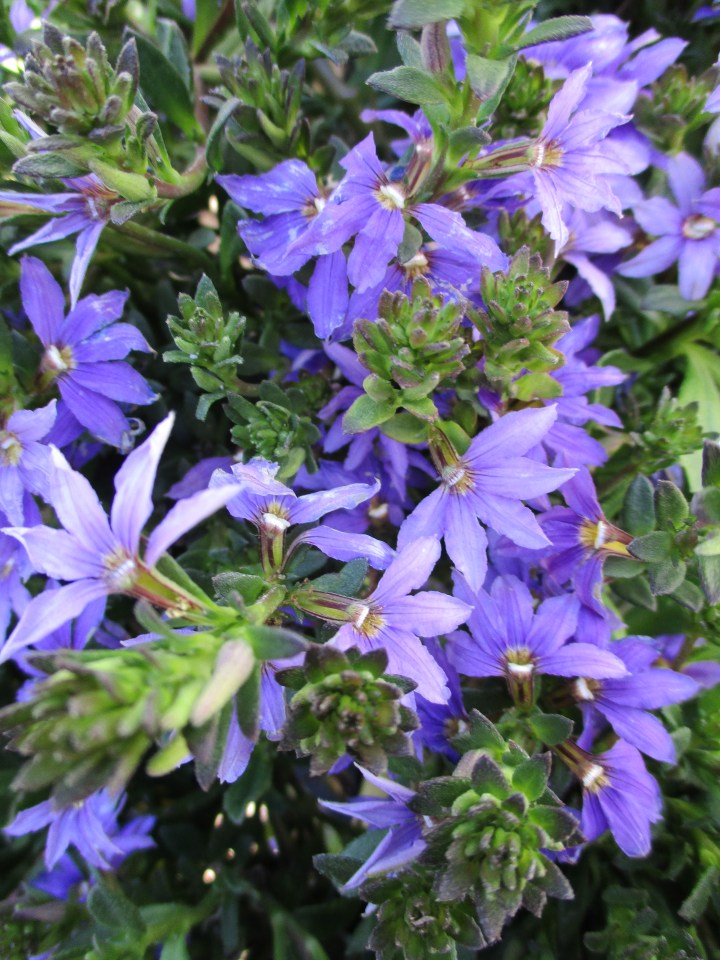 Only a few flowers are true blue. A few more are nearly blue, but slightly blushed with lavender. Of the latter group, fan flower, Scaevola albida, which is usually more lavender than blue, can be quite convincingly blue if conditions are just so. The semi-circular flowers (which are actually wide bilateral flowers) are most abundant in spring and summer, but can bloom sporadically all year.
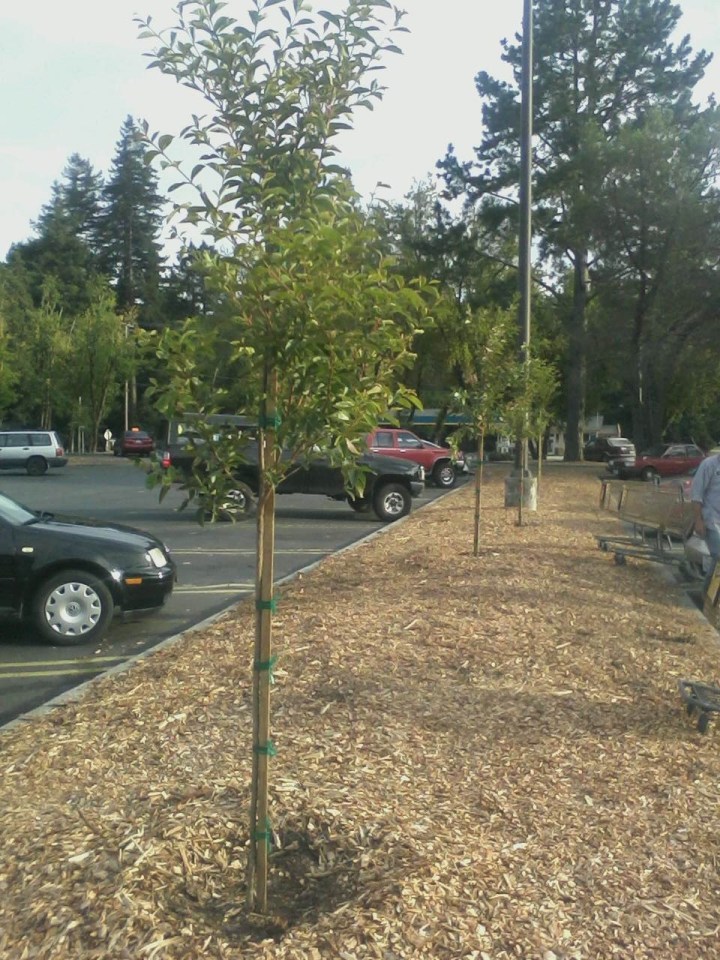 Most plants would prefer the real thing; how they do it in the wild. They drop their leaves, flowers and twigs. Deciduous plants do it mostly in autumn. Evergreens might spread it out through the year. The debris accumulates on the ground below, and decomposes at about the same rate as it accumulates. There is no one there to clean it up. Yet, the natural ecosystems know what to do.
