 Coastal redwood, Sequoia sempervirens, are remarkable stable trees. They rarely fall, which is how they get to be thousands of years old. They prefer to live in groups, where they mesh their roots together, and shelter each other from wind. Those that live outside of a group stay shorter than forest trees, and typically develop multiple trunks that function as a group.
However, they are also remarkably weak in regard to their structural integrity. Limbs are easily broken away from their vertical trunks by wind. Snow, which is rare within their natural range, causes significantly more damage than wind, which is probably why their natural range does not extend into snowy climates. Trees with co-dominant leaders (double trunks that divide from single trunks above grade) have potential to split at the union of the double trunks. Such unions are typically at such acute angles, that the trunks press against each other rather than fuse together through impenetrable compressed bark.
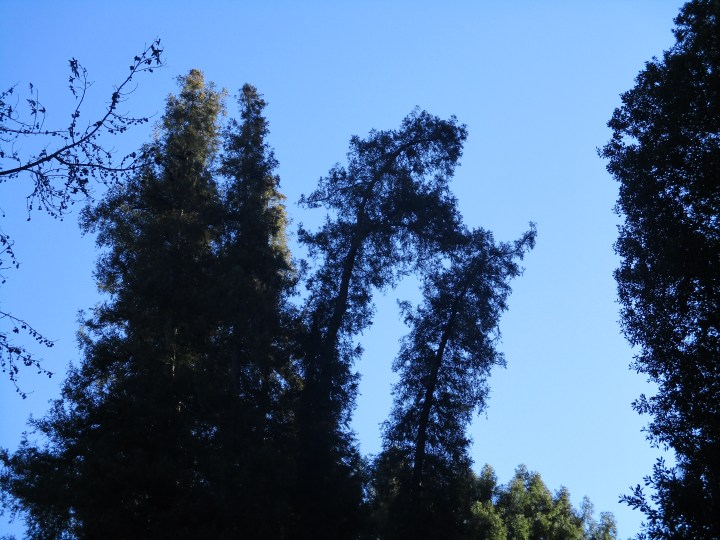
Leaning redwoods such as these that were shown earlier this morning, are potentially hazardous, not because they are likely to fall over, but because they might be likely to break. The trunks are designed to support weight vertically. The asymmetrical distribution of weight supported by these two trunks exerts inordinate lateral tension on the trunks. To make matters worse, the trunk to the left is divided into two co-dominant leaders, although the union does not appear to be at a typically acute angle. (The lower trunk is now behaving more as a big limb than as a secondary trunk.)
I would guess that these two trees are genetically identical trunks from the same root system. Such seemingly pliable trunk structure is uncommon, and it is very unlikely that two such similar trees would just coincidentally appear within such minimal proximity to each other. Redwoods often develop multiple trunks from the same root system, particularly as they regenerate after harvest.
The good news is that these two trunks have survived like this long enough to develop ‘reaction’ wood, which is just like it sounds; a bit of extra wood to compensate for compression on the inside of the bend. Also, they are sheltered from wind by the other redwood in the forest around them.


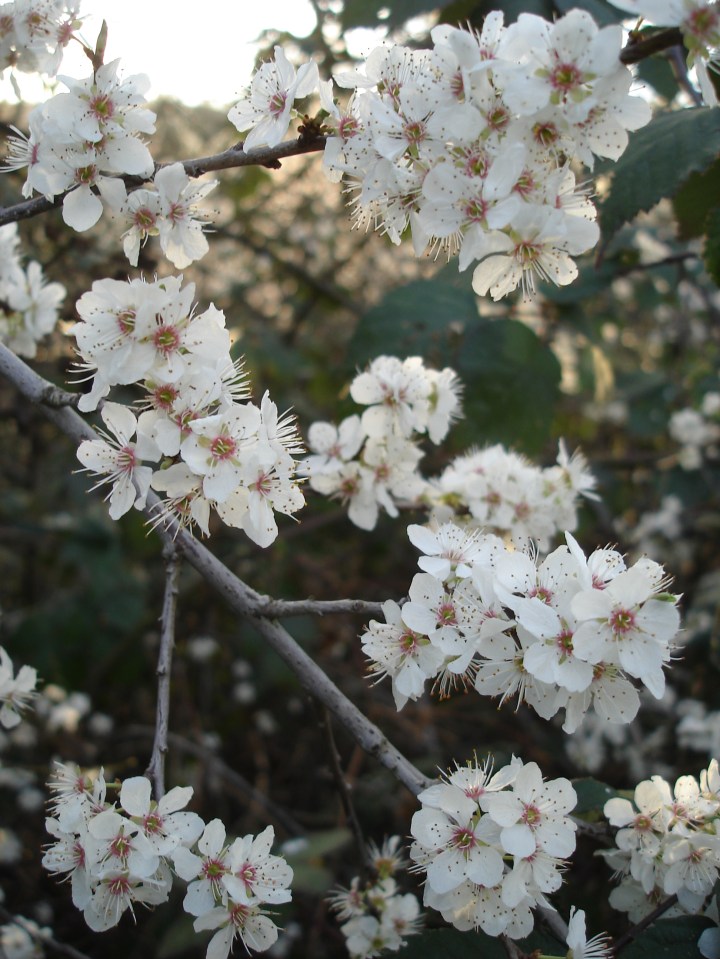 Unlike all the fancy and popular Japanese plums and European prunes, wild plum, Prunus americana, is almost never planted intentionally. It is a common understock for the more desirable types, and usually grows as suckers from below graft unions. In fact, it often grows from the roots of plum or prune trees that died or were cut down earlier. They can eventually form thickets.
 Properly pruned deciduous fruit trees probably do not have too many extra stems to spare now. Neglected trees would have more to offer. Believe it or not, a few of us who prune deciduous fruit trees diligently and meticulously in winter sometimes leave a few unwanted stems to prune out and take into the home now that the flower buds are beginning to swell and are about to bloom.
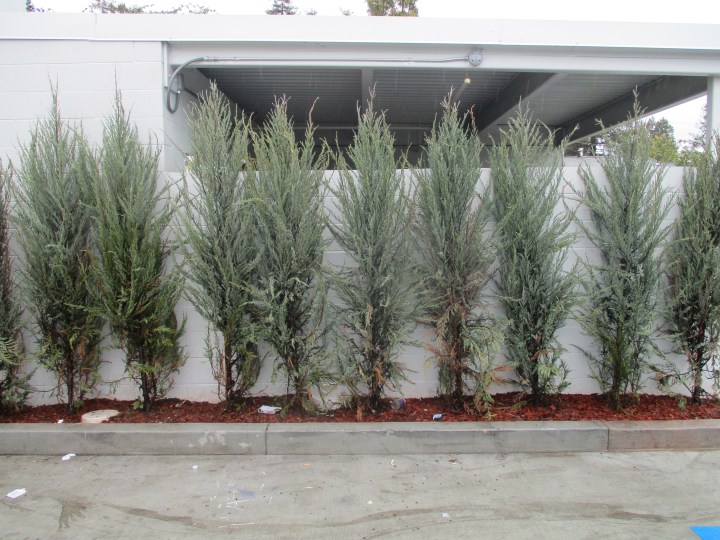 Back when horticulture was still respected, a very long time ago, dense shrubbery with finely textured foliage, such as Japanese boxwood, could be purchased already shorn into cubes that only needed to be installed in a closely set row to become an ‘instant hedge’. For some small hedges composed of small plants that recovered efficiently from transplant, it actually worked reasonably well, even if they did not look so great at first. It also worked for a few larger shrubs that happened to transplant very easily, such as glossy privet. Tall arborvitaes happen to work exceptionally well as instant hedges, although the best spacing for them leaves temporary gaps in between.
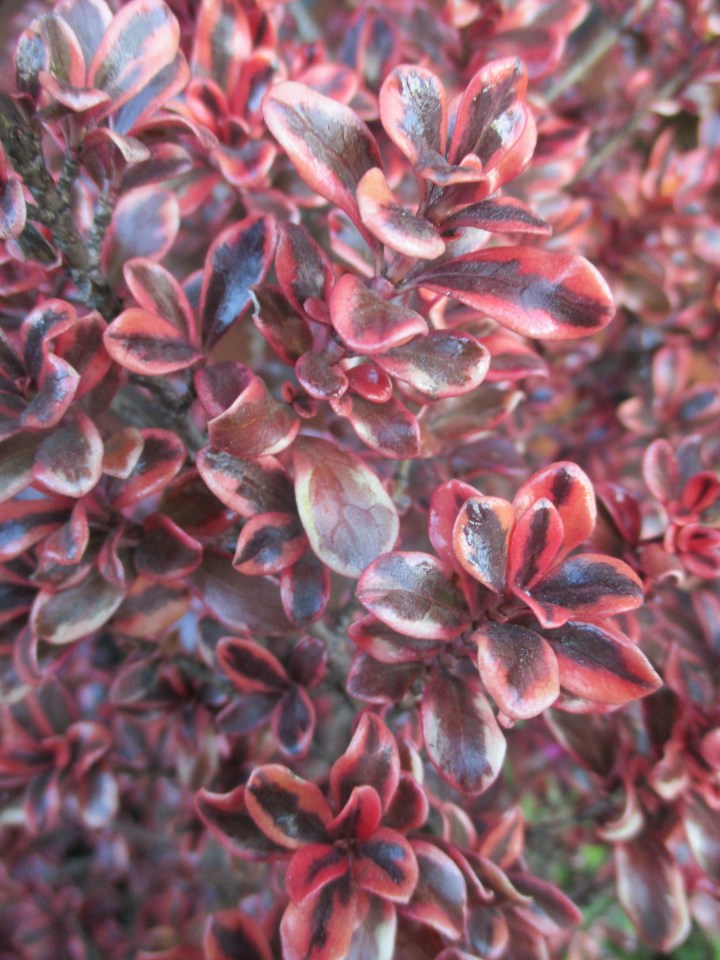 Classic but simple mirror plant, Coprosma X kirkii, was a utilitarian shrubby ground cover for many years before all the colorful modern cultivars that are so popular now were invented. Individual plants can cover quite a bit of ground without getting any deeper than two feet. It is particularly useful in coastal landscapes, because it is so resilient to wind and exposure, as well as sandy soil.
 There is no shortage of color for the garden here in our mild climates. If we want to, we can grow various flowers to bloom at various times throughout the year. If that is not enough, we can grow plenty of colorful foliage too. Evergreen sorts can stay fresh and resilient to minor frost all winter. A few deciduous plants and warm season perennials with colorful foliage will refoliate in spring.
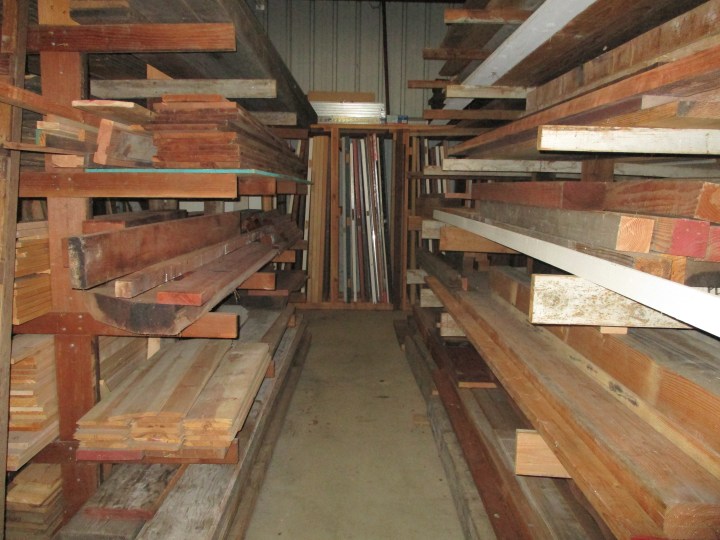 Saint Joseph did not have it so good. He is still the most famous carpenter, and somehow got the most excellent city in the World named after him, but he did not work in a shop like this one. The most well outfitted carpentry shops back then lacked modern power tools, and the selection of woods that are now so easily imported from all over the World.
 Today’s episode is brought to you by the letter ‘T’.