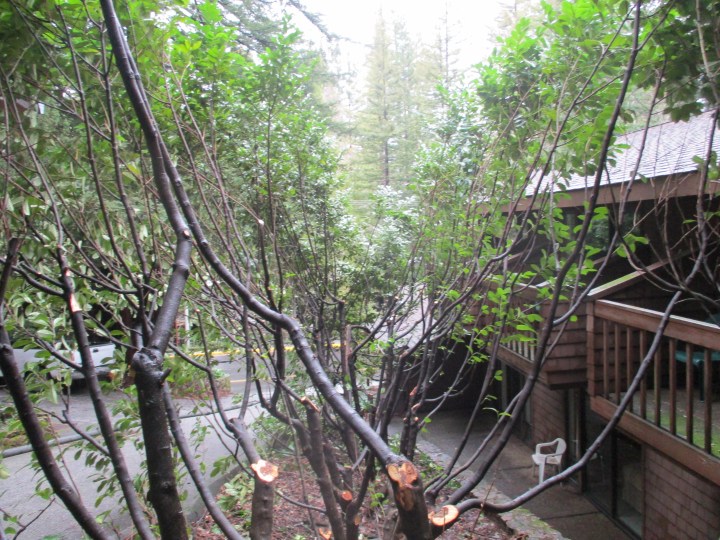
 What makes this Bullwinkle worse than most is that I pruned it like this myself. What makes it worse than worse is that it did not need to be pruned in this disfiguring manner for clearance from utility cables like the last one I wrote about was. https://tonytomeo.com/2018/08/08/horridculture-bullwinkle/ It is instead an attempt to renovate an overgrown hedge that was behaving something like a fat hedge. https://tonytomeo.com/2018/06/06/horridculture-fat-hedges/
In fact, the only reason it did not qualify as a fat hedge is that it had plenty of space for all of its superfluous bulk The side to the left was only beginning to encroach into the driveway on that side, and was easily pruned back to the curb, which for now, is adequate confinement. The side on the right was only beginning to encroach into the upstairs balconies, and was likewise easily pruned back for reasonable clearance.
The problems with this hedge were within and on top. It had been shorn back only for minimal confinement for so long that all the foliage on the sides was within a thin external layer. Pruning any farther back would have exposed a thicket of necrotic stems in various degrees of deterioration that had been accumulating within the interior for many years. Almost all growth was directed to and concentrated on top, which shaded the interior and lower stems even more than the accumulation of necrotic crud within did. Since the top had always been pruned down to the same height, all subsequent growth after pruning on top was above where it had been pruned previously, which was of course above the height where it was wanted, and consequently removed when the hedge was pruned again. There was no incentive for lower foliage to develop.
The hedge is there to obscure the view of a building on the left from the windows of the building on the right. The most important foliage for that purpose is the lower foliage, which is precisely what is lacking. Almost all resources were going to the upper foliage, which was contributing nothing, while shading out the lower growth. Although the inner thicket of necrotic stems was partially helping to obscure the unwanted view, it was also inhibiting healthier lower growth.
The illustration shows what remains after the useless top and necrotic interior were removed. After the picture was taken, the left and right sides of the hedge were pruned lower to eliminate the useless upper foliage that was not contributing to the function of the hedge. As unsightly as it is, it partially obscures the view of the building on the left from the building on the right, and will obscure it more as new foliage develops. Now that the interior is exposed, new growth should develop within the interior, and lower to the ground. Because the area is partially shaded by nearby redwoods, the exposed interior limbs are not likely to be damaged by sun scald.
After the new interior growth is established and obscuring the view, the external sides that are there now can be pruned back farther and sloped inward toward the top so that the lower growth of the hedge gets more sunlight. The hedge certainly does not need to be as wide as it is. It would be easier to maintain if it were narrower and so close to the allowable boundaries. Ultimately, with appropriate pruning over the next few years, this old hedge should be restored.
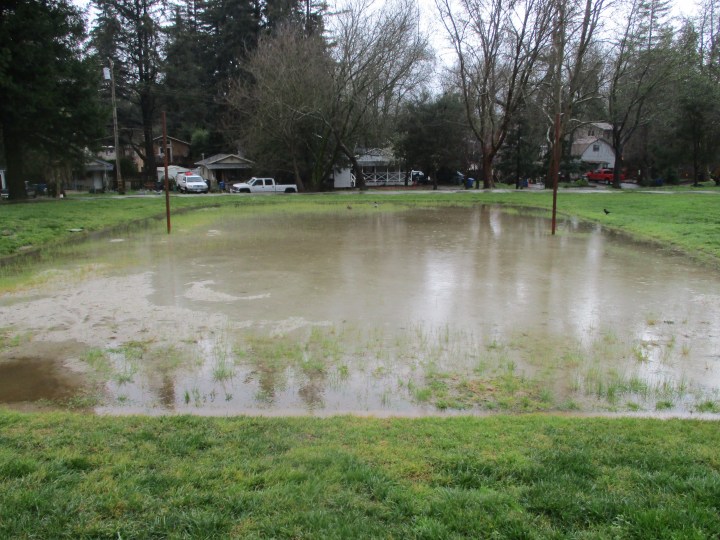 Supposedly, all this rain has not been too terribly excessive. It seems to have been raining more frequently than it normally does, with only a few days without rain in between, and more often, many consecutive days of rain. The rain also seems to be heavier than it normally is. Yet, the total rainfall is not too much more than what is average for this time of year, and well within a normal range.

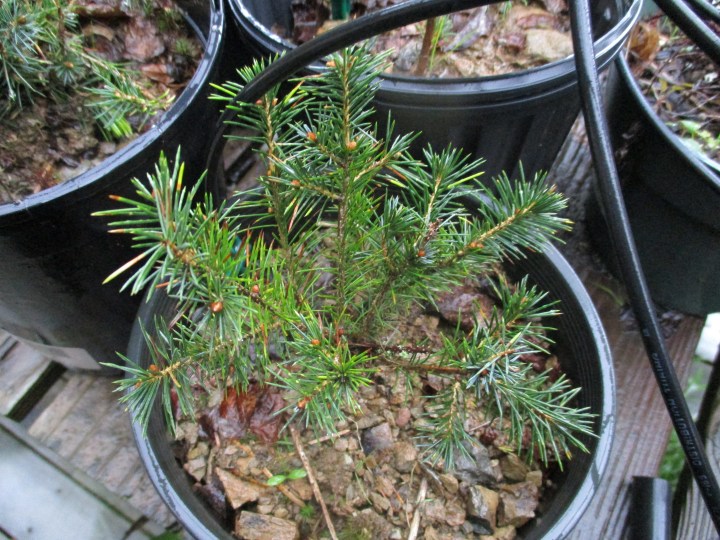


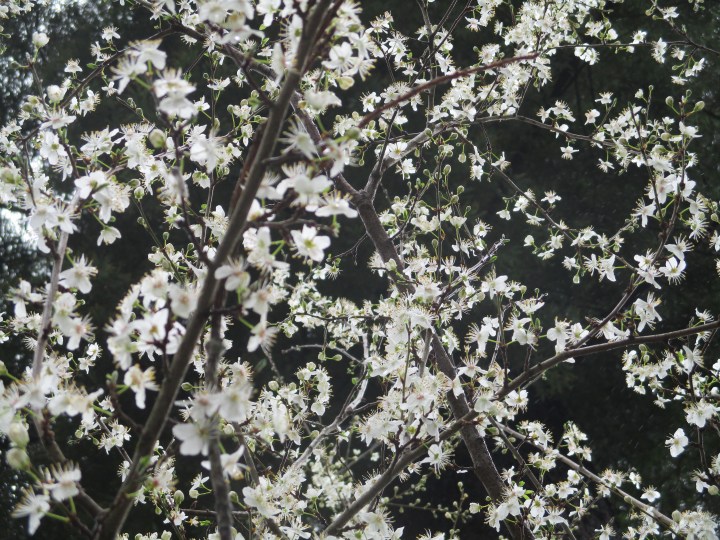

 Those of us who appreciate olive trees for their fruit production or distinctively gnarly trunks probably would not understand the popularity of the Little Ollie olive, Olea europaea ‘Little Ollie’. Not only is is completely fruitless, but it lacks sculptural trunks and limbs. It is instead a short and and shrubby plant that gets only about three or four feet tall, with very dense grayish green foliage. Only the narrow evergreen leaves are recognizable as those of an olive tree.
 Nomenclature is a standardized technology of naming. It dictates the universal ‘botanical’ names of all plants, so that everyone everywhere can communicate more efficiently about horticulture. Botanical names might seem confusing, and maybe even unflattering, but they eliminate the confusion associated with regional common names that are as variable as languages and cultures.
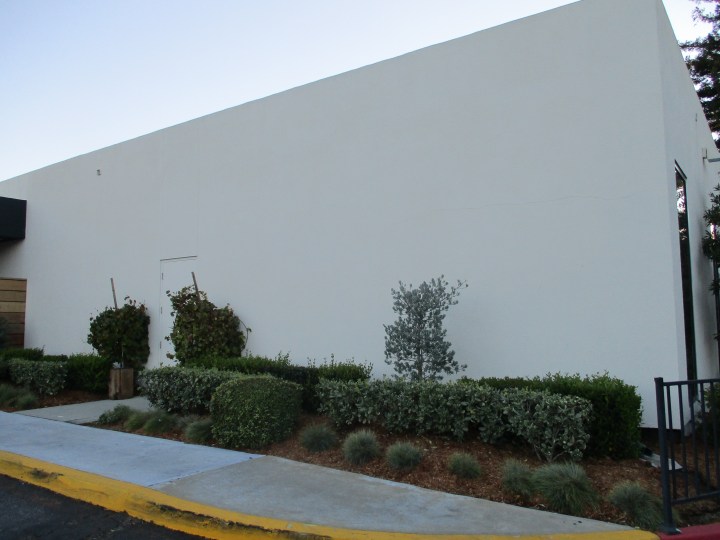 From a distance, this landscape does not look so bad. It seems to have been only recently installed, and features the sort of material that was likely intended to not necessarily obscure the sleek architecture of the building behind it, but to eventually soften the starkness of it.
 While flashier but typically weaker modern cultivars of so many other specie are being developed, the most popular of the many cultivars of English boxwood, Buxus sempervirens, remain the same. There is not much to improve on. Most cultivars get only a few feet tall, and are densely foliated with inch long evergreen leaves that are excellent for topiary and low formally shorn hedges.
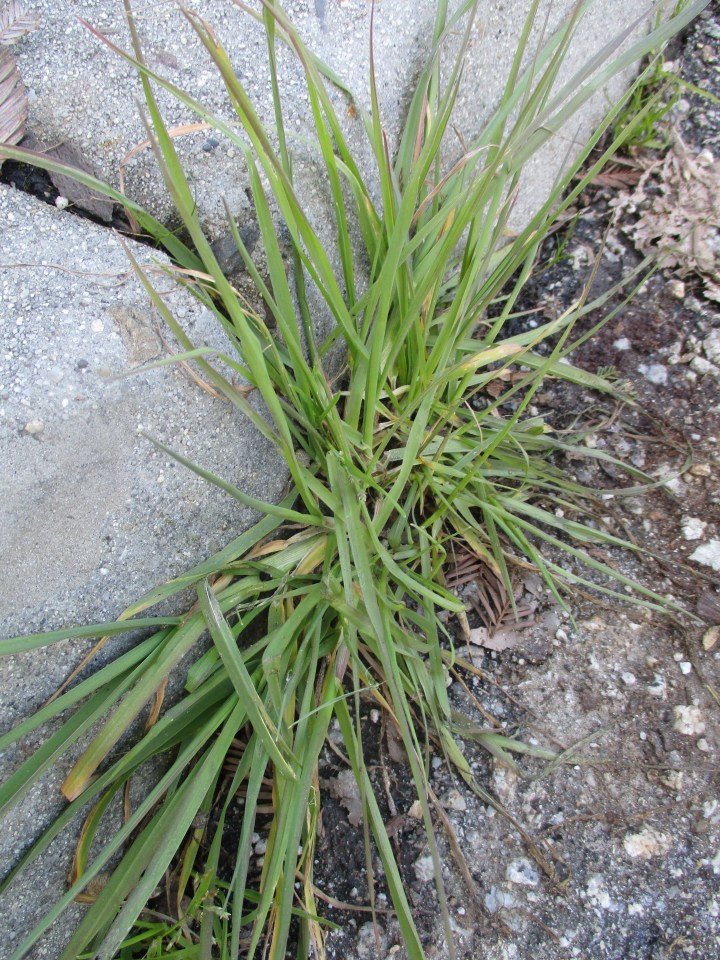 Not many of our favorite plants grow like weeds. We must help most of them along, and give them what they want. A few might naturalize and perform well on their own, but if they do too well and become aggressive or invasive, they too become known as weeds. Although we might prefer some of our favorites to be easier to grow, we are probably fortunate that more do not do too well.
 This is a relatively new development. The first few arrived here only two years ago. By last year, a few more arrived to make a significant herd that split into two smaller herds. Now these two smaller herds are quite significant. If they continue to proliferate as they have been, they will become more of a problem. They are already shredding flowers and colorful berries that are within their reach, and digging up flexible irrigation hoses.
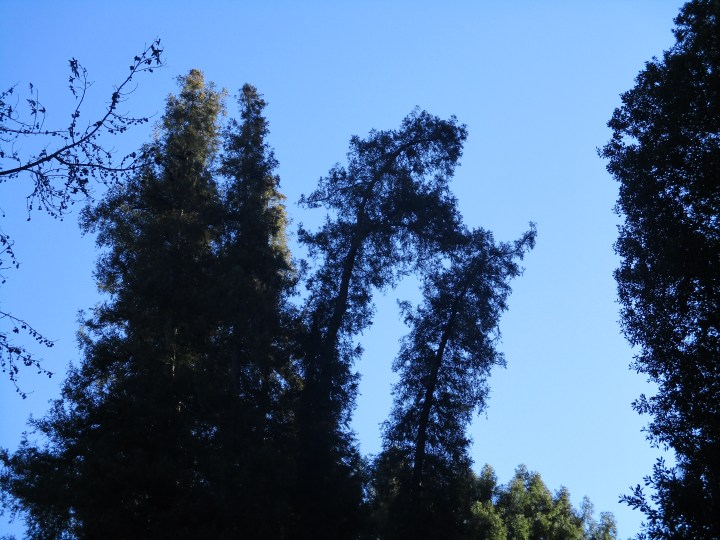 Coastal redwood, Sequoia sempervirens, are remarkable stable trees. They rarely fall, which is how they get to be thousands of years old. They prefer to live in groups, where they mesh their roots together, and shelter each other from wind. Those that live outside of a group stay shorter than forest trees, and typically develop multiple trunks that function as a group.
