Fire! . . . Again

P71018“It’s not nice to fool Mother Nature.” That old margarine commercial was lame back in the 1970s, but the quote is so true. Inadvertent interference with the natural process of wildfires has unfortunately increased the combustibility of the flora of forests and wildlands throughout California. No one really meant to interfere with the process. It is just what happens when we need to protect our homes and properties from fire.

The longer the vegetation is deprived of fire, the more overgrown and combustible it becomes. If deprived of fire long enough, many plants start to succumb to insect infestation and disease, and they become more combustible as they deteriorate and die. To make matters worse, so many of the exotic (non-native) plants that have been introduced into California are just as combustible, and some are even more combustible than native flora!

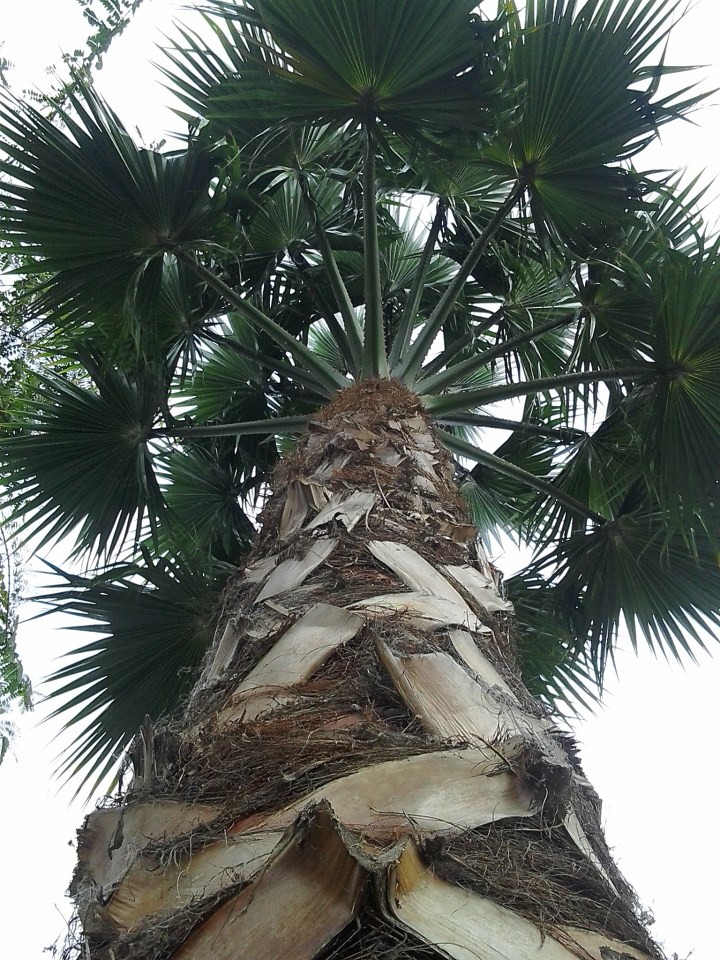
Combustibility is certainly no accident on their part. It is part of their ecology. Very few woody plants that are native to California even try to survive fire. The two specie of redwoods protect themselves with thick noncombustible bark so that they can recover from fire, even if much of the foliage gets burned away. Desert fan palms also recover after fire, after fueling it with their very combustible old fronds in order to incinerate competing specie. They are experts on this sort of ecology!

Most plants specie are neither so determine to survive fire, nor so creative in exploiting it as the desert fan palm is. They just live and die with it, only to regenerate and start the process all over again. Many release their seed as they burn. Some pines protect their seed within thick cones that open to disperse seed afterward. Seed of some specie need to be scarified by heat to germinate only after fire. Everyone want to be the first to exploit new real estate freshly cleared by fire, and they are always working on techniques to give them an advantage.

The problem with these processes is that they are not compatible with our lifestyles. As several big wildfires continue to burn throughout Southern California, another fire started early this morning just east of the Sepulveda Pass of the San Diego Freeway in Bel Air.

Sculpture

P71206

I use the term loosely. Okay, so maybe I use it mockingly in this context. This sort of thing really should have no connection to the works of Calder, Rodin or Brancusi. It might be worthy of a few fancy adjectives, such as ‘severe’, ‘unusual’, ‘dramatic’ and ‘bold’. Horticulturally though, we might be thinking more like ‘disgraceful’, ‘abhorrent’, ‘ridiculous’ or ‘just plain sad’.

There is nothing wrong with pollarding, that severe sort of pruning that almost all other arborists will tell you is wrong. It involves pruning trees back to the same distended terminal knuckles every winter. Only a few trees are adaptable to the technique, and technically, sweetgum happens to be one of those few trees.

The stipulation is that once pollarded, they MUST be cut back to the same knuckles EVERY winter. A small stub or maybe two can be left on knuckles to allow them to elongate a bit annually, but that is about all. Pollarding is severely disfiguring, and ruins structurally integrity for all growth after the first growing season. Without this annual and aggressive maintenance, pollarded trees are very likely to drop limbs and possibly disintegrate faster than they can recover.

Sweetgums are not often pollarded because they are usually grown for their autumn color. Secondary growth that develops in response to pollarding is too vigorous to color well. The foliage stays green well into winter, and then falls without much color at all. Pollarding sort of defeats the purpose of growing a sweetgum.

The real problem with this particular tree is that it was not pollarded correctly. For one, it was probably cut like this because someone thought that it was too big. It should have been cut much lower if someone was going to put the work into pollarding it at all. Now, the secondary growth that must be pruned away will be very high, and take much more work to prune away. It will also be more exposed to wind. Limbs that break away will fall from higher up, so will fall farther away, and with more inertia.

Secondly, the pruning technique really was ‘abhorrent’. Small stubs are acceptable on established knuckles in order to direct growth. Long stubs that are expected to develop into knuckles are also acceptable. The weird stubs on the trunks of this tree are both too short and too stout. Because they are too short, they will be too shaded to develop into knuckles. They are too stout to compartmentalize or ‘heal’ (if they do not form knuckles) so are likely to decay, and spread decay into the trunks.

Thirdly, this tree was pollarded in summer, which is why the secondary growth is so stunted and underdeveloped now that the tree should be going dormant for autumn. The stunting should not be much of problem, since new growth should develop in spring. The problem is that the lightly colored bark likely scaled when it suddenly became exposed to sunlight by the removal of all of the foliage in the middle of summer. The scalded areas will eventually decay and become open wounds, which will spread decay into the main trunks and limbs. Even if secondary growth is healthy, and the tree gets pollarded correctly every winter, the limbs will eventually become unable to support the weight of healthy foliage.

This is one of the many reasons it is so important to procure the services of a qualifies arborist. Someone payed a significant amount of money to get this valuable tree ruined, and will eventually need to pay more money to have it removed. It would have been much less expensive to pay a bit more to get the tree pruned properly, or to have it removed completely.

Parrot’s Beak

71213The Latin name is easy to confuse with the sacred flowers of an aquatic perennial from tropical regions of Asia, or a funny looking British sport coupe. Lotus berthelotii is a diminutive terrestrial perennial known as parrot’s beak. It gets only about a foot high, and spreads to only two or three feet wide. It cascades nicely from hanging pots, and is actually rarely planted out in the garden.

The bright reddish orange flowers bloom mostly in the warmth of spring and summer, but can bloom any time they are neither too hot nor too cool. They are about an inch long and ‘pea-shaped’, but they really look like parrot beaks. The finely textured gray foliage is comprised of small compound leaves that are divided into three or five very narrow leaflets that look like hemlock needles.

Parrot’s beak likes full sun and good drainage. It rots easily if soil is always damp. In hanging pots, it is usually sheltered from frost through winter, or can at least be moved to shelter prior to frost. Parrot’s beak can cascade nicely over the rims of urns of mixed perennials or annuals, but dies back through winter where such urns are too exposed. It is often grown as a warm season annual.

Winter Is The Season For Pruning

71213thumbNow that winter is only two weeks away, and many deciduous plants are defoliating and dormant, it may seem as if there will be less work to do in the garden. After all, not much is growing. The funny thing is that this is the best time to sneak up on some of them, and prune them while they are sleeping. Depending on what is in the garden, winter can be just as busy as any other season.

There are a few things that should most certainly not be pruned in winter. Maples and birches should either be pruned before or after winter. They bleed profusely if pruned in winter. Plants that bloom in winter or early spring should be pruned after they have finished blooming. Pruning forsythias, flowering cherries and flowering crabapples earlier will remove much of the blooming stems.

Deciduous fruit trees are of course an exception to that rule. They require annual winter pruning so that they to do not produce too much fruit. Excessive fruit is of inferior quality, and can break limbs. It is acceptable when pruning fruit trees to leave a few unpruned stems to cut and bring in later, as long as they are not forgotten. They can be less refined alternatives to flowering cherries.

Once we determine what should not be pruned in winter, it is easier to see that most deciduous plants should be pruned while bare in winter. Elm, oak, poplar, willow, mulberry, pistache, gingko, crepe myrtle and most popular deciduous trees are sound asleep and unaware of what might happen to them for the next few months. They would be pleased to wake already pruned next spring.

Some evergreen plants should probably be pruned as well. Tristania, redwood, podocarpus, Carolina cherry, bottlebrush and the various eucalypti would prefer to be pruned while the weather is cool. Conifers bleed less this time of year; and pine and cypress are less susceptible to pathogens that are attracted to wounds during warm weather. Avocados and citrus, particularly lemons, should not be pruned in winter, because pruning stimulates new growth which is more sensitive to frost.

Too Late For Pie

P71203Just a few feet downhill from where the old valley oak had lived for centuries (https://tonytomeo.wordpress.com/2017/09/11/goodbye-to-an-old-friend/), a pumpkin vine appeared shortly after the big oak stump was ground out. That was in late September, so was much too late for it to do much; or so I thought.

The vine grew very quickly! It is hard to say if it got water from a leaking pipe. A valve manifold that is visible in front of the stump in the original picture is completely obscured by the foliage of the vine in the second picture. With all the heavy work that was done right on that spot, it would have been very easy for a pipe or exposed valve to get damaged. (Water from a previously leaky pipe or valve could have contributed to the demise of the tree, by promoting the development of excessively heavy foliage that caused the large limbs to break and fall.)

Despite the vigor and size of this remarkably healthy pumpkin vine, no fruit developed. Only a few undeveloped fruit can be found now, and the weather is getting too cool for it to mature. The foliage and flowers are already starting to succumb to mildew and decay, and will eventually get frosted. If there is any fruit obscured by the foliage, it will become visible when the foliage collapses.

Regardless, the pumpkin vine really seemed to have fun while it had the chance. How many of us get to grow pumpkin vines this big through an entire growing season? It got plenty of sunlight, and must have been getting water from somewhere. The soil is good there. As you can see in the picture, it had plenty of room to grow.

What is so special about that spot? If there is not a water leak that needs to be repaired, what else could be grown there next year?!P71203+

Felton Covered Bridge

04Now that I have been watching a few other blogs for three months, I notice that some people write some very interesting or at least entertaining articles about topic that are not directly related to the main topic of their respective blogs. Most are just like old fashioned slide shows (remember those?) with cool pictures from around the neighborhood, travels, home projects, or whatever might be interesting. I have not done this yet; but I happen to have a bit of free time at the moment, so thought that I would post these three pictures of the historic Felton Covered Bridge. Although I am technically from Los Gatos, my home is in the Santa Cruz Mountains between Los Gatos and Felton. I also have history in Felton, since my grandparents and my Pa used to live here.

In an attempt to keep this post relevant to horticulture, I should mention that the trees to the right of the Felton Covered Bridge are a colony of the common box elders that suddenly died this past year. ( https://tonytomeo.wordpress.com/2017/10/04/what-is-killing-the-box-elders/ )We still do not know what killed them so suddenly. Perhaps later I can post pictures of this same area when it was flooded. I just do not have that file here right now.05This is the southwestern of the four sidelight windows on the Felton Covered Bridge. If crossing from the end in the upper picture, it would be on the left side toward the far end. It is the best window in the house. Rhody to the lower right might be mistaken for a rodent ( https://tonytomeo.wordpress.com/2017/10/14/rhody/ ). My parents have a picture from about 1970 of my older sister (from War of the Worlds – https://tonytomeo.wordpress.com/2017/10/03/war-of-the-worlds/ ), my younger brother and and I looking out of this window. My brother and I were just tykes at the time, and were to short to see out of the window, so we were standing on the lower rail. Our sister was pointing at something in the distance.06This is the view from that same window. That wet thing below is the San Lorenzo River. The black spots in that wet thing below are ducks. Once the rain starts, the San Lorenzo River really looks more like river than a creek. This last spring, in the San Lorenzo River right below the Bridge, we scattered the ashes of a good friend, Steven Ralls, with whom I went to Oklahoma (to the right in the illustration – https://tonytomeo.wordpress.com/2017/11/19/oklahoma/ ). Most of the vegetation out there is native. The trees straight ahead are common cottonwoods. However, the tree to the left is a weeping willow. No one knows how it got there.

Hey, this was fun. Maybe I will post more pictures on those memes later. I don’t know what a meme is, but I suppose I could figure it out.

‘Green’: The ‘Other’ Autumn Color

P71202After reading so much about the exquisite foliar color that most everyone else in the Northern Hemisphere gets this time of year, I must admit, I can get rather envious of those who experience four seasons instead of just two. The abundance of spring in the Southern Hemisphere does not help. Why have I not found a garden blog from Ecuador or Indonesia so that I have something to point and laugh at? It just isn’t fair.

Well, now I have something to brag about.

I found this bright red leaf on a crepe myrtle in town. Isn’t it pretty? Go ahead, you can tell me. It is gorgeous, RIGHT? Go on; say it! Say it NOW! LOUDER!

Soon, all the foliage behind it will be turning red and orange with maybe a bit of yellow. Can you see it? I think some of those leaves are starting to consider turning color right now! I just love this time of year!

There is other foliar color. I just happened to take a picture of this single leaf first. REALLY! There IS autumn color here.

In fact, most of of the foliar color here this time of year is a very different color from what is so common elsewhere. It is known as ‘green’. Have you ever heard of it? Yes, of course! It is that color that you saw so much of in spring and summer!

‘Green’ is such a splendid color! It looks particular exquisite on palm trees. Do you know what a palm tree is? Of course not. Well, we can talk about that later. For now, I will just post this spectacular picture of a rich ‘green’ sweetgum tree! Can you remember the last time you saw one in ‘green’? The fallen leaves on the ground remind us that this is autumn.P71202++

Goldenrod

61130Here on the West Coast of California, most of us know goldenrod only as a color of crayon. In most other parts of America though, it is a common wildflower that is colorful enough to be popular in home gardens. Yet, with more than a hundred specie, it is hard to say exactly which goldenrod, (Solidago spp.) the crayon color corresponds to. All are some shade of gold or yellow, but some are a bit more orange than others.

Most varieties of goldenrod that are available locally bloom in late summer or autumn. Some are still blooming prolifically now, on seemingly overloaded stems that stand taller than two feet. Shorter types that get only a few inches tall are probably unavailable. Perennial rhizomes spread slowly but surely, and can be divided to propagate new plants. Goldenrod needs full sun exposure, but not much water once established.

The blooms of goldenrod are just as interesting physiologically as they are colorful. The floral trusses of the most popular types are somewhat conical, but arching from their own weight. Each of these trusses supports a profusion of minute daisy-like flowers, which are actually composite flowers comprised of even smaller and more abundant florets! Bees and butterflies really seem to appreciate the floral redundancy!

Plants Are Particular About Exposure

1212121032One of the most important differences between plants and animals is that animals are ‘animated’, and plants are not. Aquatic plants might float about, and might even drift into more favorable situations. Vines and plants with creeping rhizomes can likewise relocate. Otherwise, most plants are confined to the same locations where they grew naturally, or where they were planted. They need to get it right from the beginning.

Most landscape plants that are commonly available in local nurseries are fortunately suited to local climates. A few tropical plants that prefer milder climates, as well as a few plants that prefer cooler winters, can be found; but most plants that prefer other climates are simply unavailable here. Yet, even within their preferred climates, the many diverse plants in our gardens are affected by many other environmental factors.

Exposure is nearly as important as climate is. Some plants need to be completely exposed, while some prefer shelter from heat, cold, wind or sunlight. It all depends on how they live in their natural environments. Some naturally live out in the open. Others live in dense forests, where they need to compete with other plants for sunlight. Even if we do not know where our plants come from, we should know what they require.

Japanese maples are understory trees that naturally grow in the partial shade of larger trees in mixed forests. Some types can do well in full sun exposure, but are likely get roasted by reflected glare, or dry wind. Lace-leaf Japanese maples are more sensitive to exposure, so prefer partial shade in the afternoon, and shelter from wind. However, too much shade compromises foliar color of the red and bronze leafed types.

Most cacti and some types of yucca are just the opposite. They naturally live out in deserts, without any significant competition. In home gardens, they will lean away from shade. Knowing what plants want helps to find the best exposures for them.

This Is No Food Blog

P71129There are not many things that will grow in my zone that I will not at least try to grow if I have the space and resources to do so. I really like to grow fruits and vegetables, particularly those that I am familiar with from when I was young. They are just as productive now as they were then. The only problem is that I do not know how to cook. I can freeze, can or pickle large quantities of produce, but cooking is something that I leave to experts.

I notice that almost all garden columns or blogs include recipes for the produce grown in home gardens. Mine does not. Except for a few recipes for pickles, jams and jellies, I just do not have any recipes that I would share.

When I get big winter squash, I really do not know what to do with them. I sometimes give them away to those who will cook them. Sometimes, I just cut them up, cook them, and then freeze what I can not eat. They are fun to grow, and I really like how I can keep them around for such a long time before I get around to cooking them; but they would be so much easier to work with if they were small like summer squash.

This weird squash was on the kitchen counter for a long time. Before it was cooked, it was very smooth, without any lumps, bumps or beady eyes. It was not ridiculously big. In fact, I only cut in half and ate it in two days. At the time, I was in a situation where I had a microwave oven in which to cook it, so I did so for several minutes. With a bit of butter, the first lower half was quite good, and separated nicely from the outer skin. I cooked the upper half in the same manner on the second day. It was making weird noises as it cooked, as if it were very unhappy about something. It was hissing and spitting for the several minutes that it was in there.

When I opened the door, this is what I found staring back at me from a small puff of steam! It looked angry! Apparently, it did not like to be cooked that way; or perhaps it was just a hateful squash. Regardless, it was rather creepy, and difficult to enjoy. I peeled the outside away and discarded it, but could not help to think that it was still watching me from the trash can with those beady tan eyes and crooked mouth! I do not think that I will be growing this variety again.