Six on Saturday: Cat Burglar

Is a cat burglar a kitty who steals things, or someone who steals from kitties? There are a few kitties here, and, apparently, a burglar. I determined that two of the kitties are appropriate for Six on Saturday because they have horticultural names. The burglar is less appropriate, and is gone anyway. I am quite annoyed that someone came here, likely during the day, and stole from us. A small hesper palm that I grew from a seedling, two specimens of golden bamboo, and a larger Mexican fan palm got taken.

1. Cat – Black Jack, like the oak, Quercus marilandica, has a good horticultural or arboricultural name. He is a solid black Maine coon cat, and is no more cooperative for a picture than Rhody.

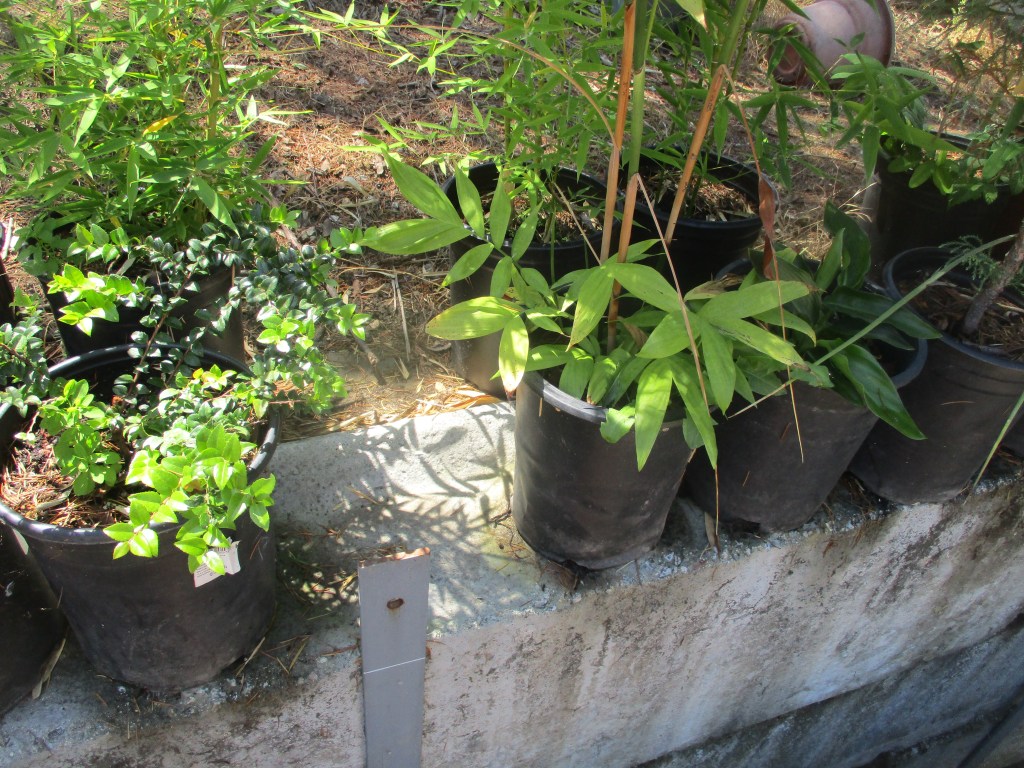
2. Burglar – Hesper palm, Brahea armata, lived here, in the blank spot on top of the wall. Golden bamboo, Phyllostachys aurea, lived right behind it and in the blank spot four cans to the right.
3. Cat – Pepper, like a species of Caspicum, has a good horticultural name too. She looks something like a penguin with a bit of brown, but is no more cooperative for a picture than Black Jack.

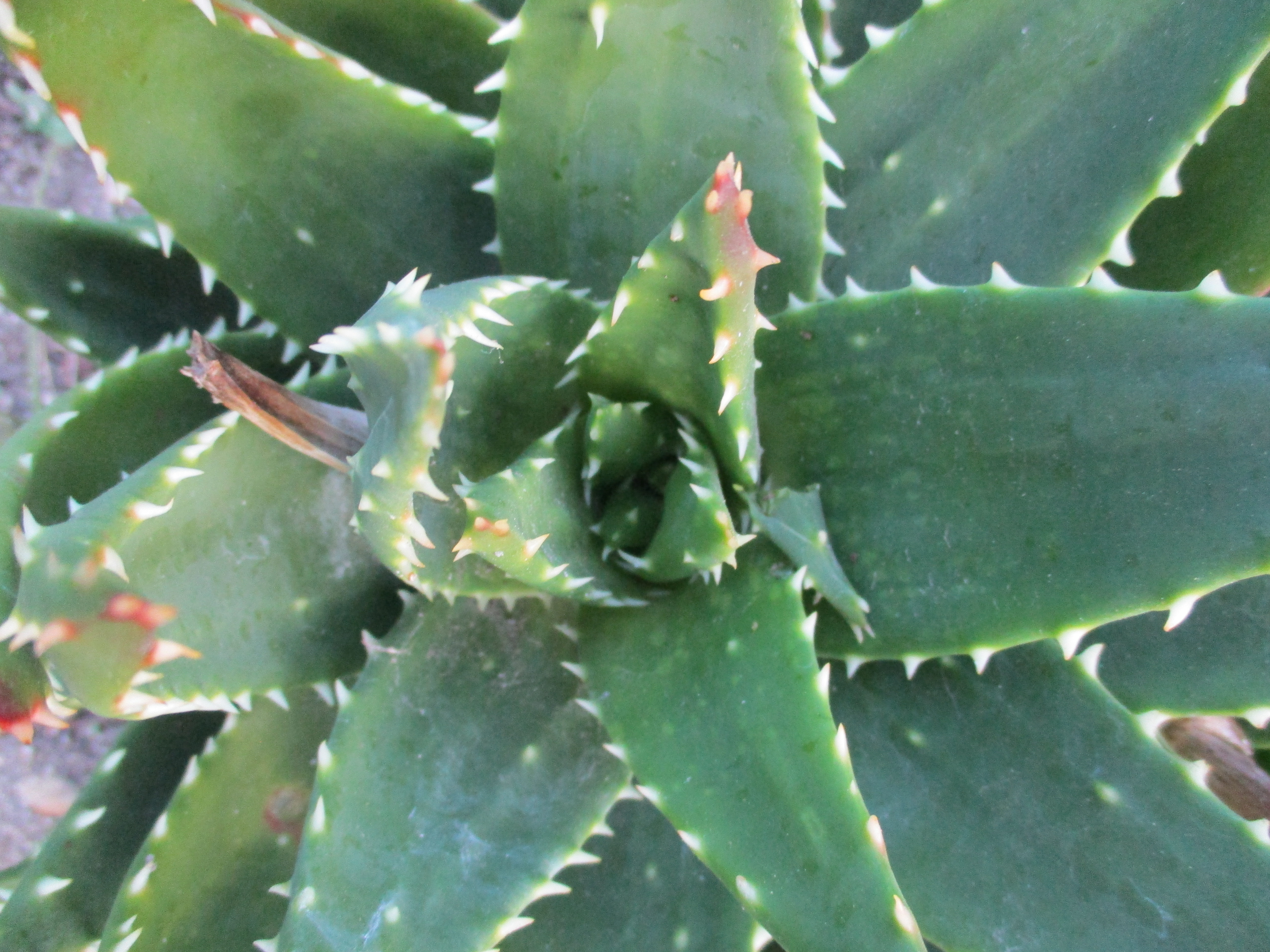
4. Burglar – I know I brought back more shoots of this unidentified species of Aloe from my downtown planter box. At least these four remain. They will get groomed and return to the planter.

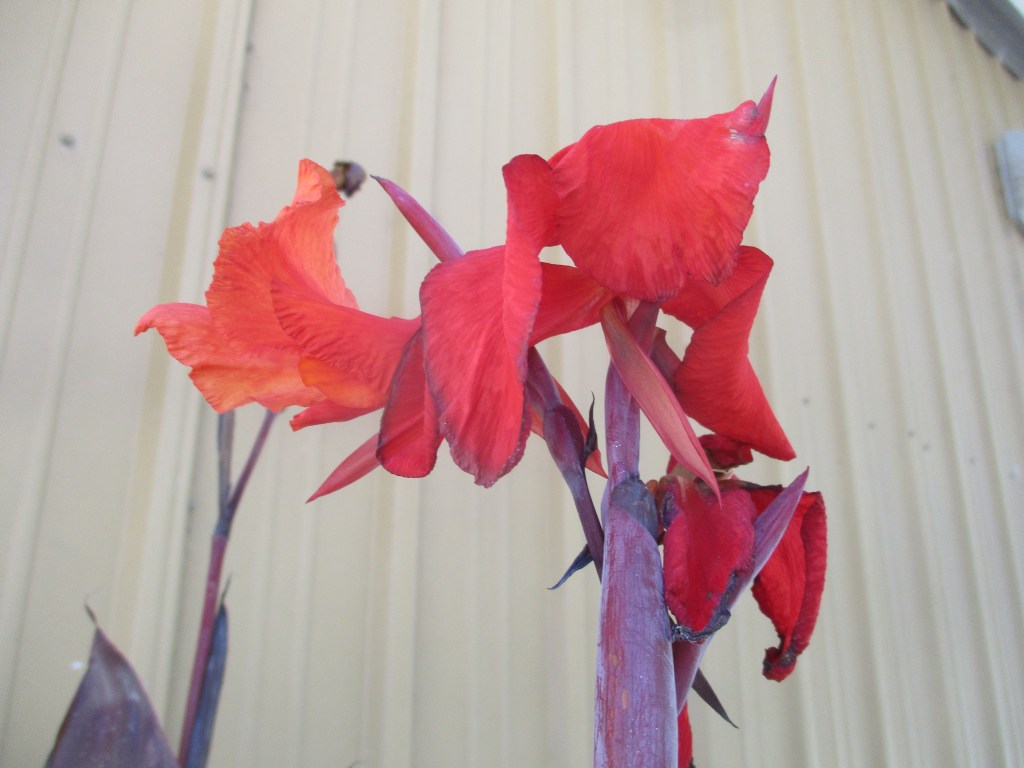
5. Canna – This also came from the downtown planter box. It needed to be removed to facilitate the repair of a few broken tiles. It will eventually return with the Aloe. This bloom is a surprise.
6. Vine maple – Acer circinatum is still healthy and reasonably happy after getting yanked from its landscape by a backhoe during the warmth of summer. I did not expect it to survive so well.

This is the link for Six on Saturday, for anyone else who would like to participate:

Fan Aloe

50610
Some aloes should have more fans.

most aloes are tough perennials that do not need much water. Unfortunately, they do not have many fans. Maybe that is why fan aloe, Aloe plicatilis, makes it’s own. The plumply succulent leaves are distichously arranged, which is a fancy way of saying that they are either to the left or to the right, flaring out to form foliar fans.

Individual leaves are just as distinctive as their arrangement is. They are not tapered and pointed like those of other aloes. Instead, they are about an inch and a half wide from end to end, with weirdly blunt tips. They get almost a foot long. The soft gray color contrasts nicely with coral flower spikes that bloom at the end of winter.

It grows slowly, but fan aloe is one of the few aloes that eventually grows into a big shrub with several sculptural trunks on a flaring base. In their native habitat in South Africa, old specimens grow as small trees more than ten feet tall. Branches that need to be pruned away can be rooted as cuttings after the cut ends dry out a bit.

Six on Saturday: More Unknown Succulents


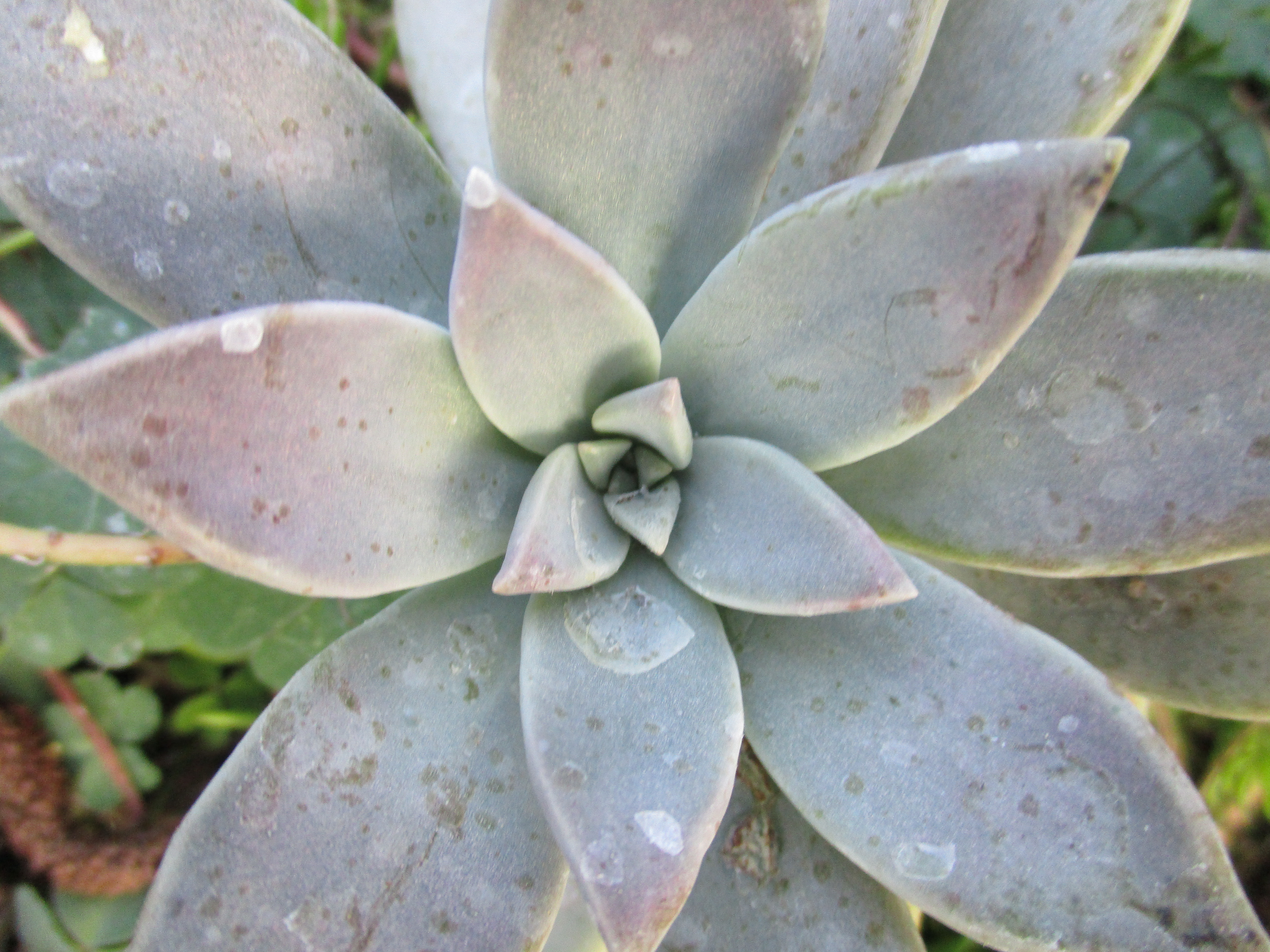
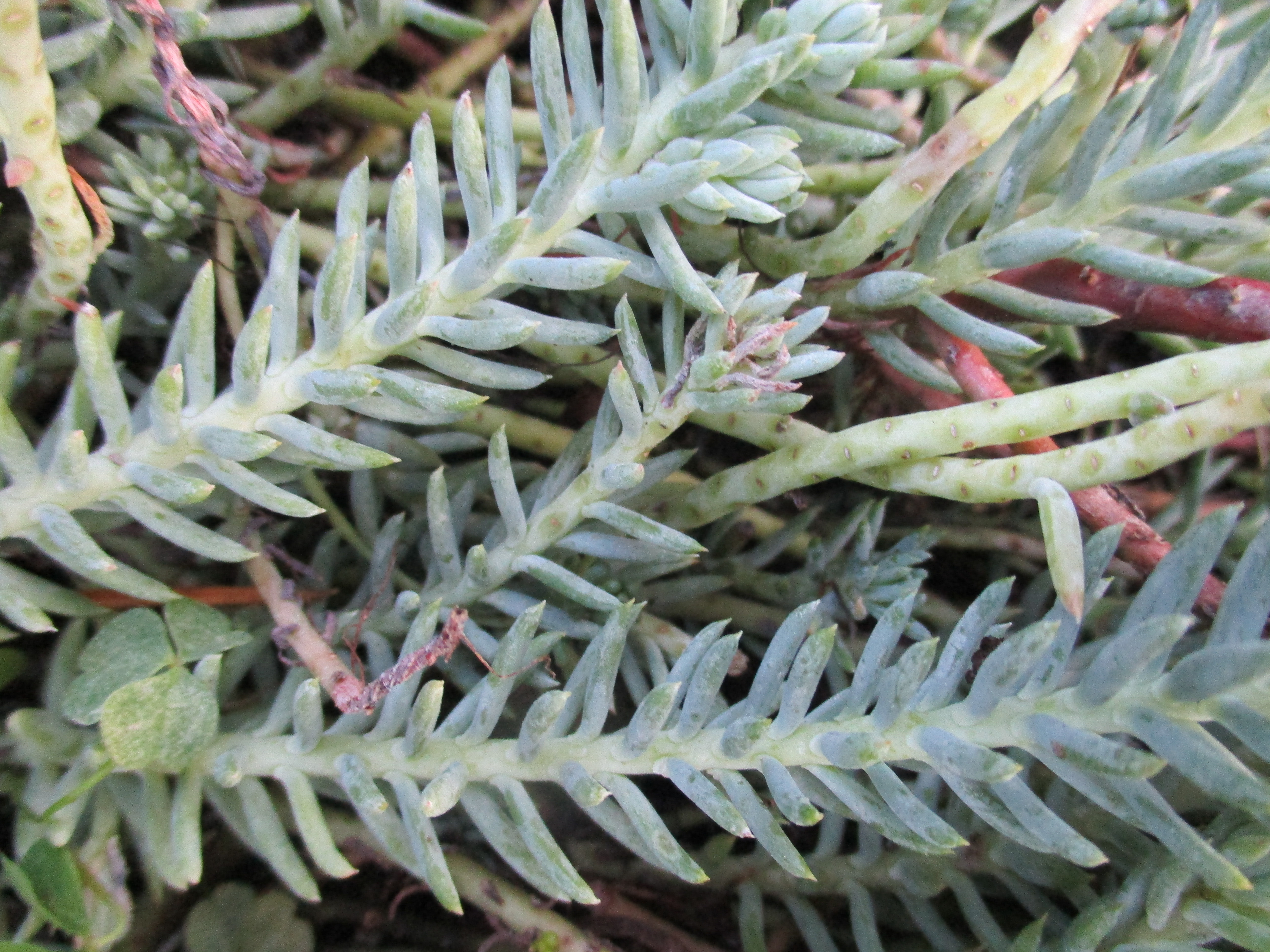
This is not as simple as it looks. It is something of a guessing game for me. I am rather certain that #1 and #2 are identified correctly. I am not so certain about #3 and #5. The name of #4 is merely a guess. #6 is the only one that I know the name of for certain, although the name that I know it as is now outdated.

The lack of a species name for the two species of Sedum #1 and #2 seems like a cop out to me. I might have discussed it in one of my Wednesday rants, or will do so soon enough. All species should be described as a ‘species’, not merely as a genus with a cultivar name tossed in as if it adequately designates the identity. I sometimes write about how the nomenclature of plants is like that of cars. Both plants and cars are distinguished by genus AND species, with some specie divided into separate cultivars and varieties. (Cultivars are merely ‘cultivated varieties’.) Depriving a plant of a species name is like describing a car as a Buick ‘Convertible’, or a Chrysler ‘Sedan’. There is a big difference between a convertible Electra and a convertible Skylark, although both are Buicks. There is also a big difference between an Imperial sedan and a LeBaron sedan, although both are Chryslers. I may not have identified the two Sedum with their correct names, but even their correct names are not very correct anyway.

Echeveria glauca #3 seems too simple. Shouldn’t it have a cultivar name too? I really do not know. I really do not even know what species it is.

The same goes for Graptopetalum paraguayense #4. Really, I do not even know what genus it is. This is merely a guess. How embarrassing.

Aloe brevifolia #5 has a different issue with its name. It seems that all aloes are known simply as Aloe vera, even though not many of us would recognize Aloe vera if we actually saw it. This makes it easier to identify unknown aloes, but complicates the identification of familiar aloes.

Then there is the easily identifiable Bulbine caulescens #6. Seriously, I recognize it, but somehow, the name got changed. The first name is how I know it. The second name is the newer correct name.

1. Sedum ‘Angelina’P81124

2. Sedum ‘Blue Spruce’P81124+

3. Echeveria glaucaP81124++

4. Graptopetalum paraguayenseP81124+++

5. Aloe brevifoliaP81124++++

6. Bulbine caulescens or Bulbine frutescensP81124+++++

This is the link for Six on Saturday, for anyone else who would like to participate:
https://thepropagatorblog.wordpress.com/2017/09/18/six-on-saturday-a-participant-guide/

Candelabra Aloe

70201As a group, aloes really deserve more respect. Many will naturalize and thrive with only occasional watering through summer. Candelabra aloe, Aloe arborescens, wants a bit more water than most other aloes, but not much. It looks like a sensitive jungle plant, but is surprisingly durable, and very easy to propagate. Any pruning scraps can be plugged wherever new plants are desired.
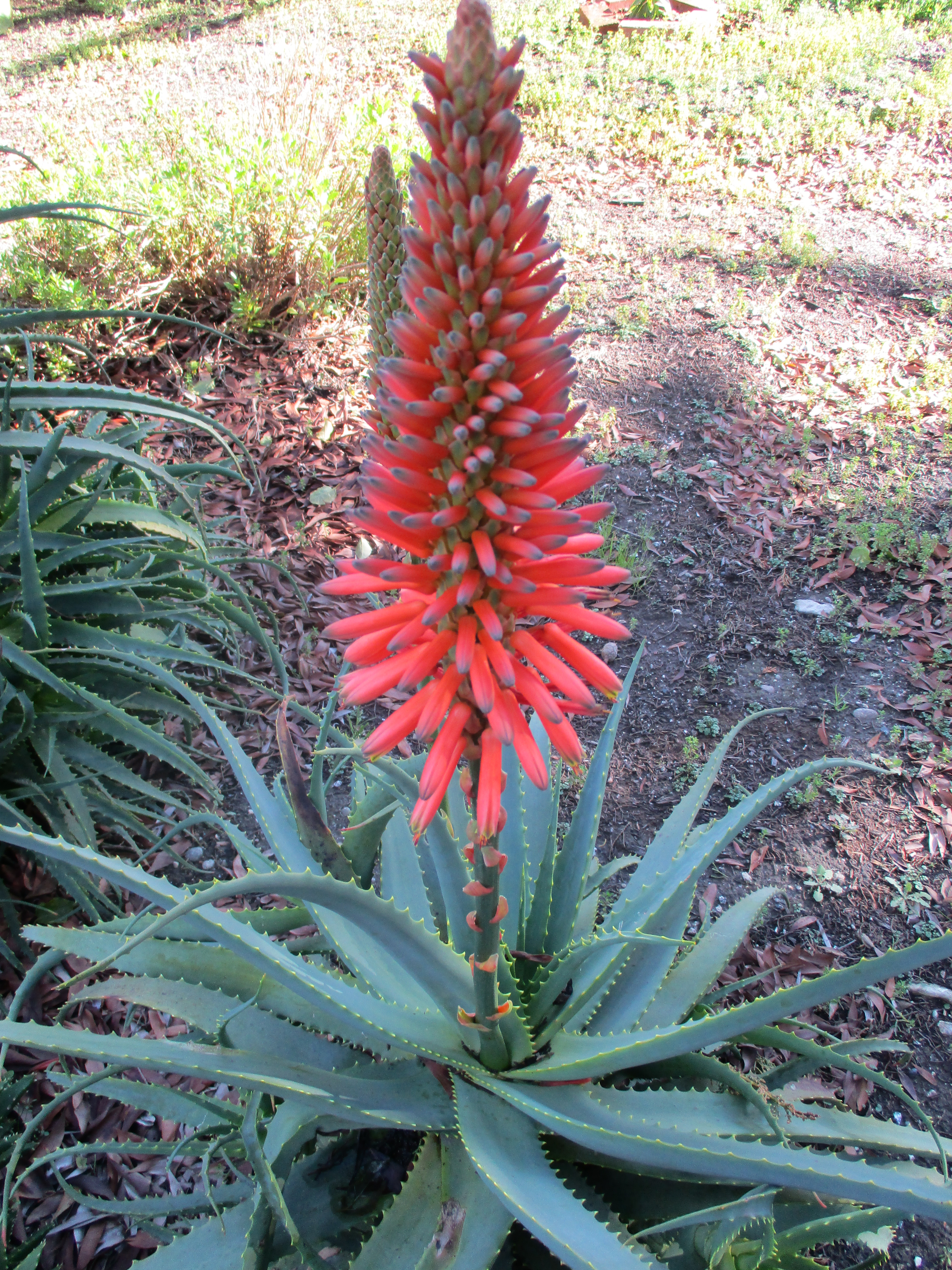
The foliage alone is striking. Some might say that the loosely arranged foliar rosettes are sloppy. Others might say they are sculptural. The long and curved leaves are outfitted with prominent but soft marginal teeth. Some specimens have narrower leaves that are almost curled. ‘Variegata’ is striped with creamy white. Mature plants may form dense mounds more than six feet high. Hummingbirds and bees really dig the flashy bright reddish orange floral trusses that bloom on tall stems in winter.

Aloes (and a Rant)

P71020We really should be growing more of what grows well here. This is as relevant in other regions as it is in the Santa Clara Valley. Some regions have a lot more to choose from. There are always limitations too. Tropical plants do not survive the winters of New England. Apples and pears want more winter chill than they can get in San Diego.

In California, we do not have enough water to go around. Well, that is not completely true. Much of that misconception is political, which is none of my business. Much of it is that there are just too many people living here and sharing a limited resource. Much of it is that many of the too many people living here waste water on, among other things, gardening.

Many of the urban areas of California are in chaparral climates, which means that there is not much rain. Los Angeles and some other urban areas are full blown desert, which means that rain is quite minimal. My former neighborhood in the western Santa Clara Valley got about a foot of rainfall annually. It was considered to be chaparral. Trona, in the Mojave Desert, gets about four inches of rain annually.

However, few people in chaparral or desert regions landscape their homes accordingly. Some limit their ornamental plants to natives. Others limit their choices to plants from chaparral or desert climates, even if not native. Yet, most of us grow plants and lawns that really have no business in chaparrals or deserts, and we do so excessively.

Well, enough of that rant. There are many plants that really should be more popular here.

Aloes are a perfect example. Although many are from more tropical climates, most do not need to be watered too much. Some prefer minimal watering through summer. After winter rains, they produce fresh new succulent foliage in spring, and bloom reliably. Many have flashy orange or yellow flowers on striking vertical spikes. As plants grow, superfluous shoots can be separated and planted wherever more of the same plants are desired.

Smaller aloes are quite dense and mounding, with tight rosettes of stout leaves. Larger types with more open growth can get six feet tall. A few grow into small trees, with thick trunks that might be distended or buttressed at ground level. Leaves might have pronounced teeth along the margins, and most are spotted to some degree.

Everything about aloes is striking. They have prominent and colorful bloom. The distinctive succulent foliage is bold and unique. The larger aloes even have sculptural form.

Aloes are ideal for planters and pots because their roots are so complaisant and undemanding. They are rarely bothered by insects or disease. They are so easy to propagate that cuttings or pups can be acquired from friends or neighbors who are already growing them.