John the Baptist did not really eat orthopteran insects out in the desert. The locust he ate were the beans of the carob tree, Ceratonia siliqua. They are actually quite nutritious. Supposedly, they are known as locust because they resemble the elongated abdomens of the insects with the same name. A few other related trees that also produce beans are collective known as such.
Robinia pseudoacacia happens to be known as black locust, even though there is nothing black about it, and the tiny and papery beans do not even remotely resemble insects. Supposedly, it arrived with Gold Rush prospectors who wanted something of their homes in Eastern North America. It naturalized aggressively, and is now an invasive exotic species in much of the West.
We tolerate a few at work. They are too pretty to cut down without a good excuse. However, one gave us a good excuse when it fell last winter. It was notably polite about it, by falling into a gap between two roofs that a cat could jump across. Damage was very minimal. Nonetheless, the tree and its destabilizing associates needed to be removed. They are gone but not forgotten.
1. Thorns of black locust only look blurry in this picture. They are wickedly sharp! The sharpest are on the most vigorous stems, which is exactly what the freshly cut stumps here generate.
2. Thickets of suckers (or watersprouts) like these developed where black locust trees were cut down last winter. Most developed on freshly cut stumps. Many emerged from random roots.
3. More than half of the suckers from the formerly impenetrable thicket around the stump at the center of the picture were removed to relinquish space for the lauristinus in the foreground.
4. A few bay trees got cut down with the black locust trees. I wanted them coppiced, but was away when they instead got VERY badly pollarded. Oh, the shame! (I will coppice them later.)
5. As nasty as black locust is, it has a few attributes. Spring bloom resembles that of white wisteria, and is almost as fragrant. This finely textured pinnately compound foliage is quite elegant.
6. Their high and open canopies provide nice shade too. It is just enough for warm summer weather, but not too much to exclude turf grass and understory plants that tolerate partial shade.
This is the link for Six on Saturday, for anyone else who would like to participate:
https://thepropagatorblog.wordpress.com/2017/09/18/six-on-saturday-a-participant-guide/
 This is not about North and South. It is about a utility pole and a pole that remained from a redwood tree that was too close to it. One is there to support a variety of cables and a streetlamp. The other just wanted to grow into a redwood tree to join the rest of the forest. One has been deceased for many years or decades. The other was alive just recently, but is now only a stump.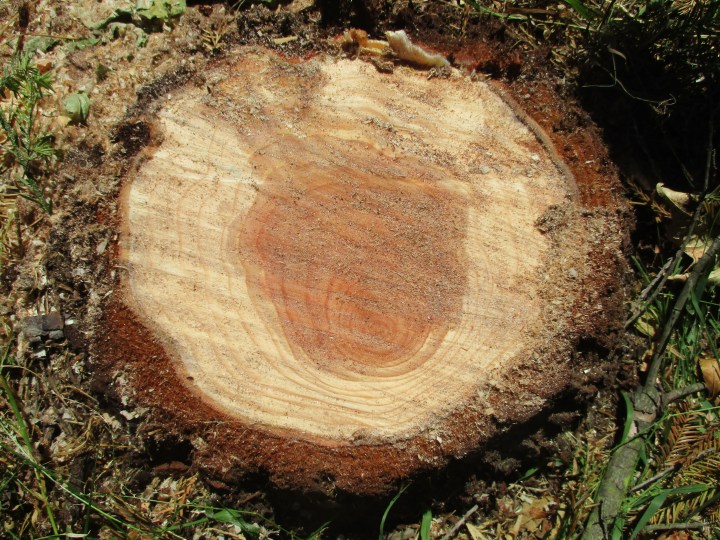

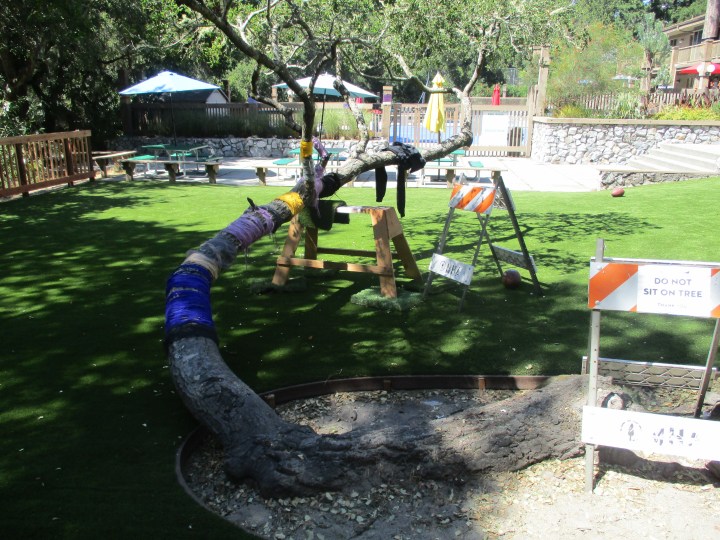
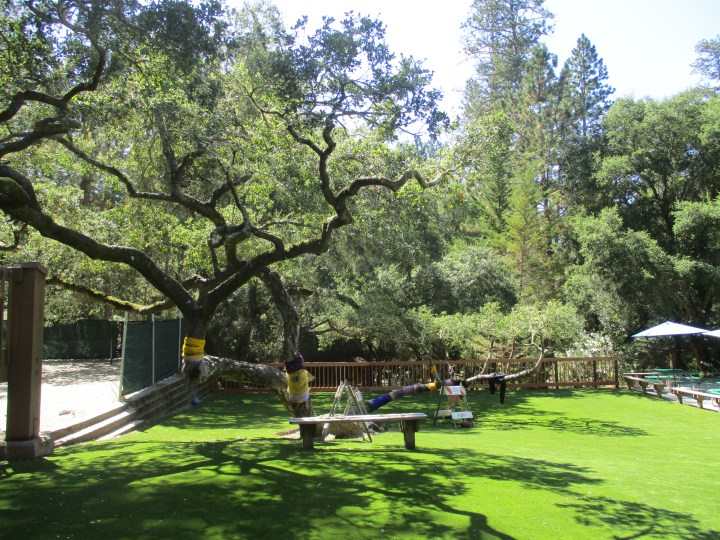
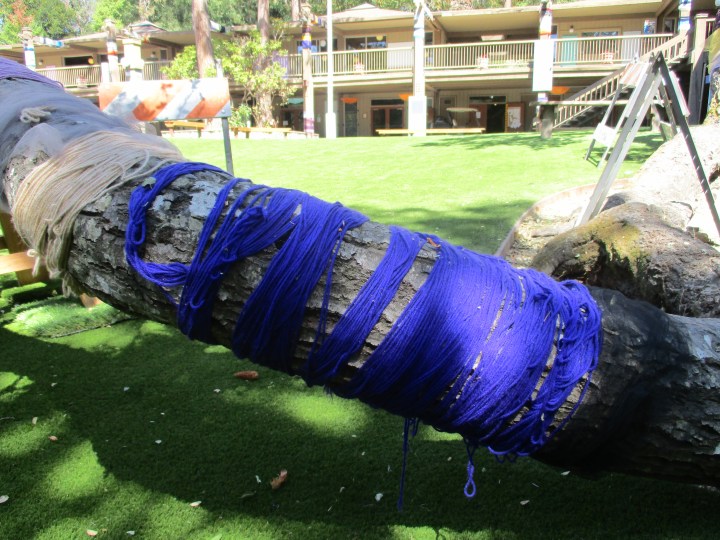
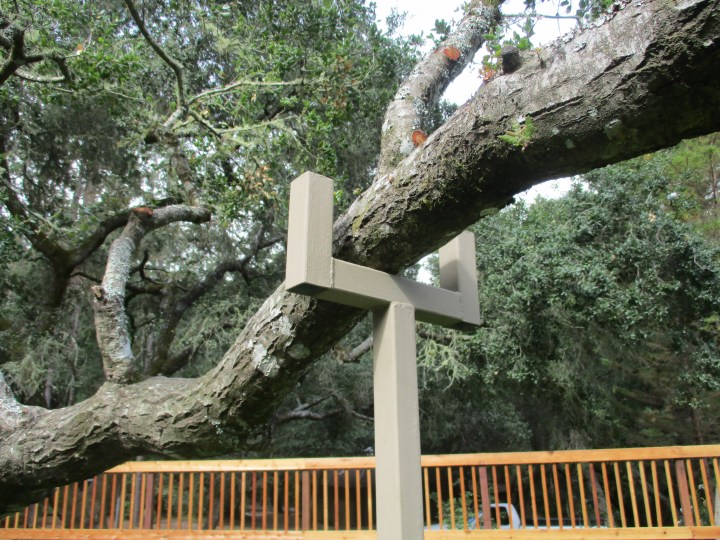 It has been almost a month since one of three small but sculptural and very prominent coast live oaks at work was destabilized by . . . well, children. They were climbing on it, as most good children should do. There were a few of them; and the tree is old and deteriorating. All three of the trees actually grew from the same rotten stump of a tree that was cut down decades ago.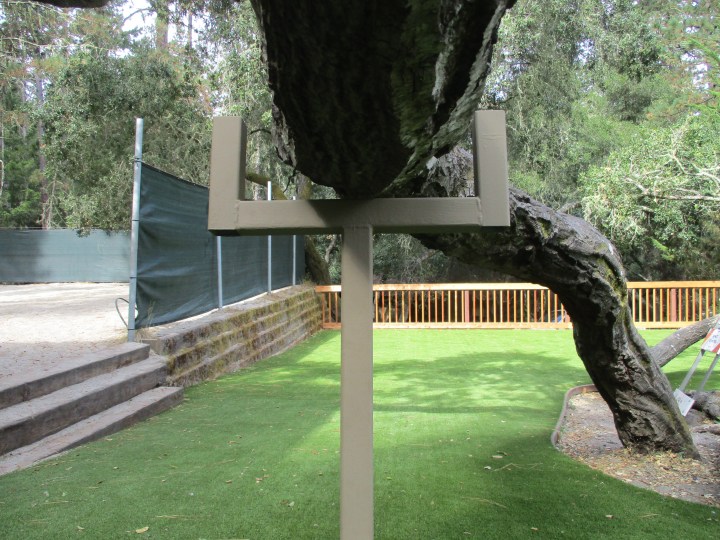
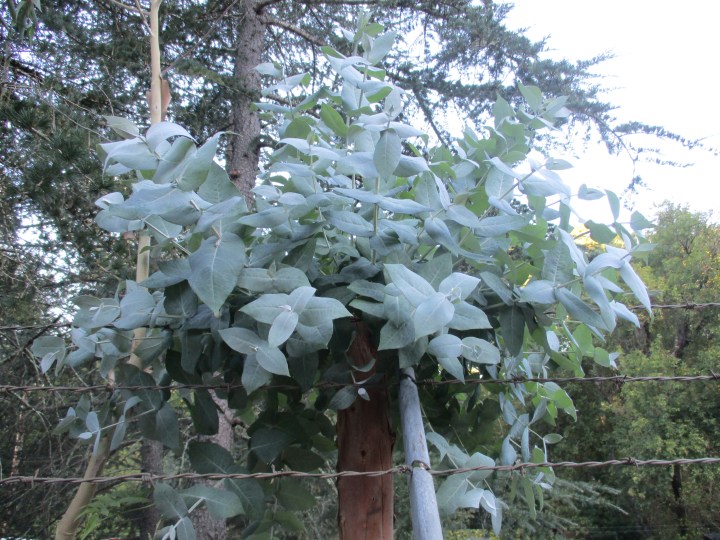 Just about any other arborist will insist that any pollard is a bad pollard. I am not any other arborist. I have no issue with pollarding certain trees properly.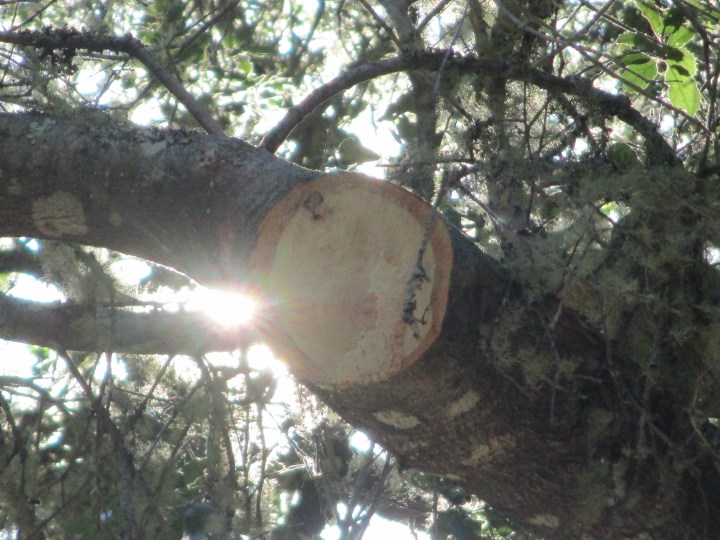
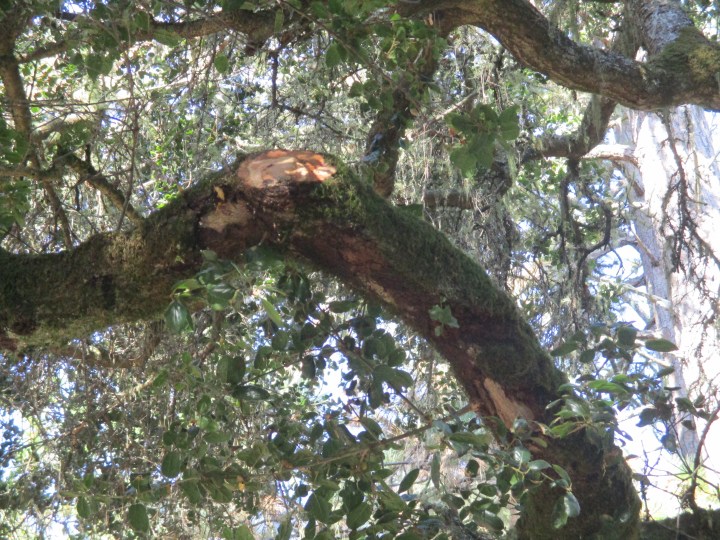
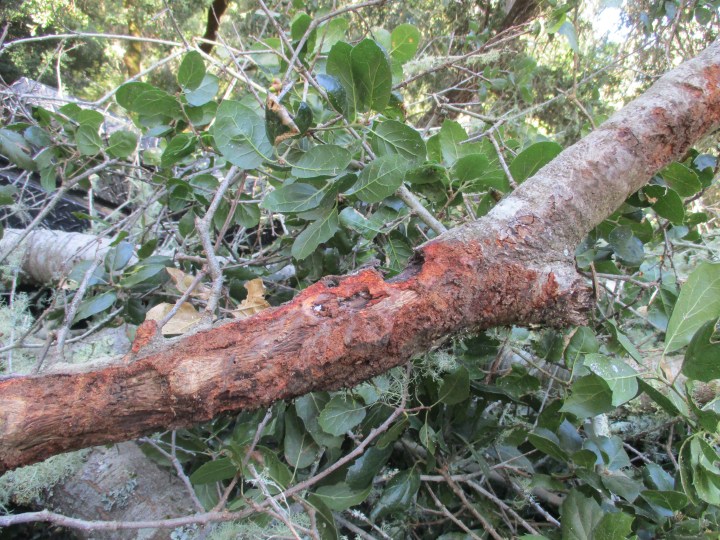
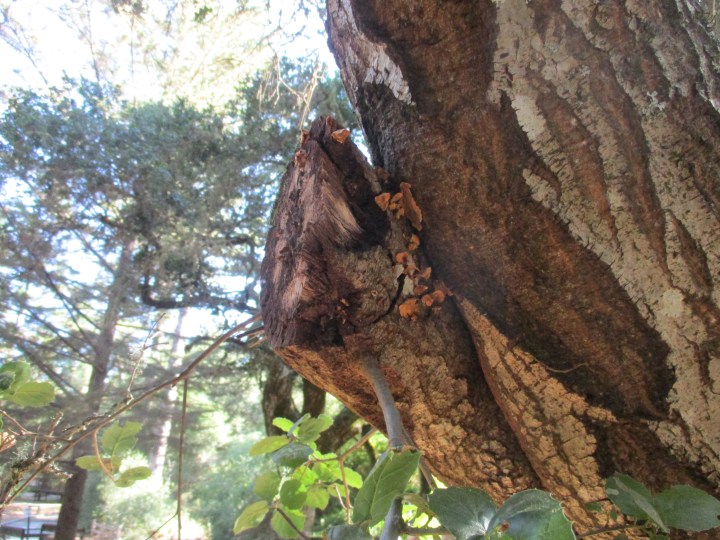
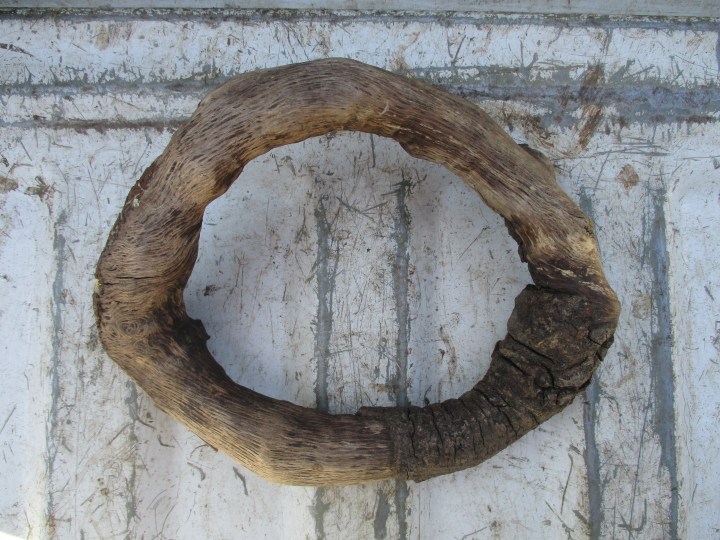
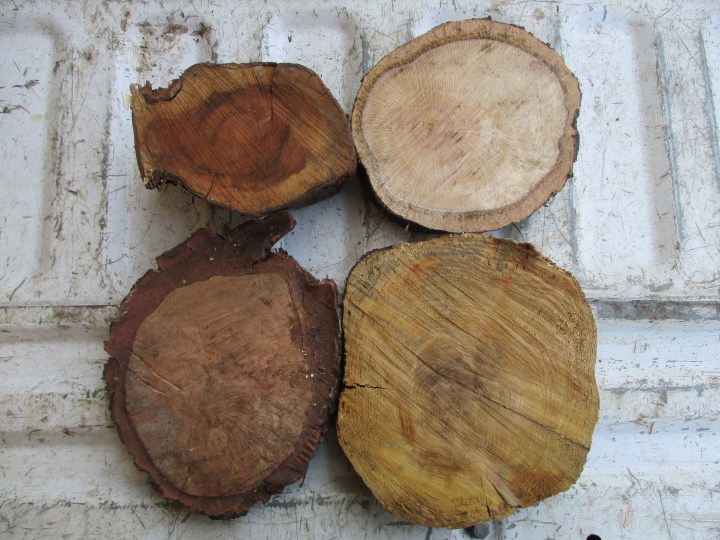
 Big trees get big problems. Part of our job is to tend to these problems before they become dangerous. Many of these problems are somewhat easy to identify. A deteriorating ponderosa pine with browning foliage it difficult to ignore if it is tall enough to be seen above the rest of the forest more than a mile away.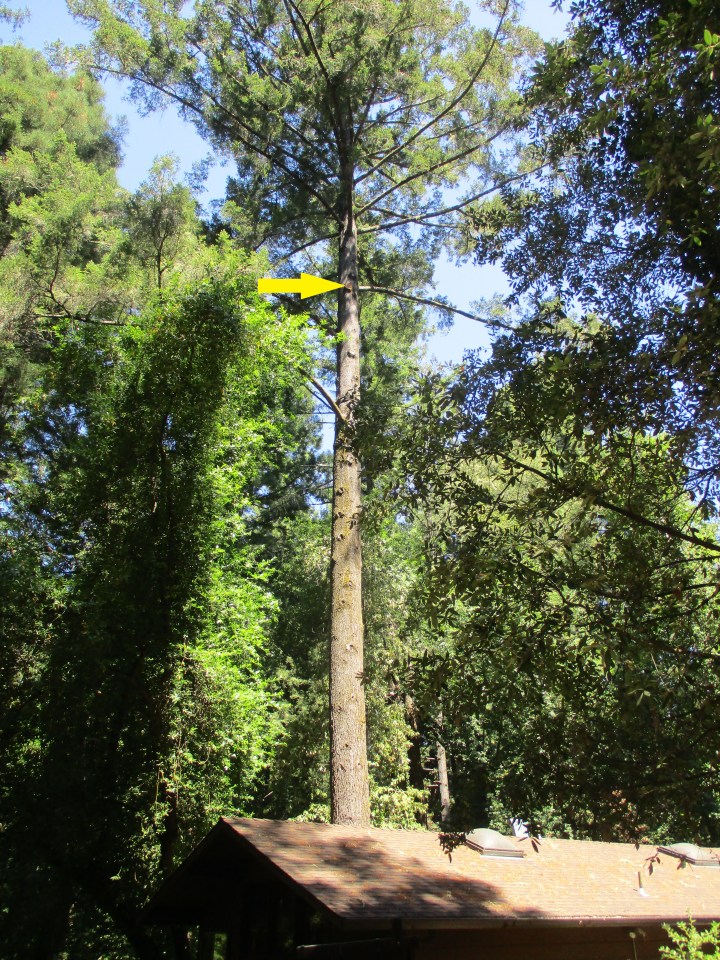
 Among pines, firs, redwoods and most excurrent trees (with central leader trunks), stubs or stumps of limbs that were shed are common and more apparent than they are among decurrent trees (which branch into many main limbs). The older lower stubs slowly but eventually decay and fall away as the trunks compartmentalize (heal over) where they were formerly attached.
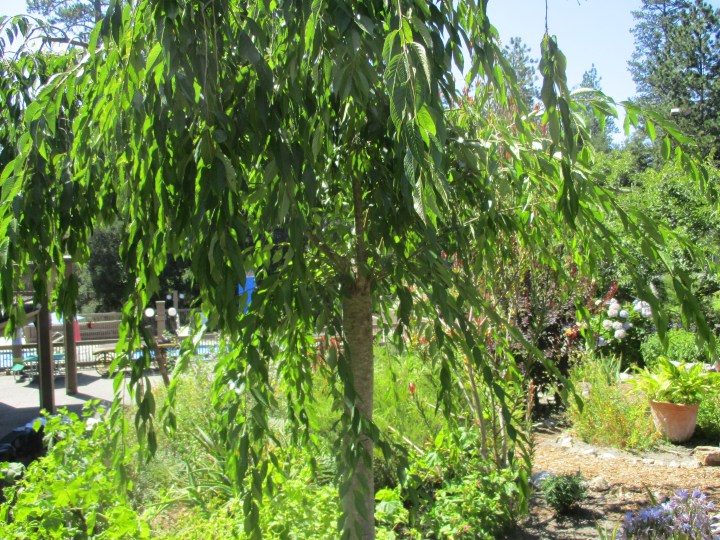 Weeping flowering cherry is another type of tree that almost never gets appreciated like it should. Like so many Japanese maples, they get planted into situation where so-called ‘gardeners’ shear them into nondescript globs of worthless foliage that only get in the way. Some get shorn so regularly that they are deprived of bloom. Their form and bloom are their two main assets.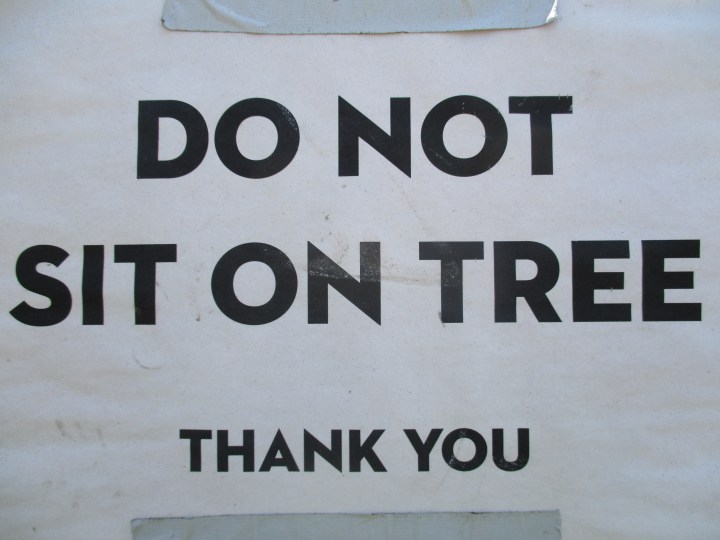


 This grand sycamore has likely been here since the third day of Genesis. A few of the top branches got broken off when Noah’s Ark floated over. When I was a little kid, it was on the edge of a vacant field where road debris was dumped, and older kids rode their dirt bikes. Now it is on the western edge of the parking lot of Felton Covered Bridge Park. I write about it sometimes.
 Tony Tomeo