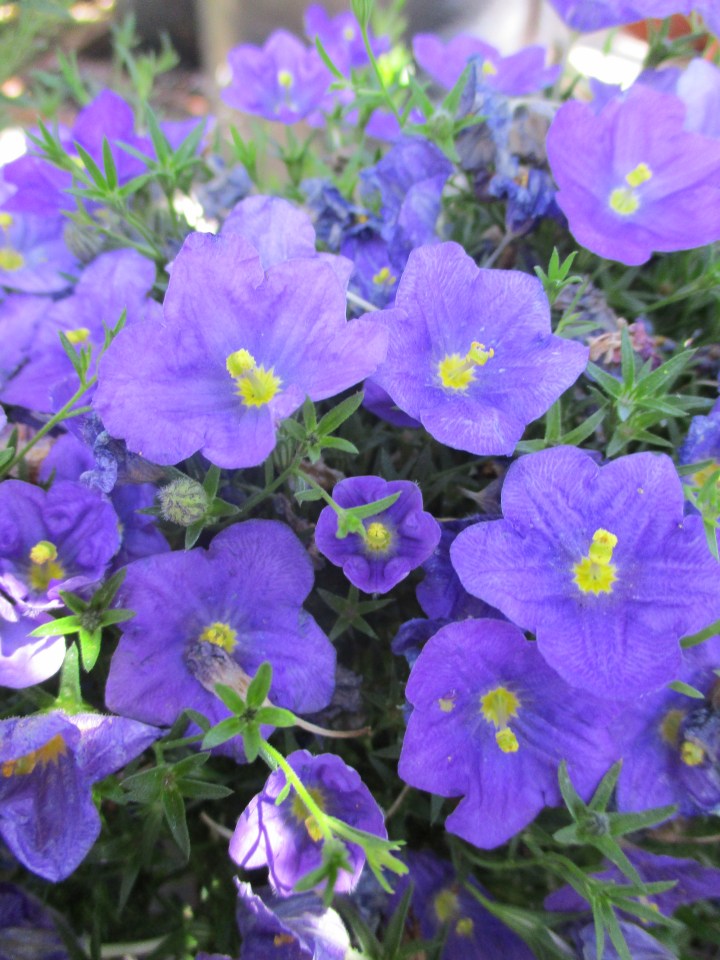
When first created by Chrysler, the Imperial was considered to be so close to perfection that fancy colors were unnecessary. It was originally only available in black or white, and later red, like the Chrysler Imperial rose that was named for it. It took a while for other colors to become available. Perhaps perfection is the same reason why nierembergia is only blue or white, or maybe purple.
Nierembergia is most popularly grown as a warm season annual for color from the middle of summer to autumn. It can get half a foot high and a foot wide. As a perennial, it has the potential to get twice as high and wide after its first year, but it lasts only a few years, and looks rather shabby through cool winter weather. The small flowers are evenly dispersed over the finely textured foliage, lacking only on the shaded sides of the densely rounded plants.
Because it gets a bit deeper than most other annuals, nierembergia is a nice transitional plant between lower annuals that might cascade over the edge of a planter in front, and higher or more upright perennials or shrubbery that might obscure a foundation behind. It can work alone too, but does not cascade from planters, big pots or hanging baskets.
 This one is no fun to handle. It is just as prickly as it looks. Yet, it is the spiny foliage and blooms that make ‘Big Blue’ sea holly, Eryngium X zabelii ‘Big Blue’, so appealing. The knobby blue thistle flowers are centered on prominently flaring grayish blue bracts that look like metallic snowflakes. The intricately lobed grayish foliage contrasts splendidly with just about any darker green foliage.
 The delightfully clear sky blue flowers of blue plumbago, Plumbago auriculata, seem like they belong with colorful annuals or in a tailored border of colorfully blooming perennials. However, the rampant canes of mature plants are really best in the background where they have room to grow wild. The canes do not climb like vines, but can flop over other shrubbery as high as fifteen feet.
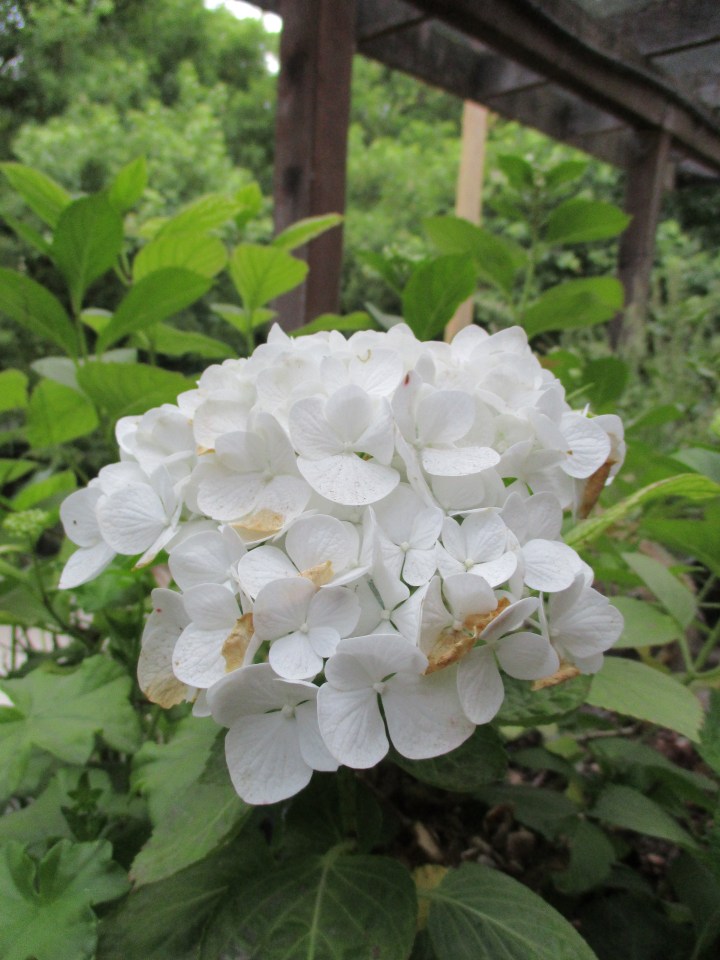 There are so many more of the fancier cultivars of hydrangea, Hydrangea macrophylla, than there were as recently as the 1990s. Many of the pink and blue hydrangeas were interchangeable years ago. They would bloom blue if the soil was acidic. They would bloom pink if the soil was alkaline. Their color changed accordingly when planted from potting media into soil of another pH.
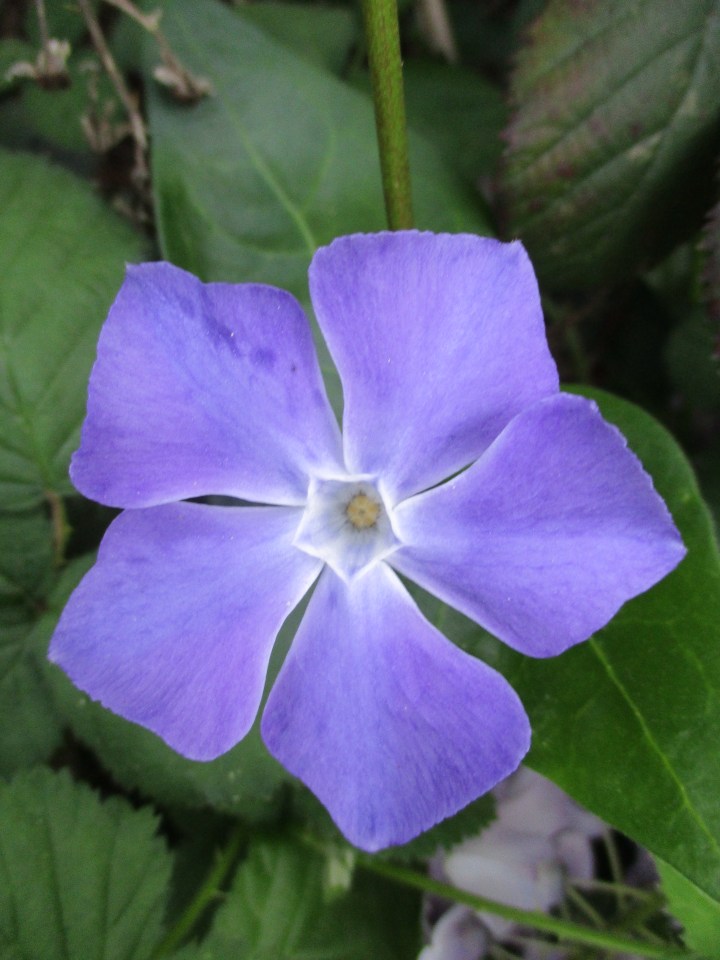 Like so many of the easiest to grow plants, periwinkle, Vinca major, is too easy to grow. It has become an invasive exotic (nonnative) weed in many moist riparian environments. It can get rather weedy in home gardens as well. This can be an advantage if it happens to fill in for bald spots in areas of other ground cover. It is a disadvantage if it overwhelms or competes with other plants.
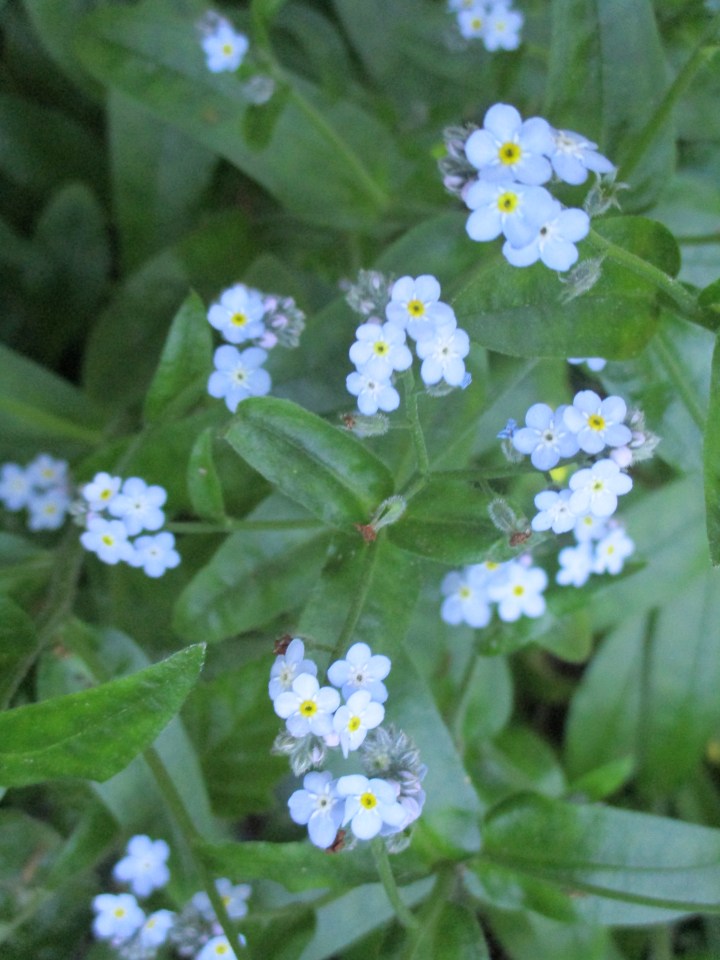 It is not easy to forget annual forget-me-not, Myosotis sylvatica. Even if it dies back early in the heat of summer, it will probably throw plenty of seed to regenerate through next winter, and bloom again by next spring. It can easily naturalize in damp or riparian areas, and might be considered to be a weed; but like nasturtium and foxglove, it is a polite weed that is not aggressively invasive.
 What ever happened to Point Reyes ceanothus? It is such a nice low growing shrub, with small holly-like leaves, and cheery blue flowers in very early spring. It was quite popular when it initially became available, but now seems to be rare. Maritime ceanothus, Ceanothus maritimus, from San Luis Obispo County, is a similar species that presently seems to be getting more attention.
 Most of the brachyscome found in nurseries nowadays are the annual Brachyscome iberidifolia. Perennial species are rare. The name is still often spelled as ‘brachycome’, without the ‘s’, as it had been spelled for decades. Although it is a warm season annual, brachyscome is also popular now because it can bloom better through the locally mild winters than the warmth of mid summer.
 Like euryops daisy, sweet pea shrub and New Zealand tea tree, the blue hibiscus, Alyogyne huegelii, blooms whenever it wants to, even if it wants to bloom sporadically through winter. It should bloom more abundantly in phases though spring and summer, but even that is difficult to predict. The three inch wide flowers are lavender blue, but can be rich purple or white. Pink is very rare.
 Tony Tomeo