In A Vase On Monday: Bad Habit

The small bouquet of only four roses that I shared last week was my first for In A Vase On Monday, and should have been my last. I do not intend for this to become a habit. I just happened to encounter a few cheap and trashy flowers right outside that I thought I could assemble for a picture. If I had planned this better, I would have gotten some more interesting flowers from work, and perhaps a more appropriate vase.

Common florist cyclamen should be finishing bloom now that the weather is warming. I am none too keen on how florist cyclamen is used as an expensive cool season annual, so started planting ‘used’ plants into some of the landscapes where they can grow as cool season perennials. They go dormant through summer, and then regenerate during autumn. I do not know why the specimen that produced these few rich red flowers was not planted with the others. It got potted instead, and is now in the recovery nursery.

Mosquito shoo geranium is a bit perplexing also. I got a few cuttings of what I thought was a more appealing scented geranium several years ago. I thought that those cuttings desiccated while I was in Southern California for several days. A few months later, mosquito shoo geranium appeared where the cuttings had been, and grew like a weed. I do not know if it grew from a surviving cutting, or from seed that blew in on the wind and just happened to land there. The specimen that provided these few flowers grew as a second generation seedling.

Flowering maple, although not naturalized, grows from seed near specimens that were intentionally planted. They are remarkably variable. The specimen that provided this single flower, as well as several other small specimen, were taken from a neighbor’s garden that could not accommodate all of them. We intended to add them to our landscapes, but have not done so yet.

The tiny vase is a ‘shooter’ bottle that formerly contained an ounce of some sort of tequila. A few of the same were found in the ivy of one of the landscapes at work. I like them because they are glass rather than plastic like the more common vodka shooter bottles. Also, they are adorned with that distinctive blue agave motif, which sort of makes them more horticulturally oriented.

The dusty shelf and glare on the glossy white background are no accident. The vase was placed on the sill below a whiteboard in our meeting room at work, just inside from where the flowers were collected. It seemed like an appropriate venue at the time, although I can now see that I could have done better.

In A Vase On Monday, which is also known simply as IAVOM, is graciously hosted by Cathy of Rambling in the Garden. Anyone can participate. Simply arrange flowers or other material from the garden in a vase, and share pictures of it with commentary and a link back to Rambling in the Garden. Also, leave a comment at Rambling in the Garden with a link back to your post.
Six on Saturday: More White Trash

White is my favorite color. That is why I write about it a bit more than I should. It seems simple enough to me. However, Brent says that I am a white supremacist. Furthermore, he says that I am white to go with it! More specifically, he says that I am white trash. I doubt that a white supremacists would agree, but I really do not care. White just happens to be my favorite color. That is why I got six pictures of white flowers for this week, even if some of them seem to be rather trashy to the more discriminating sorts.

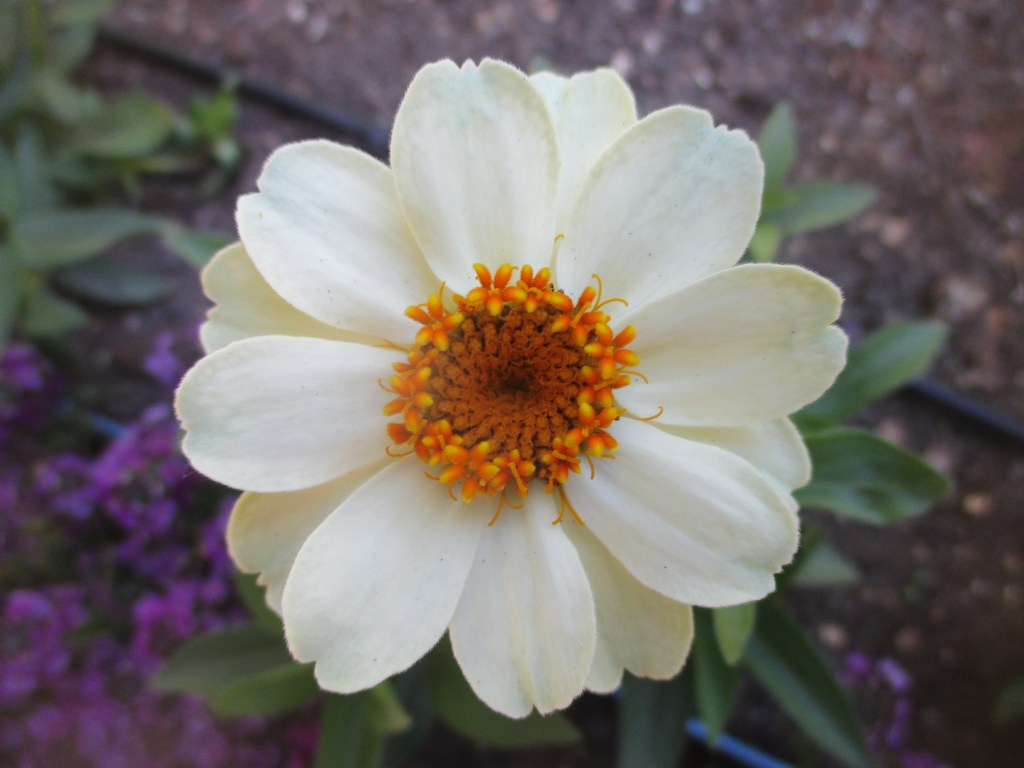
1. Zinnia is a warm season annual that will now be with us through summer. I am none too keen on annuals. Fortunately, I need not work with them. Incidentally, the zinnia colors are mixed.

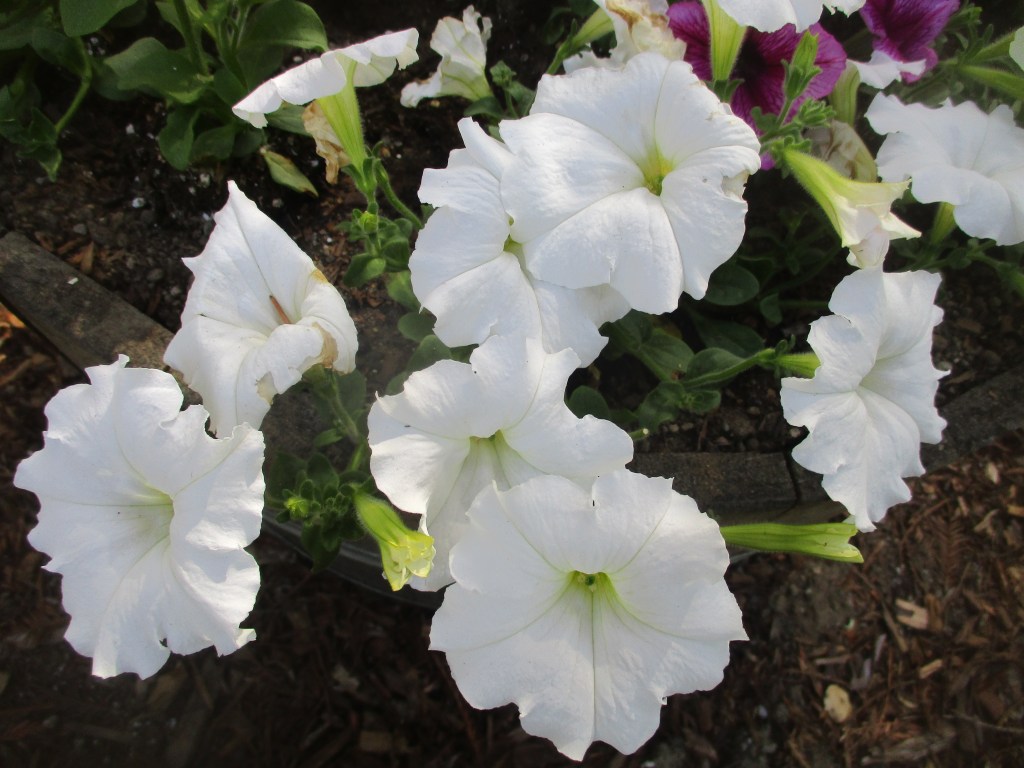
2. Petunia is another warm season annual for summer. Like the zinnia, their colors are mixed. Extra white petunia were added to the mix because I like white. I was uninvolved with selection.

w

3. Rose should not be as trashy as annual bedding plants; but this one is Iceberg. As if that were not bad enough, it is grafted together with purplish Burgundy Iceberg as a standard ‘rose tree’.

4. Azalea should be less trashy than rose; but I believe that this one is Fielder’s White. I am not certain. It somehow looks differently this year. Regardless, I like it. Bloom is deteriorating now.

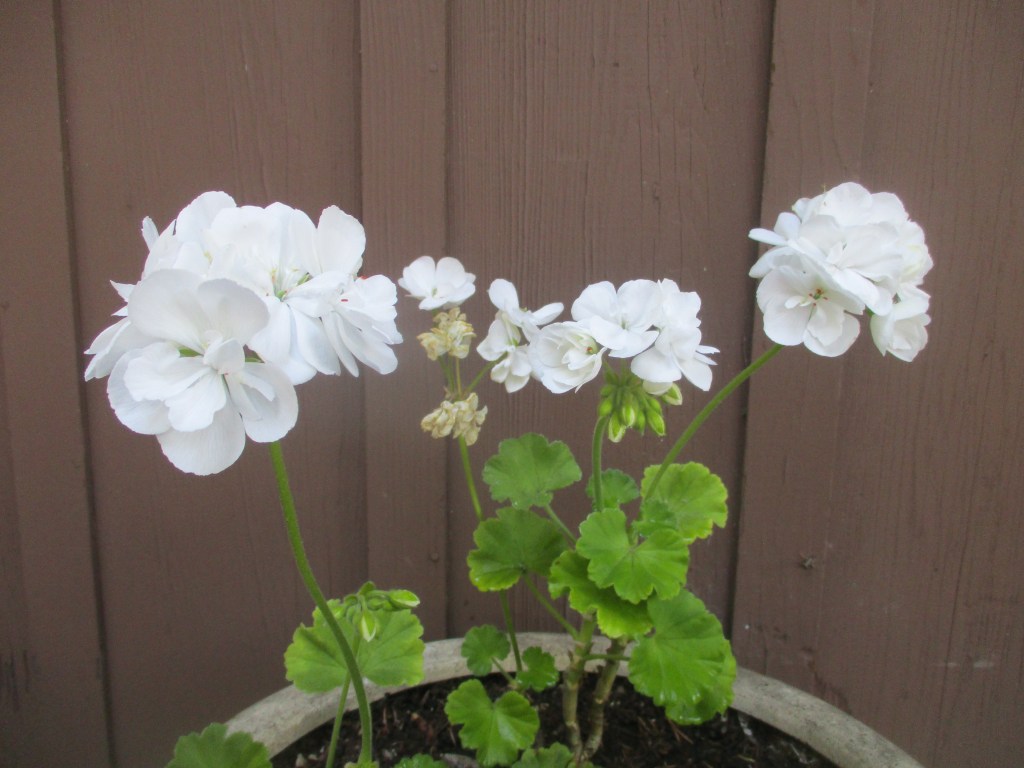
5. Geranium, which is more correctly known as zonal geranium because of its darker foliar halos or zones, is actually Pelargonium X hortorum rather than a geranium. These are new cuttings.

6. Angel’s trumpet is perhaps the least trashy of these Six, but looks shabby now because it is blooming so well with only skimpy foliage. It mostly defoliated after transplant three months ago.

This is the link for Six on Saturday, for anyone else who would like to participate:

https://thepropagatorblog.wordpress.com/2017/09/18/six-on-saturday-a-participant-guide/

Fragrant Flowers Often Lack Color

Unremarkable flowers can be remarkably fragrant.

It is presumptuous to believe that all the fancy breeding that is done to enhance the characteristics of flowers necessarily ‘improves’ them. Breeding only makes flowers more appealing to those who enjoy them in their gardens. Most flowers were already quite efficient for their intended function in their respective natural habitats long before humans started tampering with them. As far as flowers are concerned, they only need to get pollinated.

Some flowers use flashy color or patterns to be visually attractive to pollinators. Others use fragrance to be olfactorily appealing. Small but profuse flowers that are neither colorful nor fragrant have given up on insect or animal pollinators, so instead rely on the wind to disperse their pollen.

Not many flowers are both remarkably colorful and remarkably fragrant like freesia, lilac and wisteria were earlier in spring. Lily and bearded iris are of course very colorful, but not all types are fragrant. The big and bold flowers of cereus cactus, moon flower and angel’s trumpet are only fragrant because they bloom at night, and rely on nocturnal  pollinators who benefit from a bit more guidance in the dark.

Many fragrant flowers are somewhat showy, like gardenia, star jasmine, pink jasmine and honeysuckle. (However, gardenia are almost never healthy and showy locally.) Many of the most reliably fragrant flowers are really not much to brag about. Pittosporum tobira, Pittosporum undulatum and sweet osmanthus are known more for the appealing evergreen foliage than for their small and nondescript flowers. The flowers of sweet osmanthus may actually be difficult to find amongst the obscuring foliage. Night blooming jasmine is sometimes planted around corners or in the background because even the foliage is not too appealing, although the powerful candy-like fragrance is a favorite for warm evenings.

Fragrant flowers can be annuals like sweet alyssum, bulbs like hyacinth, or perennials like tuberose. Woody plants with fragrant flowers can be vines like stephanotis, shrubs like mock orange (Philadelphus spp.), or trees like Southern magnolia. Some have brief bloom seasons, while others bloom for quite a while.

In A Vase On Monday: Mothers’ Day

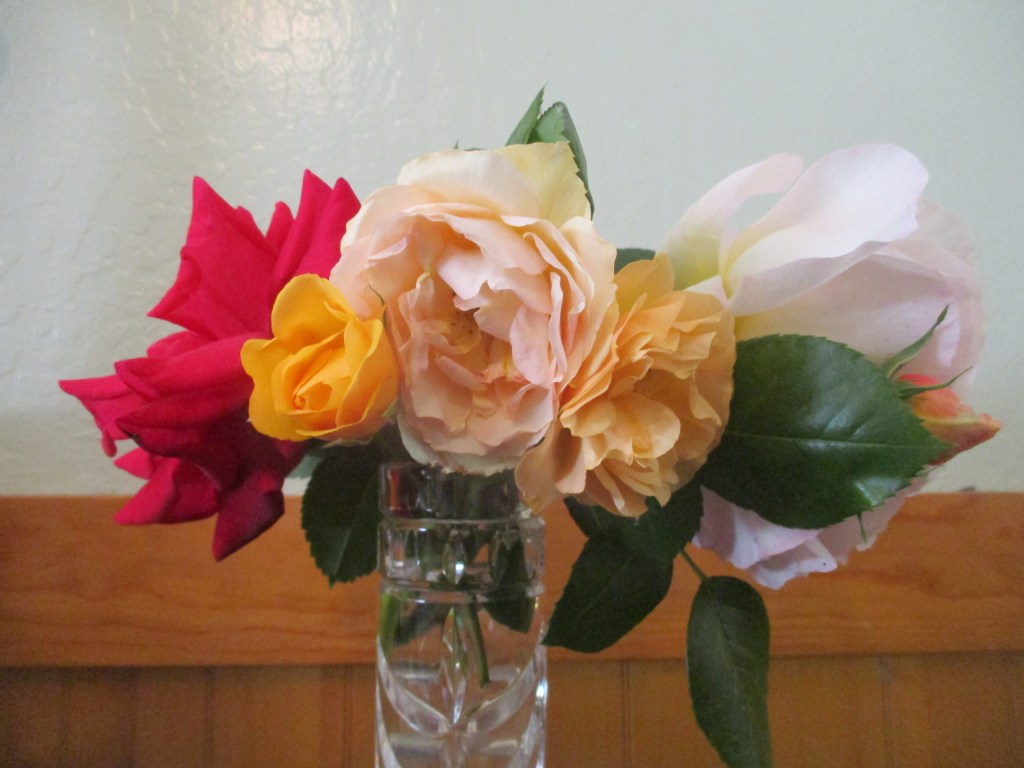
Yesterday was my first Mothers’ Day without my mother. I got her roses though. I mean I dug and canned the roses from her rose garden last winter. They live here now. Most were rather shabby and old, and probably should not have been salvaged. Nonetheless, they are all remarkably healthy now, even if only four bloomed so far. These are the same four that I got pictures of earlier, for Six On Saturday two days ago, so are somewhat faded now. Since these are the first blooms on elderly plants that, although healthy, are recovering from brutal transplant, the stems are quite puny. I gingerly set them in one of my mother’s Waterford vases, with nothing else. They would have disintegrated if I had tried to ‘arrange’ them. Instead, I simply left them facing away from each other in four different directions. Even if they had been in better condition, I really do not know much about arranging flowers. I only grow them.

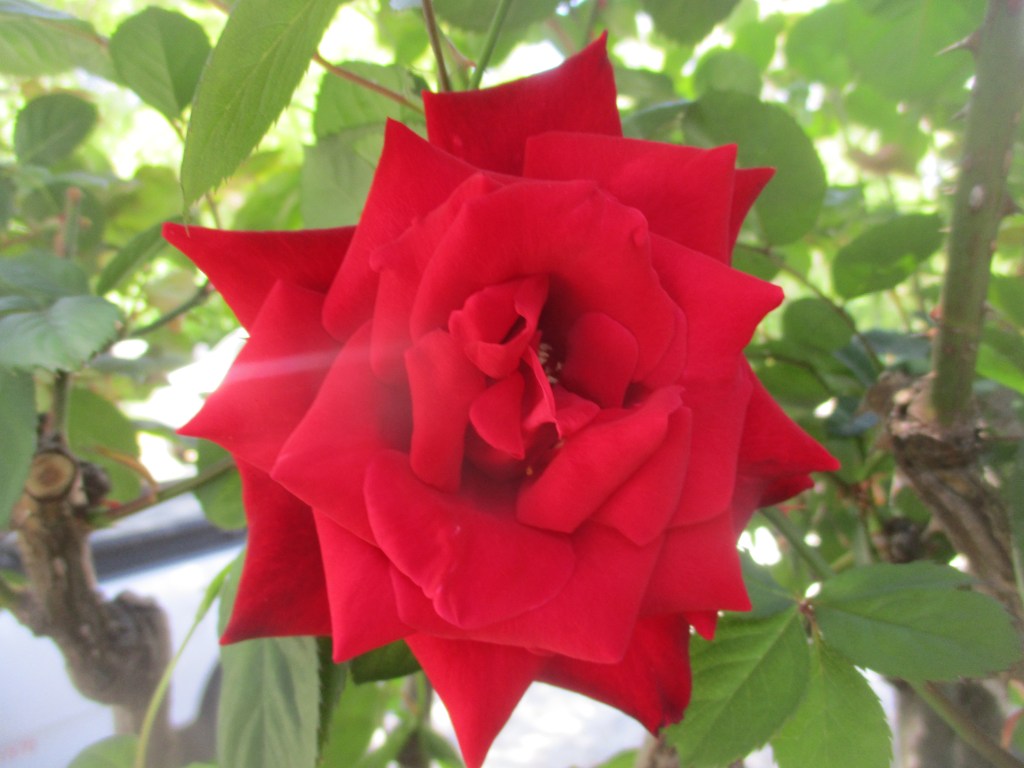
‘Proud Land’ is my favorite of the entire rose garden, and the oldest of the original roses. I planted the first in about 1984, and added two more during the following winter.

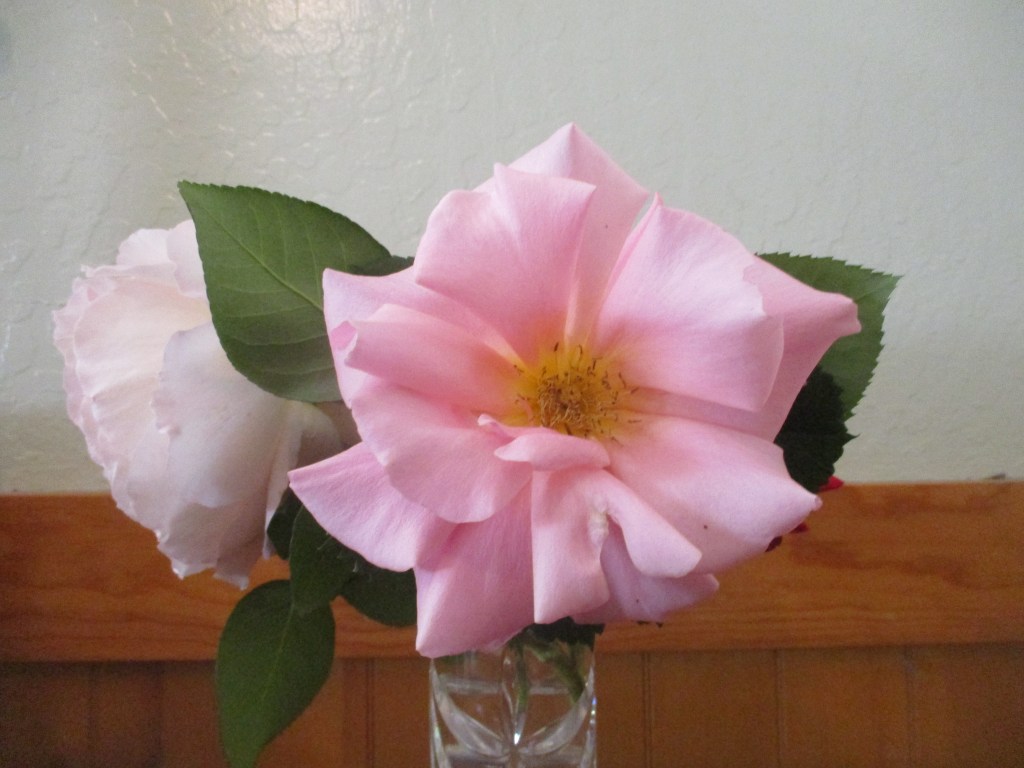
‘Heaven on Earth’ is too billowy and pale pink for me, but I got it now anyway. The color was richer earlier.

‘Apricot Candy’ really was apricot colored not too long ago.

‘Julia Childs’ is surprisingly fragrant. It was likely a gift from Filoli, where my mother volunteered.

In A Vase On Monday, which is also known simply as IAVOM, is graciously hosted by Cathy of Rambling in the Garden. Anyone can participate. I did, at least this once. Simply arrange flowers or other material from the garden in a vase, and share pictures of it with commentary and a link back to Rambling in the Garden. Also, leave a comment at Rambling in the Garden with a link back to your post.
Six on Saturday: Roses for Momma

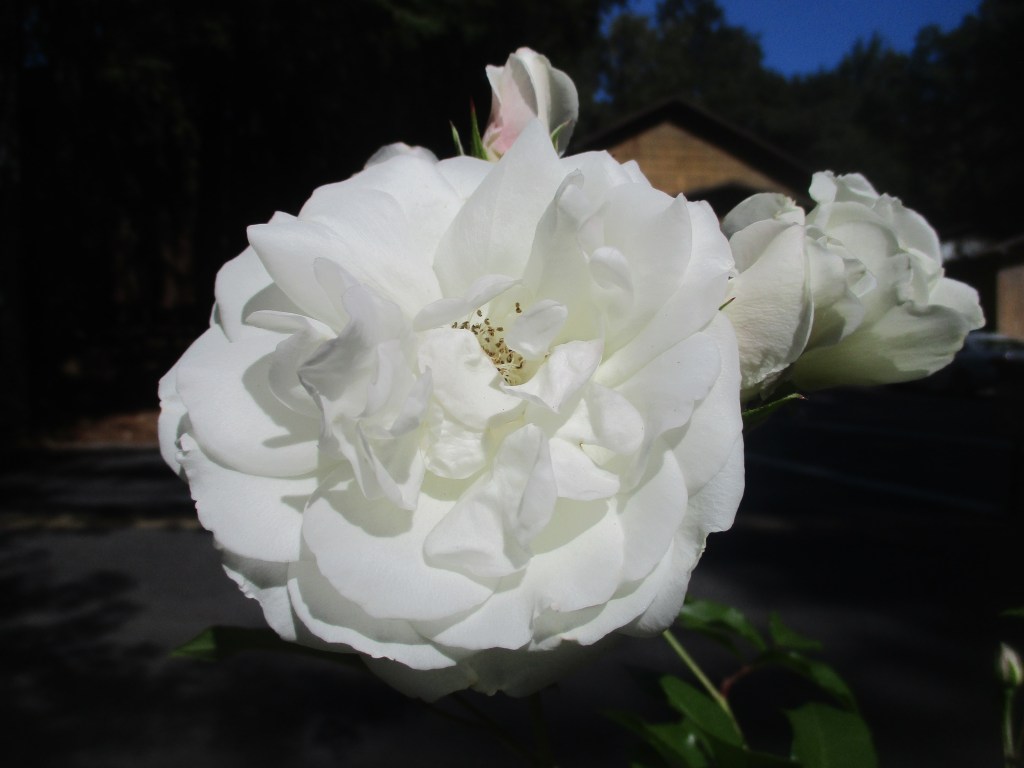
Actually, four of these ‘Six’ roses are ‘from’ rather than ‘for’ Momma. They came from my Mother’s rose garden. I never sent roses to my mother for Mothers’ Day, which is tomorrow, because she had more than I did. Besides, roses from a horticulturist would be rather mundane. Instead, I gave her rooted cuttings of all sorts of odds and ends, such as angels’ trumpet, pink jasmine, forsythia, flowering quince and a minute olive tree. Of course, only angels’ trumpet had yet to bloom. Red Souvine, ‘Roses for Momma’ composer, might have had something to say about that.

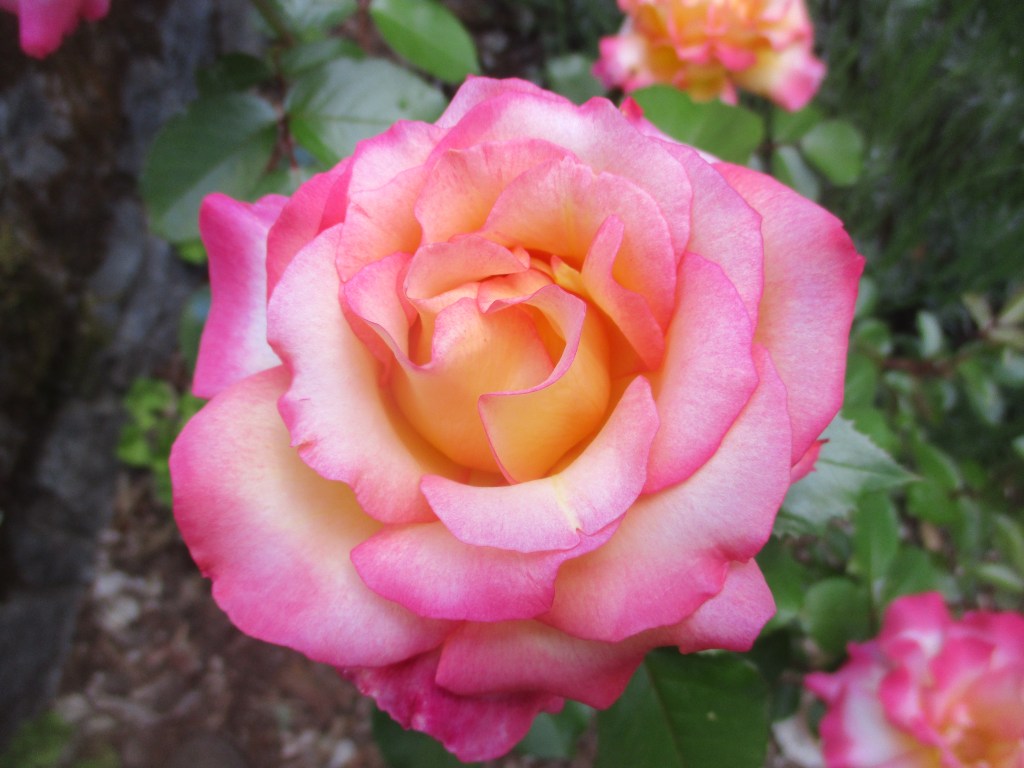
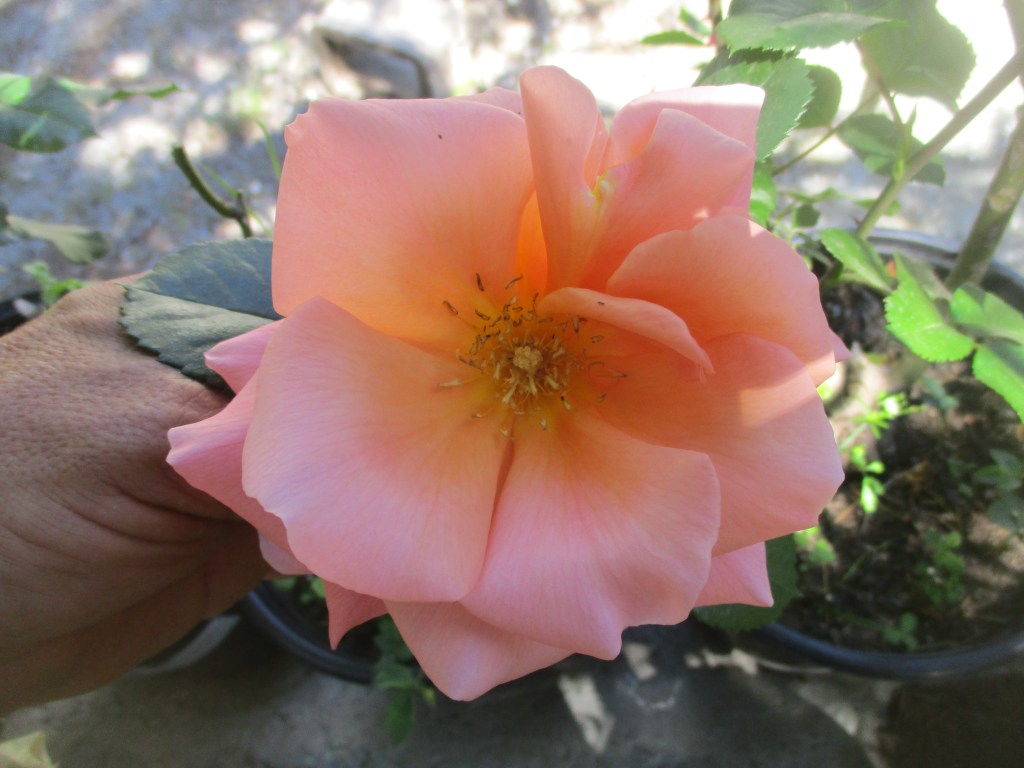
1. Double Delight is presently blooming quite abundantly at work. The yellow is normally more whitish. The pink is normally more reddish. We really have no idea what cultivar this is though.

,

2. Amber Queen is also unidentifiable, and is also blooming remarkably well in the same small rose garden as Double Delight. I am impressed by how well they perform here, in a bit of shade.

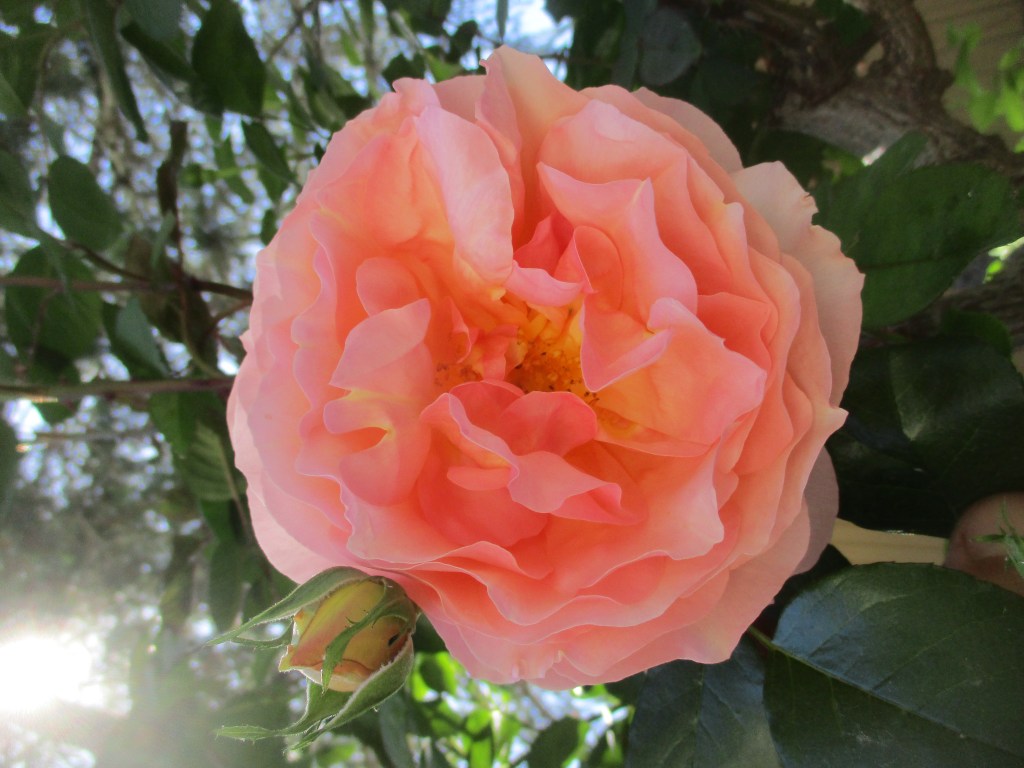
3. Julia Childs resembles Amber Queen up close like this. It was a gift from Filoli. My mother volunteered there after retirement. Actually, a few items in my mother’s garden came from Filoli.

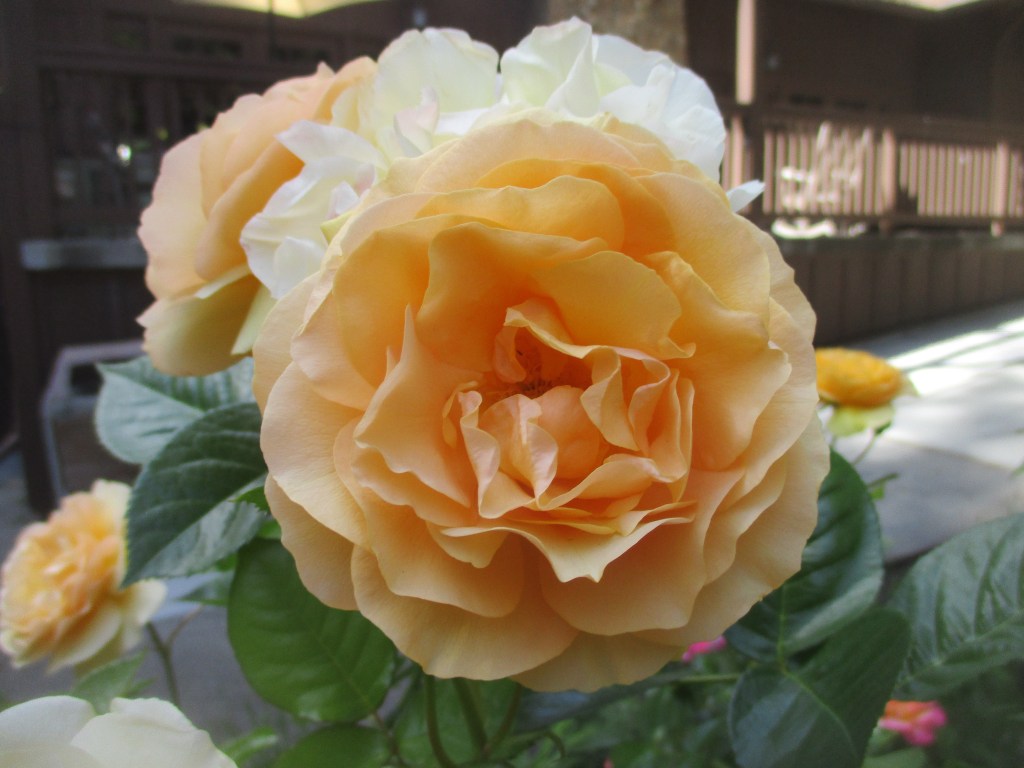
4. Apricot Candy might have been another gift from Filoli. The name is so appropriate for a garden in the Santa Clara Valley. I rather like the simplicity, although the flowers should be fluffier.

5. Heaven on Earth is one that I would not have selected. Yuck. Yet, my mother gave it a prominent situation, but never allowed me to add a most elegant John F. Kennedy rose to the garden!

6. Proud Land was one rose that I agreed on! There are three! They are the only remnants of the original roses that I planted within a few years of 1985. The flowers are typically more billowy.

This is the link for Six on Saturday, for anyone else who would like to participate:

https://thepropagatorblog.wordpress.com/2017/09/18/six-on-saturday-a-participant-guide/

Six on Saturday: Weeds +

Working inside for most of the week has certain disadvantages, especially at this time of year. There is so much blooming that I do not go out to see. I did not get many pictures of camellias or flowering cherries while they bloomed, although some camellias continue to bloom sporadically. Some azaleas are also finished blooming. Rhododendrons are blooming nicely now, but I have not started getting pictures of them. Instead, I got pictures of a few weeds and their associates from just outside of where I work inside.

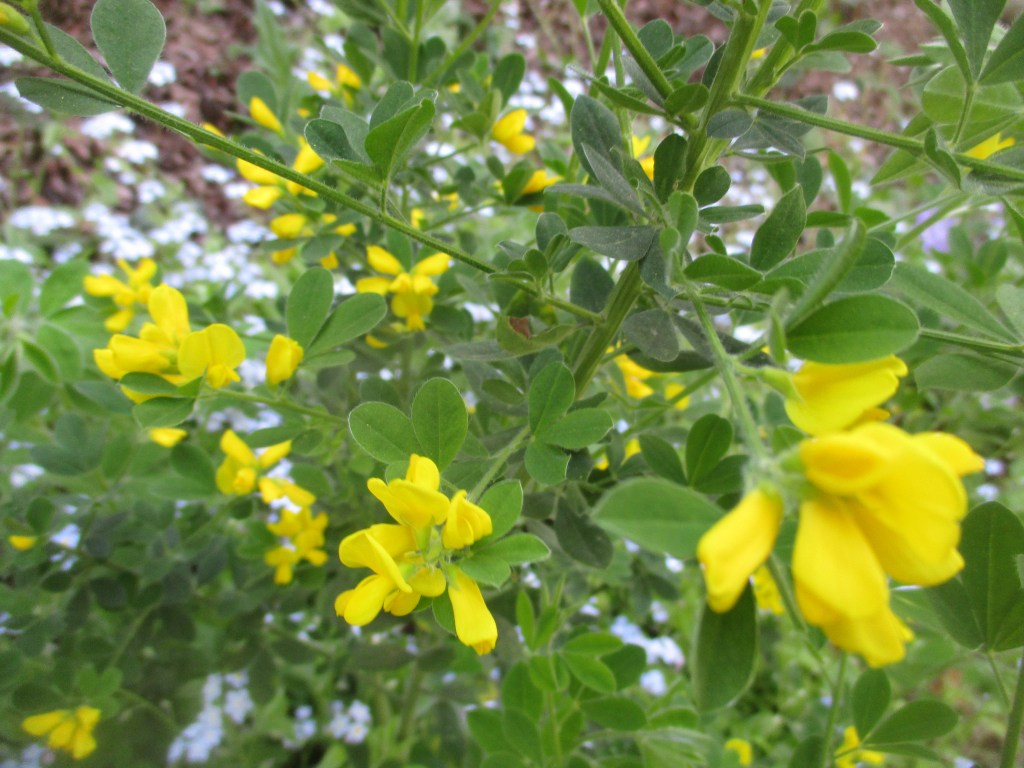
1. Broom! It is one of the most aggressively invasive exotic weeds of the Santa Cruz Mountains. No one knows if it is Scotch, Spanish or French. It is probably French, but we know it as Scotch.

2. Dandelion infests most lawns. It was probably imported for greens. I will not eat greens that grow in lawns where Rhody does what he goes outside to do. I should move some to the garden.

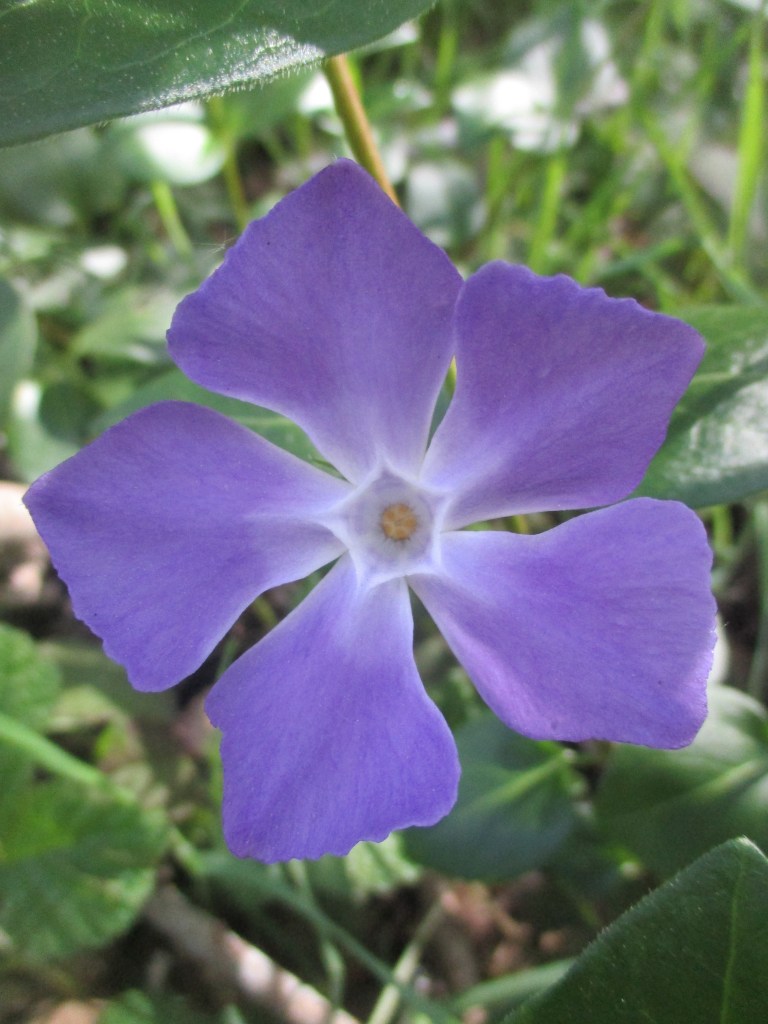
3. Periwinkle is a naturalized exotic species here, but is not so naturalized farther inland, or in urban areas where lacks space to migrate. I actually planted it where I lived while in high school.

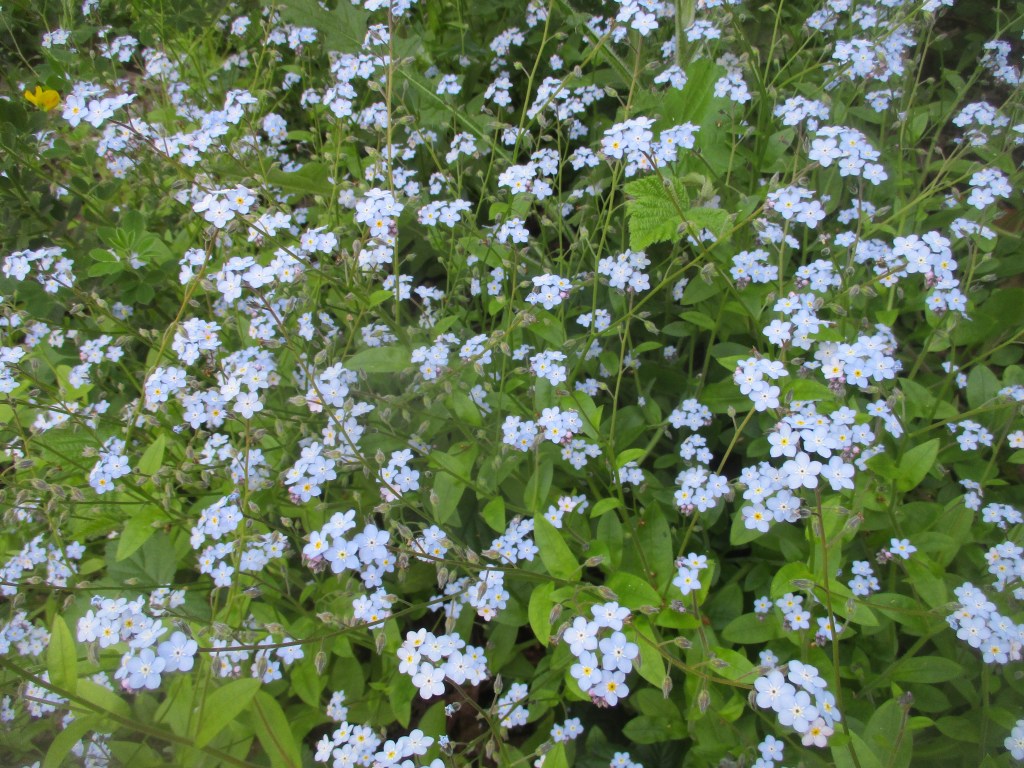
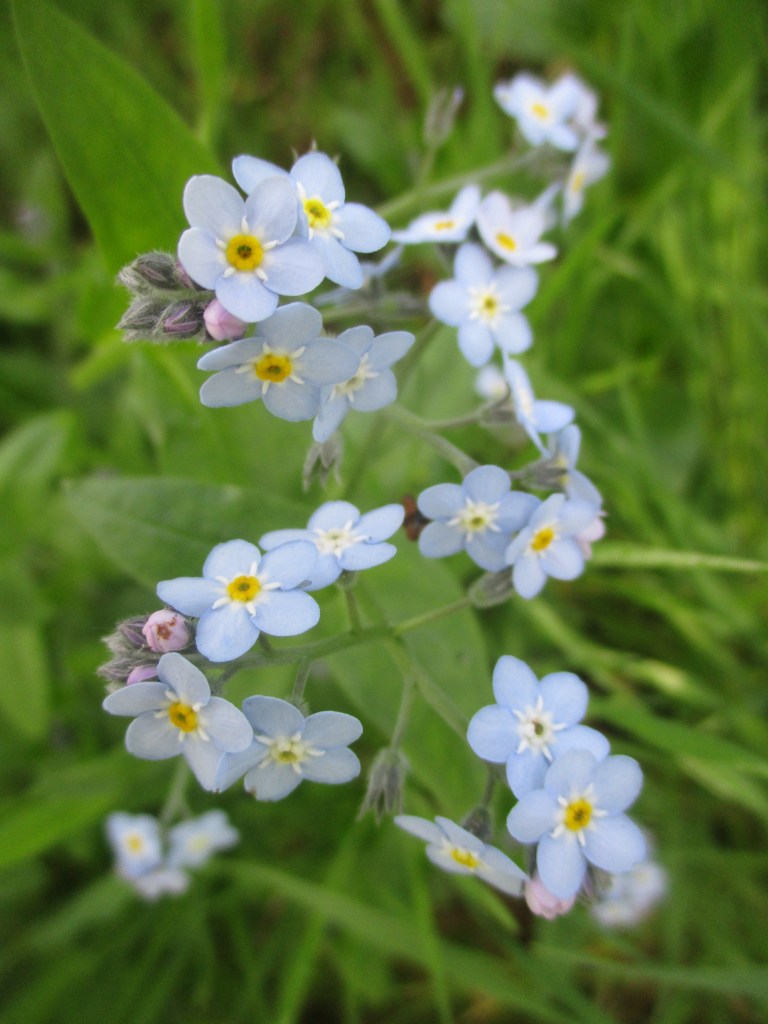
4. Forget me not, as seen in the upper right corner of the previous picture, is naturalized in riparian situations, but is also too delightful to be perceived as a weed. How could anyone dislike it?

5. Pacific Coast iris is not actually a weed. It is not even exotic. This one is a hybrid of a few native species, and was planted intentionally. I would just prefer the ‘unimproved’ Iris douglasiana.

6. Rhody puts the ‘+’ in ‘Weeds +’, which is the title for this week. Perhaps this should have been the first of these six; but then no one would have bothered with the remaining five. Priorities.

This is the link for Six on Saturday, for anyone else who would like to participate:

https://thepropagatorblog.wordpress.com/2017/09/18/six-on-saturday-a-participant-guide/

Peony

Peonies are unusually happy this year.

The fact that peonies do not perform well in such mild climates does not dissuade some of us from growing them. After all, they can sometimes be found in local nurseries and even farmers’ markets as if they belong here. Tubers of more of the countless varieties can be purchased online or from mail order catalogs while dormant in autumn. Unfortunately, without much winter chill, few peonies perform as they should.

Peonies can be white or various shades of pink or red, with considerable variation of flower structure. Tree peonies that bloom yellow are the most likely to be wimpy without winter chill. All peonies are good cut flowers. After spring bloom, the distinctively coarse and rich green foliage stays until autumn dormancy. The more popular herbaceous peonies should not get more than three feet tall and broad. Tree peonies do not actually grow into trees, but develop woody stems that can hold flowers nearly six feet high. Larger flowers may need support.

Because plants get established so slowly, they should not be moved or disturbed. Small new plants can be divided from larger plants while dormant, but take a few years to actually bloom. Peonies like rich soil and regular watering, where they do not get crowded or shaded by other plants.

Periwinkle

Periwinkle is pretty for a weed.

Dwarf periwinkle, which is a vigorous but manageable ground-cover here, is an invasive weed in other regions. Locally, common periwinkle, Vinca major, is the more aggressive sort. It naturalizes in riparian situations and damp parts of unrefined landscapes. Stolons can be difficult to pull completely from the soil. Seed disperses secretively but efficiently.

Periwinkle is almost never available in nurseries nowadays. It tends to infest gardens by sneaking in. Then, the foliage and bloom can be too appealing to eradicate. More plants are easy to divide from established colonies. Growth is tidier if mown at the end of winter. As it regenerates, it gets more relaxed, and finally gets floppy. It looks shabby if trampled. 

Periwinkle blooms with sporadic but delightfully clear blue bloom. Individual flowers are about an inch and a half wide. The evergreen leaves are an inch or two long. Wiry stems get a foot or two deep. Cultivars with white or purplish blue bloom were available before  

periwinkle naturalized. Periwinkle with foliar variegation still inhabits some old gardens. It is slightly more complaisant.

Wildflowers Are Flowers Gone Wild

Periwinkle is pretty for a weed.

Wildflowers have been quite a fad. Relative to most fads, they are not so impractical. For some situations, they are a good excuse to waste less effort and resources on unrefined parts of the garden. Of course, they all require some degree of effort and resources. Most are neither as wild nor as natural as their marketing suggests them to be. Few are native. 

Wildflowers that lived here centuries ago, prior to the introduction of exotic species, were relatively unimpressive. Although some bloomed spectacularly, they did so within a brief season. Winter is too cool for pollinators that wildflowers intend to attract. Summer is too dry for bloom to last long. Most bloom was limited to the transition from winter into spring. 

The same native wildflowers bloom even less now than they did centuries ago because of competition with exotic species. Most exotic species that compete with wildflowers are feral forage crops that lack colorful bloom. They grow so vigorously that they obscure the natives. Mitigation of such undesirable vegetation ruins wildflowers that mature within it.

Most of the best wildflowers here now are as exotic as feral forage crops. Those that are native might be more reliant on unnatural cultivation. California poppy, evening primrose, and native annual lupines might prolong bloom with a bit of extra water through summer, but need weeding. With the same watering, (non-native) cosmos stands up to the weeds. 

Unfortunately, vegetation management is more important than wildflowers outside of the refined garden. Overgrown weeds are combustible and can be dangerous to pets. Weed whacking too often involves wildflowers before they get their chance to bloom, as well as foliage of spring bulbs after bloom. (It sometimes damages bark of trees and shrubs too.)

Some low and dense perennial wildflowers are more reliable than annual sorts because they exclude annual weeds. Saint John’s wort and periwinkle are invasive exotic plants, but work well as ground covers. Mowing or shearing them late in winter slows their competing weeds, and also enhances their foliar density before competing weeds regenerate.

Six on Saturday: What Is This?!

As I mentioned last week, these pictures were obtained a week and a day ago. The flowers were fresher then. I suspect that they are all finished or nearly so by now, although money plant is still colorful in some sheltered situations. The flower that might be California bluebell did not last long at all. I should have looked for seed, but could not find it again. This is an odd batch. I know more about what I work with here than almost anyone else, but some unfamiliar items are baffling.

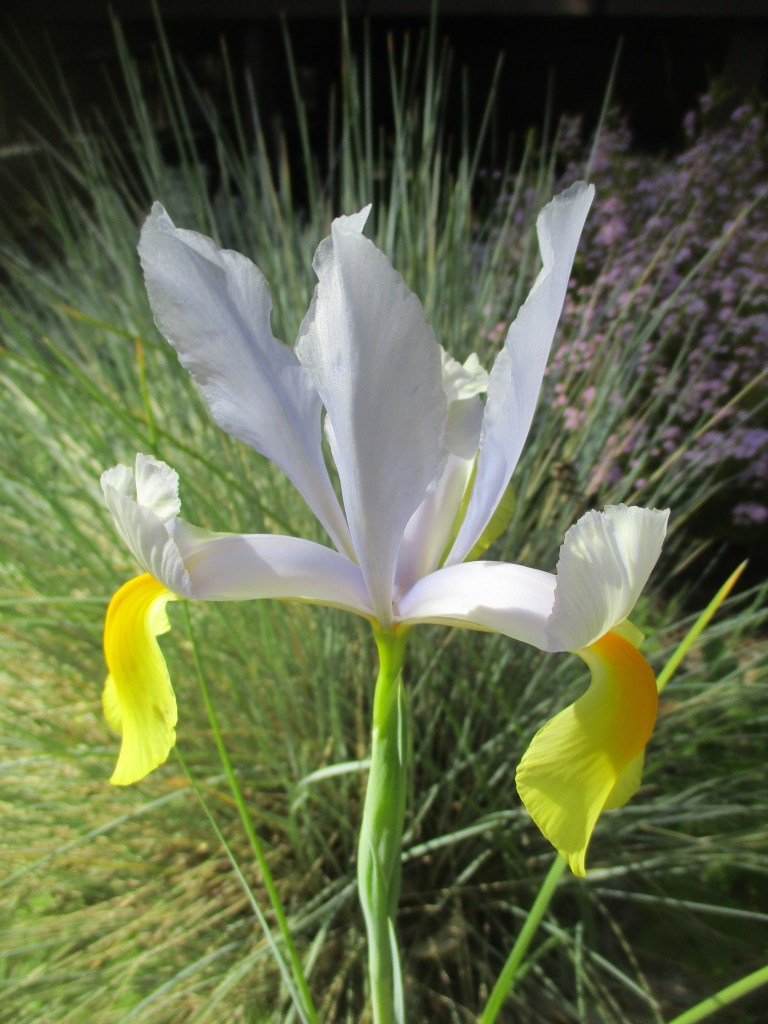
1. Is this Dutch iris? It was planted years or perhaps decades ago, but only started blooming, along with freesia and ixia, after overgrowth above it was cleared. I have never grown Dutch iris.

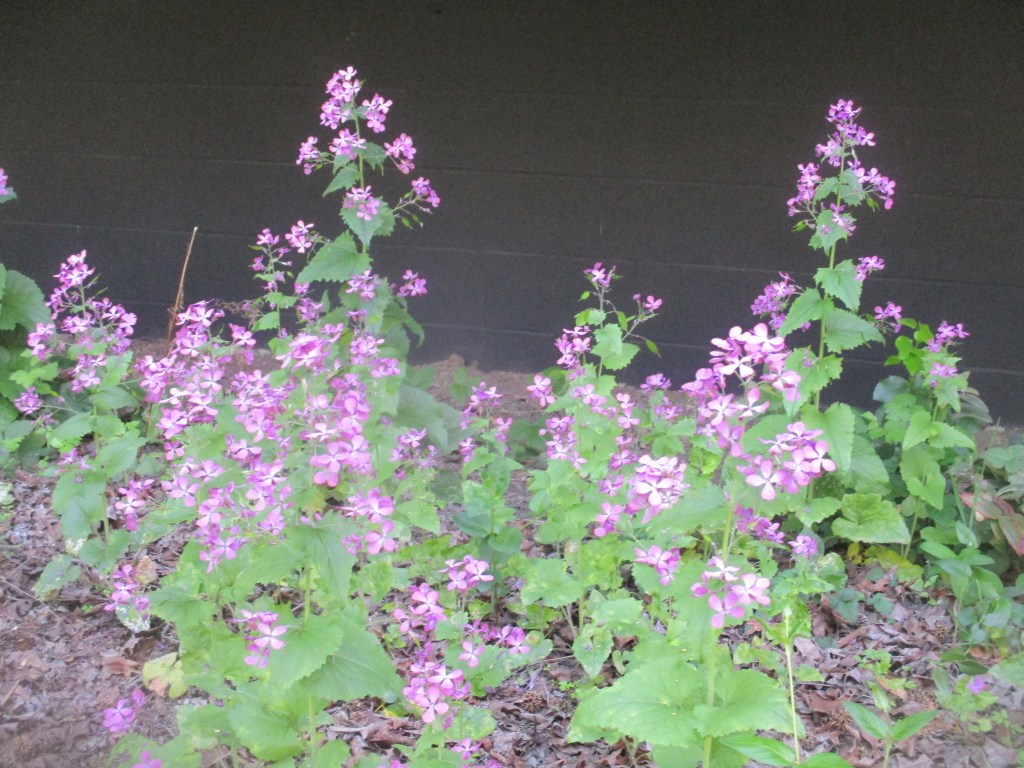
2. Is this money plant or honesty? I honestly believe that it is money plant. Others might bet money that it is honesty. I know they are the same. I would nonetheless prefer the proper name.

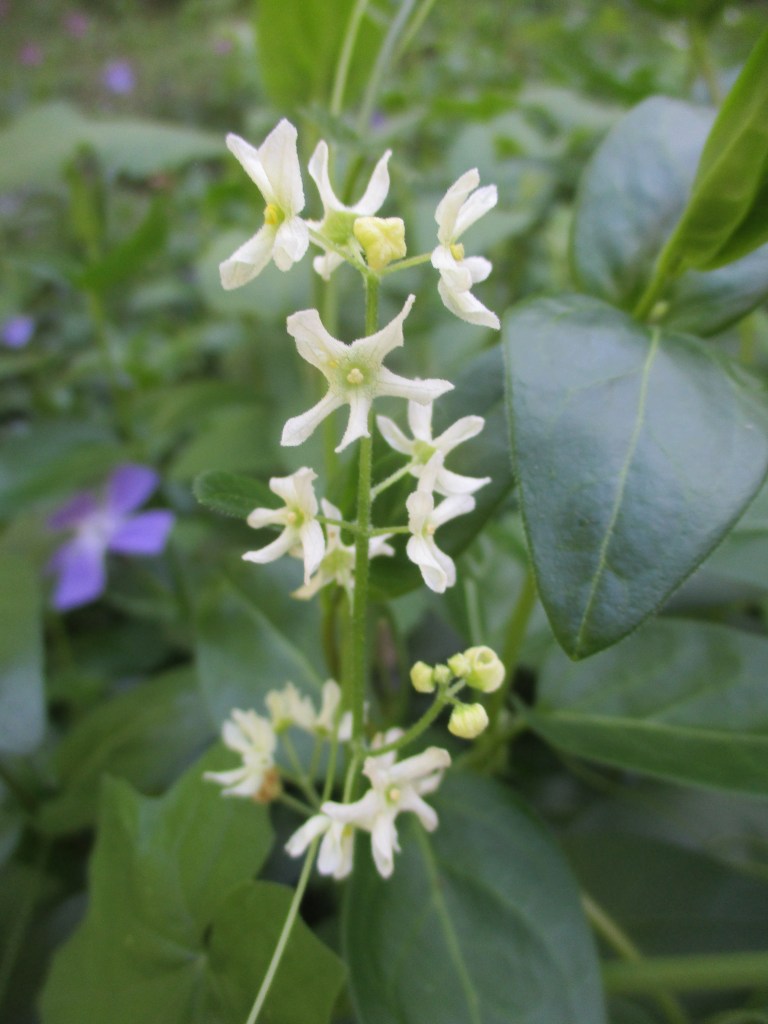
3. This one I can identify as wild cucumber. It is also known as manroot. The annoyingly weedy vines are surprisingly easy to pull out. However, the massive and resilient tubers make more.

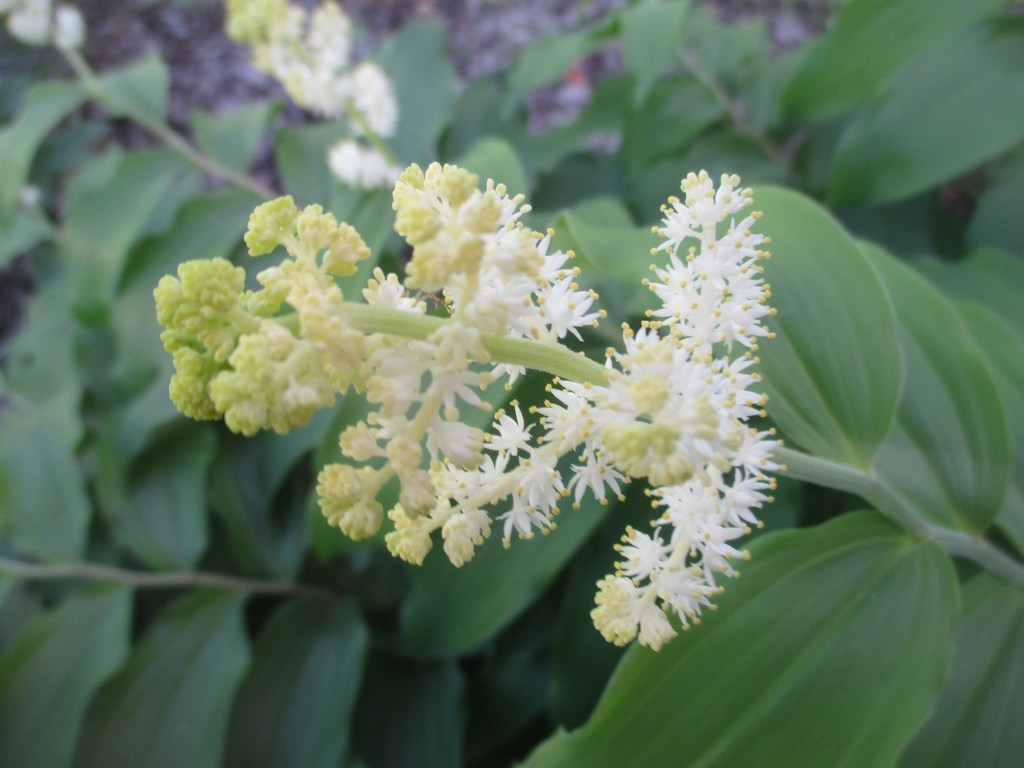
4. This is supposed to be false Solomon’s seal, but is real enough for us, since it is the only one we know. It is native, so lives in the surrounding forest and sometimes moves into landscapes.

5. What is this?! Seriously, I have no idea! It appeared on a dry roadside after the taller grassy vegetation got cut down. The foliage seems to be that of California bluebells. It is likely related.

6. I know what this is, but doubt that you do. It is from one of only two species of its genus that is native regionally. The other species is endemic to every state except for Alaska and Hawaii.

This is the link for Six on Saturday, for anyone else who would like to participate:

https://thepropagatorblog.wordpress.com/2017/09/18/six-on-saturday-a-participant-guide/