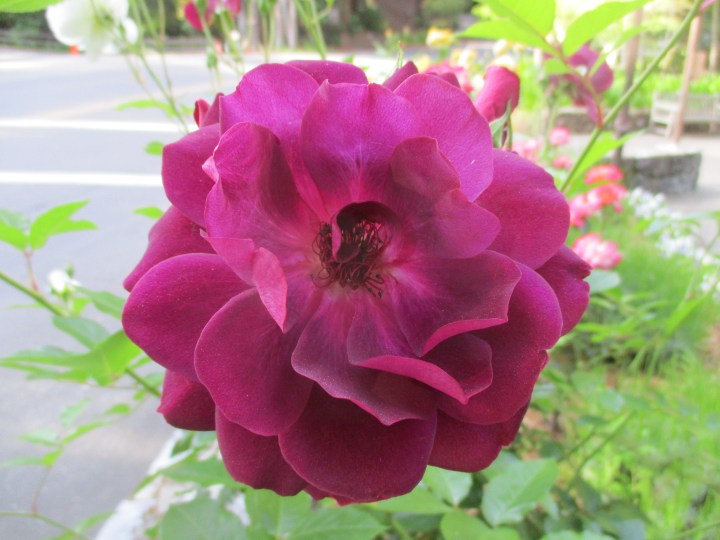
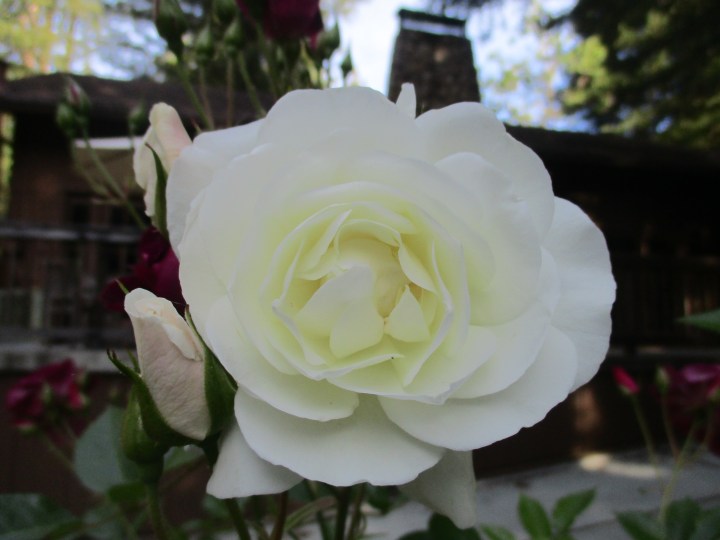
Summer Flowers Make The Cut

50819thumb
Try something new for cut flowers.

It would seem obvious that there would be more flowers to cut to bring into the home during summer than there would be in winter. A quick tour through the garden might prove otherwise. Much of the color in the garden this late in summer is provided by flowers that fade quickly, or small flowers of shrubby plants that lack good stems for cutting.

Lilies, gladiolus and most of the lily of the Nile that bloomed earlier in summer are finished. Bearded iris (reblooming types) that will soon be blooming again, as well as cannas, wilt too much to last long as cut flowers. Dahlias happen to be at their prime, and are excellent cut flowers if their water gets changed regularly. Otherwise, they rot and smell badly.

Realistically, anything that blooms is fair game. Of course, this does not mean that everything tried will work. It does means that some flowers that are not often thought of as good cut flowers might be worth considering as such. Not all of us are equipped with roses, zinnias, dahlias, sunflowers, delphiniums, blanket flowers or the many other favorite summer bloomers.

All sorts of sages, which are also known by their Latin name of ‘salvia’, are delightful cut flowers. However, some types are not very showy. Others wilt right after getting cut. Mexican blue sage may or may not wilt, but is colorful enough to be appealing even if it can not stand up like it should. Sometimes it is best to try something new to see if it works.

Sea foam statice and annual statice are nice cut flowers both fresh and dried. Fresh flowers are probably more colorful, but of course, do not last as long as dried flowers. Annual statice is lightweight enough to stand upright as it dries in a vase. Sea foam statice has bulkier flowers that should probably be hung up-side-down to dry straight.

Oleander certainly is reliably colorful, but is not worth cutting. It wilts almost immediately, and drips toxic sap. However, the stigmatized and common lemon bottlebrush is a surprisingly tasteful cut flower with rustically aromatic foliage. Speaking of foliage, some types of eucalyptus, particularly the red flowering gum (Eucalyptus ficifolia), have handsome flowers as well.
Fourth of July

P00704K
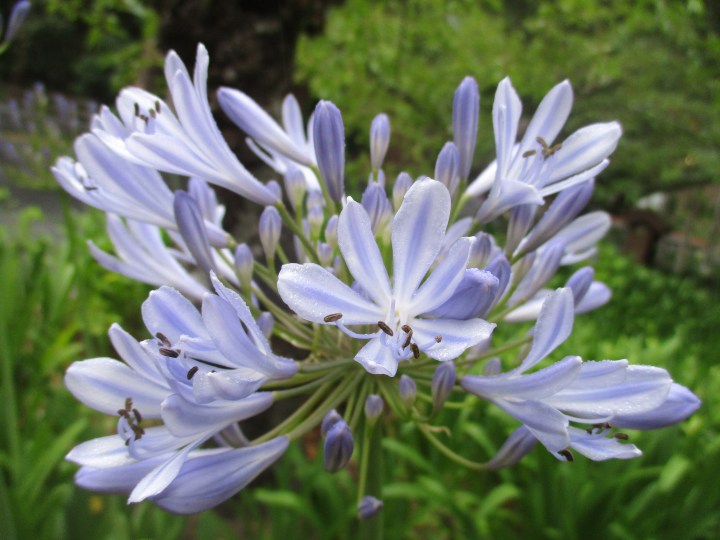
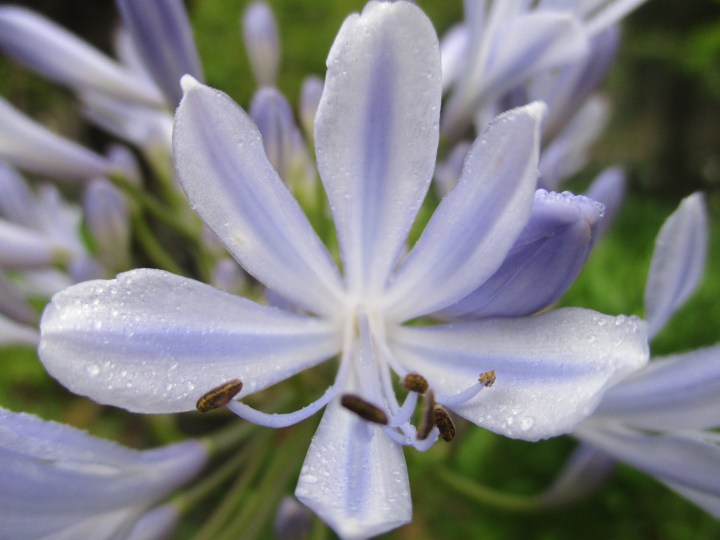
Lily of the Nile are floral Fourth of July fireworks.

Fireworks, Fourth of July parades, and the associated crowds are of course canceled for this year.

Lily of the Nile does not mind. It blooms in time for the Fourth of July regardless of what the rest of us are doing, or not doing. That is one of the two reasons why some of us know it as the ‘Fourth of July flower’. The other reason is that the nearly spherical floral trusses resemble exploding skyrocket fireworks. They are mostly blue, with some white. All that is missing is red.

The bloom in this picture is not exactly exemplary. It would have been larger, rounder, and likely more advanced in bloom if it had developed in a sunnier location. There are enough of them that we do not notice that most are somewhat diminutive. In autumn, many of the overgrown plants will be relocated to a sunnier situation where they can bloom as they would prefer too.

Lily of the Nile was the first perennial that I grew a significant quantity of. While in junior high school, a neighbor instructed me to remove a healthy colony of lily of the Nile that had grown obtrusively large in only twenty years. I could not just discard it, so chopped it into more than sixty pups, and planted it all over the neighborhood. Much of it is still there. A bit of it is here.

Back then, it was known as Agapanthus orientalis. In school, I learned it as Agapanthus africanus. I still do not know if they are two different species, or if one is just a variety of the other. I do know that mine are distinctly different from common sorts, with bigger and rounder floral trusses. The others have straighter stems that support their blooms batter, and finer foliage.

Six on Saturday: Closeups


This is not how we normally look at these flowers, stems and vegetables (fruits). They might look strange out of context. That was sort of intended. ‘Six on Saturday’ allows more freedom of creativity than the simple illustrations that I use for the gardening column. The last two are closeups of the same two gladiolas that were featured last week. Perhaps they show color better.

I should try this again for next week.

1. Lily of the Nile is the ‘Fourth of July Flower’. It blooms for the Fourth of July, and the florets radiate from the center of their floral truss like fireworks. I will write more about this at noon.P00704-1

2. Epiphyllum stems, like the stems of other cacti, do all the work of foliage. Because they are flat, they actually look like big and weirdly arching leaves. New tip growth is still rather blushed.P00704-2

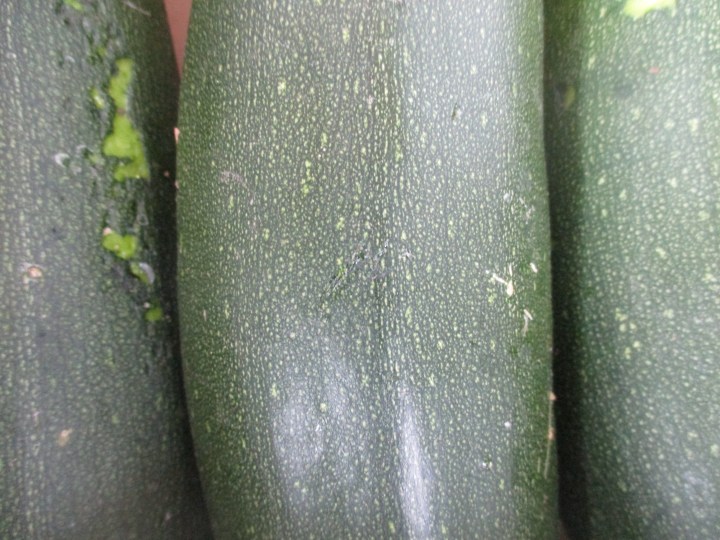
3. Zucchini is too productive. I neglected to go down to harvest it for two days or so, and then found that some fruits had gotten as big as bowling pins. They are fortunately not too tough yet.P00704-3

4. Red willow is a weedy tree that I should not be growing intentionally. This is special though. I brought its cuttings from Reno. It will be coppiced, and not allowed to grow as a real tree.P00704-4

5. Gladiola got enough attention last week that I got closer pictures of them this week. This one seemed to be more purple or less blue last week, with just a bit of white, like elderly Grimace.P00704-5

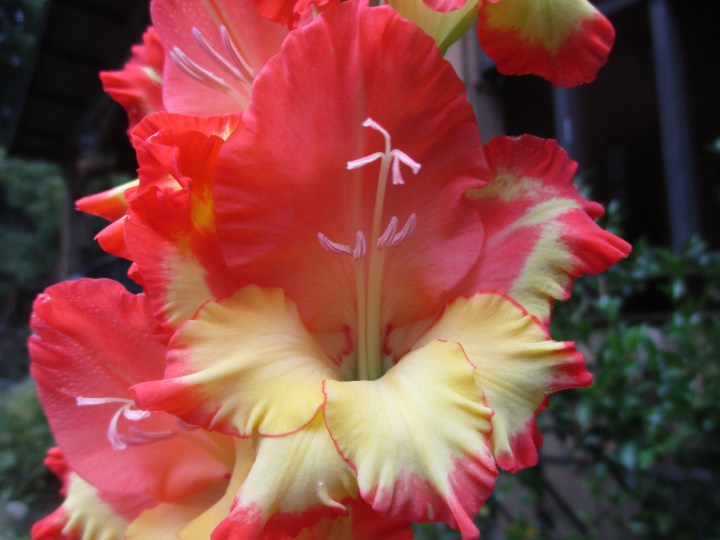
6. Gladiola are more fun when someone else selects bold colors that I would not consider. This flashy orange and yellow bloom is exquisite, and looks like Grimace’s friend, Ronald McDonald.P00704-6

This is the link for Six on Saturday, for anyone else who would like to participate:

https://thepropagatorblog.wordpress.com/2017/09/18/six-on-saturday-a-participant-guide/

Six on Saturday: Housebound


This is not a good week for my Six on Saturday. The first three are of pansies; and the last two are of gladiolus. That is not much variety. Posting six pictures of different cultivars of roses or rhododendrons is somehow different and more interesting.

I did not get out enough to get many good pictures this week. I work inside for part of the week, and needed to stay in for Thursday as well. I got outside only on Wednesday and Friday.
1. Pansies are slowly succumbing to the warmth of spring and early summer. They can continue to perform as long as they like, we will not be replacing them with any warm season annuals.00627-1

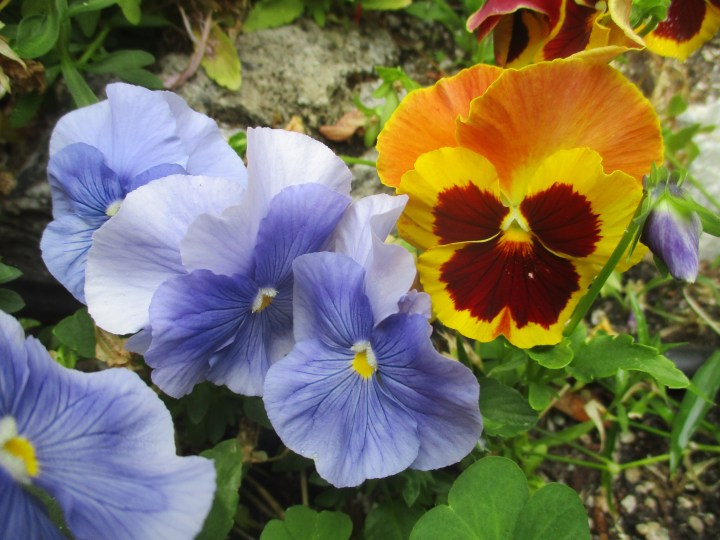
2. Pansies are even prettier up close. Foliage was unusually sparse among this group, even prior to spring. Pansies had never stayed so late before. I would not have guessed that they could.00627-2

3. Pansy is one of the favorite flowers of my colleague down south. Although he does not use many at work, or even in his home garden, he always grows one pot full of them through winter.00627-3

4. Alstroemeria, which are also known as Peruvian lilies, do very well here. I do not remember if this is pink or ‘peachy’. I believe it is ‘peachy’. There are also yellow alstroemeria here.00627-4

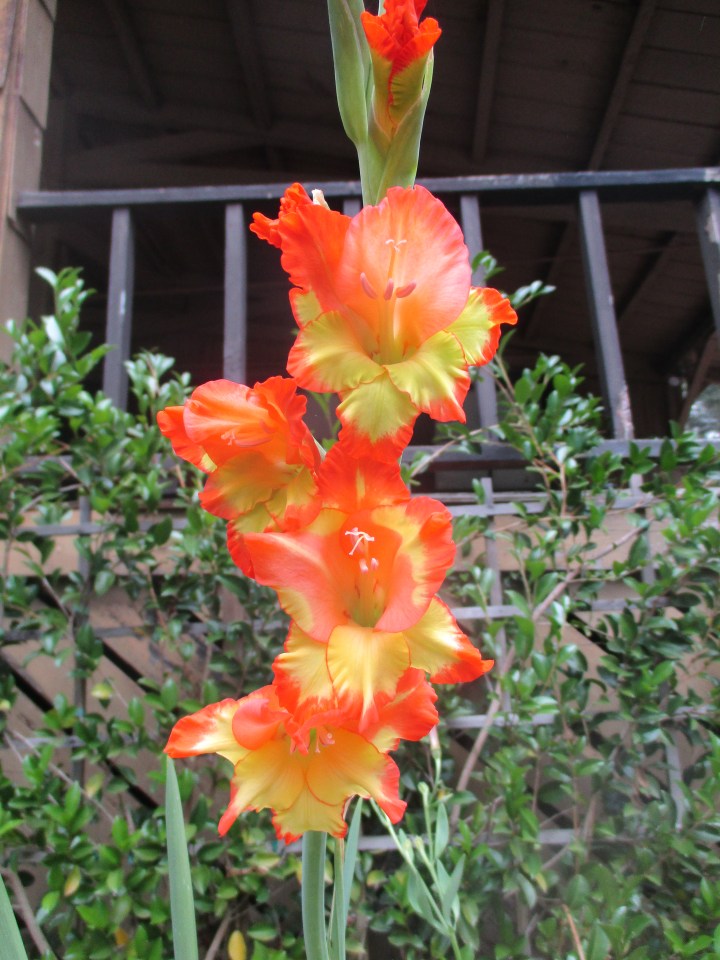
5. Gladiola is one of my favorite summer bulbs, but I have not planted any in many years. They are not reliably perennial here. However, this orange gladiola has bloomed for several years.00627-5

6. Gladiola, now that I think about it, is actually my favorite summer bulb, rather than just one of my favorites. This purple gladiola has bloomed as long as the other, only in a different area.00627-6

This is the link for Six on Saturday, for anyone else who would like to participate:

https://thepropagatorblog.wordpress.com/2017/09/18/six-on-saturday-a-participant-guide/

Zinnia

50603
zinnia

The lineage of modern zinnias is too complicated to describe. Most are still known as Zinnia elegans, even though they have been bred extensively with several other specie to produce an impressive variety of flower forms and colors. The shortest varieties get only a few inches tall. Big varieties get about two and a half feet tall.

The two to five inch wide flowers, which bloom in phases from spring until autumn, can be yellow, orange, red, purple, pink, salmon, peach, chartreuse or bronzy brown. Some are striped or freckled.

Some flowers look like colorful daisies, with big petals (ray florets) neatly and flatly arranged around prominent centers (disc florets). The overly abundant petals of pom-pom types make rounded blooms with nearly obscured centers. Most are fuller than the daisy types, but not as plump as pom-poms.

Zinnias are warm season annuals that like good exposure and rich soil. The paired leaves are slightly raspy, like kitten tongues, and can be susceptible to powdery mildew. Deteriorating flowers should be deadheaded, although a few can be left for seed.

Stinky Flowers Serve Their Purpose

00610thumb
Some beetles like stinky flowers too.

From a human perspective, flowers should not be stinky. They should be pretty and colorful, and perhaps delightfully fragrant. Many flowers in landscapes and home gardens actually are. After all, they are grown for their appealing bloom. Many plants that provide only foliage produce wind pollinated flowers. They are not particularly pretty, colorful or delightfully fragrant, but not stinky either.

Flowers do what they must to pollinate each other. Since they are inanimate, they rely on pollinators or wind to disperse their pollen. Those that rely exclusively on wind produce an abundance of very fine pollen, but waste no effort on attracting pollinators. All other flowers use customized combinations of colors, patterns, textures, fragrances and flavors to attract their preferred pollinators.

There are all sorts of pollinators. Bees are the most famous. There are many other insects too. Hummingbirds and butterflies are very popular. Bats do their work at night while no one is watching. Of all the pollinators though, flies are likely the least popular. Many of the flowers that produce fragrance to attract them are not exactly popular either. Alas, fly pollinated flowers are stinky flowers.

Stinky flowers are naturally uncommon. Apparently, not many flowers want to rely on flies. Stinky flowers are even more uncommon in home gardens and landscapes, for the obvious reason. Paw paw and carob production relies on stinky flowers. A few of the various arums grown for dramatic bloom are stinky too. Philodendron bloom is quite stinky, but very rare among foliar houseplants.

Pear and hawthorn do not rely on flies, so are only incidentally and mildly stinky.

Fortunately, stinky flowers are not often a problem. Paw paw trees are rare here. Carob trees bloom somewhat briefly. If philodendrons bloom at all, they produce only a few flowers which can get pruned off. Regardless, fragrances of stinky flowers are generally not as strong as appealing floral fragrances. They neither disperse as efficiently, nor linger as long. Some are too faint to offend.

Horridculture – Stinky Flowers

P00527-1
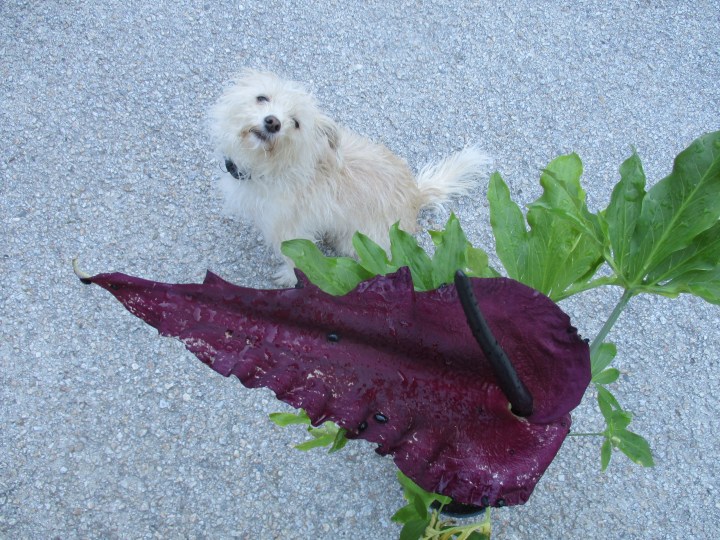
Rhody was not impressed, and he is an expert on fragrance.

Dracunculus vulgaris – dragon lily. It was featured in the gardening column for next week, both as an illustration for the main topic, and as the ‘highlight’ species. It is as unappealing as the name and the pictures suggest, but it sure is interesting. It has several more equally unappealing common names. We know it as ‘death arum’ because that is the first name we came up with.

Besides, it smells like death. Yes, it stinks. It does so to attract flies for pollination. Actually, it attracts quite a few annoying insects. I can not explain why, but insects who congregate around stinky flowers are as unappealing as the fragrance that draws them. They are certainly very different from the appealing bees and butterflies who pollinate flowers with appealing fragrance.

The first of these death arums mysteriously appeared in the garden of a colleague several years ago, and promptly multiplied by both seed and disbursement of tubers. There are now a few expansive colonies that continue to expand. Cutting down the foliage does not slow them down much. The fragrance, which is not too bad individually, is getting to be bothersome collectively.

My colleague brought me one of the tubers to confirm the identity. I got a picture of it since it was here, but then did not know what to do with it. I did not want to toss it aside into the forest like I do with so much other greenwaste. It could have grown into a problem. I did not want to discard it either, since it was viable and healthy. So, I canned it and put it aside in the nursery.

This is the result. It is not as stinky as I expected it to be. I still do not know what to do with it.

P00527-2
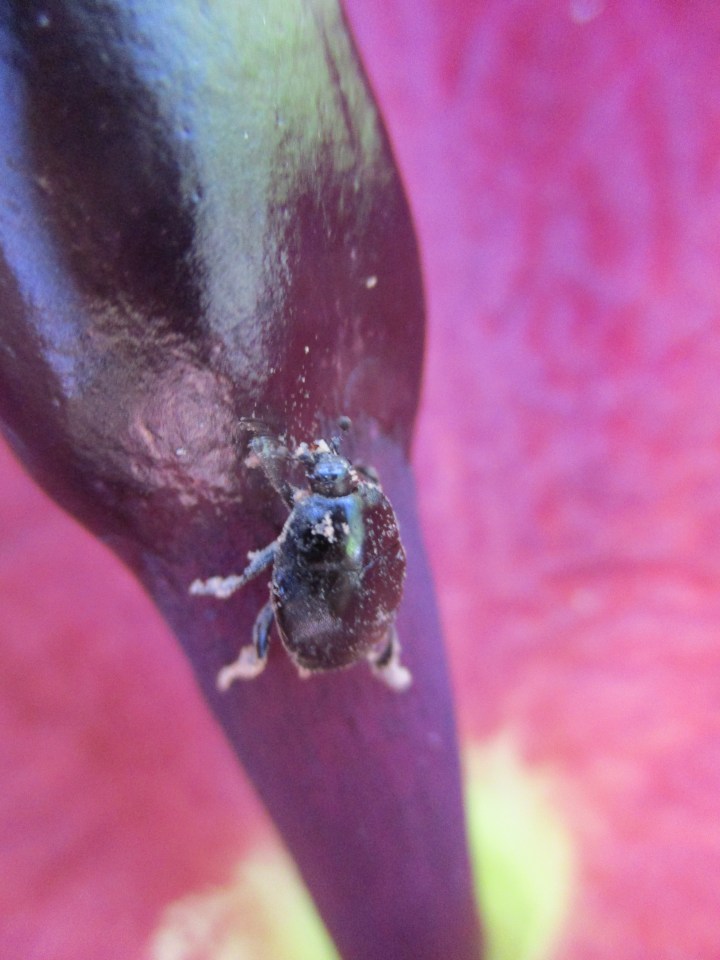
These unidentified beetles that I had never noticed here before arrived promptly for the stinky bloom.


Six on Saturday: Rhody’s Rhodies II


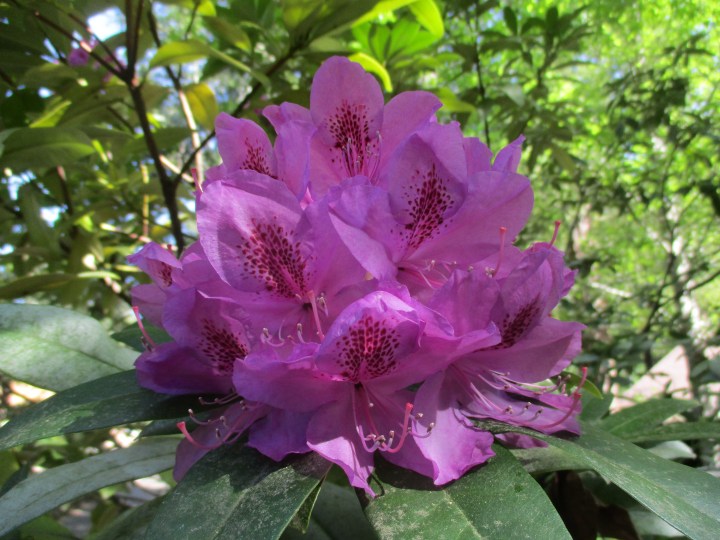
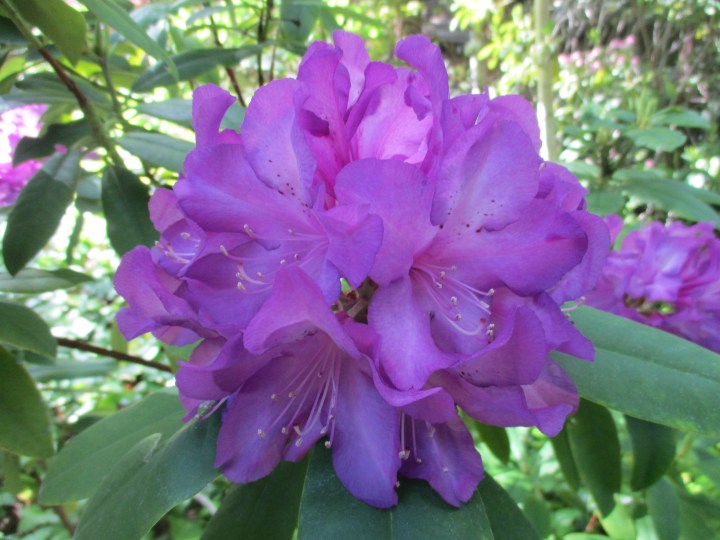
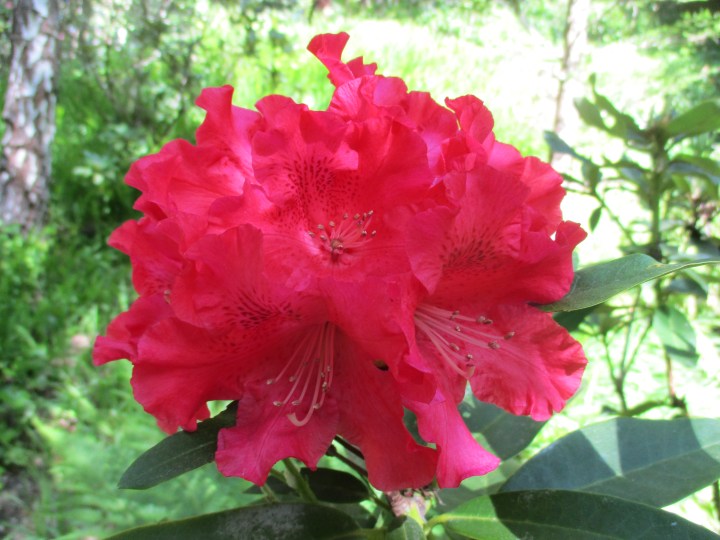
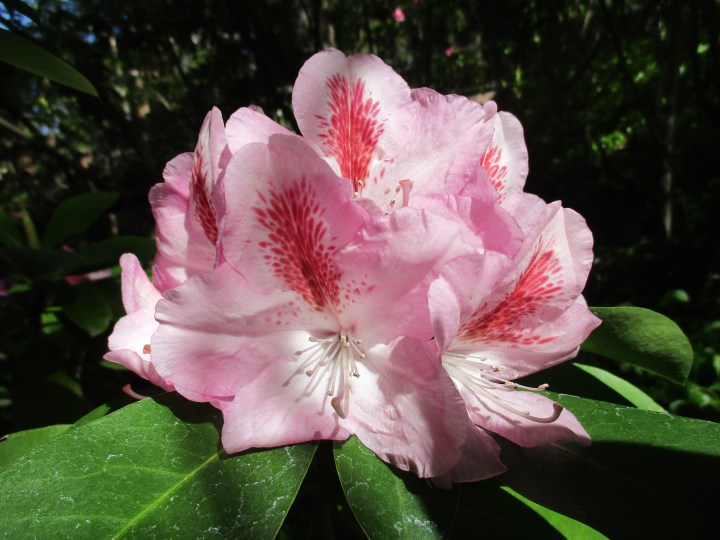
As mentioned last week, the first five of these pictures are now two weeks old. They are too pretty to discard for lack of punctuality. However, it was necessary to delete one so that the most important, although less horticultural, sixth picture could be included. Not much of the bloom remains now.

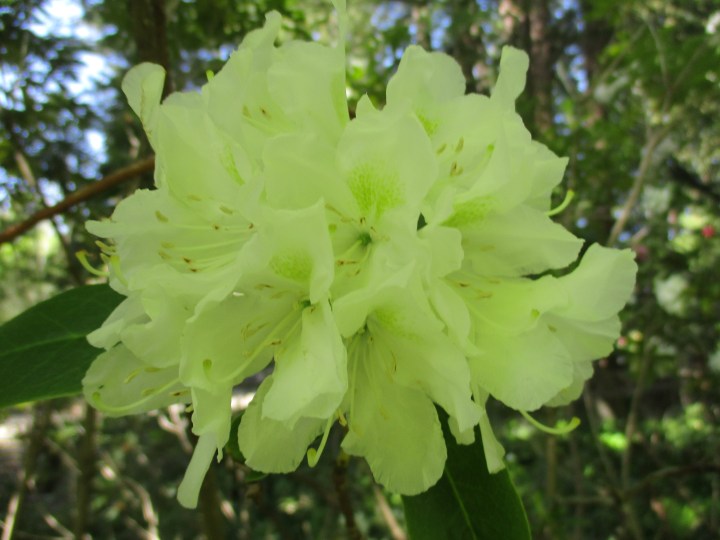
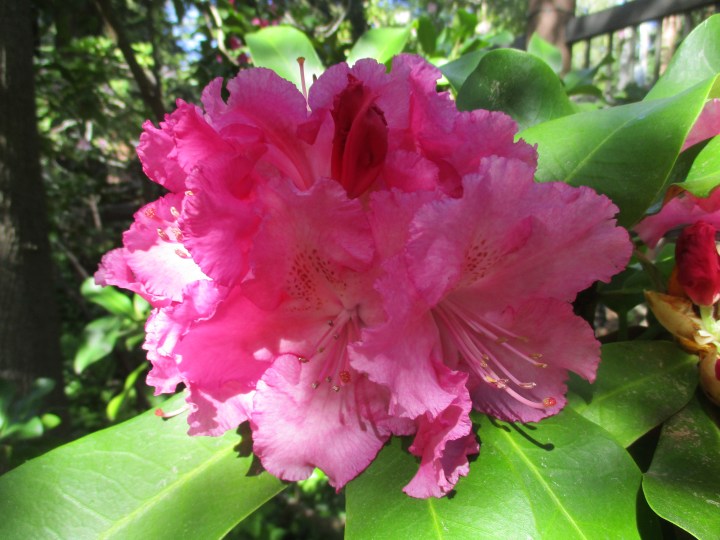
1. Color seems odd for this one. It did not seem so greenish to me when I got the picture. In fact, it seemed more pale, and almost white. I know the camera sees it more accurately than I do.P00523-1

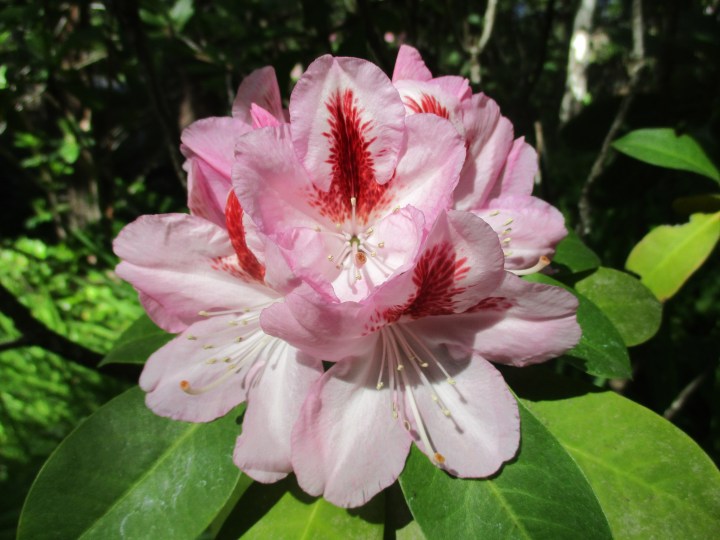
2. #1 from last week, which may have been ‘Mrs. G. W. Leak’, looks like this. I did not notice earlier. I would have otherwise deleted this instead of what I deleted to leave room for #6 below.P00523-2

3. If #4 from last week did not look like ‘Anah Kruschke’, it is because this one is. I knew I got a picture of it, but somehow switched the two. This is the only one that I can identify this week.P00523-3

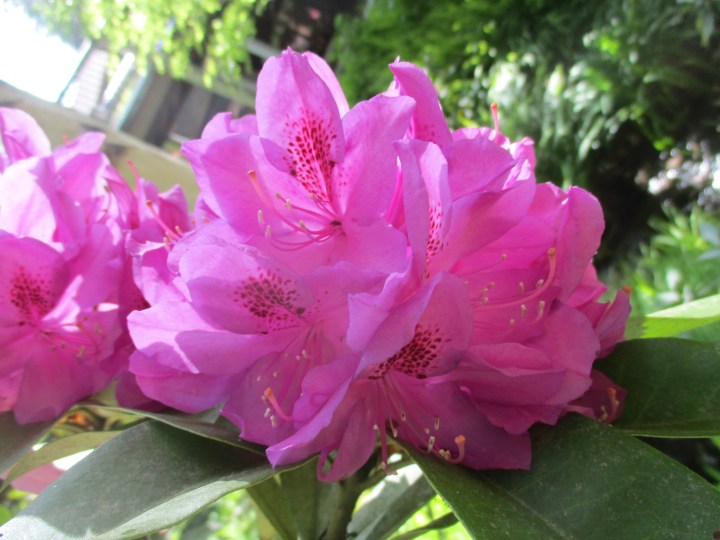
4. Color is something that I am not proficient with. I do happen to prefer this color to other purple rhododendrons. I do not know if it is purple or lavender, or if lavender is just pastel purple.P00523-4

5. Of all the rhododendrons here, only a few are as richly red as this one. Of those few, this one is the second largest specimen, and most prolific in bloom. It is usually one of the last to bloom.P00523-5

6. Rhody! It is not much, but it proves that I at least tried to get a picture of what we all came here for. I deleted a good picture of another rhododendron to do it! Rhody would not cooperate.P00523-6

This is the link for Six on Saturday, for anyone else who would like to participate:

https://thepropagatorblog.wordpress.com/2017/09/18/six-on-saturday-a-participant-guide/

Six on Saturday: Rhody’s Rhodies I


Rhody actually had nothing to do with the rhododendrons. They have been her for decades. The youngest were added in the late 1990s. We know none of their identities. It does not matter. Bloom is spectacular. These pictures are from last Friday, so are a week old already. Six more will be two weeks old for next week. I just can not miss sharing them here for Six on Saturday.

1. Mrs. G. W. Leak – The spots are not pronounced enough. The foliage is not a good match either. Otherwise, the floral color and form are about right. Branch structure seems to match too.P00516-1

2. Trude Webster – This is just a guess. The leaves are not big enough. Bloom is a bit too brightly colored, and its spots are a bit too pronounced, although floral form seems to be about right.P00516-2

3. Lem’s Monarch – This one is questionable. Flowers are usually more white with reddish pink edge. However, they do not look quite like the real thing. Foliage happens to be a good match.P00516-3

4. Anah Kruschke – Like the others, the color is off for this one this year. It is normally a bit richer purple. I am fairly certain about its identity. The foliage and branch structure conform too.P00516-4

5. Rhododendron catawbiense – I am rather certain about the identity of this one. Everything about it is as it should be, even the foliage. This is probably my favorite of these particular six.P00516-5

6. Taurus – Of all of these six, this one is the least likely to be what I refer to it as. Only the floral color is correct. Floral form, foliage and branch structure are not. I do like the name though.P00516-6

This is the link for Six on Saturday, for anyone else who would like to participate:

https://thepropagatorblog.wordpress.com/2017/09/18/six-on-saturday-a-participant-guide/

Six on Saturday: (First) Rose Parade 2020


The landscapes are in surprisingly good condition after more than a month of neglect. Weeds are horrendous, but no more so than expected. They and the lawns are the priorities. Significant progress was made just in the last three days that we have been able to work. As busy as we are, I managed to get some nice floral pictures. Rhododendrons are still blooming, but will be the topic for next week.

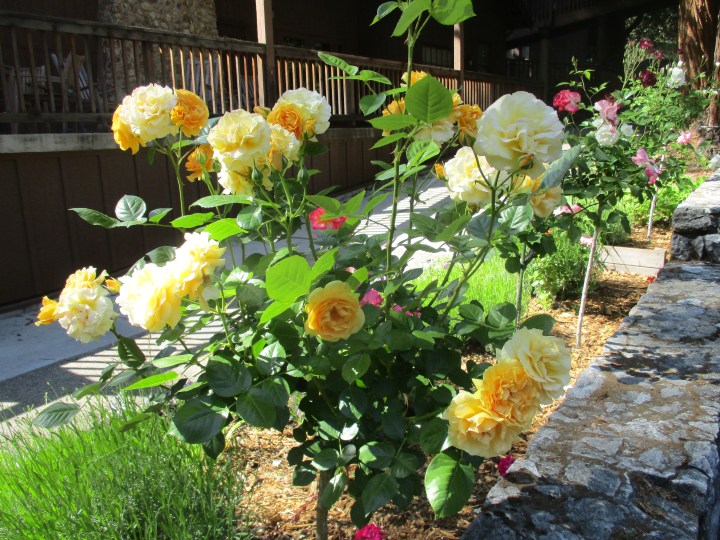
1. Of the mere four cultivars here, this is my least favorite. The color and profusion of bloom are excellent. I just dislike how the floral form resembles those of the trendy David Austin roses.P00509-1

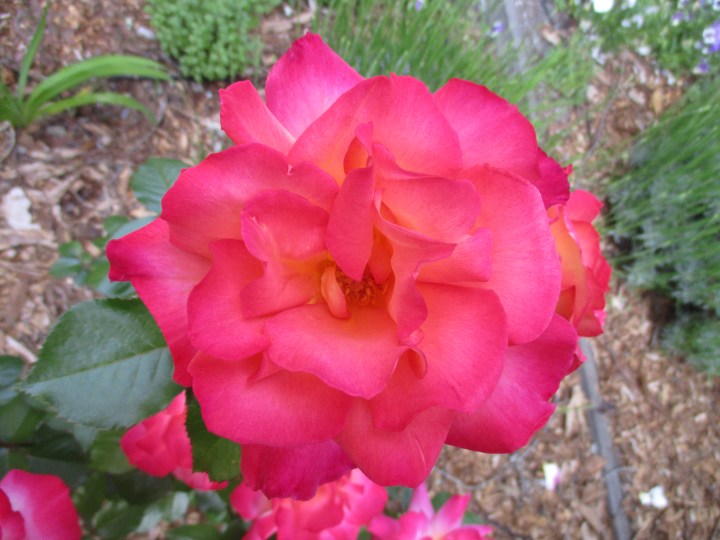
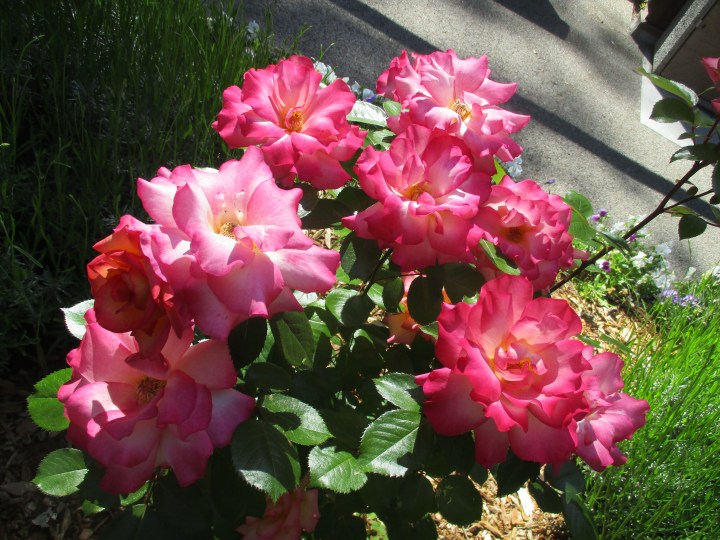
2. This cultivar is the only one that is in shrub form. All the others are tree roses (or standards). The profuse bloom resembled ‘Double Delight’ last year, but is completely different this year.P00509-2

3. Close up, it is more rich bright pink than distinctly reddish pink with white. It is fragrant like ‘Double Delight’ should be, although it does not seem to be as fragrant now as it was last year.P00509-3

4. The first (#1 above) is also different from how it bloomed last year. Its petals are not so densely packed. There are plenty of buds behind the maturing flowers. Performance is exemplary.P00509-4

5. Is this purple? Not only is its color odd, but it is grafted onto the same rose trees as the white roses (#6 below). It is too weird for my taste. Everyone else likes it. That is more important.P00509-5

6. As mentioned above, this cultivar is grafted onto the same rose trees as the purple roses (#5 above). To me, it seems to be the common ‘Iceberg’. I do like white, even if it is just ‘Iceberg’.P00509-6

This is the link for Six on Saturday, for anyone else who would like to participate:

https://thepropagatorblog.wordpress.com/2017/09/18/six-on-saturday-a-participant-guide/