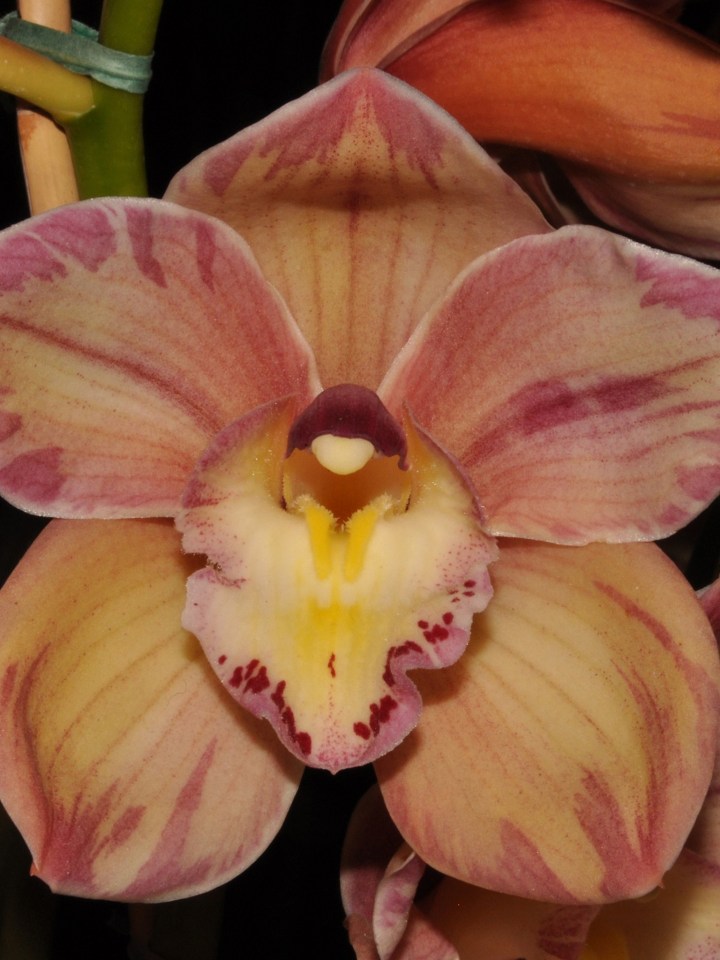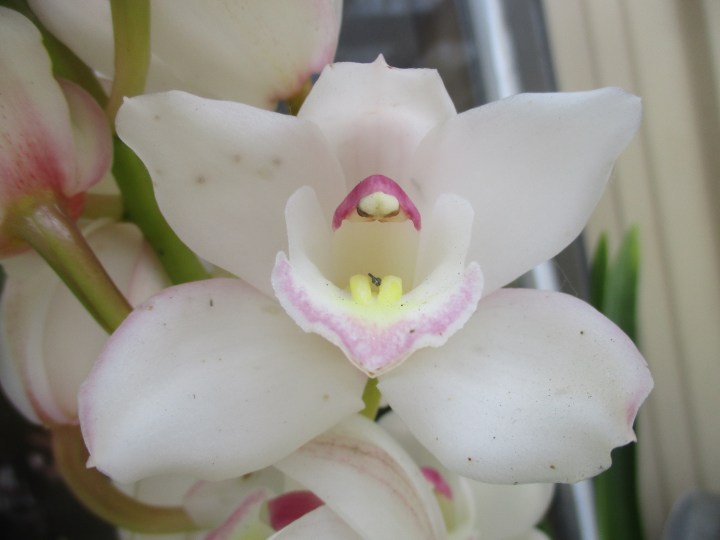
Cymbidium orchids have been popular here for as long as I can remember. Back when horticultural commodities were still more commonly grown around the San Francisco Bay area, many genera of orchids, particularly Cymbidium, were grown in acres of greenhouses in the hills of South San Francisco. They are still grown near the coast of San Mateo and Santa Cruz Counties.
In home gardens, they are often pampered under the shelter of lath, where they are protected from frost and direct exposure to sunlight. Some Cymbidium orchids live and bloom for many years or decades, and sometimes get divided into more as they get overgrown, just like lily-of-the-Nile. Some live longer than those who originally grew them, and go live with someone else.
I never pampered my Cymbidium orchids. I grew all of them out in the garden, with only a bit of partial shade from larger trees. I never once potted any of them into the coarse fir bark that Cymbidium orchids supposedly need. I grew most in dirty and uncomposted oak leaves. I put some in rotting stumps to accelerate the rot. They were happy, and bloomed remarkably well.
None of mine were purchased. They were all acquired from neighbors, clients or colleagues. Of the many Cymbidium orchids that I have grown, none were white! Yes, I wanted a white one. I just do not admit to it.
After maintaining it for more than a decade, and bringing it from a former home hundreds of miles away, a colleague brought me this Cymbidium orchid. Although I did not want him to pass it along after so many years, I was pleased to take it, particularly since it blooms white. Then, it started to bloom, immediately after arrival! Ah, if only there were more people here to see it!