Try Some Unconventional Cut Flowers

P81214There is nothing like growing our own; whether vegetables, fruit or cut flowers. Most fruit and vegetables are grown to be eaten, so are not missed too much when harvested. Even colorful citrus fruit is better harvested than left out in the garden. No one wants to waste it. Flowers are not so simple. They are so colorful and fragrant in the garden, that it is tempting to leave them all out there.

Cosmos and many kinds of daisies are so abundant that there are plenty for both the home and garden. Gladiolus are not so fortunate. They bloom only once. Cutting the flowers to bring into the home deprives the garden of their color. What is worse is that cut gladiolus, although excellent cut flowers, do not last quite as long as they would in the garden. Roses at least continue to bloom.

Daylily can be a good cut flower, but individual flowers last only a day (obviously). This is not a problem in the garden because new flowers bloom daily to replace those that that have finished. Cutting stems not only takes flowers in bloom, but also takes the flower buds behind them that are waiting for their turn to bloom. However, not many, if any, of the unbloomed buds bloom once cut.

Many types of iris, except for Dutch iris, have the same problem. Attentive garden enthusiasts might leave iris to bloom in the garden, and might even groom fading blooms from fresh blooms on the same stems, and then cut stems to bring into the home when the last bud on each stem is just beginning to bloom. The last flowers are not as excellent as the first, but it is a fair compromise.

Cannas are not so functional. They are great in the garden for both flowers and foliage, but fade too soon in the home. Bougainvillea and crape myrtle stems likewise start to wilt and drop flowers immediately after getting cut, but for those who do not mind cleaning up after them, there are plenty of papery flowers to last a few days. The wilted tips of bougainvillea stems can be pruned out.

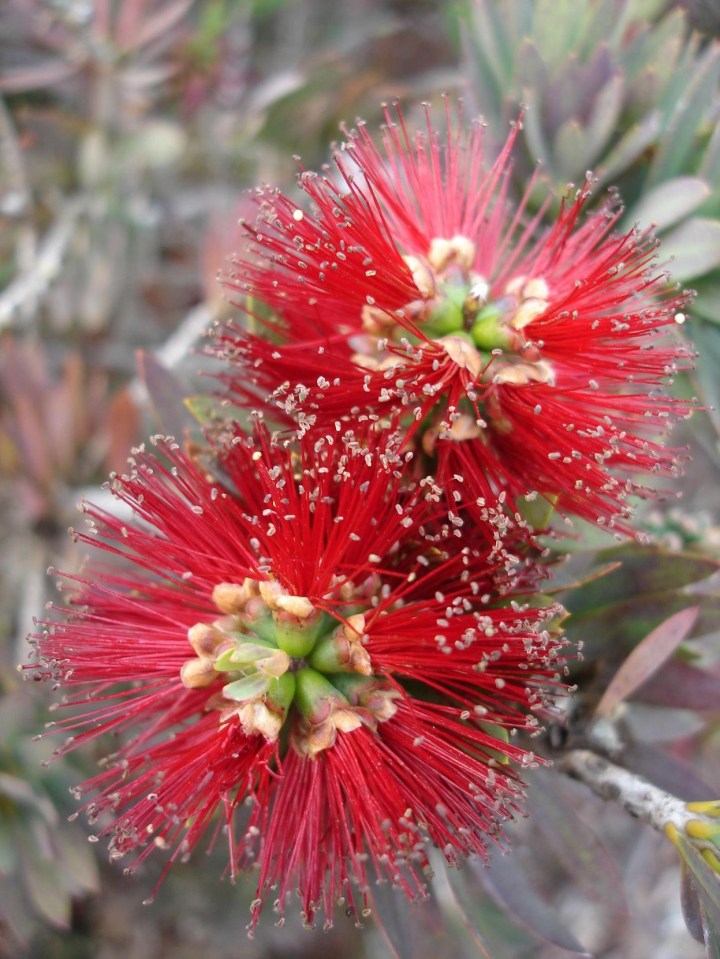
There are no rules to cut flowers. Lily-of-the-nile might seem like a silly choice, but works quite nicely for those who dare to try it. New Zealand flax flowers are not very colorful, but provide striking form. Zonal geranium and nasturtium work well with or without foliage attached. Lemon bottlebrush, photinia, New Zealand tea tree, bugle lily, various hebes, and all sorts of salvias are worth a try.
Roses Can Not Be Neglected

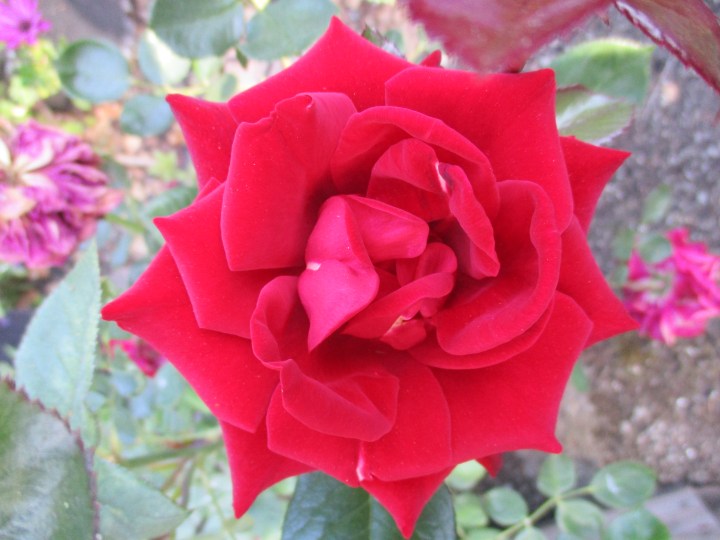
P80602+Roses are not for the meek. They are too demanding, too sensitive, too thorny, and without their flowers, they are not even very attractive. They have no business in a low-maintenance landscape, or in a landscape maintained by mow, blow and go gardeners. Those who want to grow rose plants for their flowers should be ready to give them what they want, and to prune them aggressively.
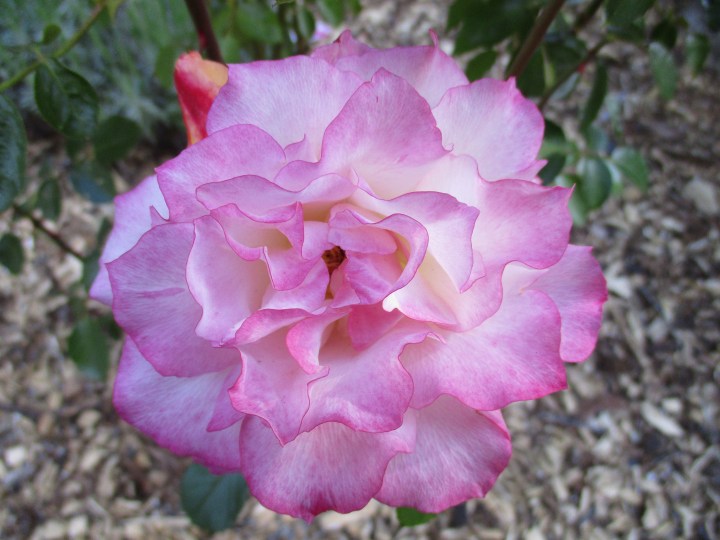
The most aggressive pruning gets done during winter dormancy. That process alone can be quite intimidating for those who are just getting acquainted with roses. After seeing them grow through the year, it seems counterproductive to prune big plants back to only a few short canes. Yet, by now, those canes should have produced much taller new canes that are already blooming profusely.

Now it is time to prune roses again, or will be time to do so soon. Deteriorating flowers need to be pruned away to promote continued bloom, a process known as ‘deadheading’. Otherwise, the fruiting structures that develop, known as ‘rose hips’, divert resources and inhibit bloom. Of course, blooms taken as cut flowers leave no hips, but they might leave stubs that may need grooming.

The popular technique of pruning back to the fifth leaf below a hip is not necessarily what roses want. It probably originated from the recommendation of pruning back to a low leaf with five leaflets because the buds associated with upper leaves with three or less leaflets are not as likely to develop into productive stems. However, pruning a bit too low is probably better than pruning too high.

When cutting roses to bring in, it is better to cut long stems, and then shorten them later if necessary. Each stem should be cut just above a leaf so that the bud in the leaf axil can develop into a new stem without much of a stub above it. The cut stem left behind on the plant should not be so long that it extends too far above the canes that were pruned over winter, or becomes crowded.

Crowded stems inhibit growth of vigorous blooming canes, and are more susceptible to rust, mildew and blackspot.P80602++

Six on Saturday: Rhody!!

P71014

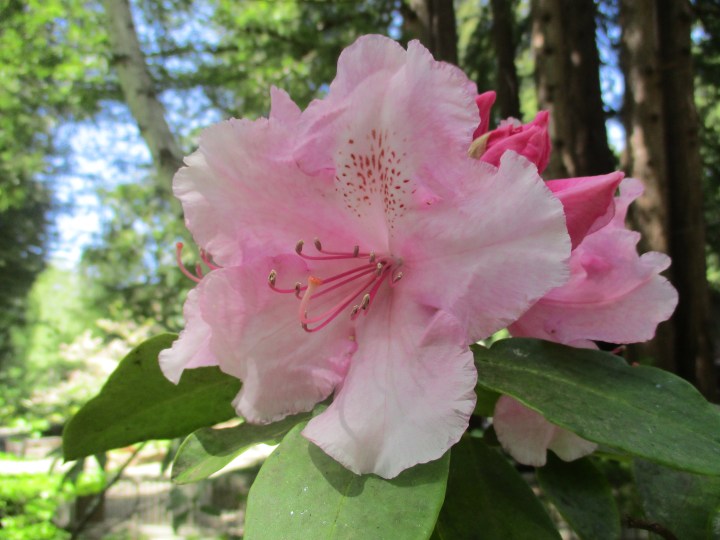
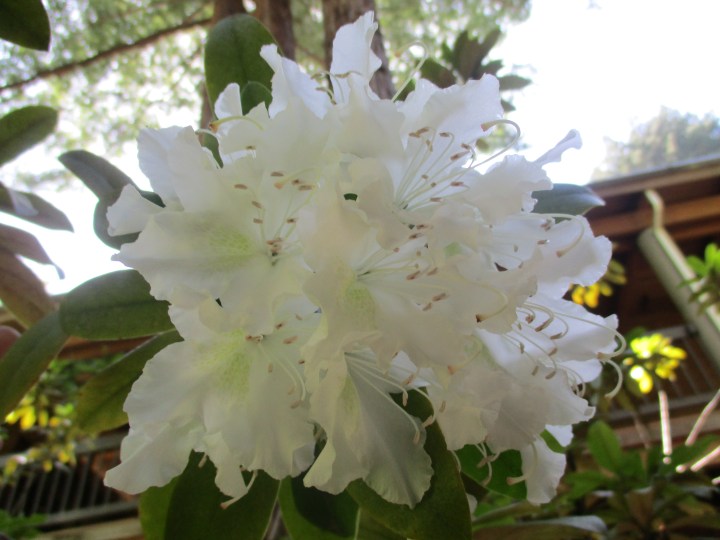
This is not really about Rhody, the terrier whom I work for. I just threw that extra picture in because, if you know who Rhody is, you were expecting to see his picture after reading the title. The six pictures below are really just rhododendrons that were blooming last week.

Last year was the best bloom of rhododendrons and azaleas in many years here. Those who have known them for many years can not remember a more spectacular bloom, with so many of different cultivars of the rhododendrons blooming so profusely in the same season.

The bloom this year is unusually sparse. No one can explain it. They have good years and bad years, just like anything else in the garden. Fortunately, even in their bad years, the flowers that bloom are spectacular.

1. Of the six this week, this is my least favorite. It is a vary pale pink, but not pale enough to be white. There are not many florets on the trusses.P90504

2. I refer to this one as ‘Taurus’; but I really do not know what it is. ‘Taurus’ is very susceptible to thrip. This one sustains only minor damage from thrip, while a few others nearby are are seriously damaged.P90504+

3. This one may not look much better than #1, but the color is pinker, and the trusses are impressively big with more florets when it is in full bloom. It grows as a tree nearly twenty feet tall.P90504++

4. I refer to this one as ‘Anah Kruschke’, but like for #2 above and #5 below, I am not sure about its identity. ‘Anah Kruschke’ should not be damaged by thrip as badly as this one is. I think my colleague grew this one.P90504+++

5. Of the three here that I have names for, this is the one that is most certainly not what I like to think it is. ‘Helene Schiffner’, which happens to be one of my favorites, is not blushed with yellow.P90504++++

6. I believe that my esteemed colleague grew this one as well as #4. I remember delivering a significant order of rhododendrons here years ago, at about the same time this and #4 were installed.P90504+++++

This is the link for Six on Saturday, for anyone else who would like to participate:

https://thepropagatorblog.wordpress.com/2017/09/18/six-on-saturday-a-participant-guide/

Clustered Bellflower

90508Do they seem to be early this year? Clustered bellflower, Campanula glomerata, typically waits until the end of spring to bloom. Once the initial and most prolific bloom phase finishes, sporadic bloom should continue almost through summer. Blue is their most popular and traditional color. White is their second most popular option. Bluish purple and purplish pink are still somewhat rare.

Vegetative growth stays relatively low and unassuming through autumn and winter, and then starts to stand up and get noticed just before spring bloom. Short varieties might bloom without getting even a foot tall, while tall varieties can get two feet tall or a bit taller in partial shade. Each blooming stem supports a dozen or so five-pointed flowers that are about thee quarters to an inch wide.

Clustered bellflower looks neater and probably blooms a bit better as the season progresses if stalks are pruned out as they finish bloom and start to deteriorate. However, a few stalks of some varieties might be retained after bloom to produce seed to scatter elsewhere. Some of the fancier or newer varieties do not produce many viable seed, and such seed may not be true to to type.

Mellow Yellow

P90427KThis picture of a yellow Pacific Coast iris probably should have been incorporated into the Six on Saturday post earlier today. I omitted it because I was not so impressed with how the color showed up. It is really more yellow than it looks. In this picture, it looks more like a discolored version of the white Pacific Coast iris. This sort of variation, that might have been normal for old fashioned photography, is not expected of digital imagery.
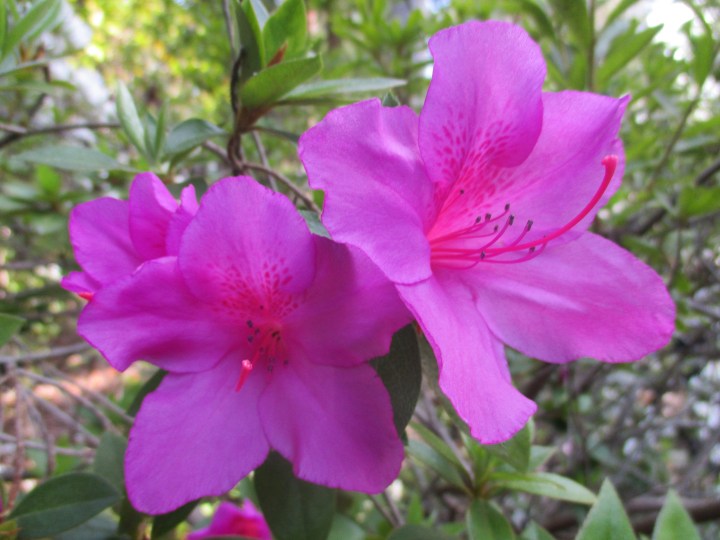
It sort of reminds me of how some insects and other pollinators see flowers so differently with infrared or ultraviolet. Are infrared or ultraviolet faded in digital imagery as well? It would make sense, since there is no need for normal cameras to record colors that we can not see. Nor is there need for computer monitors to display such invisible colors. Ironically, modern technology can modify color to make that which in invisible to us visible.
Modern technology is always improving the quality of stored data, and the presentation of such stored data. Perhaps there really are ways to take pictures that record infrared and ultraviolet, although I can not imagine why there would be a use for such technology. Video is good about recording and presenting motion. Audio records and presents sound. Regardless, none of it is good enough to keep us from actually enjoying our real gardens.
Pacific Coast iris blooms in all sorts of weirdly bright colors now. Modern technology has certainly had its way with them as well. The flowers are bigger and bolder than they naturally were. The foliage is greener and fluffier. Yet, to me, the best are still those that grow wild and bloom on the coast of San Mateo County, with unassuming flowers in subdued shades of greyish blue, like faded denim.

Six on Saturday: Azaleas


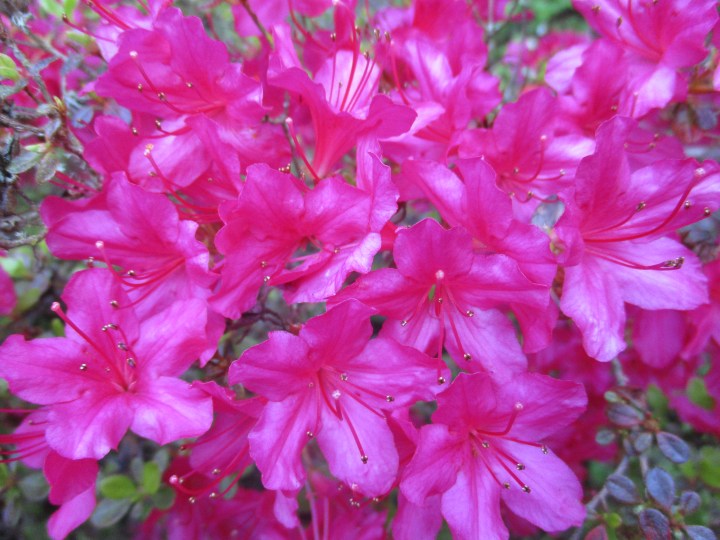
As the flowering cherry trees fade, the azaleas get their turn. Like the flowering cherry trees, the azaleas are not as spectacular as they were last year. I know it is relevant to the weather, although I do not know what the weather did to inhibit so much bloom with so many of the early spring bloomers. I know there was a lot of rain, but that should not have been a major problem. There was not much chill, but there should have been enough.

I do not know if this will be the most subdued bloom ever witnessed here, but the limited color might be more apparent because the azaleas and rhododendrons were more spectacular last year than they had ever been. According to their bud set, the rhododendrons will be even less impressive than the azaleas. The dogwoods might have had the potential to be as spectacular as last year, but some were disadvantaged by structural pruning.

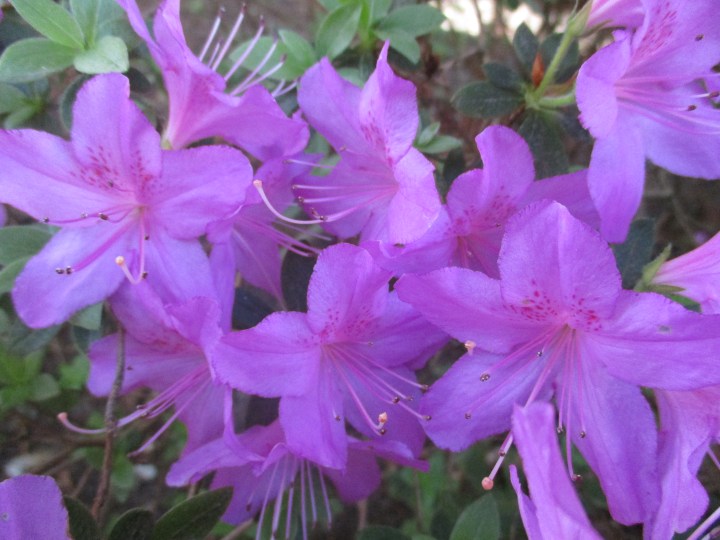
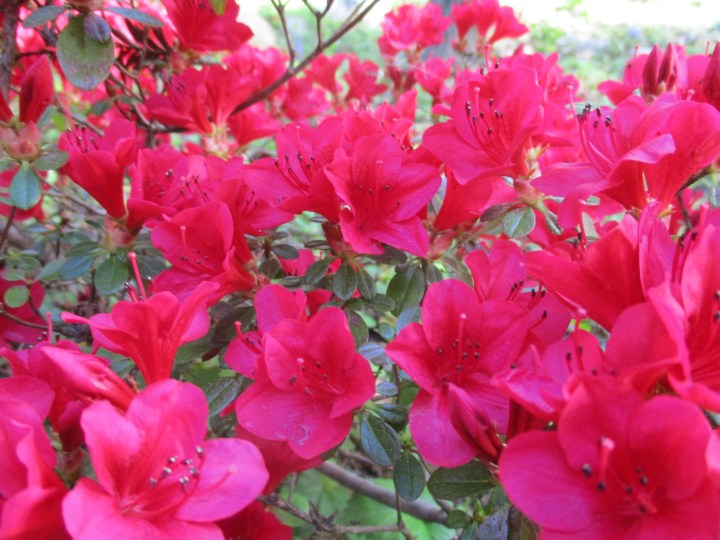
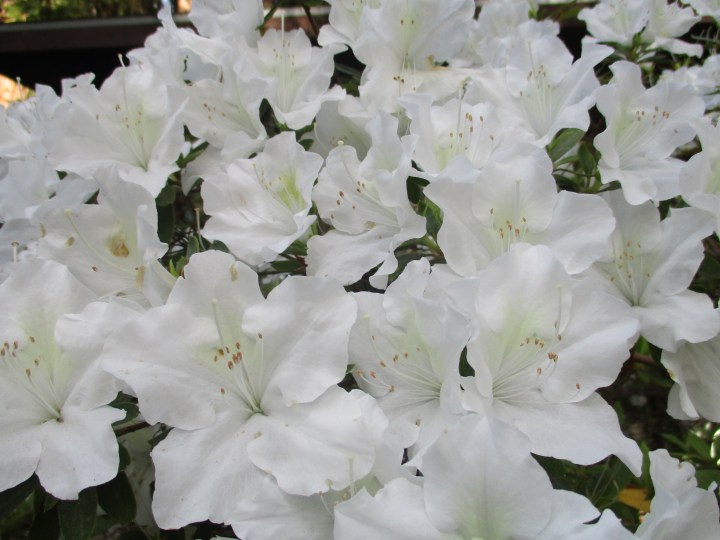
These six azaleas were the best of what was blooming here this year. The pictures were taken about a week ago. I should know the names of all the cultivars, but I don’t. They do not look the same in landscape as they do on the farm where they grow. I could guess on a few. The only one that there is no mistake about is #4, which is ‘Coral Bells’. Color is a bit off in this picture. #5 looks like ‘Hino Crimson’, but without bronzed new foliage.

Rhododendrons are coming along slowly but surely. They will not be ready for next week. Fortunately, as wimpy as our bloom is this spring, there is plenty to get more pictures of for next week.

1.P90420

2.P90420+

3.P90420++

4.P90420+++

5.P90420++++

6.P90420+++++

This is the link for Six on Saturday, for anyone else who would like to participate:

https://thepropagatorblog.wordpress.com/2017/09/18/six-on-saturday-a-participant-guide/

See Anemone

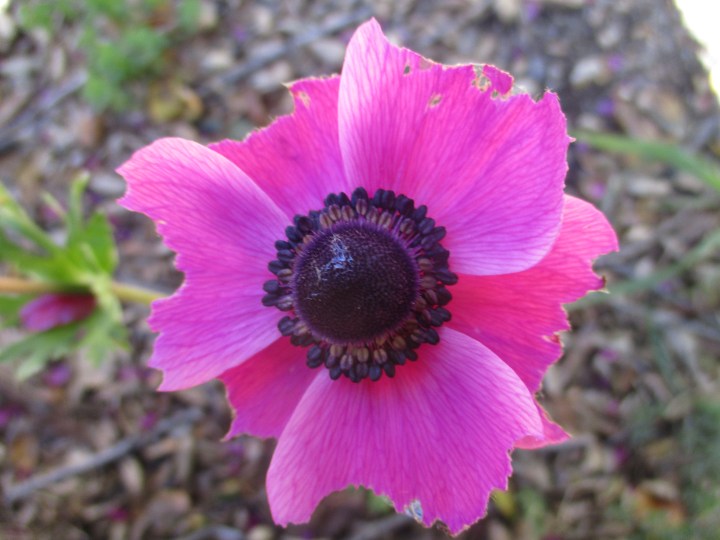
P90414This really is something that I did not expect to see. It may not look like much. It is just a raspy anemone with bites taken out of it, blooming later than it should. What is so impressive about it is that it was not planted here last year. It was planted during the previous year, then bloomed on time last year, and then died back like anemones normally do. I did not plant it, of course. It is in a planter where volunteers contribute whatever they like.
In case you are wondering why I am writing about it as if I did not expect it to bloom again, I didn’t. For whatever reason, anemones typically bloom well only once here, in their first season after they get planted. They may produce foliage for the following season, or maybe even several seasons, but very rarely bloom again. It annoys me that they are even sold locally. Nurseries should know better than to sell bulbs that do not perform well here.
I have always believed that anemones, like a few other types of bulbs, do not get enough chill in winter to bloom again. This is a rather mild climate. There are certain cultivars of apple that do well where winters are cooler that would be dissatisfied with the minimal chill they would get here. (Incidentally, this last winter was not unusually cold.)
There is also the possibility that anemones can not maintain their foliage long enough through the arid spring and summer weather to sufficiently regenerate their resources to bloom again. The foliage begins to appear in conjunction with bloom, then grows more as bloom finishes, but then dies back as the weather gets warm in spring and summer. The weather is not hot here, but it is rather arid.

Charles Grimaldi Brugmansia (not a bio)

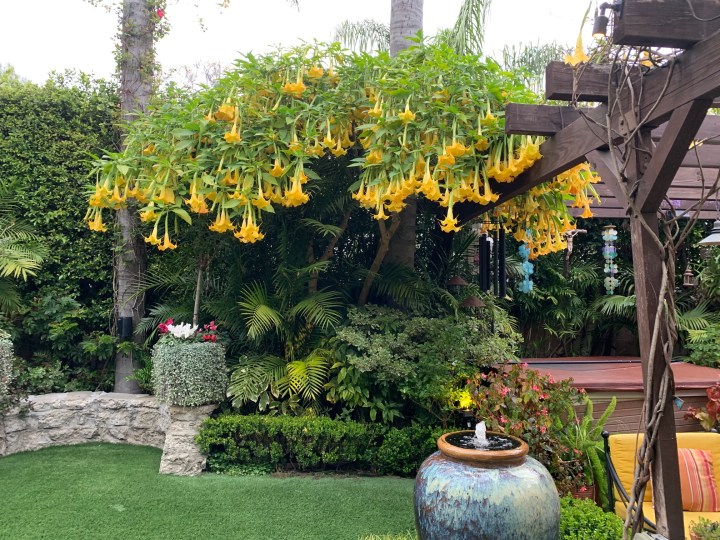
P90406KKWhen spelled like that, the whole thing looks like someone’s long name. ‘Charles Grimaldi’ really is someone’s name, and the particular cultivar of brugmansia happens to be named after him. Because no one knows who the parents of this hybrid cultivar are, the species name is omitted. It is therefore described by just the genus name followed by the cultivar name, as Brugmansia ‘Charles Grimaldi’; or simply ‘Charles Grimaldi brugmansia’.
After all that, some of us know it, as well as all other cultivars, even more simply as ‘angel’s trumpet’. They are more likely to be distinguished by floral color and form than by cultivar name. For example, Brugmansia ‘Charles Grimaldi’ might be described as a single yellow angel’s trumpet. There is also a single white, a double white, a single pink, a single pink with variegated foliage, and so on. Most are fragrant at least to some degree.

This particular specimen was not planned. As I mentioned in my ‘Six on Saturday’ posts earlier today, my colleague, Brent Green, planted it out in the back garden as a wimpy #1 (1 gallon) specimen many years ago. It grew like a weed and displaced a few other perennials that were too close to it. Brent coppiced it to the ground annually for a few years. It grew back and bloomed spectacularly and very fragrantly through each summer.

A few years ago, rather than coppice it back to the ground, Brent had me pollard it on a few tall trunks. Rather than regenerate as a big fluffy and obtrusive shrub that occupied too much of the limited space, it was able to spread out up and above the garden, while the tall and lanky trunks were pruned bare. The abundant and very fragrant flowers naturally hang downward from the upper growth.

Another Bad Picture

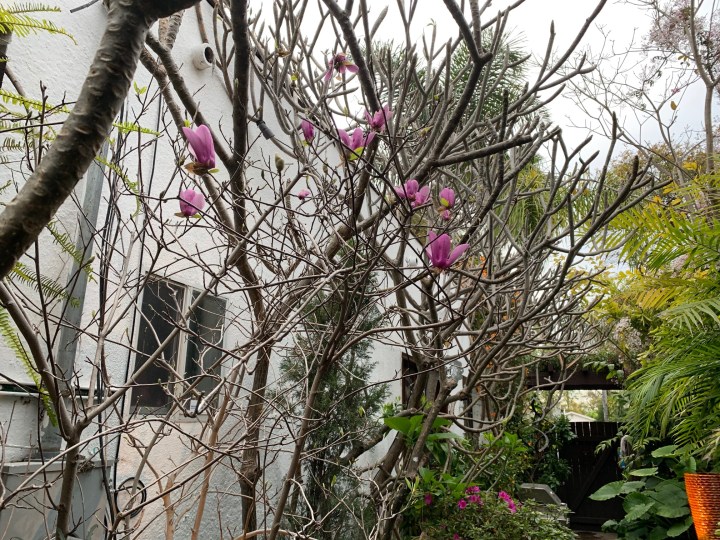
P90330KKThis is why one should not ask someone else who is very vain to take a picture of something important. The vain only take good selfies. Others subjects are too unimportant to them to bother getting a good picture of.
Fortunately, I did not ask for this picture. Brent, my colleague in Southern California, sent it to me with all those other pictures that I shared this morning, and the rest of the pictures that I intend to share next Saturday. I think he wanted to show off his magnolia. I do not remember what cultivar it is, or even what species. I though there was a Magnolia soulangeana in this spot, but these flowers do not look right for that.

I think this picture shows off the plumerias better. Brent probably did not think of that because he does not understand how impressive these specimens are to those of who can not grow them, even while these specimens are bare. I would like to grow some here, but it gets a bit too cool for them in winter. They are very sensitive to even mild frost.

Some of us know plumeria as frangipani. There are quite a few different cultivars that are indistinguishable while bare in this picture. Some stay quite small. My favorite white flowered cultivar is very tall but lanky, with only a few branches. The biggest specimen is the most common, with large trusses of small but very fragrant white flowers with yellow centers. Most bloom with a few colors swirled together. A few are more uniform hues of light pink, bright pink, red, pastel orange and buttery yellow.

I have pruned these specimens a few times. The pruning debris gets plugged as cuttings of various sizes. They grow into copies of the originals that get used in landscapes that Brent designs.

Brent’s other pictures, as well as a brief explanation of the severity of his extreme vanity, can be found at: https://tonytomeo.com/2019/03/30/six-on-saturday-vanity/ and https://tonytomeo.com/2019/03/30/six-on-saturday-vanity-ii/ .

Six on Saturday: Vanity II


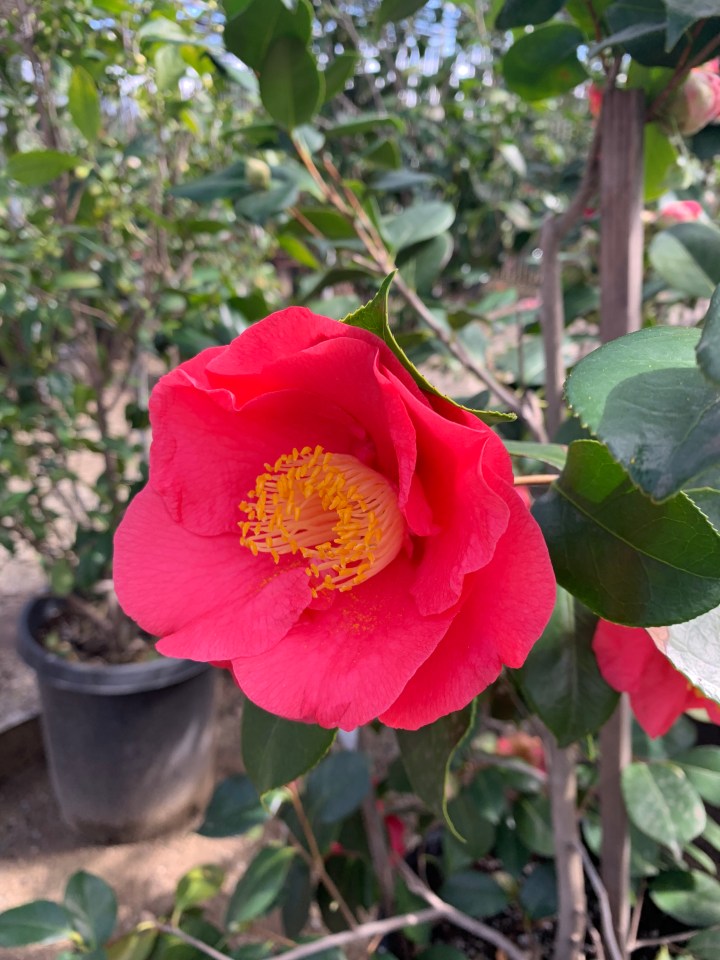
As I mentioned in the immediately previous post, this is the sequel to that same previous post, and the second ‘Six on Saturday’ for today. These five bad pictures of good camellias, and the sixth . . . picture, would make sense only after reading the previous post: https://tonytomeo.com/2019/03/30/six-on-saturday-vanity/

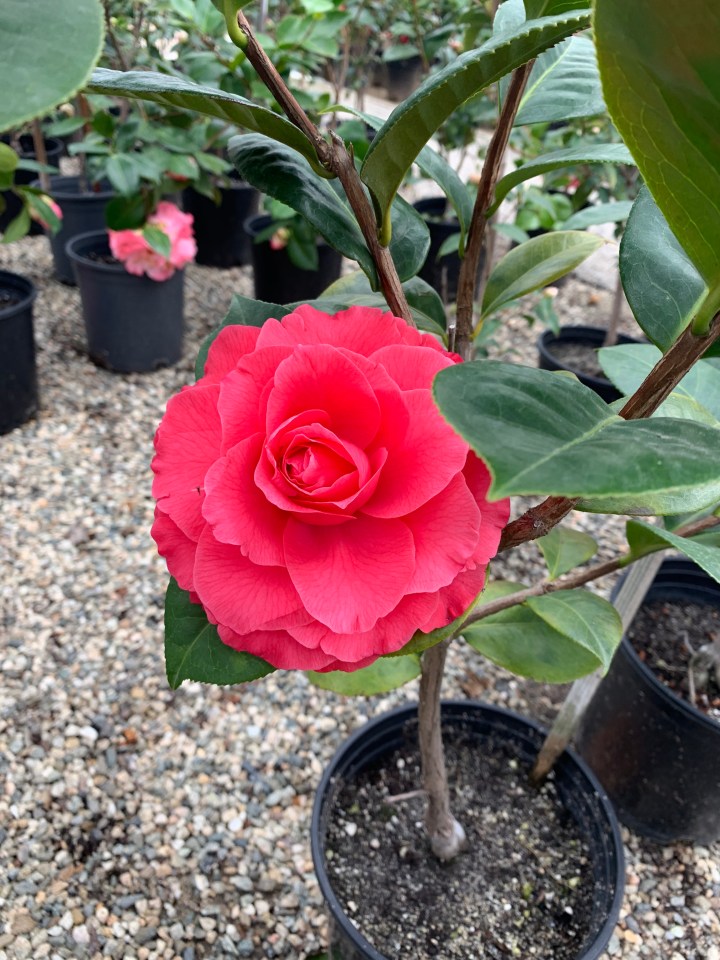
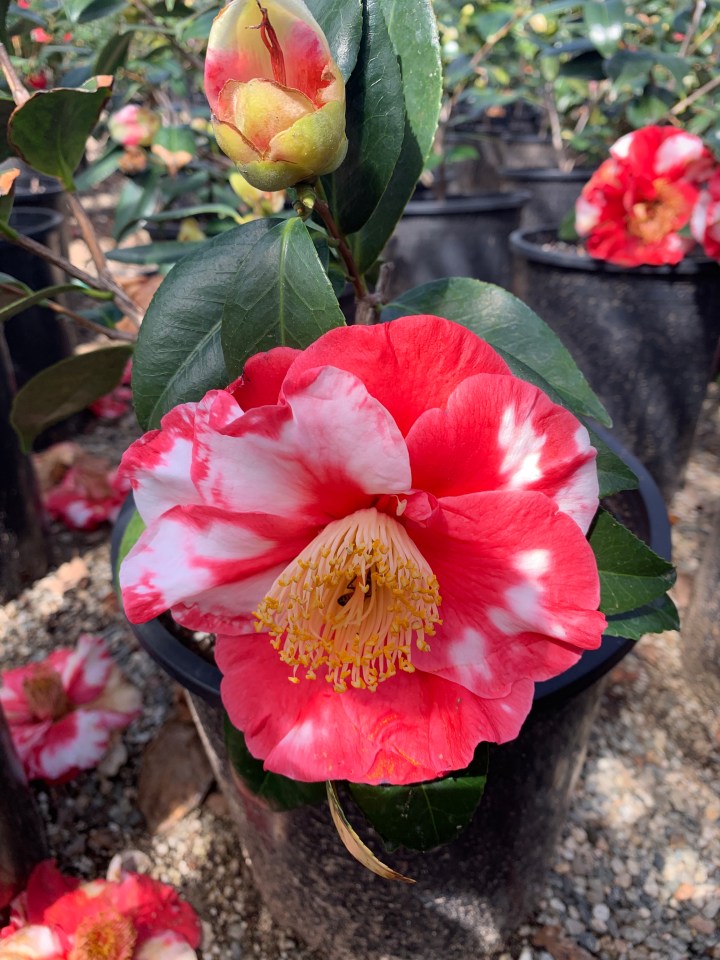
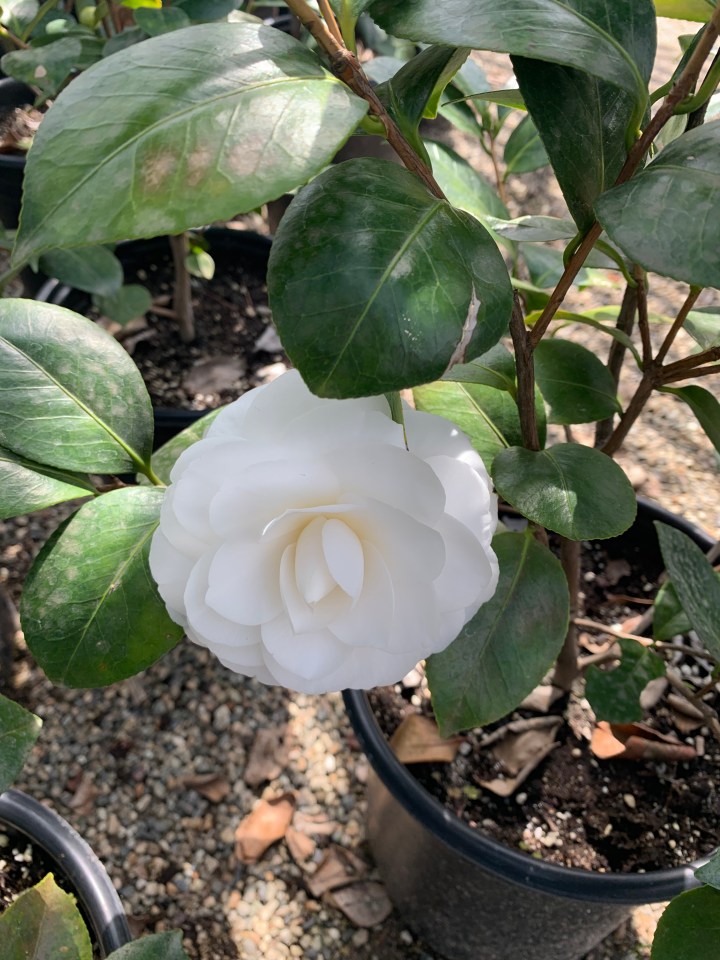
These pictures are somewhat better than the previous six, . . . although black vinyl nursery cans and the gravel on the ground below are a bit too prominent in the first four. The flowers are centered better within the pictures, . . . although the first three are not facing the camera.

1. R. L. WheelerP90330K

2. Variegated Guilio NuccioP90330K+

3. Nuccio’s GemP90330K++

4. Valentine’s DayP90330K+++

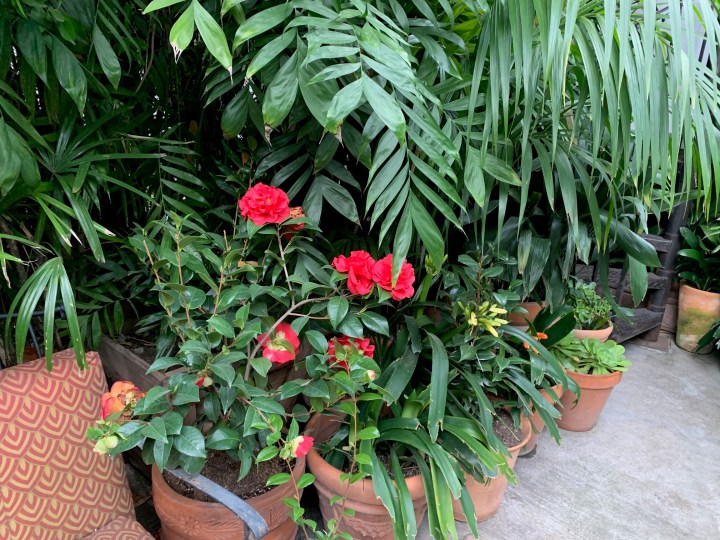
5. Unidentified camellia in the home gardenP90330K++++

6. ME! As mentioned above, the previous post makes a bit more sense about these pictures.P90330K+++++

Now, in case you do not read the previous post or know who Brent is, I will explain briefly that he is a renowned but extremely vain landscape designer in the Los Angeles region, and has been my colleague since we were college roommates in 1986. I posted my selfie here for comparison with Brent’s selfie in the previous post. Together they demonstrate that, although I am not nearly as proficient with taking good selfies as Brent is, I look much better in my selfies. Ironically, Brent Green, the renowned landscape designer, got his selfie in a nursery; and I am a nurseryman, but got my selfie in a landscape.

There are some more pictures of Brent’s home garden that I will likely share next week. They are much more interesting than the sorts of landscapes that I work in.

This is the link for Six on Saturday, for anyone else who would like to participate:

https://thepropagatorblog.wordpress.com/2017/09/18/six-on-saturday-a-participant-guide/