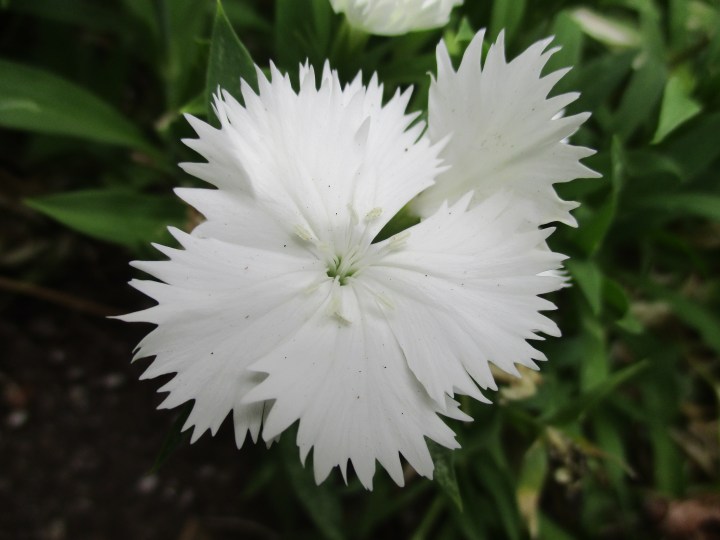
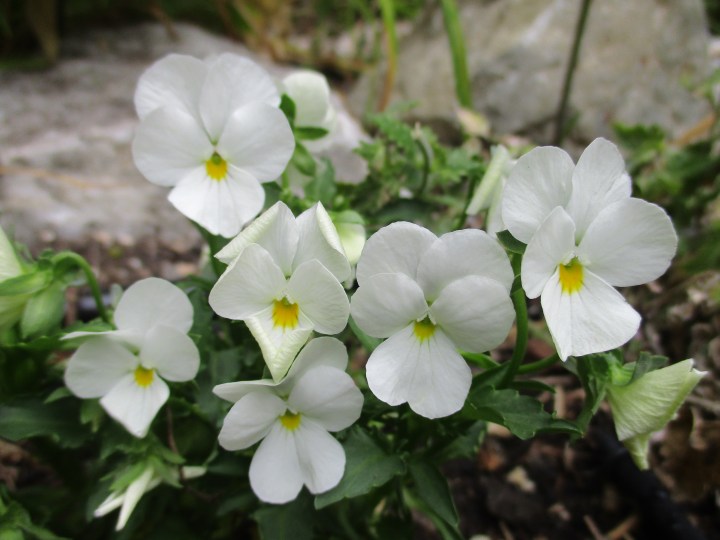
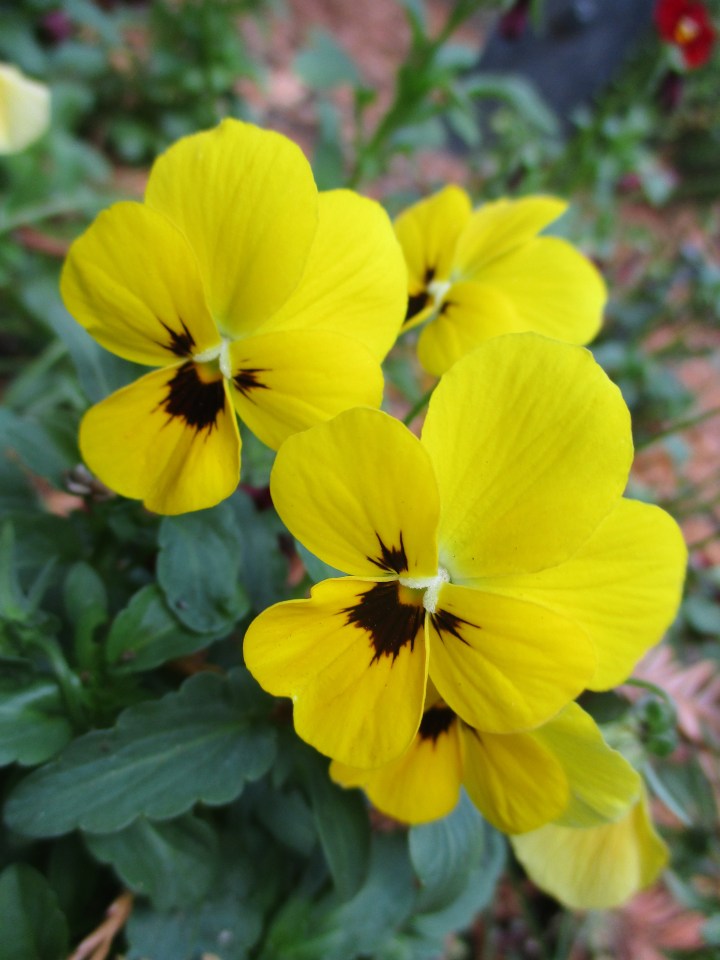
 All that unpleasant annual business of removing warm season vegetable plants to relinquish space for cool season vegetables applies to annual bedding plants too. Those of us who do not grow vegetables were spared the agony of pulling up tomato plants that might have still been producing a few tomatoes, just to make room for broccoli. Now, it is time to replace petunias with pansies.
There is a reason why annuals get removed this time of year. It is the same reason why those that get planted now to replace them will be removed later. Annuals are annual. They are expected to perform for only part of one year. True annuals naturally complete their entire life cycles in about a year. Those that have potential to be perennial are too unappealing to salvage through dormancy.
Removal of aging warm season annual bedding plants should be less distressing if they are already deteriorating. By now, most of them are. They tend to wear out faster than some of the warm season vegetable plants. Impatiens can be potted for next year, or, for mixed beds, cut down and overplanted. Most cool season annual bedding plants are already blooming when newly planted.
Because the weather gradually gets cooler through autumn, cool season annual bedding plants appreciate an early start. It is easier to disperse roots before the soil gets cool. Only those that are sensitive to warmth, such as cyclamen, get planted later. Ornamental cabbage and kale might bolt and bloom early at the end of their season if they get too warm at the beginning of their season.
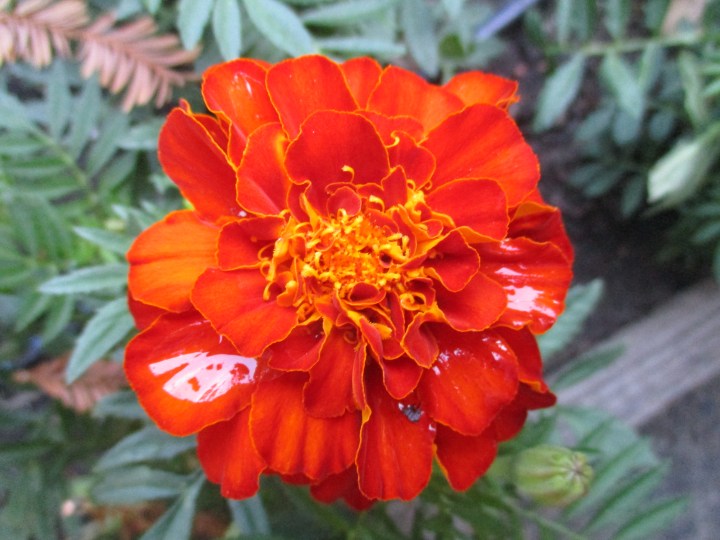
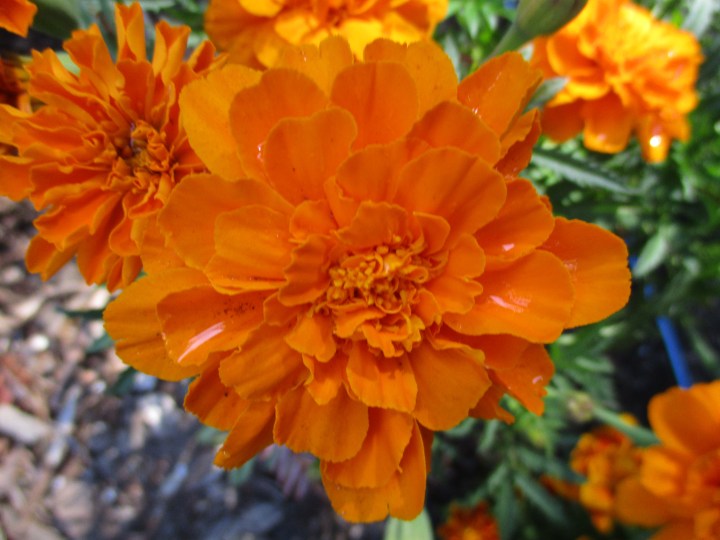
Marigold and chrysanthemum are short term autumn annuals that work very nicely until it is time to plant cyclamen or ornamental cabbage and kale.
Pansy, viola (including Johnny-jump-up), stock, sweet William, Iceland poppy and various primroses are now in season. Some could have been started from seed earlier. Otherwise, it is most practical to plant these cool season annual bedding plants from cell packs. Cyclamen and ornamental cabbage and kale that get planted later are best as more expensive four inch potted plants.
 Dog days of summer are no time for a dogwood to bloom. It should be slowing down and getting ready for autumn. Plump floral buds start to develop, but then wait dormant as foliage turns color and falls away. Only after winter dormancy, just prior to the emergence of new foliage, floral buds bloom spectacularly. September is either half a year too early or half a year too late.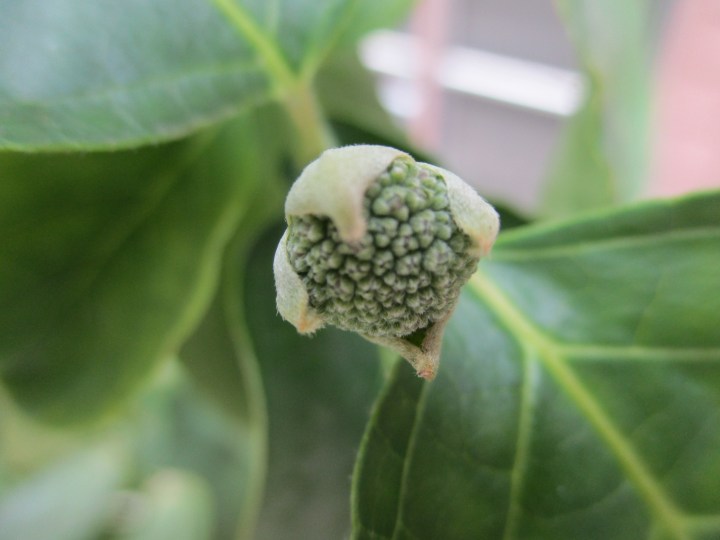
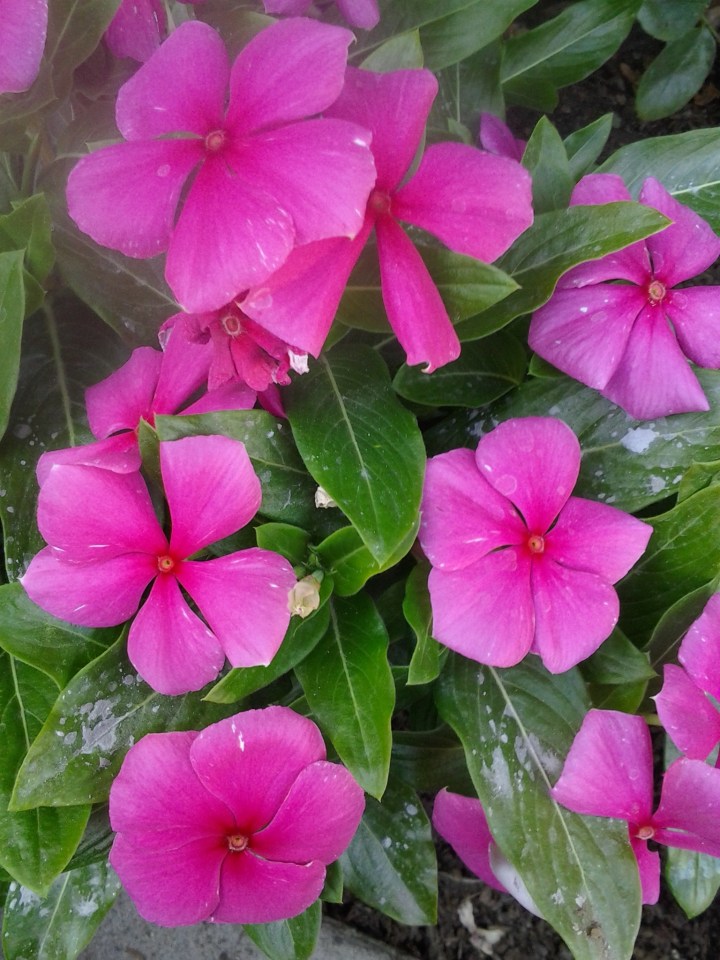 Like gardenia, dogwood and snapdragon, the potentially finicky Madagascar periwinkle, Catharanthus roseus, is often challenging to grow. It enjoys, but seems to prefer more humidity than it gets here. The happiest plants can get nearly two feet tall and wide in sheltered and humid spots. (They can get even larger in exposed spots in humid climates.) Yet, most of us are satisfied with relatively scrawny plants less than half a foot tall.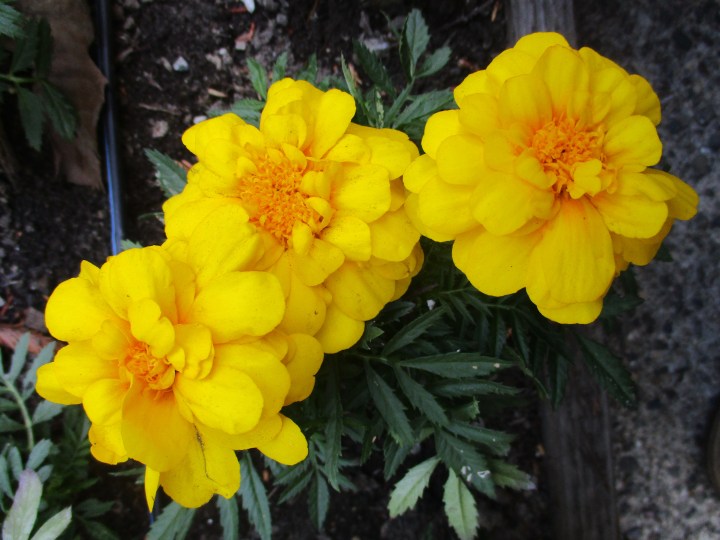



 It seems that everyone who has ever experienced the seductive yet powerful fragrance of gardenia, Gardenia jasminoides, wants to grow it, but very few actually can. Gardenias like warmth, but prefer more humidity than they get here, which is why they seem to be happier in partial shade, in atriums, or in urns that can be moved out of harsh exposure during summer. In such sheltered spots, aphid, scale and sometimes whitefly can be problematic.
 Not only does it start to bloom late in summer, but as the name implies, four o’clock, Mirabilis jalapa, blooms late in the afternoon to attract nocturnal moths for pollination overnight. By morning, the white, yellow, variable pink or rarely pastel orange flowers are closed, and their yummy fragrance is gone. Individual flowers often display irregular stripes or blotches of alternate colors, and can be divided into zones that are shaped like slices out of a pizza. Plants get nearly three feet high, but then die to the ground with the first frost. They regenerate from big tuberous roots as winter ends, and can seed profusely.


 A flower that is so prominent in American culture should have a more appealing name than black-eyed Susan. Even the Latin name, Rudbeckia hirta, sounds bad. Is Becky really so rude? Did she hirt Susan? Well, black-eyed Susan is good enough to be the state flower of Maryland, and is one of the most popular of flowers for prairie style gardens of the Midwest. After all, it naturally grows wild in every state east of Colorado. Here in the West, it is a light-duty perennial that is more often grown as an annual. As a cut flower, it can last more than a week.
 Black-eyed Susan, sunflowers and a few of the late warm season annuals and perennials are still blooming, and a few will continue into autumn. By that time, cool season annuals can move in; and some of the deciduous trees, shrubs and vines that turn color for autumn will be doing so. Realistically though, this can be the leanest time of year for color in the garden. Even some of the foliage that is colorful through spring and summer has faded.