 If you’re going to San Francisco, be sure to wear some flowers in your hair. In the 1960s and 1970s, such accessorizing with Paris daisy, Argyranthemum frutescens (which was at the time, Chrysanthemum frutescens), was a fad. The white flowers with yellow centers were about two or three inches wide. Modern cultivars have smaller flowers that might be light pink or pastel yellow.
Bloom continues in phases from spring through autumn. Light shearing as each bloom phase fades promotes fuller bloom of the subsequent phase. However, if conditions are right, bloom may be nearly continuous, without much pause between phases. Unlike the tougher yellow euryops daisy, Paris daisy wants rich soil, regular watering and maybe a bit of fertilizer for best performance.
Individual plants can get three feet tall and twice as broad, but live only a few years. Lower stems that develop roots where they touch the ground can be left to grow as new plants when an original plant dies. If they do not get roots on their own, lower stems can be pressed into the soil and held down with rocks (with their leafy tips exposed) to grow roots before the parent plant deteriorates.
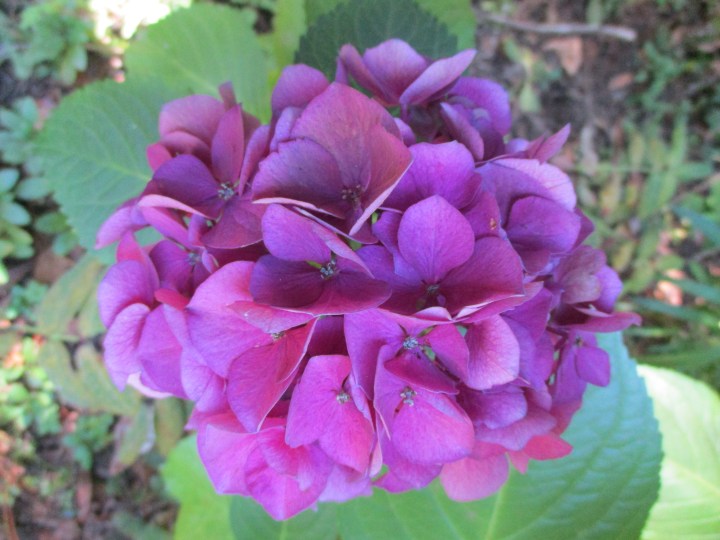 Bearded iris can bloom in almost any color. It is expected of them. There is not much they can do to surprise us.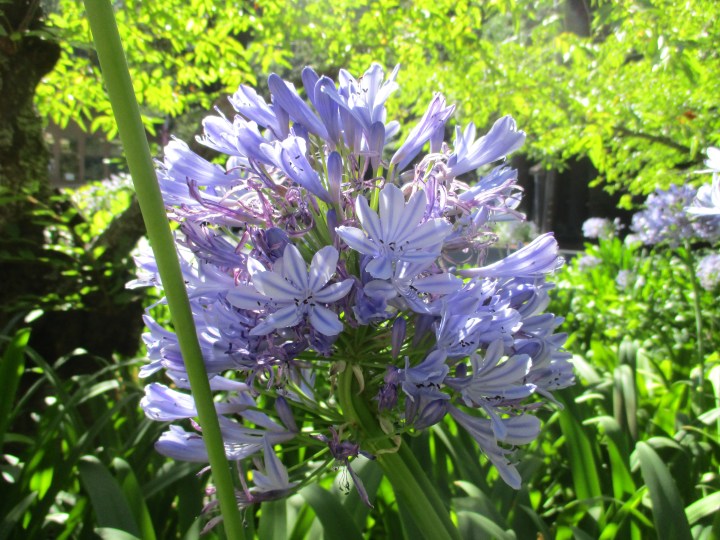




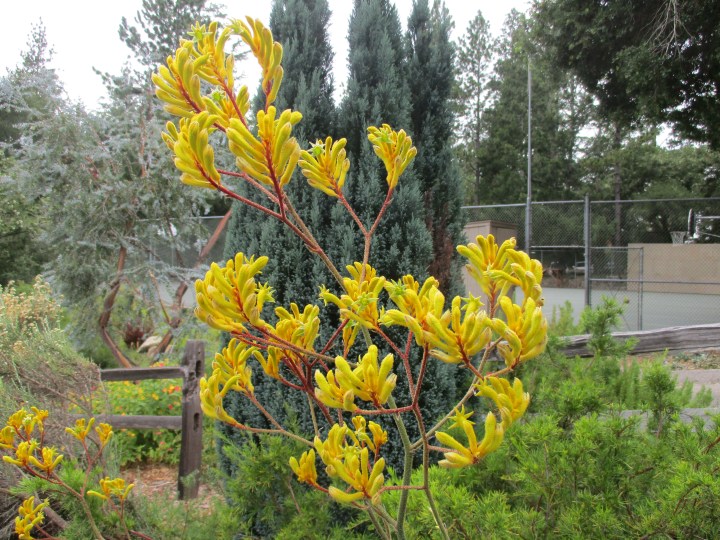


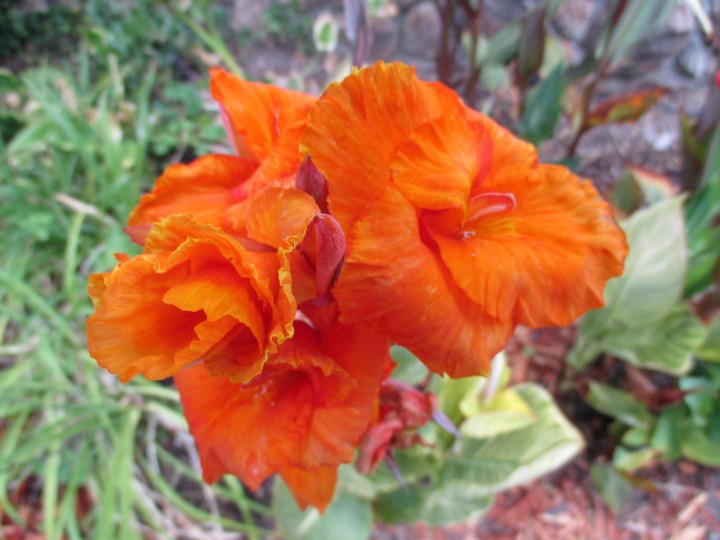

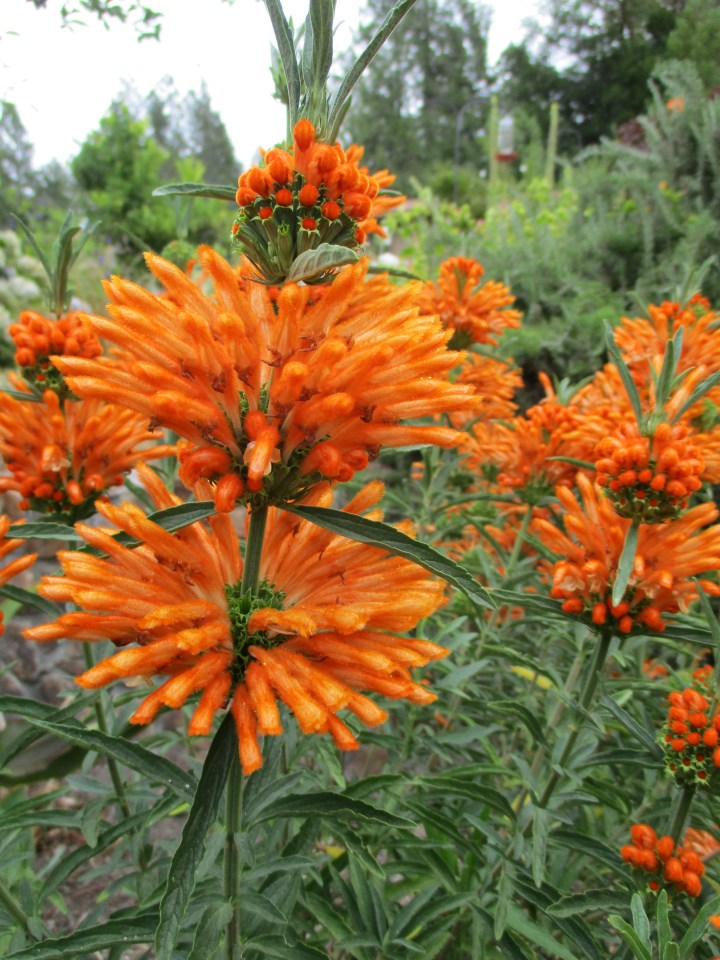 Are warm season annuals really the most colorful flowers for summer? Perhaps. They have their limits though. They are also very demanding. They need to be watered very regularly, and should probably be fertilized too. Many need to be deadheaded frequently. After all that, they are only temporary, and will get replaced with cool season annuals in autumn. Perennials are more practical.
 Unlike the common bird of Paradise that is grown for striking bright orange flowers, the giant bird of Paradise, Strelitzia nicolai, is grown for strikingly lush foliage. The big rich green leaves get nearly six feet long, and flare outward from leaning trunks that can eventually reach upstairs eaves. Foliage is healthiest if sheltered from harsh sunlight (such as hot reflected glare), wind and frost.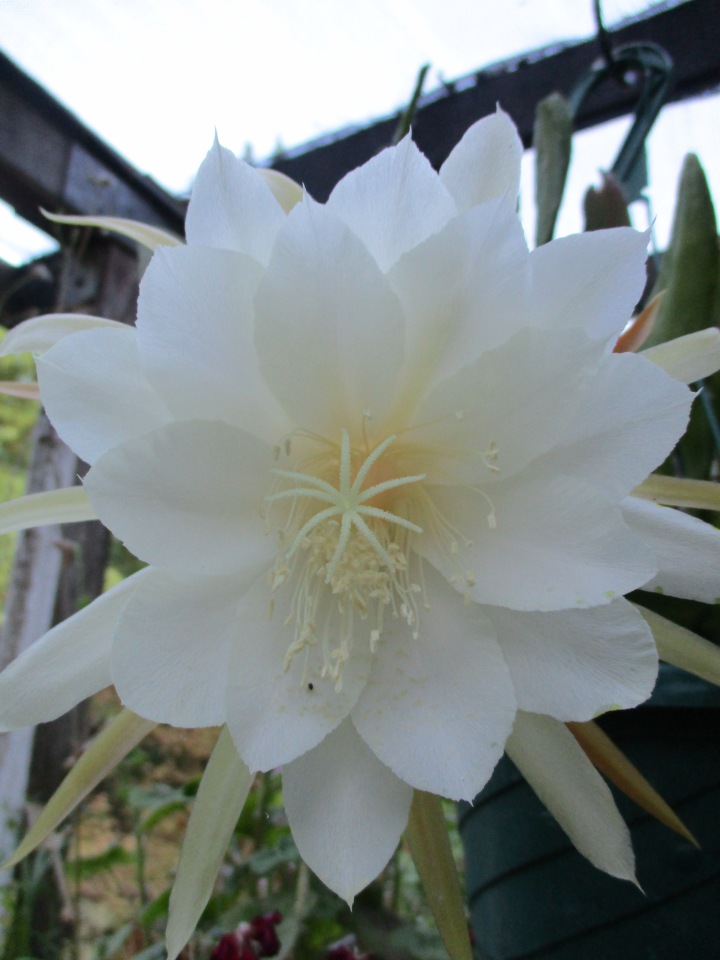

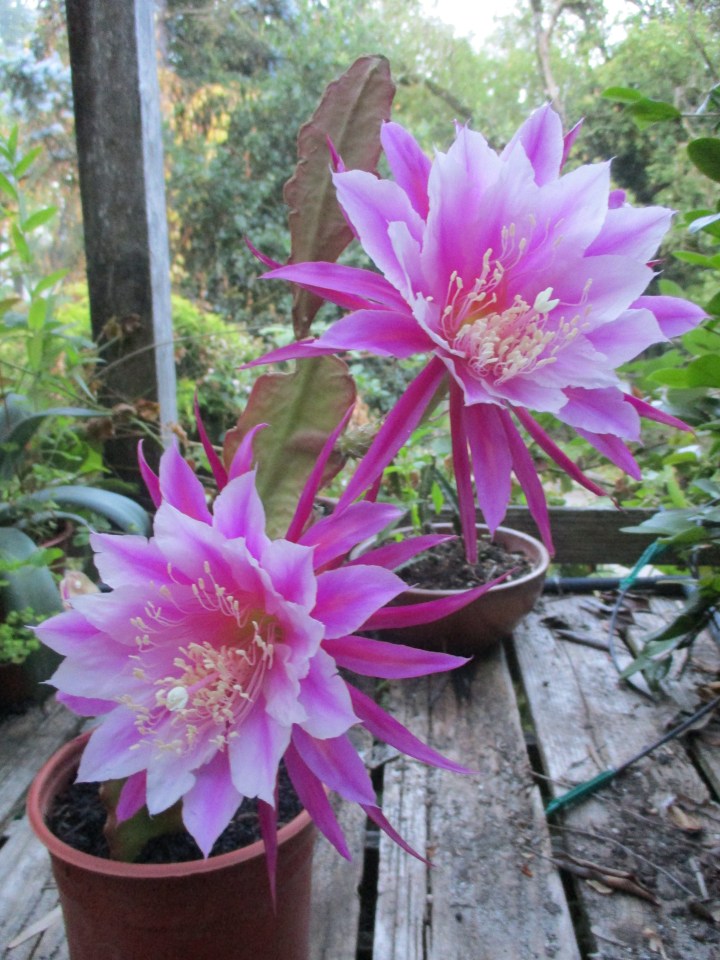
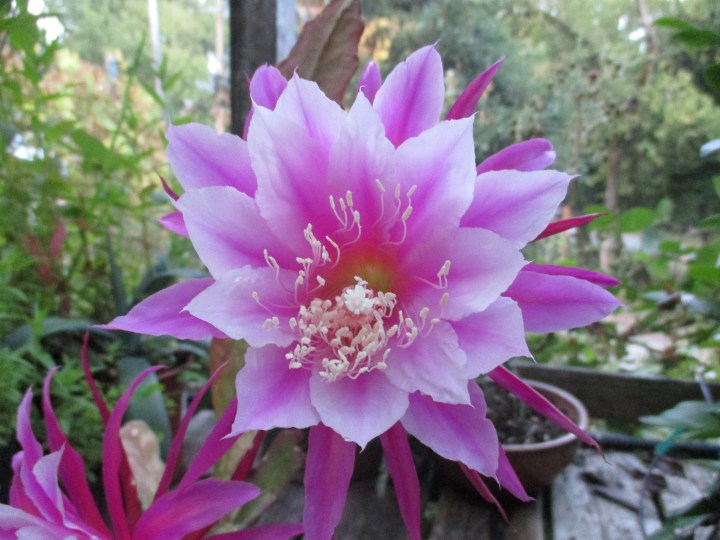
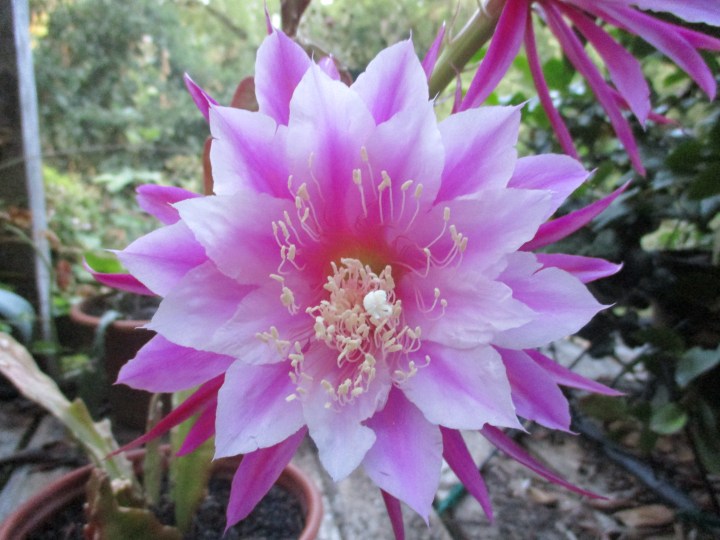
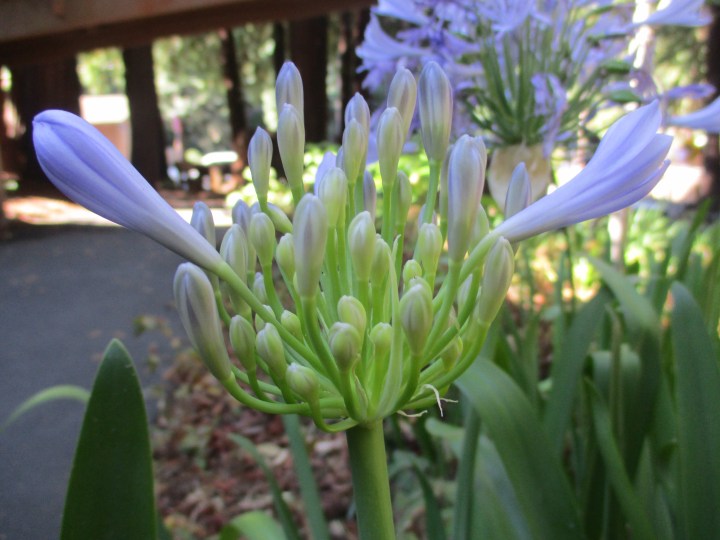
 The Nile River floods annually, inundating everything in its floodplain. Lily of the Nile, Agapanthus africanus, survives by hanging on firmly with a thick network of rubbery roots. It grows and blooms in warm weather as floodwater recedes, and then survives through a long, warm and dry season until the river floods again. It tolerates both drought and flooding, although it prefers more stability.
 No, this is not a Paris daisy. It is a common euryops daisy, Euryops pectinatus. It is obviously related, but the flowers are bright yellow rather than clear white with yellow centers, and the foliage is darker green. It is more resilient, so became more common in landscapes as quickly as mow, blow and go ‘gardeners’ replaced real gardeners who actually know something of horticulture. There is certainly nothing wrong with it. It is just cliché.
