
This is not another of my many racial slurs for the renowned Southern Californian landscape designer, Brent Green. Believe or not, I endure many more of such slurs from him; so will not even bother putting something else out there that compels his retaliation. This is about Japanese laurel, Aucuba japonica, which is incidentally rather yellowish with rich golden variegation.
Japanese laurel, which is known as gold dust plant locally, is happy in partial shade, and will tolerate rather significant shade. That is a distinct advantage in landscapes that are dominated by so many big redwoods. Even without significant bloom, the bright yellowish foliage is an asset in visually dark parts of the landscapes. There probably should be more of it here than there is.
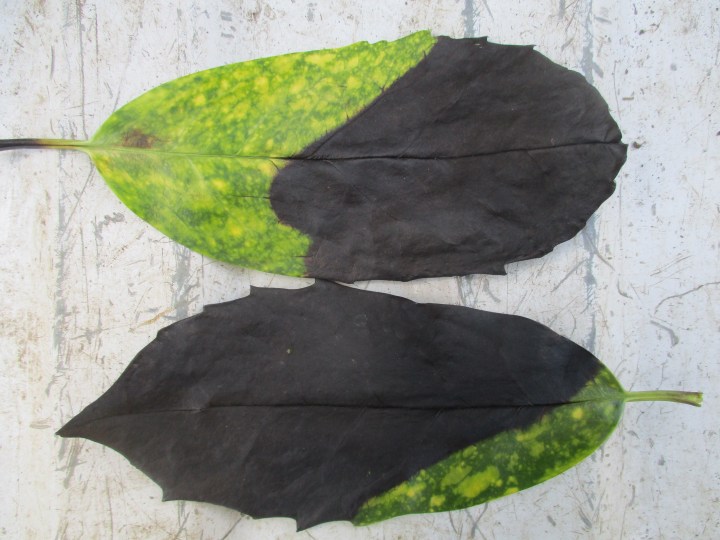
It is not one of my favorites though. It does not cooperate with pruning, and often produces overly vigorous growth that flops over in response to aggressive pruning. It shelters proliferation of snails in warmer climates. What I dislike most about it is the prominent blackening of some of the foliage that is too exposed to direct sunlight. It is so unsightly in front of the cheery gold.
After pruning a few overly vigorous stems that became floppy, I noticed how quickly the lush and fresh new foliage blackens from exposure. The pictures above and below were taken about two hours after the stems were pruned. The stems grew in a notably shaded situation, and were then left out on a hot black bed liner without shade, which of course accelerated the process.
I should have gotten a picture of the foliage as I found it, with all exposed surfaces blackened, as if spray painted where they were on the black vinyl. The portions of the leaves that remain green were shaded under other foliage.


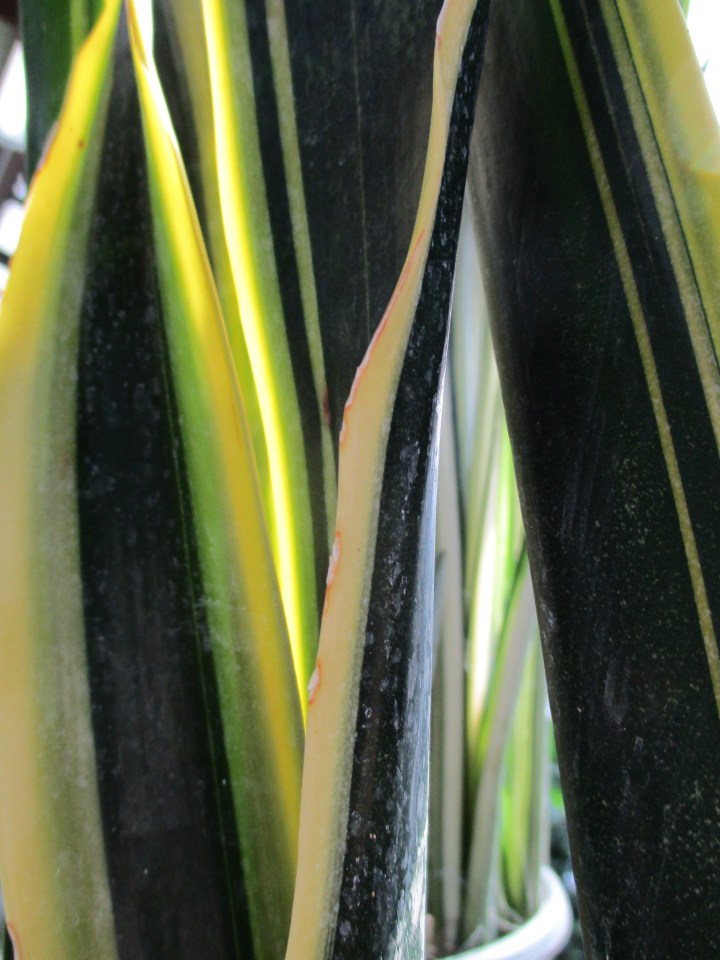
 Evergreens are popular for home décor through winter because there is not much blooming so late in most other American climates. The tradition endures, even though cut flowers of all sorts can easily be purchased from common supermarkets nowadays. Here on the West Coast, where several varieties of flowers can bloom through winter, evergreen foliage is as popular as it ever was.
 English holly is politely naturalized here. This means that, although naturalized, it is not aggressively invasive, and does not seem to be too detrimental to the ecosystem. It is only annoying to see out in forests, far from the landscapes that the seed escaped from, and wonder if it has potential to significantly compete with native vegetation. It would be better if it were not there.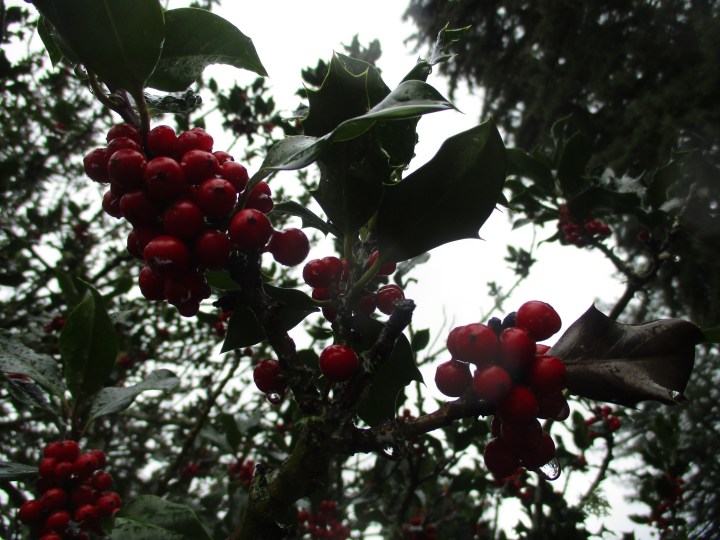
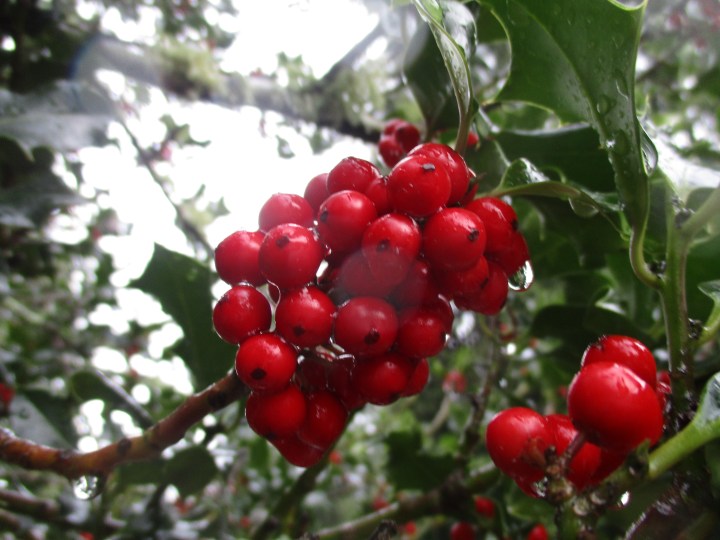
 Mild climates allow more flowers to bloom through autumn and winter here than in most other parts of America. That is why cool season annuals like pansies and violas are so popular. Cyclamen can be planted now too. None will be obscured by snow. By the time cool season annuals start to fade, warm season annuals will be replacing them. There is something to bloom in every season.
 Autumn is not much to brag about here. It supposedly got just cool enough at night for the minimal requirement of frost, at 32 degrees, but no one noticed. It has been getting to the low 80s during the day. There has been no rain yet, and none is in the forecast. As bland as such weather seems, it is not at all out of the ordinary. Autumn often arrives later than it does elsewhere.
 It is easy to mistake various cultivars of Dyckia for diminutive relatives of Agave or Yucca. They form stout rosettes of rigid leaves with wickedly sharp terminal spines. Their comparably nasty but incurved marginal teeth resemble those of most species of Agave, but are generally more abundant. Surprisingly though, Dyckia are instead related to bromeliads. They just happen to be xeric.
 Pretty soon, as autumn weather starts to get cooler, some deciduous plants will develop brilliant color before defoliating for their winter dormancy. Throughout the rest of the year, evergreen plants with gold, silver, bronze, bluish, purplish, reddish or variegated foliage are more colorful than common green foliage is. A few deciduous plants with colored foliage turn different colors in autumn.
 Tony Tomeo