Fruit Trees Need Specialized Pruning

00122thumb
Even almond trees need some pruning.

For centuries, fruit trees have been bred to produce unnaturally abundant and unnaturally big fruit. That has worked out well for those who enjoy the resulting fruit. It is not such an advantage for the exploited trees that must produce it. Without specialized pruning, most of such trees are unable to sustain healthy development of all the fruit they could potentially produce, or support the weight.

Specialized pruning concentrates resources into less excessive fruit of superior quality. It improves structural integrity of limbs that support the weight of all the fruit too. Trees that produce smaller and lighter fruit, such as cherries, may only need to be trimmed occasionally to eliminate structurally deficient growth. Heavier fruit, such as peaches, necessitates much more aggressive pruning.

Almost all deciduous fruit trees should be pruned about now, before they bloom and foliate at the end of winter. Such pruning is too severe to be done while the trees are active in spring. Summer pruning to maximize production within less space is the only practical option to dormant pruning. Evergreen fruit trees, such as citrus and avocado, should not be pruned or groomed during winter.

The main group of deciduous fruit trees that require dormant pruning in winter are stone fruit, of the genus Prunus. This includes peach, nectarine, apricot, plum, prune, cherry, various hybrids and almond. The second main group are pomme fruit, such as apple, pear and quince. Fig, persimmon and grapevines, as well as roses, need specialized and perhaps very aggressive pruning too.

Dormant pruning of deciduous fruit trees, roses and grapevines is too complex to describe adequately here in just a few paragraphs. Nonetheless, those who grow such plants must be aware of how important it is, and ideally, know how to do it. Nowadays, it is nearly impossible to procure services of horticultural professionals who know or care how to execute such procedures properly.

Prune

00115
Prune trees get planted bare root.

Does anyone remember when champagne produced in California was formally classified as ‘sparkling wine’? ‘Champagne’ is a technical classification for that which originates from the region of France for which it is named. That makes sense. The technical classifications of prune and plum formerly made sense also, even if not universally understood. Reclassification in 2001 ruined that.

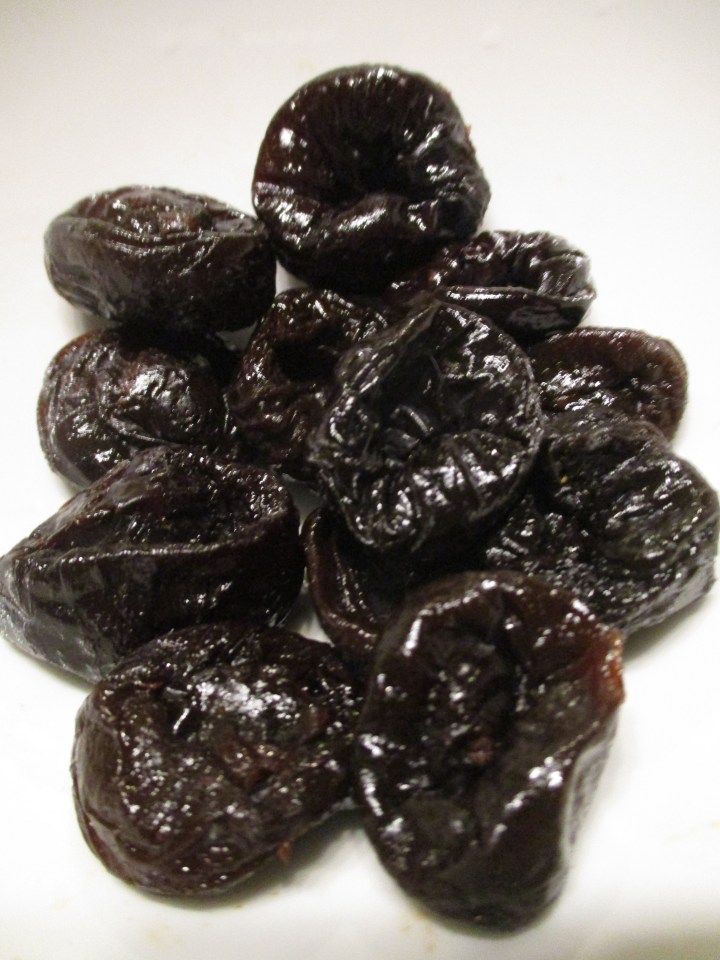
Prune, Prunus domestica, is primarily a European freestone fruit. (The pits of freestone fruits separate from the ripening flesh.) They have firmer flesh than plum, so are more practical for canning and drying. They also have higher sugar content, so might be dried without sulfuring (which prevents molding). Darkly purple and rather oblong fresh prunes are less popular than dried prunes are.

Plum is primarily a Japanese cling fruit. (The pits of cling fruits remain firmly adhered to ripening flesh.) They are softer and juicier than prune, and contain less sugar, so are not as efficiently pitted and dried without sulfuring, or canned. Larger, rounder, more colorful and more richly flavored plums are instead best fresh. They might be bluish purple, purple, red, ruddy orange, yellow or green.

Nowadays, all prunes and plums are known collectively as plums. Dried prunes are just dried plums.

Bare Plants With Bare Roots

00108thumb
Dormant plants do not miss soil.

Knowing how colorfully bulbs will eventually bloom can initially make planting them disappointing, since there is nothing to see for all the effort. Planting bare root plants is not much more rewarding. The bare stems are a bit more proof of the effort, but will do nothing until they break dormancy in spring. Now that Christmas trees have vacated nurseries, bare root plants will be arriving, and will need to be planted before winter ends.

As the name implies, bare root plants have bare roots, without the soil they were grown in. Better equipped nurseries ‘heel in’ bare root plants in moist sand, which simply means that the roots get buried temporarily. When purchased, the plants get pulled from the sand and wrapped for the trip to their new home garden, where they get planted permanently into real soil.

Alternatively, bare root plants can be prepackaged in bags of moist sawdust. They only need to be removed from their packaging and sawdust before getting planted into the garden. Mail order plants, including plants purchased online, often get packaged even more simply, with a damp bag around the roots, maybe with a bit of gel or damp paper. The plants are safely dormant, so are not even aware of what is going on.

The main advantage of bare root plants is that they cost about a third of what typical nursery stock in heavier cans of media (soil) cost. Because they are so much less cumbersome, several bare root plants can be purchased at a time, and brought home in a small car without much effort. Since they lack the luxury of the soil they were grown in, they immediately disperse their roots directly into the surrounding soil.

Roots of bare root plants should be spread away from each other at planting. Soil amendment is nice, but should not be so copious that roots will not want to disperse outside of the amended soil. Even if rain is expected, newly planted bare root plants should initially get soaked so that soil settles around the roots. Grafted plants should be planted with the graft union above grade.

Fruit trees such as apricot, cherry, plum, prune, peach, nectarine, almond, apple and pear, as well as roses, are the most popular of bare root plants. Flowering crabapple, flowering cherry, poplar, willow, lilac, forsythia, wisteria and grape are also available.

Bare Root Season Has Begun

00108thumbBefore all the Christmas trees were sold and relinquished their space, the smaller types of bare root stock started arriving in local nurseries. Blackberries, raspberries, blueberries, gooseberries, currants, grapes, strawberries, rhubarb and asparagus, may have been available for a while. More substantial bare root stock, such as roses, fruit trees and ornamentals, may already be arriving.

Bare root stock is known as such simply because its roots are bare. It gets dug as dormancy begins in autumn, and separated from the soil it grew in. It remains dormant as it gets transported to nurseries, and then to home gardens where it ultimately gets planted. It is completely unaware of the otherwise unsurvivable processes until it wakes up to resume growth in a new home in spring.

The roots of some of the smaller bare root plants and roses, as well as some fruit trees, are bagged in damp sawdust. Most bare root fruit trees, as well as some of the smaller plants, are merely heeled-in to damp sand, and upon purchase, pulled from the sand and bagged without packing material. Roots can soak in water for a few days prior to planting, but will not survive dry exposure.

There are several advantages to bare root stock. It is significantly less expensive than canned (potted) stock. It is also easier to get from a nursery and into the home garden. Branch structure can develop directly in a garden, rather than adapt from how it developed earlier in a nursery. New roots disperse directly into the soil, so need not recover from former confinement within a can (pot).

The more popular bare root fruit trees that are now becoming available are stone fruits, pomme fruits, persimmons, figs, mulberries and walnuts. Stone fruits are those of the genus Prunus, which contain single large seeds known as stones. These include apricots, cherries, plums, prunes, peaches, nectarines, almonds and their weird hybrids. Apples, pears, and quinces are pomme fruits.

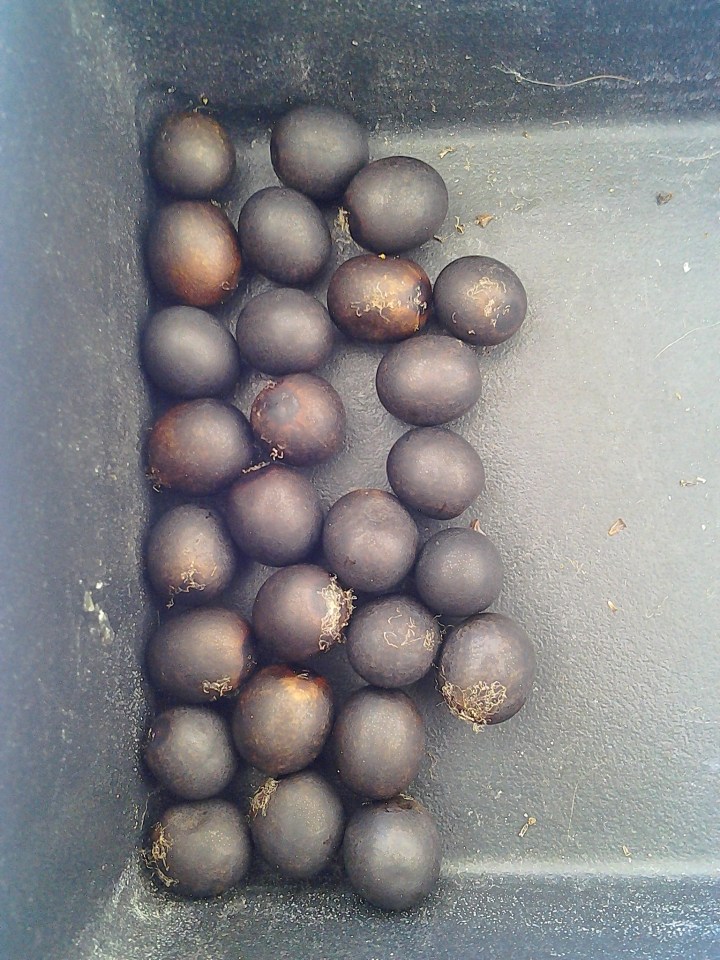
(Almonds are nuts that are actually stones of leathery fruits that dry and separate from the stones as hulls.)

Some Plants Need To Chill

41210thumbIt is easy to snivel about the weather when it gets uncomfortable for us. The rain gets too wet. The temperature gets too cool. Even here on the west coast, without the cold of Minnesota, the heat of Arizona, the humidity of Louisiana or the rain of the west coast of Washington, we tend to think about weather by limited human standards. What we fail to consider is that many other organisms rely on a variety of weather conditions for their survival.

Deciduous plants make it obvious that they know how to deal with cool winter weather. What is not so obvious that that many deciduous plants actually need specific wintry conditions to be convinced that it really is winter. If the weather does not get cool enough, or stay cool long enough, some plants do not go dormant long enough to get the rest that they need in order to perform adequately the following spring and summer.

For example, the reason that only a few of the many different varieties of apple can be grown locally is that most have chill requirements that exceed what they get here. A chill requirement is a specific duration of cool winter weather. Only a minority of all varieties were bred for their minimal chill requirements, so that they will produce reliably even where winters are innately mild.

Besides chill requirements, some seeds like to be soaked in moist soil before they germinate the following spring. This lets them know that it is raining, like it typically does in winter. Pecans, for example, can be soaked for a while inside before sowing, bur really prefer to be out in the garden through winter, where they can tell than rain water is actually flowing past them through the soil, and the microorganisms in the soil help to break down their shells.

It is all about timing. Chill requirements get apple trees to bloom in spring, only after they were convinced that it was already winter. If they were not so specific, they might bloom after a brief cool spell in autumn, leaving their blossoms or developing fruit vulnerable to later frost. Pecans germinate and grow only after the danger of frost, but before the weather gets too dry. If they start too early, they may not survive frost. If they start too late, they may desiccate through summer.

Curb Mongrel

P91208Fruit trees, with few exceptions, have been extensively bred to produce the quality of fruit that we expect from them. Some are consequently genetically unstable, or at least less genetically stable than their wild ancestors were. Even if they never mutate or try to revert to a more stable state, they are very unlikely to produce seed that can develop into genetically similar trees.

In other words, they are not ‘true-to-type’. Their seed might grow into trees that produce fruit that resembles that of one of their ancestors, or of a pollinating parent tree. It is impossible to predict what fruit will be like until it actually develops.

That may take a while. Some seed grown fruit trees start out with juvenile growth, and take a few years to mature enough to bloom and produce fruit. Some types of avocado trees grow tall and lanky for a few years before they bloom. Most citrus are fruitless and wickedly thorny through their juvenile phase.

Grafted fruit trees or those grown from cuttings are true-to-type because they are genetically identical clones of their single parents. Cuttings and scions (for grafting) are made from adult growth, so do not need to mature through a juvenile phase.

The unpredictability of genetic variability is the main reason fruit trees are not often grown intentionally from seed. Juvenility might be the second main reason. However, neither of these two reasons prevents curb mongrels from growing wherever their seed lands, which is often next to sidewalks and curbs where cores and pits get discarded.

Curb mongrels generally get removed and disposed of, just like any other weed. It would be more practical to plant a known cultivar of fruit into a situation where such a tree is actually desired. Every once in a while, a curb mongrel appears where it is allowed to stay, and eventually produces fruit that justifies its preservation.

Well, that was not what happened with this curb mongrel apple tree that appeared adjacent to a patio used for outdoor dining. It was not compatible with the landscape, so got removed before it was able to produce any fruit. It looks like it was grafted, but only because someone tried to cut it down without removing the stump two years ago.

The problem now is that it came up with enough roots to survive relocation. It is not so easy to dispose of a tree with such potential, even though there is no way to know what its potential is until it fruits. It will get planted into a private garden and pruned back accordingly. If we had planned for it to be relocated, the process would have been delayed until it was defoliated.

If the fruit is of inferior quality, the tree can be removed and discarded. At least we tried. Alternatively, a desirable cultivar can be grafted onto it. In a home garden, no one needs to know that it is not a known understock (rootstock) cultivar. The foliage resembles that of ‘Red Delicious’, which makes sense for seed that likely originated from a commonly discarded core.

Horridculture – Half-Breed

70726thumbCher explained a long time ago that a half-breed is nothing to brag about. Some of us just don’t get it. A few clients still introduce me to their weirdly bred stone fruit trees as if they are both justification for great pride, as well as something that a professional horticulturist of the Santa Clara Valley has not already encountered a few thousand times. I at least try to act impressed.

The stone fruits that grew in the orchards of the Santa Clara Valley half a century ago were the best. That is why they were grown here. The climate and soil were ideal for their production. Traditional cultivars produced so abundantly and reliably that there was no need to breed new cultivars. The quality was exemplary. Consequently, only a few were actually developed here.

Half-breeds, or weird breeds of any unnatural ratio, started to be developed more than a century ago. A few happened incidentally where different species of the same genus of Prunus grew. They were enjoyed as novelties for home gardens, but were not sufficiently productive or reliable for orchard production. Their fruit was for fresh eating only, since it did not dry or can well.

Now that the orchards are gone, and the only stone fruits in the Santa Clara Valley are in home gardens, these weird half-breeds and others are becoming more popular. Nurseries will soon be stocking several along with their incoming bare root stock. There is certainly nothing wrong with them. However, they are not necessarily any better than their well bred ancestors either.

Apricot, cherry, nectarine, peach, plum and prune, as well as almond, are the traditional stone fruits, of the genus Prunus. (Almonds are the seeds or ‘stones’ of a stone fruit that does not get eaten, but instead gets discarded as a hull.) There are many cultivars of each. Some can be canned. Prunes and some apricots can be dried. There is no need for more, or for ‘improvement’.

Pluot, plumcot, aprium, apriplum, nectaplum, peacotum, pluerry and others like them are the weird interspecific hybrids (which are hybrids of two or more species within the same genus, which for these examples is ‘Prunus‘). Some are half-breeds. Some are breeds of different ratios, such as a half-breed with a half-breed parent, or a half-breed grandparent. It is confusing!

It is also an unjustifiable fad. There are more disadvantages to these weirdly bred stone-fruits than there are advantages. They really don’t get the best of both parents, but might get half of each. Again, there is certainly nothing wrong with that. There are those who legitimately prefer such hybrids. The point is that fads are not necessarily good, and many are just plain weird.

Persimmon

41126A mature persimmon tree, Diospyros kaki, is often too much of a good thing. The fruit is both big and abundant as it ripens this time of year. Much of the fruit in taller trees is out of reach. Nearly ripened but somewhat firm fruit can be picked and shared with neighbors for a while, but must be picked immediately once completely ripe. Otherwise, it falls and makes a squishy mess that can not be raked up! Nearly ripe fruit ripens easily off the tree. Individual fruits only need to be spread out in a single layer to limit molding.

‘Fuyu’ is probably the most popular variety because the ripe fruit can be eaten while still firm, or after it has gotten soft. ‘Hachiya’ produces the largest fruit, sometimes bigger than a softball; but the fruit is too astringent to eat until completely ripe. It is actually best after it is so overly ripe that it is too squishy to handle. Persimmon fruits are very bright orange. ‘Hachiya’ fruit can be slightly reddish. The foliage gets just as colorful. Typically, the foliage colors first, and then falls to reveal the fruit. This year, the fruit seems to be coloring first.

Fruit From Non Fruit Trees

90828thumbThose of us who grew up with the old fashioned stone fruit orchards or vineyards might remember some of the traditional methods for protecting the ripening fruit from birds. Mulberry trees were grown on the corners of some orchards to keep birds well fed and less hungry for the ripe orchard fruit. Mulberry cultivars were selected to ripen just prior to the fruit within the particular orchards.

The trees were not there to produce fruit to be harvested like the fruit within the orchards was. Most, but not all of what the birds did not consume fell to the ground and rotted. Only small quantities of the overly abundant fruit was taken by a few neighbors who made jam or syrup with with it. Mulberries were a byproduct of the orchards that some put to good use just because it was available.

Decades ago, it was much easier to get a bit of fruit from neglected or naturalized fruit trees in rural regions and on roadsides without offending anyone. Isolated remnants of the old fruit orchards were common. American plum, which had been used as understock for orchard trees, had naturalized in some regions. For those daring enough to harvest them, so had Himalayan blackberry.

Even now, we can find a bit of fruit where do not expect it to be. A few plants that are grown more for their visual appeal can be surprisingly generous with their fruit production. Pineapple guava, which is now popularly grown as a simple evergreen hedge, used to be grown instead for its small tart guavas. Purple leaf plum, as it matures, may not be quite as fruitless as it is purported to be.

The difficulty with the more unfamiliar types of fruit is finding practical uses for it. The native blue elderberry makes excellent jelly or syrup, like black elderberry, but not many of us even know it is edible once cooked. Australian brush cherry, strawberry tree, English hawthorn and ‘Majestic Beauty’ Indian hawthorn, are never overly productive, but might sometimes make enough fruit for jelly.

Of course, no unfamiliar fruit or nut should be eaten prior to confirmation that it is safe for consumption.

Horridculture – Fruit Theft

70726thumbGrowing fruit trees is quite a bit of work. While producing, some of the fruit trees need nearly as much attention as annual vegetable plants in the vegetable garden. Then, while dormant, they need meticulous and specialized pruning. Some fruit trees get damaged by insect or disease infestation, or severe weather. Some fruit can get taken by wildlife. Yet, for most of us, the reward of fresh fruit is worth all the hard work that goes into growing it.
Unfortunately, most types of fruit, especially the stone fruits, ripen simultaneously within their respective seasons, and are suddenly and briefly too abundant to be consumed while still fresh. Unless shared very efficiently with plenty of friends and neighbors, some of the fruit must be canned, frozen or dried for later consumption. Then, as suddenly as it started, the season for the particular type of fruit is done. There will be no more until next year.
That had never been a problem us, even though some of the fruit trees produce quite a bit. There was one particular summer, about 2004, when we were expecting an unusually abundant crop of unusually big peaches. We got all the jars out and cleaned on Friday afternoon. All the big pots and utensils that we would need for canning were out on the counters. We must have purchased ten pounds of sugar, and even got some pectin for jam.
Early on Saturday morning, we went out to collect the peaches while it was still cool, and found them GONE! It was as if they had never been there. All the work of pruning and pampering the tree was for NOTHING!
Now, I know that when I was a kid, we shared abundance with neighbors. We children were expected to take brown paper grocery bags of produce to neighbors who lacked the trees for particular fruit. For example, I delivered cherries to those who lacked cherry trees. I delivered apricots to the few who lacked apricot trees. Neighbors sometimes stopped me on the road to give bags of fresh produce for my parents or other neighbors.
Also, I know that there was nothing wrong with taking a few fruits from a neighbor’s tree. We often went behind the Charles Residence to get a few oranges when we got out of school. We sometimes got apples from the back yard of the Richmond Residence. Of course, we first asked if we wanted more than a few for a recipe or something. No one really minded because the system was respected, and none of the trees were exploited.
That was a long time ago. By the time I was in high school, we started hearing about fruit trees getting stripped of every last bit of fruit while no one was around. Over the years, it became progressively common. Some neighbors had me cut down fruit trees from their front yards because there was no point in all the maintenance if they could not get fruit from them. It was saddening, wasteful, and so contrary to our formerly idyllic lifestyle.
When it happened to the peach tree that I had taken such good care of in the garden next door, I was furious! What made it even worse is that we knew who did it! The so-called ‘gardener’, who was supposed to ‘maintain’ ONLY the front lawn stopped by the prior evening, just after I checked on the fruit. I sort of wondered why he was there so late, and why he was in back, but gave it no more thought than that.
He later told me that no one wanted the fruit, and that it was just going to fall on the ground and go to waste. Really, I would not have minded if he had taken a few peaches. I would not have minded if he had taken several or even most if he had asked before we got ready to can them. It would have been better for someone or several someones to enjoy them fresh than to can them as surplus.
About a year and a few months or so later, the fig tree in my back yard was stripped by the so-called ‘gardener’ who supposedly ‘maintained’ the landscape next door on the opposite side of where the peach tree lived. There had been no preparation to dry the figs yet, since I had planned to leave them on the tree a bit longer. Also, there was not as much fruit as there was on the peach tree.
The theft of the fruit was not the worst of the problems in this situation. The main problem was that the tree was so severely damaged in the process. I had pruned the tree so meticulously for several years, both for good (late crop) production, and also for clearance above a parking space. I did not mind the slightly elevated canopy; but the guy who stole the fruit without a ladder broke the limbs so that he could get the higher fruit!