 It is easy to snivel about the weather when it gets uncomfortable for us. The rain gets too wet. The temperature gets too cool. Even here on the west coast, without the cold of Minnesota, the heat of Arizona, the humidity of Louisiana or the rain of the west coast of Washington, we tend to think about weather by limited human standards. What we fail to consider is that many other organisms rely on a variety of weather conditions for their survival.
Deciduous plants make it obvious that they know how to deal with cool winter weather. What is not so obvious that that many deciduous plants actually need specific wintry conditions to be convinced that it really is winter. If the weather does not get cool enough, or stay cool long enough, some plants do not go dormant long enough to get the rest that they need in order to perform adequately the following spring and summer.
For example, the reason that only a few of the many different varieties of apple can be grown locally is that most have chill requirements that exceed what they get here. A chill requirement is a specific duration of cool winter weather. Only a minority of all varieties were bred for their minimal chill requirements, so that they will produce reliably even where winters are innately mild.
Besides chill requirements, some seeds like to be soaked in moist soil before they germinate the following spring. This lets them know that it is raining, like it typically does in winter. Pecans, for example, can be soaked for a while inside before sowing, bur really prefer to be out in the garden through winter, where they can tell than rain water is actually flowing past them through the soil, and the microorganisms in the soil help to break down their shells.
It is all about timing. Chill requirements get apple trees to bloom in spring, only after they were convinced that it was already winter. If they were not so specific, they might bloom after a brief cool spell in autumn, leaving their blossoms or developing fruit vulnerable to later frost. Pecans germinate and grow only after the danger of frost, but before the weather gets too dry. If they start too early, they may not survive frost. If they start too late, they may desiccate through summer.
 Fruit trees, with few exceptions, have been extensively bred to produce the quality of fruit that we expect from them. Some are consequently genetically unstable, or at least less genetically stable than their wild ancestors were. Even if they never mutate or try to revert to a more stable state, they are very unlikely to produce seed that can develop into genetically similar trees.
 Cher explained a long time ago that a half-breed is nothing to brag about. Some of us just don’t get it. A few clients still introduce me to their weirdly bred stone fruit trees as if they are both justification for great pride, as well as something that a professional horticulturist of the Santa Clara Valley has not already encountered a few thousand times. I at least try to act impressed.
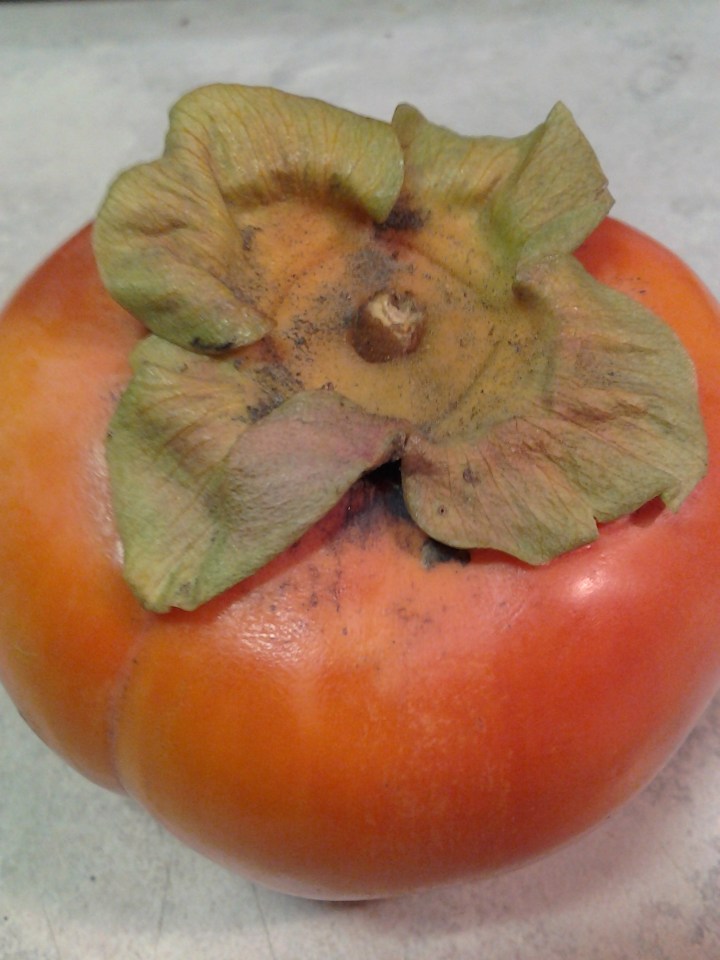 A mature persimmon tree, Diospyros kaki, is often too much of a good thing. The fruit is both big and abundant as it ripens this time of year. Much of the fruit in taller trees is out of reach. Nearly ripened but somewhat firm fruit can be picked and shared with neighbors for a while, but must be picked immediately once completely ripe. Otherwise, it falls and makes a squishy mess that can not be raked up! Nearly ripe fruit ripens easily off the tree. Individual fruits only need to be spread out in a single layer to limit molding.
 Those of us who grew up with the old fashioned stone fruit orchards or vineyards might remember some of the traditional methods for protecting the ripening fruit from birds. Mulberry trees were grown on the corners of some orchards to keep birds well fed and less hungry for the ripe orchard fruit. Mulberry cultivars were selected to ripen just prior to the fruit within the particular orchards.
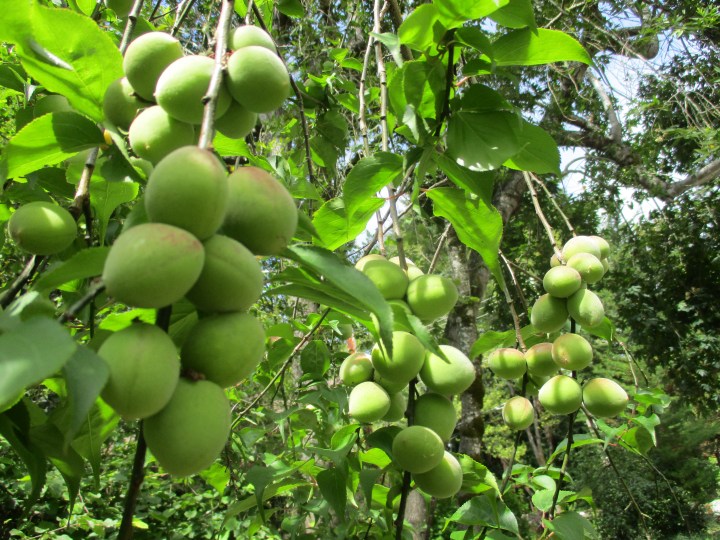 They do not come with instructions for their maintenance. Deciduous fruit trees, particularly the stone fruit trees (such as cherry, plum, prune, apricot nectarine and peach) and pomme fruit trees (such as apple and pear), can be procured as easily as nasturtium seed or petunias. Whether bare-root in winter or canned (potted), they very often get planted into gardens where they are expected to produce their fruit as easily as daisies bloom.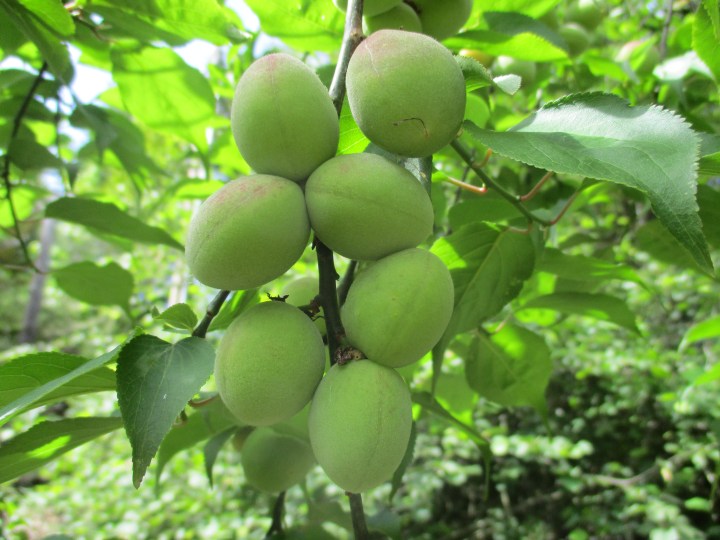
 It may not be the mother of all lemons, but Lisbon lemon, Citrus limon ‘Lisbon’, is the original cultivar from which ‘Eureka’ lemon was derived; and ‘Variegated Pink’ lemon was later derived from ‘Eureka’ lemon. ‘Variegated Pink’ is still uncommon, and the pink juice is unusual, but because its variegated foliage is less efficient than greener foliage, it is more manageable in small spaces.
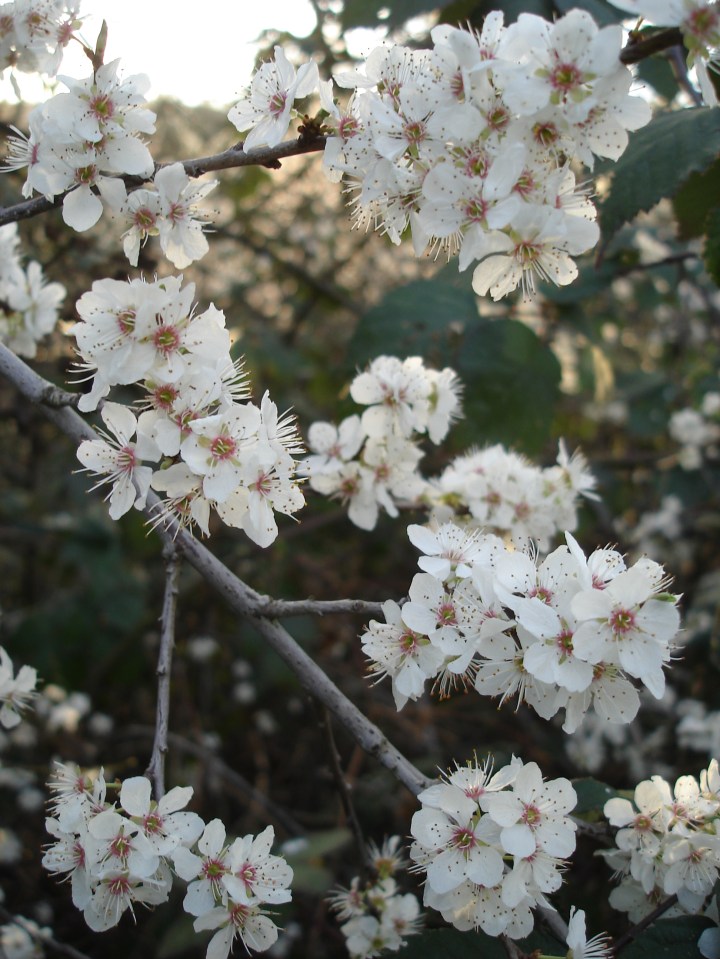 Unlike all the fancy and popular Japanese plums and European prunes, wild plum, Prunus americana, is almost never planted intentionally. It is a common understock for the more desirable types, and usually grows as suckers from below graft unions. In fact, it often grows from the roots of plum or prune trees that died or were cut down earlier. They can eventually form thickets.
 Properly pruned deciduous fruit trees probably do not have too many extra stems to spare now. Neglected trees would have more to offer. Believe it or not, a few of us who prune deciduous fruit trees diligently and meticulously in winter sometimes leave a few unwanted stems to prune out and take into the home now that the flower buds are beginning to swell and are about to bloom.
 Tony Tomeo