Prune Now For Fruit Later

70726thumbModern fruit trees have been so extensively bred to produce abundant and unnaturally large fruit, that most types are unable to support the weight of the fruit that they can produce each season. Without specialized dormant (winter) pruning to limit production, the weight of excessive fruit breaks and disfigures the limbs of the trees that produce it. Fruit becomes too much of a good thing.

Pruning not only limits the weight of the fruit; but it also improves the structural integrity of the limbs that must support it, and ideally, keeps fruit more reachable. Concentrating resources produces fewer but better fruits, instead of wasting resources on excessive fruits of inferior quality. Fewer stems that grow in spring are more vigorous and resistant to disease than more stems would be.

‘Stone’ fruits (of the genus Prunus) generally get similar pruning. However, peaches and nectarines produce such heavy fruit that they get pruned more severely than apricots, plums and prunes. Cherries and almonds are so lightweight that they may not need to be pruned at all. Cherries may be pruned for height. Since almonds get shaken from their trees, height is not so important.

Stems that grew last summer should produce fruit next summer. They should therefore be pruned short enough to support the weight of the fruit that they can produce (or what stems produced in previous years). For peaches, stems may need to be pruned to only a few inches long, even if the new stems are several feet long. Upper stems that get too high can be pruned out completely.

Apples and pears benefit from the same sort of pruning, but can be cut back even more aggressively, since their new stems tend to be more productive at the base. Crowded clusters of vigorous new stems can be thinned to eliminate the largest and most dominant stems. Stunted ‘spur’ stems that do not elongate more than two inches or so each year many not need to be pruned at all.

The ‘four Ds’, which are ‘Dead, Dying, Diseased and Damaged’ stems, are the first to get pruned out, even if they happen to be in the right places. There is just too much potential for problems later. Young trees that do not need much pruning now should be pruned for structure. Dormant fruit tree pruning is so important and specialized, that it is worth studying in more thorough detail.

Bar’berry’

P81215KJust last Saturday, in the first of my two ‘Six on Saturday’ posts, I mentioned that I had never before seen the berries of barberry. https://tonytomeo.com/2018/12/08/six-on-saturday-too-much-autumn-color-iii-cherries-berries-plums-apples-ginkgo/ Well, just a few days afterward, which was also a few days ago, while getting pictures for the English hawthorn that will be featured on Tuesday, in the same mostly brutalized landscape that I happened to mention in a post last Wednesday, https://tonytomeo.com/2018/12/12/horridculture-disdain-for-bloom/ , I noticed that the barberry shrubs were adorned with these odd red berries. They were quite tiny, not much bigger than grains of white rice. Nonetheless, they were the berries that I had never before seen. Now I know that barberry really does produce berries.
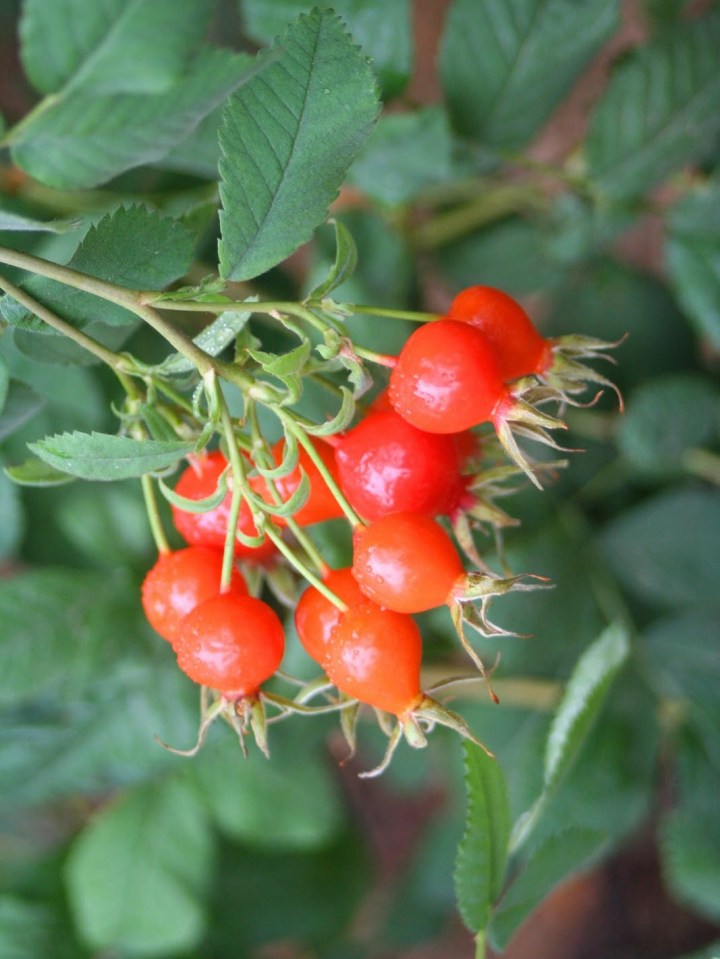
I had heard that such berries had medicinal and culinary application, but because I had never seen the berries before, I believed that the fruit was obtained from other specie. Perhaps the barberries that I am familiar with in landscape situations produce less fruit or no fruit at all because they are sterile interspecific hybrids. Perhaps they rely on specific pollinators who are not endemic here. I never bothered to investigate the lack of berries.

Now that I found a source for the berries, I sort of want to try them. However, they are tiny, and suspended among those wiry and famously thorny stems. Those in this picture are probably all gone by now anyway. Little birds have no problem with the thorns. Besides, even if I got a few, I would not know what to do with them. They can supposedly be used as a flavoring, and taste something like tart citrus. Well, at least I know where to find them if I want to try next year, if the so-called ‘gardeners’ who just ruined the flowering crabapples do not destroy them first.

Colorful Berries Linger Through Winter

51125thumbJust as many flowers attract pollinators with color, some types of fruit employ color to get the attention of birds and other animals. Just as many flowers reward their pollinators with nectar, fruit is its own reward to the animals that eat it. The only catch is that those who want the fruit must disperse the seed within. For both the hungry animals and the fruiting plants that lack mobility, it is a rather equitable arrangement.

Much of the fruit that uses this technique ripens in autumn, and linger through winter, when there is not much other fruit. It is available to migratory birds and animals that want to fatten up for winter. Unlike nuts and large seeds that get buried locally by squirrels, the tiny seeds of winter berries typically get eaten and ‘dispersed’ more remotely. Some actually need to be scarified by digestion before they will germinate.

Because they put as much effort into attracting vectors to disperse their seed as flowers put into attracting pollinators, fruit and berries can add significant color to the home garden. Oranges, mandarins, lemons, grapefruits and other citrus are quite colorful, even though they do not expect to be taken away by birds, To attract crows, persimmon fruits get as colorful for winter as their foliage was through autumn.

Firethorn (pyracantha) is probably the most colorful and profuse of the ornamental berries. Various specie and cultivars of cotoneaster produce similar berries, but not quite so prolifically. They are popular for their resiliency. Toyon, which is the native ‘California holly’ that Hollywood is named for, is a bit too finicky for irrigated and refined gardens, but can be quite colorful with berries in wild or casual landscapes.

Firethorn, cotoneaster and toyon, as well as English hawthorn, all produce similar ‘pomme’ fruits, which are actually more like tiny apples than real berries. They are so popular with the birds that they are not very messy; although the birds may be if they loiter. English hawthorn is a small deciduous tree, so yellows and defoliates as the bright red fruit ripens.

My Private Heritage Tree

P81020+++++I really believed that I had something special here. A few fruit trees that are either remnants or descendants of remnants of fruit trees of the old Zayante Rancho have survived on a vacant parcel east of town.
There are two pear trees, a prune tree and an apple tree. The pear and prune trees are too overgrown to make much fruit. Almost all of the fruit that they manage to produce is too high to reach, and of inferior quality. They could be renovated, but the process would require severe winter pruning for several years.
However, the apple tree is still somewhat compact and quite productive. Much of the fruit is within reach for the ground. Much of the rest can be shaken from the tree without damaging it too much. Although abandoned for decades, someone actually put the effort into pruning the apple tree a few years ago. It still needs some major pruning, but would be easier to renovate and restore than the other trees.
I can not identify the cultivar of the apple, or even the type. The fruit looked and tasted like some sort of Pippin apple earlier in the season, but is now slightly more blushed than other familiar Pippin apples in the region. It could of course be another cultivar of Pippin. It is not very juicy, but is quite richly flavored. Winter pruning to concentrate resources would probably improve the quality of the fruit.
Until recently, anyone who wanted to forage for a bit of fruit from these few fruit trees had open access to them. Both prunes and pears needed to be knocked out of their trees, and collected from the ground. Timing was critical for the prunes. They would be unripe if a few days early, or squishy and on the ground if a few days late. Apples were the most popular because they were more abundant and easiest to collect from the tree.
Unfortunately, the vacant parcel needed to be fenced. Only those who are involved with maintenance of the parcel have access to the trees now.
Well, I happen to occasionally work for one of those privileged few, which indirectly gives me access to the distinguished trees.
Of course, I could not resist bragging to my Pa about my privileged access to these now private heritage trees, especially the apple tree. As I said earlier, I really believed that I had something special here.
To my surprise, and perhaps disappointment, my Pa is very familiar with my special apple tree! I had nothing to brag about that he could not also claim! He actually picked apples from it with his mother when he was a little tyke living on Ashley Street in town!

Not Enough Blue

P80929KThere were barely enough blue elderberries left this late in the season for the blue elderberry jelly that should have won the blue ribbon at the Harvest Festival. It’s a long story.
After the main supplier of blue elderberries was removed to widen the driveway that it was next to many years ago, I started collecting blue elderberries from other wild shrubs on roadsides about town. At the time, the berries were very abundant. No one else was collecting them, and the doves did not come down to eat them until later in the season.
A friend eventually asked me why I was collecting the berries. I informed him that they could be used just like the black elderberries that grow wild in Eastern North American and Europe. He decided to make wine and booze with them, and payed others for whatever they could harvest. The berries were much more scarce the following season, not because they had been any less prolific, but because others were collecting them as quickly as they ripened. They became comparably scarce elsewhere as well, seemingly since the blue elderberry jelly started winning second place annually at the Harvest Festival. https://tonytomeo.com/2017/10/01/blue-ribbon/
This year, the elderberries were collected faster than I could get them. Even the berries at work that were out of reach of those collecting berries closer to town were taken by the doves who arrived early, and could not get enough to eat around town. Some of my friends insisted that they could find berries for me, but by the time I asked one of the them to do so, it was just too late in the season. She found barely enough for the two half pints of jelly needed to enter into the competition at the Harvest Festival. I was pleased with that much. It would have been all that I needed for my blue ribbon. However . . .
The Jelly and Jam Competition at the Santa Cruz Mountains Harvest Festival was canceled for this year!
That too is a long story. There are not enough entries to make it worth the bother. A few years ago, there were only seven entries, and five were mine (which makes my ‘temporary’ lack of a blue ribbon even more embarrassing)! The competition will resume next year, and it will get more publicity. The Santa Cruz Mountains Harvest Festival is happening right now (until 6:30 this evening), but without the Jelly and Jam Competition.
For now, I made only one pint of elderberry syrup.

Enjoy The Fruits Of Summer

70726thumbIs a prune really just a dried plum? No! A plum is really a prune. In fact, all ‘stone fruit’ are of the same prune genus known as Prunus. This means that apricot, cherry, peach, nectarine, prune, plum and even almond are all related. So are all their weird and trendy hybrids, such as aprium, pluots, plumcots and so on. (Almonds are the pits or ‘stones’ of dry leathery fruits that fall away as hulls.)

The main difference between prunes and plums is that prunes contain enough sugar to inhibit mold while they dry, . . . if they dry efficiently enough. Plums are juicier and contain less sugar, so are more likely to mold before they dry. If dried in a dehydrator, plums get squishy, and are likely to develop an odd flavor. Most prunes are European. Most popular plums are of Japanese descent.

The wrinkly and leathery fruit that most of us know as prunes are actually ‘dried’ prunes. Fresh prunes can be eaten just like plums, but are firmer, and have milder flavor. They are better for juicing, canning (whole, while firm) and cooking, although plums make better jam. Plums have richer flavor for eating fresh. Because they are so soft, they do not juice as well, but make nice plum nectar.

Apricots are not quite as easy to dry as prunes are. They must either be dried quickly in a dehydrator of some sort, or sulfured; and sulfuring is probably too much work for most of us. Most of the apriums, pluots, plumcots and other weird apricot hybrids that have become so trendy in the past many years are too soft for drying or canning. Like plums, peaches and nectarines, fresh is best.

Fruit that ripens evenly throughout the tree is best for canning, freezing, drying or any technique that takes large volumes of fruit at once. Uneven ripening is better for fruit eaten fresh. It allows later fruit to continue ripening while the earliest fruit is being consumed. The problem is that the best stone fruits ripen very evenly, all at the same time. If not shared with neighbors, some is sure to rot.

If some of the fruit ripens later than the rest, it will be inside the shadiest part of the canopy. The most exposed fruit on the exterior of the canopy ripens first, and for most types of fruit, has the best flavor. After all fruit is harvested from a tree, any remaining bad fruit should be removed from the tree, and from the ground around the tree. Diseases proliferate, and later overwinter in rotting fruit.

Flowers Are Only The Beginning

70719thumbFlowers have a bigger and better agenda than coloring our gardens and homes. They bloom to get pollinated. Their color and fragrance are designed merely to attract pollinators. Less vain but more abundant blooms take advantage of the wind to disperse their pollen. Once pollinated, flowers fade and deteriorate as resources get diverted to the production of seed and fruit to contain it.
Some flowers are on a tight schedule. They bloom in a single brief season. Others have a bloom season that last significantly longer than the individual flowers do. They might bloom continually for a few months, replacing fading older flowers with new flowers; or they might bloom in phases, with each phase blooming simultaneously, and then getting replaced with a subsequent phase.

Fruit trees and many fruiting vegetable plants bloom once annually, and then produce fruit. Tomato, summer squash and bean plants bloom and produce fruit continually. Tomato fruits are best if allowed to ripen on the vine. Beans and summer squash like zucchini are better if harvested while young and tender. Also, the plants are more productive if regularly deprived of premature fruit.

The priority of these plants is to produce seed. Production of seed requires significant resources. Plants that are busy producing seed within maturing beans and zucchini do not put much effort into producing subsequent bloom and fruit. However, if deprived of maturing seed and fruit, these sorts of plants are compelled to divert resources into new bloom, and seed and fruit production.

The same applies to many flowering plants, particularly perennials and flowering annuals. ‘Deadheading’ is the removal of deteriorating flowers to promote continued bloom. It is not practical for plants with profuse small flower, such as sweet alyssum and lobelia. Nor is it necessary for some sterile or nearly sterile plants that do not produce much seed anyway, like busy Lizzy (impatiens).

French marigold, petunia, zinnia, floss flower and cockscomb all bloom better if deadheaded. Rhododendrons do not benefit directly from deadheading, but look better without old floral trusses. Conversely, the potentially picturesque dead flowers of sea holly might be left intact.

Too Much Grapefruit

P80303KThere really is such a thing as too much grapefruit. I know; I have witnessed it more than once.
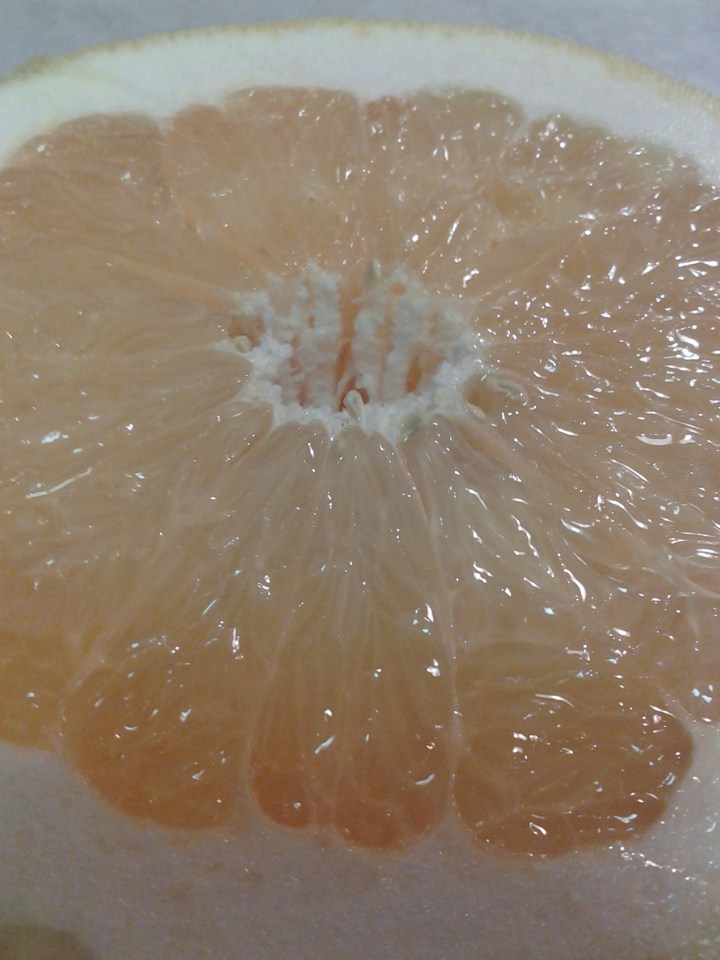
The most recent occasion was two years ago. We were pruning a few fruit trees for a client in San Jose. One of the trees was an old fashioned ‘Marsh’ grapefruit, which happens to be my all time favorite grapefruit.

As we were pruning, the client was dragging brush away to curbside recycling. Most of our clients prefer to do the ‘cleanup’ to save money. The client asked me if I would like some of the fruit. Of course, surplus fruit is one of the many benefits of our work; and of course, I told the client that I would be pleased to take some of the excellent grapefruit. I then went back to work on a nearby persimmon tree.

While busy with the persimmon tree, I was unaware of what the client was doing with the grapefruit. I knew that there was quite a bit of it. She and her sister bagged it and took it out front. From there, they loaded as much of it as they could into the little Blazer (Roy, the ‘Bravada’. It is a long story. I will explain later.). By the time I finished, the Blazer was FILLED with bagged grapefruit! I really should have gotten a picture.

There was no way I could eat or share all that grapefruit before most of it went bad. However, it would have been rude to leave the fruit there after they had so nicely loaded it into the car. Naturally, I ate a lot of grapefruit. It was excellent! The good news is that I really was able to share all that I could not eat or juice. None of it was wasted.

Plants Are Masters Of Deception

80307thumbMany of us already understand that daisies, sunflowers, asters and all related flowers are composite flowers, which bloom as many tiny flowers clustered tightly together to form what appears to be significantly larger single flowers. Distended ‘ray’ florets around the edges imitate petals that other types of flowers are equipped with. It is like one stop shopping for pollinators craving nectar.
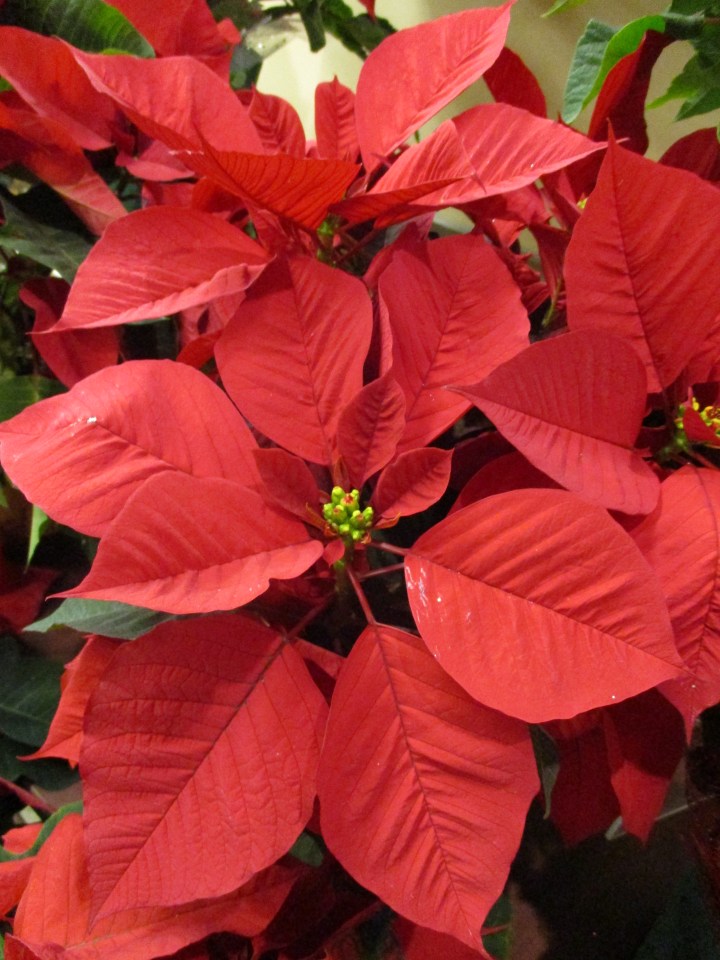
Many other plants have developed comparably ingenious techniques for facilitating what they need to do. Flowers are the more common beneficiaries of their creativity. Fruits, leaves, stems and roots have also been modified out of necessity. For example, the colorful bracts around tiny poinsettia and bougainvillea flowers are modified leaves that pretend to be petals to attract pollinators.

We think of strawberries, pineapples and figs as fruit. Strawberry fruits are actually the small specks on the outside that resemble seeds. The sweet and juicy part that suspends these fruits is a modified stem. Each ‘eye’ of a pineapple is a swollen flower, that is fused with flowers around it. Tiny fig flowers bloom and produce seed all within the fleshy floral structure that is eaten like fruit.

Some types of acacia trees have no real leaves. Their foliage is comprised of distended petioles (leaf stems) known as ‘phyllodes’, but without the leaves that petioles normally support. Juvenile leaves that actually look like lacy acacia leaves do not last long. Makrut lime has big phyllodes too, but in conjunction with leaves, which is why they seem to have double leaves joined end to end.

Cacti and the euphorbs (poinsettia relatives) that resemble them are among the most deceptive of plants. Euphorbs that have both recognizable leaves and thorns provide hints about how they work, since some tufts of thorns and spines also have leaves. Each tuft is a node. Small bristly spines are modified leaves. Larger and stouter thorns are modified axillary stems. A few stems develop into limbs or segments. Without leaves, the fleshy green stems do all the work of photosynthesis.

Kumquat

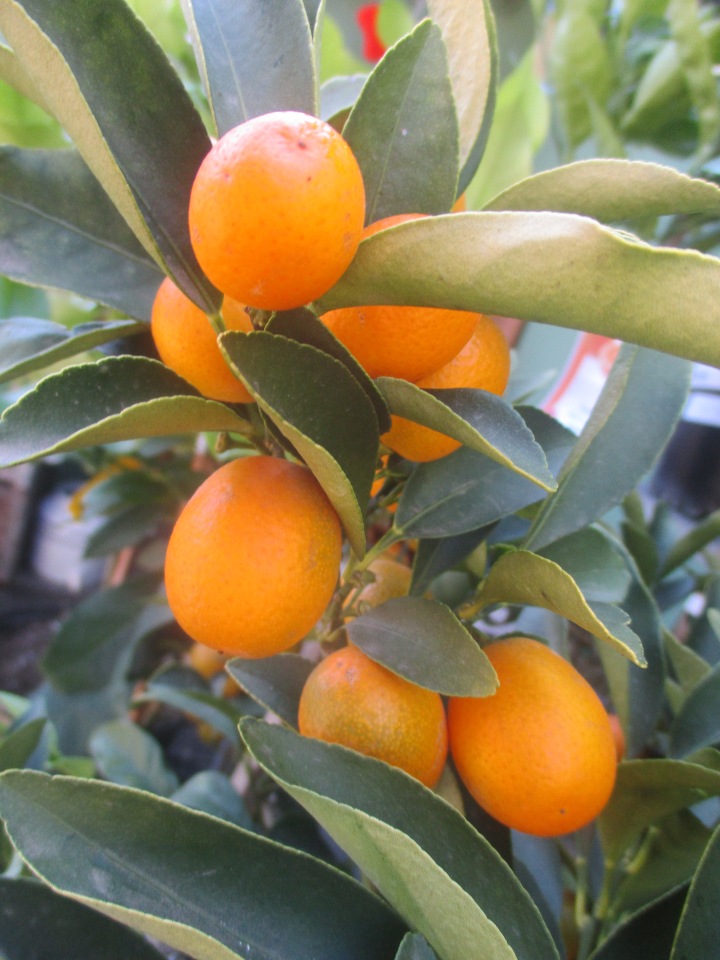
80131Tet, on February 16, will be the Vietnamese New Year’s Day for the Year of the Dog! Any year associated with the dog must be pretty excellent. Anyway, potted and fruited kumquat trees are very traditional decorations for Tet. Although less popular than orange and lemon trees, they are the most compact of the citrus trees, so are therefore the most adaptable to compact home gardens.

They grow slowly and may never reach first floor eaves. The evergreen leaves are a bit thicker, smaller and darker green than those of Mandarin orange. Stems are mostly thornless. The compact growth is quite symmetrical, so might only occasionally need to be trimmed for a stray stem here and there. Clusters of small white flowers bloom about the time the last of the fruit gets harvested.

Kumquat has the distinction of being the ‘other’ citrus. Although the genus is alternatively known as Citrus, experts know it as Fortunella. Those with round fruit are Fortunella japonica. Those with oval fruit are Fortunella marginata. The abundant fruits are not much bigger than big grapes, and are eaten whole, with the seeds spit out. The tart pulp with the sweet skin is a tangy combination.