
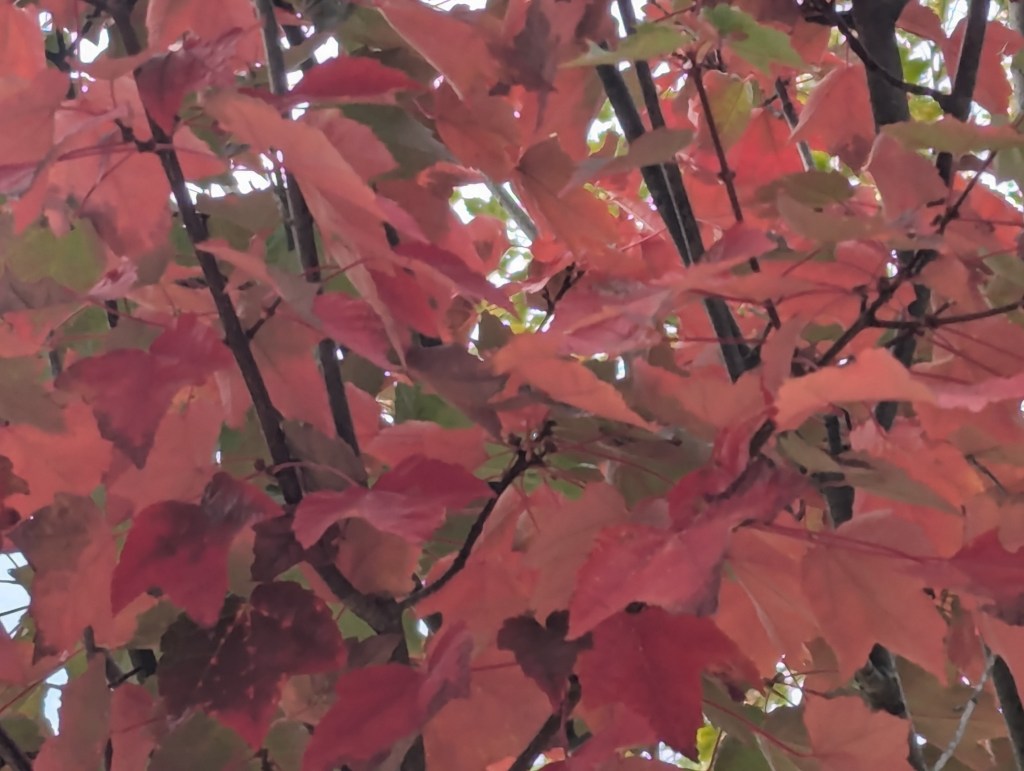
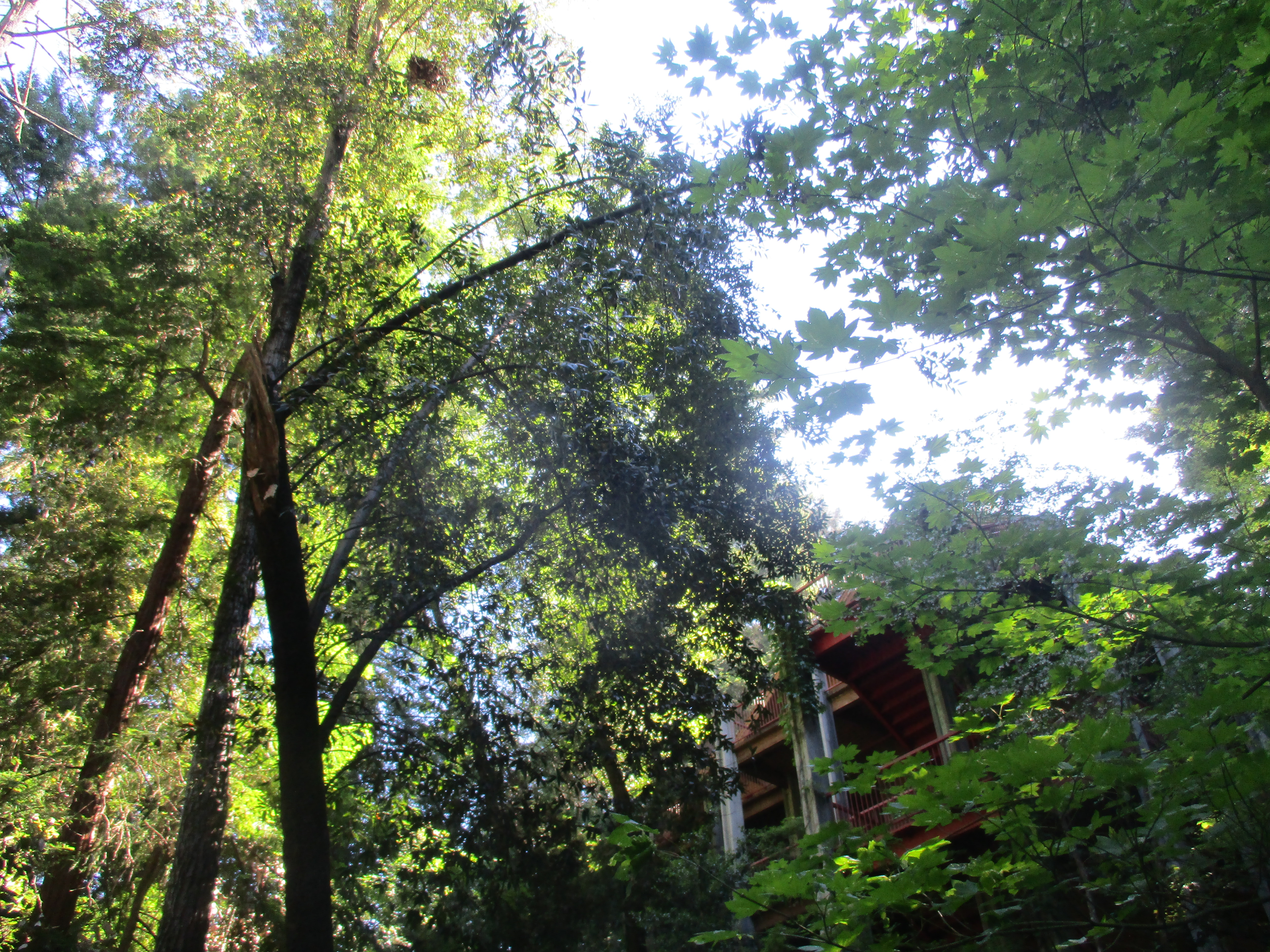
Acer platanoides ‘Schwedleri’, is Schwedler’s maple, which is an old fashioned cultivar of Norway maple. It is not a red maple. However, because its new foliage initially emerges with deep burgundy red color, it is often mistaken for red maple, particularly where red maple is uncommon. Its deep burgundy red foliar color does not last long before developing deeper purplish bronze color, with tiny contrastingly greenish yellow flowers. For autumn, the foliage turns yellow. Schwedler’s maple was a common street tree for the many large tracts of suburban homes that were built within the Santa Clara Valley during the late 1950s. Although it has not been available from nurseries for the past few decades, at least two similar but more modern and darker bronze cultivars of Norway maple are becoming more available. Modern cultivars are generally sterile, so are not invasive like the simple species has been within some ecosystems that are more favorable to naturalization than that of the Santa Clara Valley. The Norway maple in the picture above is not ‘Schwedleri’ but looks very much like it.
Acer rubrum is the real red maple, not just because of its often bright red autumn foliar color, but primarily because of its red floral buds that emerge immediately prior to foliation in spring. However, prior to autumn, its foliage is simple green. Red maple was rare here prior to 1990, and by the turn of the Century was still only mildly popular in the Santa Clara Valley. It could be more popular than it is, and realistically, performs better as a street tree than cultivars of Norway maple. Although not as colorful as bronzed cultivars of Norway maple are through summer, its vibrant yellow, orange and typifying red autumn foliar color is superior, even in response to only mild chill.


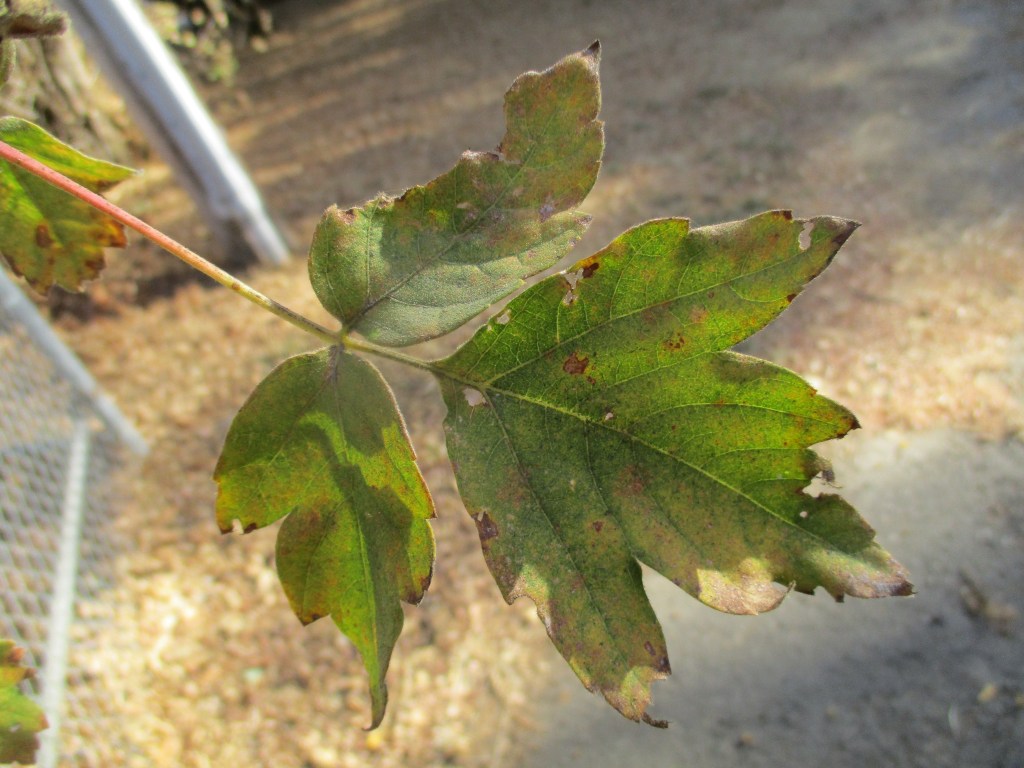
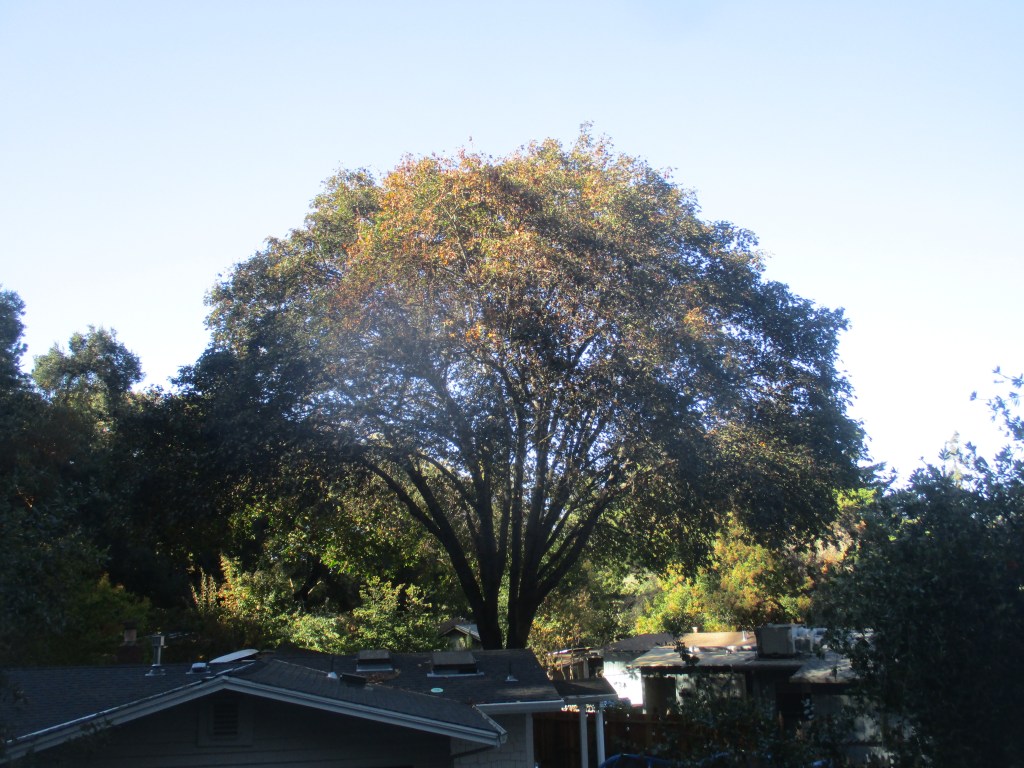


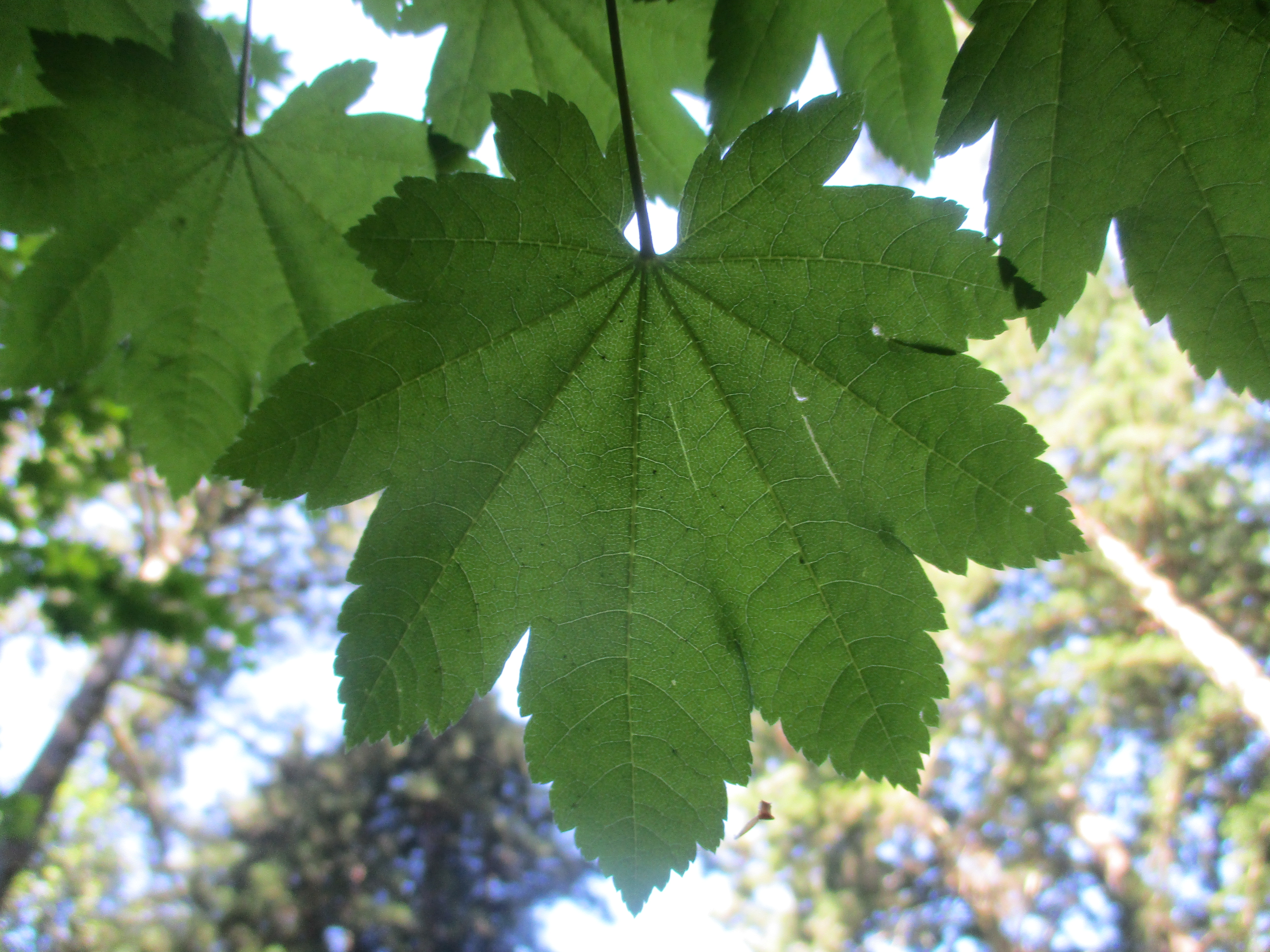

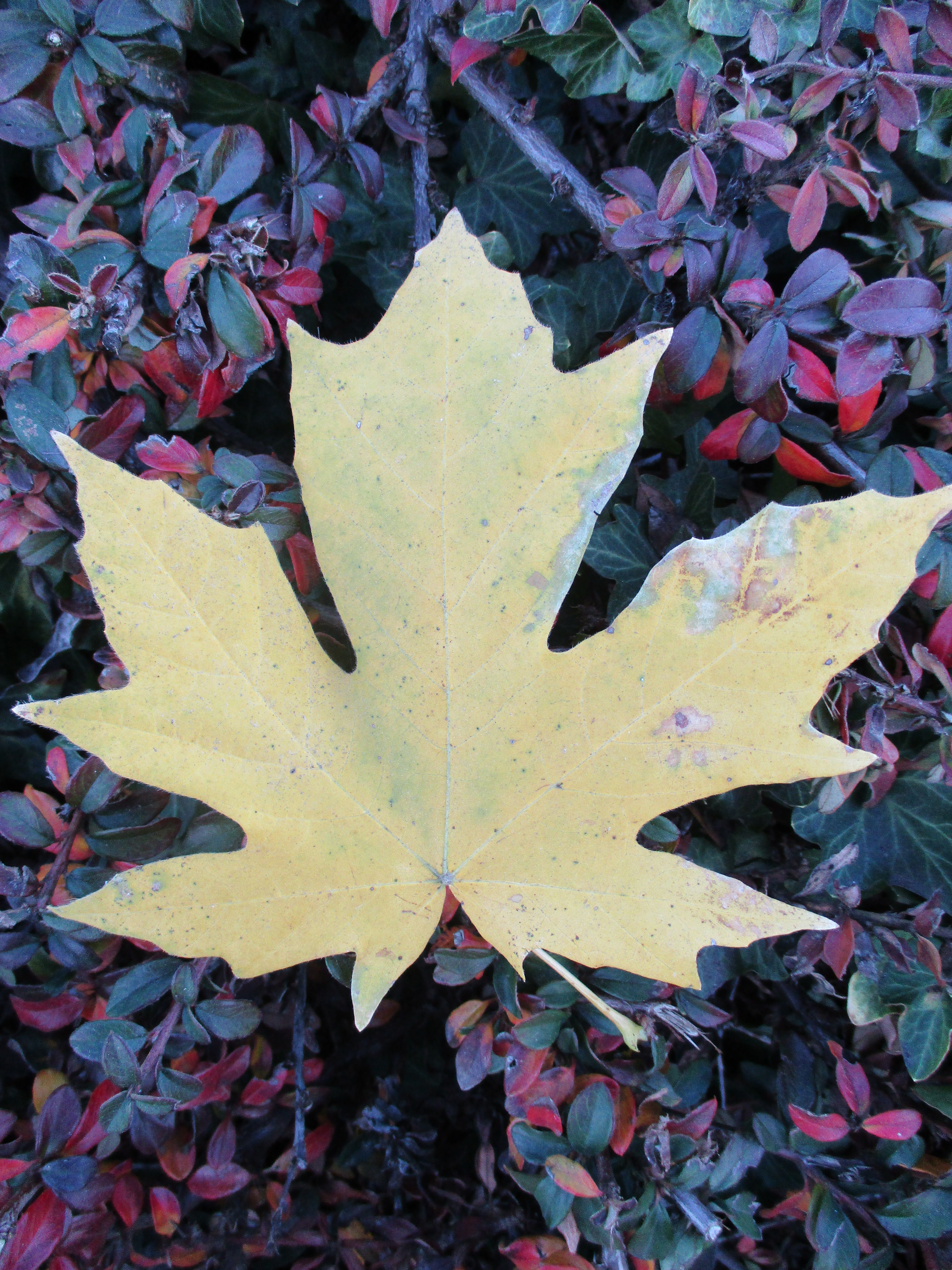
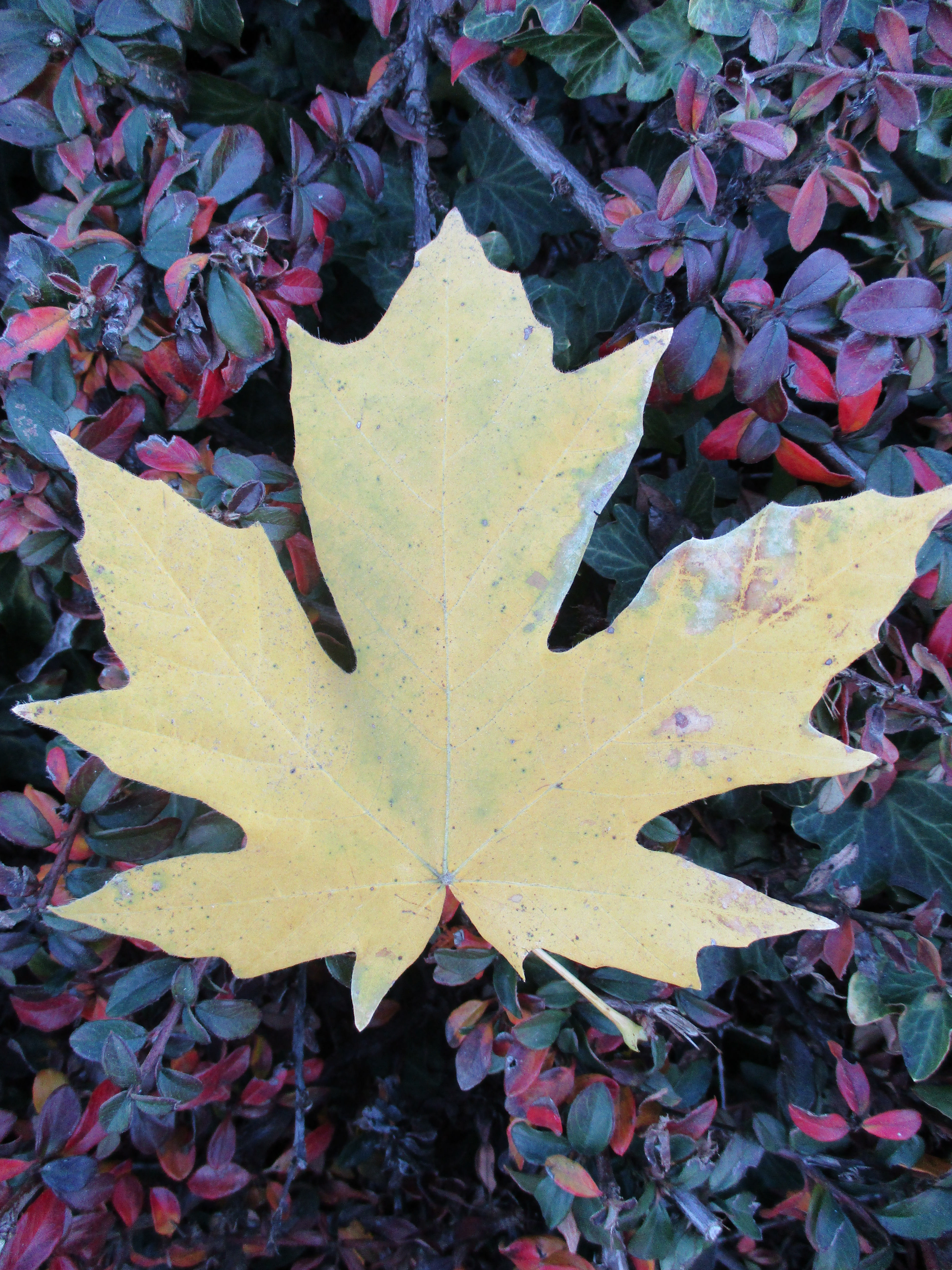 It is native from the extreme southern tip of Alaska to the extreme southwestern corner of California, but not many of us will see bigleaf maple, Acer macrophyllum, in our neighborhoods. It is planted only rarely, particularly where winters are mild. Relative to other maples, its roots can be more aggressive, and its shade can be darker, so is likely to interfere with lawn and other plants.
 Stereotypes can be such a bother. For the past almost twenty years that I have been writing my gardening column, many of those who read the column have been making assumptions about who I am and how I behave. I actually find much of the behavior that I should conform to be rather objectionable. Even the lingo would be awkward for me. I am a horticulturist, and if you must know, an arborist as well. It is my profession. I did not take an interest in horticulture because I retired or got bored with my primary career. Nor did I flunk out at everything else. I am not a garden guru, flower floozy or hortisexual. I do not crowd my garden with garden fairies, repurposed junk or rare and unusual plants. There is nothing eclectic or quaint. There is no whimsy or magic, and most certainly NO riot of color! Brent does not even flinch at my offensive racial comments.
 It was probably one of the best television shows for children back then, and probably still is. Everyone of my generation in American remembers Sesame Street. We all identified with it, even if our neighborhood did not look like Sesame Street, or lacked the variety of neighbors. Sesame Street sometimes took us on television field trips to other neighborhoods. Some were more familiar. Those that were more foreign were presented within a compelling and inviting context that got us interested in how other children lived within their respective societies.
 Tony Tomeo