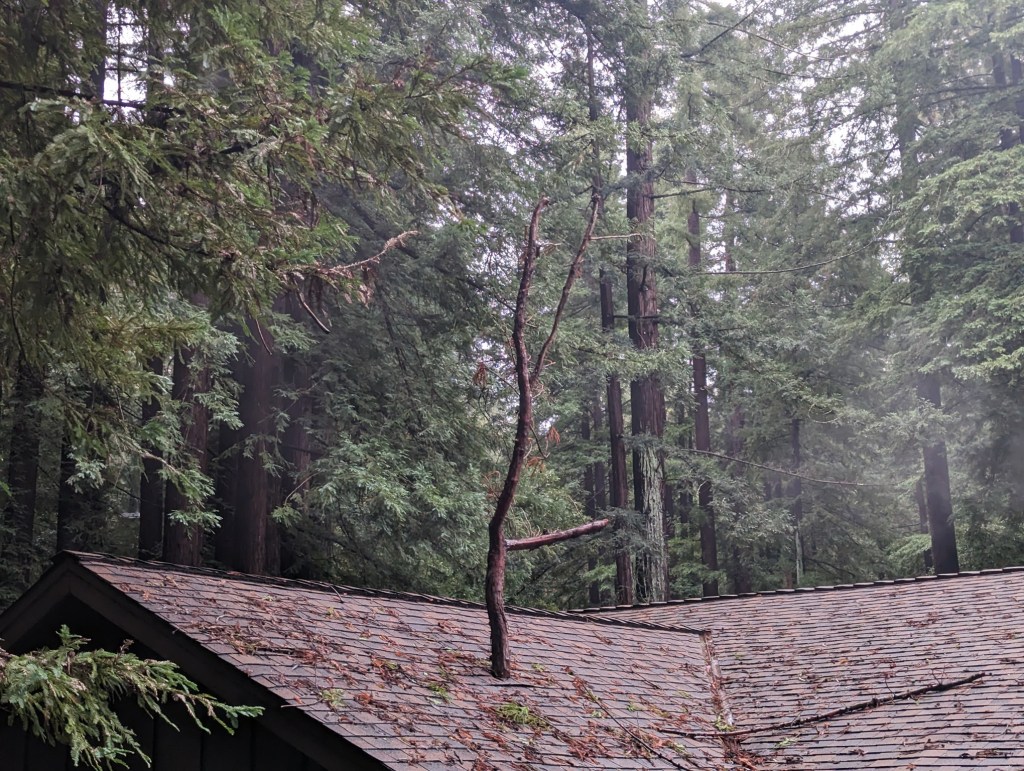
Six on Saturday: Brief Winter

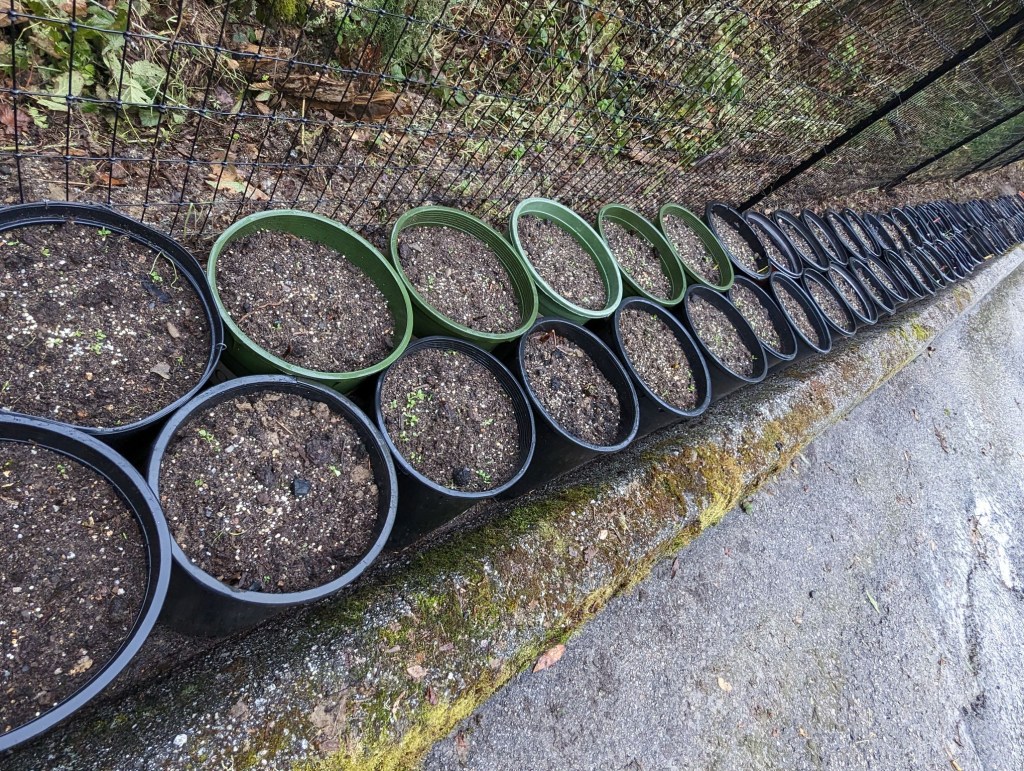
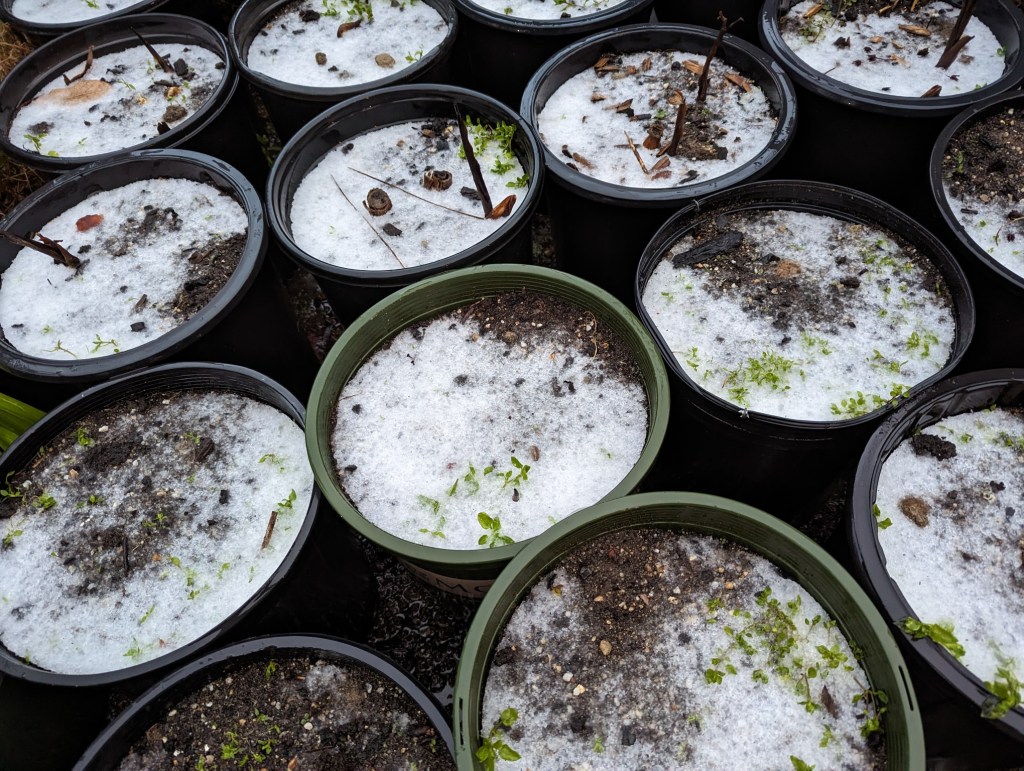
Winter is the busiest season here. There is no more to do during winter here than here is anywhere else, but there is a bit less time in which to do it all. Dormant pruning must be done prior to the last frost, and the first bloom. Planting should be done prior to the last rain, especially for small plants and seedlings such as most of these. Even after the most torrential weather since 1982, winter weather here can not maintain dormancy for long. Even if it would do so for more species, canna may not cooperate. I suspect that some of its ancestral species were familiar with frost without winters in the tropical Andes. They survive frost, but are too eager to grow immediately afterward.

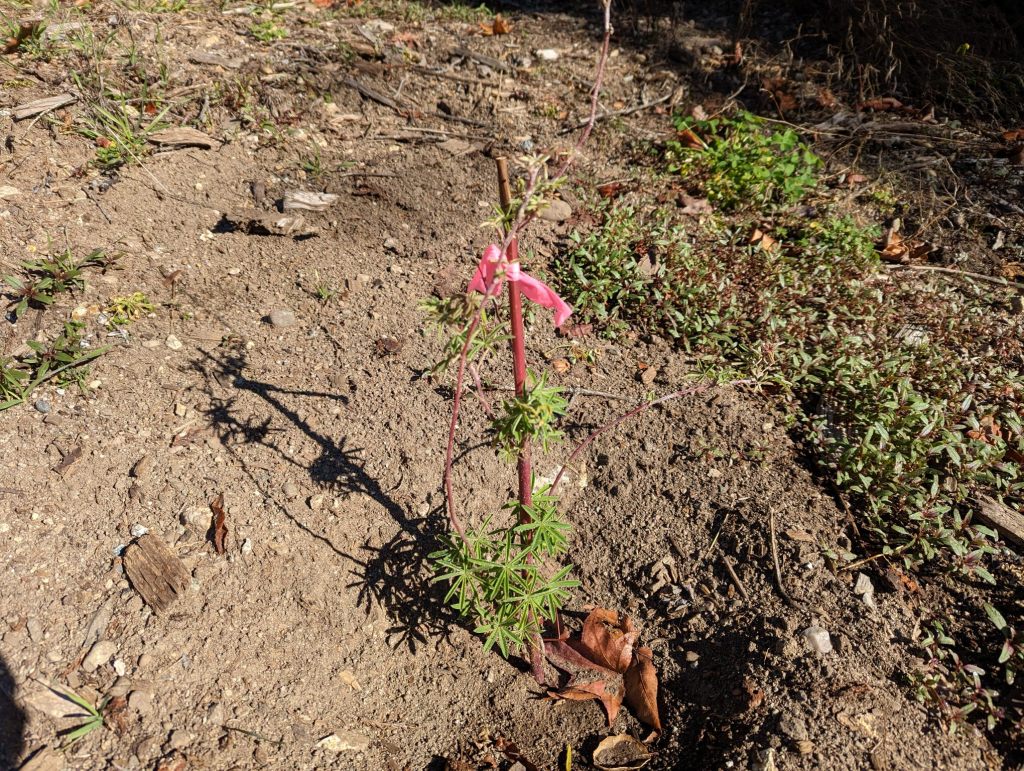
1. Lupinus arboreus, bush lupine is a gift from a local nursery that grows native species. They were getting too mature to be marketable. We got a dozen. They grow wild nearby.

2. Lantana camara, lantana is coppiced annually after getting a bit frosted, but prior to regeneration. This unexpected seedling was also coppiced, but relocated in this process.

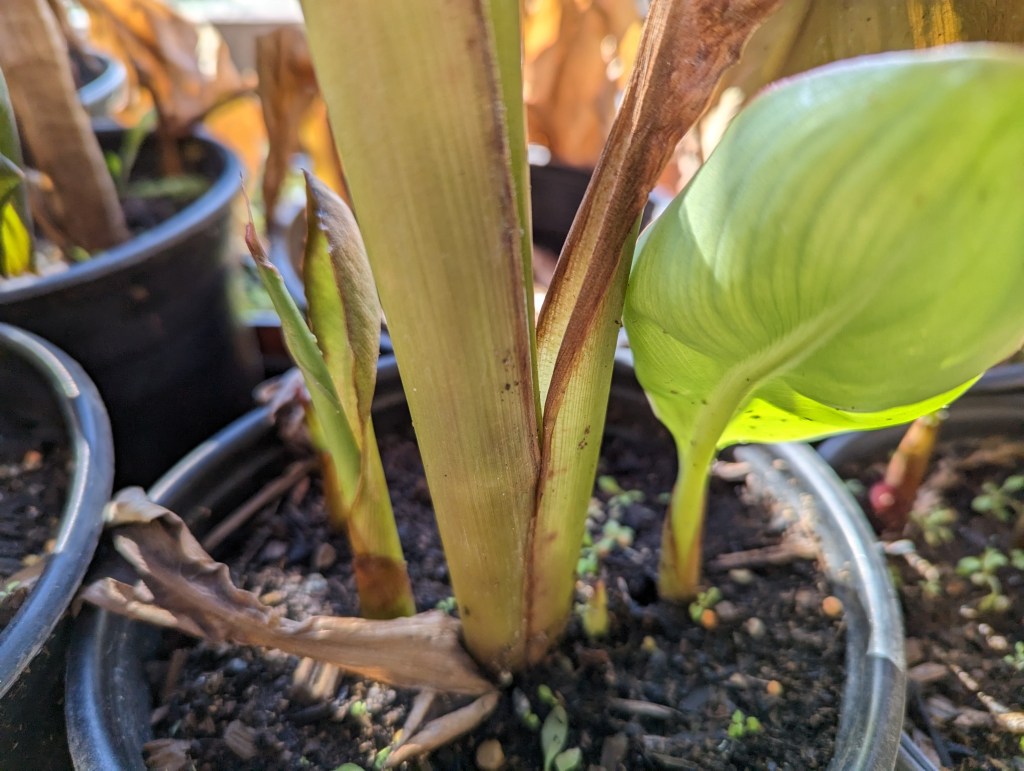
3. Canna indica, canna does not seem to know what winter is. It survives frost, but tries to regenerate immediately after experiencing it, instead of waiting for the end of winter.

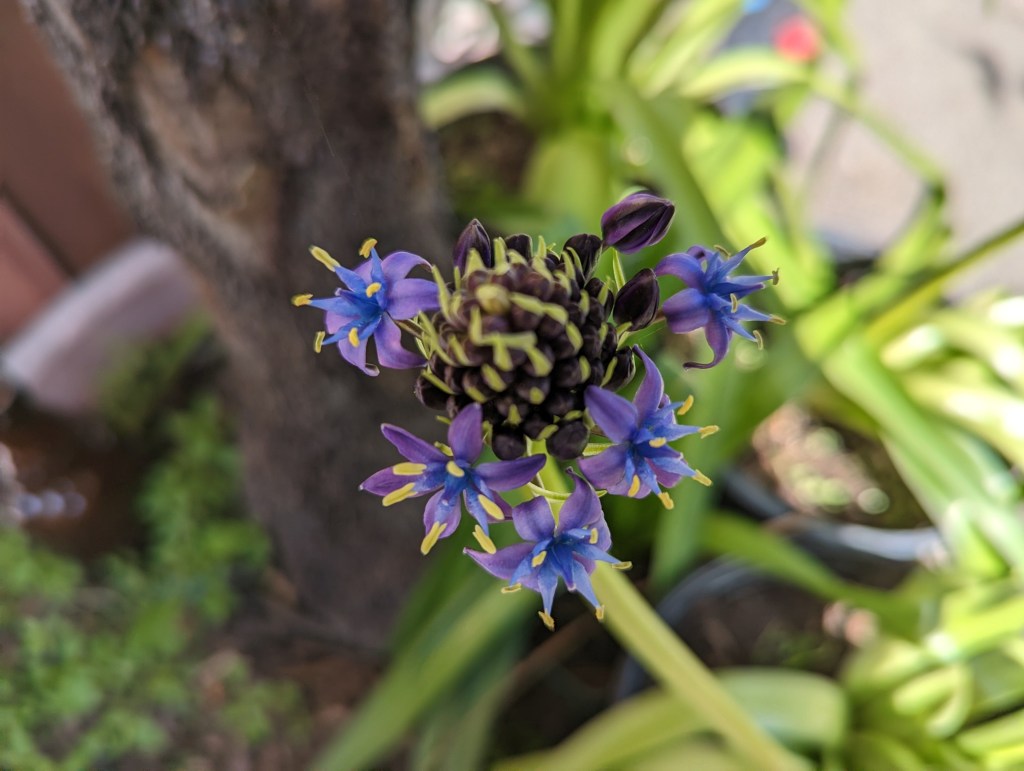
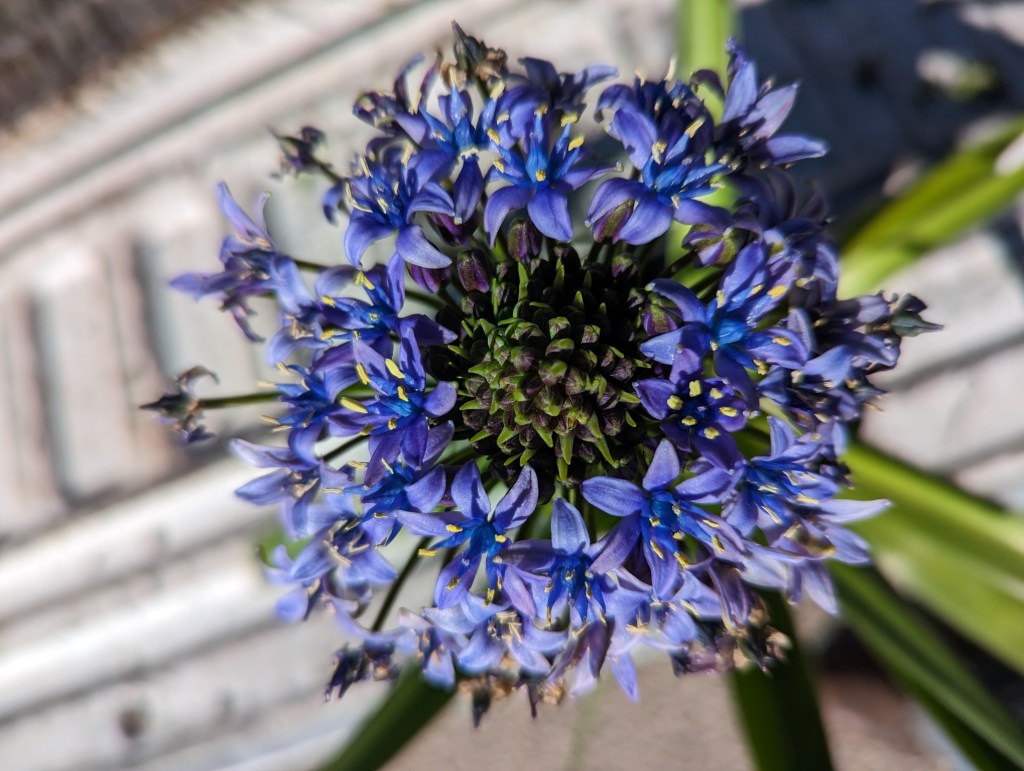
4. Scilla peruviana, squill seems like it should be just as familiar with winterless frost in Peru, near the Equator, but is actually a Mediterranean species. Three are blooming late.

5. Amaryllis belladonna, naked lady generates too many seed. I again made the mistake of collecting some two seasons ago. What now? These actually get put out while foliated.

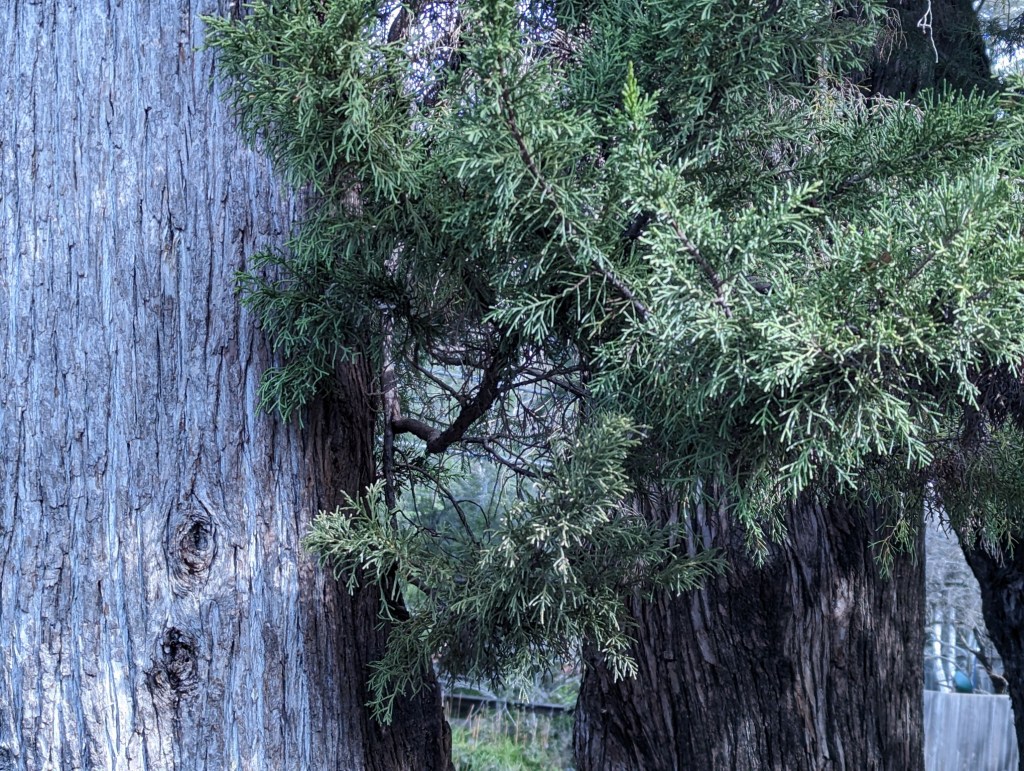
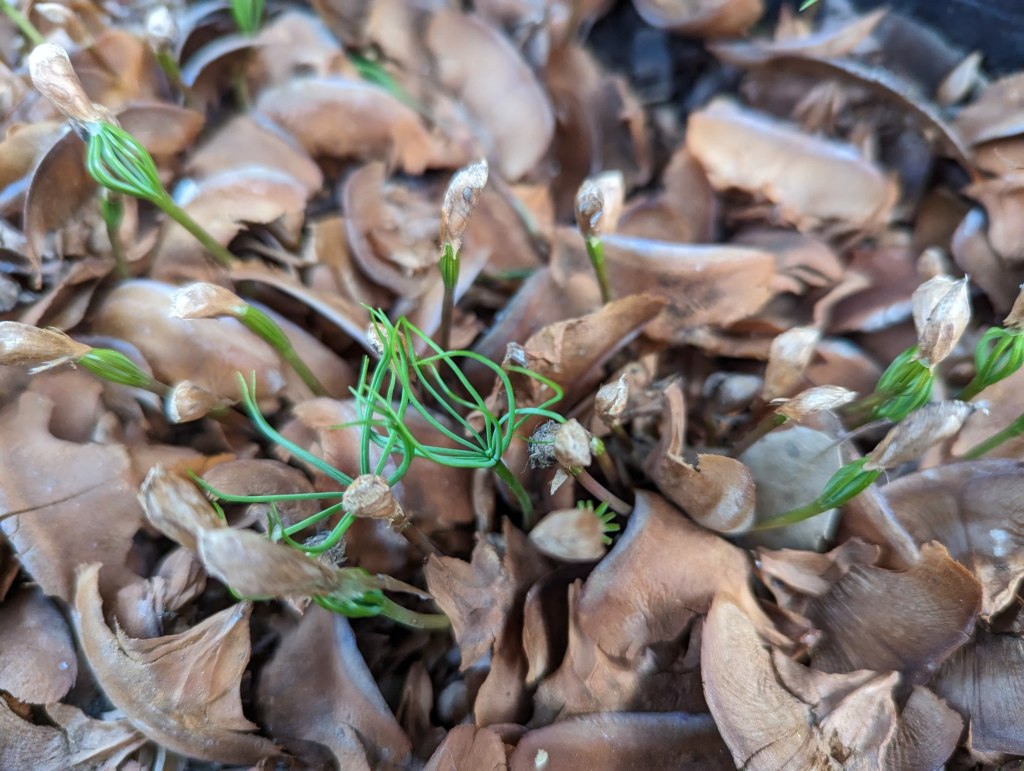
6. Cedrus deodara, deodar cedar is as prolific, but without my intervention. I pulled and plugged several a few years ago, but most of them were killed by weed whackers anyway.

This is the link for Six on Saturday, for anyone else who would like to participate: https://thepropagatorblog.wordpress.com/2017/09/18/six-on-saturday-a-participant-guide/
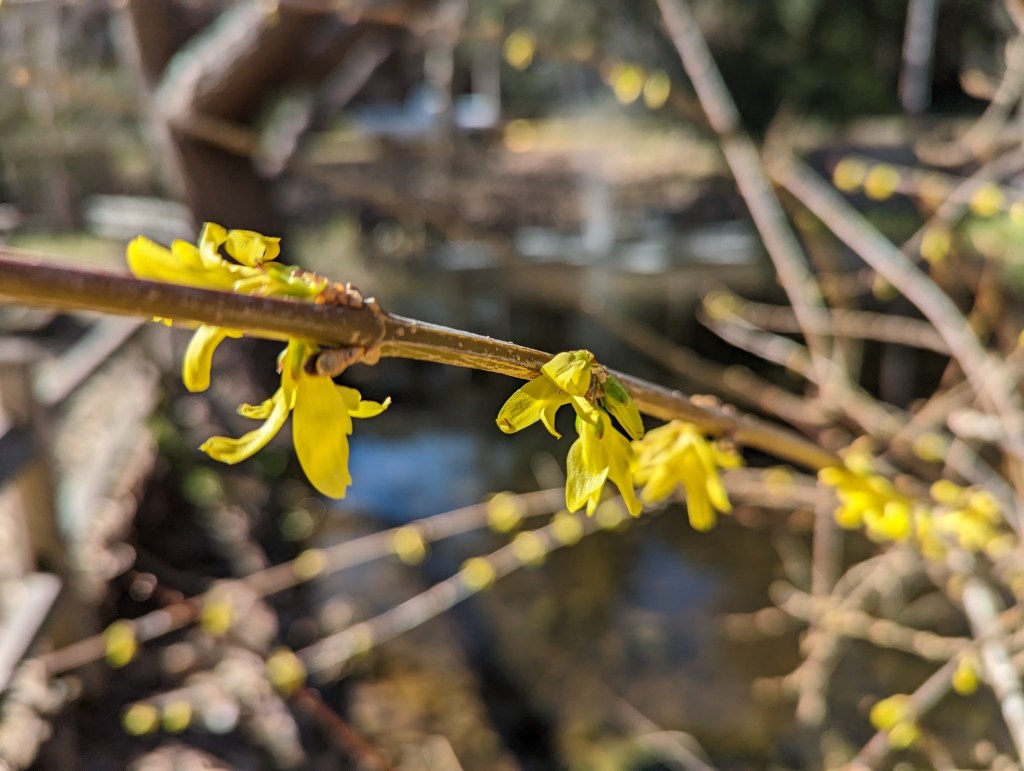
Six on Saturday: After The Storm

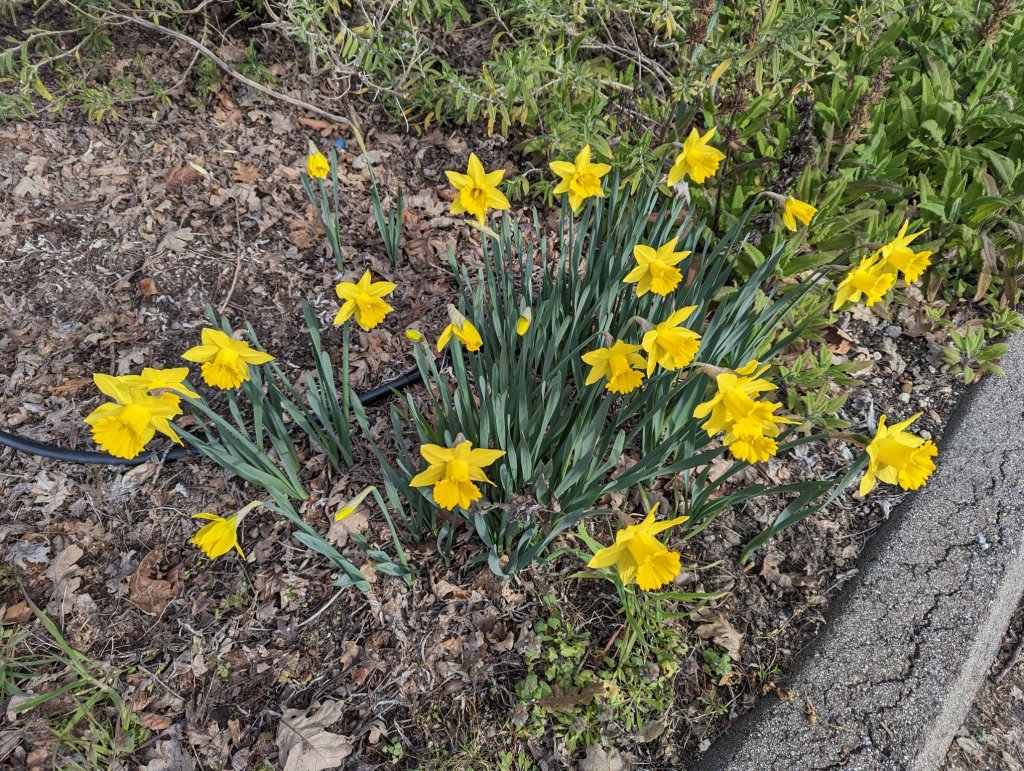
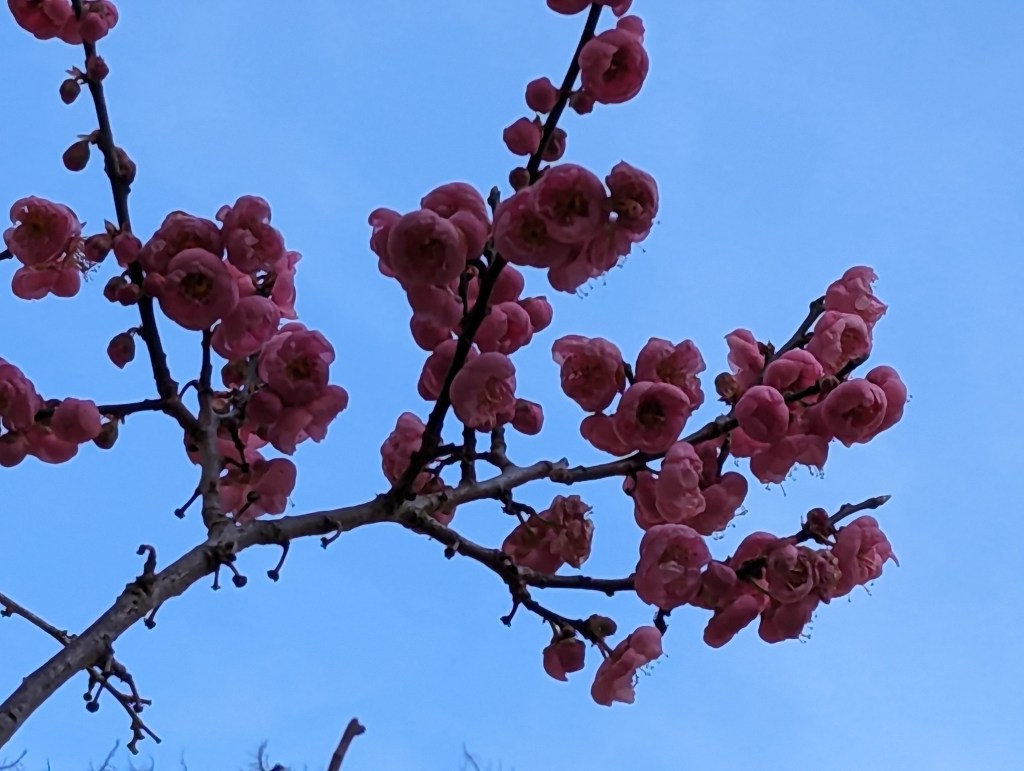
Rain is expected for today and Sunday. It rained a bit yesterday morning. This is normal for winter here. It will not prevent us from resuming seasonal work that was interrupted by the not so normal and epically torrential rain and associated flooding earlier. A bit of the mess associated with that earlier extreme weather remains, but is not so much of an encumbrance. Spring flowers such as daffodil have been blooming for a while. Flowering cherry buds are plumpening. One flowering cherry and the only flowering apricot are in full bloom. Meanwhile, other crews work to keep the power on.

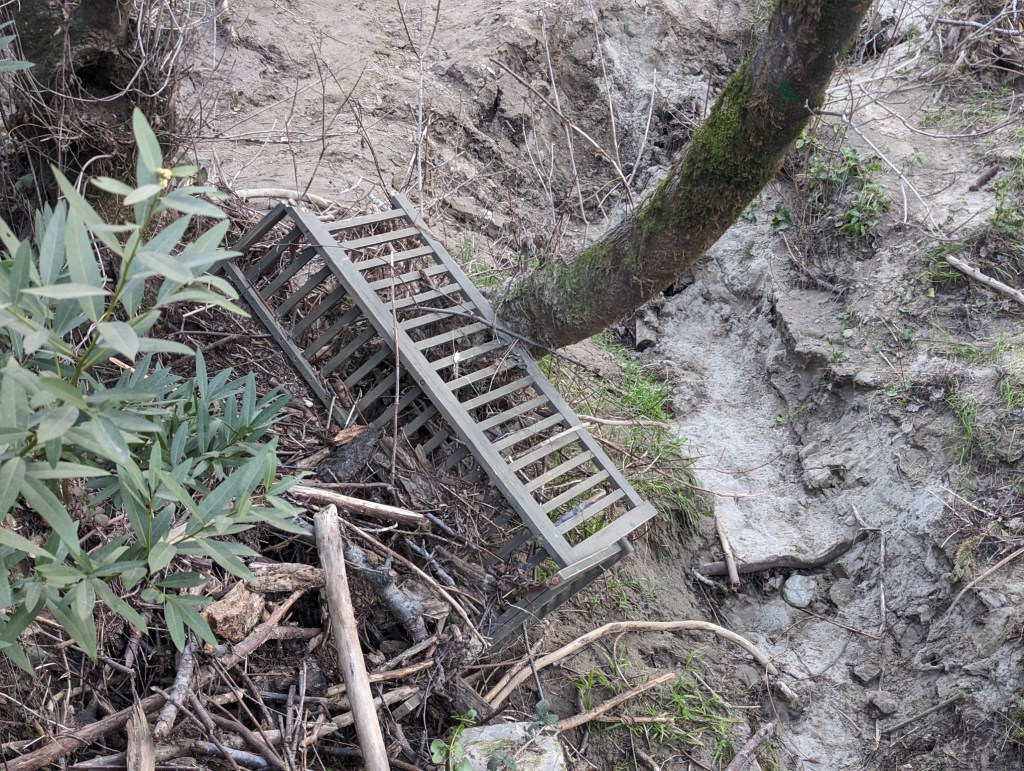
1. Debris of all sorts remains on the banks of Zayante Creek downstairs. This might be a futon. I hope that it came from an exterior patio, and not from within a home upstream.

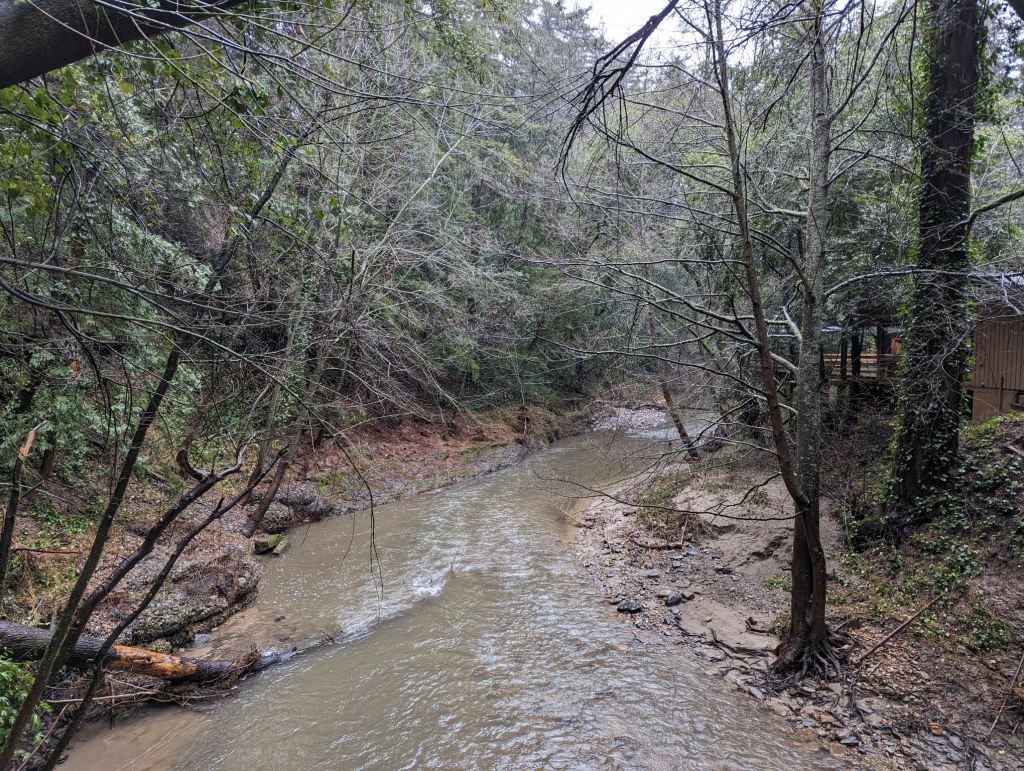
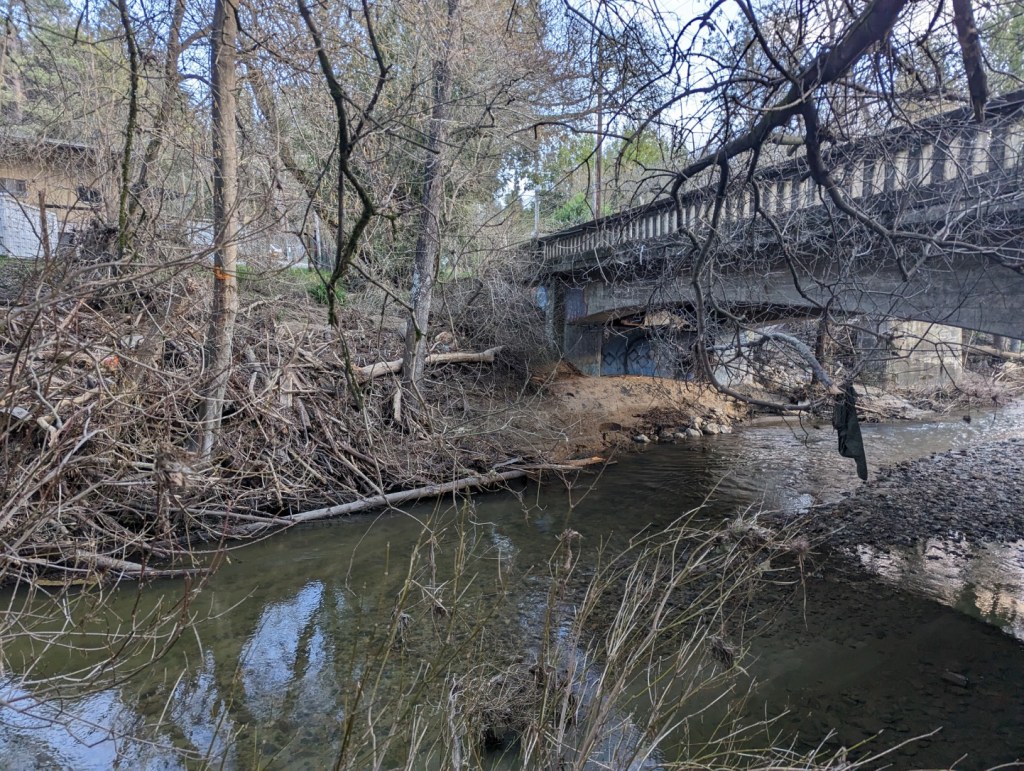
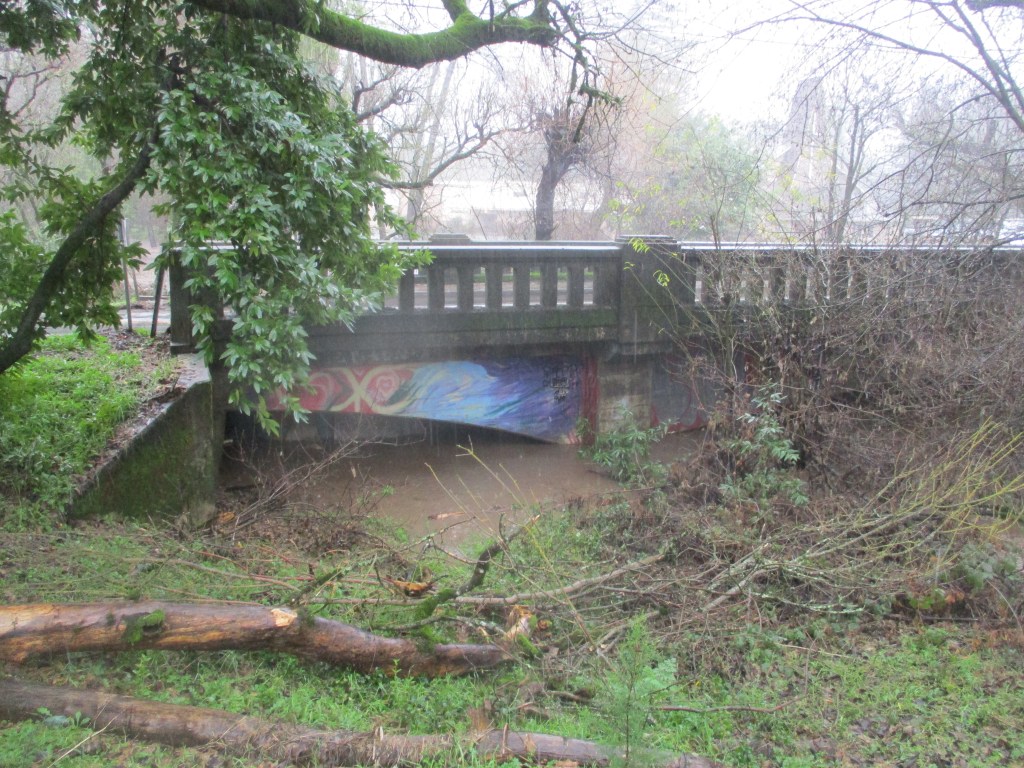
2. Zayante Creek is right where it should be now. It was slightly above the arch just prior to midnight of New Year’s Eve. The crew’s galley is inside the windows to the upper left.

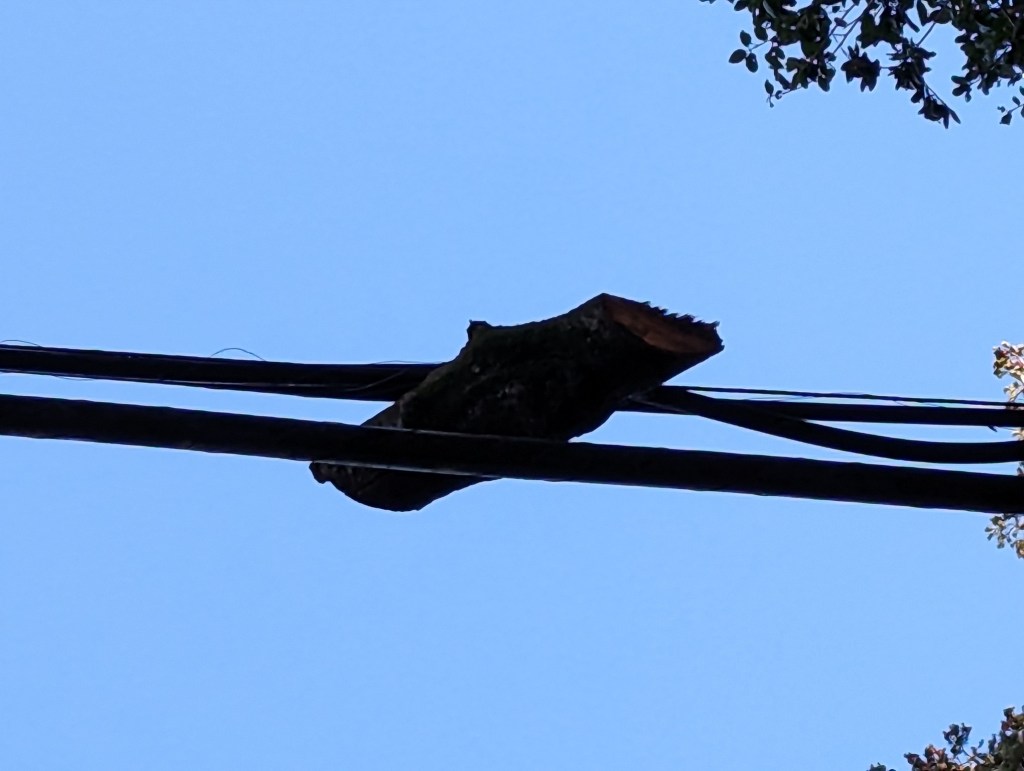
3. After all that torrential rain, another crew came to prune trees for clearance from new utility cables. The work was not bad, but they could not remove this log from the cables.

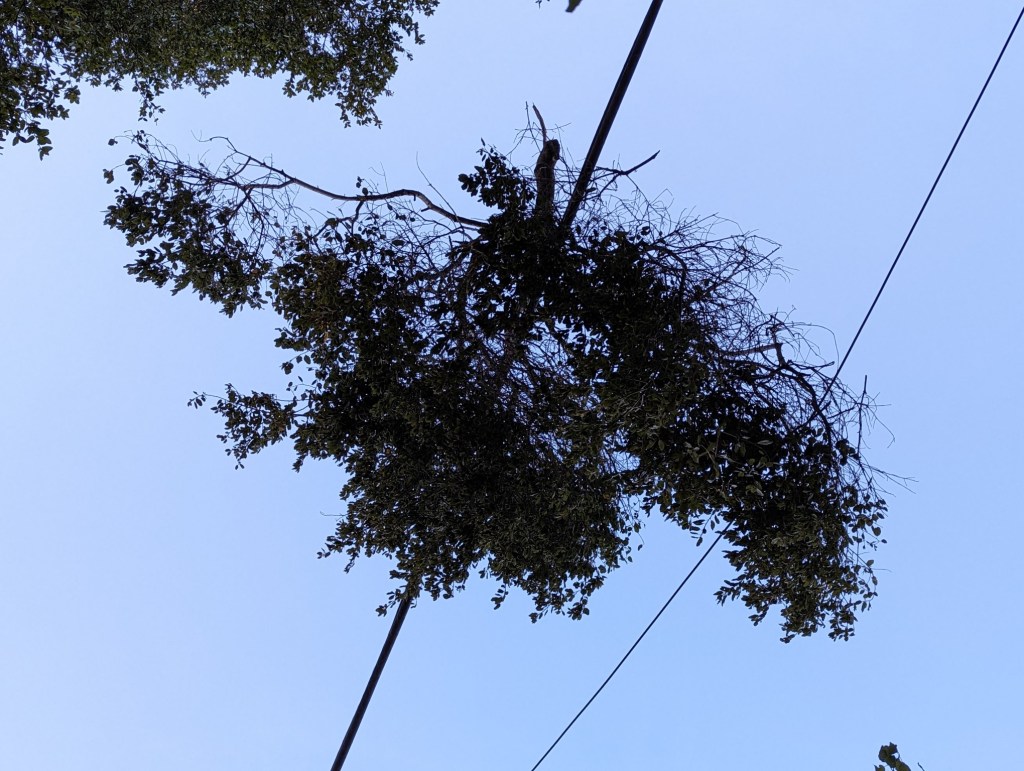
4. After the crew finished pruning a particularly large coast live oak that survived all that torrential rain, the big oak fell. Yes, it fell AFTER the storms, and AFTER it was pruned.

5. As if that were not bad enough, it left this big limb hung precariously on the new cable that they installed immediately prior to the rain! It is heavy and hooked by a small stub.

6. Landon’s Tree blooms as if none of this drama ever happened. It is a flowering apricot that grew from the understock of a purple leaf plum that was cut down several years ago.

This is the link for Six on Saturday, for anyone else who would like to participate: https://thepropagatorblog.wordpress.com/2017/09/18/six-on-saturday-a-participant-guide/

Six on Saturday: Bloom!

Bloom has been conspicuously absent from my Six on Saturday posts for the past several weeks. Severe weather had prevented me from performing my horticultural obligations, and then prevented me from processing pictures after resuming my obligations. As I was able to post last week, I merely posted six pictures of why I neglected to share pictures of horticultural relevance for previous weeks. Finally, I can share a few pictures of some of the bloom that I have neglected. I am impressed that some of it survived so much severe weather. Incidentally, the weather has been totally awesome since the storms stopped as suddenly as they started. Zayante Creek flows as it typically does for this time of year, as if nothing happened. The water seems to be unusually clear.

1. Camellia japonica cultivars are sufficiently numerous here for a month or so of Six on Saturday. Some bloom profusely but briefly. Some bloom sporadically for a long season.

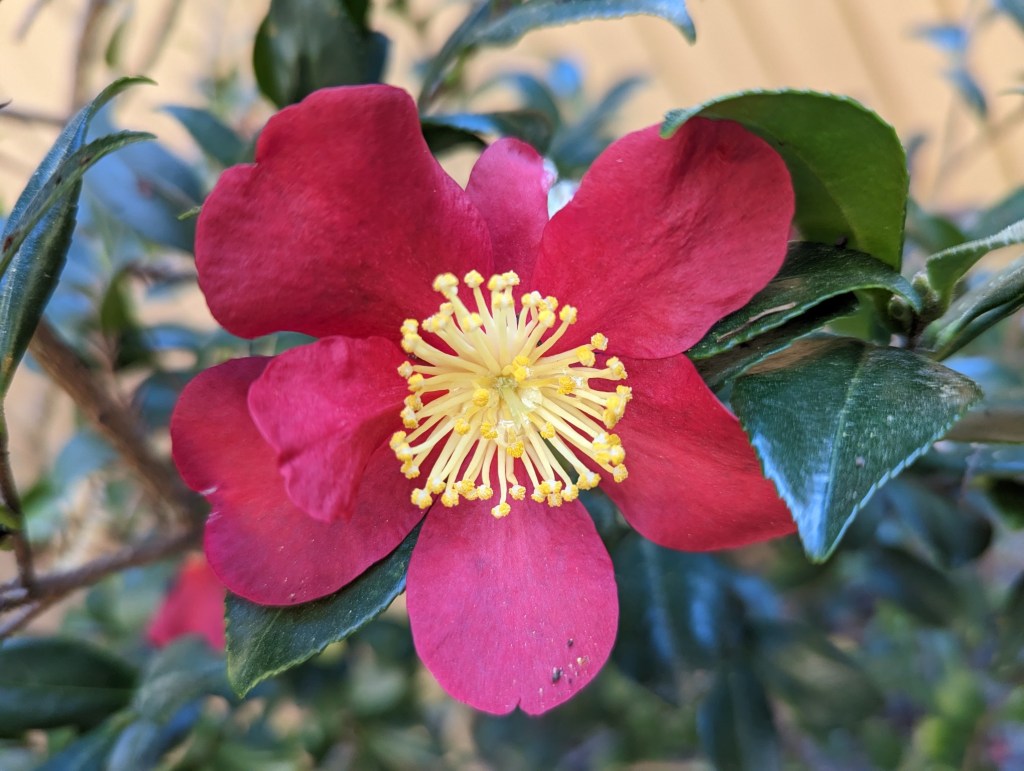
2. Camellia sasanqua cultivars are less numerous, but might be sufficient for two weeks of exclusive Six on Saturday presence. This one is ‘Christmas Cheer’ blooming a bit late.

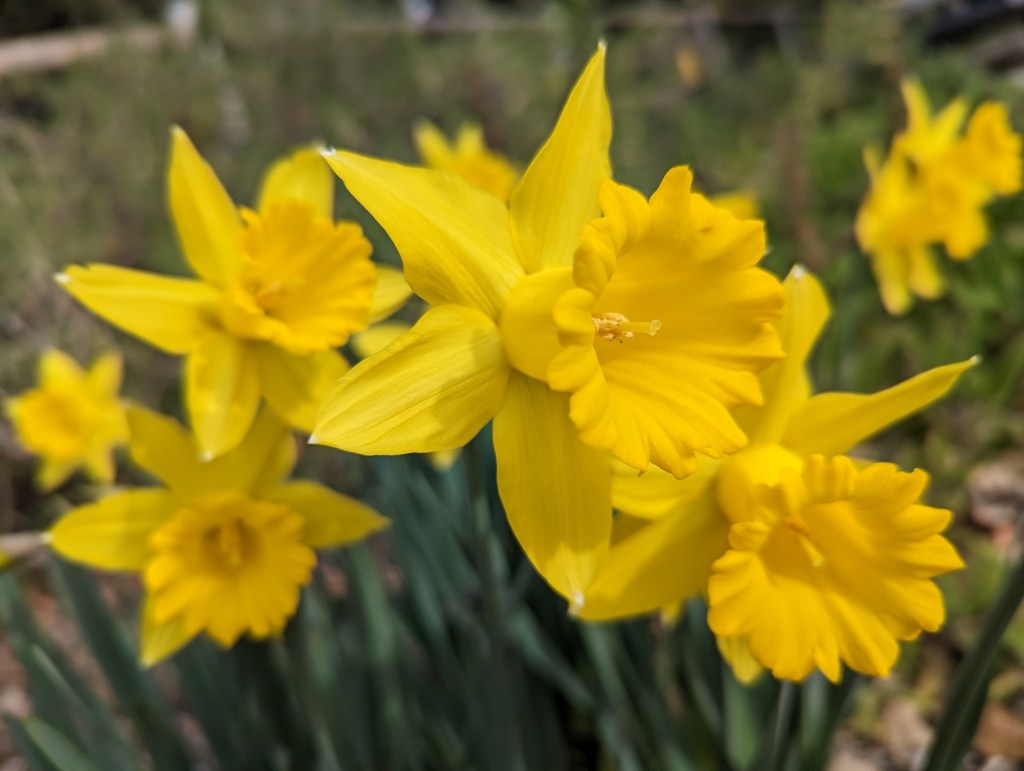
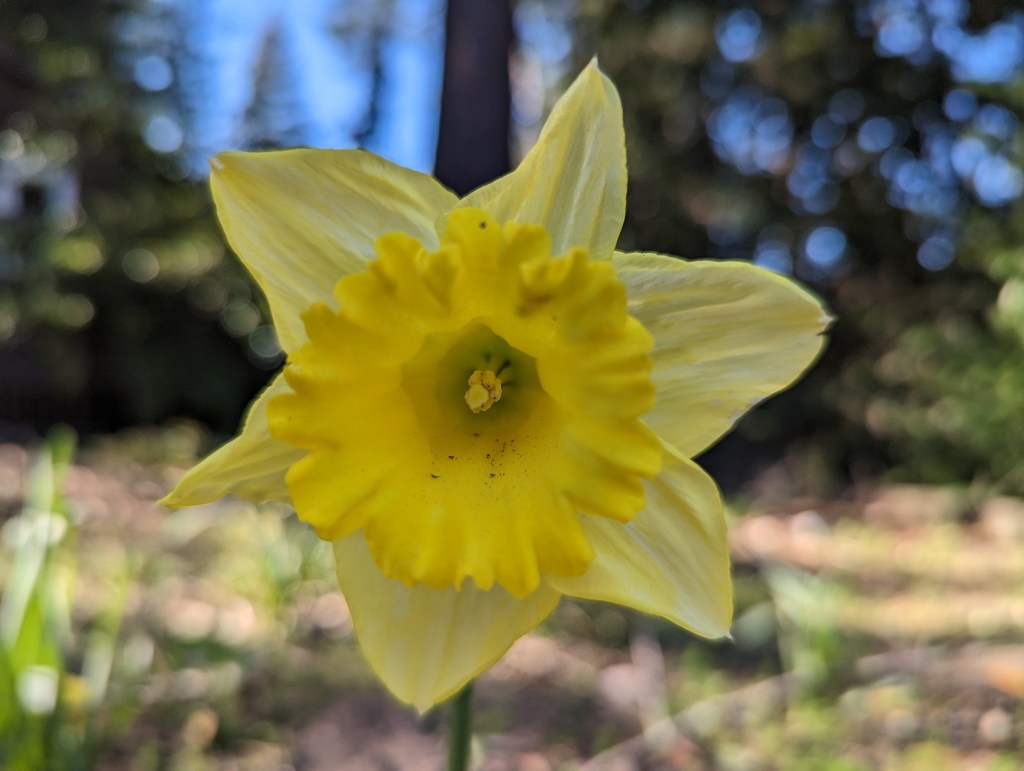
3. Narcissus is too botanically complicated for species designation. This is possibly ‘King Alfred’. Experts might be able to identify its species or hybrid. I know it only as daffodil.

4. Iris X germanica is also botanically complicated. This unidentified cultivar wastes no time recovering from seemingly early division last September. I am very pleased with it!

5. Scilla peruviana, squill was still canned when we noticed it blooming! We neglected it while busy with the weather. The best is now planted. The rest awaits gopher mitigation.

6. Rhody is very pleased that his crew has been able to resume their normal duties, such as providing treats and petting, without all the stress associated with the severe weather.

This is the link for Six on Saturday, for anyone else who would like to participate: https://thepropagatorblog.wordpress.com/2017/09/18/six-on-saturday-a-participant-guide/
Six on Saturday: Excuses

It had not rained so much here since 1982. Consequences of such excessive rain were the priorities at work. I neglected to procure pictures of horticultural topics while the first of the problems associated with the weather began to develop two weeks ago. I was unable to transmit new pictures last week because of disruption of telephone service. Now that I am able to share new pictures, I find that a few are redundant to some that I posted two weeks ago, and none are any more horticulturally oriented than a few unidentifiable logs and an unseen redwood tree. Well, at least they demonstrate why I was too busy to share horticultural pictures on Six on Saturday.

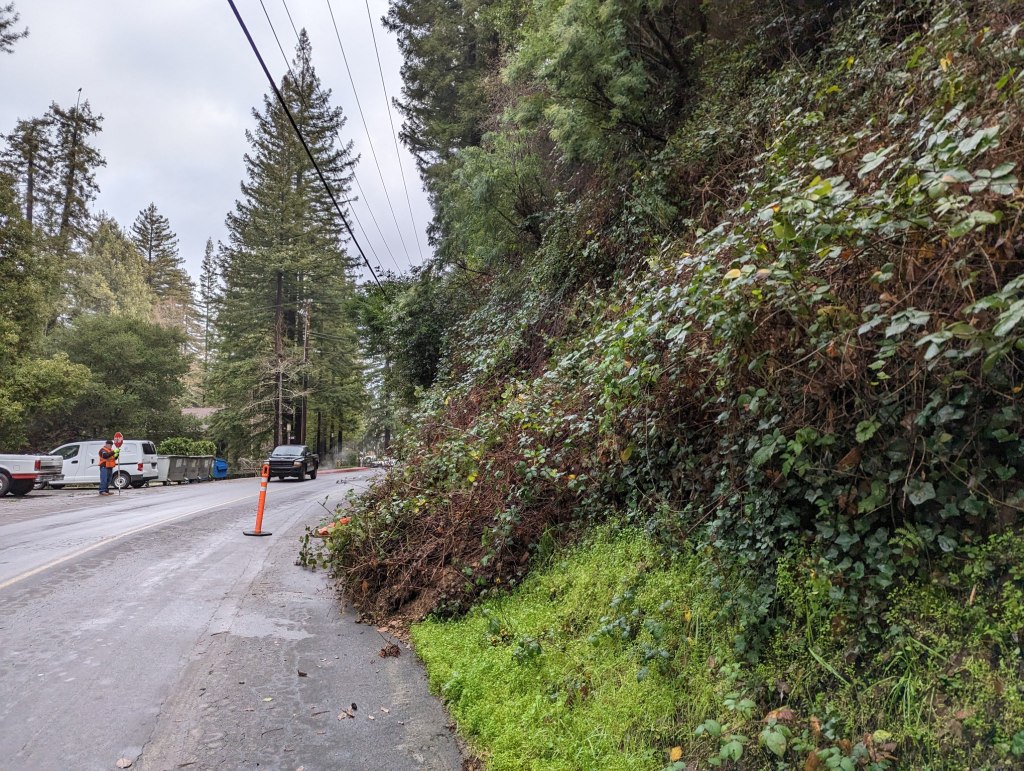
1. Mudslides blocked a few portions of the main road into town at various times. None of them stayed for long, but they took turns. Shortly after one got cleared, another one slid.

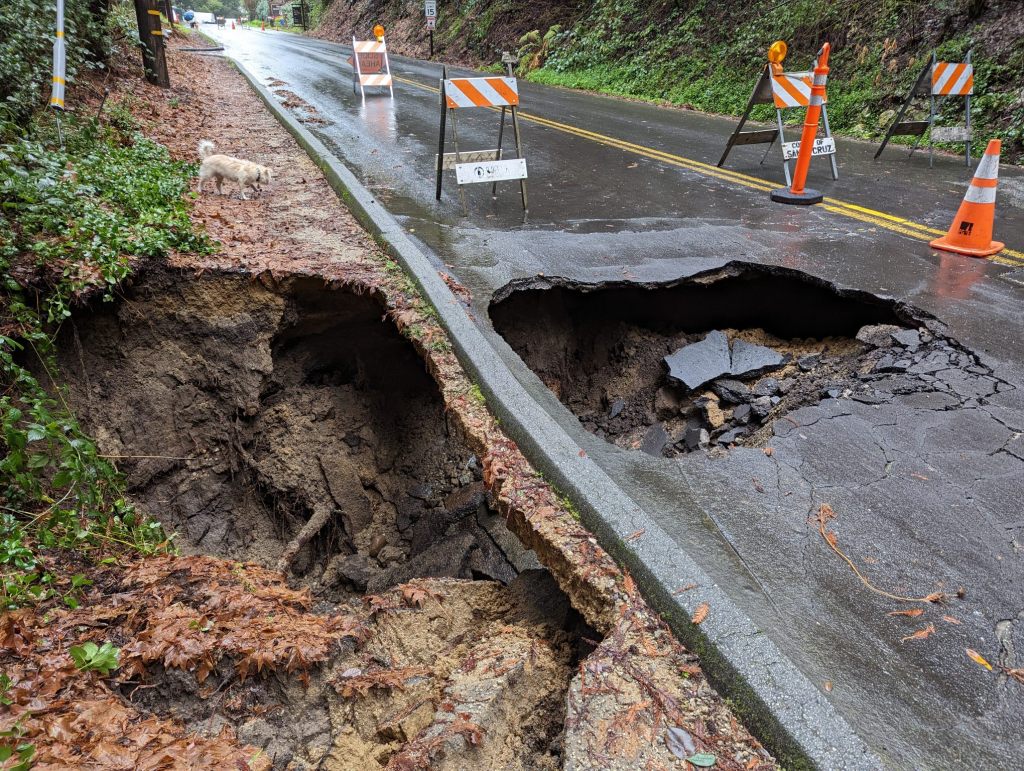
2. Sinkholes were mudslides from below rather than from above, and ruined portions of roads that were not under mud. I nearly dropped the camera here to hastily grab Rhody.

3. Floods got deeper than since 1982, and took trees that were big enough to leave twigs two thirds of the way up the right and upstream side of the pillars nearest to the middle.

4. Logjams collected some of those trees that would otherwise be on beaches near Santa Cruz by now. Ironically, that is a municipal water pumping station across Zayante creek.

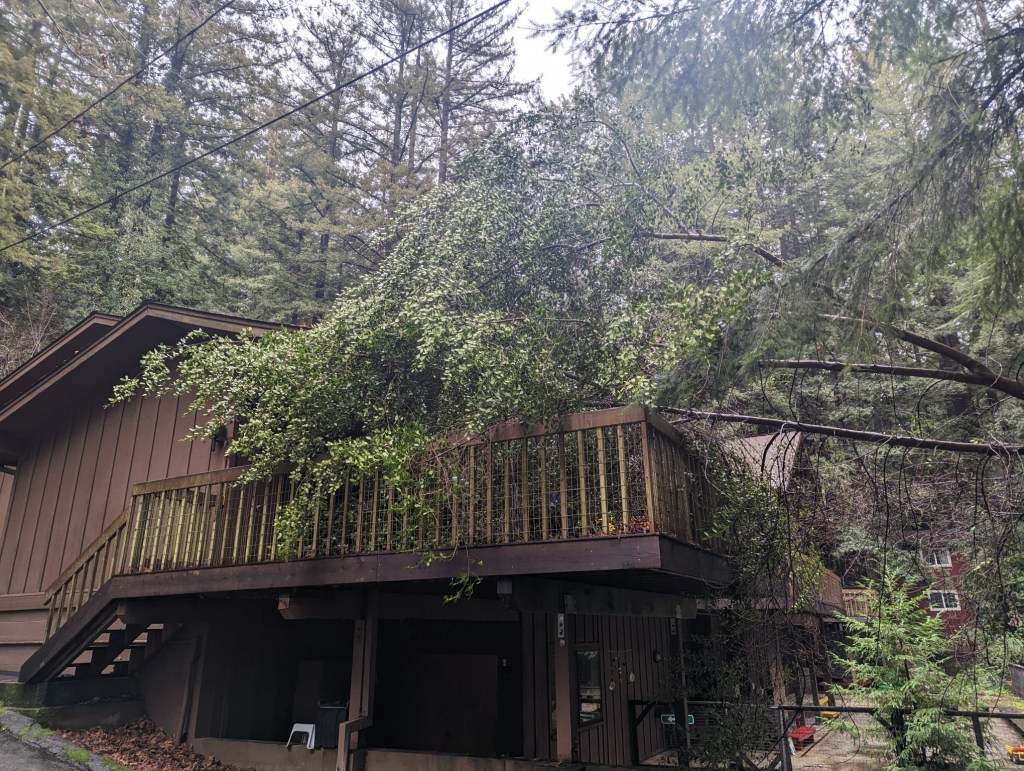
5. Fallen trees are particularly dangerous within forests of the tallest trees in the World. This one took out about twenty feet of the trail. I will share two more pictures of it later.

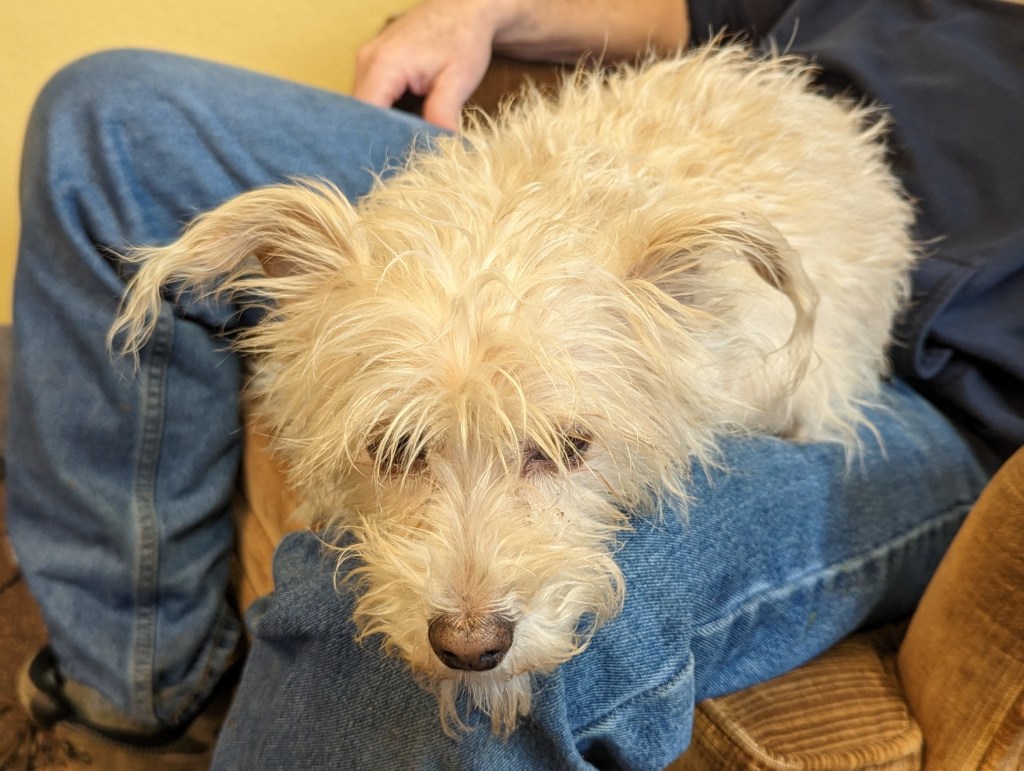
6. Rhody was exhausted from exemplary service to his similarly exhausted crew through many days of the rainiest weather here since 1982. He is enjoying sunnier weather now.

This is the link for Six on Saturday, for anyone else who would like to participate: https://thepropagatorblog.wordpress.com/2017/09/18/six-on-saturday-a-participant-guide/
Six on Saturday: 2022 Ends II

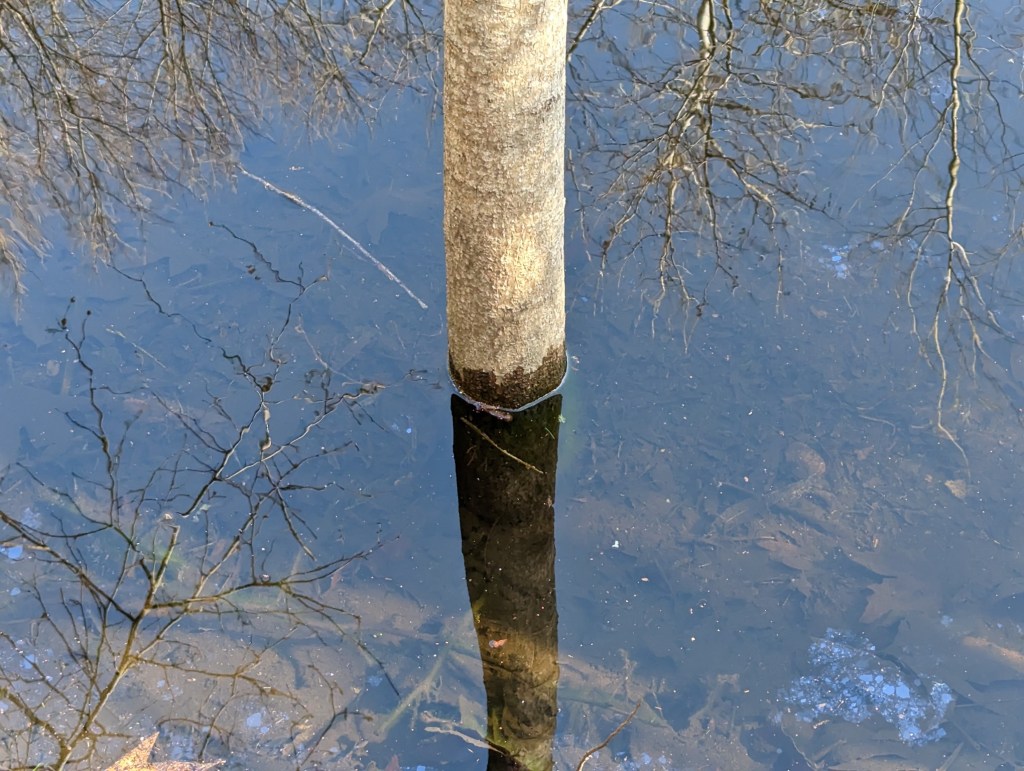
2022 ended with what might have been the worst series of storms since 1982. More rain is in the forecast, so the situation has potential to get worse. As I was composing my ‘Six on Saturday’ for last week, Zayante Creek behind the shop buildings at work was coming up higher than it has been in many years. An adjacent neighborhood was evacuated later in the day. Evacuated neighbors parked their vehicles in a big parking lot across Zayante Creek, and partied in the rain until 2023! By then, they could go home on muddy roads. It was a unique way to celebrate the New Year. Picture #1 was yesterday. #2 and #3 were Wednesday. #4, #5 and #6 were last Saturday, 2022.

1. Mudslides caused a few road closures and other damage elsewhere in the region. This was the worst for us. It was mitigated yesterday. Vegetation did not control this erosion.

2. Fallen trees were another major problem elsewhere in the region. A big coast live oak squashed a car nearby. This Italian buckthorn was the worst for us. It damaged nothing.

3. Widowmakers are terrifyingly dangerous during windy weather. All too many free fall silently for more than a hundred feet from the exteriors of canopies of coastal redwoods.

4. David Fritiof Lindberg Memorial Tree is barely visible to the right of the center of the lower edge of this picture. It is immobile, but has never been this close to Zayante Creek.

5. Steven Michael Ralls Memorial Tree resides in the same Memorial Grove as the David Fritiof Lindberg Memorial Tree, so is also now closer to Zayante Creek than it should be.

6. Conference Drive Bridge over Zayante Creek is a short distance north and upstream of the Memorial Grove. At the time, most vegetation was obscured from view under water.

This is the link for Six on Saturday, for anyone else who would like to participate: https://thepropagatorblog.wordpress.com/2017/09/18/six-on-saturday-a-participant-guide/
Six on Saturday: 2022 Ends

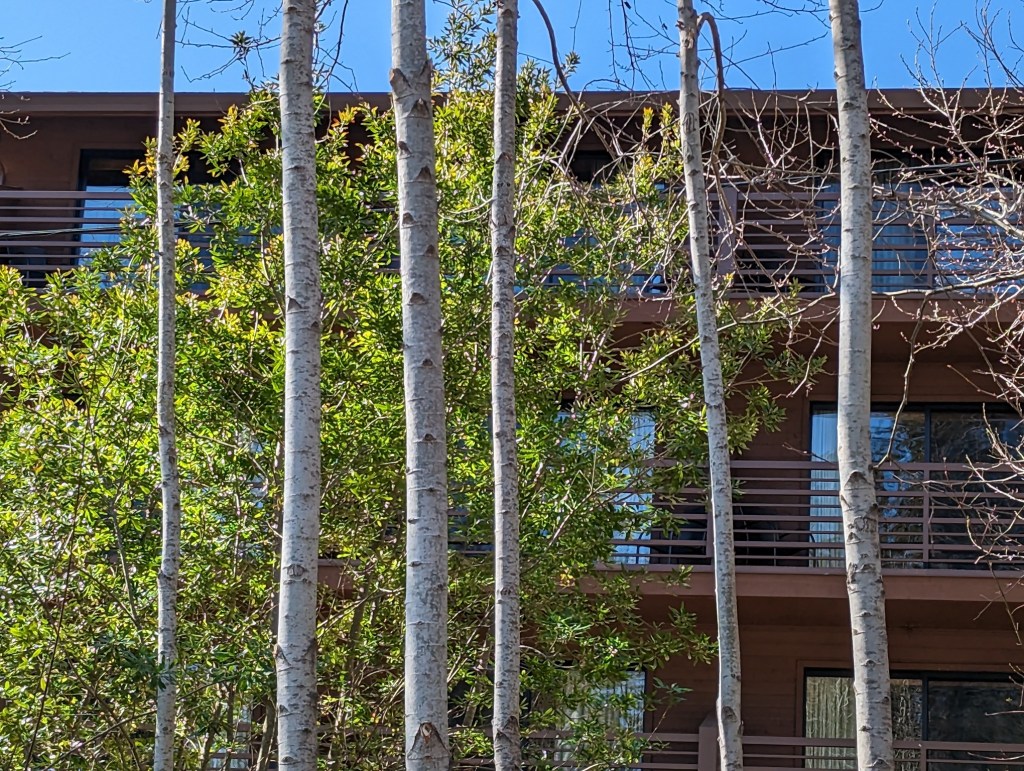
The year ends with the day, but bad habits continue. I make no resolutions. I continue to collect too much seed, plug too many cuttings and divide too many perennials. Common weeds are not off limits. Canna were already too abundant before more were canned last week. More will be divided later! Cymbidium is not proliferating yet, but has potential to do so after bloom. For now, there is no need to irrigate any of this surplus, since the rain will not stop.

1. Lunaria annua, money plant or honesty, is not quite naturalized within unrefined but damp zones of our landscapes. We collect seed to toss where we think it should perform well. It has become a tradition. The name implies that it is native to the Moon, and that, like 2022, lasts only one year. These seed in key envelopes are for whomever takes them.

2. Canna ‘Australia’ are bloomed canes that I groomed from the downtown planter box, as seen last week. There are a dozen #5 cans of four canes, and six #1 cans of two canes! More pups must be thinned later! Also, I will soon dig even more cannas for a neighbor!

3. Bellis perennis, English daisy is naturalized in the vast lawn at Felton Covered Bridge Park. I have no use for it, but plugged a dozen solitary rosettes in with the Canna canes.

4. Sambucus nigra ‘Black Lace’, black elderberry should generate a bit of fruit without a pollinator, but is merely pretty here. I plugged a few cuttings because its darkly bronzed foliage works so well for our landscapes. Native blue elderberry produces plenty of fruit.

5. Cymbidium orchid is extending quite a few floral spikes. I have not counted them yet.

6. Morgan was reminded why no one craves his parking space. Rain is splendid though!

This is the link for Six on Saturday, for anyone else who would like to participate: https://thepropagatorblog.wordpress.com/2017/09/18/six-on-saturday-a-participant-guide/

Six on Saturday: Memorial Trees +

Goodness! Not only did I not get good pictures of these Memorial Trees, but I needed to add two unrelated pictures for a total of Six on Saturday. Perhaps fewer Memorial Trees are better than more. Sadly, another must be added as space becomes vacated. Anyway, the first picture is something I am quite pleased with. The sixth complies with tradition. Links have more information about the Memorial Trees at my other blog, Felton League.

1. Australian tree fern, Cyathea cooperi, was relocated from my former neighborhood in town. It may not look like much, but the trunk, which is not visible here. is nine feet tall!

2. Steven Michael Ralls Memorial Tree was the first Tree of the Memorial Grove when it was installed on May 2, 2020, the third anniversary of his death. It is now about six feet tall, and inhabits a site that was formerly inhabited by Mr. Ralls while he was unhoused.

3. David Noel Riddell Memorial Tree was installed quite a while after Mr. Riddell passed away, so it is only about three feet tall. Incidentally, Mr. Riddell is a direct descendant of some of the first Spanish people to arrive in Monterey where Monterey cypress is native.

4. David Fritiof Lindberg Memorial Tree was installed shortly after Mr. Lindberg passed away on November 13, 2021, and in conjunction with The David Noel Riddell Memorial Tree. It is only about four feet tall. All three of those Memorialized were mutual friends.

5. Jeffrey Dale Scofield Memorial Tree became The Memorial Tree after a few friends of the Memorialized passed away within only a few years afterwards. It is maturing nicely!

6. Canna ‘Australia’ in the downtown planter box remain lush after harsh grooming, and after those at work were frosted. Of course, this picture is not actually about this Canna.

This is the link for Six on Saturday, for anyone else who would like to participate: https://thepropagatorblog.wordpress.com/2017/09/18/six-on-saturday-a-participant-guide/

Six on Saturday: Sale

We do not spend much on plant material here. Actually, I purchase nothing. Removal of excessive vegetation is more of a priority than adding more. We purchased quite a bit of plant material this last week only because it was so very inexpensive from a supplier that is closing for business. All of it is new to our landscape. New Zealand tea tree is common locally, but was somehow never installed here. We got a single #15 specimen, although I did not add a picture of it here. We would prefer to install all of the new material early in the rainy season. By local standards, the weather is too cool to do so comfortably.

1. Frost happens here also. Fortunately, it is not too severe. This is the coolest spot in the region. Rhody should not mix randomly capitalized letters like this. ‘E’ should match ‘e’.

2. Canna ‘Red King Humbert’ melts when the weather gets this cool, even without frost. It is already trying to replace this foliage, so might melt again, but will be fine by spring.

3. Dicksonia antarctica, Tasmanian tree fern could perform better than the rather pekid Australian tree ferns in a cool and riparian landscape. We got only a single #5 specimen.

4. Physocarpus opulifolius, ninebark is the first that I have ever met! It is bronzed, but I do not remember its cultivar. It is too cool to go look now. We got twelve #15 specimens.

5. Pinus mugo, mugo pine looks like a smaller and greener version of mature specimens of dwarf white pine of last week. They eventually get bigger. We got thirty #5 specimens.

6. Picea abies ‘Nidiformis’, bird’s nest spruce will not be combined with mugo pine here. I was warned about their redundancy of form last week. We got forty-two #5 specimens!

This is the link for Six on Saturday, for anyone else who would like to participate: https://thepropagatorblog.wordpress.com/2017/09/18/six-on-saturday-a-participant-guide/
Six on Saturday: Bad Timing

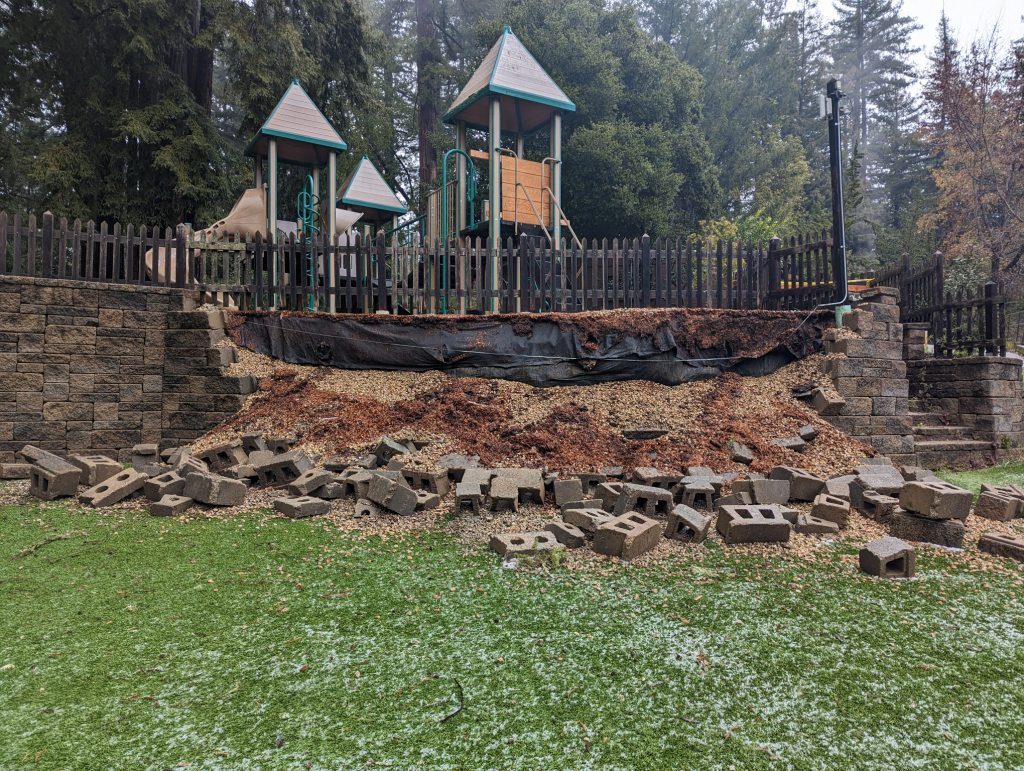
The preponderance of white amongst these ‘Six on Saturday’ is merely coincidental, and might not be obvious anyway. Only #2 and #4 are actually white. Contrary to its cultivar name, #3 is really very pale yellow. As stylish as he might be, #6 is quite obviously gray. #1 bloomed with tiny white flowers earlier, but its berries are now as red as #5. Anyway, with the exception of #1, their timing is less than ideal. #2 and #3 are performing better than they have all year, but will not last for long now that the weather is cooling. #4 and #5, although slightly confused, should still bloom splendidly in season. #6 was not there in the morning.

1. Ilex aquifolium, English holly is doing nothing that it should not be doing at this time of year, but is rarely so prolific with its berries here. It might be more invasive if it were.

2. Brugmansia X candida ‘Double White’, double white Angel’s trumpet is likewise a bit more enthusiastic than it typically is, but at the wrong time, as autumn becomes winter.

3. Helianthus debilis ‘Italian White’, Italian white sunflower is blooming like the angel’s trumpet, at the wrong time. It grew slowly through summer to begin blooming this late.

4. Rhododendron, azalea of an unidentified cultivar is either very late or very early. This unseasonal bloom deducts from the bloom for the following season, but is rather minor.

5. Rhododendron, azalea of another unidentified cultivar bloomed even earlier, or not so late, as this is an older picture. The minor consequences are the same. This white is rad!

6. Kenny II waddled out to meet me as I went out to close the gates for the night, but did not seem to do so intentionally. He stopped waddling when he encountered me, so I left.

This is the link for Six on Saturday, for anyone else who would like to participate: https://thepropagatorblog.wordpress.com/2017/09/18/six-on-saturday-a-participant-guide/
Six on Saturday: New Photinia

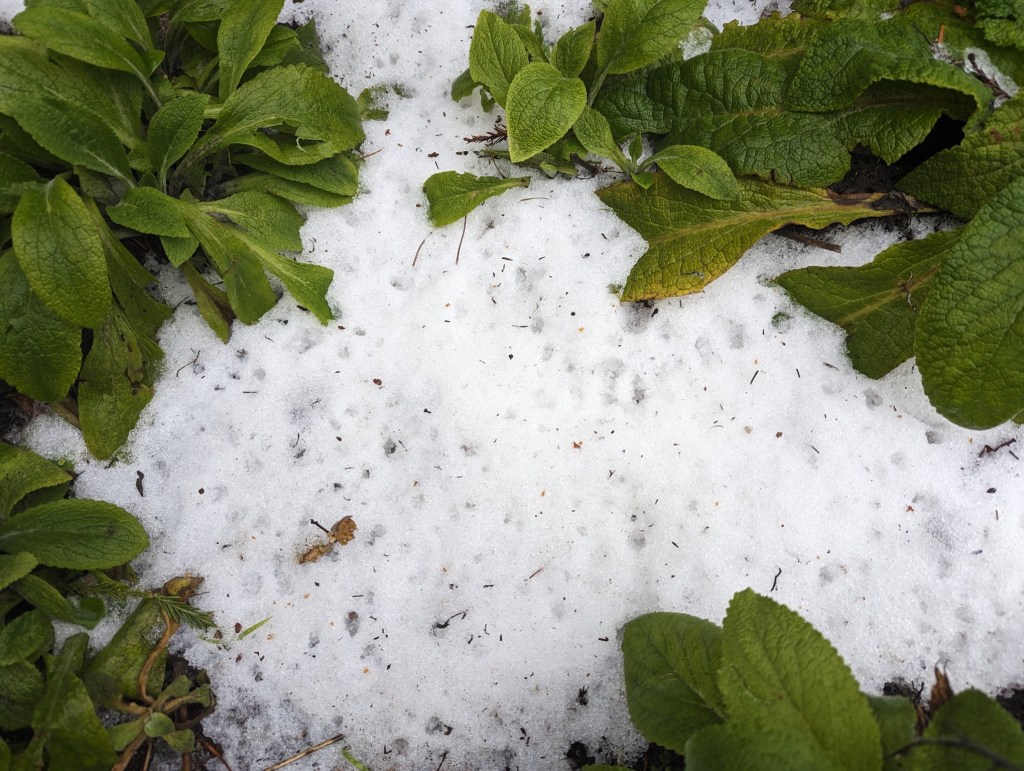
Renovation of an old photinia hedge on the main road at work has been more work than it should have been. It was too overgrown for simple shearing. I pruned it up as a row of small trees, with the intention of eliminating their upper canopies as basal watersprouts grew upward from the newly exposed trunks below. Well, water sprouts did not grow as readily as I hoped for. The trees were cut down while the hedge below was still scrawny. As planned, I layered a tall water sprout as a replacement for one of two missing shrubs, but needed to replace the other with the naturally layered specimen from another hedge. (Layers develop roots where they touch soil, while attached to their original specimens.)

1. Rain! The first storm of the season came and went about two weeks ago. The drainage pond flooded about two feet over its spillway! This duckweed was left on a nearby fence.

2. Controlled burns resume now that the beginning of the rainy season is also the end of the fire season. There has been no more rain since the first storm, but forests are damp.

3. Damp ground and cooler weather facilitate planting within areas that lack automated irrigation. This layered photinia stem got relocated from one old hedge to patch another.

4. It was not enough though. To compensate for lack of another, I simply made a second layer by bending over and mostly burying a vigorous water sprout of an adjacent stump.

5. A new photinia can now grow where the tip of the mostly buried water sprout emerges from the soil. I am very pleased with the very uniform spacing of all specimens involved.

6. Meanwhile, I plugged a rooted sucker of an ungrafted historic flowering cherry within the decayed center of the stump of the now deceased original tree. It could replace itself!

This is the link for Six on Saturday, for anyone else who would like to participate: https://thepropagatorblog.wordpress.com/2017/09/18/six-on-saturday-a-participant-guide/