Six on Saturday: Blank Slate (& Asphalt)


While unable to work at my second most time consuming job, I developed a bit of unused space into a vegetable garden. I would not have done so if I had known how much work it would be, or how much of what seemed to be usable space was just trash, brambles and a shallow bit of soil on top of pavement. Alternatively, I should have had the main unpaved area bulldozed first.

Now that it is halfway through spring, this new vegetable garden is finally started!

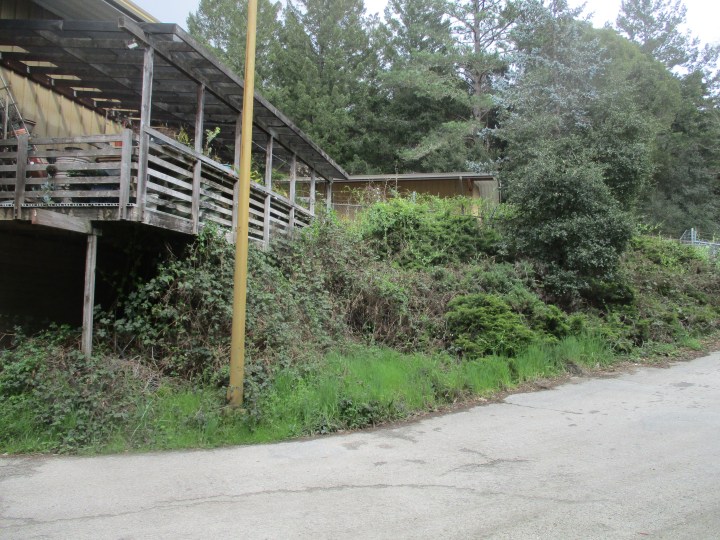
1. Four decades of junk mixed with wicked brambles was removed to expose less than four hundred square feet of cruddy slope. Rain draining from the deck eroded a gully in the middle.P00425-1

2. To the right, disfigured juniper should be temporarily obscured by cucumber vines expected to grow from seed sown just above a ditch. Indeterminate tomato vines will be added soon.P00425-2

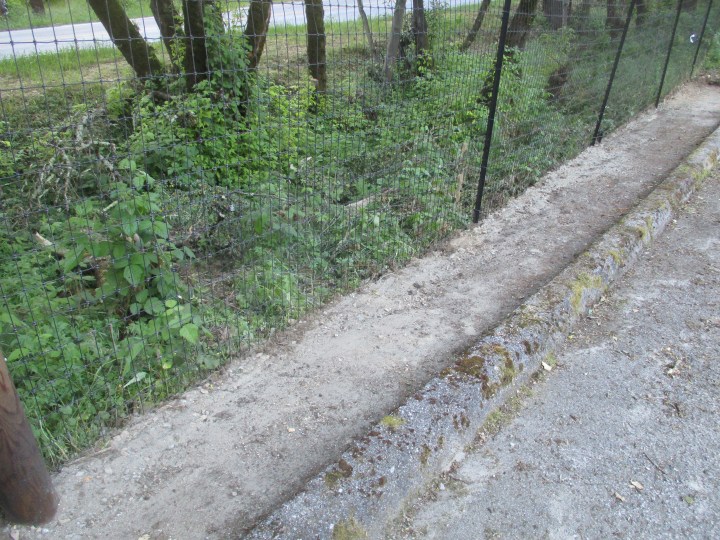
3. Across the road, more junk, weeds and brambles were removed from between a curb and fence, only to find that the area is paved to the fence! Pole beans will be pleased with the fence.P00425-3
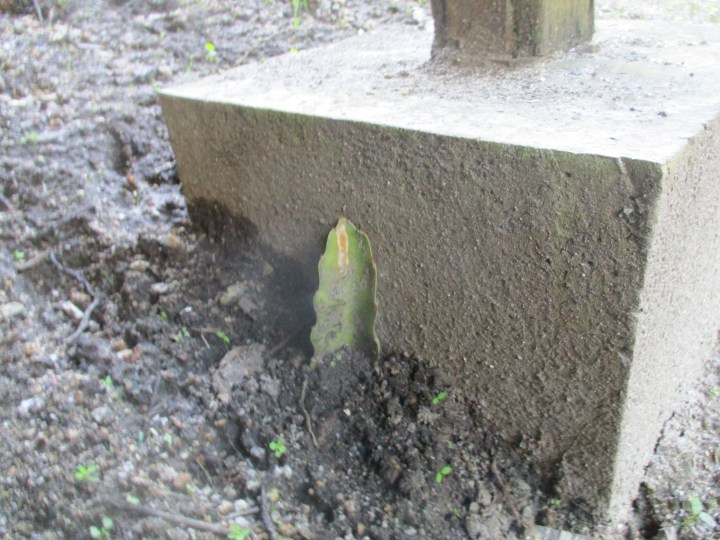
4. Posts supporting the deck had too much potential to ignore. Dragon fruit plants can climb them to the top and cascade downward. The posts are pressure treated, so will be painted first.P00425-4
5. ‘Kadota’ fig can grow as a hedge where the outer surface gets sunlight under the downhill edge of the deck. The area behind it is too shaded to be useful. The area in front is for vegetables.P00425-5

6. There are plenty of radish greens growing wild outside of the garden; but a few radish roots would be nice too. These are developing splendidly, and should be ready before anything else.P00425-6

This is the link for Six on Saturday, for anyone else who would like to participate:

https://thepropagatorblog.wordpress.com/2017/09/18/six-on-saturday-a-participant-guide/

Horridculture – Jumpin’ Juniper!

P00422-1
This is the backside of some of the better junipers!

Junipers have a bad reputation. They earned it at a time when they were too common. Too many were installed into situations that they were not appropriate for. As they grew, they were unpleasant to handle. If not handled enough, they became overgrown and shabby. Once that happened, there were nearly impossible to prune back into confinement without being ruined.

I was never one to completely subscribe to that bad reputation. There were just too many junipers that I really liked, particularly the Hollywood juniper and the Hetz blue juniper. There were a few that I disliked, and I still loath the common tam juniper, but they were in the minority, and happen to be the same sort that are becoming more scarce.

For landscape situations that they happen to conform to, there really is no reason for junipers to be any less appropriate than any other genus is. They are happy with local climates and soil types. Once established, they do not need much water at all, and many need no supplemental irrigation. They last for a very long time. Best of all, they need only minimal maintenance.

However, even some of the best junipers are not perfect. I know. I just needed to work with some that were installed in 1980, and, except for getting pruned back around the edges, were completely ignored. After days of trying to tame them, I can not longer deny that some of what I have not wanted to believe about them is very true.

Besides all the trash and road debris that had been dumped into them during the past four decades, they were thickly infested with Himalayan blackberry. Removing the bramble was not only wickedly unpleasant, but it exposed bare spots where juniper foliage had been shaded out. Removal of a few junipers that had been overwhelmed and died left even more bare spots.

Well, I could not just leave all the dead twiggy growth under the bars spots, so tried to remove some of that too. That only exposed more of what what under and behind it, and caused the well foliated stems above to sag into the whole mess. In the end, the junipers are an unsightly mess, and I know that they will stay that way for a very long time.

P00422-2
Removal of all the bramble and dead junipers exposes a lot of bare branches.

Six on Saturday: Moving Day

A neighbor family relocated to a new home a short distance away. The former home needs such major repair that it may instead be demolished and replaced. For now, it remains abandoned. I collected a few plants from the abandoned garden so that some could be relocated to the new home. So far, only two Philodendron selloum and one Mexican fan palm went. The rest remain here, and may actually go to other homes.

1. In all my career, I have never seen a trunk of a palm shrivel from desiccation like this. All of the now absent roots were desiccated also. I seriously doubt that this queen palm will survive.P00418-1

2. It got canned anyway. Without significant roots, it certainly did not need all this medium. It only got a #15 can so that the shriveled trunk could be buried, sort of like a weird palm cutting.P00418-2

3. This lemon tree was almost left behind because it is so mutilated. It looks a bit suspicious too, sort of like shaddock understock of a formerly grafted tree. Actually, it is ‘Ponderosa’ lemon.P00418-3

4. The smaller of two Mexican fan palms got canned into a #5 can until it starts to produce new roots and foliage. Actually, only the queen palm and the big Mexican fan palm got larger cans.P00418-4

5. This bigger Mexican fan palm got a squat #20 can because the trunk is wider than a #5 can. There are not very many roots in there yet. It got left here to divert traffic around the garden.P00418-5

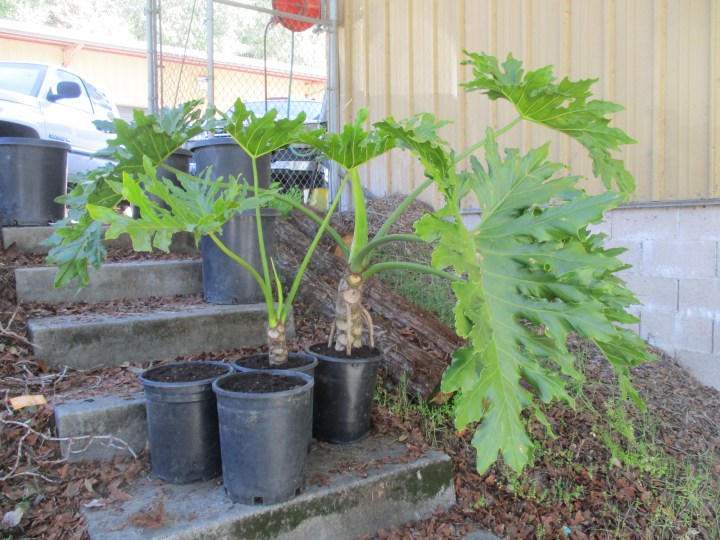
6. These three Philodendron selloum were all I originally wanted to salvage. One lacks foliage for now. The other can that seems to be empty contains bare tubers of an unidentified heliconia.P00418-6

This is the link for Six on Saturday, for anyone else who would like to participate:

https://thepropagatorblog.wordpress.com/2017/09/18/six-on-saturday-a-participant-guide/

Horridculture – Slim Waists

P00415
If I put a spider plant in the pot on the right, I may never get it out.

Clay pots have been around for a very long time. It is impossible to know for how long exactly. It is logical to say that they have been around long enough to evolve into the perfect shape for their function. Although the dimensions and proportions are variable, the basic design characteristics of the simplest and best engineered clay pots can not be improved on.

Clay pots are circular from above and below for a few reasons. Such a shape is easily formed on a potters’ wheel. It is more structurally sound than a form with flat sides and more corners. The space within is evenly distributed around the vertical center, without more remote corners. Although roots will circle within, there are not so many corners for them to congregate in.

Drainage holes are at the bottoms because that is where water drains to.

Thick rims around the top edges of common clay pots enhance durability where it is most necessary, and also prevent pots of the same size from becoming wedged into each other when stacked. The weight of stacked pots rests firmly and vertically on such rims, rather than being diverted laterally to break wedged pots to pieces.

It would not be possible to stack clay pots if they were not tapered to be wider on top. Of course, they are tapered for a few reasons, just like they are circular and outfitted with rims for a few reasons. Tapered form fits the natural dispersion of the roots of most plants better. More importantly, tapered form facilitates the removal of firm root systems with minimal disruption.

So, after perhaps thousands of years of evolution to achieve the perfect form, who thought it was a good idea to taper pots inward at the top? The lack of a rim is not so important if pots are not so numerous that efficient stacking is a concern. Such pots can not be staked anyway. They do not get reused as much as common clay pots either, so do not need to be so durable.

However, that upper inward taper is a serious problem for plants that mature and develop firm root systems within. Such mature plants can only be removed from such pots only by tearing their root systems apart, or by breaking the pots apart. Such form is only practical for big pots that contain multiple small plants that, individually, do not get big enough to fill the pots.

For example, big urns of bedding plants or mixed perennials function more as planters than as pots. Bedding plants get removed and replaced seasonally, and even if the don’t, they can not get big enough to develop a solid root system that is wider than the inwardly tapered top of a big urn. Likewise, most perennials get removed from such big pots before they get stuck within.

Palms, agaves, yuccas and other more substantial perennials must not be allowed to live within an inwardly tapered urn long enough to develop a firm root system that can not be removed.

Horridculture – Going To Pot

P00408-1
Would these hanging potted plants even be noticeable if they were not circled?

Container gardening is overrated. Perhaps not so much now as it had been while it was more of a fad a decade or so ago, but it is still overrated nonetheless. Most plants are happier in the ground than they are in confinement. They want to disperse their roots freely to where the goodies are, and not contend with the unnatural temperature fluctuations of contained medium.

There are only a few exceptions for which containment of potted plants is an advantage. Houseplants are the most obvious exceptions. Also, plants that are sensitive to frost can be relocated to sheltered situations for winter if contained. Potted orchids and other flashy bloomers can be prominently displayed while blooming, and then returned to utilitarian locations as they finish.

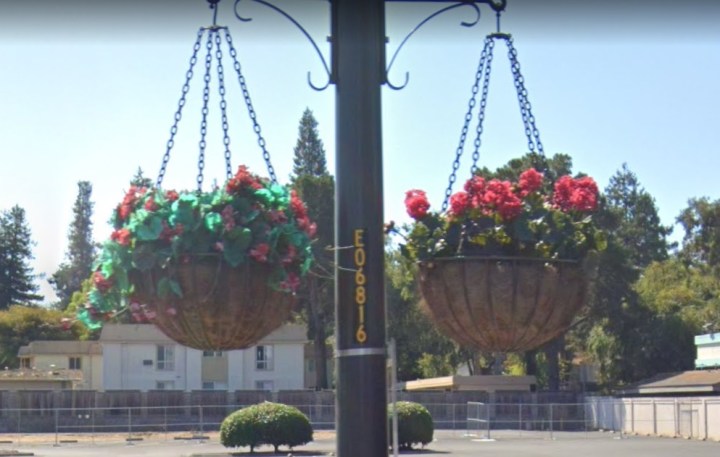
The justification for the hanging potted plants in the picture above escapes me. Does anyone besides me even notice that they are there? They are hung too high for anyone on the sidewalk to appreciate them, or actually see the flowers that are visible from above. Those on the opposite sidewalk can see them, but only at a great distance across all those lanes of El Camino Real.

Those in cars on the road see less of them than pedestrians. Even those who happen to look up while riding past in convertibles with the tops down will see only the undersides, and only at significant speed. These potted plants would be in the way of the sidewalks if they were lowered to be more visible. No matter where they are, they are not proportionate to the broad road.

Maintenance of the flowers in these many hanging pots was quite a bit of work. The annual flowers needed to be replaced a few times a year, or more if ruined by the weather. Without automated irrigation, someone needed to manually water them, which left puddles on the sidewalks that were more noticeable than the highly hung pots above.

As if all these hanging pots were not already tacky enough, the flowers within were eventually replaced with . . . fake flowers, as seen in the picture below.

P00408-2
Just when it could not get any tackier; they are fake!

Six on Saturday: More Recycling


Since lauristinus, deodar cedar and a few other species are happy enough here to naturalize and proliferate a bit too much where we do not want them, they should be just as happy to perform where we do want them. That is how we justify reallocation of such resources. We do it with other species too, just to avoid wasting them, or just because they are easy to propagate.

Norway maples and birches got canned over winter too, but I did not get pictures.

1. cyclamen – was something I grew in high school as a perennial that went bare for the heat of summer. It saddens me that it is so expensive, but also so expendable as a cool season annual.P00404-1

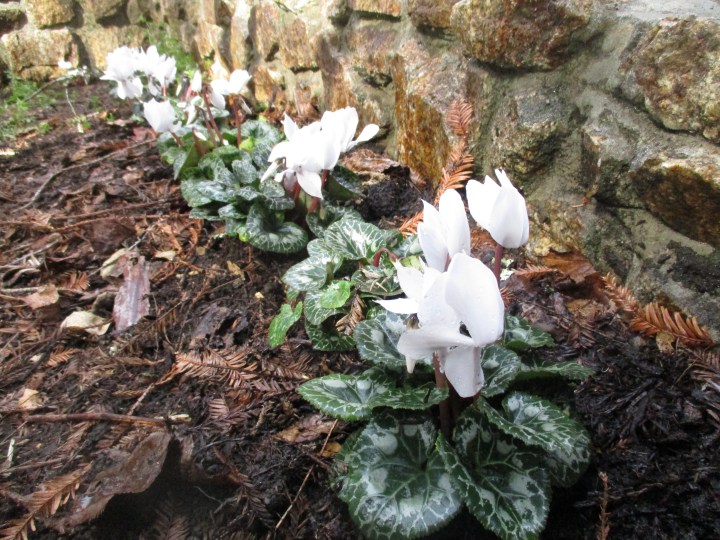
2. cyclamen – will get a second chance this year. They got replaced earlier because of mold, but both the white group above and this red group went out into a landscape where they can stay.P00404-2

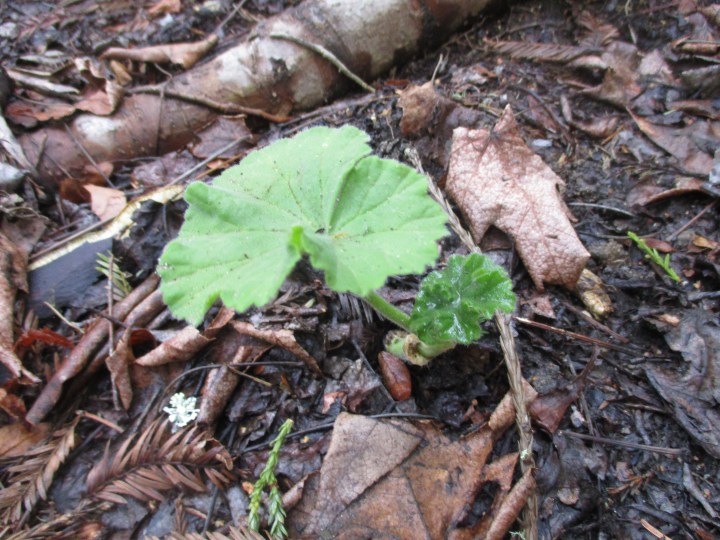
3. ivy geranium – pruning scraps got plugged as cuttings to eventually replace zonal geranium that were mistakenly planted into hanging baskets. (That is the Pet Rock in the background.)P00404-3

4. zonal geranium – pruning scraps get plugged as cuttings also. As they hopefully subordinate to ivy geranium, those in the hanging baskets will get pruned back more until totally replaced.P00404-4

5. pigsqueak – that needed to be removed from one spot got plugged into another. Leftovers that could not be accommodated there and then, got canned for another time and another place.P00404-5

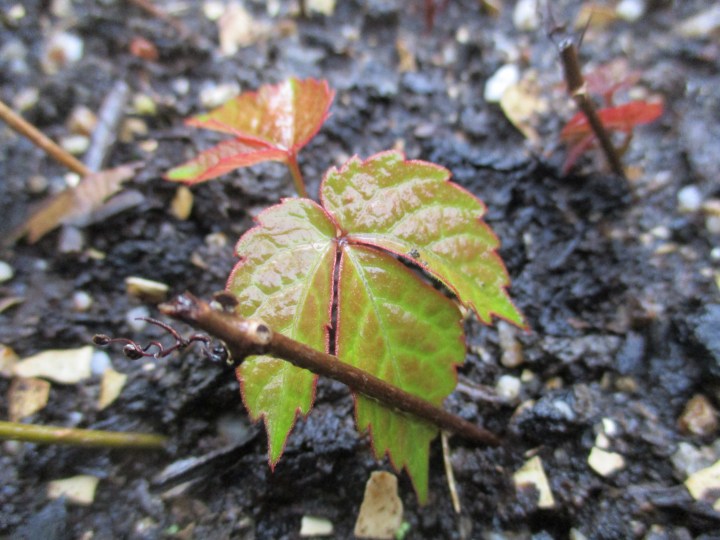
6. Boston ivy – could be a problem. We wanted only a few copies. Rather than plug just a few pruning scrap cuttings into just a few cans, I plugged a whole flat of a hundred. Most are rooting!P00404-6

This is the link for Six on Saturday, for anyone else who would like to participate:

https://thepropagatorblog.wordpress.com/2017/09/18/six-on-saturday-a-participant-guide/

Horridculture – Major Improvement

P00401-1
A bit of Boston ivy adds a bit of texture and color to the stone wall.

My rant for this week is that I was deprived of my rant. I went to a nearby landscape that had been trashed by the so-called ‘gardeners’ for many years, only to find some unexpected and major improvements. I do not know what happened. Although it will take some time for the landscape to recover from the prior damage, it is already starting to function as intended.

It is obvious that the landscape was very well designed. Although I know very little about design, I know what is horticulturally correct. The designer selected species that are very appropriate for every application, even though none were particularly trendy at the time. Those who were hired to maintain the landscape only interfered with its intended development.

I noticed several improvements, but got pictures of only two features that bothered me the most prior to this season.

Obviously, the landscape designer intended the trailing rosemary in the picture above to cascade over the stone retaining wall, not so much to obscure the appealing stonework, but to break up its expansiveness. Obviously, the Boston ivy was intended to climb up from below to do a bit more of the same, and provide a bit of color in autumn, without overwhelming the rosemary.

Until recently, the so-called ‘gardeners’ had shorn the Boston ivy into useless little globs at the base of the wall. If it crept onto the wall, they were sure to remove it just as it was starting to exhibit color for autumn. The rosemary was never allowed to hang over the edge, and typically got shorn just as it was beginning a bloom phase.

Now, the Boston ivy is allowed to climb the wall somewhat. I suspect that it will be partly removed through the year, just so that it can provide a bit of color by autumn, but without getting too overgrown. Also, the formerly shorn edge of the rosemary is beginning to take on a natural form, and will likely start to cascade through summer, hopefully with occasional thinning.

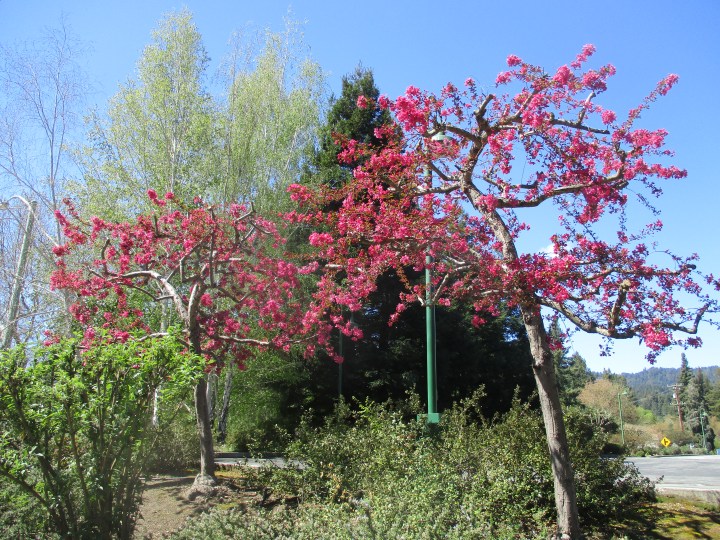
What bothered me even more than the glaringly bare wall was how this pair of flowering crabapples in the picture below got hacked back annually just as the flower buds were beginning to show the slightest bit of color. Seriously! Every little twig that could have bloomed was removed. The so-called ‘gardeners’ were weirdly punctual about this.

Well, the trees got pruned a bit earlier last winter. What I did not bother to notice earlier was that much of the unsightly stems that had been disfigured by what the so-called ‘gardeners’ did to them were pruned back to healthier growth, while much of the blooming stems were left intact to bloom now! All the damage can not be repaired in one season, but this a great start.

P00401-2
Someone is putting serious effort into renovating these flowering crabbaple trees.


Six on Saturday: Greens


There are no vegetables in the garden yet. It is so shameful. Work had been so overwhelming that I am only now renovating a small vacant space into a new vegetable garden, and only because I am unable to go to work at my most time consuming job. I needed to remove our berry canes to do it!

Until the garden becomes productive, and perhaps to avoid the supermarket, I have been getting much of my produce from the surrounding forest and landscapes.

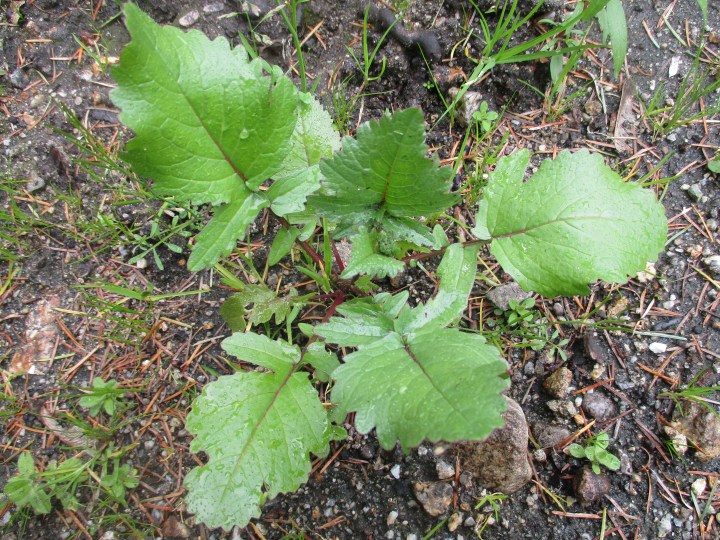
1. mustard greens – are the most abundant of the greens growing wild around the perimeter of the abandoned baseball field. Similar wild radish and turnip greens are even better, but not abundant.P00328-1

2. dandelion – grows in the outfield of the same abandoned baseball field, mostly past third base. They are not my favorite, but are an alternative to the other greens. These are dirty from heavy rain.P00328-2

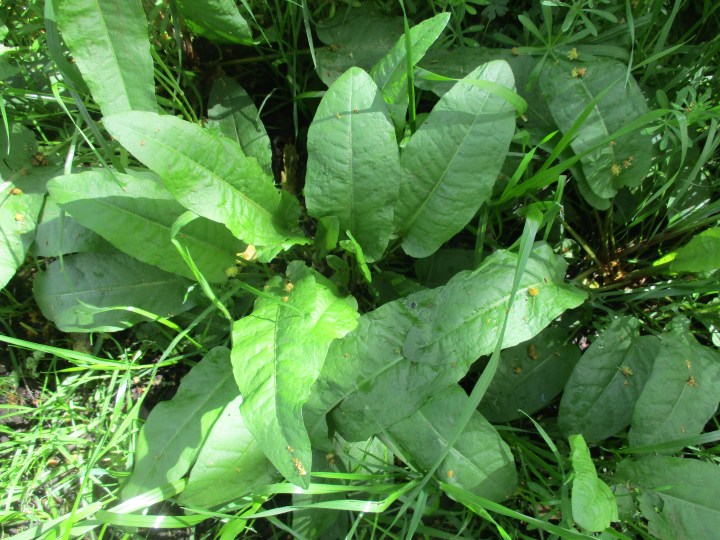
3. dock – is more randomly sporadic. It grows amongst the other greens and elsewhere, although not in significant colonies. The tough midribs are supposed to be removed. I just chop them up fine.P00328-3

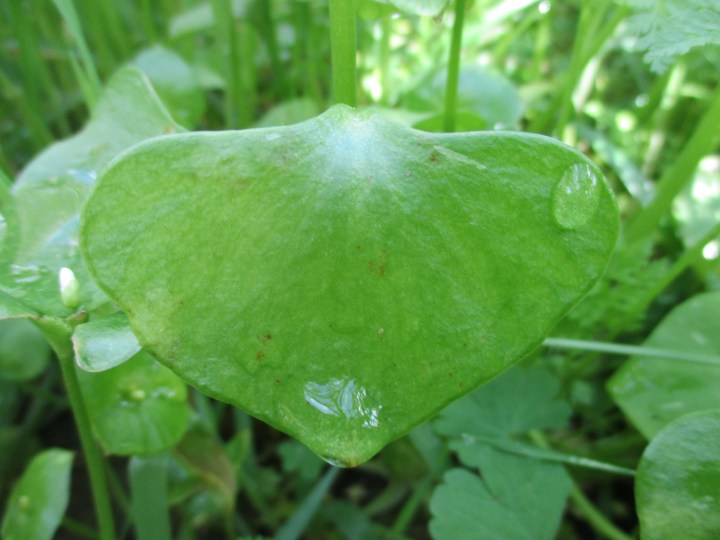
4. miners’ lettuce – is the only native of these greens. Most leaves are circular with tiny white flowers in the center. These vegetative leaves are supposedly better. Like lettuce, they do not get cooked.P00328-4

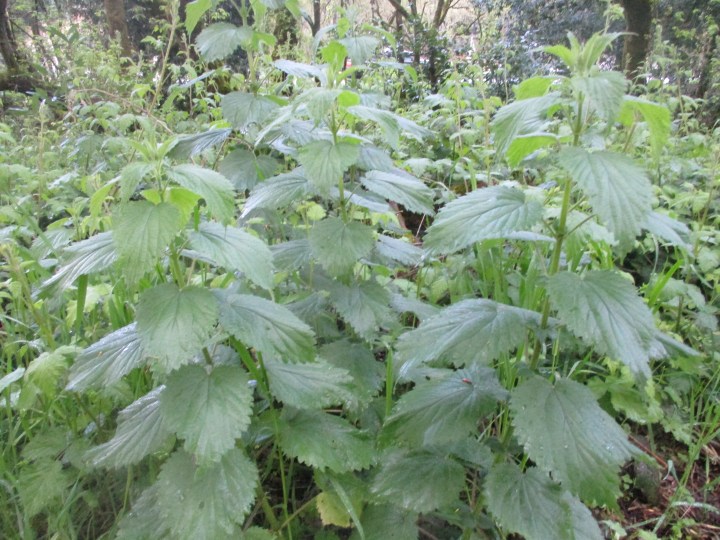
5. stinging nettle – must be cooked to stop stinging. This is my favorite of the greens. It is like spinach that I do not need to tend to. I get it from along the trails where it should be eradicated anyway.P00328-5

6. Rhody – is not even remotely relevant to greens; but everyone wants to see him. Someone suggested that I write exclusively about Rhody, as if my horticultural topics are insufficiently interesting.P00328-6

This is the link for Six on Saturday, for anyone else who would like to participate:

https://thepropagatorblog.wordpress.com/2017/09/18/six-on-saturday-a-participant-guide/
Horridculture – Antihorridculture


Wednesday has been my day for ranting about aberrations of horticulture. I certainly have plenty to rant about. However, there is plenty of other ranting going on nowadays without my help. Therefore, for this Wednesday only, I will forego the ranting. Furthermore, I will forego the horticulture too. I can not remember ever doing that before. This could be something totally new for me.

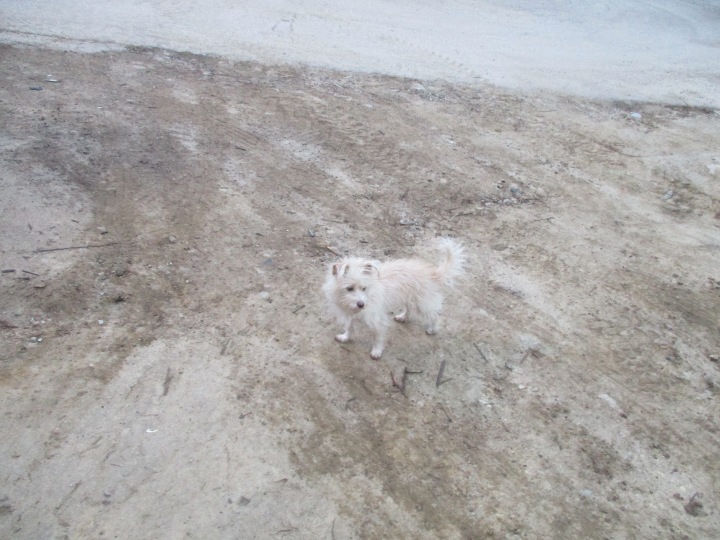
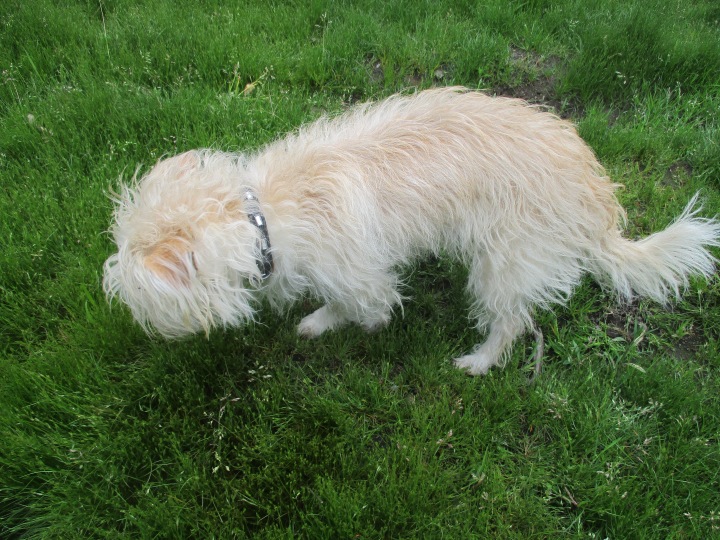
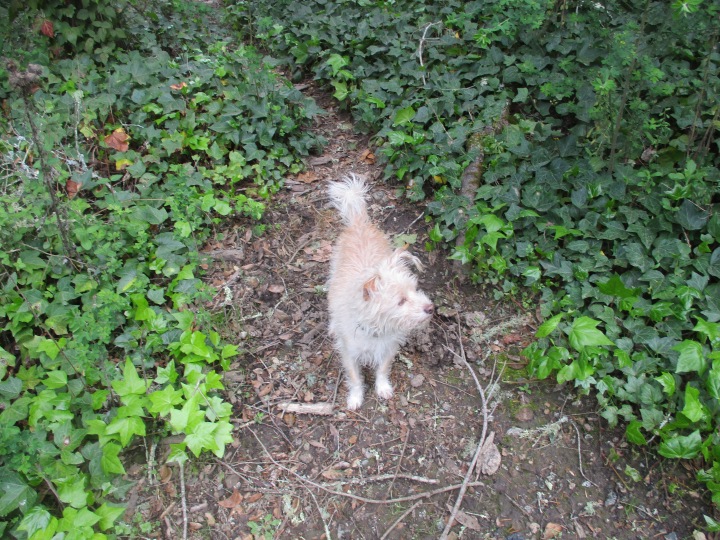
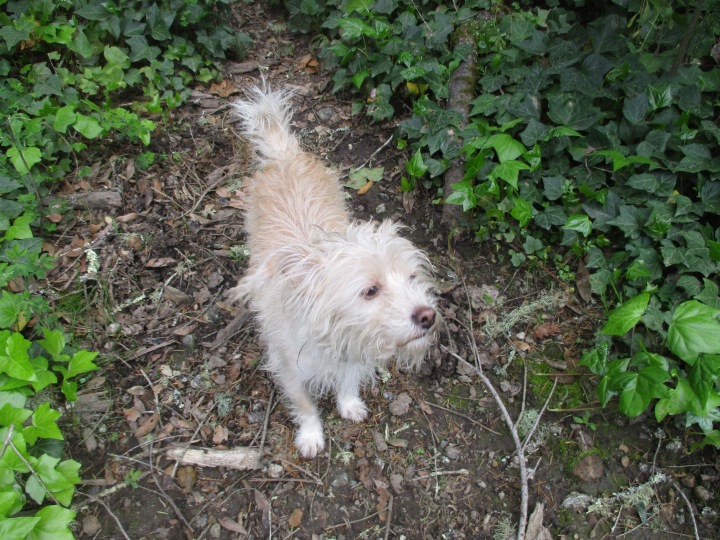
After Rhody photo bombed one of my pictures that was featured on Saturday, others suggested that I feature more pictures of Rhody. Everyone loves Rhody.

Most of these pictures are devoid of vegetation. The minimal vegetation that is visible in the other pictures is mostly unrecognizable in the background. There are a few redwoods, a few firs, some English ivy and all that riparian mess around Zayante Creek behind the abandoned ball field. They are unimportant in this post.

This post is just pictures of Rhody, complete with captions that all begin with ‘Rhody’.

Rhody really has been a good sport. He has been coming to work without his crew for more than a week. Only a few of them stop by in the morning. One or two rarely come by through the day. We avoid each other.

Rhody misses them very much. He frolics on their sofa where he typically does ‘laps’ during morning staff meetings, and sometimes settles into the rocker chair that he typically avoids when no one else in it. He neglects his favorite thrasher toys, but instead drags around a dirty glove that belonged to someone of his crew. He takes it to bed, but I somehow wake up with it.

We will work in the still unvegetated vegetable garden in the morning. It is right outside, so he will be here if anyone of his crew happens to stop by.

P00325-01
Rhody found us a new car.
P00325-02
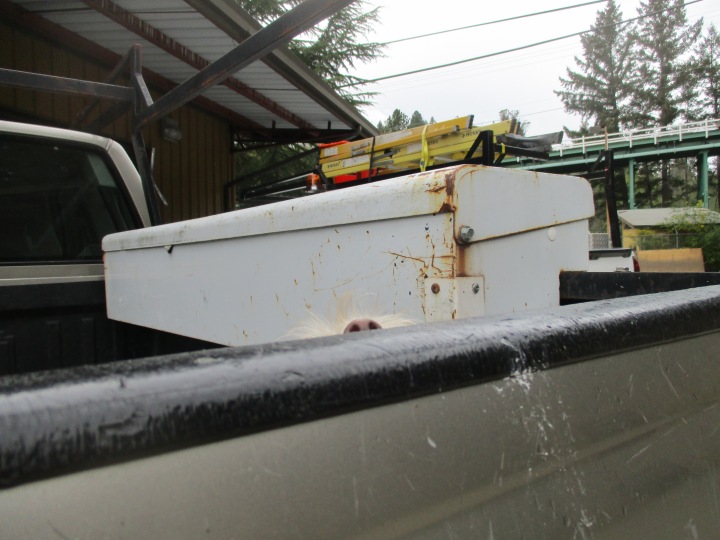
Rhody still prefers his friend’s work truck.
P00325-03
Rhody in camo.
P00325-04
Rhody found it, . . . but doesn’t know what it is.
P00325-05
Rhody likes the beach, . . . but can’t find the ocean. (It is a few miles away.)
P00325-06
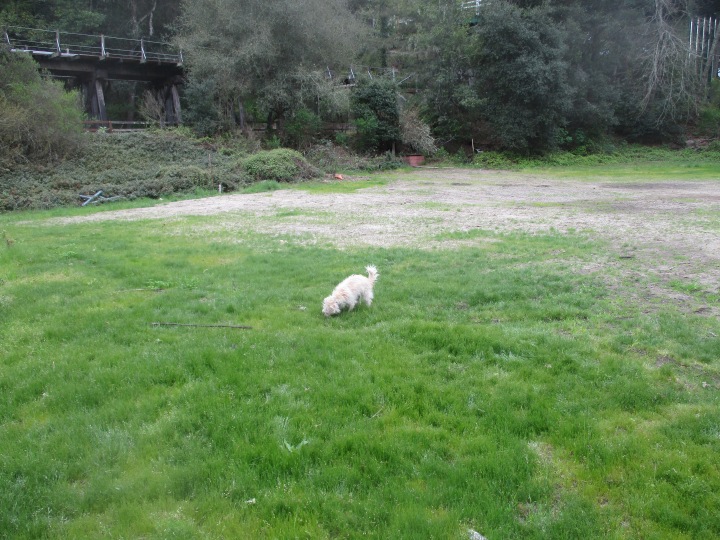
Rhody gets to second base and beyond, past the outfield of the abandoned ball field.
P00325-07
Rhody is easily amused. I don’t get it.
P00325-08
Rhody is still intent on finding . . . it.
P00325-09
Rhody can be such a ham.
P00325-10
Rhody knows how cool he is.
P00325-11
Rhody misses his staff who can’t come to work yet.
P00325-12
Rhody misses them a lot!
P00325-13
Rhody still works hard at being cute, even though there is no one here to see it.
P00325-14
Rhody is done with pictures for now.
P00325-15
Rhody thinks the camera smells . . . interesting.

Six on Saturday: New Vegetable Garden


There is more time for a late start on a new vegetable garden now. I had planed to take this and next week off from most of my work, to tend to other neglected obligations. However, under the circumstances, I am still unable to tend to many of those obligations! Well, the crew wants a new vegetable garden.

1. Before, the area was overwhelmed with a dense thicket of Himalayan blackberry brambles, that had grown up into the joists of the deck above, and over the adjacent junipers to the right.P00321-1

2. After, it is not much better. This initial phase took me half a day!! I intended to remove most or all of the junipers, but as they become exposed, it is evident that they are worth salvaging.P00321-2

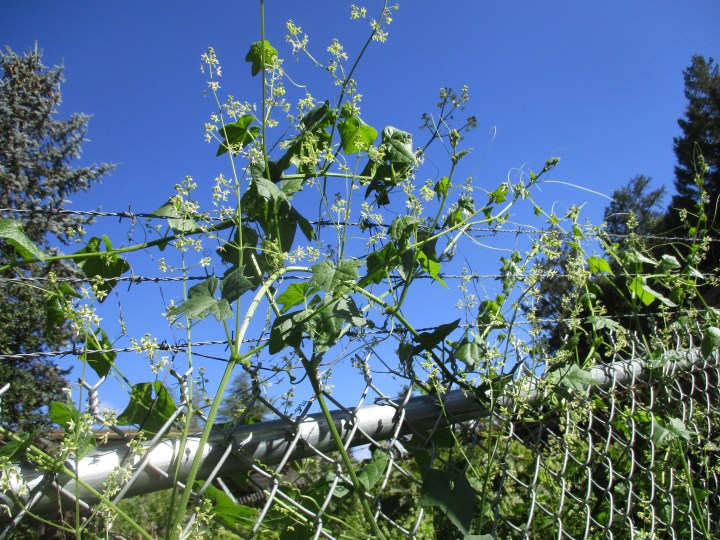
3. I already know I will be sowing seed for the warm season vegetables a bit late; but this wild cucumber feels compelled to remind me. It is already past the top of this seven foot high fence.P00321-3

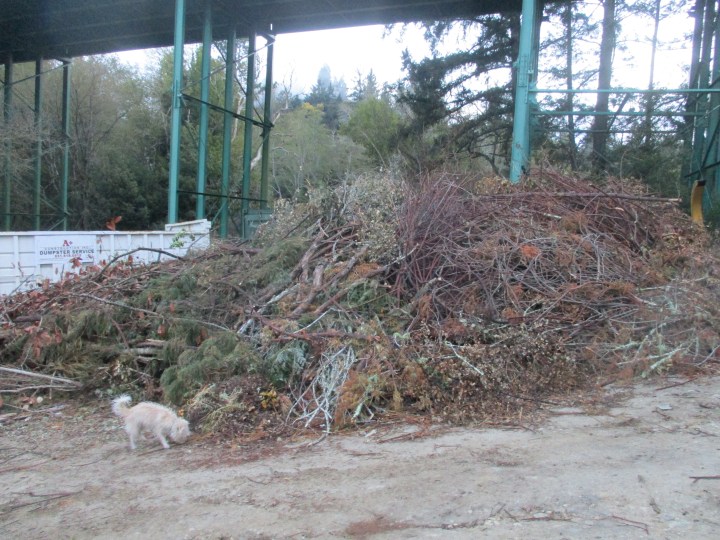
4. This is just some of the debris that I removed. For comparison, the animal to the lower left is a buffalo. Okay, it is really just Rhody. The dumpster is as high as the cargo container though.P00321-4

5. Okay, so that was a bit of an exaggeration. The pile really is this big, but only the small portion outlined in yellow to the upper right is from the new garden, and is only about two feet high.P00321-5

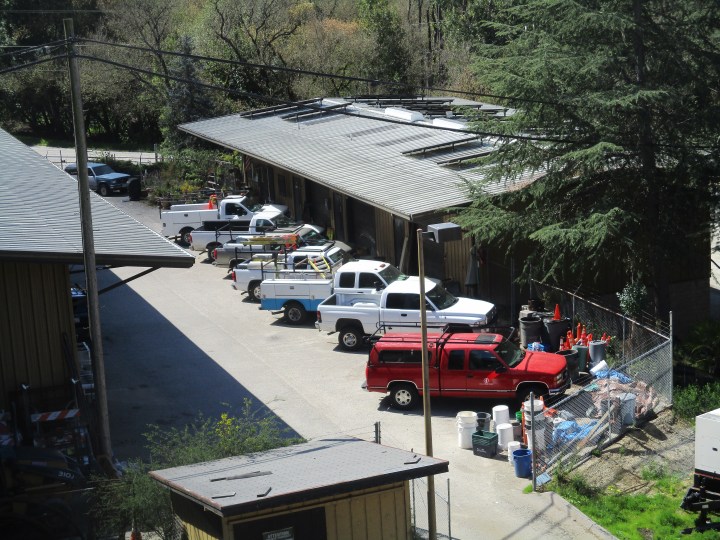
6. While up on the bridge over the debris pile, I got this picture of most of the work trucks that are not at work where they belong. Everyone else writes about it; but I have not mentioned it.P00321-6

This is the link for Six on Saturday, for anyone else who would like to participate:

https://thepropagatorblog.wordpress.com/2017/09/18/six-on-saturday-a-participant-guide/