I wish we had one. There is no rhyme and only a few disjointed reasons for what happens at the small storage nursery at the maintenance shops. This is nothing like acres of production nursery full of rhododendrons, azaleas, camellias and such. Nor is it like the retain nurseries that sell the rhododendrons, azaleas, camellias and such. This is merely a small yard where we store a few plants that get removed from landscapes, and plants that were recently procured from a nursery but have not yet been planted.
It is like the nursery version of the wood shop, with its collection of new lumber and old recycled lumber that gets used on the historic buildings. The plumbing shop contains all sorts of new plumbing and fixtures, as well as many old fixtures that might someday be useful. The landscape shop, which is separate from the nursery, is #7 of about twelve specialized shops used by the maintenance staff. The nursery might seem to be the most dysfunctional of the several shops, but only because plants are dynamic and need maintenance . . . and because, without necessary maintenance, a few have deteriorated, died or conversely thrived and made themselves at home.
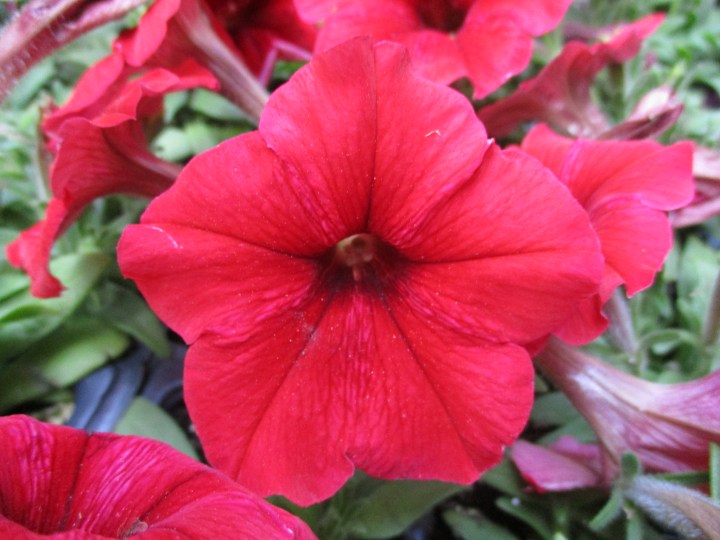
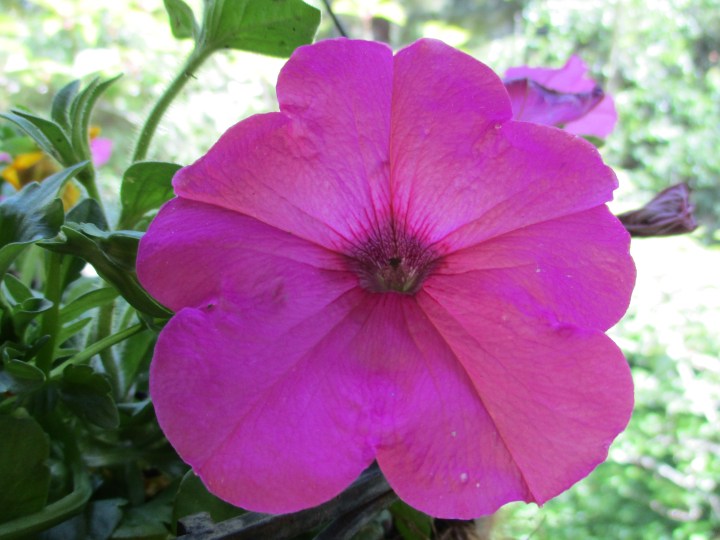
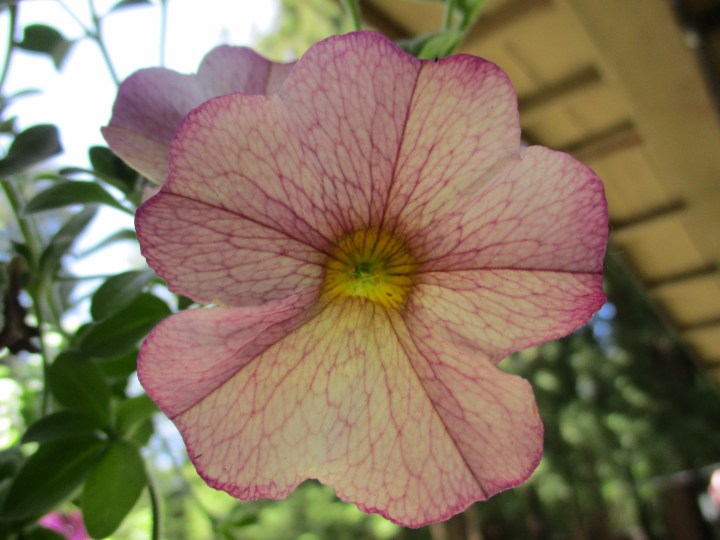
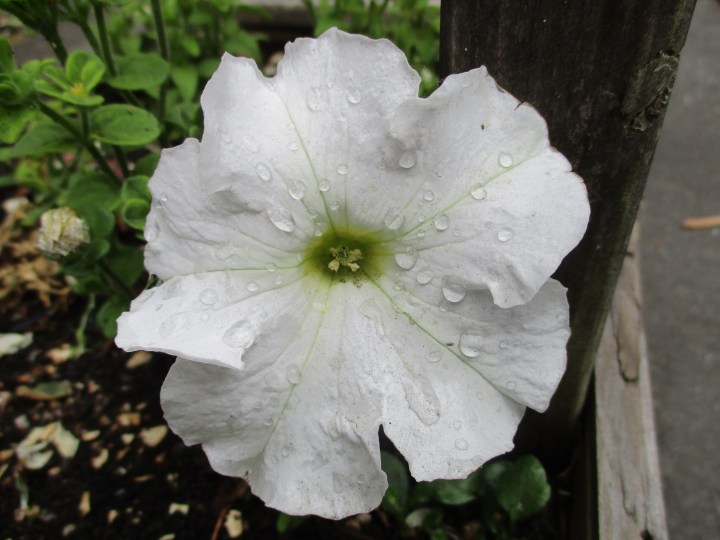
Newly procured plants like #5 and #6 are easy to work with. They come in with a plan, and generally leave within a week or two as they get installed out somewhere in the various landscapes. Recycled plants like #1 and #2 were removed from the landscapes either because they were in the way of something, or because they proliferated too much, but could someday go back into other landscaped areas. Then there are a few plants like #3 and #4 that stay long enough to disperse roots through the bottoms of their cans and into the ground, essentially planting themselves on the spot because they got tired of waiting for a new home.
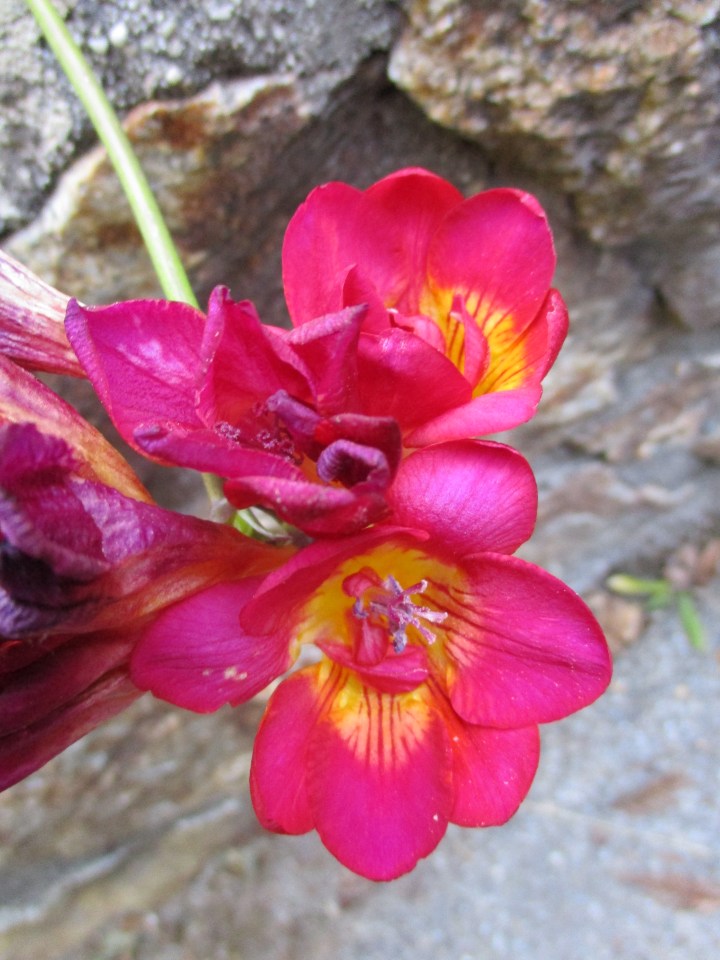
1. Peruvian lily was so prolific at the Post Office that many needed to be pulled. They were canned to be installed elsewhere, but no one wants to put them into a situation where they might proliferate like they did at the Post Office. Besides this pink, there is also peachy pink and yellow. All are the tall types that were originally grown fro cut flowers, rather than the lower mounding home garden varieties. Consequently, they need to be staked or caged like tomatoes so that they do not lay on the ground.
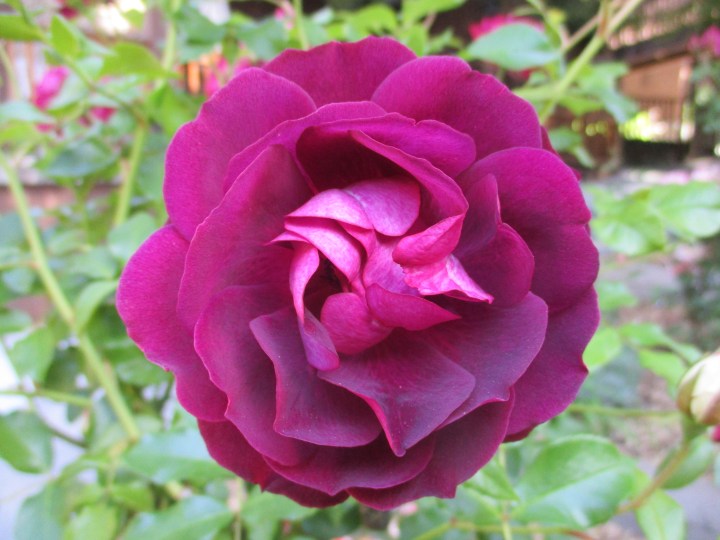
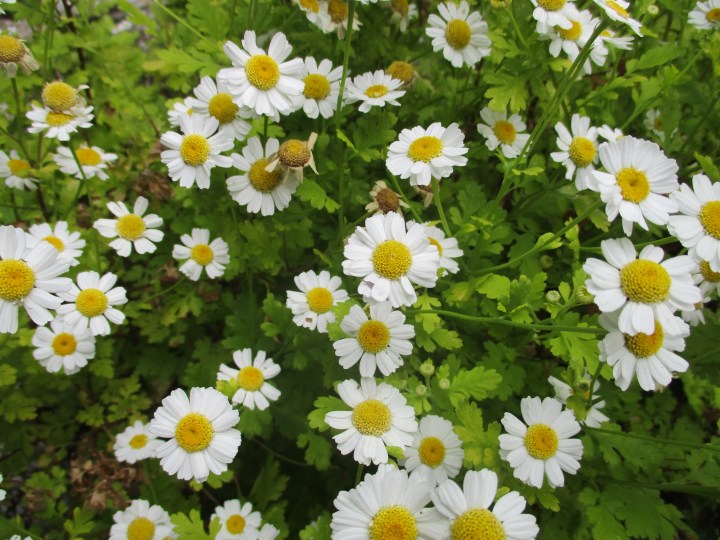
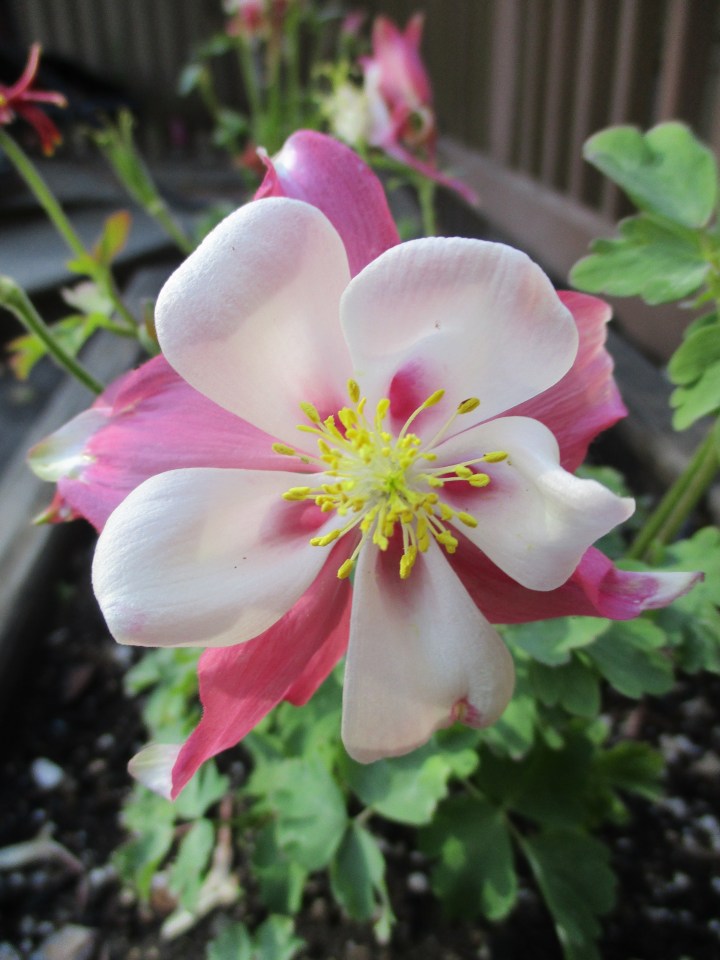
2. Chrysanthemum was grown as annuals in a few various locations, but when they were removed to relinquish their space for more seasonable annuals, a few were canned. It is not always easy to discard certain perennials just because their time is up. The problem is that, although they look so good in the nursery, and bloom in spring instead of autumn, they do not get cycled back into the landscape. When new color is needed, it is often purchased and planted before the old stock is considered.
3. Potato vine has been growing like a weed on the cyclone fence and shade structure for so long that no one knows where it came from. I do not even know where the vines originate from. I would guess that somewhere under the overgrowth, the main canes emerge from the remains of a #1 can that the roots split apart years ago. This vine lives here now. Even if we had a spot for it, relocation is not practical. If it gets too overgrown, it might get cut back.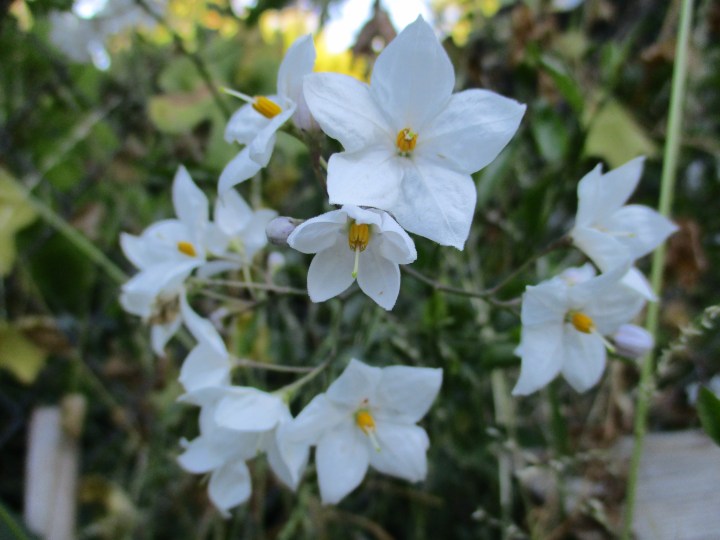
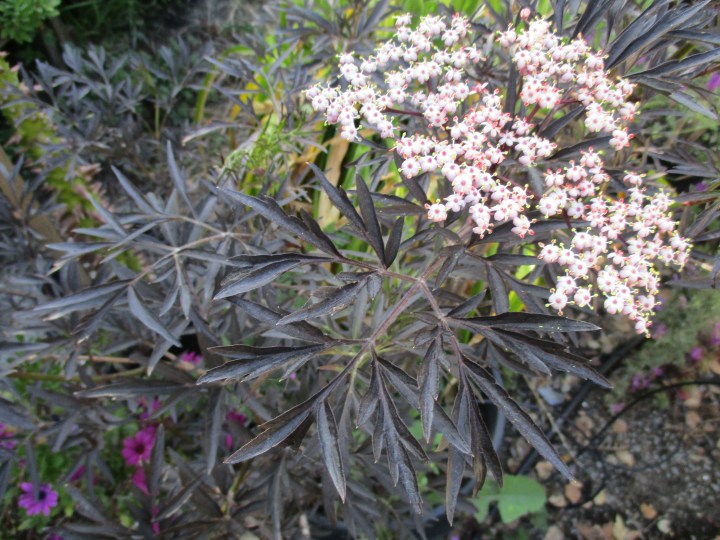
4. Campanula was probably in a 4” pot that got set into the #15 can of a ‘Black Lace’ elderberry and forgotten about. It might have been recycled, or it might have been something new that never got installed. Before the elderberry was relocated, the campanula had spread into the cans of other trees, so like the potato vine, it lives here now.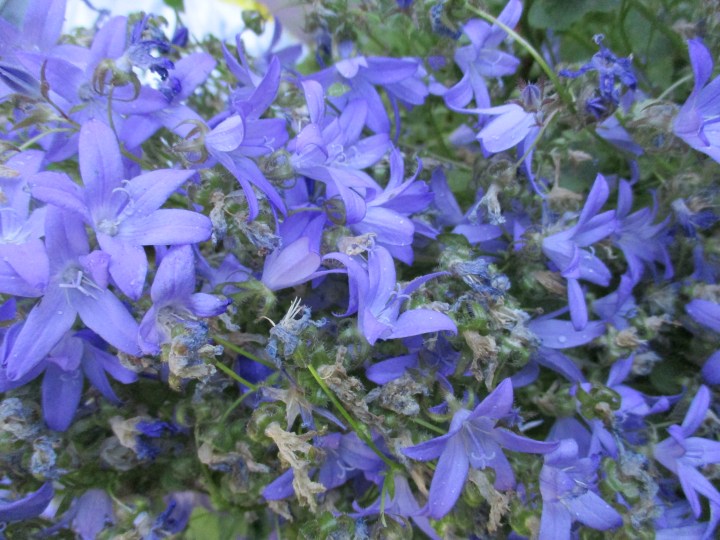
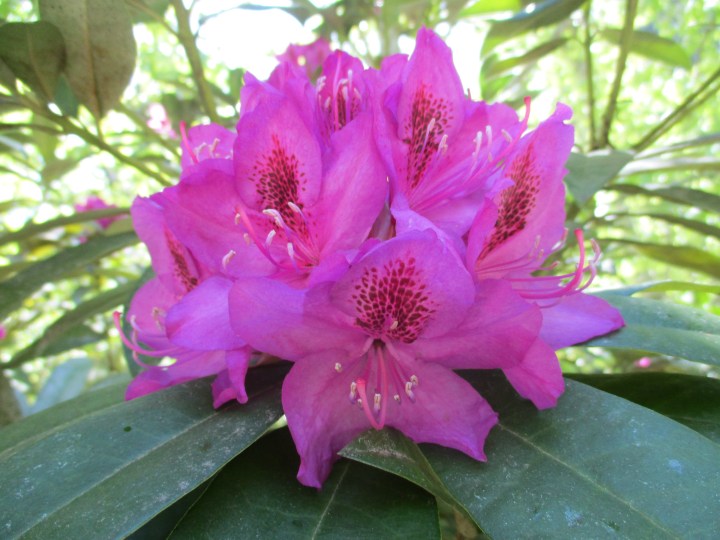
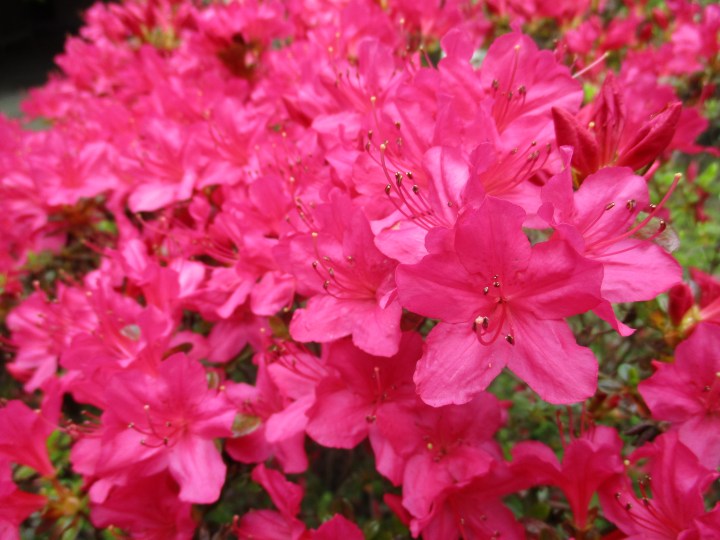
5. Cone flower is easy. I just arrived from a nursery, and will be installed into a landscape in just a few days.
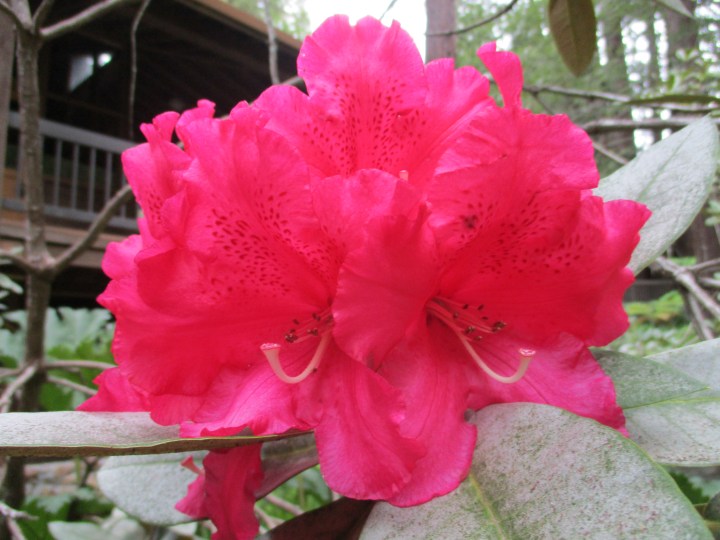
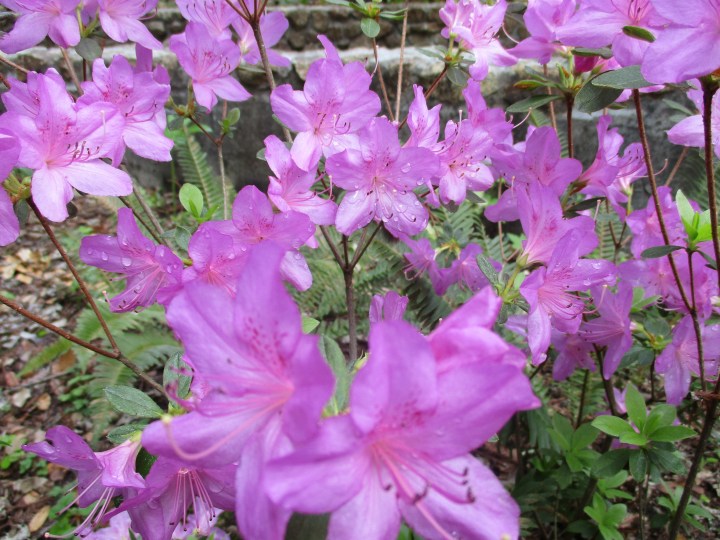
6. Yarrow came with the cone flower, and will be planted nearby in the same landscape at about the same time.
This is the link for Six on Saturday, for anyone else who would like to participate:
https://thepropagatorblog.wordpress.com/2017/09/18/six-on-saturday-a-participant-guide/
 2. This sometimes happens when prying up mudstone.
 3. At the second and much larger landscape, the irrigation system and lighting needed to be installed before the rest of the landscape. There is now irrigation pipe and electrical conduit everywhere! It took some serious digging. Because so much excavation had already been done at the site for the installation of big wide walkways, much of the soil was being moved a second time. The soil is so loose and sandy that much of it needed to be dug a few more times from the ditches as the irrigation system was installed.
 4. A few big boulders were installed on the site. To avoid driving the heavy machinery on the new concrete, the boulders were installed early in the renovation process, before the new concrete was installed. Consequently, they were buried by the soil that came from all the ditches for the irrigation and lighting systems. They reappeared as the ditches were filled. I still do not understand the appeal of stone and boulders in landscapes. The mudstone that was encountered earlier in the week was not much fun.
 5. Plant material has not yet been installed, so the landscape features only a few dogwood trees that were already there, and these few boulders scattered about in the dusty soil. It really is dusty! I cannot figure out why the dogwoods are so happy there. I can not figure out why the boulders are so happy either, . . . or if they are happy . . . or if they really care at all. I just do not know.
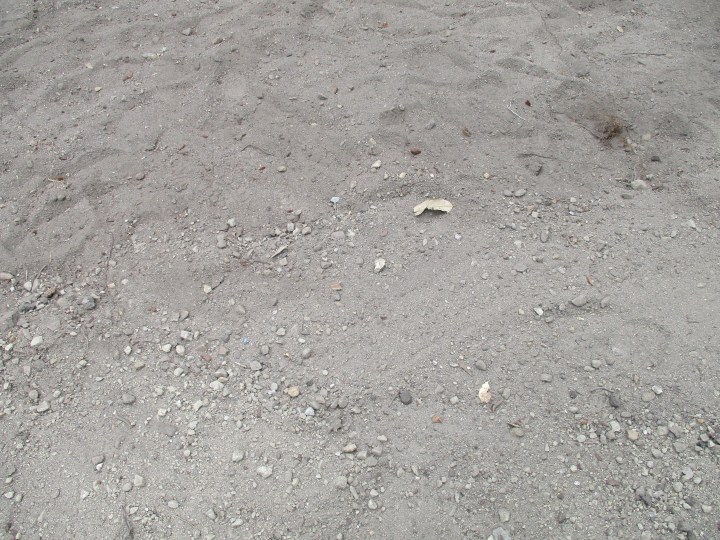
 6. One of our soil science professors at school was emphatic about soil being ‘soil’. We were not allowed to refer to soil as ‘dirt’. Well, this soil happens to be better than it looks, and it is good enough for dogwoods, but it really is very dirty soil.
 This is the link for Six on Saturday, for anyone else who would like to participate: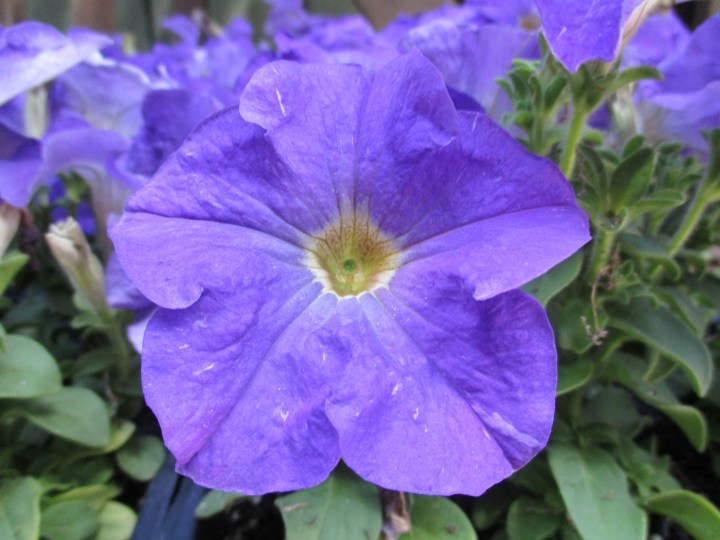










 This is the link for Six on Saturday, for anyone else who would like to participate:






 Tony Tomeo