Fourteen Weeks

July 12 & October 21

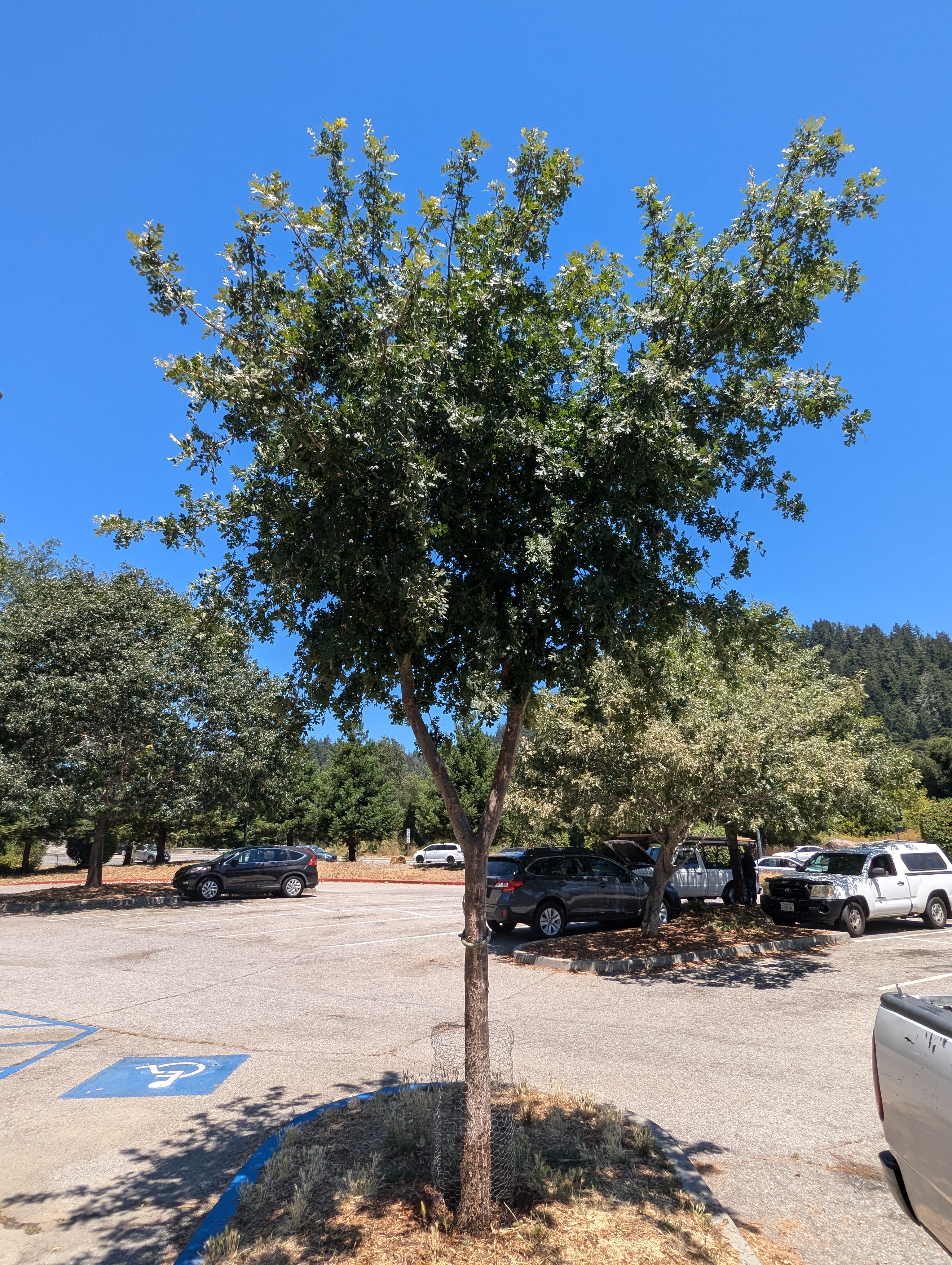
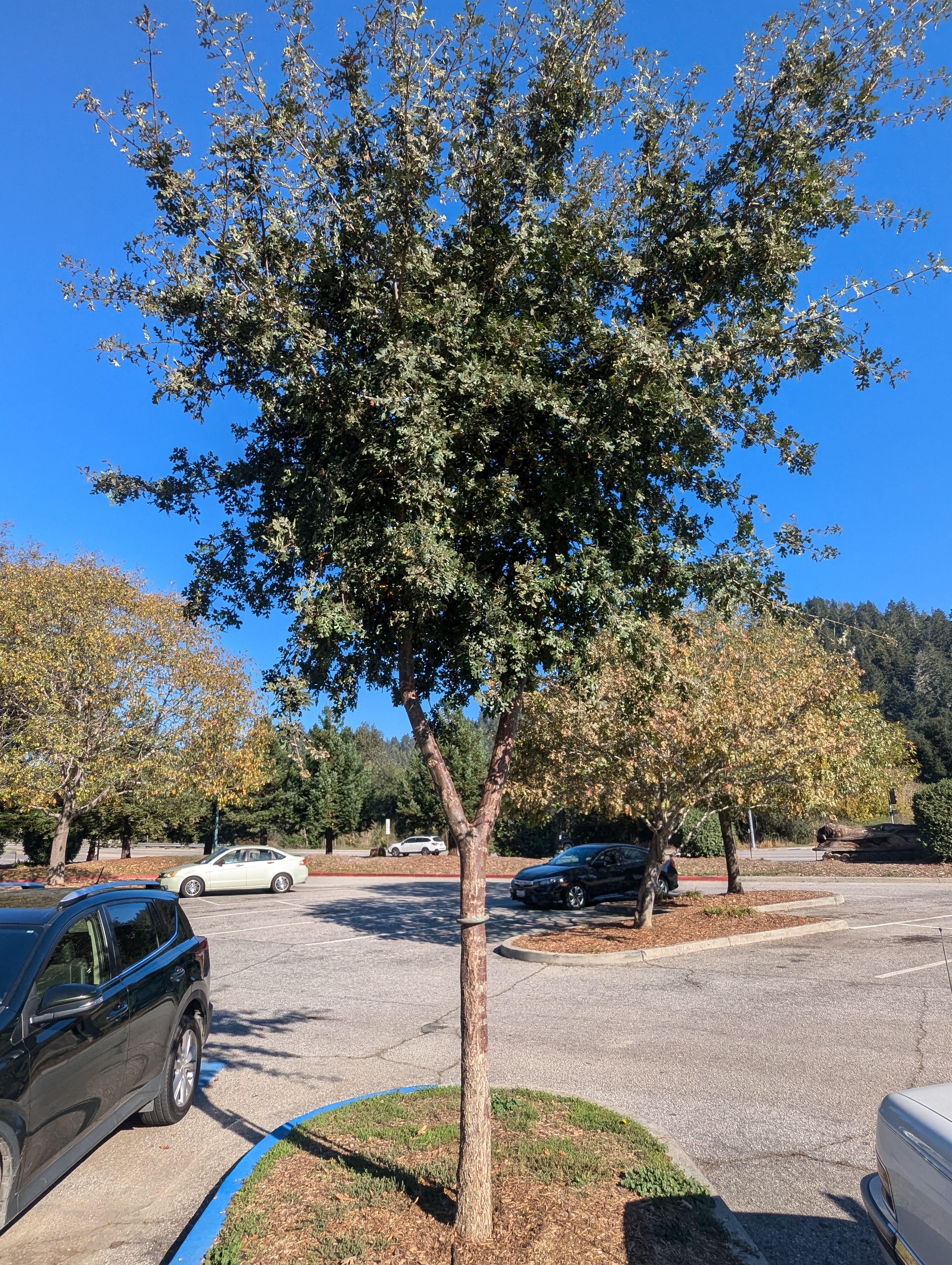
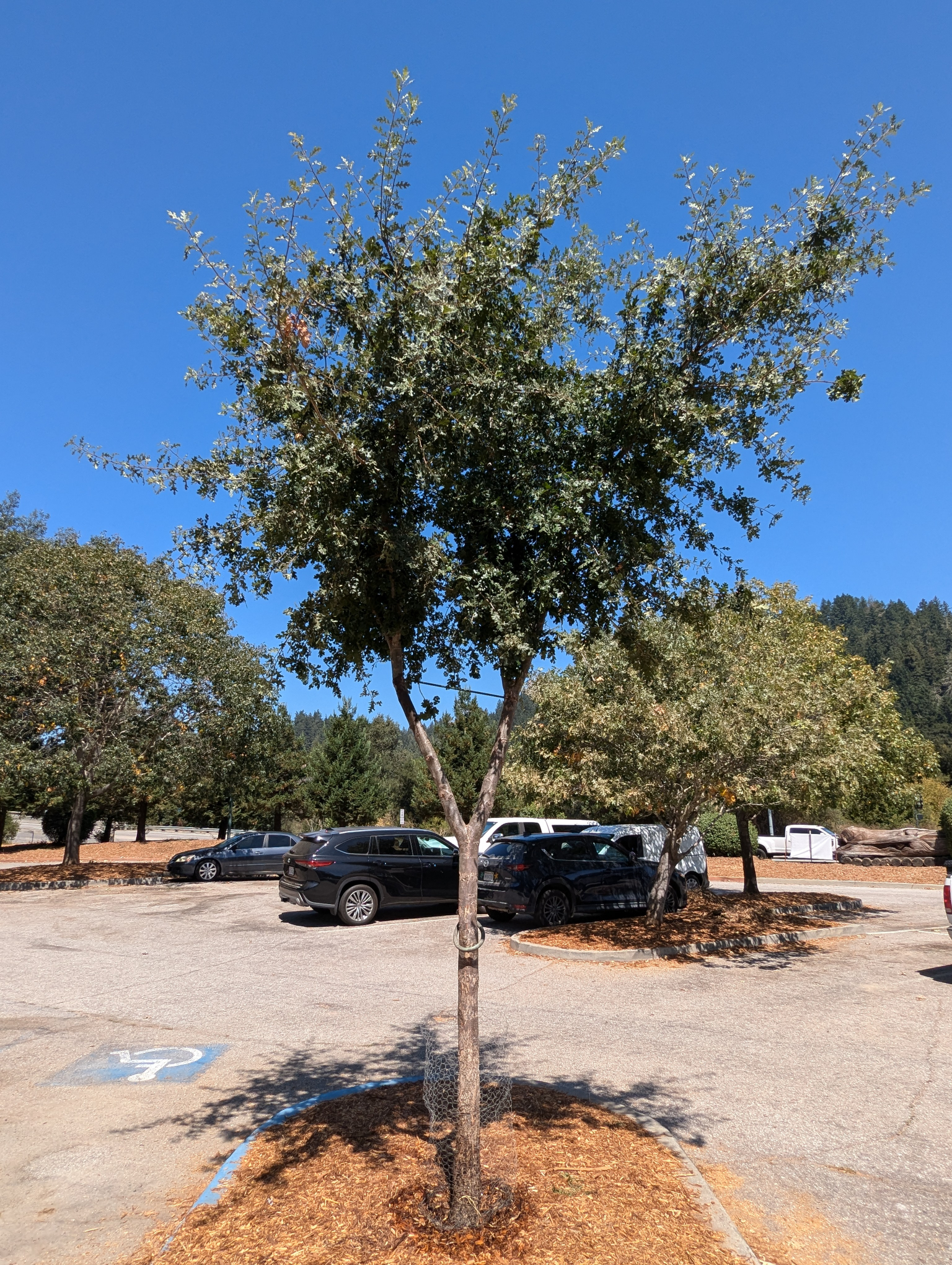
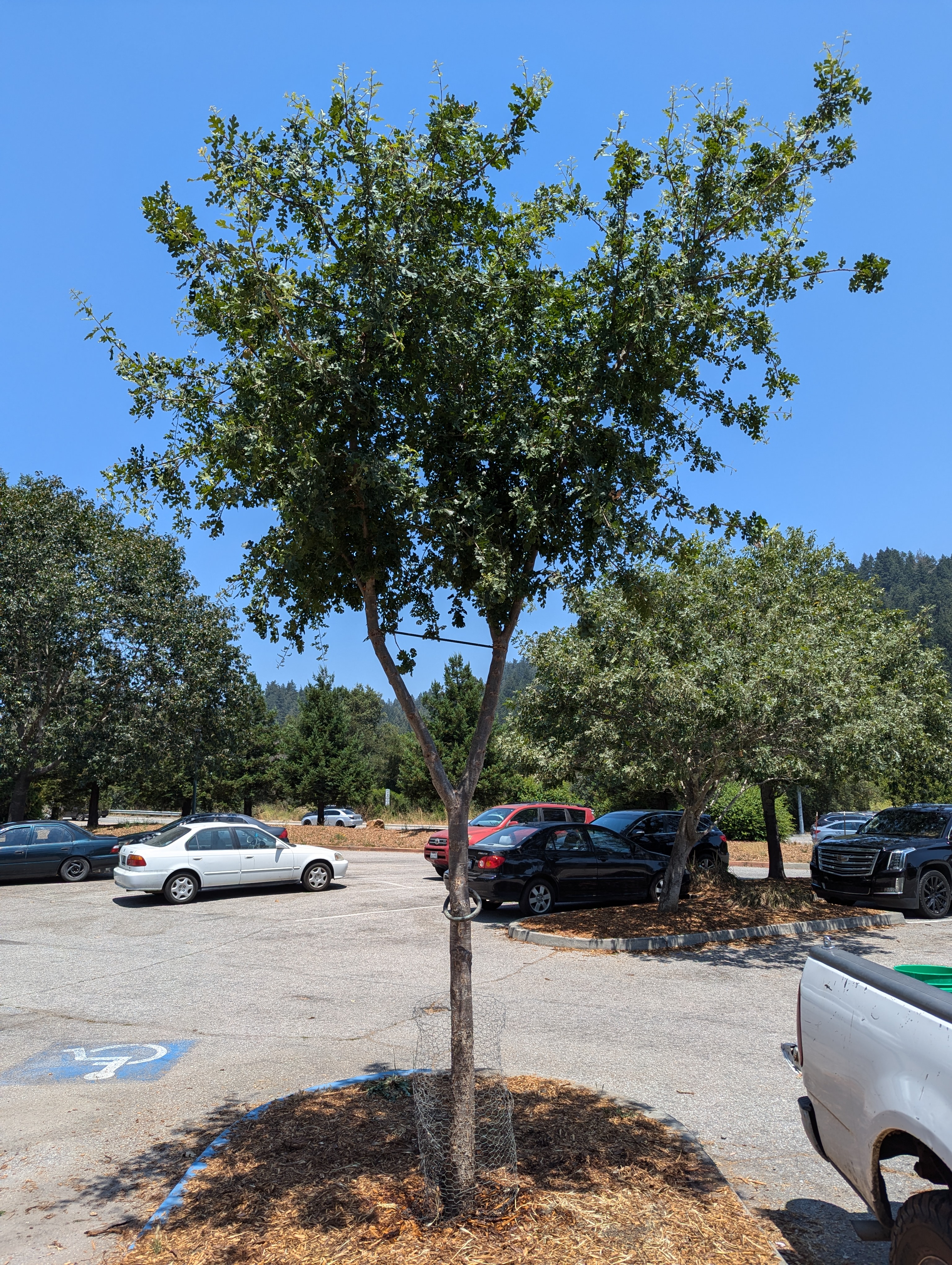
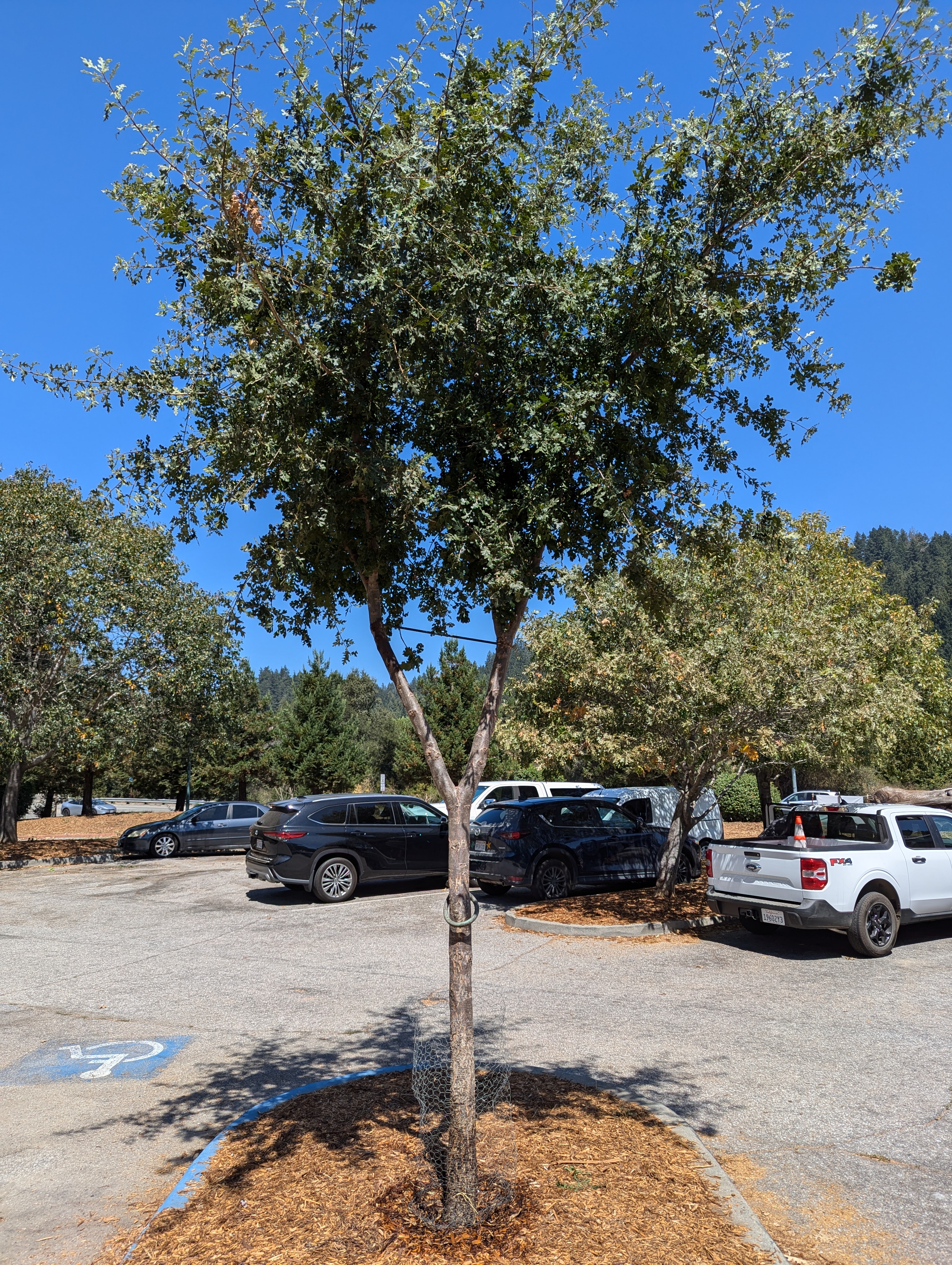
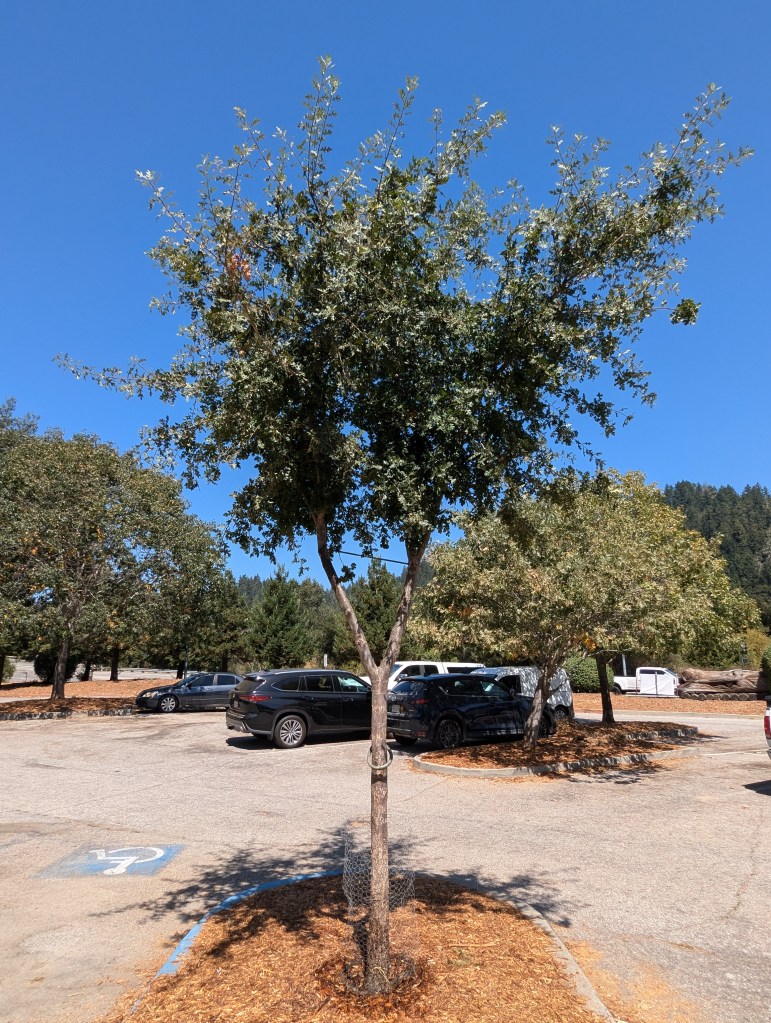
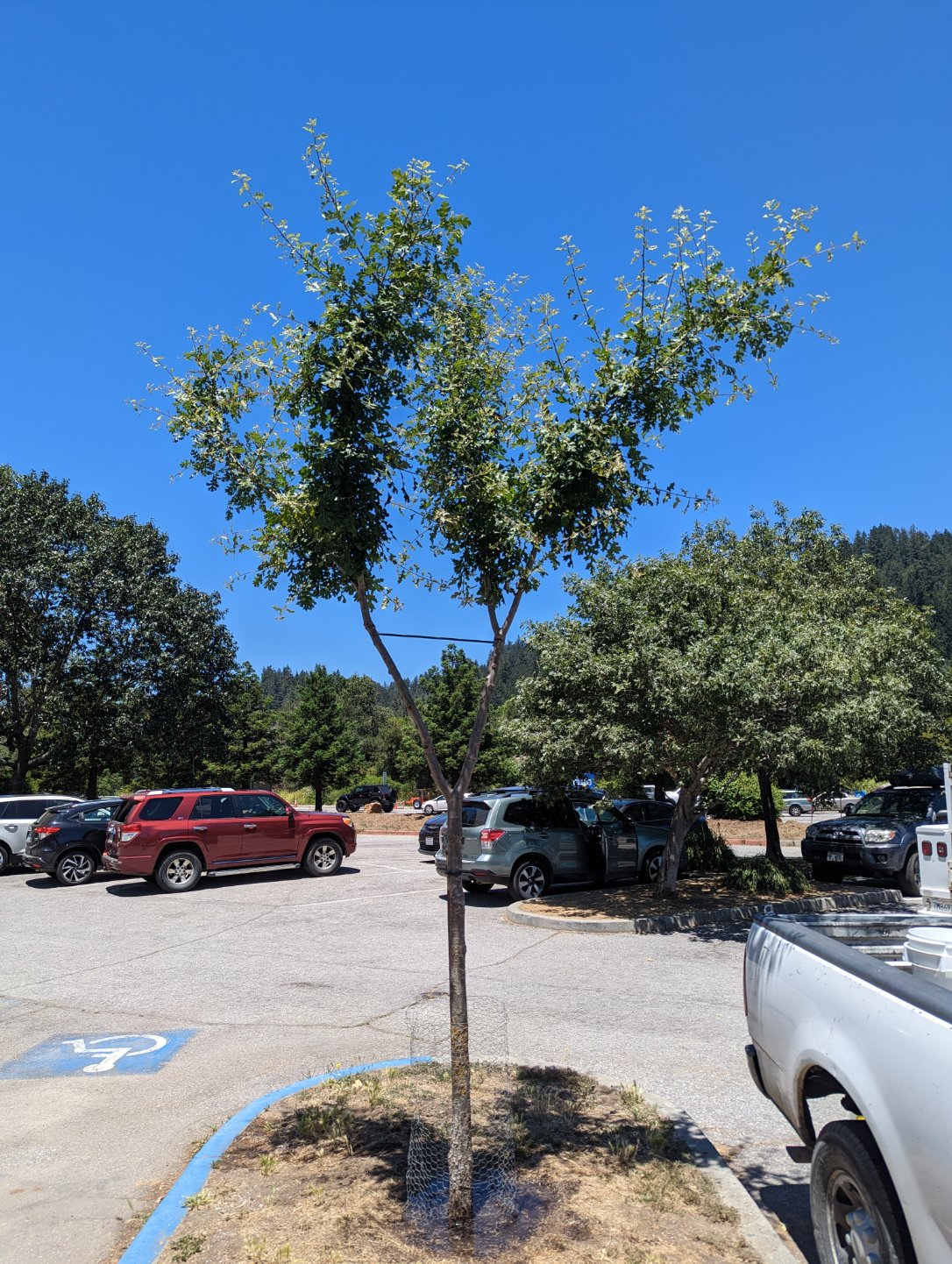
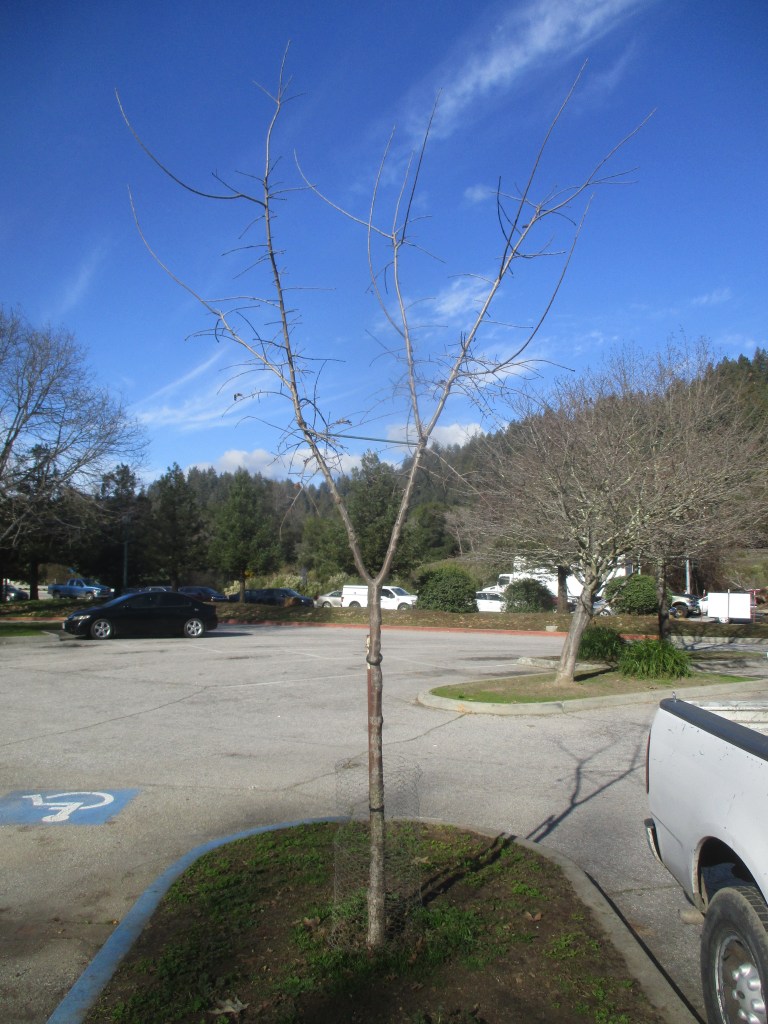
As mentioned in September of last year, comparisons of the growth of the Memorial Tree of Felton Covered Bridge Park are probably more accurate about now, at the end of its growing season, rather than in the middle of July, as I have been conducting them. So, like last year, I did comparisons at both times this year. A minor difference this year from last year is that this secondary comparison is fourteen weeks after the primary comparison instead of seven weeks, and more completely after the Tree has finished noticeable growth for the year. The first pair of comparison pictures compares the Memorial Tree now to July 12. The second pair of comparison pictures compares the Memorial Tree now to August 30 of last year. While the second pair demonstrates approximately how much the Tree has grown during the past year, the first pair demonstrates how much the Tree has grown since July 12. Strangely, most of the growth seems to have occurred after July 12. This is a good indication that the Tree has extended roots below the nearby lawn, so is exploiting irrigation there. (This species typically exhibits most of its growth during spring and early summer while the endemic soil remains moist from winter rain, but then decelerates its growth as the soil dries through summer.)

August 30, 2024 & October 21,2025

Seven Weeks

July 12 & August 30

What a difference seven weeks can make! Updates regarding the Memorial Tree in Felton Covered Bridge Park are typically posted annually about the twelfth of July. Growth is obvious after a year. I did not expect it to be so obvious after less than two months between the twelfth of July and the thirtieth of August. I suppose that I should not be surprised. Even after most growth occurs through spring, some growth continues through late summer, and perhaps as late as the beginning of autumn, immediately prior to the slow initiation of dormancy for winter. Specimens of this species, valley oak, Quercus lobata, are innately vigorous and grow faster and more vertically while young. Growth decelerates and redirects itself laterally as trees mature and age. Otherwise, if they continued to grow as vigorously as they do while young, they would collapse from their own weight before they get to be as old as elderly trees get. Some live for more than six centuries, so their technique is obviously effective. Four nearby California black oaks, Quercus kelloggii, are not likely to get to be five centuries old, and are more likely to live for only one or two centuries. Unfortunately, two of them are not in comparably exemplary condition. One must be pruned for removal of major necrosis, and direction of new growth. Another requires major structure pruning. All four should be pruned for clearance above the surrounding parking lot. Perhaps I should be more concerned with these four California black oaks now that the Memorial Tree will need nothing for quite a while. Perhaps I should investigate the condition of the Monterey cypress Memorial Trees within the nearby Memorial Grove, which are growing well enough that surrounding box elders should be pruned away to relinquish more space for them.

August 30 zoomed out

July 12, 2024 – Memorial Tree Update (July 14)

The Memorial Tree is becoming a productive member of its ecosystem!

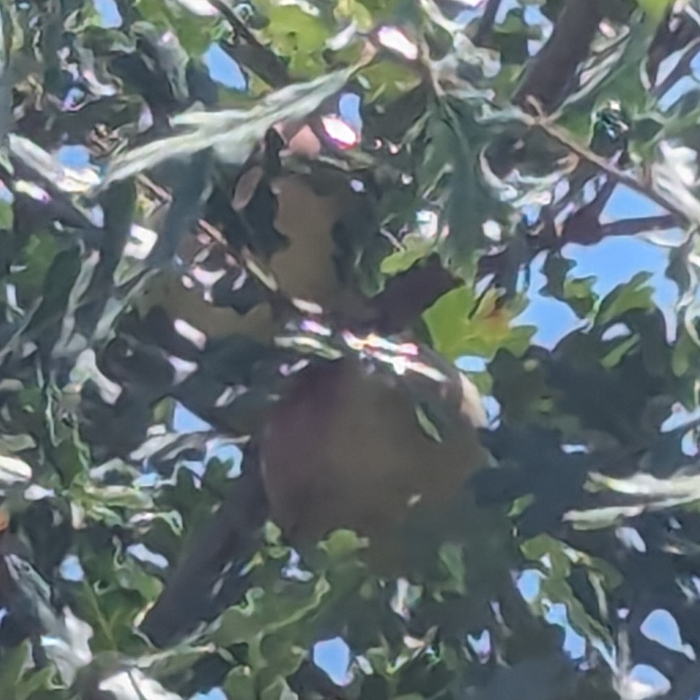
Every year, there is less to write about regarding the Memorial Tree in Felton Covered Bridge Park. That is because every year, it becomes more independent. It no longer needs structure pruning for clearance above the surrounding parking lot. It no longer benefits from supplemental irrigation. The mesh around the base of the trunk really should be removed. So should the truss between the two lowest main limbs. The stake remains merely as a precaution for strong winds, but is likely completely unnecessary. It can be removed after defoliation next winter. The trunk is quite sturdy. Growth is quite vigorous. The branch structure seems to be rather awkward, but such structure is normal for such young specimens of this particular species, and is very unlikely to compromise structural integrity as the tree matures. The canopy is slightly asymmetrical, but not problematically so. The crew who maintains the park replenishes the mulch within the parking lot island around the tree more regularly than they had in the past, and cuts weeds when necessary. They are very protective of this tree, so pull weeds between the trunk and the surrounding mesh rather than get too close to the trunk with their weed whackers. Recently, a neighbor pulled weeds before weed whacking became necessary. Although oaks can technically bloom and produce acorns after only about five years, almost all delay bloom until they are about twenty years old, and some wait until they are twice as old. A lack of bloom this early is therefore normal. The development of two oak apples was a surprise though. Apparently, an oak apple gall moth considers this tree to be mature enough to sustain its eggs. It is as if this little Memorial Tree is already growing up to become a productive member of its ecosystem!

From the ground, I could not get a good picture of these first oak apples.

Six on Saturday: Service Interruption (I have nothing to share here this week.)

Unusually rainy weather here has been quite a problem. Flooding, mudslides and falling trees have kept us all very busy at work. They have also interfered with the utilities, such as electricity, cable and internet service. A message on my telephone informed me of the service interruption that prevented me from sending pictures to myself to share here on Six on Saturday. I intended to simply share pictures that were illustrations for my other blog, but as I was writing about them, I realized that I already shared them on Christmas Eve. I therefore have no more than these recycled pictures. More pictures from here are in the news.

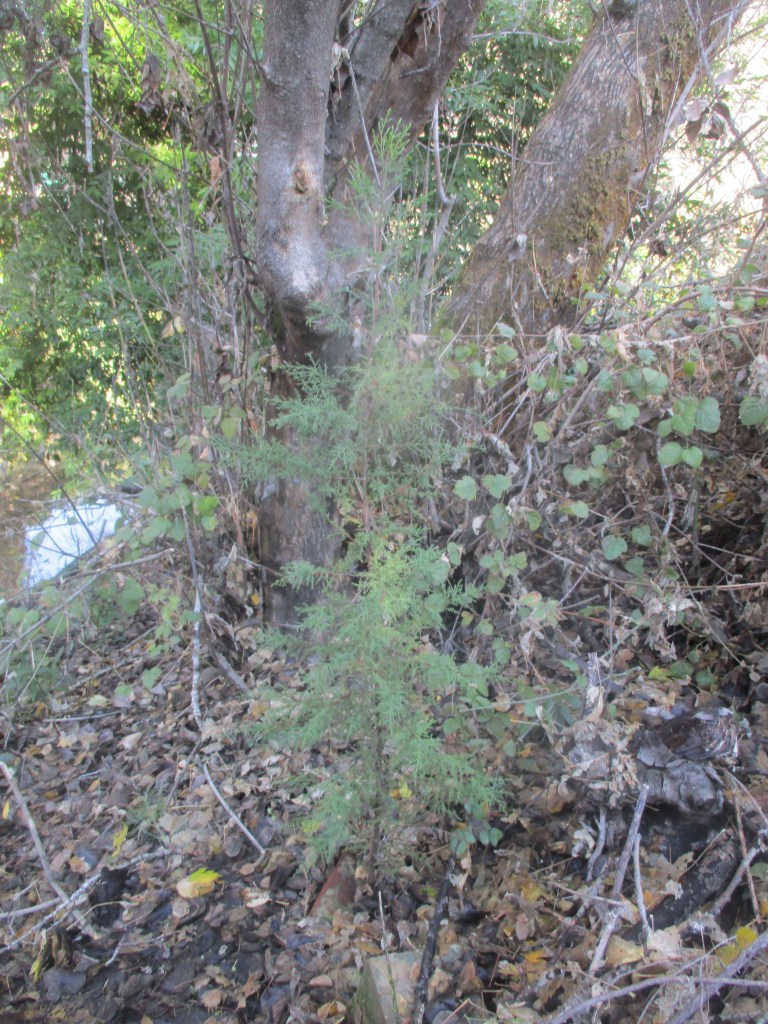
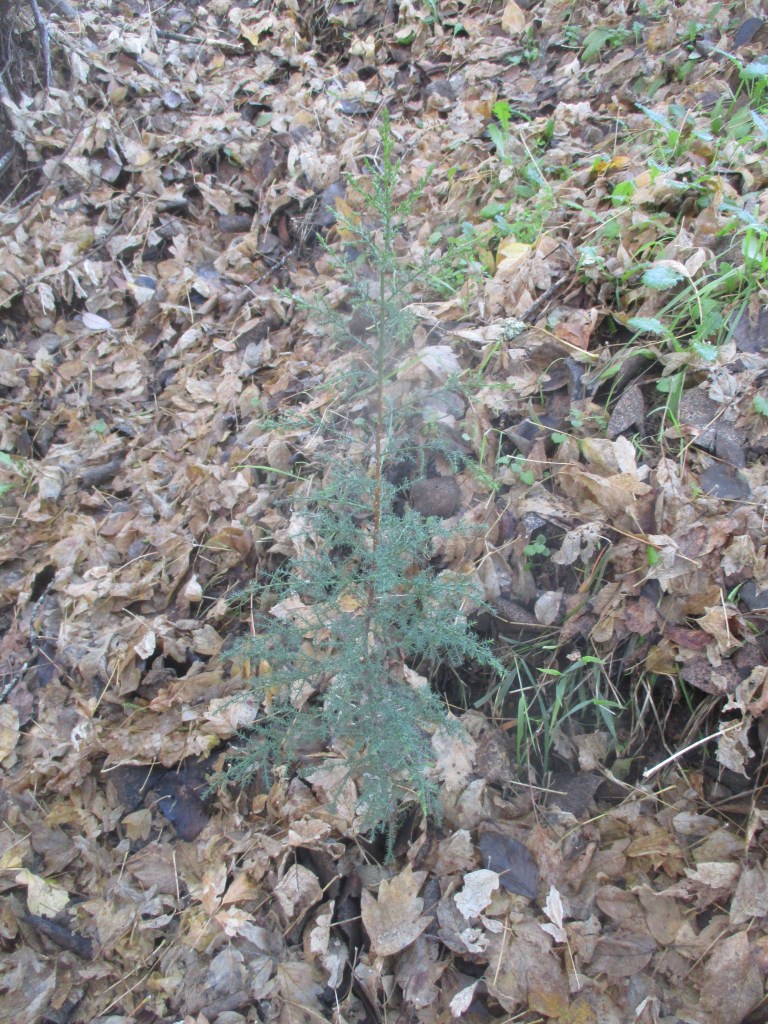
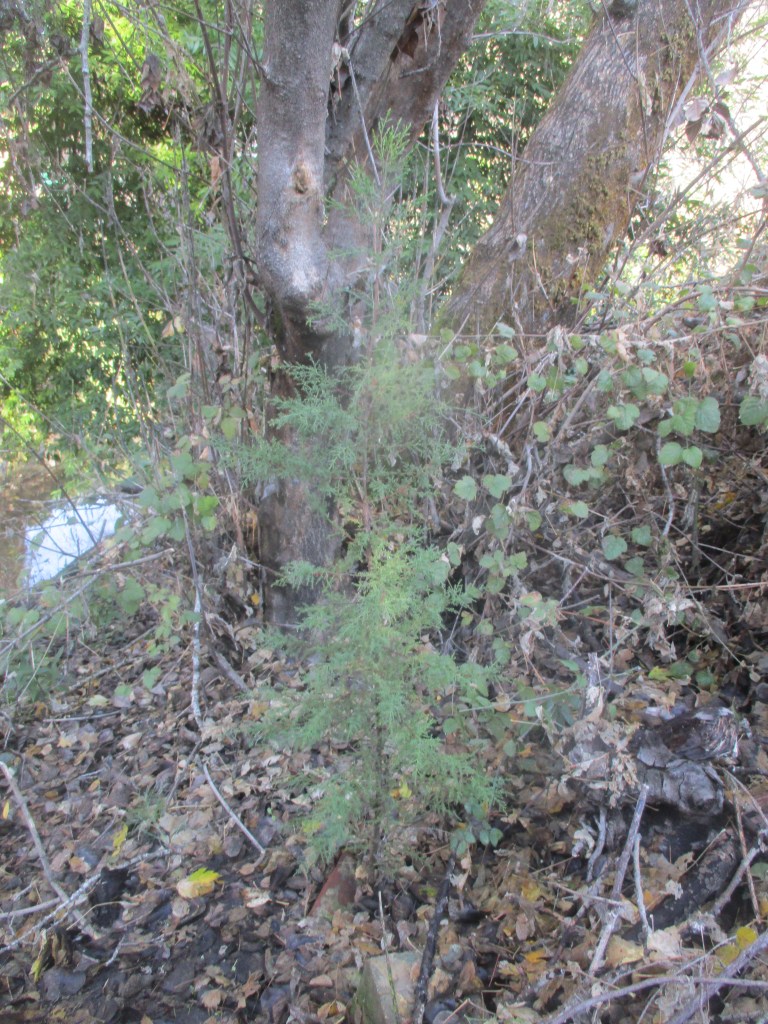
1. The Steven Michael Ralls Memorial Tree was planted two and a half years ago, so it is the oldest Monterey cypress within this Memorial Grove, and is now almost six feet tall.

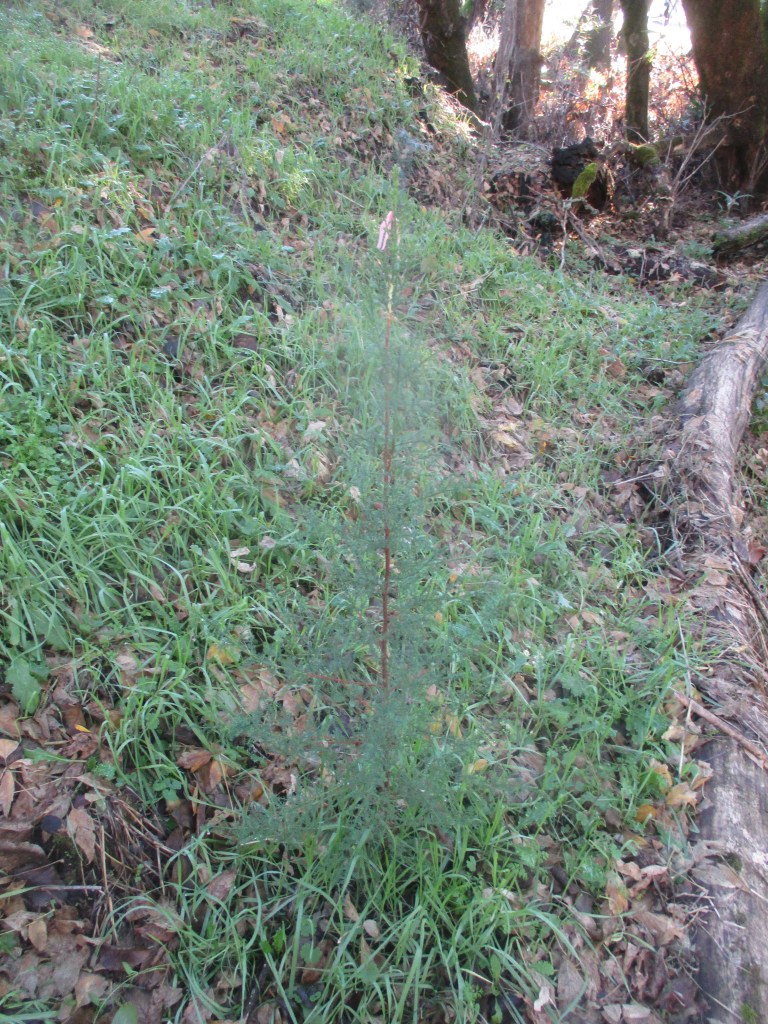
2. The David Noel Riddell Memorial Tree was installed with #3 below, only about a year ago. It is the smallest of the three cypress trees, and is only slightly taller than three feet.

3. The David Fritiof Lindberg Memorial Tree was installed a few days after David Fritiof Lindberg passed away on November 13, 2021, with #2 above. It is only four feet tall now.

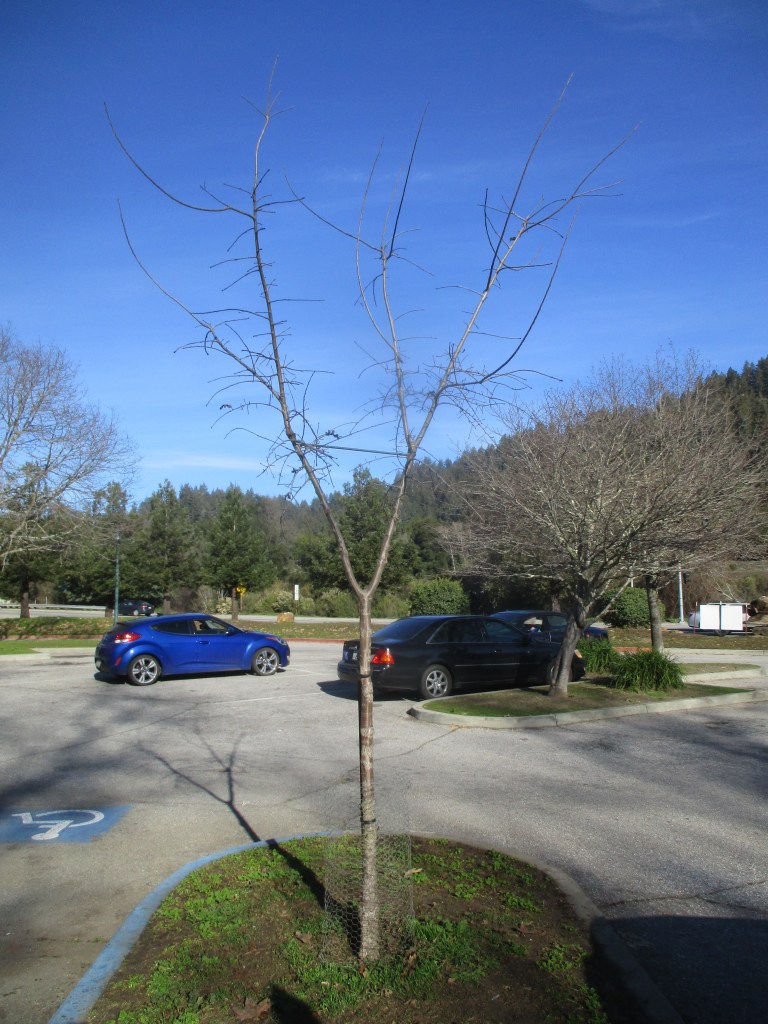
4. The Memorial Tree in Felton Covered Bridge Park is actually one of several Memorial Trees within its landscape. It is doing well, but needed a bit more pruning for clearance.

5. It looks scrawny after pruning, but will fluff out splendidly through spring. It may not need pruning for clearance again for quite a while. By that time, it will be too big for me.

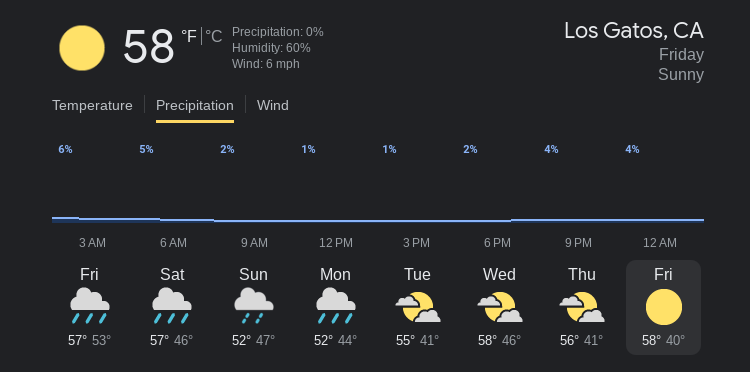
6. Sunny weather is finally in the forecast. Rain is normally appreciated in our chaparral climate, but has been excessive for too long. It has not rained this much in four decades.

This is the link for Six on Saturday, for anyone else who would like to participate: https://thepropagatorblog.wordpress.com/2017/09/18/six-on-saturday-a-participant-guide/

Six on Saturday: Memorial Trees +

Goodness! Not only did I not get good pictures of these Memorial Trees, but I needed to add two unrelated pictures for a total of Six on Saturday. Perhaps fewer Memorial Trees are better than more. Sadly, another must be added as space becomes vacated. Anyway, the first picture is something I am quite pleased with. The sixth complies with tradition. Links have more information about the Memorial Trees at my other blog, Felton League.

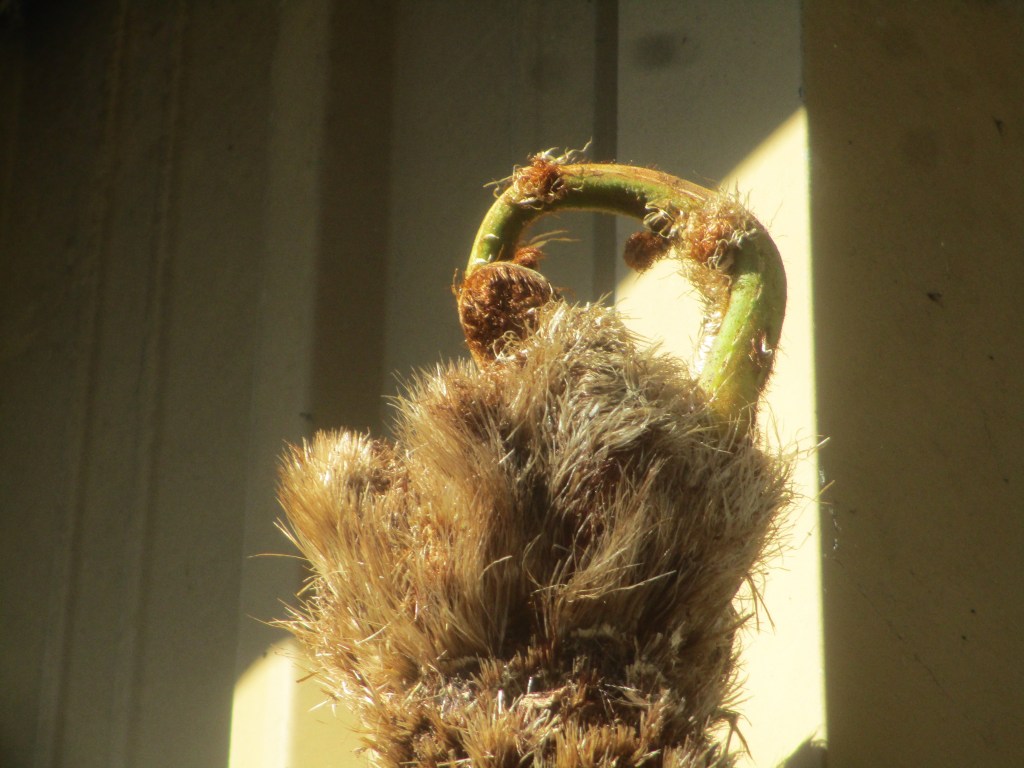
1. Australian tree fern, Cyathea cooperi, was relocated from my former neighborhood in town. It may not look like much, but the trunk, which is not visible here. is nine feet tall!

2. Steven Michael Ralls Memorial Tree was the first Tree of the Memorial Grove when it was installed on May 2, 2020, the third anniversary of his death. It is now about six feet tall, and inhabits a site that was formerly inhabited by Mr. Ralls while he was unhoused.

3. David Noel Riddell Memorial Tree was installed quite a while after Mr. Riddell passed away, so it is only about three feet tall. Incidentally, Mr. Riddell is a direct descendant of some of the first Spanish people to arrive in Monterey where Monterey cypress is native.

4. David Fritiof Lindberg Memorial Tree was installed shortly after Mr. Lindberg passed away on November 13, 2021, and in conjunction with The David Noel Riddell Memorial Tree. It is only about four feet tall. All three of those Memorialized were mutual friends.

5. Jeffrey Dale Scofield Memorial Tree became The Memorial Tree after a few friends of the Memorialized passed away within only a few years afterwards. It is maturing nicely!

6. Canna ‘Australia’ in the downtown planter box remain lush after harsh grooming, and after those at work were frosted. Of course, this picture is not actually about this Canna.

This is the link for Six on Saturday, for anyone else who would like to participate: https://thepropagatorblog.wordpress.com/2017/09/18/six-on-saturday-a-participant-guide/

Steven Michael Ralls Memorial Tree

P00502K
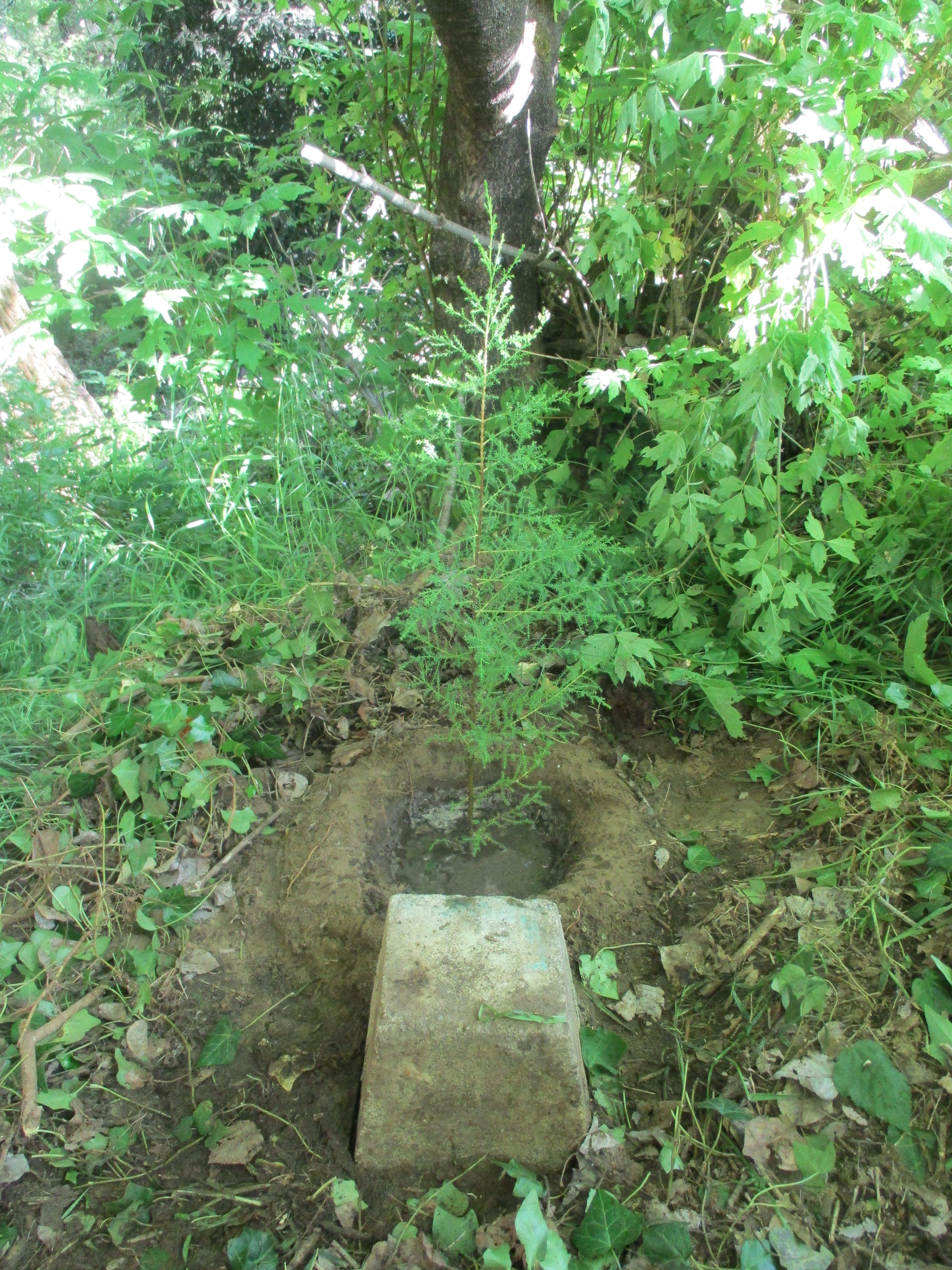
Steven Michael Ralls Memorial Tree is mostly camouflaged by the surrounding forest.

Steven Michael Ralls got his Memorial Tree this morning, three years after he passed away on May 2, 2017. The circumstances that coincided for this event were impossible to ignore. Just like the other Memorial Tree, which was installed to replace an oak that was missing from a parking lot island, the Steven Michael Ralls Memorial Tree also has a practical application.

The small tree is a young Monterey Cypress, Cupressus macrocarpa, that needed to be removed from one landscape, and was waiting in the recovery nursery to be installed into another. Of course, a Monterey cypress in no easy tree to accommodate. It is too big and too dark to be compatible with most of the landscapes into which we add smaller and mostly deciduous trees.

However, it happens to be ideal for obscuring undesirable scenery, just like a row of five Arizona cypress, Cupressus arizonica, will be expected to do when installed along a busy roadway. Furthermore, it just happens to grow bigger faster than Arizona cypress, so is even better for the low end of the row where a bigger tree is preferred. The row really needs six trees anyway.

The location of the tree just happens to be ideal as well. With all Arizona cypress spaced evenly along the roadway, and the Steven Michael Ralls Memorial Tree strategically situated around the lower corner of the fence, it is located precisely where Steven Michael Ralls camped while homeless late in 2012. I could not have selected a more appropriate location if I had planned it.

The new tree will need to be watered by bucket occasionally through summer, but will need no intervention after the rain starts next autumn. It knows what it needs to do to get established and become an evergreen asset to the forest.

FP00426
It was easier to see before it was planted.

Memorial Tree Update – March 22, 2020

P00322-1
Memorial Tree – Before

Updates get complicated as they link back to previous updates to previous updates to previous updates and so on. Linking and reblogging from another blog adds more complication. The last update for the Memorial Tree was reblogged from Felton League on August 10. It and previous updates should link back to preceding updates chronologically. At least it sounds simple.

Another brief update that will reblog here from Felton League at noon will describe more of the social significance of the Memorial Tree rather than horticultural concerns. It really is special.

This little Memorial Tree has certainly been through some difficult times. Despite reassurances that it would not happen again, and that the tree would be outfitted with an ‘approved’ trunk guard, the trunk base has been gouged by weed whackers on more occasions than I can remember. That is an unfortunate consequence of efficient but unaware community service workers.

Such major damage severely inhibited growth. As it begins its fifth year, the Memorial Tree is barely six feet tall. By now, it should be developing branch structure above minimal clearance. Fortunately, it was quite healthy last year. If it continues to grow similarly this year, it will grow above six feet, where it can later develop scaffold limbs. I intend to apply fertilizer regularly.

Stubble had been left on the trunk to enhance caliper growth. That which was developing into significant branches was removed to concentrate resources into vertical trunk growth. Stubble that remains is minimal, but should be substantial enough by winter to get mostly pruned away again. It will more likely be unnecessary, and pruned away completely from the main trunk.

Binding is unfortunately still necessary. The species innately develops irregular form. Binding straightens the otherwise curved trunk. Once the trunk lignifies in the desired position, binding and the associated stake will not be necessary. The larger lodgepole stake holds the binding stake vertical, but is more important for protection from those who bump into the still small tree.

Weeds were removed from around the base of the Memorial Tree, so that there would be no need for a dreaded weed whacker to get close to it. Former damage is compartmentalizing well.

P00322-2
Memorial Tree – After

Horridculture – Memorials

P00129
Where are the cedars?

Memorial trees should be remembered . . . right? I mean, they are planted to remind us of . . . something, or . . . someone. They are typically trees that will be around for a long time, because that is how important memories should be. Redwoods and oaks work nicely. Most get outfitted with plaques to remind everyone what the trees are there to remind us of.

The old original Sunnyvale City Hall was landscaped with several memorial trees. The most prominent were redwoods and cedars that were mostly planted as memorials for local veterans of various wars. They accumulated over several decades and a few wars. City Hall seemed like a good place for them, where they could live for a long time without bother.

However, City Hall was demolished in the late 1970s, and replaced with a big mall. The larger redwood and cedar memorial trees were salvaged as the mall was build around them. Most survived in a courtyard within the mall until the mall was partly demolished less than a quarter of a century later.

All the cedar memorial trees died in captivity within the courtyard. One redwood that was not a memorial was added to the group where one of the cedars had been.

Prior to the demolition of the courtyard, I needed to inspect the surviving redwood to prescribe procedures for safe removal of surface pavement, and subsequent protection of exposed roots. The surviving trees were in remarkably good health. I was not very worried about them. What bothered me though, was the complete disregard for their historical significance.

The plaques associated with these memorial trees were a mess. It was as if they all had been collected from their respective trees, mixed up, and replaced randomly. Plaques from the absent cedars were assigned to some of the surviving redwoods. The oldest and grandest memorial redwood was labeled as the redwood that was added last, after the mall was built, and therefore of no historical significance. The smallest and youngest redwood that really was added after the mall was built was labeled as one of the more historically significant memorial trees.

I believe that all the trees that were there during my inspection are still quite healthy within a small park space that was built around them. I have no idea if they are outfitted with plaques. If they are, I can not help but doubt the accuracy of those plaques.

Six on Saturday: Souvenirs From Oklahoma


Oklahoma is a place that I mention often in my writing. It was one of those very few places outside of California that I had always wanted to go to. After actually going there seven years ago, I want to go back to see what another season besides autumn is like. The flora there was so fascinating and unfamiliar. In the short time I was there, I collected seed of several species. Amazingly, most seed were viable a few years after collection.

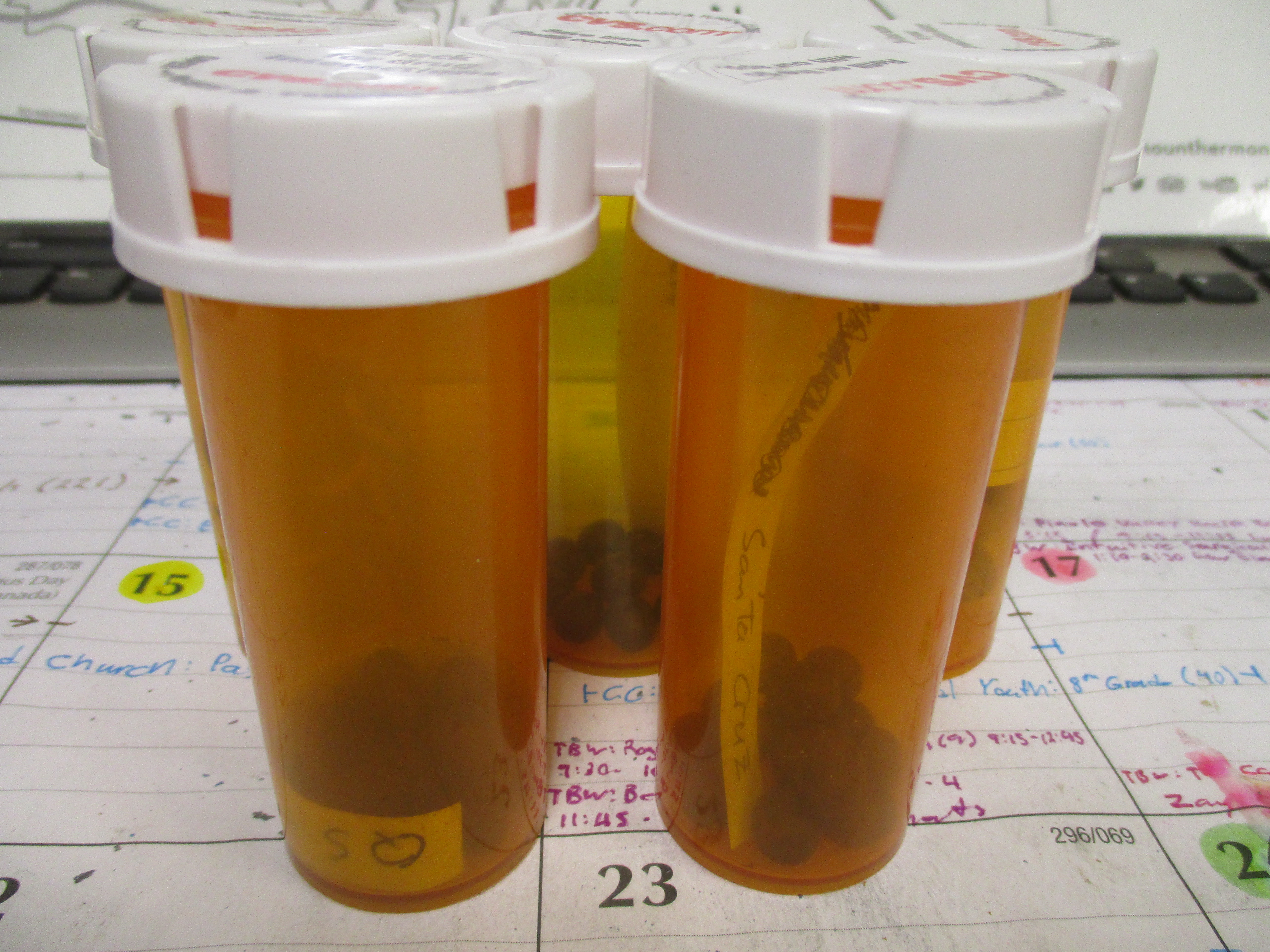
1. Seed ~ was collected in these old pill bottles. These seed are not really from Oklahoma. They are mostly from canna, and were collected more recently. Collecting seed can be a bad habit.P91012

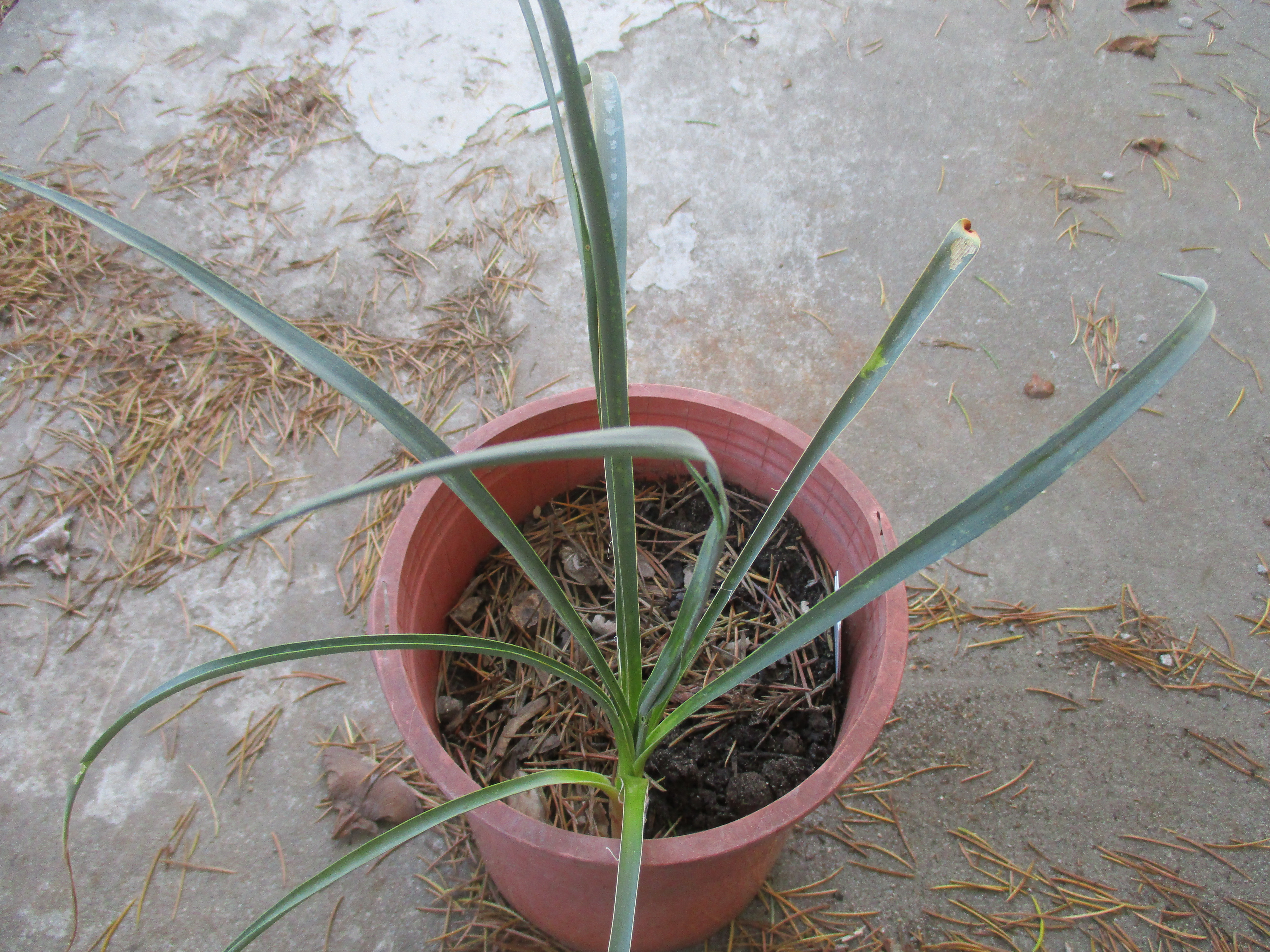
2. Yucca glauca ~ seed was collected at a truck stop in New Mexico on the way to Oklahoma, where it is also native. I found a shoot of Yucca arkansana in Oklahoma, but it did not survive.P91012+

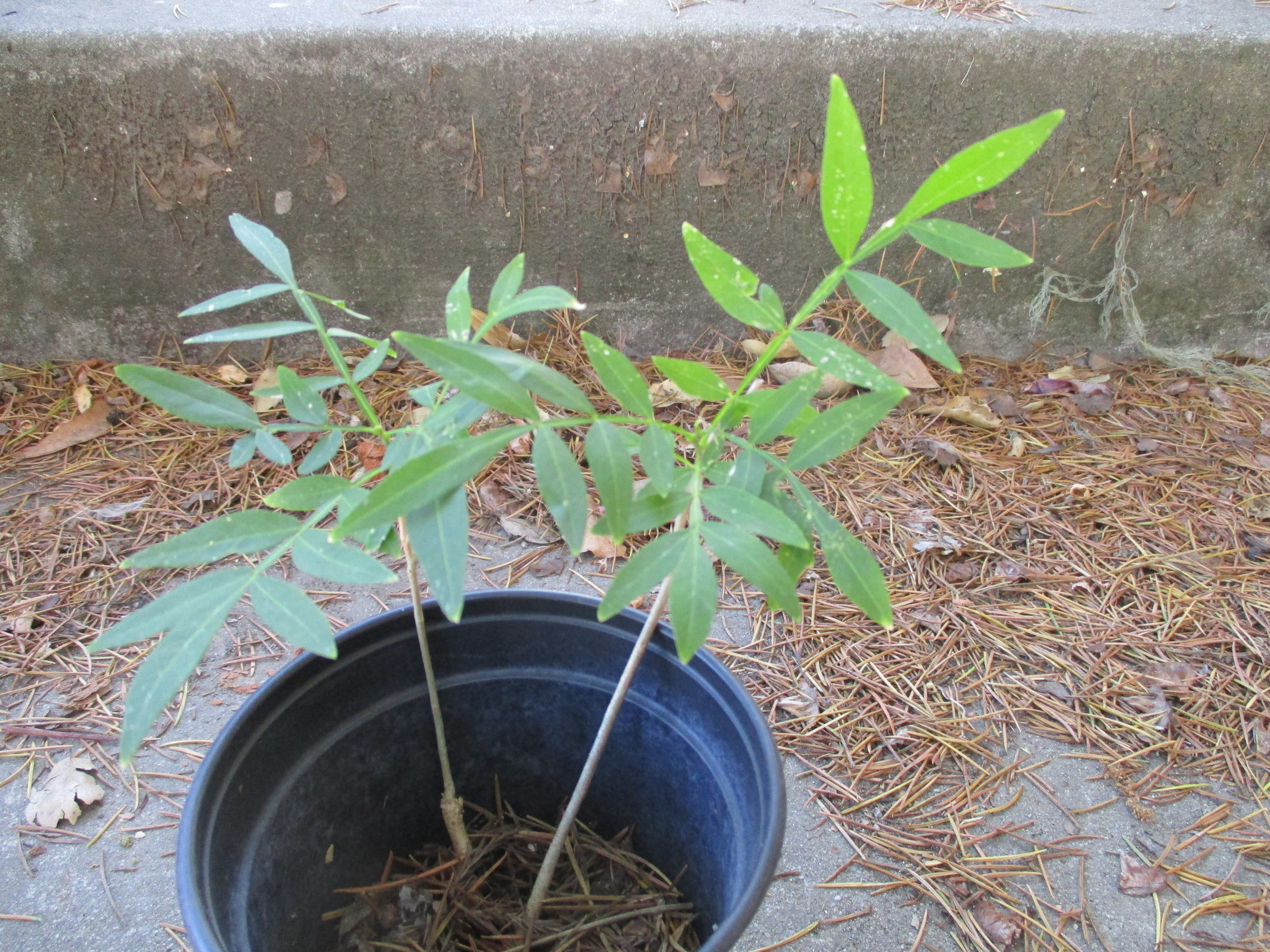
3. Sapindus saponaria ~ seed was found hanging over a fence from a backyard into an alley in Norman. The ‘seedling’ on the left grew from a root that broke from the seedling on the right.P91012++

4. Diospyros virginiana ~ happened to be in season while we were there in November and December. The small persimmons are very different from Japanese sorts, and loaded with seeds.P91012+++

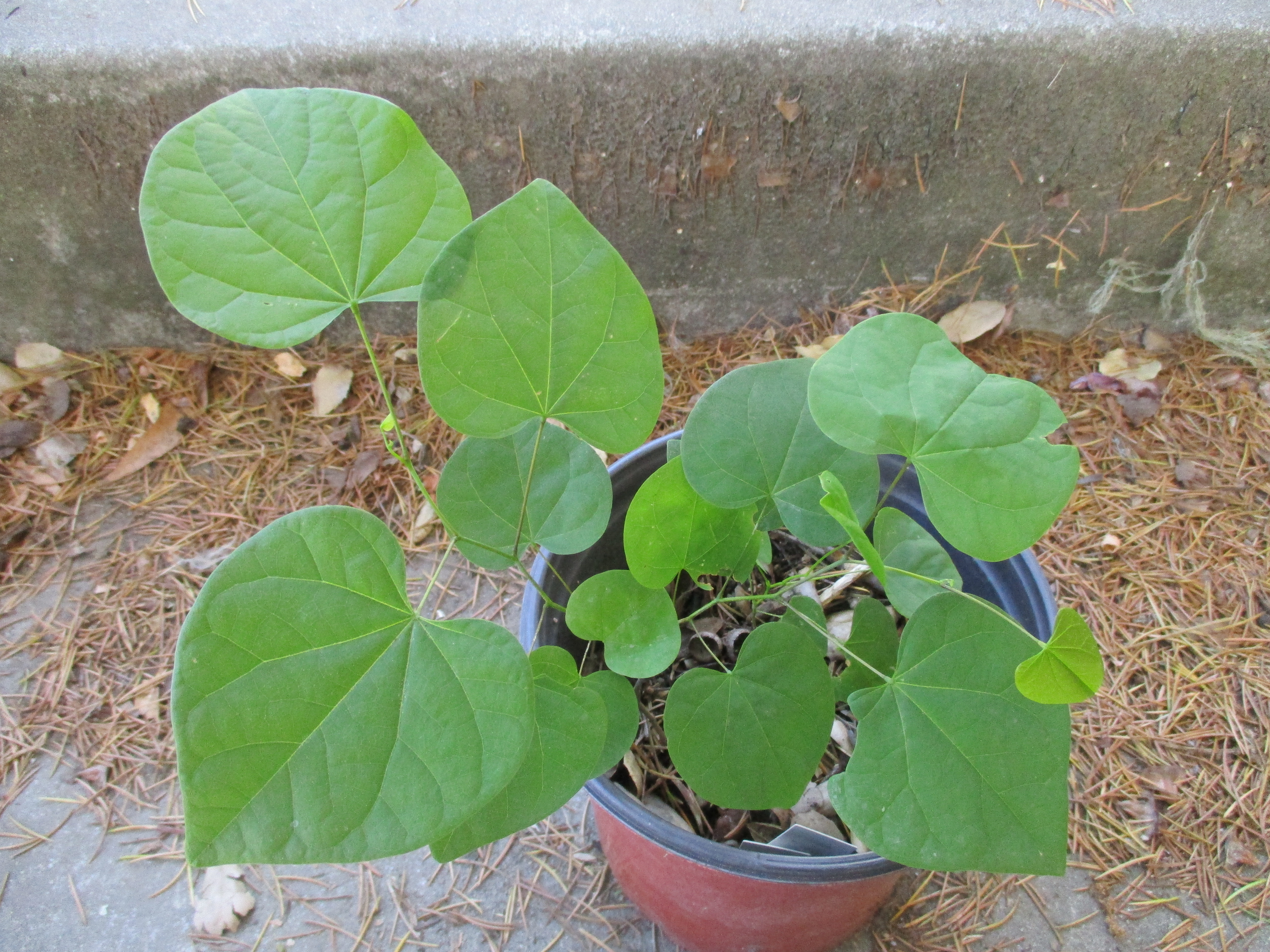
5. Cercis canadensis ~ is the state tree of Oklahoma. Supposedly, the variety that grows wild there is ‘Texensis’. Several native plants are named for places where they were first identified.P91012++++

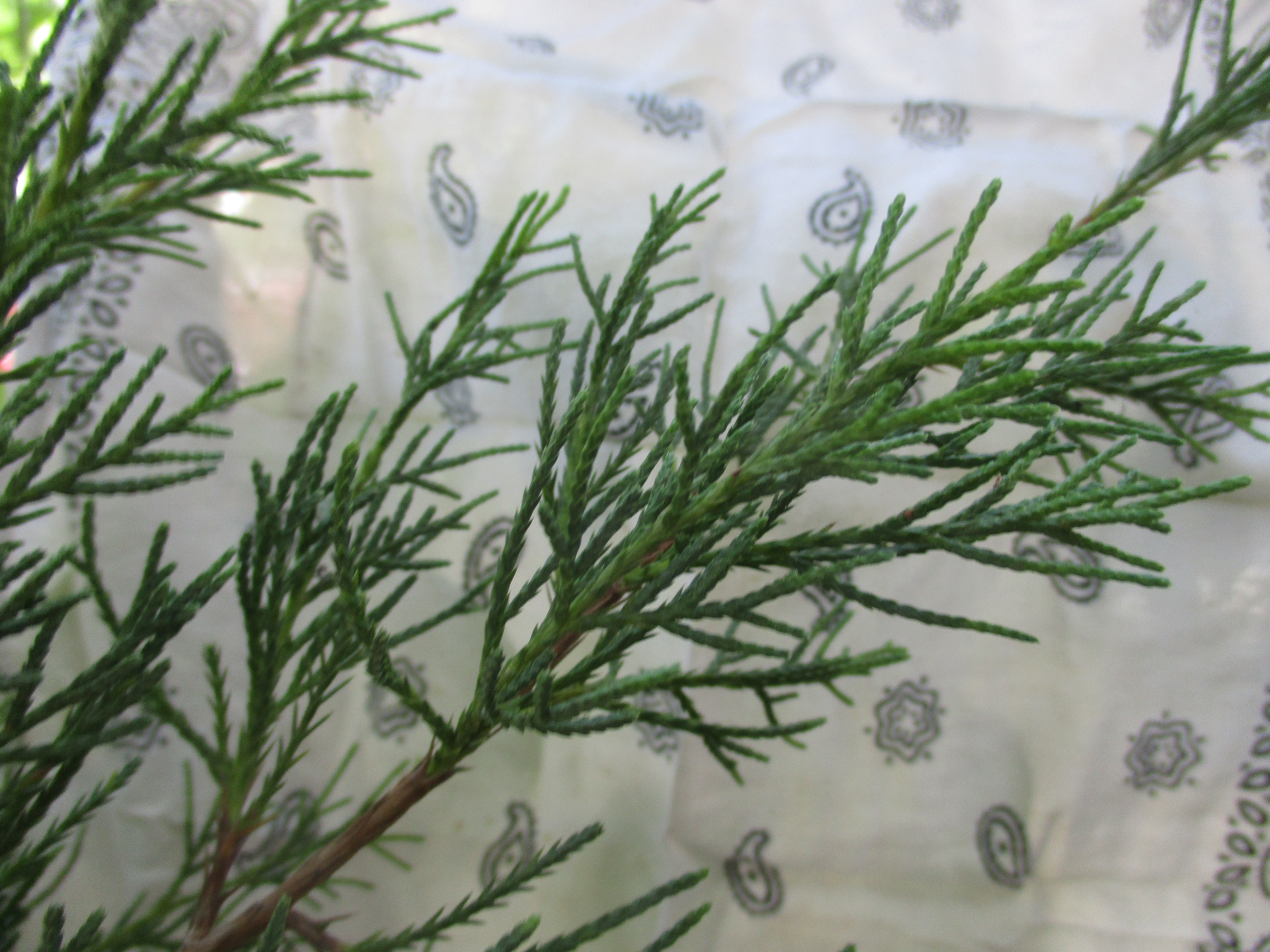
6. Juniperus virginiana ~ was not grown from seed, but gathered as wild seedlings. It is unpopular among those more familiar with it, and for good reason. I, however, am unfamiliar with it.P91012+++++

This is the link for Six on Saturday, for anyone else who would like to participate:

https://thepropagatorblog.wordpress.com/2017/09/18/six-on-saturday-a-participant-guide/

Memorial Memorial

P81014The little Memorial Tree in Felton Covered Bridge park that I so frequently write about is not the first to be planted there in its parking lot island. It is actually the fourth! The first was a California black oak like the other four in the other islands. They were all planted with the original landscape. It did not live there long before getting run over by a car. The island was empty for many years.

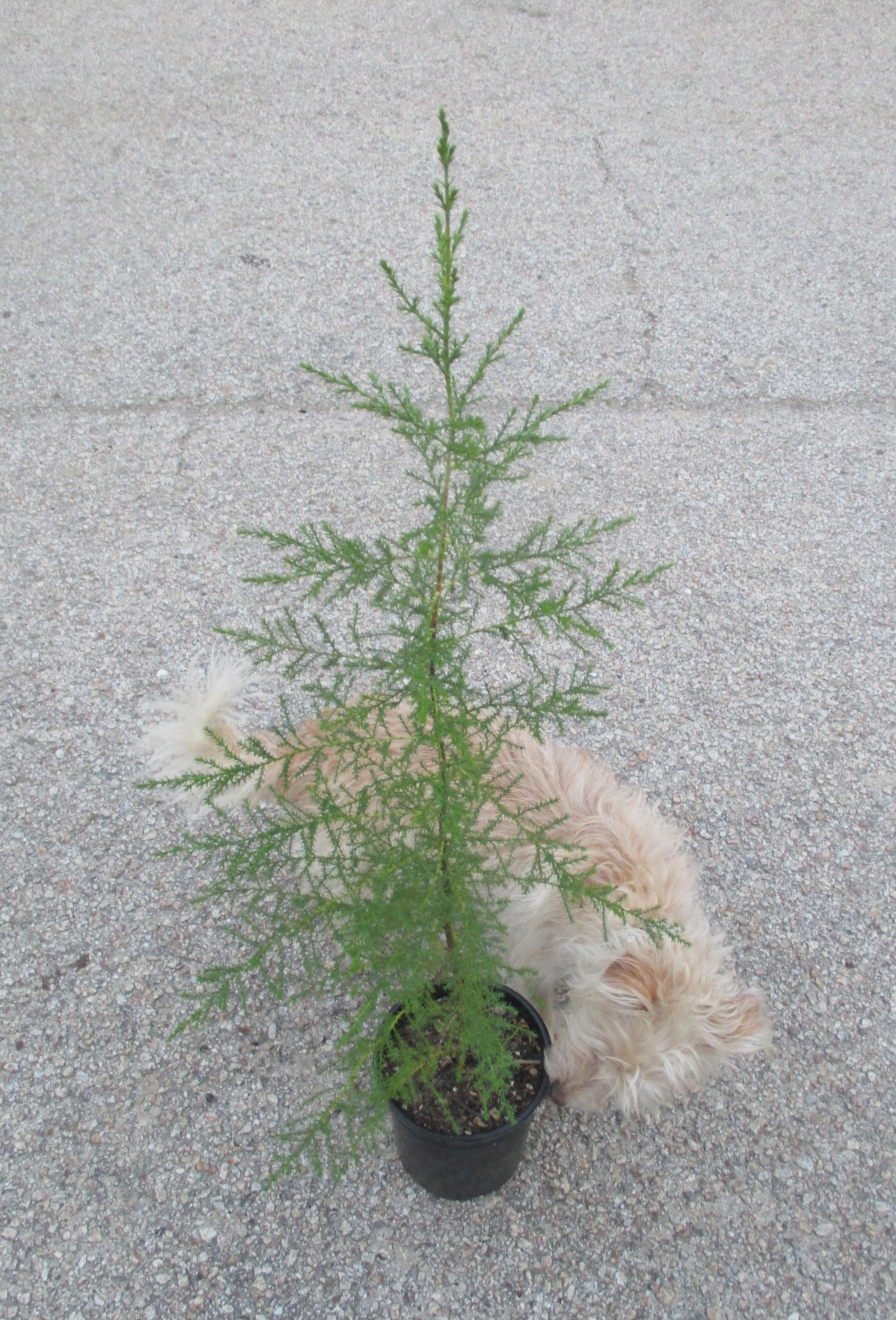
The second tree (above) was an Eastern red cedar that I brought from Oklahoma. It arrived here very early in the morning on the last day of 2012, in a bag with a few others that I pulled out of the ground the day before we left. They may be nothing special within their native range, but they are very exotic to me. At the time, I had no plans for the small trees. I just wanted to grow them.

I was downtown and up late the following night when I realized that it was nearing midnight between 2012 and 2013. I took out a trowel, dug a small hole in the island, and planted one of the Eastern red cedars right at the moment that one year changed to the next. I did not give it any more thought than that. Otherwise, I would have preferred a native species like the Park was originally landscaped with.

Sadly, that tree lasted only a few months before succumbing to what dogs do to young trees in parking lot islands. It was a bare root tree, so was not very resilient.

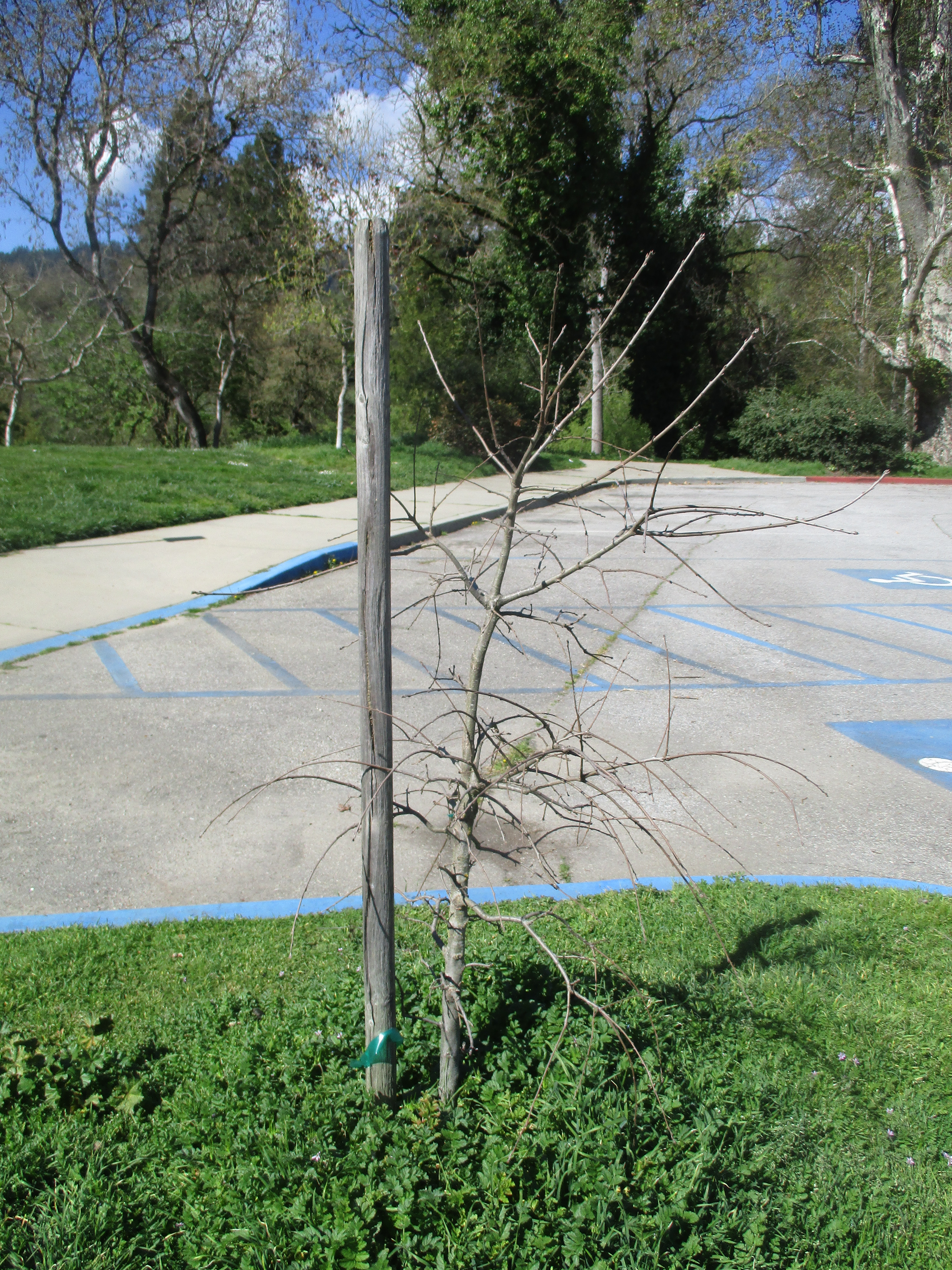
The third tree (below) was a native bigleaf maple that was planted the following winter between 2013 and 2014. It did not get much more planning than the Eastern red cedar. I found it growing on the side of the road where it would have been killed by vegetation management within the utility easement. Like the little Eastern red cedar, I pulled it up and planted it bare root. It was a better choice in some ways, but would have needed to be watered by bucket for the first few years. It survived through the first year and half way through 2015 before it too succumbed to what dogs do. I was being optimistic by thinking that a bare root tree would survive that.

The fourth tree is the little native valley oak Memorial Tree that is there now. I found it for just a few dollars at a local nursery. It was planted in the winter between 2015 and 2016, so this was its third summer. It was a canned tree, so started with more of a root system than the previous two trees that were planted bare root. Nonetheless, life out in that exposed parking lot island is not easy. The tree was severely damaged by weed whackers both in 2016 and in 2017, so barely grew, and is recovering slowly. It is quite well rooted now, so should have a much better season next summer.

https://tonytomeo.com/2018/09/22/illegally-planting/ – This is a link to one of the more recent articles about the Memorial Tree. It includes a link to another previous article, which also links to other older articles. I really do not remember how many updates I have written about the Memorial Tree.P81014+