Spring in Guadalupe Gardens

(This information is now outdated.)

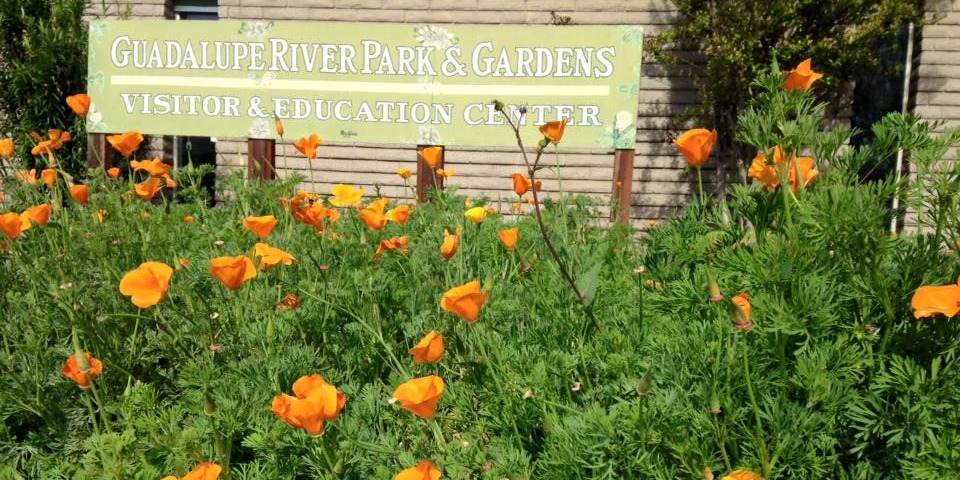
Spring in Guadalupe Gardens, a celebration of healthy living, gardening and the environment, will be here in little more than two weeks, on April 28! The 5 kilometer Fun Run that begins at 9:00 a.m., an hour before anything else, makes its way through the park and back to the main event, where there will be various health professionals to share information about healthy living, and for health screenings. Other exhibits will feature information about the environment and green technology, including presentations about solar energy and worm composting. Recyclable electronic waste can be dropped off free of charge. There will be all sorts of lectures, workshops, activities for children and even dancing and live bluegrass music.

But honestly, the main reason that most of us who read this column attend Spring in Guadalupe Gardens is all the gardening goodies! There will be an abundance of all kinds of plants from all kinds of specialty nurseries. Spring in Guadalupe Gardens has always been a great source of rare and unusual plants, as well as some of the more familiar plants, at reasonable prices.

Not only will there be plenty of plants to buy, but experts and some of the nurserymen who grew many of the plants will be available for advice on selection and cultivation. Representatives from the American Fuchsia Society, the John. E. Stowell Dahlia Society and the South Bay Heritage Rose Group will be there selling their plants, and sharing their expertise and information about membership. It is not too late in the season to select warm season vegetable plants, including heirloom varieties, from the extensive assortment that will be available.

Besides the shopping, Guadalupe River Park Conservancy and Greenwaste will be giving away one free bag of compost to each household. The San Jose Heritage Rose Garden, which is the most extensive public collection of old-world roses in the Western Hemisphere, will be in full bloom and open for tours.

Spring in Guadalupe Gardens will be from 10:00 a.m. to 3:30 p.m., in the Guadalupe River Park and Gardens between Taylor Street and Coleman Avenue in San Jose. There is no charge for admission or parking. More information can be found online at www.grpg.org or by telephoning 298 7657. Registration for the Fun Run, which begins an hour earlier at 9:00 a.m., can be arranged at www.grpg.org/FunRun.shtml.
Six on Saturday: Rhody’s Roady IV (not Hedera) – Carson

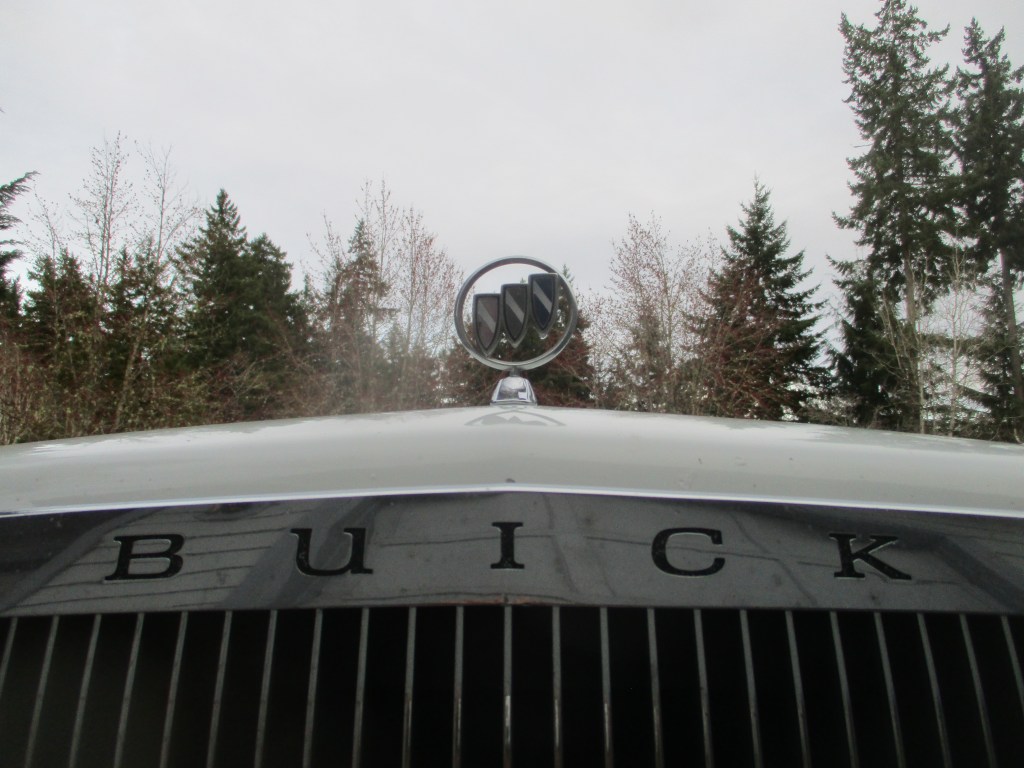
Carson is Rhody’s Roady. Like most of the vehicles here, he is named after a place. Beau is named after ‘Beau’lder Creek (Boulder Creek) (although his name was actually derived from Hobo). Lee the Chrysler was named after Bever’Lee’ Hills (Beverly Hills). Roy was named after Gil’Roy’ (Gilroy). So, Carson is named after Carson City in Nevada. He took Rhody and I to the Pacific Northwest on vacation. We returned two and a half weeks ago with only a few pictures. These six are some of the last, which were taken during the last two days, as we drove back. The drive was totally excellent!

1. Douglas fir grows wild everywhere we went. Red maple is not native, but is very happy in a neighbor’s yard. This could have been a good picture if not photobombed by Carson.

2. Oregon white oak is likewise native to almost all the regions that we traveled through. However, we did not see many. Although uncertain, I think that these are some of them.

3. Mount McLoughlin is visible from only several miles of Highway 5. It seems to be too visible though. Scenery is obscured by dense forests elsewhere in the Pacific Northwest.

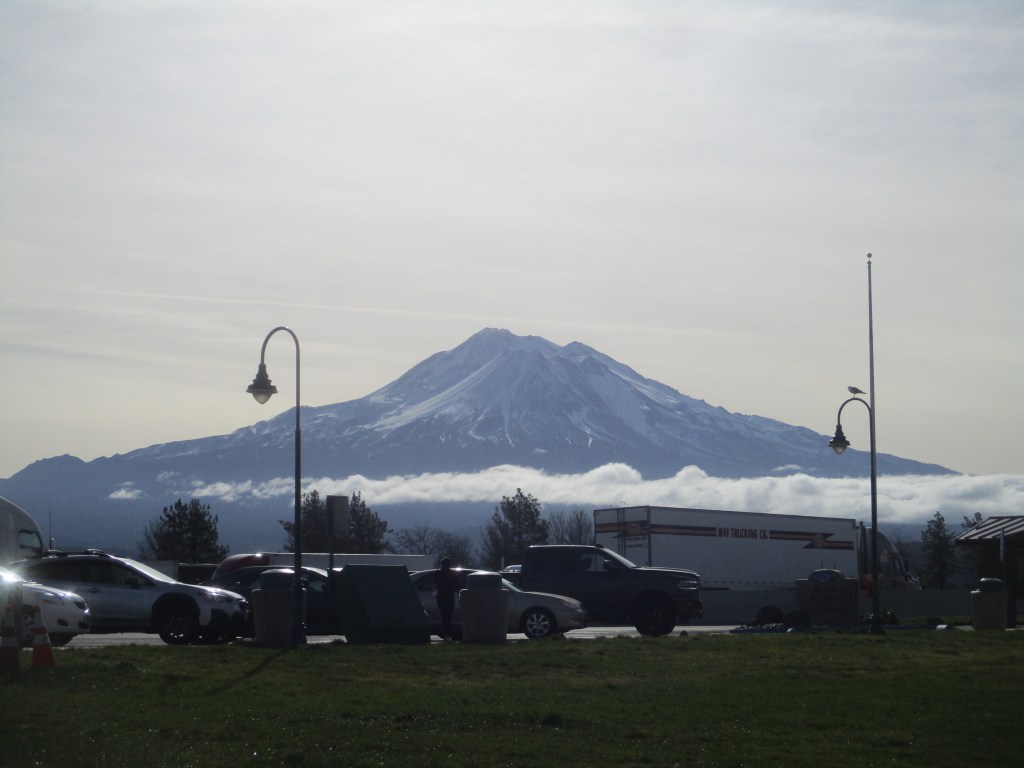
4. Mount Shasta is even more visible for many miles of Highway 5, not only because of a lack of dense forest, but also because highway 5 gets nearer to it. This was at a rest stop.

5. Apple trees were still being pruned where we stopped for the night on the return trip. The trees to the left are finished. The vigorous trees to the right are about to get pruned.

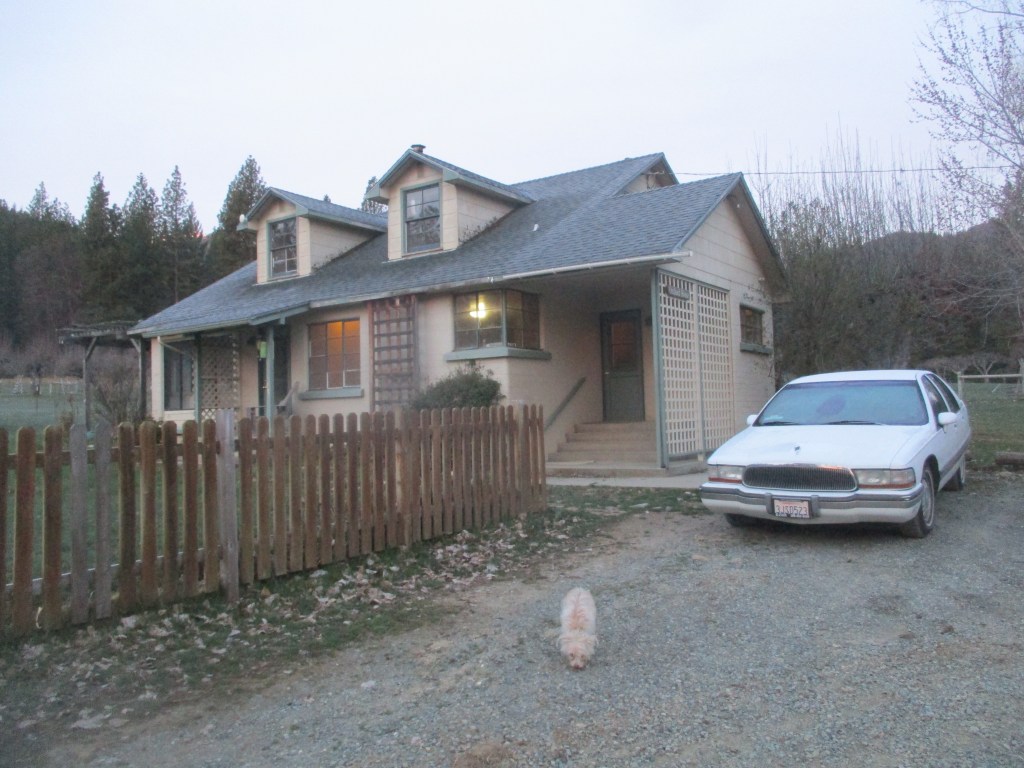
6. Orchard House was our lodging for the night. It was as grand as Cedar Lodge! Rhody, of course, is near the lower center of this picture. Carson, Rhody’s Roady, is to the right.

This is the link for Six on Saturday, for anyone else who would like to participate: https://thepropagatorblog.wordpress.com/2017/09/18/six-on-saturday-a-participant-guide/

The Physics Of Fruit

datsun_b210_1_76Sir Isaac Newton had something to say about an apple that was a victim of gravity. My high school physics professor was even better. He taught us all about velocity, force, inertia, vectors and much of what he had to teach us about physics with the help of a very ripe persimmon . . . and an insipid green 1976 Datsun B210.

I was reminded about these lessons a few years ago while Brent and I were in his old neighborhood in Los Angles. He pointed out an old burnt-orange Caprice that was in remarkably good condition. It had less than the typical wear and tear for a car that was nearly as old as we were. Brent pointed out a nearly imperceptible but specific dent in the driver side tail flank, and explained that it was made by a hard under-ripe peach. I did not need to ask how a green peach had attained sufficient force to cause such damage. I grew up in the Santa Clara Valley, where we all know the joy of attacking cars with fruit.

Most of our ammunition was apricots in various stages of ripeness. While in season, the orchard provided an unlimited supply. While they were out of season, we took what we could get from other fruit trees. Winter was meager; but just before 1977 became 1978, we discovered the gloriously humongous and squishy fruit of the ‘Hachiya’ persimmon tree in a neighbor’s front yard. Each fruit had the destructive force of a large ‘Marsh’ grapefruit, but with a squish factor of tapioca pudding! We had never seen anything like it!

Our first victims probably did not know what hit them. They probably heard the mild thuds on their cars, and drove home believing that they had been hit with the typical and mess-less lemons or oranges that are available in winter. Only after parking their shiny cars and getting out did they witness the horror or ‘Hachiya’ persimmon! Perhaps that is how ‘Hachiya’ got its name. It sounds Japanese for something someone would say in response to such a hideous mess. “Hachiya! What happened to my Mitsubishi?!” I do not know if Mitsubishi was around back then. Most of our targets were big American cars.

Then one day, we got a more challenging and more appropriately Japanese victim; a bland green Datsun B210. It was a smaller and speedier target than what we were accustomed to. Our small herd of neighborhood boys ran out to greet it; but then something unexpected happened. The car stopped. The red-headed leprechaun driving it saw us coming and just stopped there before the first persimmon took flight.

We were baffled. The other boys dropped their fruit and ran. I was too annoyed. I did not want to waste the big fruit that the persimmon tree had put so much work into. So, . . . I threw it. It made first contact on the right side of the windshield, and slid its sloppy ripe goo over most of the windshield to the driver’s side. Yes, it was glorious!

I stood there briefly in awe before I realized that the driver of the car was just glaring back at me . . . with the LOOK! Yes, it was the look; the look that said, “If I did not have these short leprechaun legs, I would run after you and beat you into the mud!”. Then I ran off to join the other boys, believing that was the end of it. I occasionally saw the Datusn around the neighborhood afterward, but did not think much of it, unless the leprechaun driving it happened to glare menacingly back at me.

We started high school a few years later. Part way through the first day, I got to my physics class just before the teacher arrived. I was already seated when he walked in, and glared right at me. Yes, it was HIM; the leprechaun! For the first time ever, I saw him smile. He did not have long fangs dripping with blood, but he was terrifying nonetheless. This was going to be a long nine months!

It wasn’t that bad. In fact, the leprechaun was one of many excellent professors at my high school. We all liked him. He did have an odd way with word problems though; you know, those situations involving ‘object A’ and ‘object B’. We had word problems like, “If object ‘persimmon’ weighs .75 pounds and is traveling east at 25 mph, and object ‘Datsun’ weighs 2,000 pounds and is traveling southwest at 25 mph, how much force will object ‘persimmon’ exert against object ‘Datsun’ when they collide?”.

Never Forget the Valley of Heart’s Delight


The Santa Clara Valley really was as idyllic as the natives say it was. It was excellent for us kids, as well as for our parents who raised us here. That is why it is also know as the Valley of Heart’s Delight.

Every autumn, the orchards would turn soft yellow. Cherry orchards got a bit more orange. Apple and pear stayed greener later. The foliage still smelled sort of fruity. Leaves would start to fall with the first breezes and cool autumn rain. There was still mud here back then. It was real orchard mud; not the sort that happens because a gardener waters the lawn way too much.

By winter, the foliage on the ground smelled earthy. . . very earthy. It might have been slippery to walk on. The upper stems of the bare trees reached upward as if they were not expecting to be slowed down by the change in the weather. The trees seemed to watch each other getting pruned, and then point and laugh at each other when it was all done. Debris piled on the edges of the orchards burned fast, and then smoldered for a few days, with a narrow wisp of almost sweet smelling smoke.

Spring made you think the whole world was in bloom! It was billowy white bloom. Apricot was the best, but cherry ad almond were brighter white. Prune seemed to be very slightly blushed. It was all white, but different flavors of white. It was so soft and fragile. The fragrance was surprisingly simple, sort of fruity, and . . . perfect. Apple and pear bloomed later, giving the illusion that bloom lasted a long time. However, each type of orchard bloomed only for a short time. Let’s be honest; apple and pear did not smell quite as good as the rest; and some described them less graciously than those of us who were kids back then. Walnut and fig, well, they were always the odd ones anyway.

Summer smelled like fruit. It was everywhere. It smelled sort of grassy at first while the fruit was developing. By the end, it smelled way too ripe. Finally, it smelled like wine and toasted soil. The soil here really was great. It was grey and heavy. Summer was warm but only rarely hot. Mustard grew under the trees, and then wilted down just before getting cut.

We were all raised with horticulture, whether we realized it or not, or whether we liked it or not. We all got peanut butter and jelly sandwiches in our lunchboxes because our mothers had to get rid of the apricots somehow. Fudge at Christmas was overloaded with walnuts. Mom’s apple pie was not revered here like everywhere else in America. It was our culture. It was everywhere.

Even though almost all of us were natives, and most of our parents were natives, and some of our families had been here for several generations, the horticulture was imported from all over the place. Apricots, cherries, prunes, peaches, almonds, walnuts, figs, pears, apples; there was just about every fruit tree imaginable. They came from Turkey, France, Italy, Spain, Greece, England, Persia . . . really anywhere and everywhere. Our ancestors brought their horticultural expertise from Italy, Spain, Japan, Oklahoma, Portugal, Mexico and who knows where else. It all came here and somehow got mixed together to make the Valley of Heart’s Delight, our own distinct culture within the Santa Clara Valley.