
California has no more native palms than Oklahoma has with the diminutive dwarf palmetto. The stately California fan palm, which is also known as the desert fan palm, inhabits warm desert regions in southern California. It is what put the ‘Palm’ in ‘Palm Springs’. However, because it likes heat and minimal humidity, it is not so happy away from deserts. The very tall and lean Mexican fan palm is closely related to the comparably stout California fan palm, but is so happy in local climates that it naturalizes and can be invasive.
The queen palm has a leaner trunk, and a broader and more billowy canopy. It rarely self sows, but is so overly popular that it very often gets planted in bad situation where it does not have room to grow. Unlike fan palms that have rounded palmate leaves that radiate outward from the ends of bare petioles (leaf stalks), the queen palm is a ‘feather’ palm, with pinnately compound leaves comprised of narrow leaflets arranged along stiff midribs.
The massive Canary Island date palm is another feather palm, with a broad canopy and bulky trunk. Like Mexican fan palm, it often self sows, so gets into some weird situations. The foliage is so thick that is commonly becomes infested with rats and pigeons. Female trees produce messy fruit that keeps rats and pigeons well fed.
Whether they get planted intentionally or simply appear in the landscape, the main problem with all these and other large palms, is the expense of maintenance, since they can only be maintained by professional arborists who know how to climb such large branchless trees. Without regular grooming, fan palms that are so often allowed to retain long beards of old leaves become fire hazards, and have the potential to drop dangerously heavy sections of their beards without warning. Removal of old deteriorating leaves from the huge canopies of Canary Island date palms is quite an chore!
There are few small palms, like windmill palm and Mediterranean fan palm, that are more proportionate to compact gardens. Windmill palm has a strikingly shaggy trunk and a compact canopy that is easy to groom before it grows beyond reach. Mediterranean fan palm has multiple trunks that grow so slowly that it takes many decades for them to grow beyond reach. Nasty sharp thorns on their petioles make pruning difficult but not impossible.
Selection of a palm that is appropriate to a particular situation is just as important to limiting serious long term problems as the selection of any other tree is.


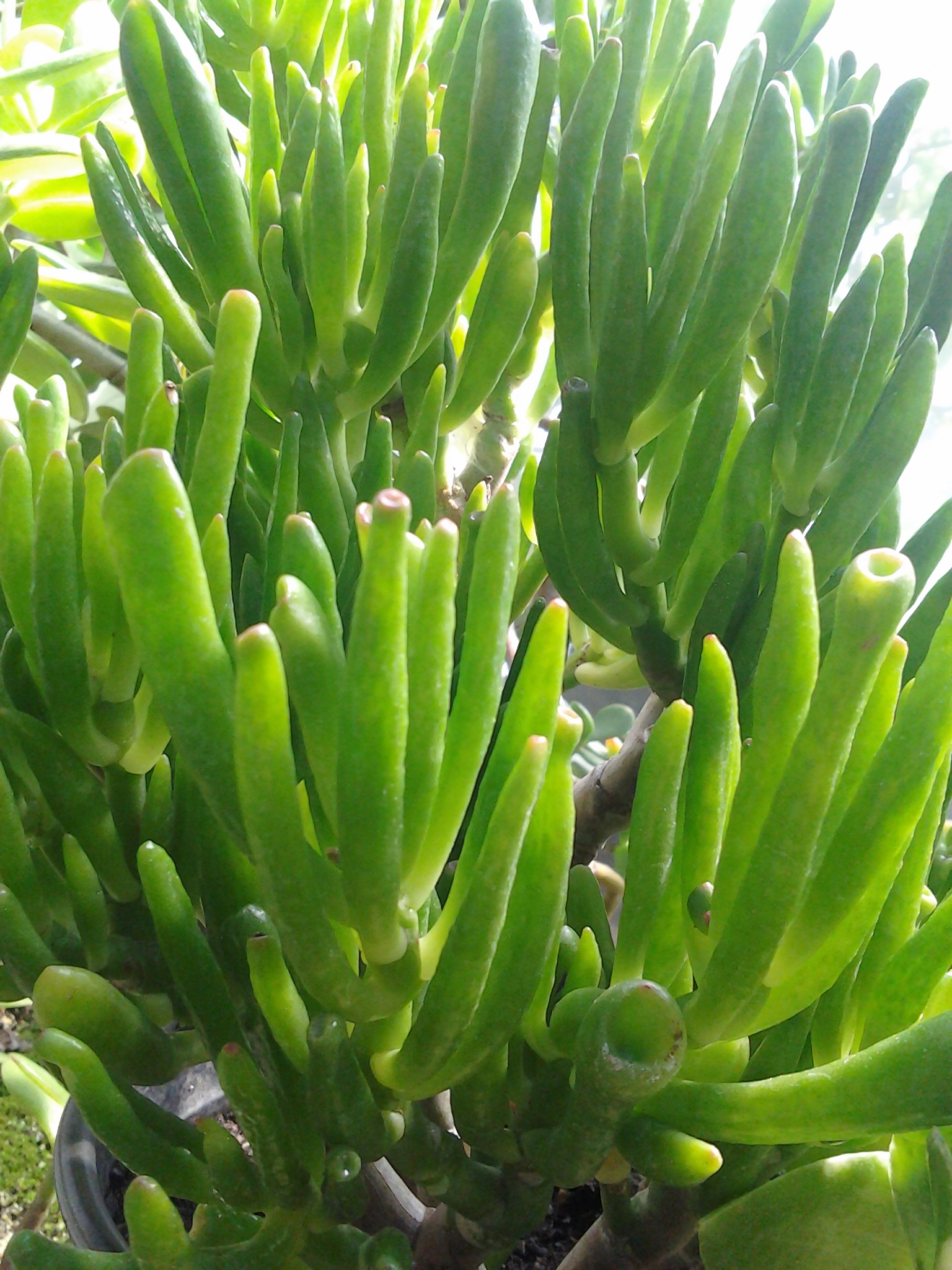
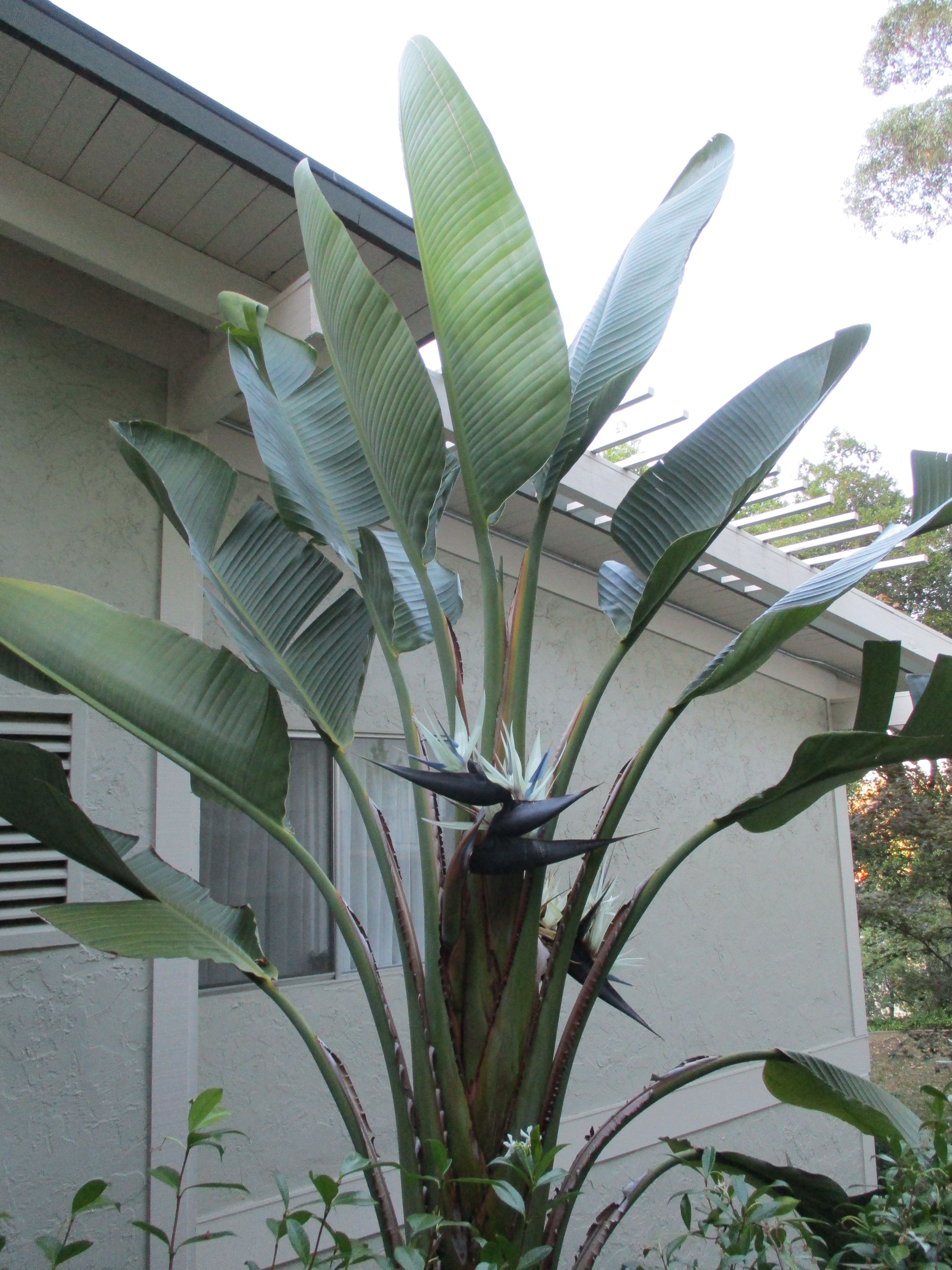 Just like anything else that gets planted in the garden, new perennials seem to be so cute and innocent. They get even better as they mature. Some grow and spread to impressive proportions. Then . . . some perennials get to be too large. Some get overgrown enough to obscure their own appealing characteristics or other plants. Others get crowded enough to inhibit their own bloom.
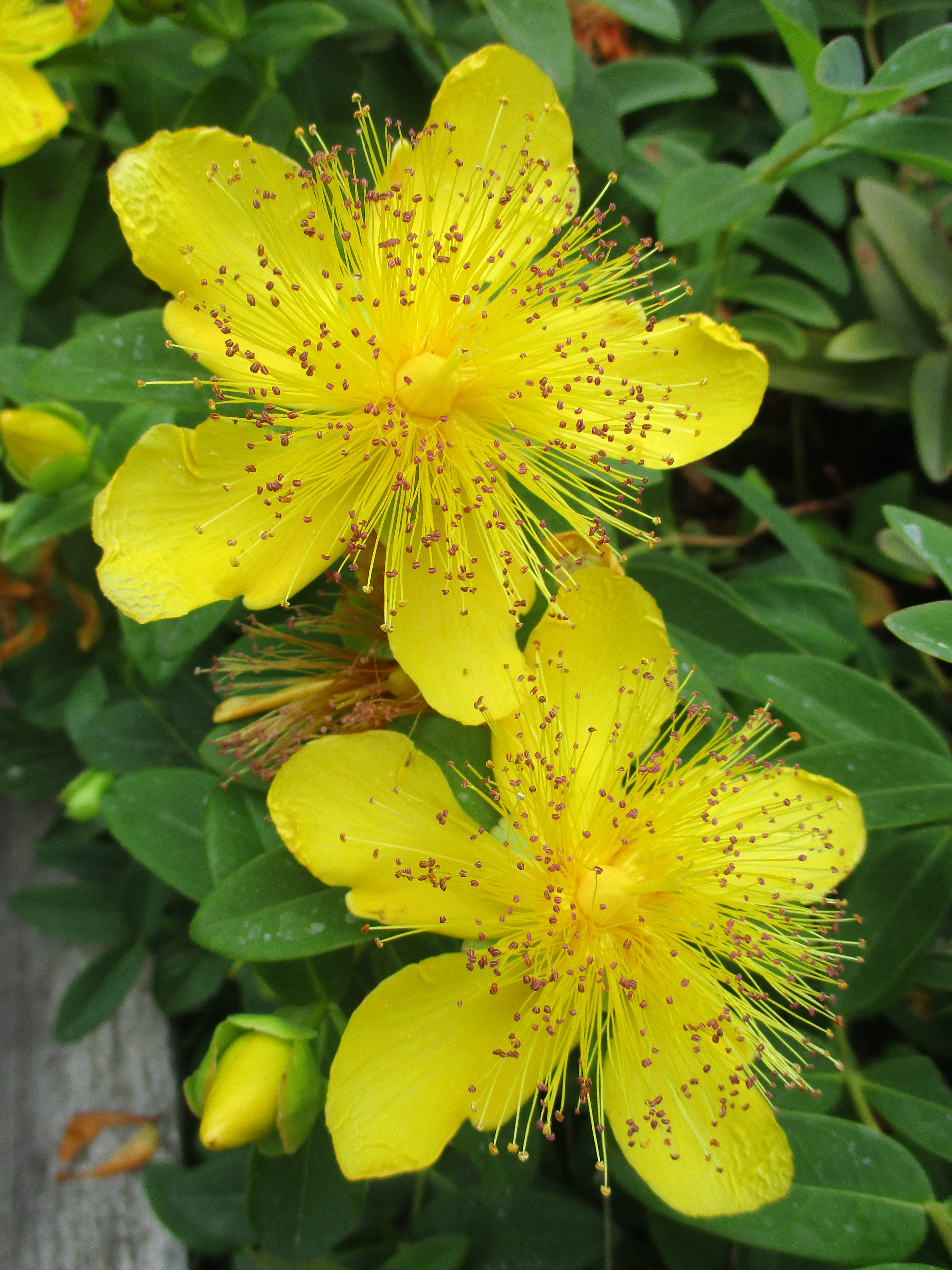 This is not the dreaded aggressively invasive Saint John’s wort that has naturalized in other regions. Nonetheless, creeping Saint John’s wort, Hypericum calycinum, does precisely as the name implies. It creeps, and has naturalized to a less aggressive degree in many spots near the coast. Its vigor is an advantage to many landscapes, but might eventually displease adjacent neighbors.
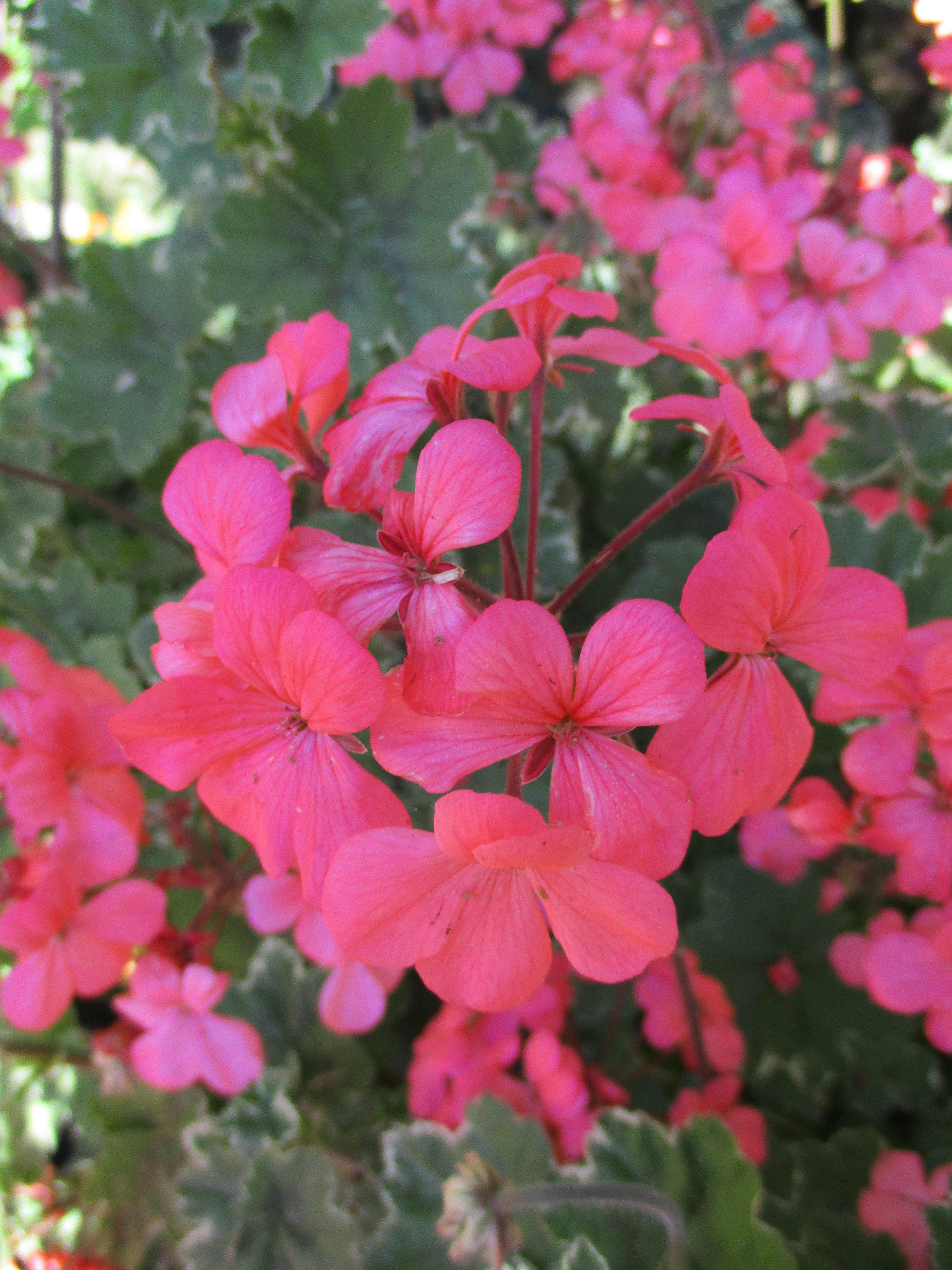 New and improved is not always better. Modern garden varieties of zonal geranium, Pelargonium X hortorum, with bigger, fuller and more profuse blooms, are more colorful than the relatively weedy classic varieties, but they are considerably more demanding. In fact, because they are so unhappy through winter, they are often grown as warm season annuals instead of as perennials.
 Annuals are plants that complete their entire life cycle from germination to death within a single year. Biennials complete their entire life cycle in two years, mostly by developing vegetative growth during their first year, and then blooming, producing seed and then dying after their second year. Perennials are the many herbaceous plants that survive longer than just a few years or indefinitely.
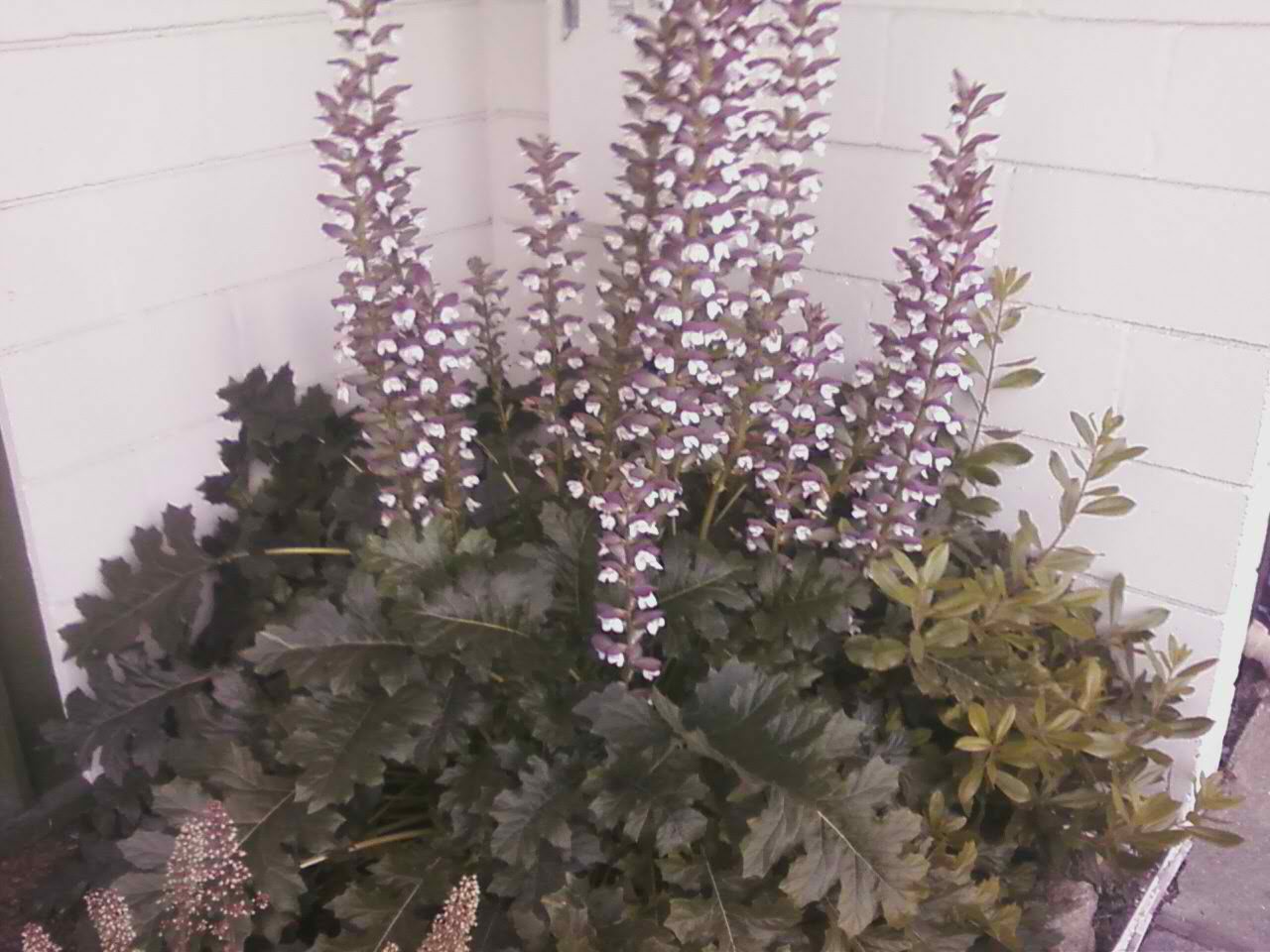 Along with all the bare root fruit trees, roses and cane berries, nurseries also stock bare root perennials like strawberries, asparagus, horseradish and rhubarb. They are so easy to plant while dormant. They recover from transplant through spring, and by summer, should be growing as if they had always been there. Although, if they had always been there, they might be crowded by now.
 The statute of limitations allows me to discuss this now. It happened thirty years ago, in the spring of 1987. The famous landscape designer, Brent Green, was my roommate in the dorms at Cal Poly, San Luis Obispo. As the bearded iris started to bloom, Brent immediately noticed a bed of uniformly pink bearded iris off the edge of a lawn in the inner campus. He watched it bloom from beginning to end, and occasionally updated me on the progress. During the process, he convinced me that these iris were very rare. Neither of us had ever seen pink bearded iris before. We had no idea that they could easily be purchased from mail order catalogs or nurseries.
 Tony Tomeo