 Annuals come and annuals go. There are cool season annuals for winter. There are warm season annuals for summer. Really though, there are all sorts of annuals that are not annuals at all. Most are some sort of perennial that has the potential to last longer than a single season. Only a few popular ‘annuals’ would necessarily die after blooming and producing seed, within a single year.
To be clear, true annuals last only a single year. They probably germinate from seed early in spring, and grow quickly. They then bloom in spring or at least by summer, and subsequently produce seed. Once their seed has matured and been dispersed, their job is done. They finally die in late autumn or winter. Annuals from deserts are even faster because of the harshness of the weather.
Many large-flowered sunflowers are true annuals. They are finished once their seeds mature. They will not bloom again. Even if they wanted to, they would not survive through winter. Petunias should be annuals, because they also die over winter. However, it is possible for them to survive winter in a semi-dormant state, and regenerate and bloom again the following spring and summer.
Realistically, it is not practical to salvage petunias for a second year. It is easier and more efficient to plant new ones. Yet, it sometimes happens, particularly in mixed plantings where old plants can get cut back while cool season annuals dominate in winter. Alternatively, lanky old stems can get buried with only their tips exposed. These tips might grow as new plants the following spring.
Cyclamen are cool season annuals that have been dieing back for summer. They usually get removed by now. However, in mixed plantings, some of their fat tubers can survive through summer to regenerate next autumn. For what they cost, they are worth salvaging! Primrose, chrysanthemum, impatiens and the various fibrous begonias are all worth salvaging through their off seasons.
Fibrous begonias may not know what their off season is. Those that bloomed through winter might be looking tired by now. If pruned back, they could regenerate as warm season annuals. Those planted in spring might look tired by the end of summer. If pruned back early enough in autumn, and protected from frost, they might grow enough before winter to work as cool season annuals. Cutting them back and waiting for regeneration may not be much more effort than replacing old plants with new ones, and is less expensive.
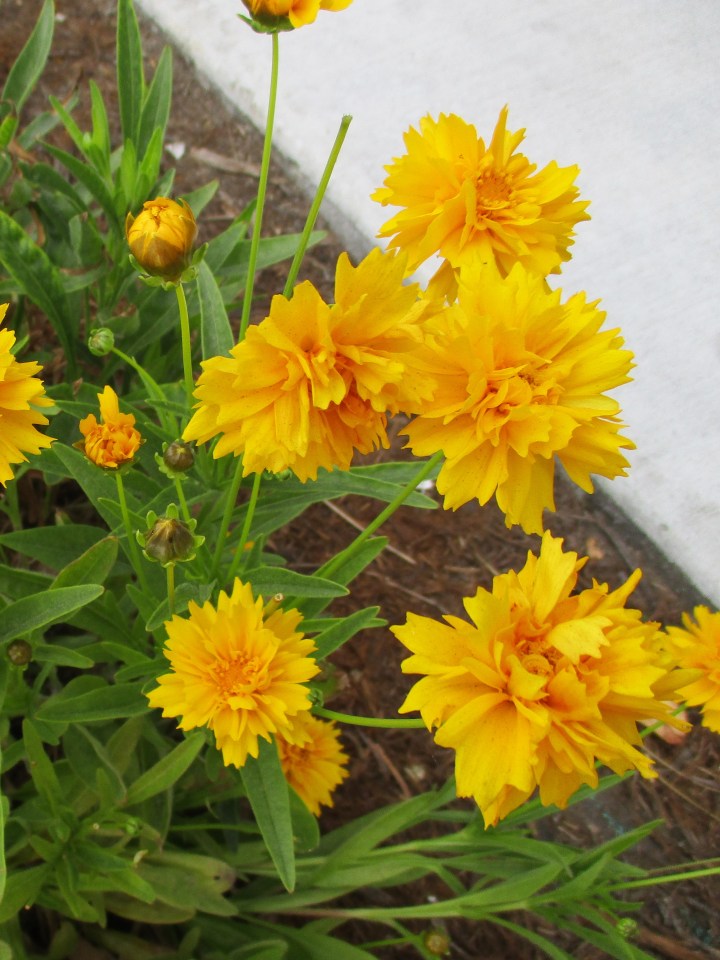 It is a common theme. Coreopsis was a much simpler group of only a few specie and cultivars in the 1980s. There are now too many hybrids and cultivars to keep track of. They have been bred so extensively that they do not produce viable seed like the old fashioned types that can self sow so nicely, and were more closely related to the unimproved specie that would be found in the wild.
 Once it gets started in late spring, ‘Mystic Spires Blue’ salvia has potential to bloom until autumn. It only needs older floral spikes pruned away as they fade (deadheading) to stimulate new bloom. If it gets overworked and lanky without deadheading, it can be cut back in the middle of summer to start a new bloom cycle all over. It can get more than three feet tall and almost three feet broad.
 The native American coneflower, Echinacea purpurea, of the Midwestern prairies has been popular within its native range longer than anyone can remember, and has become more popular in the West as extracts of echinacea became a fad in herbal medicine several years ago. Modern garden varieties and cultivars have been bred and hybridized for larger and more colorful flowers.
 Nurseries are full of plants for sale. That is their business. They sell plants, and whatever plants need. With a bit of money, it is easy to purchase plants to compose an exquisite landscape. That is important to landscape professionals who make a business of composing landscapes to beautify the environments in which they work.
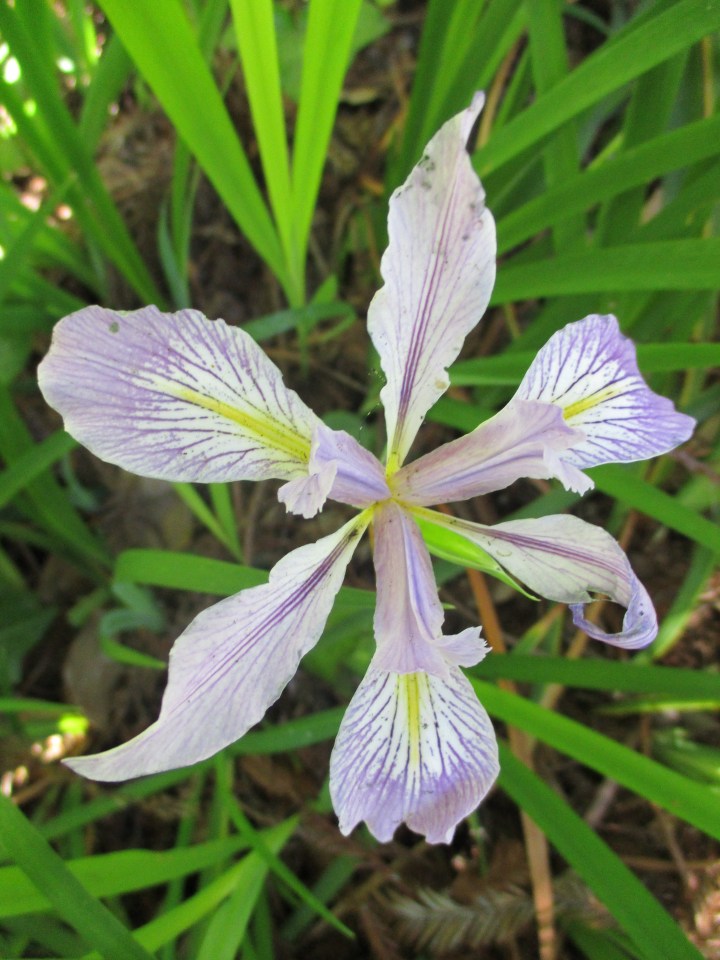 It is not as if the previous article about it was inadequate.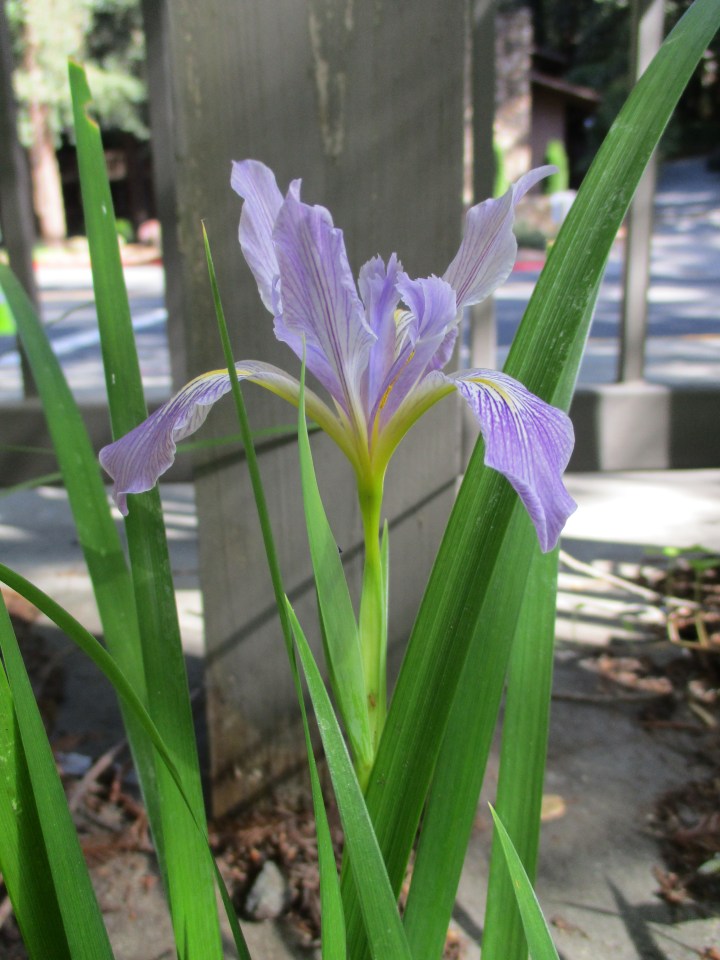
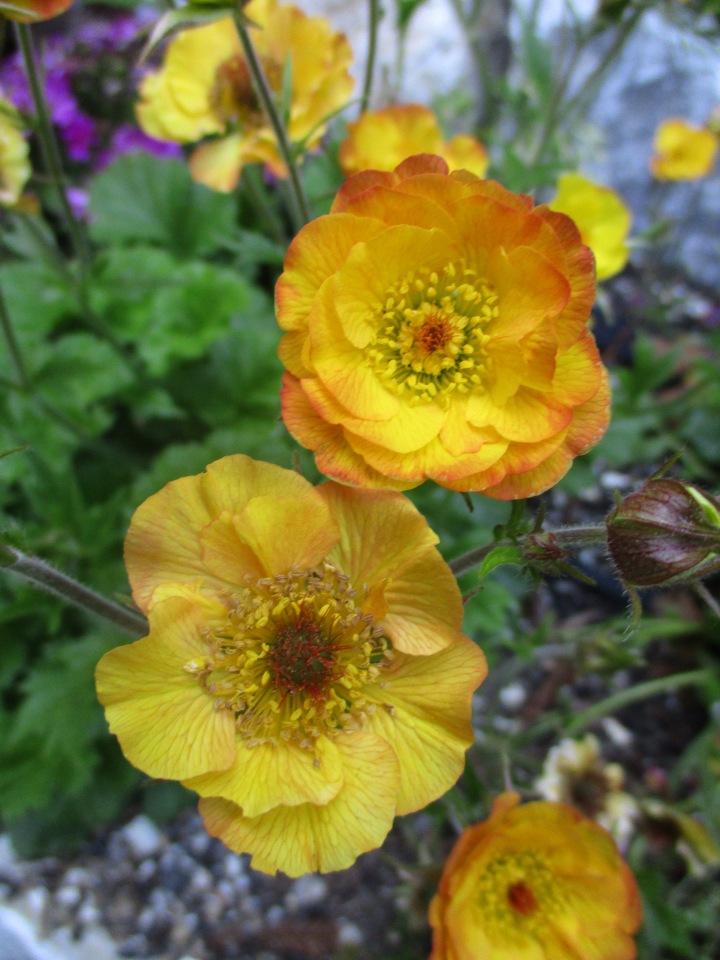 Wow, this is quite old school. Is it making a comeback? That would be nice. Avens, which is also known as Chilean avens, Geum quellyon, is an old fashioned perennial relative of the strawberry. Instead of producing fruit, it provides handsome yellow, red or coppery orange flowers that look something like small single, semi-double or double anemones, but can bloom through most of May.
 Daffodils, freesias, lilies, snowdrops and the various early spring blooming bulbs and bulb like perennials will be finishing soon if they have not finished already, leaving us with the annual question of what to do with the foliage after bloom. The plants will not bloom again until next year, and the remaining foliage might be unappealing without bloom. Much of it slowly deteriorates into summer.
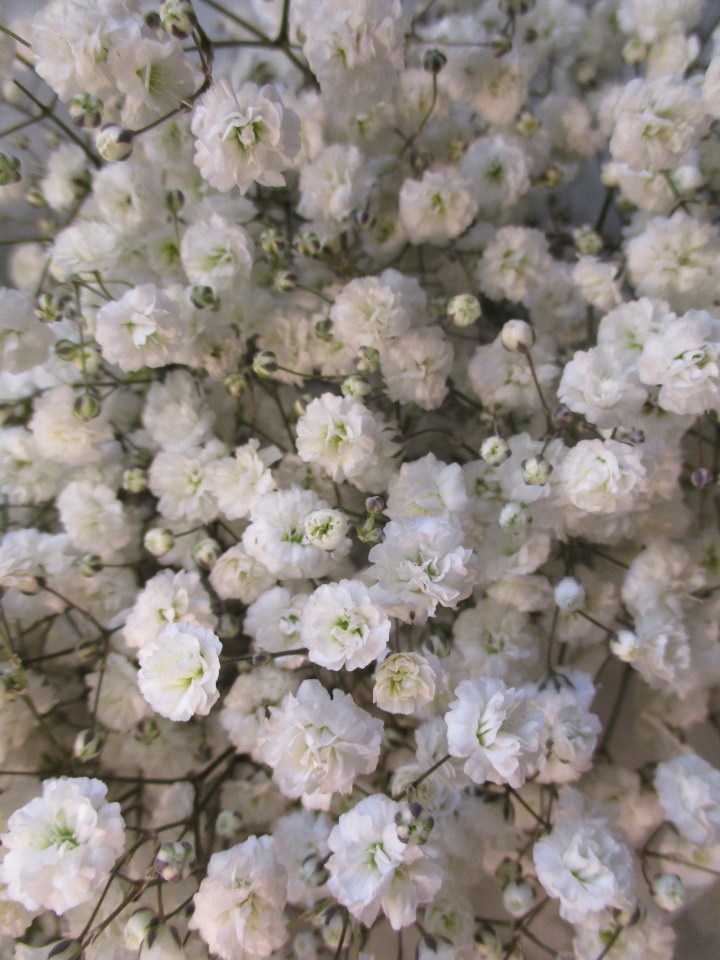 You might think that such a popular flower would be easy to get a picture of. Baby’s breath, Gypsophila paniculata, is everywhere, and almost a standard component of the mixed bouquets found in supermarkets. However, the flowers are so small and so sparsely arranged on thin stems, that they do not look like much in pictures. This picture is a closeup of a tightly bound bundle of bloom.
 It looks like sweet alyssum, but is not even close. The tiny white flowers and finely textured foliage work almost as well for similar uses in the landscape. In fact, the plants are most often grown as short term warm season annuals. However, candytuft, Iberis sempervirens, is really a perennial that can be cut back in autumn, regenerate through winter, and bloom for spring and early summer.
 Tony Tomeo