The Right Bulbs Save Energy

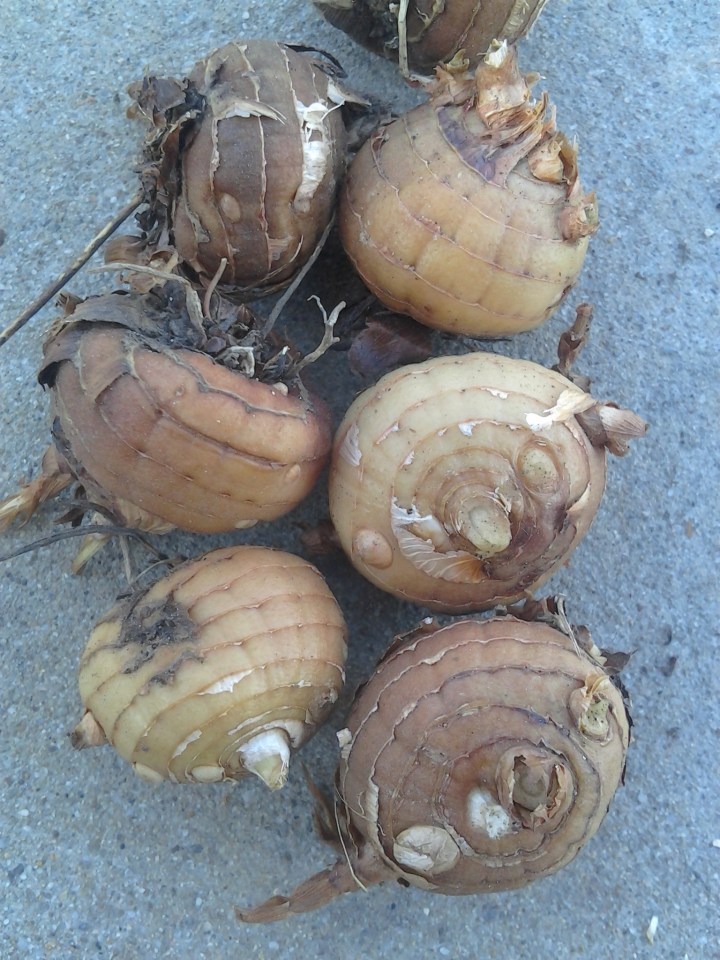
51014thumbAfter working so hard to bloom so impressively in spring or summer, bulbs redirect their efforts into saving up their energy for winter dormancy. That is why their fading foliage lingers after faded flowers get pruned away. The foliage eventually dries and deteriorates, leaving plumped dormant bulbs to overwinter underground. It is all their natural life cycle.
However, to bloom well the following spring, many bulbs need to be chilled while dormant. Such bulbs are from cooler climates. The chill convinces them that it really is winter, and that it will be safe to bloom when weather gets warmer in spring. They can get rather confused without adequate chill. Some may never bloom as well as they did their first spring.

Tulip, hyacinth, lily, anemone and ranunculus are probably the best examples of the worst perennial bulbs. Technically, they are perennials. Where winters are cooler, they may naturalize and bloom every spring. Here, winters are just too mild. They bloom very impressively in their first spring, but rarely bloom as well the second spring, and only if pampered.

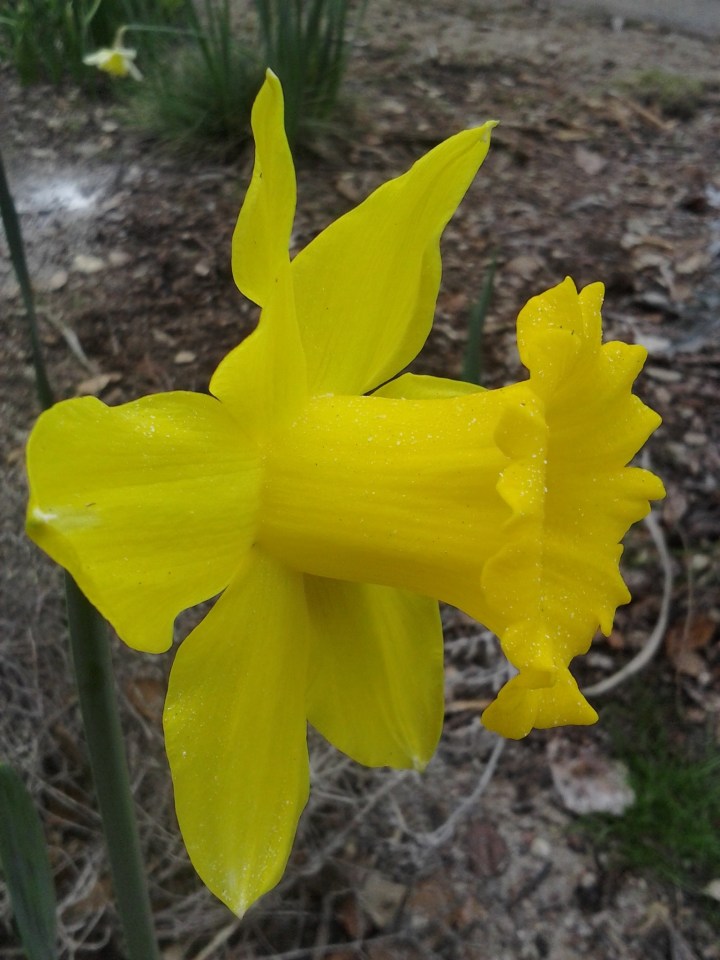
Narcissus, daffodil, grape hyacinth and bearded iris are much more reliable. Crocus and freesia are a bit more demanding, but can be reliable if they get what they want. Montbretia and crocosmia are reliable enough to become invasive. Gladiola and dahlia, which are not quite as reliable as crocus, are summer bulbs, so get planted a bit later.

Of course not all bulbs are true bulbs. Some are corms, rhizomes, tubers or tuberous roots. Some get planted deeply. Bearded iris and a few others get planted shallowly. A few others do best in pots. In their first year, some bulbs can be planted in phases so that they bloom in phases the following spring. However, all bulbs of each type will synchronize by their second year.

Anemone, ranunculus and bearded iris bloom too synchronously to be phased. No matter when they get planted, each type blooms at the same time. However, some bearded iris bloom as early as the earliest of daffodil, and others bloom late. Some even bloom twice!

Six on Saturday: Zoning Out


Zonal geraniums, Pelargonium hortorum, can bloom anytime it wants to here, but really does tend to slow down somewhat through autumn and winter. As growth slows, older foliage will deteriorate and become more susceptible to rust and decay. Where exposed, older grown might succumb to frost over winter. Zonal geraniums will soon be zoning out.

Such deterioration and winter frost damage is not as bad as it looks, unless of course, frost is severe enough to kill the entire affected plants. By the time old growth looks shabby enough to be removed, new growth is probably already starting to develop down near the roots. After the last frost date (when no more frost is likely), old growth can be cut back to expose new growth that will soon replace it. Even if new growth is very minimal, growth will accelerate once exposed by the removal of old foliage, and as weather warms into spring.

That is still a few months away. For now, zonal geraniums are just beginning the process of zoning out, which is why their floral trusses are neither as big nor as abundant as they had been through summer. While they are busy with that, autumn flowers are beginning to bloom, and some of the winter flowers are getting ready for their season. Winter flowers get started in autumn because growth is slower in cooler weather, even for plants that prefer cool weather.

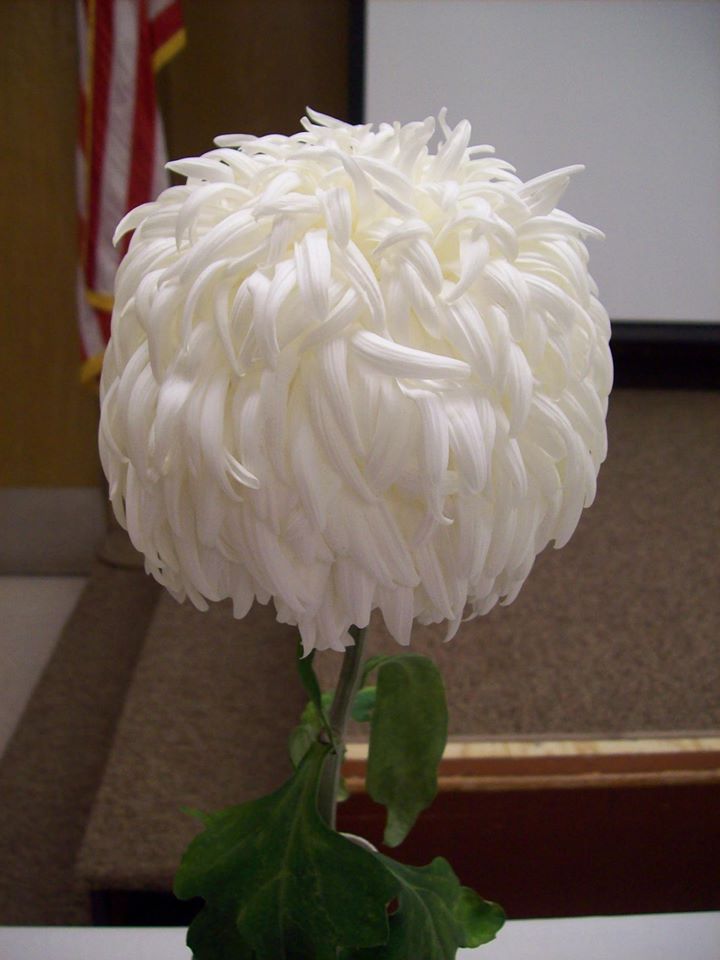
1. Chrysanthemum is ‘the’ classic autumn flower. These are blooming well enough in the infirmary that they will soon be relocated out into prominent spots or pots out in landscaped areas.P81006

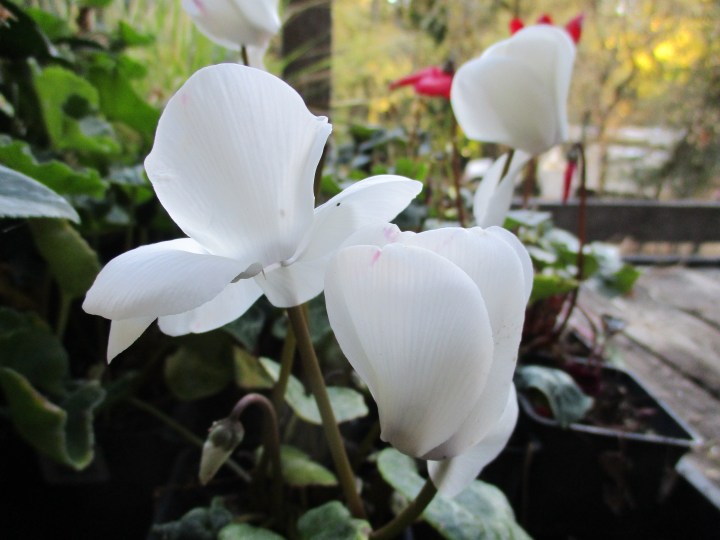
2. Cyclamen is a winter flower that is just now starting to grow after its long summer dormancy. These rudimentary first blooms are not much to brag about, but will likely be followed by enough for these plants to also be recycled back into the landscape from which they came last spring. These white flowers really are the best of the cyclamen for now. (I did not take this picture just because white is my favorite color.)P81006+

3. Reddish orange zonal geranium, and the magenta zonal geranium below, exhibit two more of those colors that I can not identify. I will just say that it is reddish orange. I happen to like it because the color resembles that of one of my two first zonal geraniums. Mine is not so well bred, so exhibits weedier growth and less prominent bloom. Nonetheless, I like mine because it is so resilient and predictable. I cut it to the ground at the end of winter, before new growth develops, and it grows right back. This prettier garden variety would probably prefer a gentler process.P81006++

4. Red zonal geranium seems to me to be the most elegant of those blooming here presently. Of course, I do not know for certain if it is. I do not know much about color. It just seems to me that this color is not as garish as the magenta sort of color below, or as unrefined as the common reddish orange above.P81006+++

5. Magenta zonal geranium, like the reddish orange zonal geranium above, is another color that I can not identify. It is a bit too flashy for my taste. However, the other one of my two first zonal geraniums blooms with a softer hue of a similar color. As much as I prefer to not admit it, my two first zonal geraniums are still my favorites, even though they bloom in colors that I am none too keen on.P81006++++

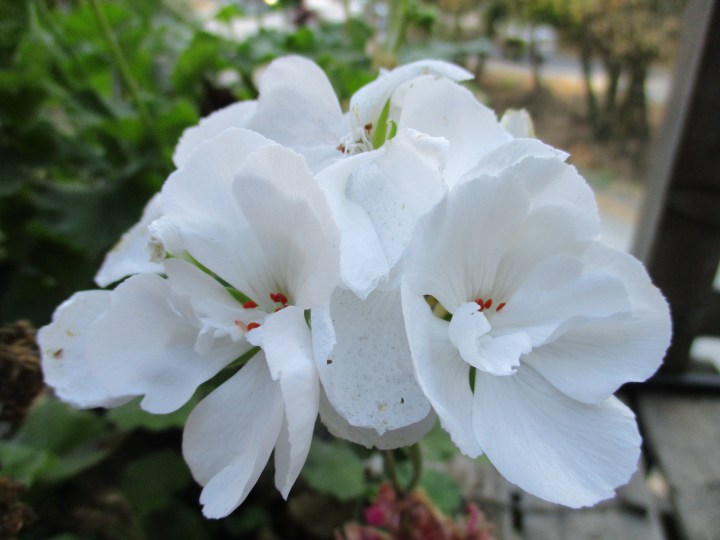
6. White zonal geranium happens to contrast well with the dark greens of landscapes in the redwood forests. Although it is my favorite of the four zonal geraniums that are blooming here now, my first two weedy zonal geraniums that bloom with unrefined reddish orange and garish magenta are still my two favorites.P81006+++++

This is the link for Six on Saturday, for anyone else who would like to participate:

https://thepropagatorblog.wordpress.com/2017/09/18/six-on-saturday-a-participant-guide/

Mulla Mulla

81010The common name sounds funny, but it is easier to pronounce then than the Latin name. Mulla mulla, Ptilotus exaltus, is an Australian species that has been locally available longer than its limited popularity suggests. It may seem to be more peculiar than it is because it is grown primarily by specialty growers, who happen to grow many cool plants that should be more popular than they are.
Like many species that are grown as annuals, the mulla mulla is really a short term perennial that can perform for a few years, but is unfortunately more often grown as a warm season annual. It will finish blooming soon, but if left in the garden through winter dormancy, young plants should resume in about April or May. It can succumb to frost if the weather gets cold enough through winter.

Although it can survive with less, mulla mulla prefers somewhat regular watering, and good sun exposure. New spring growth develops rather vigorously without getting much more than half a foot high and wide. Fuzzy cylindrical blooms that stand above the foliage are about three inches long. Floral color is pinkish mauve, with a silvery sheen. Deadheading promotes subsequent bloom.

Six on Saturday: Gazania


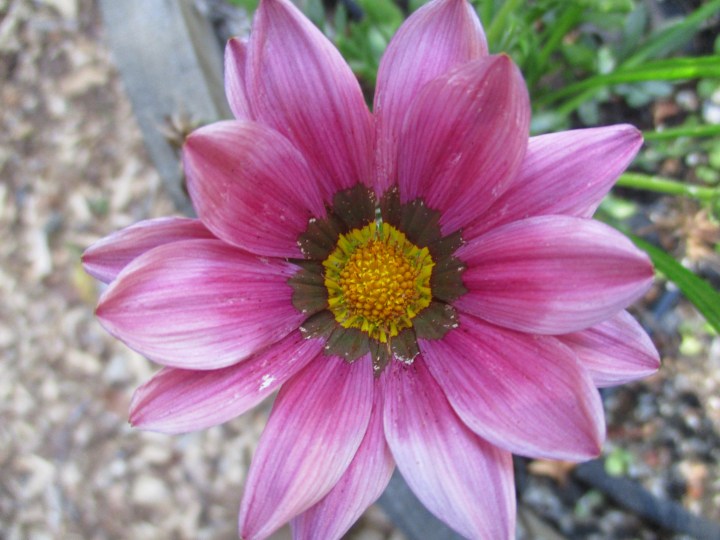
Gazanias were not planned. The English daisies that were planted last spring as warm season annuals that might hopefully continue as perennials succumbed to rust. Seriously! This rust was nasty! I had no idea that English daisy was so susceptible to rust! They were so ugly that they needed to be removed. They were replaced with the gazanias a bit more than half way through.

Gazanias are not the flashiest of choices for the prominent planters that they went into, but they work. If they continue to bloom through winter, they can stay as long as they like. If they stay long enough to get bald spots, we can trim around the edges and plug the scraps back into the bald spots. I would rather put a bit of effort into maintaining them than replace them as the seasons change.

These pictures were taken about two weeks ago, along with the picture of the gazania that was posted last week. For some unknown reason, the gazanias are presently taking a break from blooming.

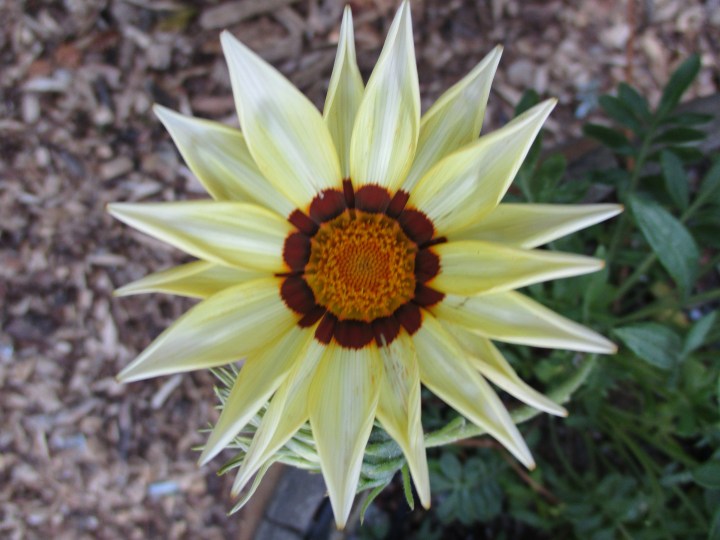
1. White is actually not my favorite color for gazanias. Yes, white is my favorite color. I just think that gazanias are at their best in brighter colors like yellow and orange. This white is not the best anyway. It looks like very pale yellow to me.P80922

2. Yellow, in conjunction with orange, is one of the two classic colors for gazanias, and is one of my two favorites . . . in conjunction with orange.P80922+

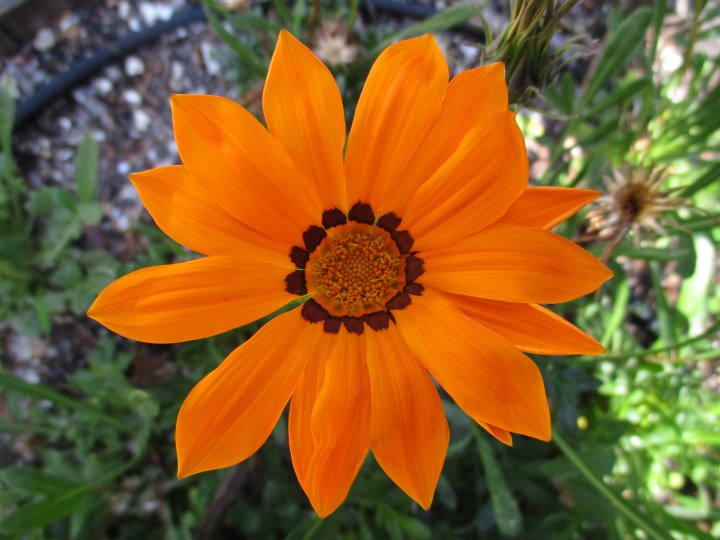
3. Orange is the other half of the caption to the picture above. (Just read the same caption, and switch ‘yellow’ for ‘orange’, and ‘orange’ for ‘yellow’.)P80922++

4. Pink might really be light burgundy. It was a bit darker when it first bloomed. This might be one of those colors that only girls can identify.P80922+++

5. Yellow with red stripes looks like something that blooms in the garden of Ronald McDonald.P80922++++

6. Cream with burgundy stripes looks like something that blooms in the garden of a clown with slightly more discriminating taste.P80922+++++

This is the link for Six on Saturday, for anyone else who would like to participate:

https://thepropagatorblog.wordpress.com/2017/09/18/six-on-saturday-a-participant-guide/

Lion’s Tail

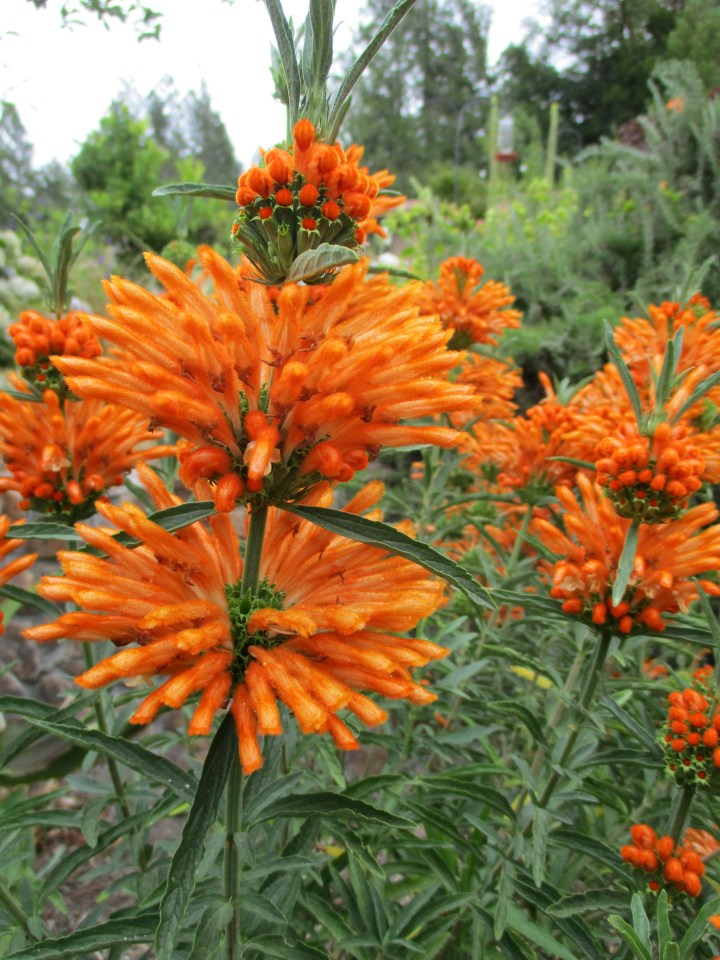
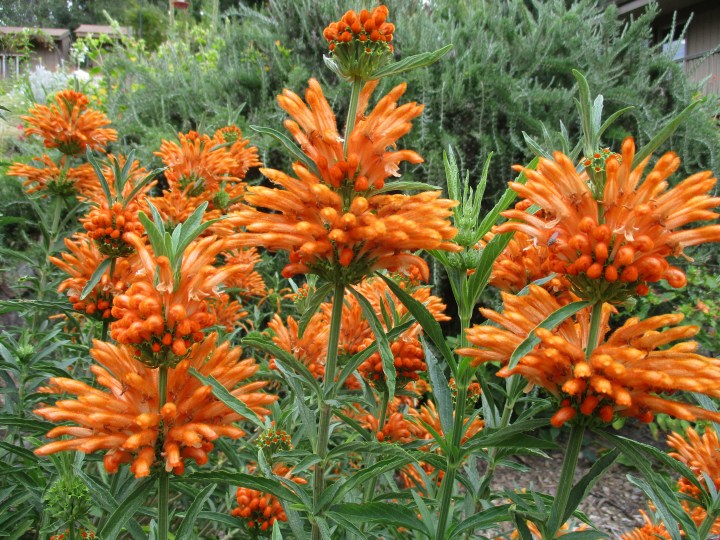
80919It does not get much more orange than this. Lion’s tail, Leonotis leonurus, tends to start with a relatively light duty bloom phase in the middle of spring, and then continue blooming in increasingly prolific phases until it finally culminates with the most spectacular bloom phase of the year about now, late in summer or early in autumn. The bloom is about as bright orange as California poppy!
Deadheading and pruning between bloom phases is not as simple as it might seem. Cutting back too aggressively postpones the next bloom phase. Bloomed stems should instead be cut back just below the deteriorating blooms. This unfortunately allows maturing plants to get somewhat overgrown and in need of more severe pruning over winter, before their first bloom phase of spring.

By now, well blooming plants may be as tall as six feet. As they mature, plants tend to get a bit wider than tall. The narrow evergreen leaves are about three inches long. Bloom is typical of related salvias, with dense tufts of tubular flowers neatly arranged in tiers on upright stems. Lion’s tail just happens to bloom with distinctively wide floral tufts. Cultivars with yellow or white flowers are rare.

Blue Marguerite

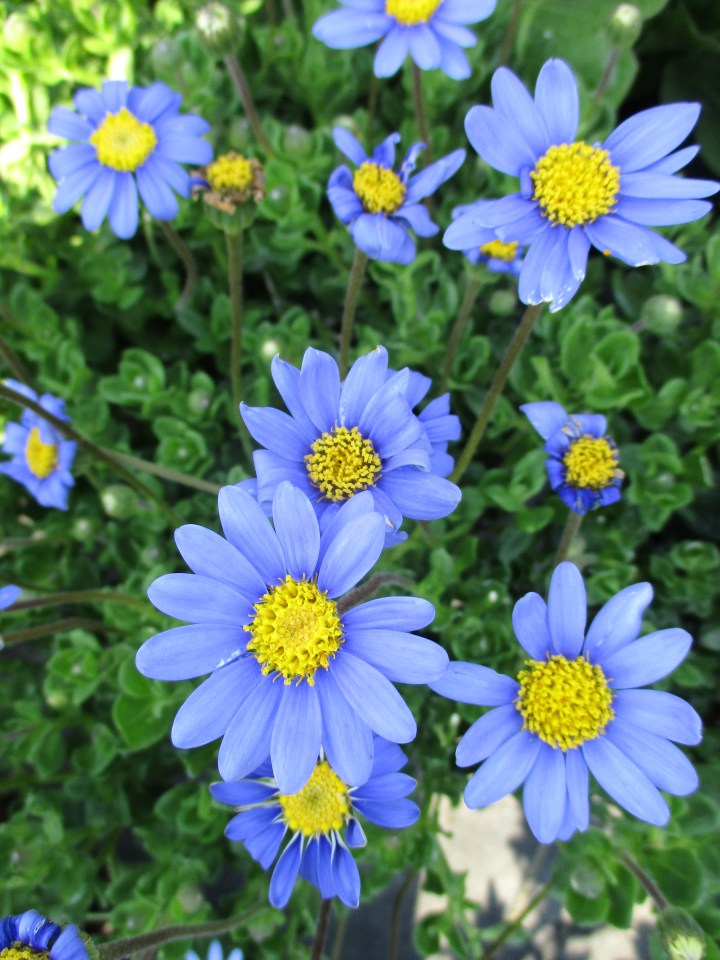
60907Most blue flowers are blushed with purple to some degree. Except for lily of the Nile, true blue flowers are quite uncommon. Even with their yellow centers, the tiny daisy flowers of blue marguerite, Felicia amelloides, seem to be too blue to be real. They are almost expected to fade to lavender. Bloom may not be as full as it was a month ago, but continues as long as the weather is warm.
Mature plants are usually less than a foot and a half tall, and not much wider, with a symmetrically rounded form. The branches are rather fragile, and can be broken by something as trivial as a clumsy cat. They really are not strong enough for bouncy dogs or children. Yet, their tiny oval leaves are just raspy enough to deter deer. Unfortunately, blue marguerite plants live only a few years.

Six on Saturday: Again – Not My Garden


There are just too many cool things blooming in my colleague’s garden to not get some more pictures. Some may seem to be redundant to others that were shared earlier, as well as to some that have not been shared yet. The unknown salvia and lion’s tail are finishing their bloom, as it the know what time of year it is. The weather may not seem like that of late summer, but they know otherwise. I got these pictures while I could. African iris and African daisy are oblivious. They bloom whenever they want to, and African iris can even bloom a little bit through winter if it chooses to. Autumn sage, as the name implies blooms best about now. Of these six, only the four O’clock will deteriorate in autumn and die back through winter. The salvias will get pruned back anyway.

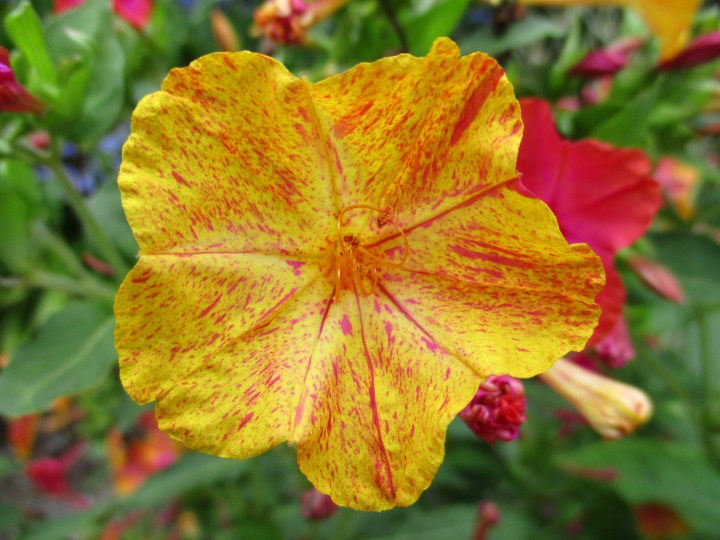
1. Four O’clock, Mirabilis jalapa, are the same as those featured last Saturday in Six on Saturday, and in the following brief article about the individual plants that bloom with flowers of different colors. This one looks like a blob of mustard with a bit of ketchup that squirted out of a hamburger as someone bit into it. The rich red flower in the background that looks more like plain ketchup is on the same stem.P80908

2. Autumn sage, Salvia gregii, is a different cultivar of the same species featured yesterday. The picture that was posted yesterday was from a specimen in the landscape at the library in town. This picture is that of a cultivar of smaller stature but with bigger flowers. The zonal geraniums of questionable (pink, salmon, peach or whatever) color that were featured last week can be seen in the background.P80908+

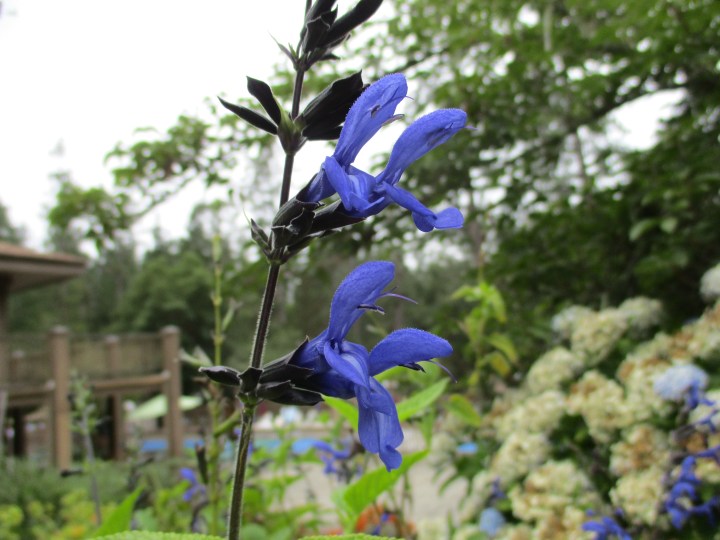
3. Black and blue salvia, Salvia guarantica, looks just like this. . . or this looks just like black and blue salvia. I really do not know what it is. It sure is an exquisite blue though. The base of the plant is rather scrawny, almost as if it intends to grow only as an annual. It will get cut back like other salvias, but not as aggressively. If it regenerates from the base like it should, the old growth can be cut back later.P80908++

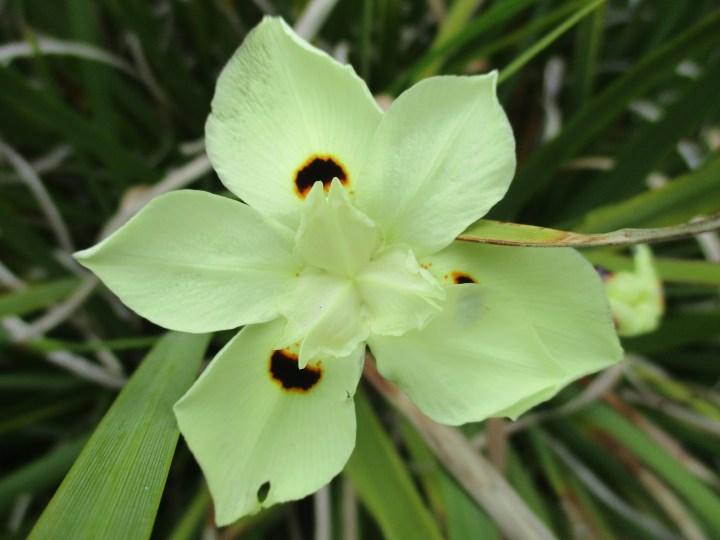
4. Yellow African iris, Morea bicolor, is sort of cliché. However, this is the only one anywhere around. Seriously, with all the many acres of landscape that my colleague maintains out there, this is the only one. The more common white African iris, Dietes iridioides, is lacking completely. (‘Dietes‘ and ‘Morea‘ are synonyms, but ‘Dietes‘ is uses more for the ‘iridiodes, and ‘Morea‘ is used more for the ‘bicolor‘.)P80908+++

5. African daisy, Osteospermum ecklonsis, looks something like gazania. There are plenty pictures of gazania as well, but I will use them for the next two weeks. This species of African daisy is shrubbier and more colorful than the sprawling types that were popular as ground cover back in the 1980s. It blooms more profusely, and with more vivid colors. I probably should have gotten pictures of the other colors too.P80908++++

6. Lion’s tail, Leonotis leonurus, will be featured in my weekly gardening column this week, which shows up here on Tuesday. I am no fan of orange, but I can not dislike this bloom. The color is as flashy as that of California poppy. I will never understand why this perennial is not more popular than it it. It has been available longer than some of the less impressive salvias, but salvias are trendy. They are related of course.P80908+++++

This is the link for Six on Saturday, for anyone else who would like to participate:

https://thepropagatorblog.wordpress.com/2017/09/18/six-on-saturday-a-participant-guide/

Autumn Sage

50909Perhaps in the wild, it blooms in autumn. Where it gets watered in home gardens, even if watered only occasionally, autumn sage, Salvia greggii, blooms all through summer as well. If pruned back severely over winter, it starts to bloom even sooner in spring. The tiny flowers are red, rose, pink, peach, very pale yellow, lavender or white. Some poplar cultivars have bi-colored flowers.

Compact autumn sage that does not get much more than a foot tall is uncommon. Larger cultivars get four feet tall and broad, with more open growth. Most get about three feet high and a bit wider. Without severe winter pruning, stems can eventually get twiggy, with sparse foliage on the exterior. The tiny aromatic leaves are less than an inch long, and visually resemble oregano.

Even though it is not native to California, autumn sage is popular for native landscaping because it does not need much water. Just like native sages, it attracts butterflies and hummingbirds.

Fernleaf Yarrow

70830‘Moonshine’ is probably the epitome of fernleaf yarrow, Achillea filipendulina, even though it is technically a hybrid. From the middle to the end of summer, its three inch wide corymbs (flat-topped trusses) of tiny bright yellow flowers stand as high as three feet above ferny and gray basal foliage. Bloom is best in full sun and warm exposure. Established plants do not need too much water.

Most varieties of fernleaf yarrow also bloom with bright yellow or gold flowers. Some might bloom with pale yellow, rosy pink, pale pink, reddish, white or pink and white flowers. All are good cut flowers, and can be dried. Some varieties are more compact. The most compact varieties work nicely in planters of mixed perennials. Butterflies and hummingbirds find them wherever they are.

Pruning out deteriorating blooms may promote sporadic subsequent bloom until autumn. However, some plants may bloom all at once, and then not bloom again until the following summer. Large blooms on the most vigorous plants may need to be staked. New plants can be propagated by division from mature plants. ‘Moonshine’ and many other cultivars are sterile. Others might self sow.

Where The Green Ferns Grow

80829thumbThe list of what ferns will not do is more noteworthy than the list of what they will do. They do not bloom with colorful or fragrant flowers. The do not produce fruit. Very few turn color in autumn, and their color is generally nothing to brag about. Most ferns will not maintain their appeal through drought, or if neglected too long. Nor will they tolerate heat and wind, especially in full sun exposure.

Yet ferns are still popular for what they ‘will’ do. They provide remarkably distinctive and stylish foliage. They survive in spots that are too shady or perhaps too damp for other plants. Ferns will be quite happy in pots or planters, and some are happy to grow as houseplants. Ferns somehow avoid getting eaten by deer. If a fern gets tasted by a deer who does not know better, it will survive.

All ferns are perennial. Most are evergreen. Their foliage arches upward and outward from the terminal buds of stout rhizomes. Some ferns develop dense foliar rosettes. A few develop trunks by growing vertically instead of horizontally, and dispersing roots downward through their own decomposing fibrous rhizomes. Many ferns will get quite broad. Many are quite delicate and diminutive.

Ferns may not require too much maintenance, but the little bit of maintenance they require is somewhat important to keep them looking tidy. Old foliage should be pruned away as it is replaced by new foliage. This may be as simple as pruning away all old foliage just after new foliage develops early in spring. For some ferns, small batches of old foliage might get removed through the year.

The foliage of ferns is comprised of leaves known as ‘fronds’. With few exceptions, the fronds of ferns are intricately lobed or divided into smaller leaflets known as ‘pinnae’. (‘Pinna’ is singular for pinnae.) These pinnae are arranged on opposite sides of fibrous leafstalks known as ‘rachi’. (‘Rachis’ is singular for rachi.) Rachi are quite fibrous and tough, so should be cut close to the ground with pruning shears when they get groomed, rather than plucked.