
The deeply colored foliage of black mondo grass, Ophiopogon planiscapus ‘Nigrescens’, is about as convincingly ‘black’ as foliage can get. It is darker than bronze New Zealand flax, purple leaf plum or bronze coral bells. Only purple beech or chocolate coleus are comparable. The foliage is dark enough to contrast very well against lightly colored planters or gray concrete, so works well in urns or mixed perennials, and bordering walkways. If it gets enough sunlight, black mondo grass makes a nice small scale ground cover under Japanese maples.
Mature plants stand only about half a foot tall, and spread slowly. The happiest plants can get nearly twice as tall. The softly cascading leaves are only about a quarter inch wide. Small spikes of tiny pink flowers that sometimes bloom in summer would contrast nicely against the dark foliage, but are rarely seen above the foliage. Black mondo grass prefers rather rich soil and somewhat regular watering. However, as they disperse roots, older plants do not seem to mind too much if they briefly get a bit dry.



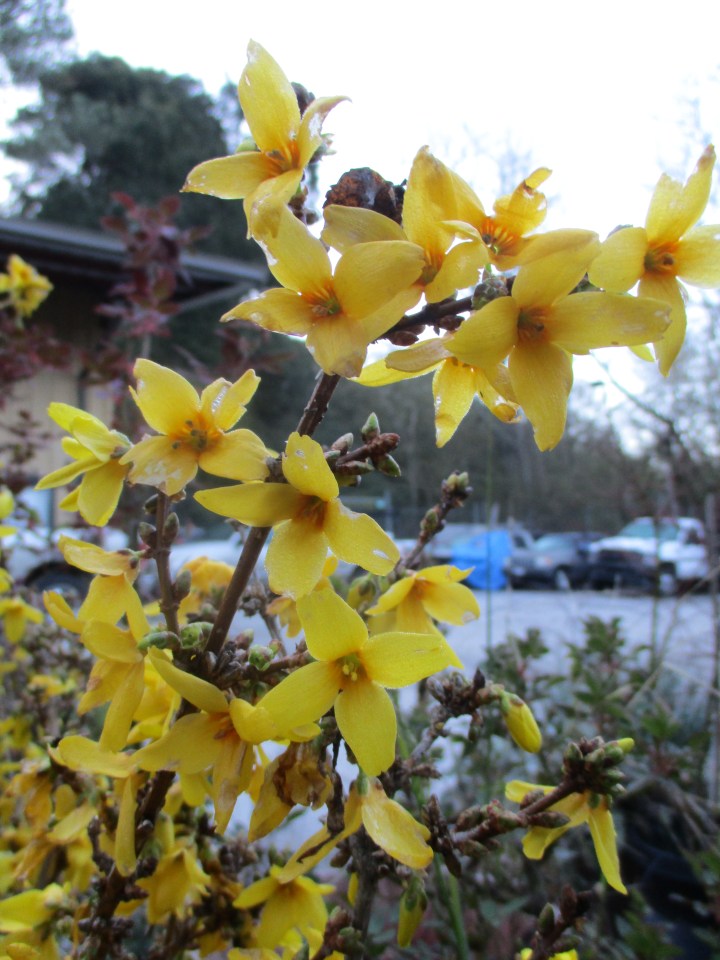 This may seem to be three months early, or an entire season out of season; but this is when bare root forsythia, Forsythia X intermedia, gets planted. Even so, the smaller of new bare root plants will bloom with only a few flowers early in their first spring, so will not produce their famously profuse and garishly bright yellow bloom for another year and three months. They will be worth the wait.
 The simple pink and white of ‘good & plenty’ candy is what fairy primrose, Primula malacoides, is known for. Pastel purple is also popular. Rosy reddish pink and deeper pinkish purple are somewhat rare. The small flowers are arranged in circular trusses that stand as tall as one foot, just above the softly mounding light green foliage. The rounded leaves are slightly fuzzy. All parts of fairy primrose are toxic, and to those who happen to be allergic to it, can be as severely irritating to the skin as poison oak!
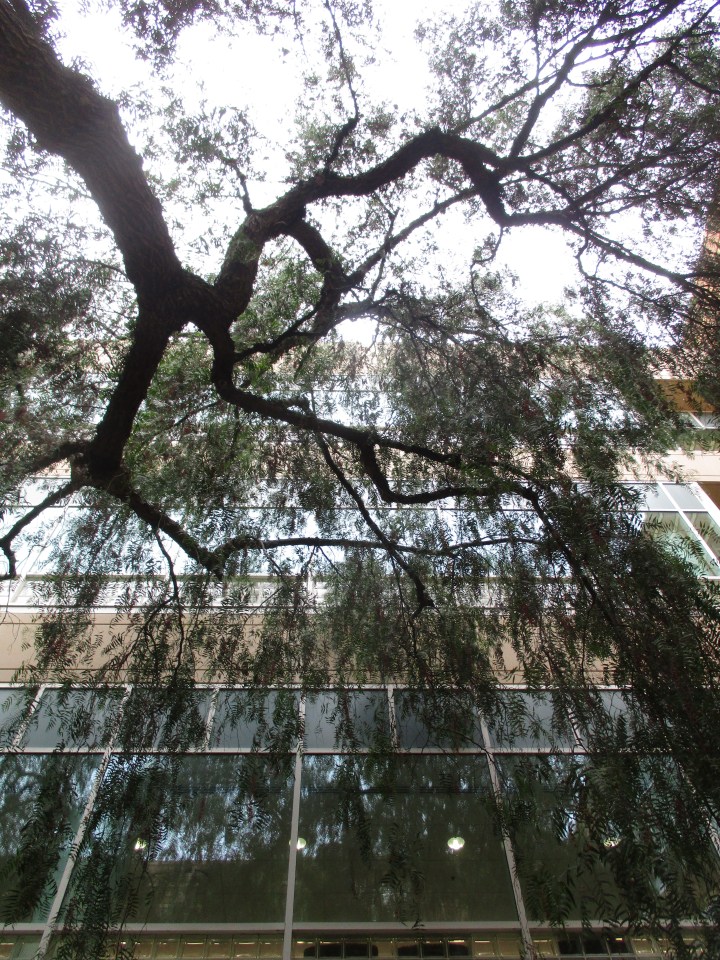 It has been naturalized in Southern California long enough to seem to be native. California pepper, Schinus molle, is actually endemic to Peru and adjacent arid regions of South America as far south as Central Argentina. Furthermore, although its small pink fruits with hard black seeds are sometimes used for culinary purposes, it is actually not related to black pepper, and is mildly toxic.
 Tony Tomeo