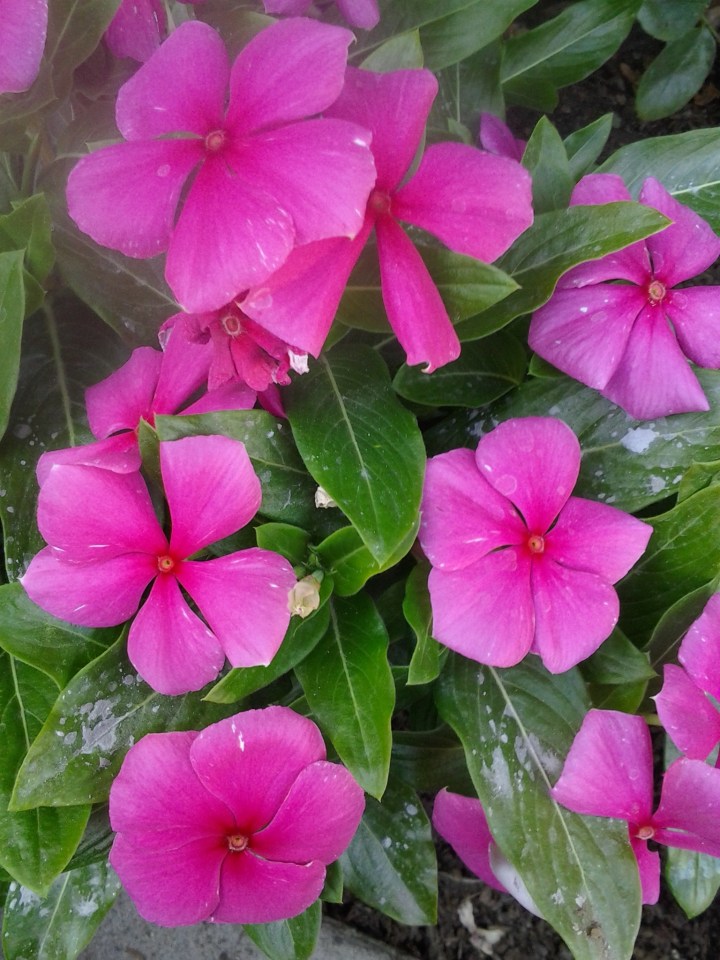
 Like gardenia, dogwood and snapdragon, the potentially finicky Madagascar periwinkle, Catharanthus roseus, is often challenging to grow. It enjoys, but seems to prefer more humidity than it gets here. The happiest plants can get nearly two feet tall and wide in sheltered and humid spots. (They can get even larger in exposed spots in humid climates.) Yet, most of us are satisfied with relatively scrawny plants less than half a foot tall.
Madagascar periwinkle is popularly grown as a warm season annual until the weather gets too cool in late autumn, but it can tolerate a bit of cool weather, and can even survive as a perennial through winter if sheltered. The one or two inch wide flowers have five petals and small red centers, and can be white or various shades of pink, pinkish red, lavender or pastel orange. All parts of Madagascar periwinkle are incidentally toxic.
 Bugs Bunny was an expert. He was always chewing on a carrot, Daucus carota, and rudely talking with his mouth full. Because carrots can be stored in refrigeration for a few months, Bugs Bunny could get one whenever he wanted to. However, in home gardens, they are cool season vegetables that are grown through spring and autumn, but not through summer or the middle part of winter.
 It seems that everyone who has ever experienced the seductive yet powerful fragrance of gardenia, Gardenia jasminoides, wants to grow it, but very few actually can. Gardenias like warmth, but prefer more humidity than they get here, which is why they seem to be happier in partial shade, in atriums, or in urns that can be moved out of harsh exposure during summer. In such sheltered spots, aphid, scale and sometimes whitefly can be problematic.
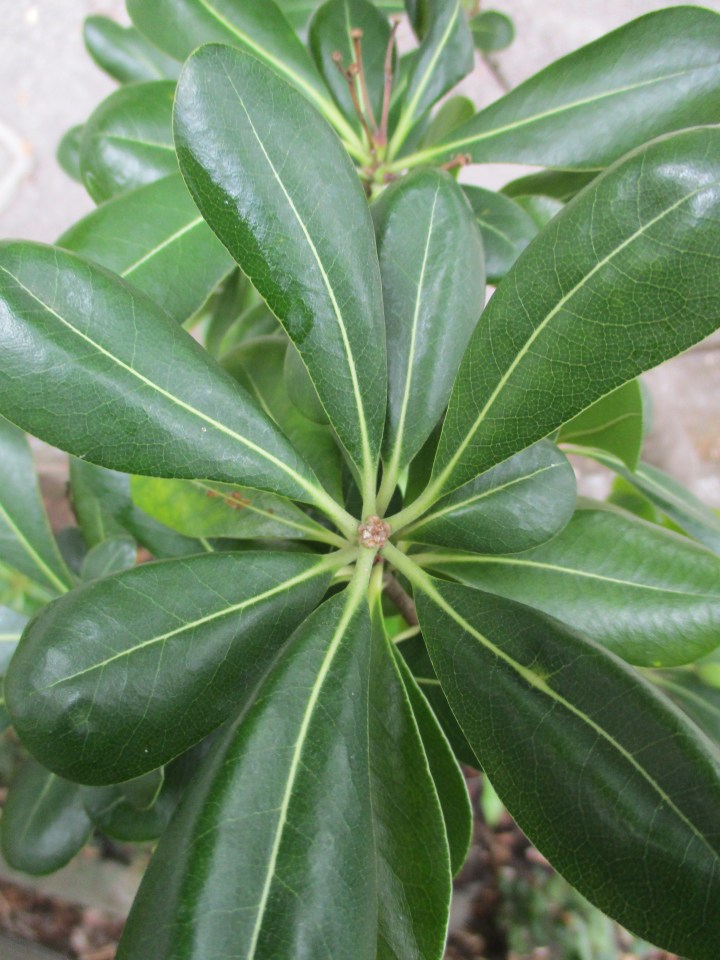 A surplus of common names seems to be a common theme for many plants that we thought we knew the names of. The simple Pittosporum tobira, which might be known here by its Latin name, might instead be known as mock orange, Australian laurel, Japanese pittosporum, and Japanese cheesewood. Its native range is about as diverse, including Greece, Japan, Korea and China.
 Not only does it start to bloom late in summer, but as the name implies, four o’clock, Mirabilis jalapa, blooms late in the afternoon to attract nocturnal moths for pollination overnight. By morning, the white, yellow, variable pink or rarely pastel orange flowers are closed, and their yummy fragrance is gone. Individual flowers often display irregular stripes or blotches of alternate colors, and can be divided into zones that are shaped like slices out of a pizza. Plants get nearly three feet high, but then die to the ground with the first frost. They regenerate from big tuberous roots as winter ends, and can seed profusely.
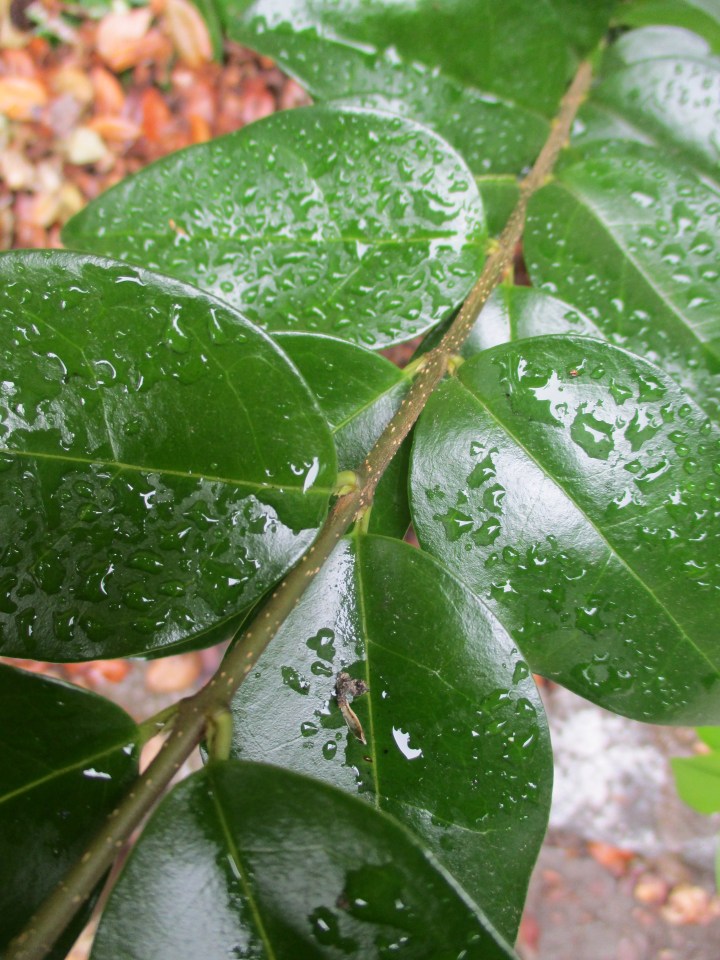 Here on the West Coast, privets had traditionally functioned like hollies had in the East. They are conducive to shearing into the big formal hedges that were popular during the Victorian period. Since then, as gardening space became more limited, the common glossy privet became less popular than the more compact and complaisant waxleaf privet, Ligustrum japonicum ‘Texanum’.
 A flower that is so prominent in American culture should have a more appealing name than black-eyed Susan. Even the Latin name, Rudbeckia hirta, sounds bad. Is Becky really so rude? Did she hirt Susan? Well, black-eyed Susan is good enough to be the state flower of Maryland, and is one of the most popular of flowers for prairie style gardens of the Midwest. After all, it naturally grows wild in every state east of Colorado. Here in the West, it is a light-duty perennial that is more often grown as an annual. As a cut flower, it can last more than a week.
 Within its natural range on the West Coast between the southern extremity of Alaska and the southern extremity of California, Western sword fern, Polystichum munitum, is the most common of the native ferns. A few disjunctive wild colonies live as far inland as the Black Hills of South Dakota. Yet, with few exceptions, Western sword fern is difficult to cultivate outside of the natural range.
 If you’re going to San Francisco, be sure to wear some flowers in your hair. In the 1960s and 1970s, such accessorizing with Paris daisy, Argyranthemum frutescens (which was at the time, Chrysanthemum frutescens), was a fad. The white flowers with yellow centers were about two or three inches wide. Modern cultivars have smaller flowers that might be light pink or pastel yellow.
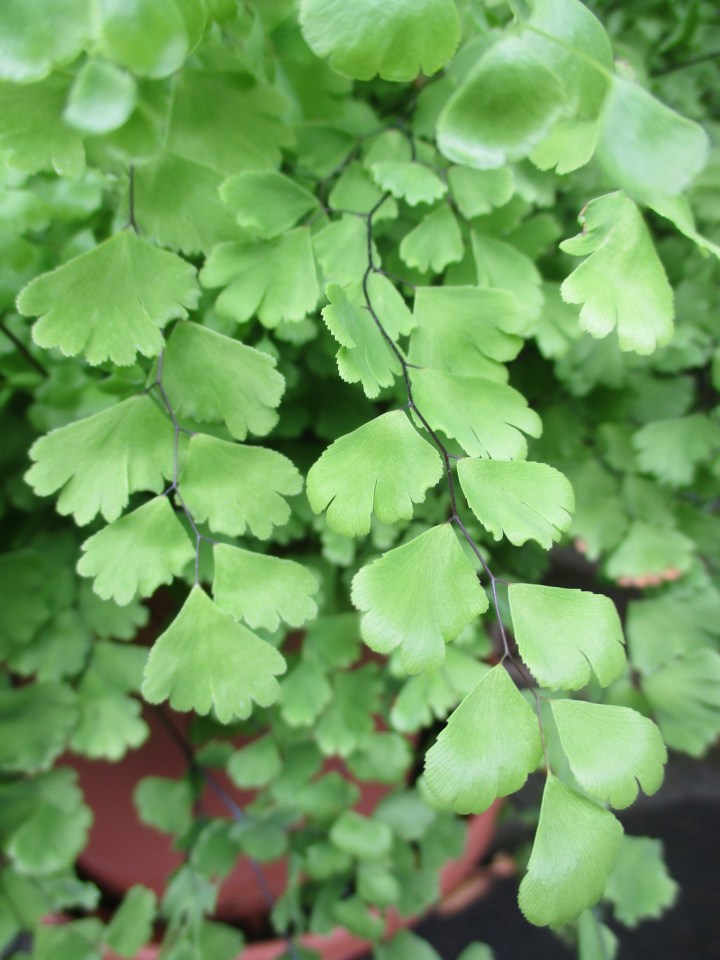 Some of us might remember Delta maidenhair fern, Adiantum raddianum, as a houseplant that was popular for terrariums in the 1970s and into the 1980s. Although quite happy in terrariums, it eventually gets big enough to crowd other plants in such tight spaces. It prefers to be potted on a porch, or in a regularly watered and sheltered spot in the garden. It tolerates quite a bit of shade.
