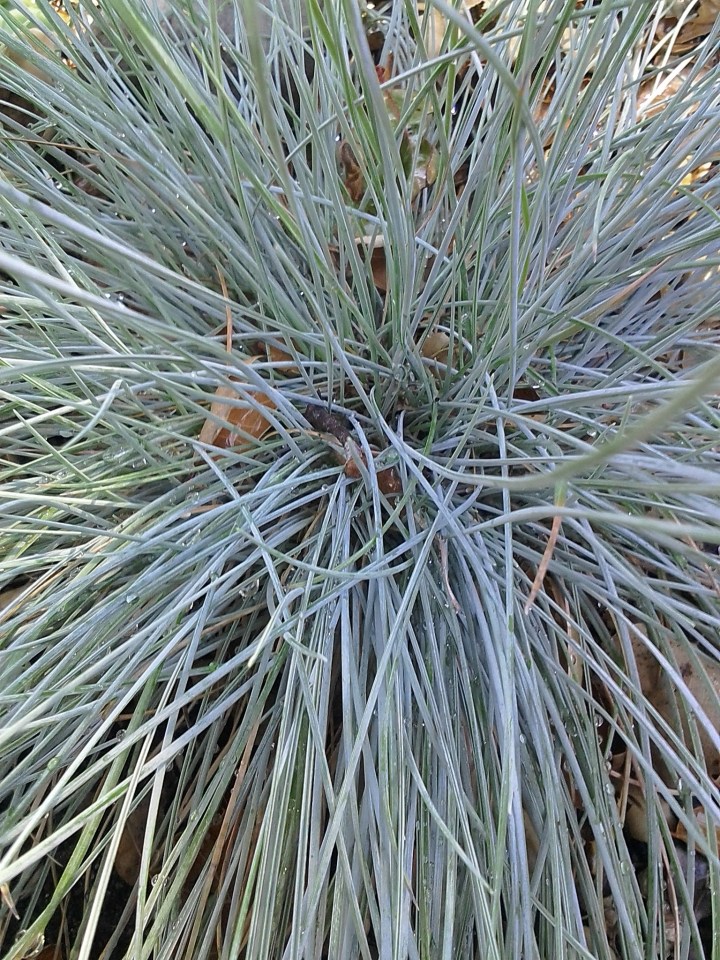
 To avoid confusion with dwarf fescue blue turf grass, Festuca ovina glauca is more familiarly known as blue festuca. If planted close together and left to spread as a small scale ground cover, it is much lumpier and mounding than uniformly spreading turf. It is a clumping perennial that is more popularly grown as distinct tufts of finely textured blue gray foliage that looks like gray sea urchins.
Either individually, or in small herds, these resilient gray sea urchins mix nicely with brightly colored flowering annuals. They do not need too much water, but can tolerate as much as annuals want. Their color is best in full sun. Partially shaded plants are greener, with longer and more pliable leaves. So are feral plants that rarely grow from seed. Modern cultivars are bluer than classic types.
The evergreen foliage does not get much higher than half a foot, with thin and less impressive floral spikes that stand a bit higher in summer. It slowly spreads wider, but before it gets a foot wide, it will probably be going bald in the middle. Overgrown or balding plants can be dug and divided into new smaller plants in winter. Old foliage that gets shorn in the process is replaced in spring.
 The dark bronze and variegated varieties of tree houseleek, Aeonium arboreum, are so much more popular than the simple species, that the simple species with plain green foliage is now rather rare. The succulent stems do not stand much more than three feet tall. They get about as broad, and can get even broader as lower stems develop roots and grow into new plants. The succulent rosettes of foliage of well watered plants can be fragile to handle. Mature plants can bloom in spring with unusual conical trusses of yellowish or chartreuse flowers.
 Even with all the unusual breeds of daffodil and related narcissus that are available nowadays, the traditional big yellow types that resemble the classic ‘King Alfred’ daffodil are probably still the most popular, even if real ‘King Alfred’ are unavailable. Although all narcissus are daffodils, the term ‘daffodil’ typically refers to those with fewer but bigger and bolder flowers that lack fragrance.
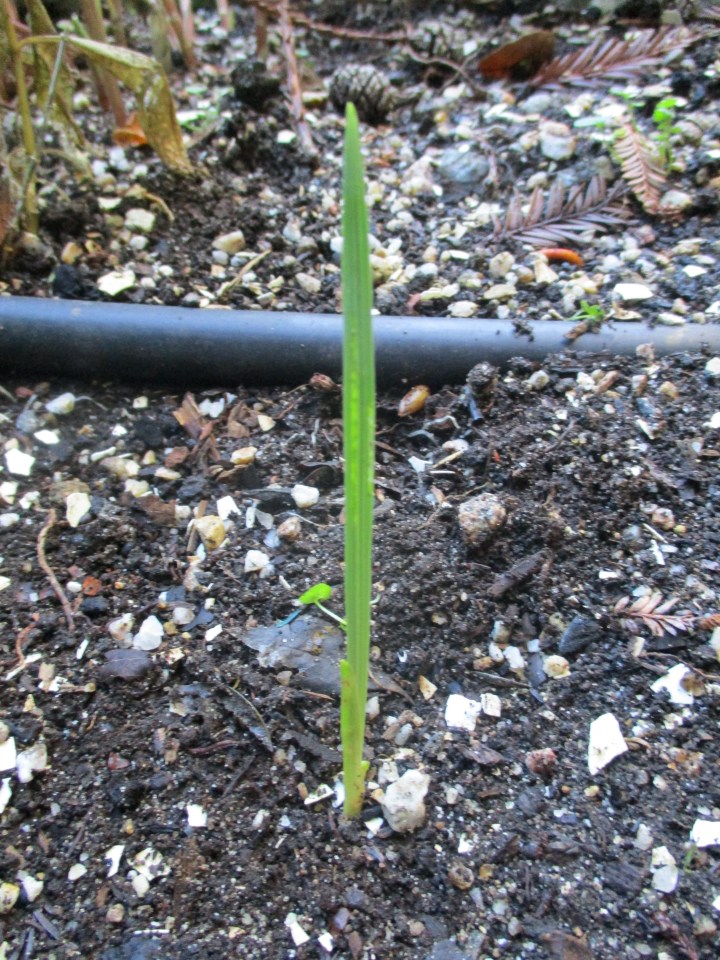
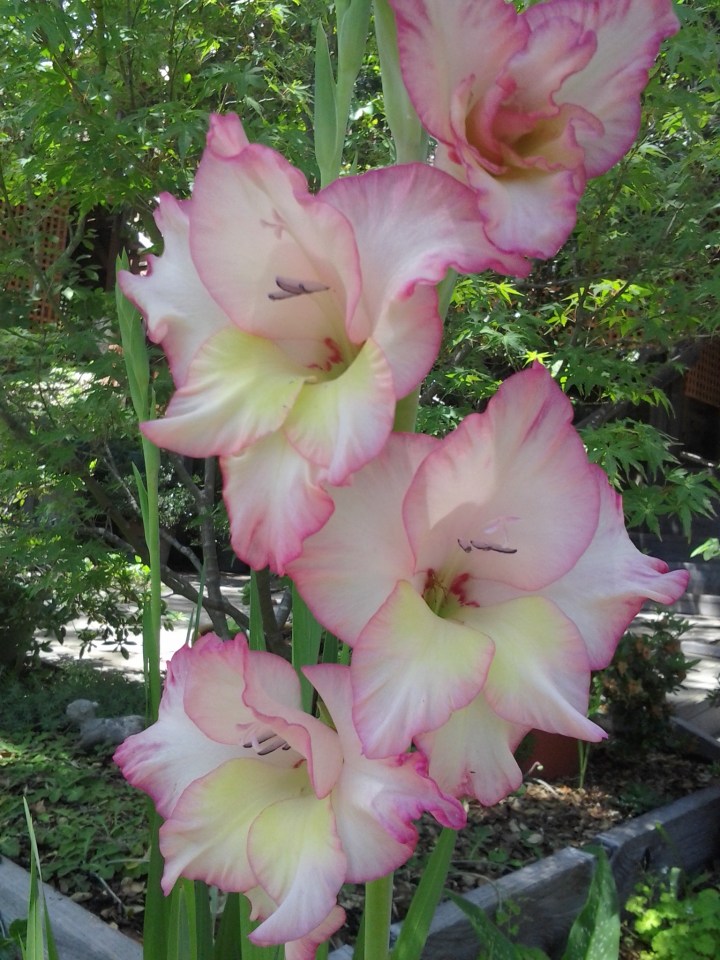 The sword of a gladiator was known as a gladio, and it probably resembled the leaves or floral spikes of gladiolus. These narrow and pointed leaves stand nearly vertical, angling only slightly to the left and right of a single flower stalk that can get as tall as six feet. The floral spike supports several very colorful florets that are arranged to the left and right, but tend to lean toward the front.
 It is no more in season now than the other stone fruits like apricot, cherry, plum and such, but this is the time of year that almond, Prunus dulcis, needs work. Established trees get pruned while bare and dormant. New trees, preferably bare root, get planted. The most popular modern cultivars available are self pollinating, and labeled as such. Old traditional cultivars require pollinators.
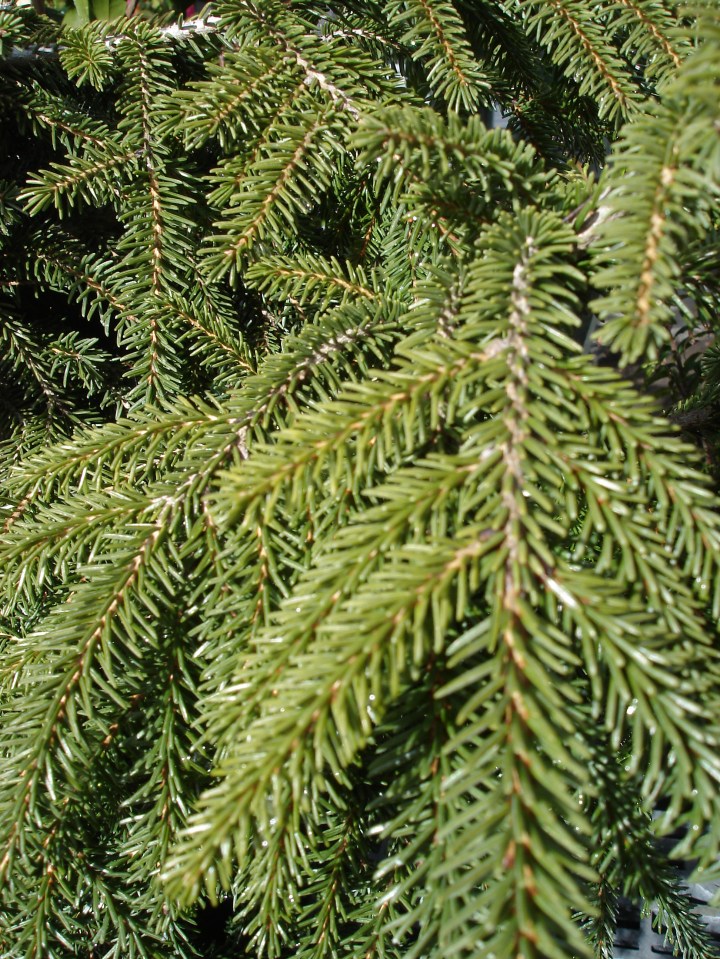 If it got as big as it does in the wild, Oriental spruce, Picea orientalis, would not fit into many home gardens. It can get more than a hundred feet tall! Fortunately, it does not often get much more than twenty five feet tall locally. Trees that compete with taller trees in forested landscapes might get to forty feet tall. Their symmetrically conical canopies get about fifteen or twenty feet broad.
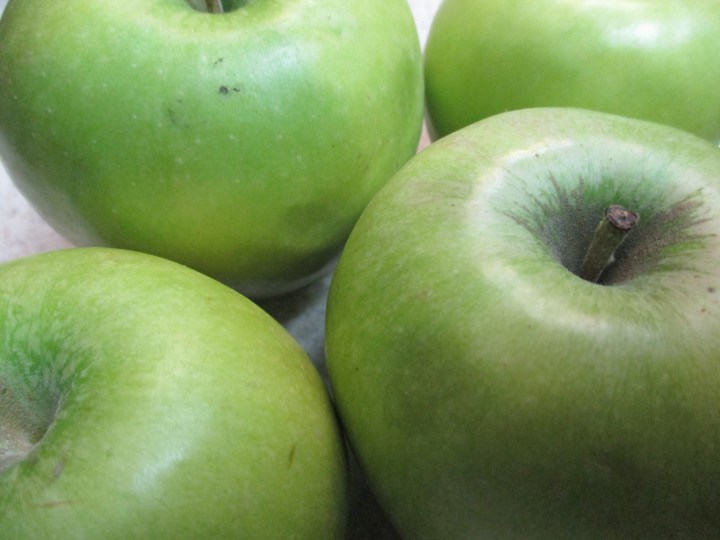 Some of us who enjoy gardening may not like to admit how useful the internet can be. There is a lot of bad information out there. There is also some degree of good information. It is impossible to fit much information about apples into just a few brief paragraphs. Therefore, the internet is likely the best source of information about the countless cultivars and specie within the genus of Malus.
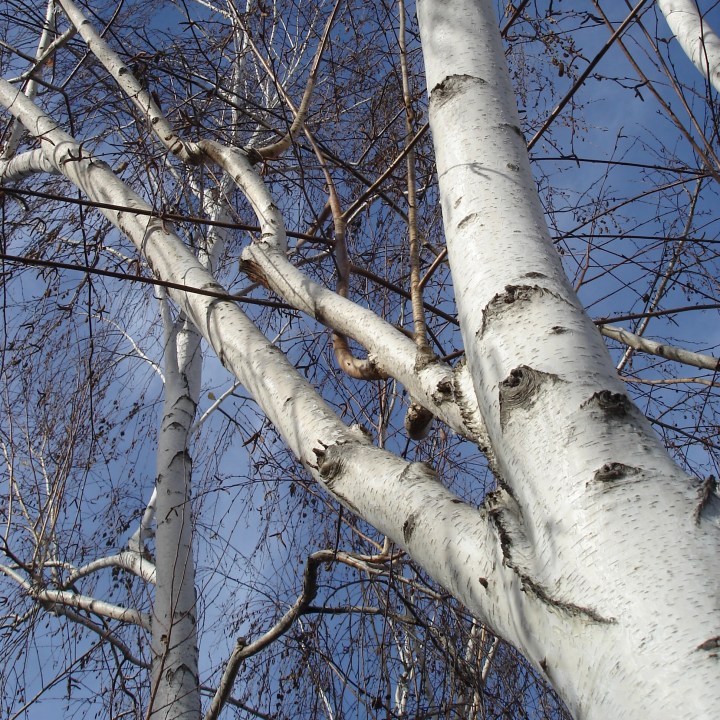 It may not be the biggest or best deciduous shade tree, but European white birch, Betula pendula, is famous for tall and elegant white trunks with wispy pendulous stems. It is a very informal tree that typically leans in one way or another, but is somehow right at home in refined landscapes. It is rarely alone, since it is usually planted with two or more friends, and sometimes in groves.
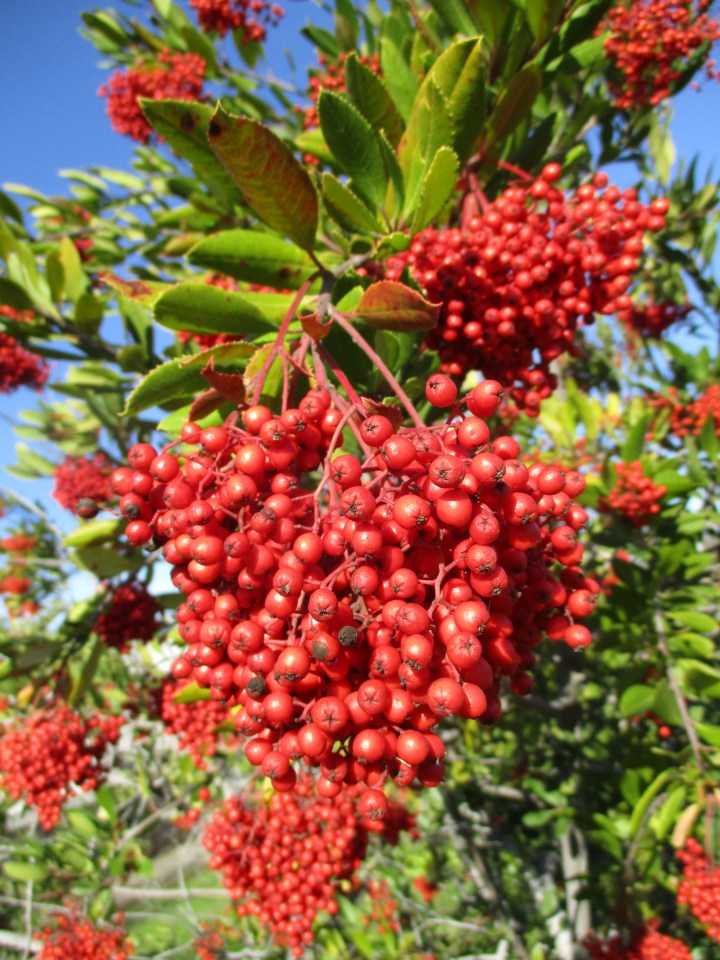 Botanists took a while to contrive an identity for toyon, which is also known as Christmas berry and California holly. It was classified as a species of Crataegus, two different specie of Photinia and two other specie of Heteromeles before it was finally identified as Heteromeles arbutifolia. Meanwhile, the town named after it changed its name only once from Hollywoodland to Hollywood.
