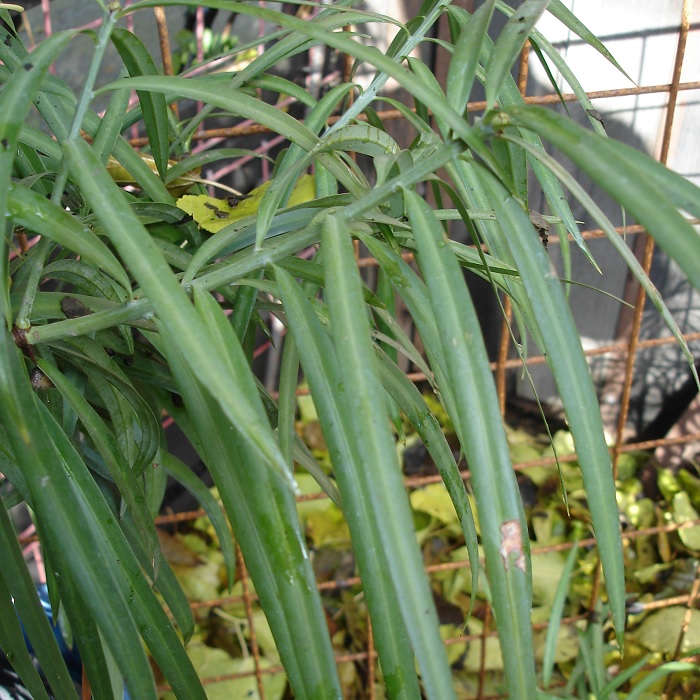
 Of the various specie of podocarpus, and as the name implies, the long leafed yellowwood, Podocarpus henkelii, has the longest leaves. They can get about six inches long, and hang elegantly from upwardly curving branches. This glossy evergreen foliage can be quite dense. It is dark green in full sun, and can be a slightly bluish in partial shade, particularly as new growth develops.
Mature trees have the potentially to get a bit taller than second story eaves, and nearly as broad, but are typically kept shorter. Most grow as big fluffy shrubbery or as informal hedges. Long leafed yellowwood can be pruned (but not shorn) into a handsome formal hedge, or even espaliered against a fence. It prefers somewhat regular watering and well drained soil. It might be unhappy in dense soil. Fertilizer can improve color and density if foliage gets distressed.
 Just like roses and camellias, the innocent peach, Prunus persica, has been developed into too many distinct cultivars to write about in just a few brief paragraphs. It had been in cultivation for thousands of years before arriving in North America. Peach is a classic summer fruit, but trees should be planted while dormant, preferably as bare root stock, about now, in the middle of winter.
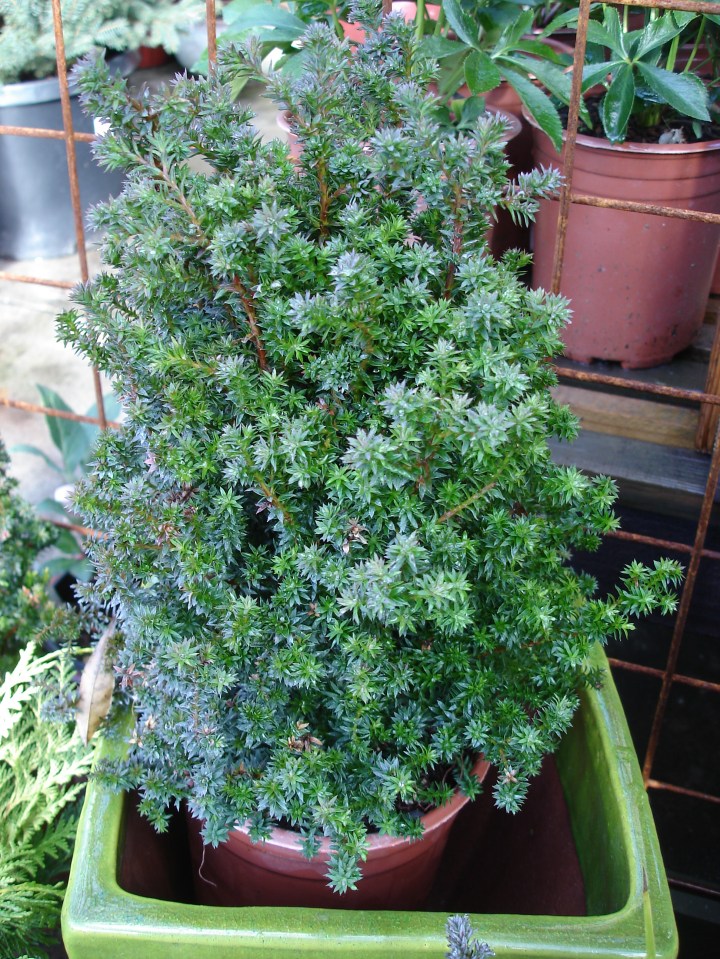 Is it red or white? Actually, it is neither. ‘Whitecedar’ is the common name for Chamaecyparis thyoides, which is a formidable coastal conifer from Maine to Mississippi. ‘Red Star’ is a much smaller garden variety. Its finely textured foliage is bluish green when it first emerges in spring, and can turn slightly purplish or bronzed gray if it gets cold enough in winter, but never turns red.
 We all know that holly is famous for holly berries, but in modern gardening, English holly, Ilex aquifolium, is appreciated, or despised, for its distinctively glossy but very prickly evergreen foliage. Like countless tiny thorns, the foliage is too prickly to handle for those who despise it. Those who appreciate it know there is no substitute for the elegantly polished sheen and handsome texture.
 Between New England and the Pacific Northwest, the boulevard cypress, Chamaecyparis pisifera ‘Cyano-viridis’, is classified as a small tree, even though it gets no bigger than large shrubbery. Locally, only very mature specimens reach the eaves, without getting much more than half as broad. Trunks and limbs remain concealed by fluffy evergreen foliage. Warm and dry air limit growth.
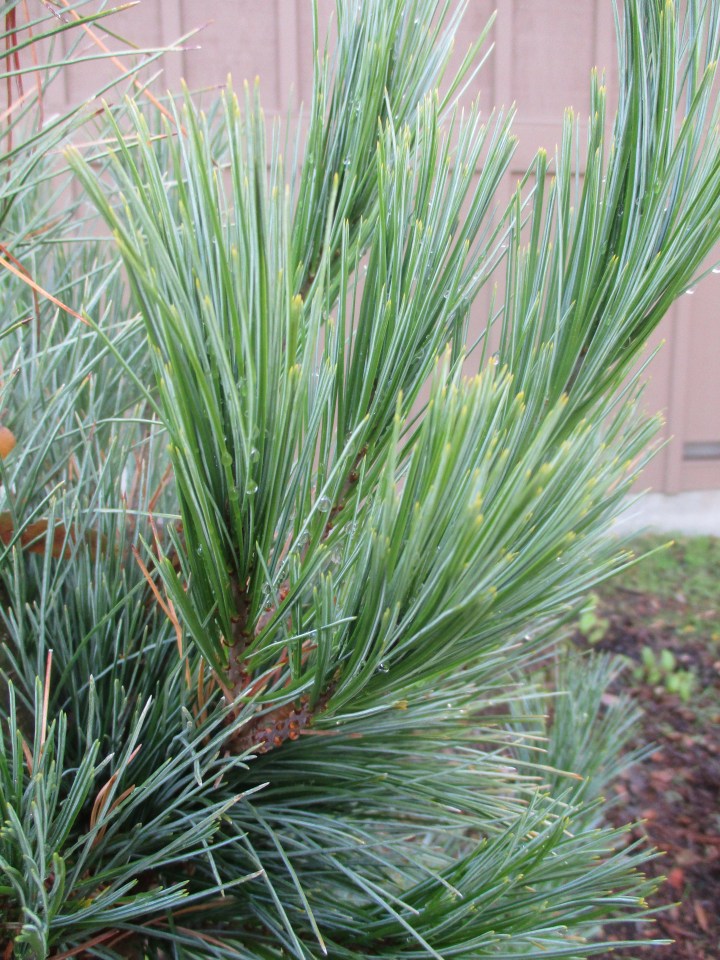 The big name of this little pine takes some explaining. Domingo pine is a cultivator of an interspecific hybrid of two distinct specie, Eastern white pine, Pinus strobus, and Mexican white pine, Pinus ayacahuite. Until a better name in invented, it is known as Pinus strobus X ayacahuite ‘Domingo’. It is typically but incorrectly abbreviated as Pinus ‘Domingo’, or Pinus strobus ‘Domingo’.
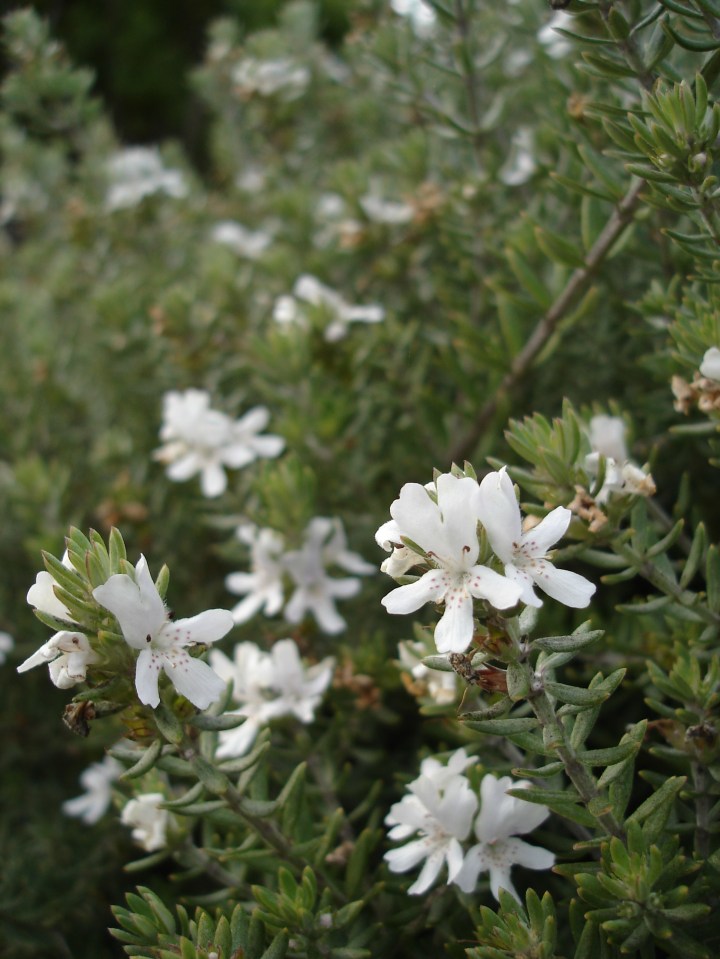 Just like real rosemary, the coast rosemary can either be a low ground cover or a dense shrub. Lower cultivars can get nearly five feet wide without getting much more than a foot high. Shrubby types can get nearly six feet tall without getting much wider. Shrubby types are more popular than ground cover types, and are often pruned so that they do not get too broad.
 The first specie to be imported to North America from Europe were utilitarian plants that produced fruits, vegetables or other horticultural products. English hawthorn, Crataegus laevigata, was likely one of the first ornamental specie to be imported merely because those who were familiar with it appreciated the delightful white spring bloom and the rich red berries in autumn and winter.
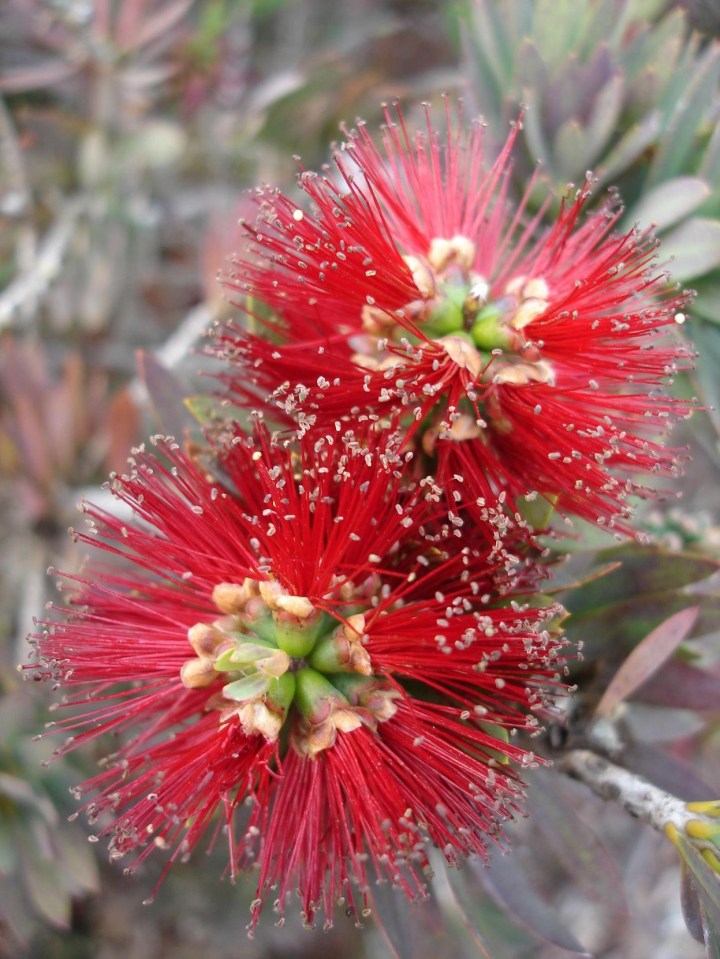 Where it has space to grow, classic lemon bottlebrush that was so popular in the 1960’s is still a practical and resilient large shrub, and is happy to bloom with bright scarlet flowers as long as the weather is warm. It is resistant to most diseases and pests, and once established, survives on annual rainfall. Its main problem is that it simply gets too big for many situations.
 Some might say it blooms very late. Others might say it blooms very early. Regardless, sasanqua camellia, Camellia sasanqua, blooms in autumn or early winter when not much else is blooming. The abundant two inch wide flowers can be pale pink, rich pink, white or red, all with prominent yellow stamens. Some are fluffy with many petals. Others have only a few. Alas, fragrance is rare.
