 They sure took their time getting this far along. The bluish green succulent foliage of showy stonecrop, Hylotelephium spectabile, (formerly Sedum spectabile) first appeared at ground level in early spring, and has been growing into rounded mounds so slowly that it now stands less than three feet high and wide. Smaller types are half as big. Blooms are only now beginning to turn color.
Broad and flat-topped floral trusses of minute flowers are almost always some sort of pink. Sometimes, they are almost terracotta red. Sometimes, they are somewhat peachy. They might even be blushed with a bit of lavender. ‘Stardust’ blooms white. The biggest blooms can be as wide as five inches. If not pruned away as they fade, the blooms (according to some) dry nicely by winter.
New growth starts to appear from the ground almost as soon as old stems die in late winter. Established clumps can be divided in spring every few years. Even small plants can spare a few small pups that will grow into new plants. Stems might get taller in partial shade, but might also need to be staked as they bloom. Bees really flock to the flowers because not much else blooms so late.
 With indiscriminate pruning, glossy abelia, Abelia X grandiflora, will never develop its natural form, with elegantly long and thin stems that arch gracefully outward. Sadly, almost all get shorn into tight shrubbery or hedges that rarely bloom. If only old stems get selectively pruned out as they get replaced by fresh new stems, mature shrubs can get eight feet tall and twelve feet wide.
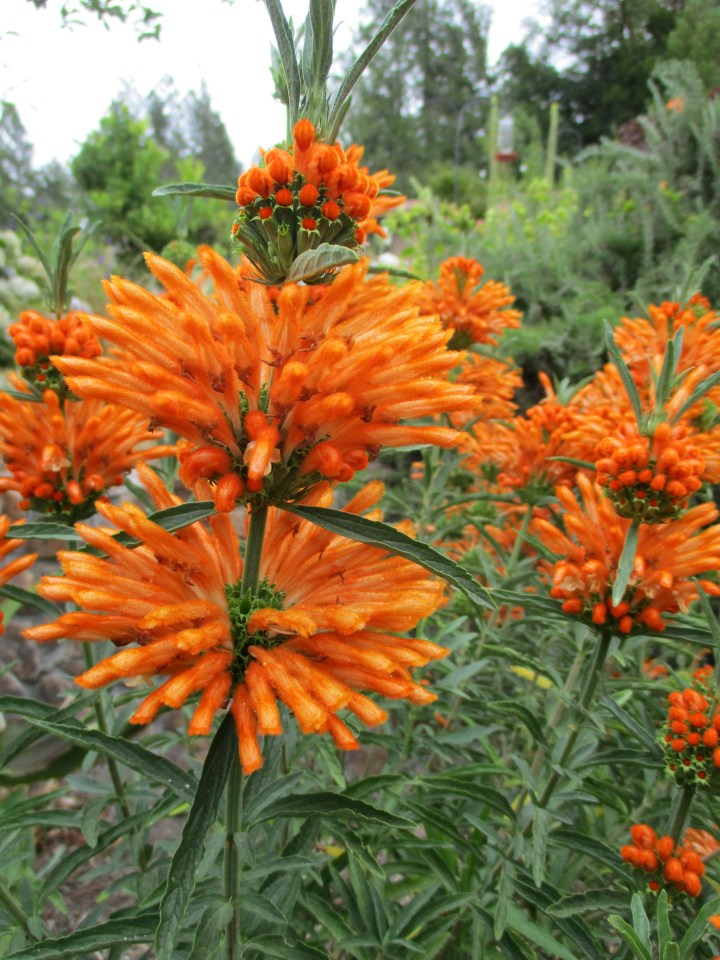 It does not get much more orange than this. Lion’s tail, Leonotis leonurus, tends to start with a relatively light duty bloom phase in the middle of spring, and then continue blooming in increasingly prolific phases until it finally culminates with the most spectacular bloom phase of the year about now, late in summer or early in autumn. The bloom is about as bright orange as California poppy!
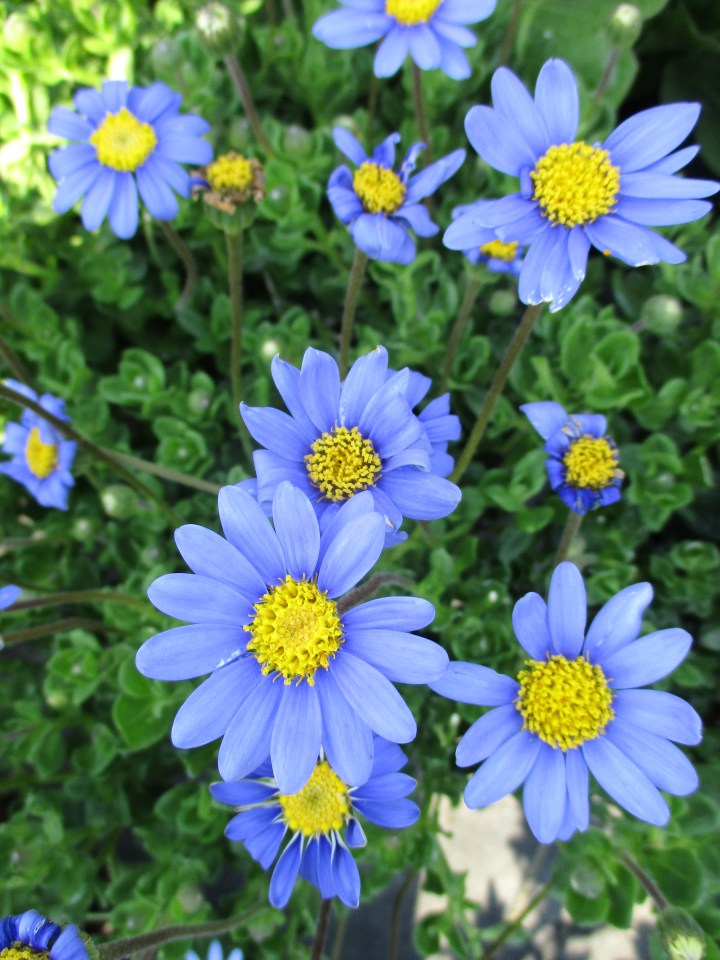 Most blue flowers are blushed with purple to some degree. Except for lily of the Nile, true blue flowers are quite uncommon. Even with their yellow centers, the tiny daisy flowers of blue marguerite, Felicia amelloides, seem to be too blue to be real. They are almost expected to fade to lavender. Bloom may not be as full as it was a month ago, but continues as long as the weather is warm.
 Something that I neglected to consider about the first year anniversary of this blog is that what was new is now old. The articles from my weekly gardening column that were new when posted last year are now a year old. That necessitates an adjustment to scheduling.
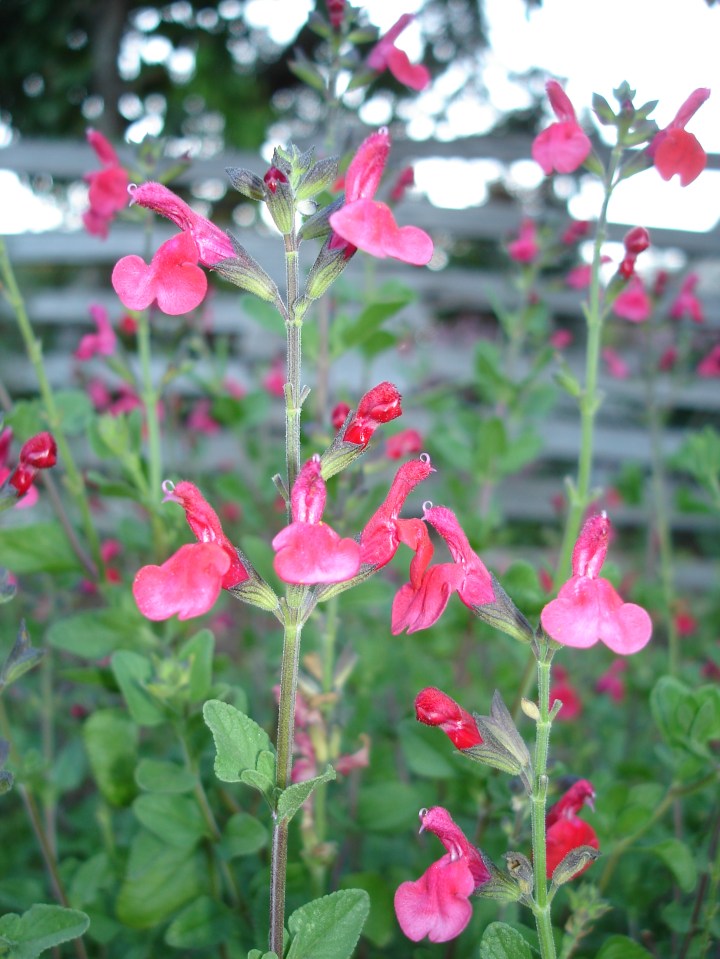 Perhaps in the wild, it blooms in autumn. Where it gets watered in home gardens, even if watered only occasionally, autumn sage, Salvia greggii, blooms all through summer as well. If pruned back severely over winter, it starts to bloom even sooner in spring. The tiny flowers are red, rose, pink, peach, very pale yellow, lavender or white. Some poplar cultivars have bi-colored flowers.
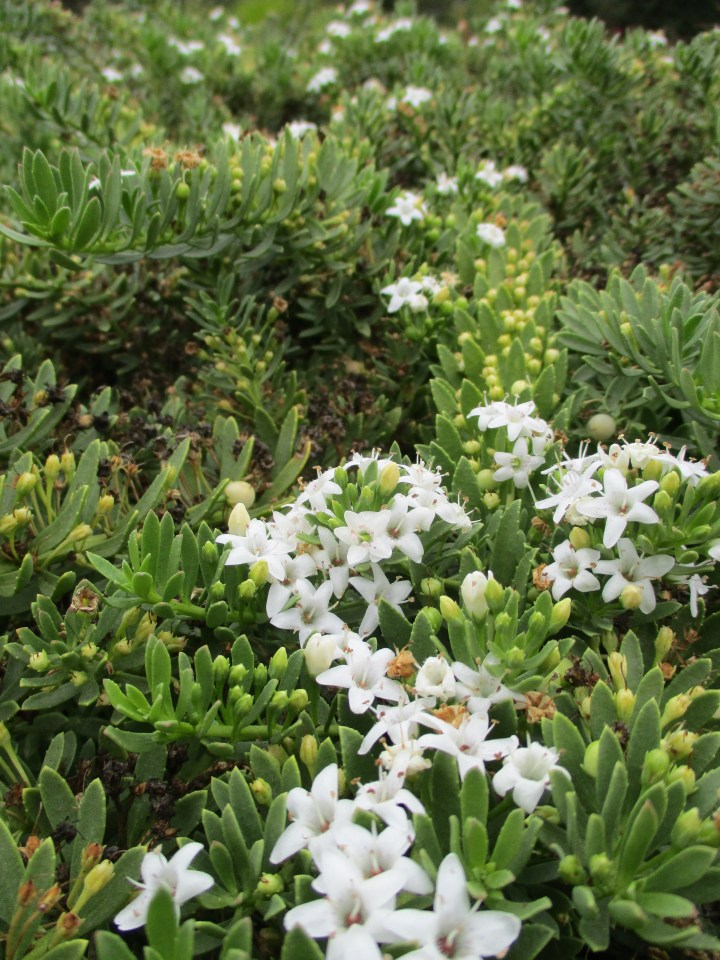 The familiar sandalwood, Myoporum laetum, that is such a resilient small tree or big shrub in windy coastal climates, might make the wrong impression for the less familiar creeping myoporum, Myoporum parvifolium. Creeping myporum does not get much more than a foot high unless it climbs over stones or other obstacles, and it might stay less than six inches deep in exposed spots.
 ‘Moonshine’ is probably the epitome of fernleaf yarrow, Achillea filipendulina, even though it is technically a hybrid. From the middle to the end of summer, its three inch wide corymbs (flat-topped trusses) of tiny bright yellow flowers stand as high as three feet above ferny and gray basal foliage. Bloom is best in full sun and warm exposure. Established plants do not need too much water.
 Their pastel hues and blends of pink, lavender, near red and white are so perfect for the middle of spring when cosmos, Cosmos bipinnatus, begin to bloom. They are just as perfect as bloom continues right through summer and almost to autumn, when the tall and airy plants finally begin to wear themselves out. If they continue through autumn, they eventually succumb to frost in winter.
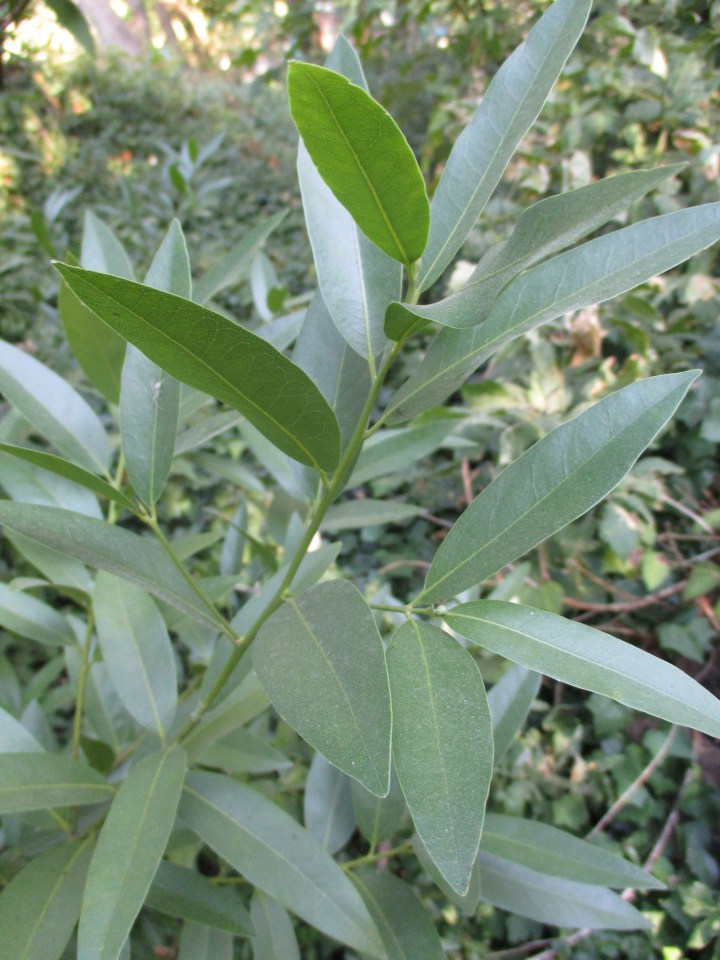 Just because California bay, Umbellularia californica, can be used like Grecian or sweet bay for culinary purposes does not necessarily mean that it should be. California bay has a stronger and much more pungent flavor and aroma. Some might suggest substituting less than half California bay for Grecian bay. However, even if the intensity is adjusted accordingly, the flavor might be off.
