This is a quick trivia question.
Which of these three states has the most native genera of palm?
1. California
2. Hawaii
3. Oklahoma
4. None of the above

This is not a trick question. Notice that it asks about genera rather than species.
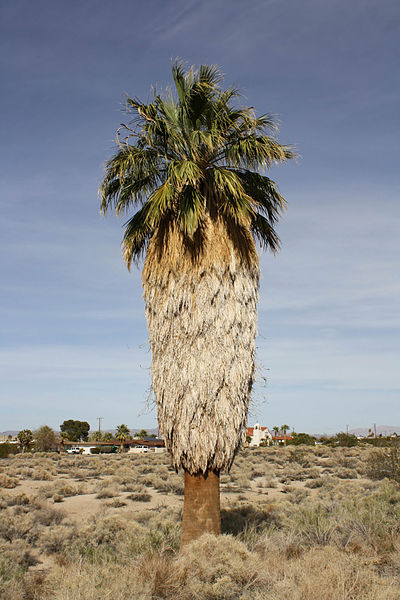
1. California is home to many exotic specie and genera of palm; but only ONE is native. The California fan palm, Washingtonia filifera, which is also known as the desert fan palm, lives in isolated groves out in the Mojave Desert. https://tonytomeo.wordpress.com/2018/06/30/oasis/ Because it prefers hot and arid desert climates, and does not like to be watered too generously through summer, it is now a very unpopular palm for landscapes.
2. Hawaii, is populated by many more exotic species and genera of palm than California is, but only species of the ONE genera of Pritchardia are native. Many of the exotic genera were imported by ancient Polynesians to produce food. Others were imported later for landscaping.
3. Oklahoma is the sort of place where only a few of the toughest of exotic palms can survive outside. Yet, McCurtain County, in the very southeastern corner of Oklahoma, is home to ONE very rare but nonetheless native variety of dwarf palmetto, Sabal minor.
4. ‘None of the above’ is the correct answer to the question because none of the other choices above have any more native genera than any of the others.
So, although Hawaii really does have more native species of palm, it has no more native genera than California or even Oklahoma. Each of these three states has exactly ONE native genus of palm.
I am sorry that I have no good pictures of any of these palms. All three of these pictures were obtained online. I have experience with neither the dwarf palmetto of Oklahoma, nor any of the species of Pritchardia of Hawaii. However, the California fan palm happens to be my all time favorite palm, even though it is not very happy here. It is such a stately palm, and those grown from the same seed batches are uniform enough for formal plantings. They are the palms that flank the famous Palm Driveway of the Winchester House in San Jose, as they were popular for flanking driveways and roadways in California and Arizona during the Victorian period. I did happen to see California fan palm in the wild outside of Palm Springs while in school in the late 1980s and can tell you that they are spectacular in their native habitat.

Note: The elderly and deteriorating California fan palms that flanked the Palm Drive of the Winchester House have been replaced with palms that are hybrids of California fan palm, Washingtonia filifera, and Mexican fan palm, Washingtonia robusta. They are more tolerant to the irrigation of the landscape around them.
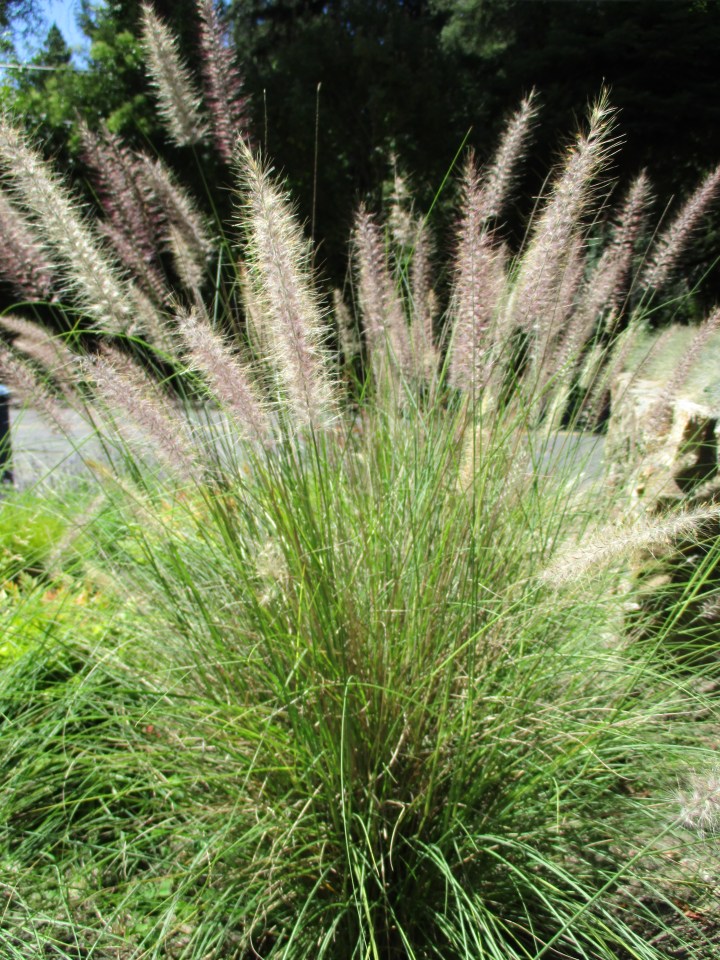 It was probably a good idea when it was introduced to California, but fountain grass, Pennisetum setaceum, became too much of a good thing for a few temperate regions in which it naturalizes and displaces native vegetation. Although it now works to inhibit erosion where it grows wild on the embankments of highway interchanges, it must sometime be mown because it is combustible.
 The delightfully clear sky blue flowers of blue plumbago, Plumbago auriculata, seem like they belong with colorful annuals or in a tailored border of colorfully blooming perennials. However, the rampant canes of mature plants are really best in the background where they have room to grow wild. The canes do not climb like vines, but can flop over other shrubbery as high as fifteen feet.
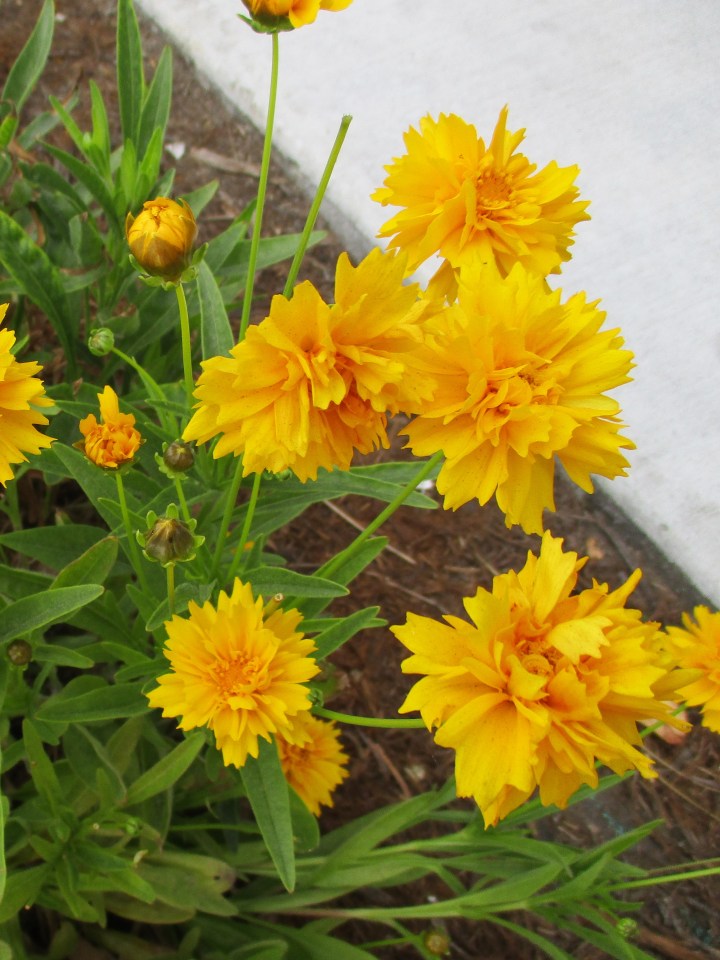 It is a common theme. Coreopsis was a much simpler group of only a few specie and cultivars in the 1980s. There are now too many hybrids and cultivars to keep track of. They have been bred so extensively that they do not produce viable seed like the old fashioned types that can self sow so nicely, and were more closely related to the unimproved specie that would be found in the wild.
 Once it gets started in late spring, ‘Mystic Spires Blue’ salvia has potential to bloom until autumn. It only needs older floral spikes pruned away as they fade (deadheading) to stimulate new bloom. If it gets overworked and lanky without deadheading, it can be cut back in the middle of summer to start a new bloom cycle all over. It can get more than three feet tall and almost three feet broad.
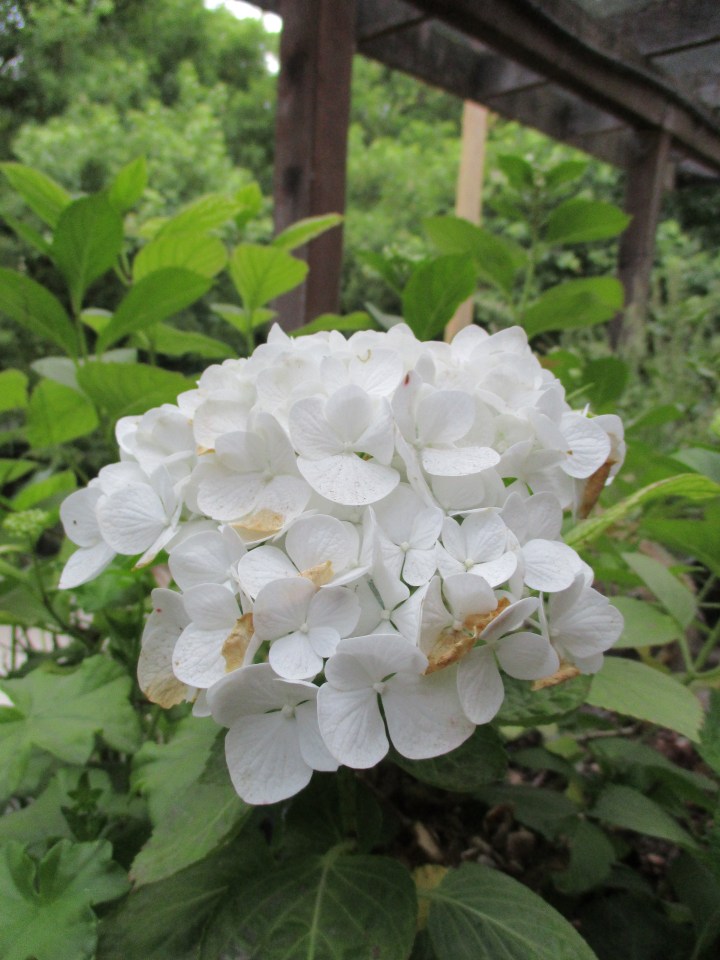 There are so many more of the fancier cultivars of hydrangea, Hydrangea macrophylla, than there were as recently as the 1990s. Many of the pink and blue hydrangeas were interchangeable years ago. They would bloom blue if the soil was acidic. They would bloom pink if the soil was alkaline. Their color changed accordingly when planted from potting media into soil of another pH.
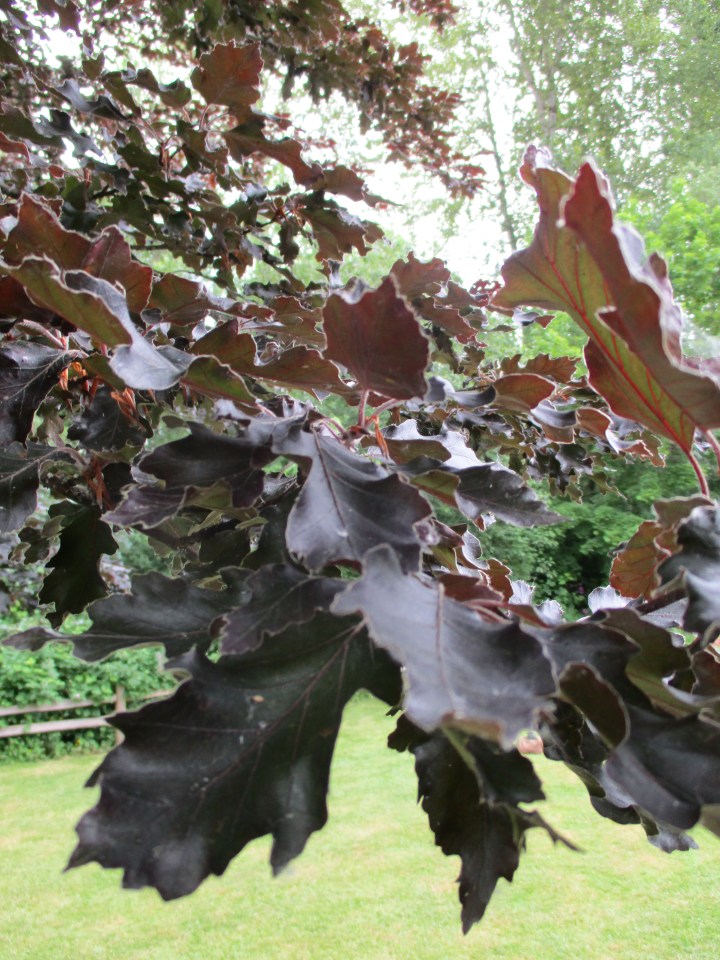 Compared to crape myrtle, sycamore (London plane) and many other more popular trees, the beech, Fagus sylvatica, is much less problematic, and really deserves more respect. Although it can eventually get almost as big as sycamore, it has remarkably complaisant roots. It is neatly deciduous, defoliating only in autumn, without noticeable floral mess. Disease and pests are rare.
 The native American coneflower, Echinacea purpurea, of the Midwestern prairies has been popular within its native range longer than anyone can remember, and has become more popular in the West as extracts of echinacea became a fad in herbal medicine several years ago. Modern garden varieties and cultivars have been bred and hybridized for larger and more colorful flowers.
 Pink, red or white are the only choices. There happens to be a darker shade of red. Yellow throats are more conspicuous in white flowers. Otherwise, there is not much variation of color amongst the various mandevillas. The flowers are very similar in both color and form to those of related oleander, but are larger. Some are as wide as three inches. Small flowers can have pointed petals.
 It is considered to be an Italian herb, but since it was popularized in America in the late 1940s, oregano, Origanum vulgare, has become more popular in Italian-American cuisine than it is in Italy. It is now the traditional ‘pizza herb’ for American style pizza. Oregano happens to be one of the few herbs that is preferred dried rather than fresh. Only foliage is used, either before or after bloom.
