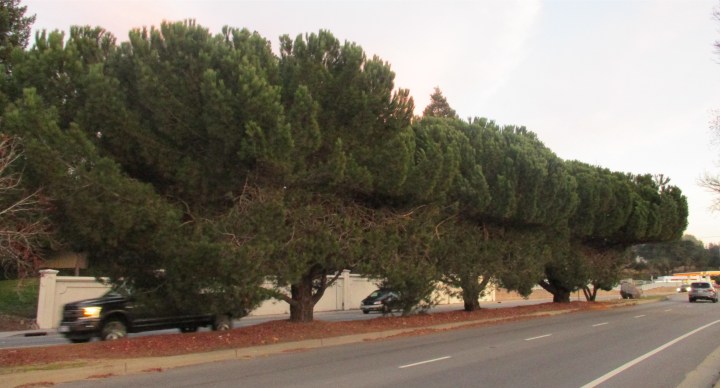
 Many arborists mark certain lengths on their pole saws and pole pruners. When stood upright, these marks designate the standard heights for minimal clearance pruning. Not so many need to mark the height of minimal clearance for walkways, since they will prune away anything that is within reasonable reach with hand tools from the ground. The minimal clearance above parking spaces is not so easy to guess at, so is more likely to be marked on poles. So is the minimal clearance over roadways, where the lowest limbs must be high enough to be out of the way of campers and freight trucks.
Clearance to the sides is determined by the location of the curb, but even that might need to be modified at sharp turns, or where the roadway slopes significantly away from the center. Clearance must similarly be a bit higher over dips in a roadway, where the height of long freight trailers would be affected by the elevation of the wheels in front and back (outside of the dips). Clearance around street lighting, roofs, utilities and such is determined by the object that requires clearance, so no marks must be made on the poles for such work. (Clearance pruning of high voltage cables is only performed by those who are qualified to do so.)
Clearance pruning is serious business for arborists. They do not want their trees to hurt anyone, or to damage vehicles. Nor do they want their trees to be damaged by vehicles. Obtrusive limbs can be torn away by freight trucks. Even if not torn away, limbs that are regularly battered by freighter trucks are rather unsightly.
As someone who used to drive the delivery truck, I can tell you that clearance pruning is also important for some of us who use the roadways.
These three young Italian stone pines are healthy specimens that are probably well structured inside all of the outer foliage. It is hard to say, since I can not see inside through all the disfigured lower foliage that has been continually battered by truck traffic. They probably only need to be pruned for clearance above and away from the traffic. If pruned to establish a minimal ceiling just two feet or so above the obvious damage, and to remove all the lower growth to the side, they would be excellent street trees for many years. They will eventually need to be pruned again, as maturing branches sag from their own weight, but that is to be expected. The main trunks and bulky limbs within would probably be quite sculptural if they were to be exposed by pruning that is necessary anyway. It really would not take much.
Horridculture – Promiscuity
 Nomenclature of the botanical sort was so much simpler back when we studied it back in the 1980s. It was intended to be like that. It was how the various specie of plants were identified and classified. There were certain rules that simply made sense. After ‘family’, plants were classified into general ‘genera’, and then further classified into specific ‘specie’. Some specie were further classified into ‘varieties’ and ‘cultivars’. (Cultivars are simply ‘cultivated varieties’ that need to be perpetuated by cloning because they are too genetically unstable to be true-to-type from seed.)
The genus name is always first. The species name is always second. Because they are Latin, they should be italicized. Any variety or cultivar names are last, not italicized, and in semi-quotations.
Back in the 1980s, there were a few specie that did not quite fit into such neat classification. Intergeneric hybrids (between two parents of different genera) were designated by an ‘X’ before the genus name, such as X Fatshedera lizei, which is a hybrid between Fatsia japonica and Hedera helix. Interspecific hybrids (between twp parents of different specie) were designated by an ‘X’ before the species name, such as Platanus X acerifolia, which is a hybrid between two different specie of the same genus of Platanus. Then there are different species that hybridize freely, but are still designated as separate specie, such as Washingtonia robusta and Washingtonia filifera, but that is another story.
Nowadays, with so much weirdly promiscuous breeding, it is difficult to know what specie or even genera some of the modern varieties and cultivars fit into. Consequently, species names are often omitted, and genus names are sometimes changed. It is getting difficult to know the differences between the two formerly distinct genera of Gaillardia and Rudbekia.
What is even sillier is that all this is happening while ‘sustainability’ and gardening for ‘bees’ are such fads. Weirdly bred specie . . . or whatever they are, are likely unable produce viable seed, so are just the opposite of sustainable. They only sustain their own marketability by ensuring the need for replacement. Some make no pollen for the bees that visit the flowers expecting to find some. Some make pollen of questionable nutritional value, or serve it in complicated flowers that might be difficult for bees to navigate.
There certainly are advantages to simplicity.
Apologies for the delay of posting ‘Horridculture’, which is normally posted on Wednesday. I was unable to write, so advanced the article that was intended for today to Wednesday, and finished writing this rant for today.
Horridculture – Three Is A Magic Number
 We learned it young from Schoolhouse Rock. Those of us who studied Landscape Design were compelled to learn why, and assume that it is always true.
Well, I am not a landscape designer. I am just a horticulturist and arborist. I can see why three is the best number for groups of trees, and that five is probably the second best option for larger groups, followed by seven, and then nine, and so on. I sort of understand why two, four, six, eight and so on are not so desirable. However, these rules are not absolute.
When I was a kid, many suburban front yards were outfitted with three European white birch trees. Such groups were typically in a corner of the rectangular yards, just outside of the curvacious mowing strips that were designed to make the rectangular spaces seem to be more irregular than they really were. Individually, the groups of three birches were appealing. Collectively, they were cliché. They were supposed to look more ‘natural’; but there is nothing natural about contrived groups of three trees, especially when it is so prevalent. That is not how they grow in forests.
Now, although I am no landscape designer, I do happen to know that good landscape design is compatible with the architecture of the building that it is associated with.
Early American architecture really should be landscaped in the Early American style. This might seem to be simple, just because Early American landscapes are simple and utilitarian, with most of the plant material at a safe distance from the buildings. The difficulty is that such landscapes are very symmetrical, with paired shrubbery and trees, and several paired and evenly spaced trees flanking roadways. The left matches the right. That means quite a bit of twos, fours, sixes, eights and so on. Early American landscape design developed at a time when nature was something to be dominated and utilized in the most efficient manner possible. Not many landscape designers comprehend this philosophy, or would adapt to it if they did understand.
The group of three dwarf Alberta spruce in the picture below was not intended to be a rebellious expression of formality. As you can see, it really is a group of three. Yet, they are also evenly spaced in a straight row that parallels the adjacent wall. Without pruning, they will always be very symmetrically conical. Cool!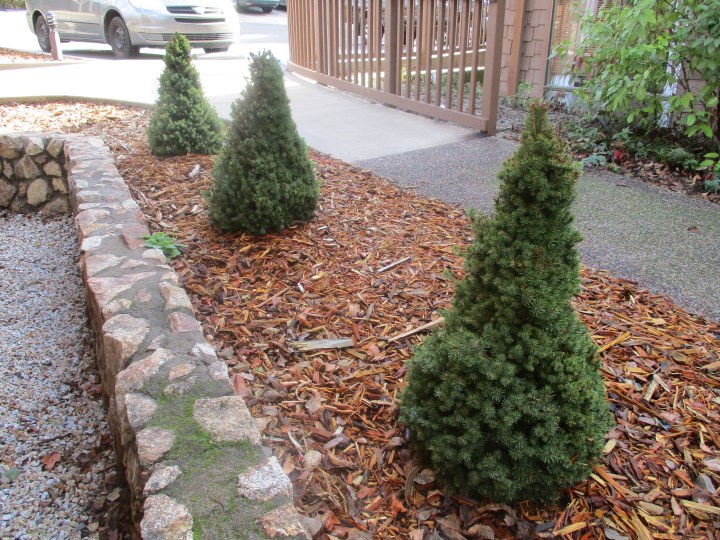
Horridculture – Disdain For Bloom
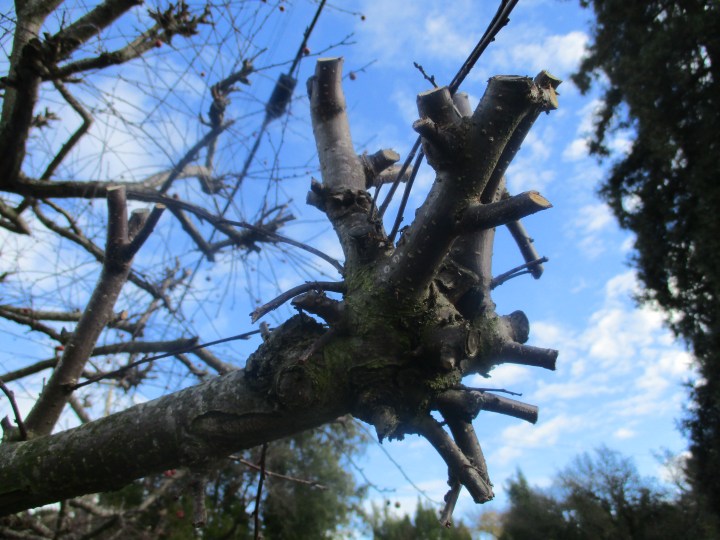 From the same landscape that, last autumn, was so dutifully deprived of its elegantly cascading rosemary and soon to be fiery autumn color of Boston ivy, https://tonytomeo.com/2017/11/05/serously/ , I procured these disturbing images of what results from of a serious disdain for flowering crabapple bloom. These trees were mentioned earlier in that article, but without such images. Similar victims were discussed last spring, https://tonytomeo.com/2018/03/07/the-good-the-bad-and-theyre-both-ugly/ and about a year ago https://tonytomeo.com/2017/12/06/sculpture/ .
The landscape where these trees live was actually rather well designed, and for a few years, had been well maintained. Seriously! The flowering crabapples were likely selected because they would not get tall enough to encroach into the utility easement above. There were pruned as much as necessary to prevent them from developing into a nasty thicket like young flowering crabapples typically do, but without significantly compromising the spectacular bloom. They really were spectacular!
About six years ago, a different crew of ‘gardeners’ was hired. It was obvious when it happened because the brutality to other features of the formerly well maintained landscape was so immediate. These flowering crabapples were somehow spared, but only temporarily. They were at their prime when they displayed exemplary bloom for the last time three springs ago. As these pictures indicate, they were hacked back two springs ago, just as the fat floral buds were showing bright pink color, and were about to pop open. All the buds and blooming stems that the trees had put so much work into were cut off and taken away, just days or maybe hours before the big show. The process was repeated in the same manner just prior to bloom last year. A scarce few twigs were somehow missed, and managed to bloom with a few blossoms that developed into the few fruits that can be seen in the second picture. I can not explain why the hacking was done earlier this year. Nor can I explain why a bit more of the twiggy growth remains. Did the ‘gardeners’ leave it for a tiny bit of bloom, or were they just lazy with their mutilation. It does not matter. As long as these trees get hacked like this, they are ruined. The client pays the ‘gardeners’ to do this.
Now, these trees could only be salvaged by renovation. This would involve pollarding, which would remove the tangles of gnarled stubs, but would leave horridly stubbed limbs to start the regeneration process. The trees would be just as deprived of bloom for the first year, but would at least be able to compartmentalize (heal) the wounds on the cleanly stubbed limbs. The secondary growth would need to be very meticulously and systematically groomed and pruned for many years to replace the canopy. It is possible, but would involve more work than even a good horticulturist or arborist would want to devote to the project.
Horridculture – Lack Of Planning
 This is a recycled picture that still annoys me. There was another that I did not want to use because it happens to be from a landscape that I sometimes work in.
The picture that I did not use shows a variety of annuals in a half wine barrel that is set on cobble stone that fills a square that is about five feet by five feet that was cut out of an asphalt paved area.
So:
The area was paved to function as a patio.
A square was cut into the pavement perhaps because there was too much pavement.
The square was filled with stone because there was too much exposed soil where there should have been pavement.
A half wine barrel of various annuals was installed on top of the stone as if a square filled with stone was not adequately in the way.\
The half wine barrel and stone should be removed so that the are can be paved as usable patio space. . . like it had originally been.
It reminds me of a monologue by the renowned comedian, Bill Cosby. He discussed the small compartment that is designed to keep butter from getting too cold within a refrigerator that is designed to keep food cold, within the home that is heated to keep the interior from getting too cold.
Now, back to the picture above. It annoys me even more because it is not the result of a series of mistakes by several different volunteers working in the landscape that I did not post a picture of. It was done by so-called ‘professionals’, like those I briefly worked for a few years ago.
The area was paved. I might add that it was paved quite well. Then, either because there was too much pavement, or because someone wanted to sell more junk, potted plants and the associated irrigation system were installed onto the pavement, so that the affected portion of pavement is now useless.
How does this makes sense? It should have been done properly when the pavement was installed only a few years ago. I would guess from looking at it that the pavement was done properly, but someone just wanted to sell more infrastructure.
The bigger urn in the foreground is planted with pink jasmine on a trellis. I explained the problem with the vine not getting released from its bindings last week. https://tonytomeo.com/2018/11/28/horridculture-well-done-stakes-are-rare/ Not only does a bundled thicket of stems remain in the middle, but all the new growth is crowded on top of the trellis because the landscape ‘professionals’ planted a big vine on a tiny trellis, and then neglect to maintain it. What is the point of a trellised vine in the first place? I mean, what does it ‘do’? Wouldn’t something shrubbier or a cascading perennial have been more appropriate? Do we really want to see the bare soil and accumulated cigarette butts below the vine? What about the landscape behind the potted plants? Why obscure that? Why create more obstacles for those who sweep or blow debris from the area.
Just look at all the pointless infrastructure in this useless space. Rather than a nice well designed landscape adjacent to clean and usable pavement, we have pointless potted plants cluttering the area, leaking water that stains the now useless pavement, and just getting in the way!
Horridculture – Just When You Thought It Couldn’t Get Any Sillier . . .
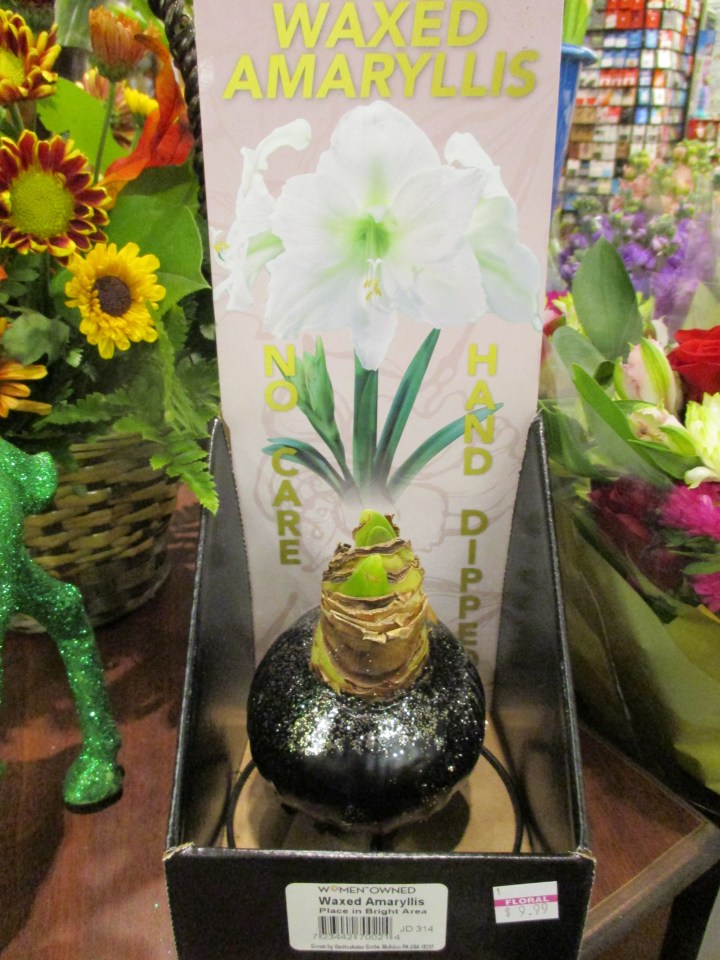 Two others have already written about this far more proficiently than I would have:
https://sweetgumandpines.wordpress.com/2018/11/18/abomination/
Amaryllis, Queen of the Forced Bulbs
These two articles say it all. I would not have bothered to write about it too if I had not already taken the picture above. I did not read the label to learn what one of these articles said about why these bulbs were waxed. It seals in moisture, so that the bulbs do not desiccate while they bloom without water or moist media. They at least get water when forced by the conventional manner.
I suppose to many who force amaryllis bulbs, there is no problem with waxing them like this, since they are typically discarded as their forced bloom deteriorates. There is no expectation for the bulbs to survive the process to regenerate and bloom the following year.
We can at least pretend that we intend to nurture amaryllis bulbs that bloom in a ‘forcing kit’ that includes a small volume of potting media that sort of sustains the fleshy roots through the process. After all, they can survive the process and get potted into larger volumes of media to recover and bloom again. Some of us have actually sustained such bulbs for a few years Bulbs that are purchased bare and then potted directly into more reasonable volumes of media are of course more sustainable from the beginning.
Poinsettias and living Christmas trees are no better than forced amaryllis. Nor are the Easter lilies in spring.
Like amaryllis bulbs, Easter lilies can be purchased bare and grown directly out in the garden. Those that are forced in pots can be planted out in the garden afterward to possibly recover. Otherwise, they too get discarded after bloom.
Poinsettias can technically be grown as houseplants, but rarely survive that long. Those that do not get tossed after they shed their colorful bracts are likely to get tossed as they languish in recovery from the process of forcing them to bloom in a very contrived greenhouse environment.
Living Christmas trees are actually more of a problem if the ‘do’ survive. They so often get planted into small gardens, and often next to foundations of homes, with the belief that they will always stay small and innocent. The problem is that most are seedlings of the Italian stone pine, which grows very big and very fast, and soon becomes a problem that is very expensive to remove. If not planted in a garden and allowed to destroy all within reach, they die from neglect and confinement within their own pots, often within their first year.
Horridculture – Bad Name
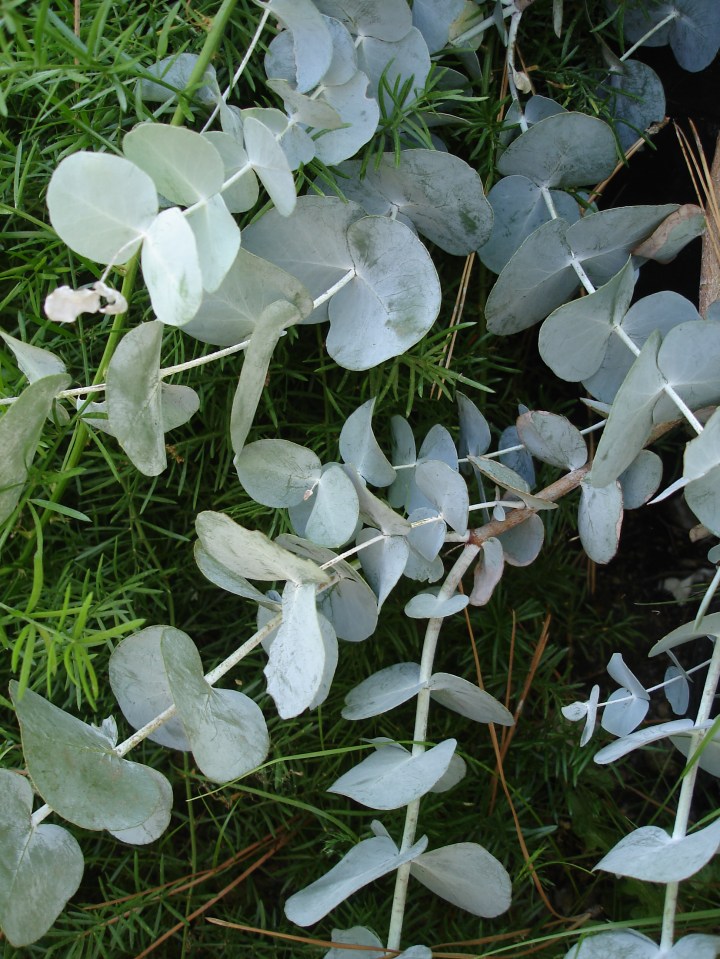 Junipers have a bad name. So do eucalypti. Too many of the wrong types were planted back at a time when they were too trendy. Those that were planted into inappropriate situations grew up to cause problems. The names of all junipers and eucalypti are now synonymous with those problems, even though there are many types of both genera that are quite practical for landscape purposes.
Get over it.
There are many junipers and eucalypti that are very good options for some landscape purposes. They need only minimal watering once established, and many will survive with none at all when mature. Some types of juniper grow as very low and very dense ground cover. With proper pruning, others can develop as exquisitely sculptural shrubbery or even small trees. (Just do NOT shear them!) Because of their very complaisant roots, some of the smaller eucalypti work very well as street trees.
I am certainly not promoting either junipers or eucalypti. They will not work for every application. I am merely saying that they should not be automatically dismissed because of their names. They were once overly popular for a variety of reasons, and those reasons are still valid.
However, I will say that there are a few species and varieties of each that are worth avoiding. They are likely what originally justified the bad reputations that are now shared by all of their relatives. For example, blue gum eucalyptus that was planted as a timber crop so long ago really is MUCH too big and messy for home gardens. Even where space is sufficient, there are probably better options.
Some of the current fads are also worth avoiding, or at least questioning. Some are very likely to earn a ‘bad name’ in the future, either because there will be too many of them, or because their faults will become evident as they mature. Because so many get planted within such a short time, many that mature at the about the same rate will develop their faults at about the same time.
For example, crape myrtle is such a useful and complaisant tree that it has been planted too commonly for just about every situation in which a tree is desired. It is resilient. It is complaisant with concrete. It blooms spectacularly. It colors splendidly in autumn. It really is an excellent small scale or medium tree for small garden spaces or near utility easements. It works very well in narrow park strips where larger trees would displace concrete. Yet, despite all the attributes, it is not good for everything, and does not get big enough to become a substantial shade tree, as it so commonly gets planted for. In the future, there will be so many crape myrtles in so many of the wrong situations that they will be considered to be too common.
Queen palm is another example. It used to be somewhat uncommon and respected. Through the 1990s, big box stores were selling them like junipers and eucalypti decades earlier. They happen to be very appealing palms that are more practical than the formerly more common Mexican fan pale, but have become so common that they were very often planted into situations that they are not appropriate for. Those that are under utility easements will need to be removed when their canopies start to encroach into utility cables. Because they are palms, they can not be pruned around the cables. Those that are able to mature will outgrow the reach of those who maintain their own gardens, or typical gardeners, necessitating attention from more expensive tree services. Like crape myrtles, they will also lose their appeal in the future.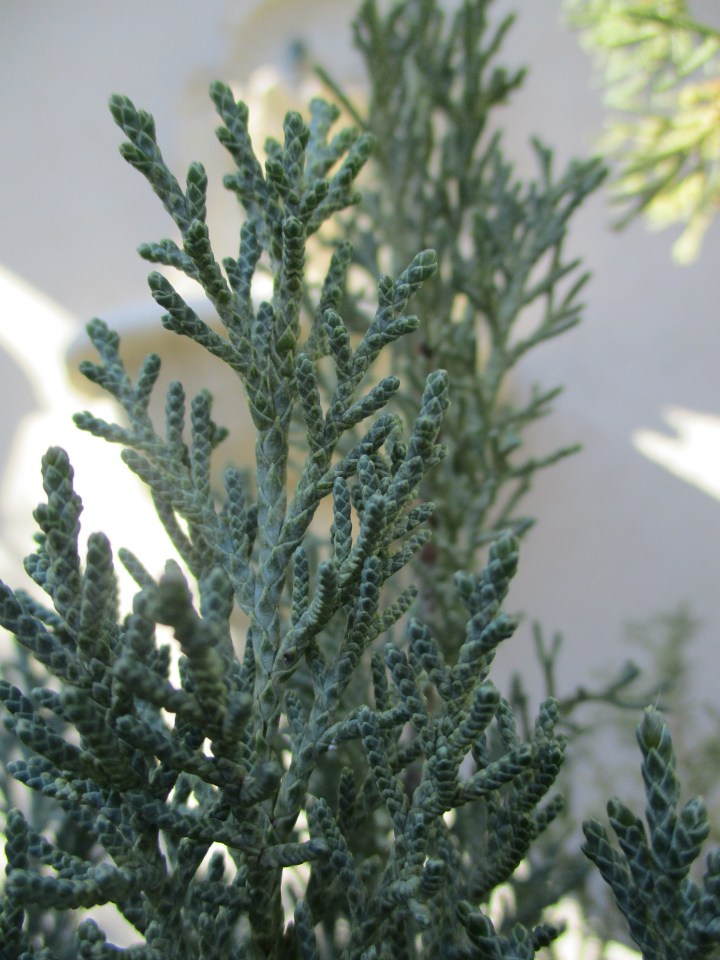
Horridculture – Blame
 The response to the brief article that I wrote about the smoke from a small and localized wildfire on Sunday is not easy to dismiss. The original article is at https://tonytomeo.com/2018/11/04/smoke/ . It is about the smoke from the small and localized Rincon Fire, and goes on to discuss how the clear cut harvesting of redwood more then a century ago enhanced the combustibility of the forest. It was shared to Facebook, including the Facebook page of Felton League.
The article did not blame anyone for starting the fire. I read it again just to be certain. I said nothing about arsonists, the homeless, homeless arsonists, or anything of the sort! Blame, in regard to the Rincon Fire, is not relevant to horticulture, forestry, arboriculture or anything that I write about.
We all know that there are mentally ill people who are homeless because they do not function well enough to maintain a domestic lifestyle. Some are potentially dangerous because they can do things, such as start fires, without thinking about it. There are also those who can accidentally start fires as they are just trying to stay warm when the weather gets cold out in the forests where they live.
Do we really believe that blaming and vilifying the homeless or mentally ill helps? Chasing them from their encampments and farther out into the forests, as so many suggest, only increases the innate hazards by relocating them into areas that are more inaccessible and more combustible. If we really are so concerned, we should want such hazards relocated to more localized and accessible situations. The severely mentally ill who can not manage a descent lifestyle simply should not be homeless.
Furthermore, what about the vast majority of fires that are caused by electrical malfunction? Why are we not wanting to outlaw electricity? What about the fires that are caused by sparks from lawn mowers and weed whackers? Shouldn’t such machines be outlawed? What about forest fires that start as house fires? Should we blame those who live in homes? Who do we blame for all those combustible trees that grow wild in the forests?
I intend to resume writing mostly and perhaps nearly exclusively about horticultural topics after today. It is what I am qualified to write about. I apologize for this deviation. If I eventually establish a blog regarding homelessness, I will be sure to share a link to it here.
Horridculture – All Hallows’ Eve
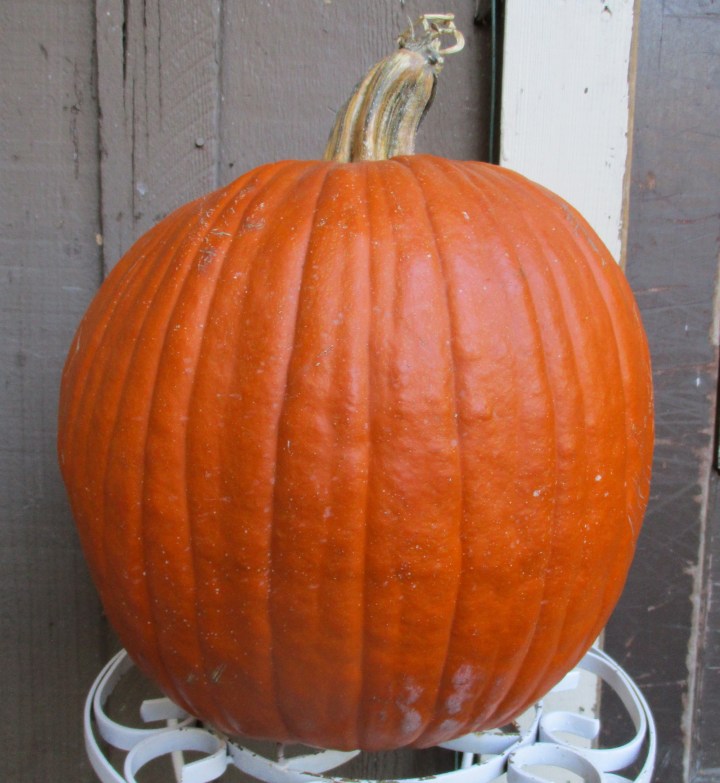 All Saints’ Day is November 1. As the name implies, it is a feast day that honors all Saints. It is one of the most important Holy Days of the Catholic Church. Yet, not many of us know about it.
We are much more familiar with the day before, which had been known as All Hollows’ Eve, and is now known simply as Halloween. Although some of the associated traditions are fun for children, Halloween has become an excuse for people to dress up in costumes, party, ruin perfectly good pumpkins, and behave stupidly. What an unsaintly way to celebrate, just prior to the day designated to honor all Saints!
Saint Patrick’s Day is no better. People dress up in green, party, exchange disposable potted shamrocks, and behave stupidly, all on a day that had been designated to honor a Saint whom they know very little about, and care even less about.
Mardi Gras at least makes a bit more sense, with all the indulgent behavior just prior to forty days of good behavior and fasting. Even societies that do not party for Mardi Gras have old traditions of feasting on foods that will be abstained from through Lent, just to avoid wasting them. It is easy to see how such feasting and indulgence evolved into over indulgence and partying. Mardi Gras lacks a tradition of wasting innocent horticultural commodities like pumpkins and shamrocks.
Easter, at the other end of Lent, is still a respectable Holy Day. Most people know that it is a celebration of the Resurrection of Jesus, and celebrate accordingly. Perhaps a bit of indulgence is in order after forty days of fasting, Colored eggs nestled in fake grass, and disposable potted lilies, do not seem to be as inappropriate as ruined pumpkins.
Christmas is the most complicated Holy Day of all. It should probably be divided into two separate Holy Days. The primary Christmas should be the celebration of the birthday of Jesus. The secondary Christmas, which could be assigned another day, and given a different name, could be a celebration of disposable potted poinsettias, dead mistletoe, and a fat guy in red coming down chimneys to deliver gifts under dead coniferous trees that would be terribly embarrassed by their tacky adornments if they were alive.
There is more to Holy Days than pumpkins, shamrocks, lilies, poinsettias, mistletoe and coniferous trees.
Horridculture – WEED!
 Q: What do I spray on my medicinal marijuana plants to kill mealybug?
A: Roundup.
This solutions takes care of two problems at the same time; the mealybug infestation as well as the weed that it is growing on! Cutting the weed at the base and simply discarding it is just as effective and even more practical because it does not involve a toxic, environmentally controversial, and expensive chemical herbicide. The best option is to simply not grow weed in the first place.
I am a horticulturist. I love what I do. I love plants. However, I do not worship them.
When I grew citrus trees back in the early 1990s, I happened to enjoy all sorts of rare and unusual citrus fruit that grew on the trees that we grew. However, there were no citrus themed clothing, jewelry, accessories, home furnishings or tattoos. There was no overly indulgent or theatrical manner of consuming the fruit with fancy blown glass utensils designed for doing so, or a traditional technique of taking a piece and passing the rest around. I enjoyed citrus and got on with my life. Yes, I enjoyed growing citrus AND I had a life.
I realize that almost all of those who use marijuana medicinally do so responsibly. That is fine. Keep it out of my way. I am no more interested in smelling it, seeing it, or fleeing the smoke, than anyone else is interested in sharing my prostate medication. I find it to be quite objectionable and offensive.
It would not be so objectionable if those who use it excessively would not so predictably assume that I am a horticulturist because I grow it! Again, there is more to life and the flora of the world than WEED! If you are a stoner, wastoid or burnout because of your reverence for pot, do not recommend that I should try it! It is not as if you are a good example of the attributes of WEED!
 Tony Tomeo