
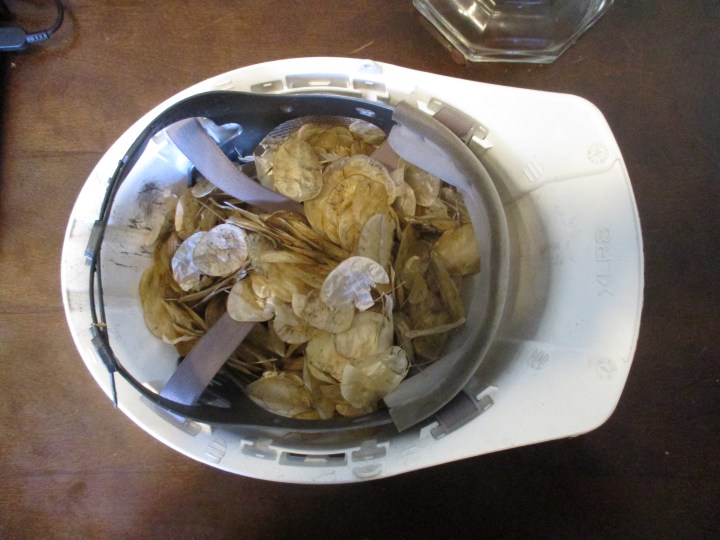
Money plant, Lunaria annua, which some may know as ‘honesty’, is honestly not a wildflower here. It is neither native nor naturalized. Yet, it seems to grow wild on roadsides, in drainage ditches, and around the perimeters of some of the landscapes. It certainly produces enough seed to naturalize. It just would not have done so in this climate without a bit of intervention.
Many years ago, someone who maintained the landscapes here started sowing seed for money plant. I do not know if he was the first to sow the seed, or if he collected it from plants that someone else grew. He collected seed annually to disperse randomly by simply tossing it out wherever he though it might happily grow into more money plant.
Since money plant wants a bit more water than it gets from annual rainfall here, it was happiest where it is most often seen now, in roadside drainage ditches and on the perimeters of irrigated landscapes. It somehow competes effectively with other seemingly more aggressive vegetation. In the more favorable situations, it self sows, but can not perpetuate indefinitely.
The horticulturist who dispersed the seed for so many years retired a few years ago. Consequently, there has been a bit less money plant annually since then. It certainly tries to naturalize, but was rather scarce last year.
We could not allow it to go extinct just yet. We collected some of the seed from the plants that bloomed last year. I dispersed a few where I thought they would be happy without being obtrusive in the landscapes. I gave most of the seed to a neighbor who happens to enjoy tossing random seed into random (but hopefully suitable) spots where wildflowers would be nice.
It is such a delightful tradition that is worth continuing.


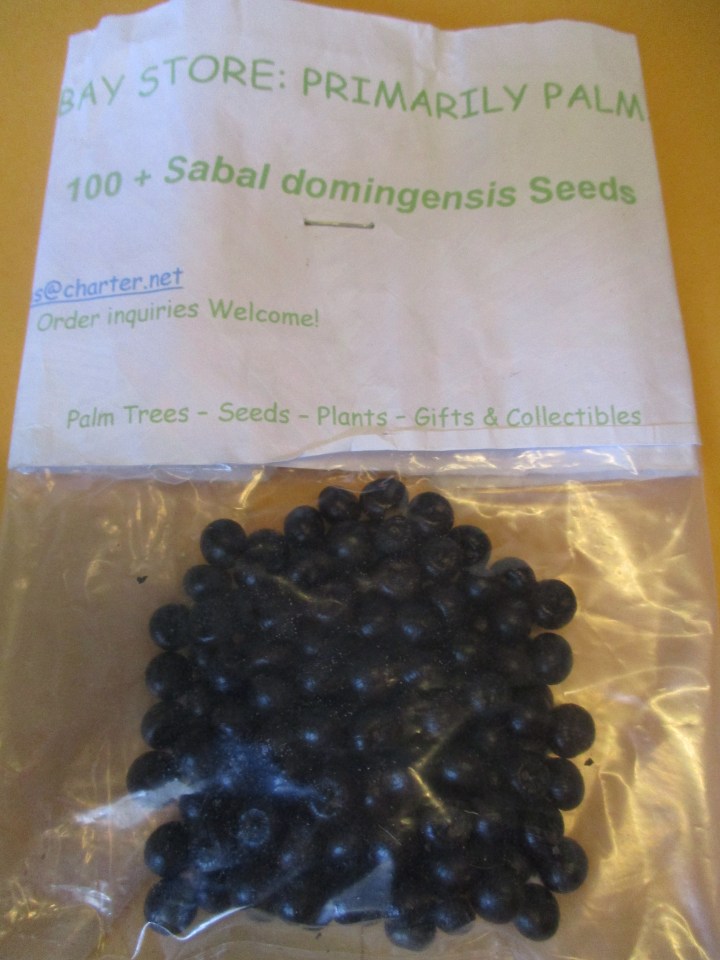




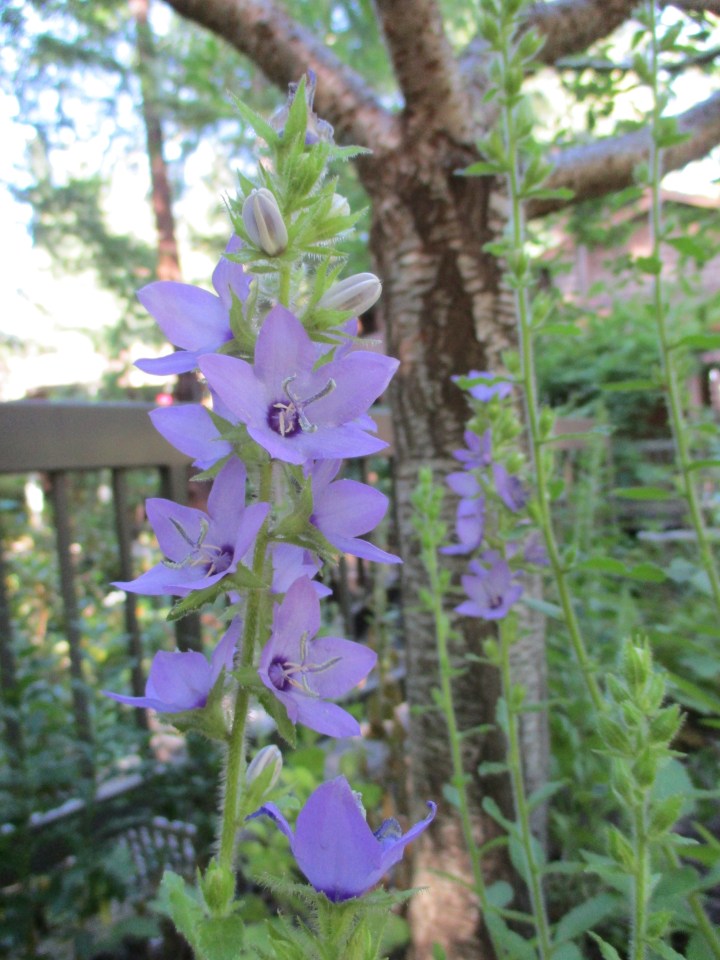 The seed is not really bad. At least I do not think that it is. It is merely misunderstood. Perhaps it would be more accurate to say that it is simply unidentified. I really do not know what it is. I do not say that very often, especially about seed that I bother to collect to sow elsewhere. I believe that it is of American bellflower, Campanula americana. If not, it is very closely related.
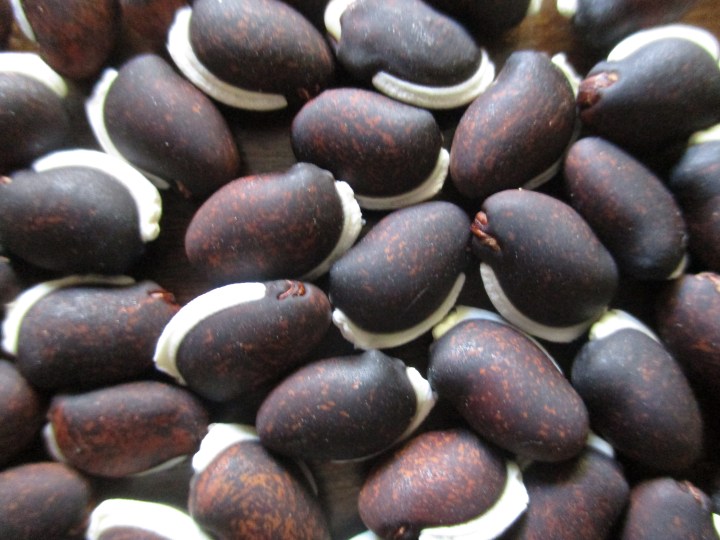 Hooey! It’s a bunch of hooey! Sweet pea seed that gets sown this time of year for next spring does NOT need to be soaked before sowing. In fact, unless there is some strange species of plant that has become that dependent on human intervention, NO seed need to be soaked prior to sowing. Not only is the technique completely unnecessary, but it is completely unnatural as well.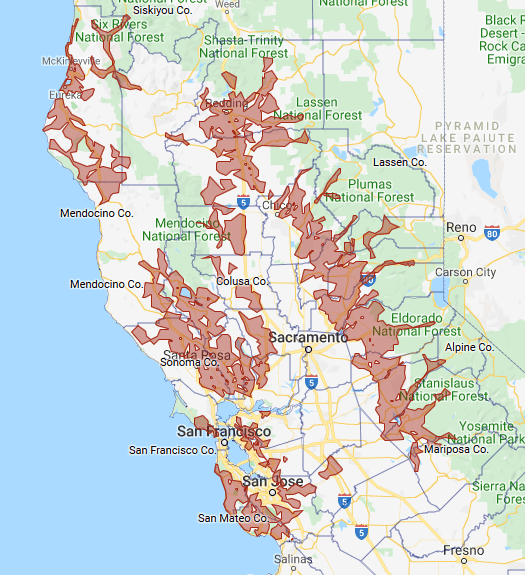




 The recent unseasonably warm weather was no problem for any remaining moss rose, Portulaca grandiflora. They usually start to look rather tired as the weather gets cooler this time of year, and eventually succumb to the first frost. Where allowed to do so, they can regenerate next year from seed. I like to collect their seed during the summer or autumn so that I can sow them after the last frost of the following winter. Through spring and summer, I find that additional plants are easy to grow from cuttings.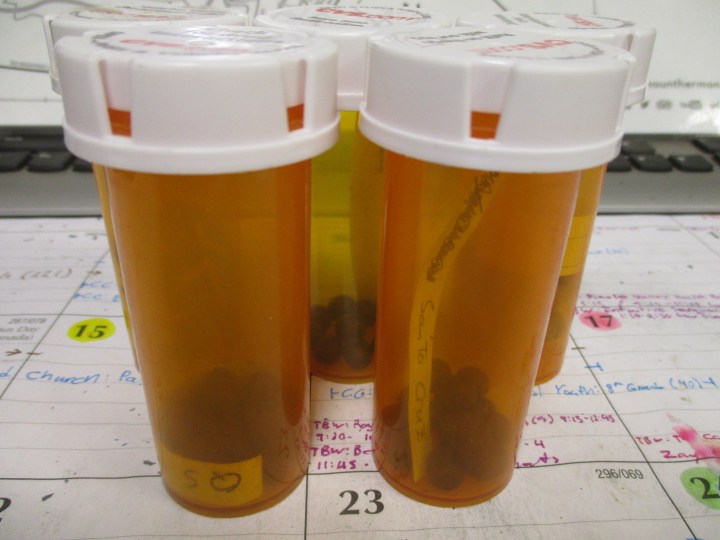



 Tony Tomeo