Six on Saturday: Mixed Bag


These are merely odds and ends that would not conform to any particular category. The first two are from my colleague’s garden that provided the pictures for last week. The third, fourth and fifth are from a nearby landscape that is comprised of native specie. The sixth is another landscape nearby, but is obviously not native.

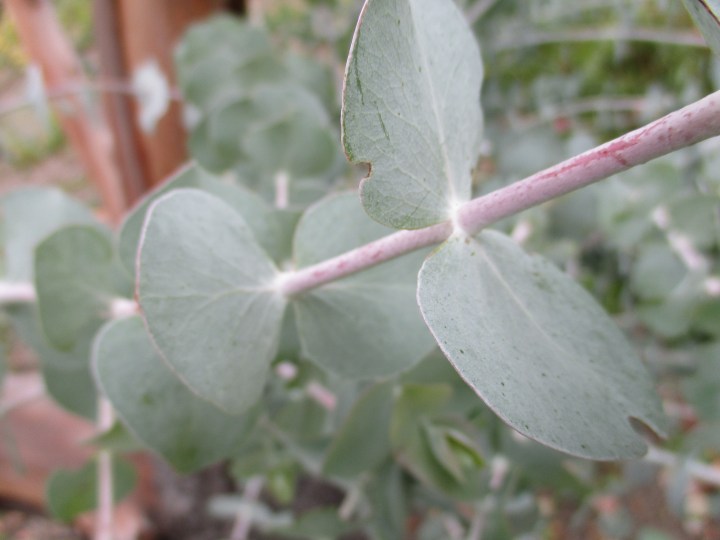
1. Eucalyptus provides distinctively aromatic silvery foliage for young students of Outdoor Science. We keep this tree low and almost pollarded so that the students can reach the juvenile foliage. We plan to prune back any adult foliage, since it is neither as pretty, nor as aromatic. No matter how much gets cut from the tree, there is always more. We thought this tree was Eucalyptus cinerea, but we really do not know what it is.P80915
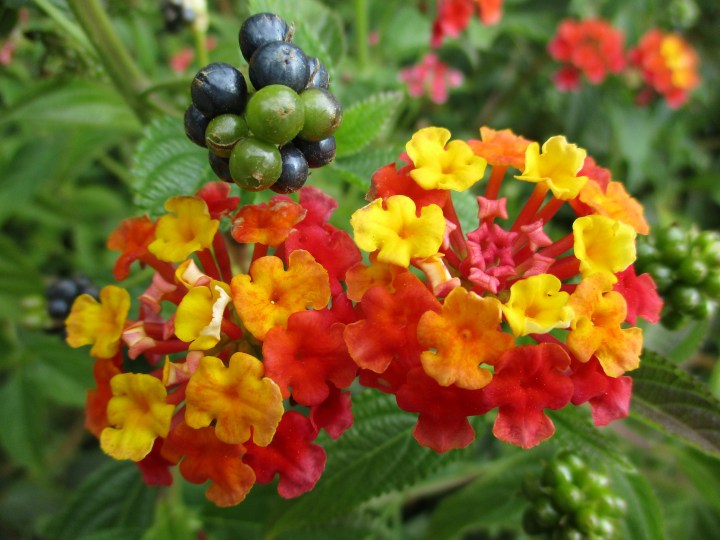
2. Lantana camara gets frosted to the ground where it is at. It might do better on a slope just a few yards away, or under the canopy of big trees nearby. It just happens to be in one of those cold spots where cold air settles on frosty nights. The dead stems get cut back at the end of every winter, and new growth regenerates just fine. However, by the time it starts to bloom nicely, it is already autumn!P80915+
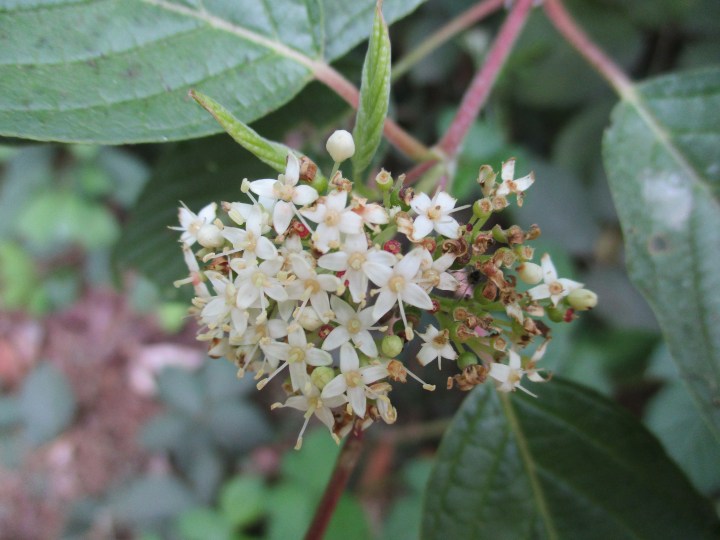
3. Cornus stolonifera is the only locally native dogwood. These pathetic blooms demonstrate why it is not more popular than it is. There are more individual flowers than other dogwoods get in each of their clustered blooms, but they bloom late in summer without the flashy bracts behind them. This dogwood is commonly known as red twig dogwood, but the twigs are not as colorful as those of another species of the same name.P80915++
4. Rose, although planted, happens to be native to the region as well. I do not know the species of this particular rose. It is not much to look at, but it is worth growing in a landscape of natives. It does not get pruned like roses that are grown for their bloom. In fact, we do nothing to it. It just grows wild. Flowers are sporadic, starting late in spring, and continuing until frost.P80915+++

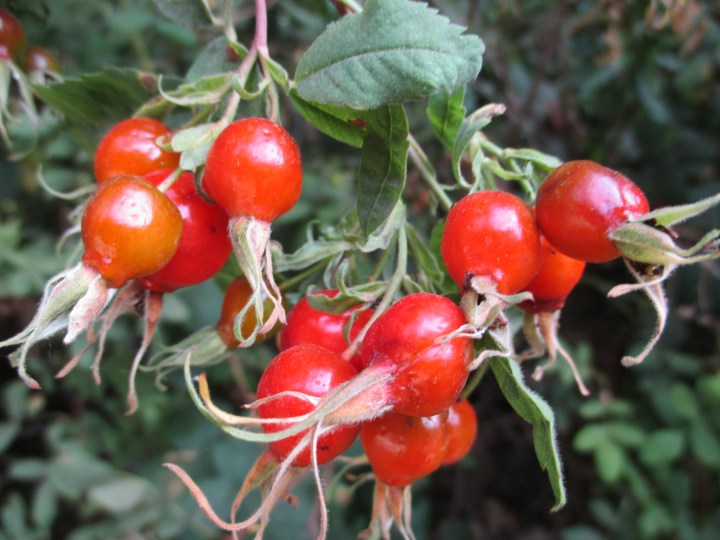
5. Rose hips take a while to ripen. These were probably from the first flowers that bloomed months ago. Flowers that are blooming now may not produce hips at all, or if they do, the hips may never ripen. They just do not have enough time. Fortunately, there are enough to provide a bit of color while many of the plants in this spot defoliate through winter. They do not have great flavor alone, but are fine with other herbal tea.P80915++++
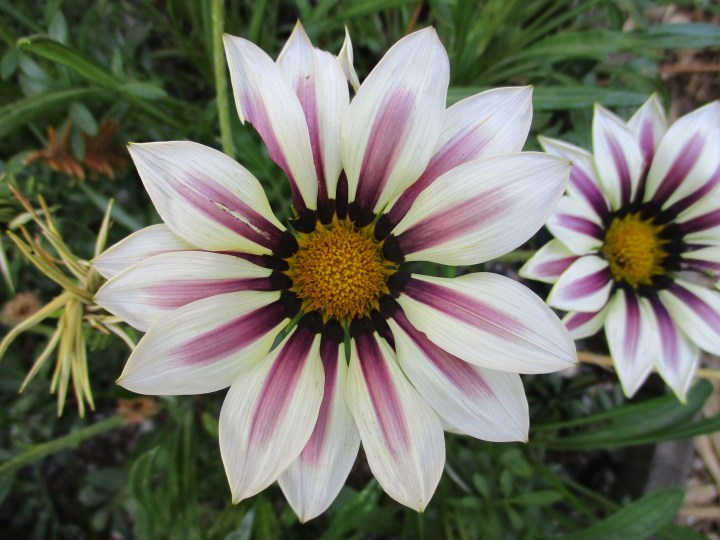
6. Gazania is related to the African daisy from last week. More gazanias will be shared next week. These were planted somewhat recently to replace English daisy that succumbed to a really bad infestation of rust, so have not bloomed as much as they might have liked to if they had gotten established earlier. They will continue until frost, and can bloom sporadically through winter, before resuming bloom as weather warms next spring.P80915+++++
This is the link for Six on Saturday, for anyone else who would like to participate:

https://thepropagatorblog.wordpress.com/2017/09/18/six-on-saturday-a-participant-guide/
Six on Saturday: Again – Not My Garden


There are just too many cool things blooming in my colleague’s garden to not get some more pictures. Some may seem to be redundant to others that were shared earlier, as well as to some that have not been shared yet. The unknown salvia and lion’s tail are finishing their bloom, as it the know what time of year it is. The weather may not seem like that of late summer, but they know otherwise. I got these pictures while I could. African iris and African daisy are oblivious. They bloom whenever they want to, and African iris can even bloom a little bit through winter if it chooses to. Autumn sage, as the name implies blooms best about now. Of these six, only the four O’clock will deteriorate in autumn and die back through winter. The salvias will get pruned back anyway.

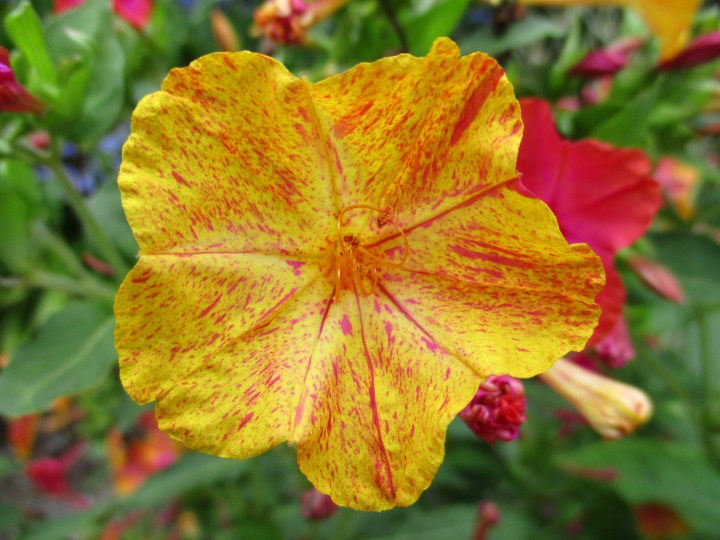
1. Four O’clock, Mirabilis jalapa, are the same as those featured last Saturday in Six on Saturday, and in the following brief article about the individual plants that bloom with flowers of different colors. This one looks like a blob of mustard with a bit of ketchup that squirted out of a hamburger as someone bit into it. The rich red flower in the background that looks more like plain ketchup is on the same stem.P80908

2. Autumn sage, Salvia gregii, is a different cultivar of the same species featured yesterday. The picture that was posted yesterday was from a specimen in the landscape at the library in town. This picture is that of a cultivar of smaller stature but with bigger flowers. The zonal geraniums of questionable (pink, salmon, peach or whatever) color that were featured last week can be seen in the background.P80908+

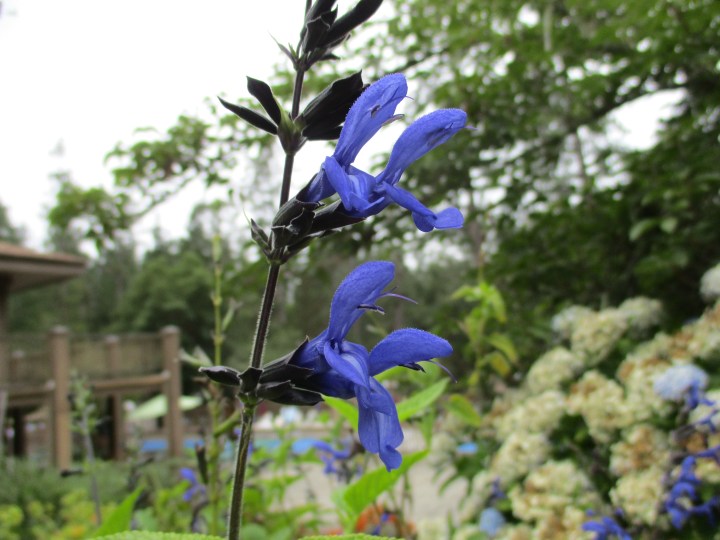
3. Black and blue salvia, Salvia guarantica, looks just like this. . . or this looks just like black and blue salvia. I really do not know what it is. It sure is an exquisite blue though. The base of the plant is rather scrawny, almost as if it intends to grow only as an annual. It will get cut back like other salvias, but not as aggressively. If it regenerates from the base like it should, the old growth can be cut back later.P80908++

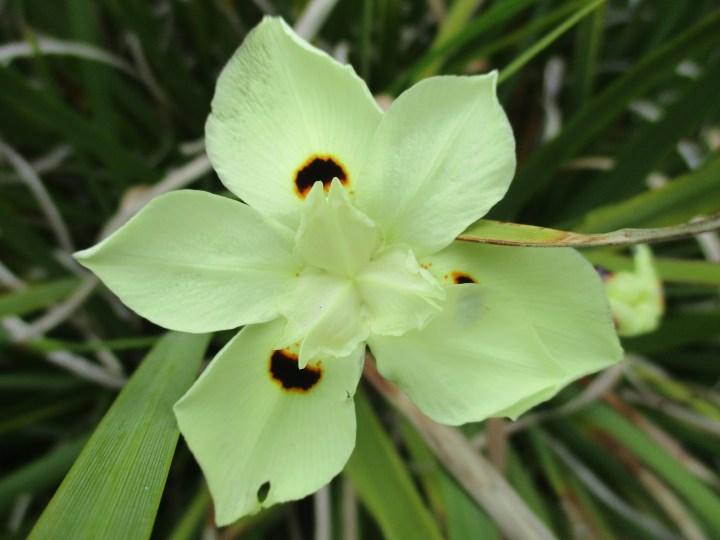
4. Yellow African iris, Morea bicolor, is sort of cliché. However, this is the only one anywhere around. Seriously, with all the many acres of landscape that my colleague maintains out there, this is the only one. The more common white African iris, Dietes iridioides, is lacking completely. (‘Dietes‘ and ‘Morea‘ are synonyms, but ‘Dietes‘ is uses more for the ‘iridiodes, and ‘Morea‘ is used more for the ‘bicolor‘.)P80908+++

5. African daisy, Osteospermum ecklonsis, looks something like gazania. There are plenty pictures of gazania as well, but I will use them for the next two weeks. This species of African daisy is shrubbier and more colorful than the sprawling types that were popular as ground cover back in the 1980s. It blooms more profusely, and with more vivid colors. I probably should have gotten pictures of the other colors too.P80908++++

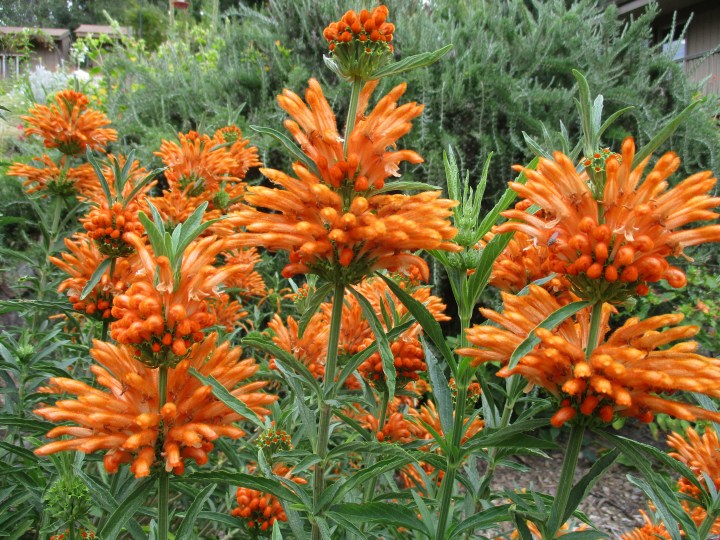
6. Lion’s tail, Leonotis leonurus, will be featured in my weekly gardening column this week, which shows up here on Tuesday. I am no fan of orange, but I can not dislike this bloom. The color is as flashy as that of California poppy. I will never understand why this perennial is not more popular than it it. It has been available longer than some of the less impressive salvias, but salvias are trendy. They are related of course.P80908+++++

This is the link for Six on Saturday, for anyone else who would like to participate:

https://thepropagatorblog.wordpress.com/2017/09/18/six-on-saturday-a-participant-guide/

Six on Saturday: Not My Garden


My garden really is not much to talk about. Really. It is just a bunch of redwoods with a bit of other native vegetation dominating the few items that I added into the mix. There are fourteen stock fig trees, but they are very small and mostly obscured by the underbrush. The elderberries, currants and huckleberries are the same as what grows wild, so they do not look like much either. Even the cane berries look very similar to the native blackberries. There is a quince tree, some rhubarb, and some small prickly pear, but they are barely visible amongst the other vegetation. Well, that is enough talk about why my garden is not much to talk about.

These pictures are from one of the gardens that one of my colleagues maintains.

1. Hibiscus is probably the flashiest bloom in this garden now. I have no idea what cultivar this hibiscus is; and I am not even certain about the species. It sure is impressive though. This flower is more than six inches wide!P80901

2. Red honeysuckle is something that I really want to grow, but can not justify it. I mean, it does not exactly ‘do’ anything more than look good. It is not fragrant like Japanese honeysuckle is. This one took a while to bloom.P80901+

3. Zonal geranium happens to be one of my favorite perennials, even if others consider it to be too cheap and common. I do not know if this one is pink, peach, salmon . . . or one of those odd colors that only girls can see.P80901++

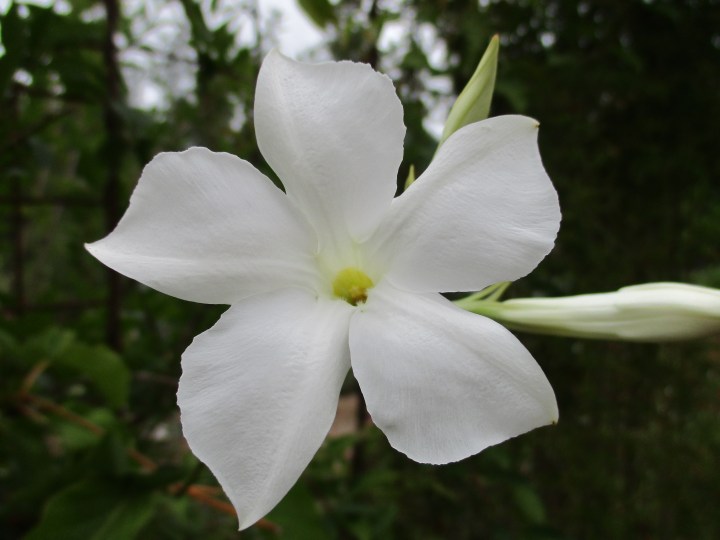
4. Mandevilla is my best guess. Again, I do not know the species. Did I mention that this is not my garden? I do happen to like this one though, because it is so perfectly white. Otherwise, I am none too keen on mandevilla.P80901+++

5. Morning glory is quite happy here. This one is annual of course. There was a perennial white morning glory known as a moonflower nearby, but it succumbed to frost last winter. Hope for its recovery ran out months ago.P80901++++

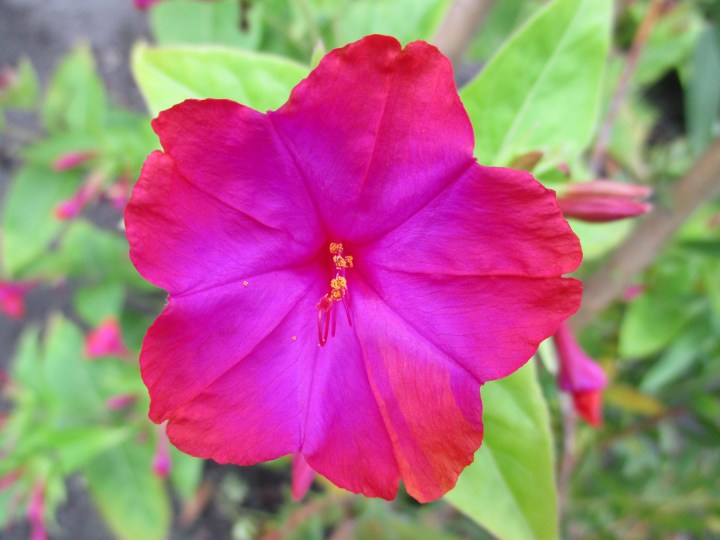
6. 4:00 (four o’clock) is a prolific naturalized exotic species. I would not say that it is invasive, but merely prolific. I do not know if this one is 4:00 a.m. or 4:00 p.m., but I do know it will not be the last. More on that later.P80901+++++

This is the link for Six on Saturday, for anyone else who would like to participate:

https://thepropagatorblog.wordpress.com/2017/09/18/six-on-saturday-a-participant-guide/
 

Six on Saturday: Redwoods Again


Redwoods are such interesting trees. There is always something to write about them. I happen to live and work within the native range of the coastal redwood. I often work with very big redwoods, both in the wild, and in landscaped areas that were formerly wild. There are no other trees that are comparable. The giant redwoods in the Sierra Nevada are bigger, but they are also very different.

1. In most home gardens and landscapes, trees that get cut down get recycled into greenwaste and firewood. Not many are big enough to get recycled into lumber. Even fewer are big enough to get milled into big timbers. This milled redwood lumber is drying before getting milled again into timbers and smaller sizes of lumber that will get used to repair and remodel some of the historical old buildings. A bit of pine lumber is also obtained from the big ponderosa pines nearby.P80825

2. Limbs, foliage, bark and parts of the redwood trees that can not be milled into lumber get chipped. Chips get used as mulch in landscaped areas. After taking this picture, I realized that it is not really a pile of chipped redwood, but is instead chipped wood waste. Chipped redwood is typically green with foliage. Oh well, you get the idea.P80825+

3. The Ewok Village of ‘Star Wars IV – Return of the Jedi’ was in a redwood forest near Fortuna. This is not really an Ewok Village.P80825++

4. It is a Redwood Canopy Tour. People (not Ewoks) can be seen on a platform in the yellow rectangle just above and to the right of the center of the picture. Someone on a zip line can be seen in the white rectangle just below and barely to the left of the center. It looks crazy to me, but many of my colleagues do crazier things at work.P80825+++

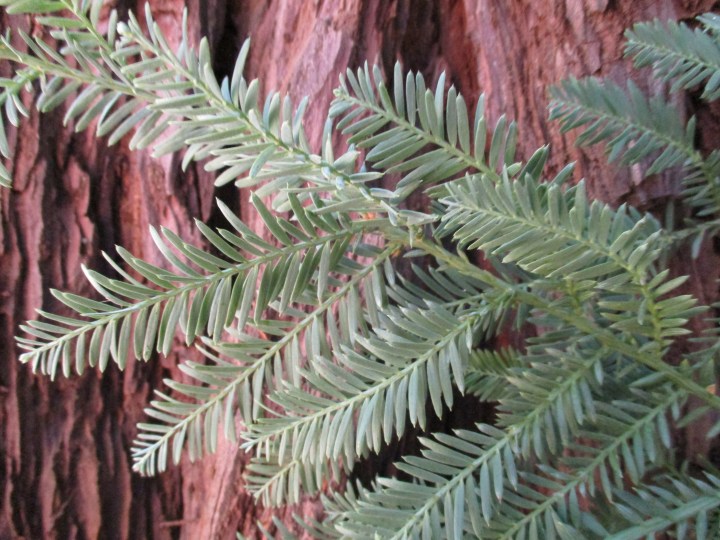
5. Most of us have seen pictures of massive redwood trunks. Most of us have seen pictures of redwood forests. Not so many of us have seen what the foliage looks like.P80825++++

6. This perennial pea has nothing to do with redwoods, but needed to be included as a token flower for this week. Besides it is cool. It is softer pink than the bright purplish pink that is so typical, and is blooming very late.P80825+++++

This is the link for Six on Saturday, for anyone else who would like to participate:

https://thepropagatorblog.wordpress.com/2017/09/18/six-on-saturday-a-participant-guide/
Here are a few links for some of my brief articles about redwood:

https://tonytomeo.com/2018/08/17/dawn-redwood/

https://tonytomeo.com/2018/08/12/general-sherman-tree/

https://tonytomeo.com/2018/08/04/albino/

https://tonytomeo.com/2018/08/04/six-on-saturday-bits-and-pieces-ii/

https://tonytomeo.com/2018/07/14/six-on-saturday-redwoods/

https://tonytomeo.com/2018/05/12/six-on-saturday-tree-ring-circus/

https://tonytomeo.com/2017/10/15/redwoods/

https://tonytomeo.com/2017/10/05/big-tree-in-a-small-town/


Six on Saturday: Out With The Old


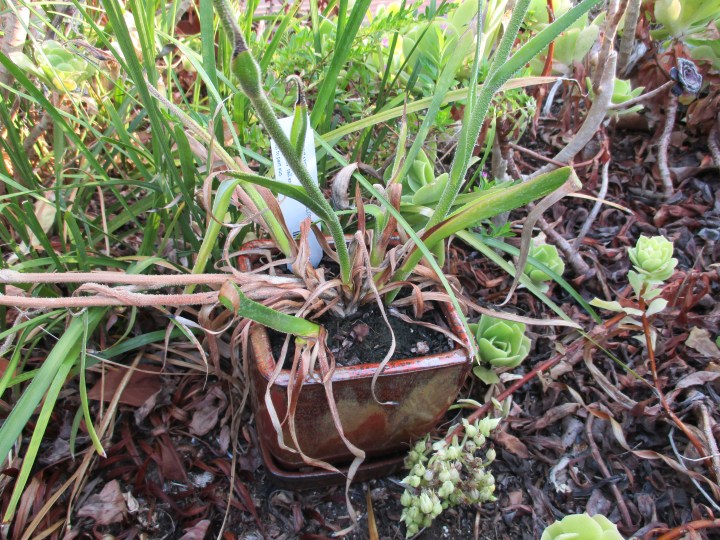
The planter box downtown has been neglected for too long. ( https://tonytomeo.com/2017/11/04/my-tiny-downtown-garden/ ) I really must make some time to clean out the debris and a little bit of trash. There is nothing as interesting as when the concrete slurry was dumped into it by whomever was installing the tile in the bathroom of the adjacent building, but there are some odds and ends. One of the six trailing rosemary plants that was trailing so nicely over the southern edge is missing . . . as in someone cut it back to a stump. Someone dumped out an old dead houseplant right into the middle of the planter box, leaving an upside down pot shaped wad of potting soil, as if no one would mind. Right next to that, someone left a potted kangaroo paw, as if I might want to plant it into the planter box. It is all dried up and mostly dead . . . and I really do not like kangaroo paw enough to want to grow it there. Well, perhaps it is better to show you the drama than to write too much about it.

1. This is the potted kangaroo paw that someone left in the planter box. Anyone who does not notice how sloppy all the dried foliar debris on the ground around it is will be sure to notice how unsightly this dried kangaroo paw is. The pile of discarded potting soil was already bashed up and spread out before this picture was taken. I will probably plant the kangaroo paw somewhere else, just in case it survives. I do not want it here. The pot is nice.P80818

2. It has a name; Anigozanthos ‘Kanga Yellow’. Doesn’t anyone use species names anymore?P80818+

3. Right next to my planter box is a tree well with a London plane that has not grown more than a few inches in the past few years. When my nasturtiums really get to blooming and seeding, I sweep some of the seed into the tree well, where they bloom just as prolifically as they do in the planter box, but a bit later. I make it look like an accident. There is also a busted up houseleek in there. It grew from a piece of mine, and will regenerate when the rain resumes in autumn. It sort of looks like an accident too.P80818++

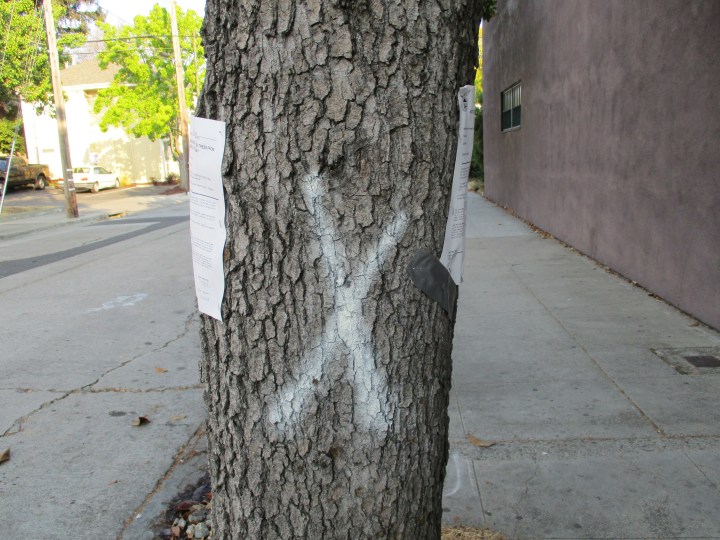
4. Just to the west of the slow London plane is one of a few old Southern magnolias that will be removed. They are disfigured and somewhat unhealthy, so are not worth salvaging as the pavement of the surrounding roadway, sidewalk and curb get replaced. Even if we wanted to salvage them, they would not likely survive the process. It is sad to see them go, but they were good street trees for a very long time, and certainly lasted longer than they should have been expected to. Southern magnolias commonly displace pavement. I really would not mind if the ailing London plane were to be removed as well, just because it it too pathetic to work around, but the tree huggers are intent on preserving it. When the magnolias get replaced with new redbuds or tupelos, the London plane will look odd, and will eventually get too big and break the new pavement. Oh well. My planter box and this tree are actually on Nicholson Avenue, not on Tait Avenue or Bayview Avenue.P80818+++

5. ‘X’ marks the magnolias who are condemned to death. I know they need to go, but it is saddening anyway. They were fun neighbors.P80818++++

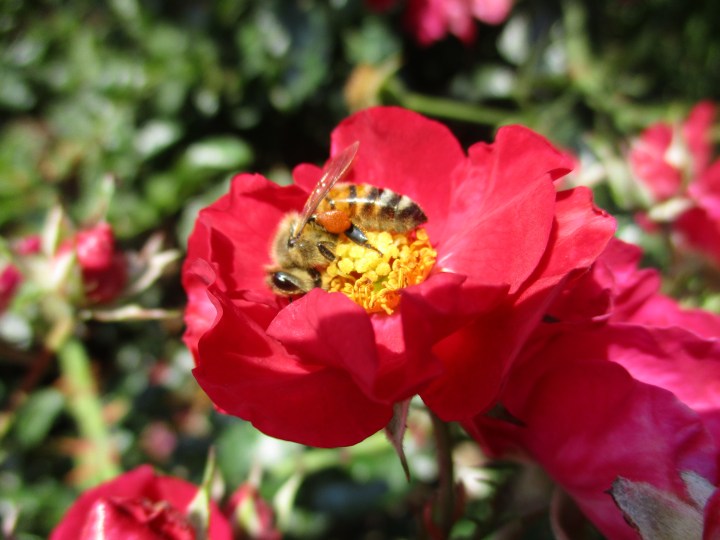
6. Since there were no colorful flowers within my planter box, it was necessary to get this picture elsewhere. Brent might say this looks like the Academy Awards, with a bee on the red carpet rose. Well, I can not expect you to know how Brent thinks. You can omit ‘rose’, and think of ‘bee’ as ‘B’, and think of ‘B’ as a euphemism.P80818+++++

This is the link for Six on Saturday, for anyone else who would like to participate:

https://thepropagatorblog.wordpress.com/2017/09/18/six-on-saturday-a-participant-guide/

Six on Saturday: Cacti

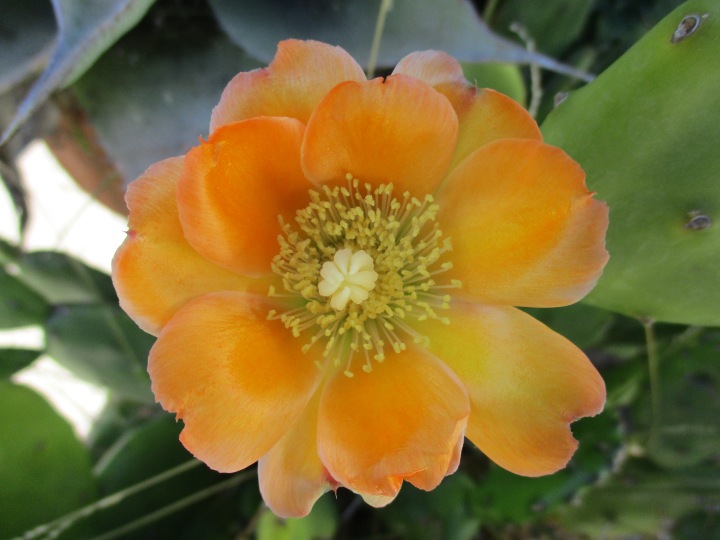
Cacti was the topic for my gardening column less than two weeks ago. ( https://tonytomeo.com/2018/07/30/cacti-are-notorious-for-nonconformity/ ) Both space and illustrations are limited in the column though. Only a picture of a prickly pear was posted with that main article. The other part of that article, which is a brief description and a picture of white epiphyllum, was posted the next day. ( https://tonytomeo.com/2018/07/31/epiphyllum-oxypetalum/ ) Since then, I have been wanting to get a picture of one of the small but delightful orange flowers of a prickly pear in the private collection of one of my colleagues. Now that I got that picture, I really did not know what to do with it. I got two other pictures of the fruit and stems of the same prickly pear, and three more pictures of other cacti in the same collection so that I could post them here. Instead of saving the best picture for last, the prickly pear flower is posted first just because it is that cool.

1. Prickly pear flower should bloom during the day. They should not be nocturnal. I can not be certain because I am not familiar with this particular species. What I do know is that the flowers have been open early in the morning, and then closed shortly after exposed to sunlight, almost like those of a nocturnal epiphyllum. It took me a while to get this picture of this single peachy orange flower.P80811

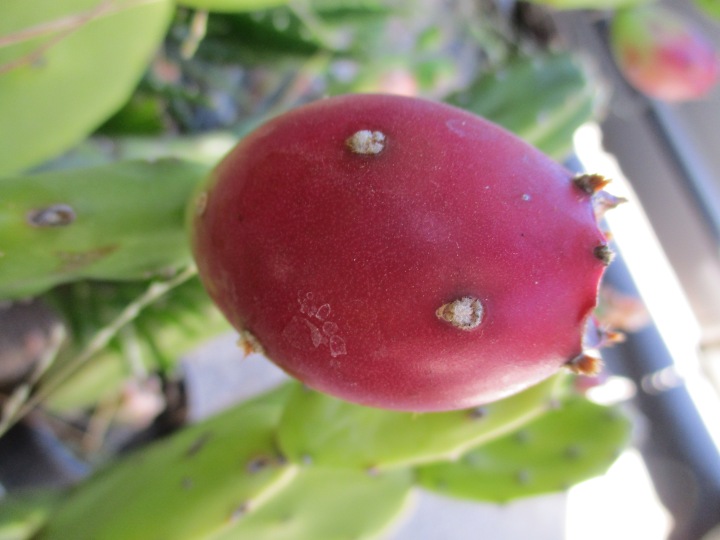
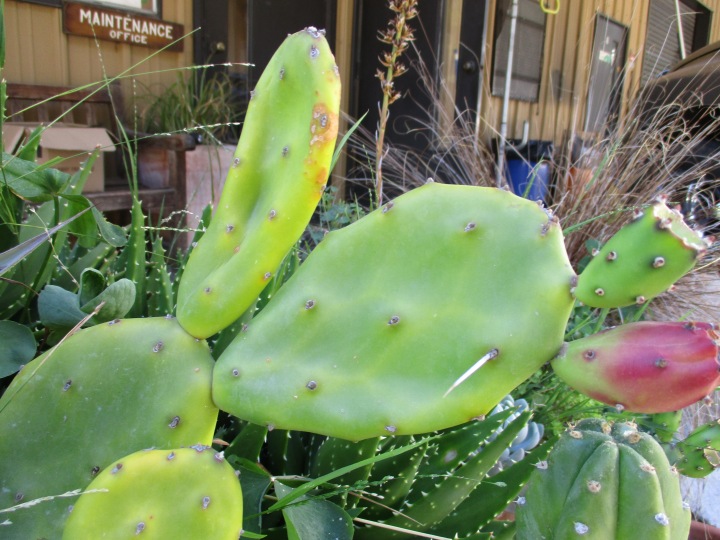
2. Prickly pear fruit should ripen right after bloom, but most fall off of this plant while still green. It might be because the plant is potted and watered regularly. Those that ripen are only about two inches long, and quite pithy without much flavor. They would probably be bigger, more abundant and better flavored if the plant could grow in the ground.P80811+

3. Prickly pear pad is not as prickly as those that I got a picture of for the previous article about cacti. I do not know how their flavor is because I have not tried them. This is a small plant that can not spare many pads. Even if there were a few to spare, they are not very big, even when mature. The probably would not taste very goo either, since they take so long to mature in the pot.P80811++

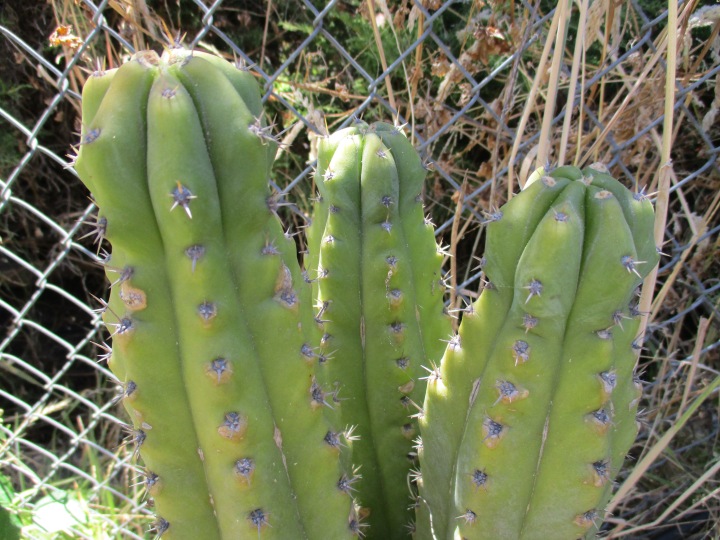
4. Cereus cactus really is nocturnal; cereusly! It produces huge white flowers that are about as big as those of the white epiphyllum that was featured earlier. The flowers do not open until after sundown, and may wait until late at night. While open, they are powerfully fragrant. The fragrance seems to ‘turn on’ immediately when the flower open, and ‘turn off’ as soon as the flowers close before dawn.P80811+++

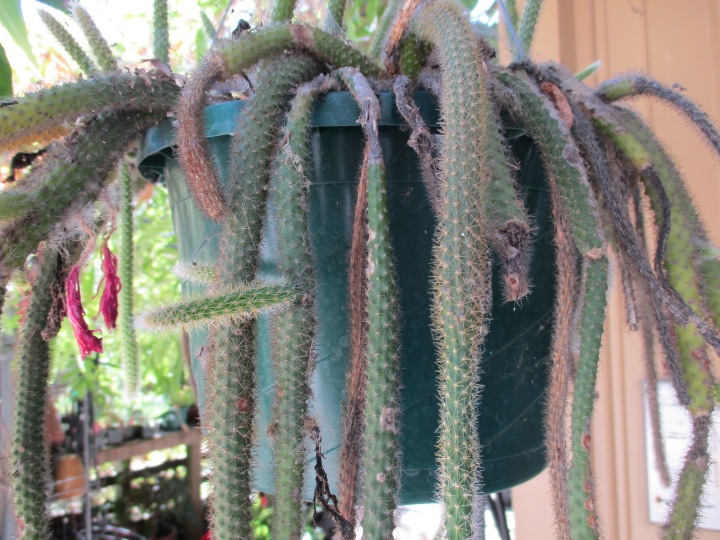
5. Rat tail cactus, like epiphyllum, is epiphytic, which means that it grows where debris collects in crotches of limbs in big trees. If they grown on the ground, they just sprawl about and maybe form low mounds. This is not an exemplary specimen, although it bloomed well earlier, with reddish orange flowers that are significantly smaller than those of the epiphyllum, and also a bit smaller than those of the prickly pear.P80811++++

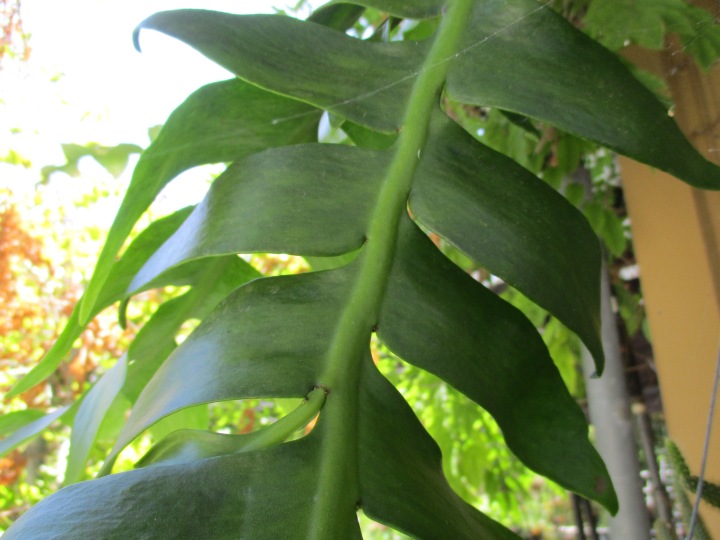
6. Epiphyllum is a weird epiphytic cactus. This particular cultivar is even weirder than most. Cacti photosynthesize with their green stems, while using what should be leaves as spines. This cultivar does not seem to be satisfied with that technique, so is outfitted with these weird leafy appendages on its flat green stems, as if it really wants leaves like other plant have.P80811+++++

This is the link for Six on Saturday, for anyone else who would like to participate:

https://thepropagatorblog.wordpress.com/2017/09/18/six-on-saturday-a-participant-guide/
Six on Saturday: Bits and Pieces II


It has been a while since I posted a sequel to anything like I used to do so commonly. I am only doing it now because I do not have six pictures that fit a particular theme. There are not six different camellias or six different rhododendrons blooming at the same time. There is not a new landscape with six different newly installed plants to show off. Instead, I merely found a few amusing or silly pictures from work for this week. I sort of like #5 because it is interesting even to those of us who are familiar with it. I will actually elaborate a bit more on that later at noon.

I know these Six on Saturday posts do not fit with my other articles, but hey are fun for those us who participate. You can see other Six on Saturday posts by other writers at the link at the bottom of the page. You might even want to give it a try and participate yourself.

1. This might look like a signs at the Generic Aroboretum, or the Arboretum for the Horticulturally Disinterested, but the signs really refer to buildings that are named after trees. Almost all of the buildings in the neighborhood are names after flora of some sort.P80804

2. Woodpecker pantries are often constructed in old coastal redwood trees with soft bark. It seems silly to me; but it must be effective. Otherwise, woodpeckers would not put so much effort into stocking them. Woodpeckers deposit single acorns into the holes bored into the bark, in order to store the acorns for later. Some of these holes are very old, so have stored several acorns over several years. At lest one woodpecker guards the pantry from squirrels while the other woodpeckers are out and about collecting acorns. Such pantries are typically in trees that are isolated from others, so that squirrels can not enter from other trees, and then raid the pantry from above. The only access to the squirrels is from the ground. This panty does not seem to be active at the moment, but discarded acorn shells at the base of the tree indicate the it was active in recent history.P80804+.JPG

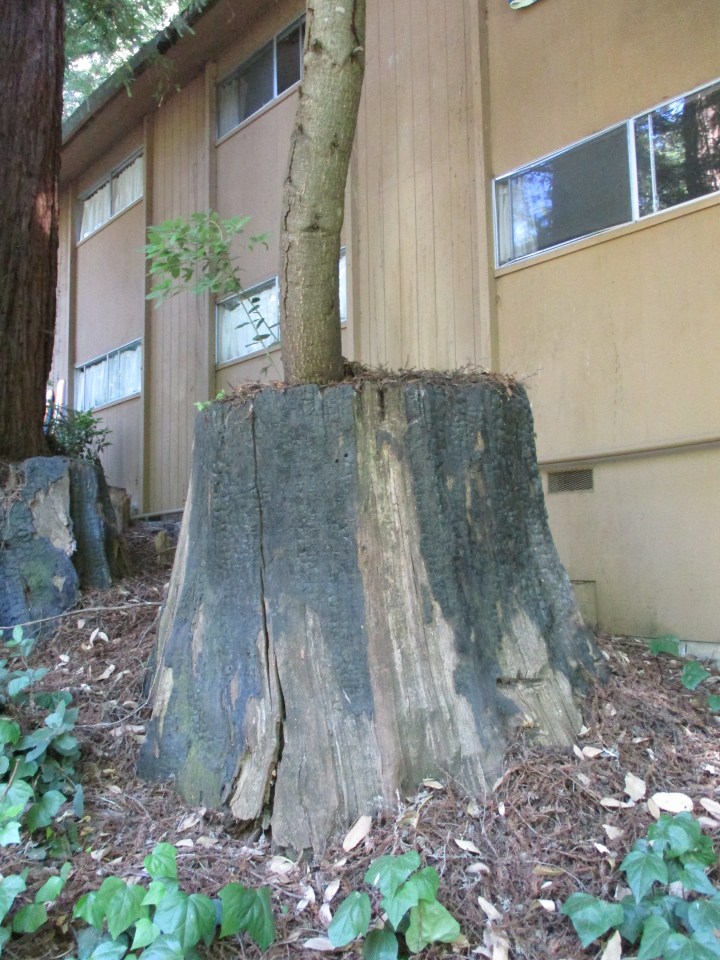
3. Coastal redwood trees are very efficient at regenerating from stumps of harvested trees. This tan oak wanted to give it a try too. It did not really regenerate from the stump of course, but merely grew from an acorn in the detritus that collected on top of the stump, and rooted into the rotted wood. The fractures visible at the bottom of the stump are caused by expanding tan oak roots.P80804++

4. Which of these things does not belong here? Do you remember that from Sesame Street? Blue hydrangeas are not common here, although we have quite a few that are fertilized to be blue. I thought that these looked silly together because they are so similar in color.P80804+++

5. Albino coastal redwoods are so fascinating. The white foliage can not survive without chlorophyll, so must remain attached to the original green tree that produced the white mutant growth. This takes a bit of explanation, so I will write a bit more about this about noon.P80804++++

6. Finally, we have two silly looking tiny weds that grew in a crack in the big rock that I wrote about earlier in Rock Concert. https://tonytomeo.com/2018/04/07/six-on-saturday-rock-concert/ They are not much to look at, but this looks like one of those artistic pictures that other writers take.P80804+++++

This is the link for Six on Saturday, for anyone else who would like to participate:

https://thepropagatorblog.wordpress.com/2017/09/18/six-on-saturday-a-participant-guide/

Six on Saturday: Bits and Pieces

There were no major projects this week that were interesting enough to get six pictures of. The best that I could do was get six random pictures of random features of the landscapes. I do not actually do much to cultivate flowers, but they happen to be components of the landscapes. Most are perennials that bloom on their own. Of course, I do not mind taking credit for them.

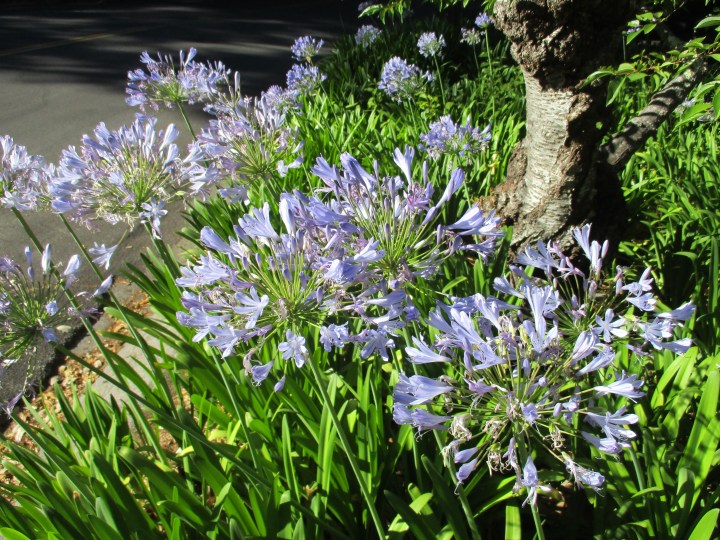
Some blooms started late while the weather was mild, but were then accelerated as the weather suddenly warmed. It seemed that several different types of flowers needed to be deadheaded at the same time. Zonal geraniums and lily-of-the-Nile are two of the most reliable perennials that bloom on schedule no matter what. Zonal geraniums bloom sporadically most of the time, and only bloom more while the weather is warm. Lily-of-the-Nile may start a bit early or a bit late, but is always in full bloom on the fourth of July. The blooms even look like exploding fireworks. More than two weeks later, their flowers are still in full color but will slowly start to fade. Phlox was a surprise for us.

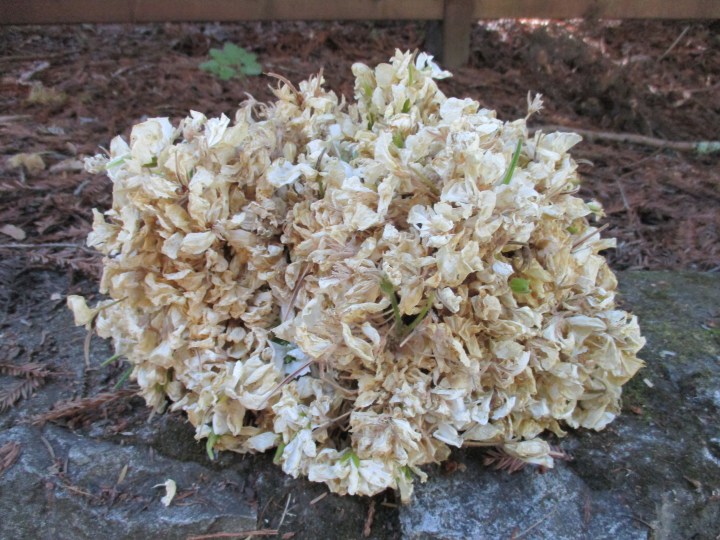
1. Can you guess what this bloom is?P80728

2. You can probably guess that this is phlox. It sure had my colleagues and I perplexed. We had never seen anything like it. Phlox is uncommon here. I would even say it is rare. No one knows why. It just is. I got a picture of it a few years ago only because I was intrigued by it in a neighboring landscape. It took a bit of effort to identify it, although I sort of suspected that it was phlox. It did not look quite like this phlox, and was lower to the ground. No one knows how this one got into the landscape. We suspect it arrived with the ‘fertilizer’ that the horses make for us.P80728+

3. Lily-of-the-Nile is still one of my all time favorite summer blooming perennials. I do not care how cheap and common it is. It is one of the first perennials I divided while I was in junior high school. I grew more than eighty new plants from a single old plant that needed to be removed. It was the old fashioned sort, with big blue flowers and big flabby leaves, perhaps bigger than these. I also like the white ones with the same big flowers and leaves, of course, because they are white. All the fancy modern cultivars are nice too, but not as excellent as the originals. I do like seeing the very pale blue ones in other gardens.P80728++

4. This zonal geranium has these small but cheery cherry red flowers, but it is really grown for the weirdly variegated foliage that is blurry in the background. I think that these flowers would look better against simple green foliage. There is another zonal geranium in another part of the landscape, with small peachy pink flowers and foliage that is variegated only with white. I am none too keen on the flower color, and I am not often too keen on variegation, but the foliage of that particular zonal geranium really looks sharp.P80728+++

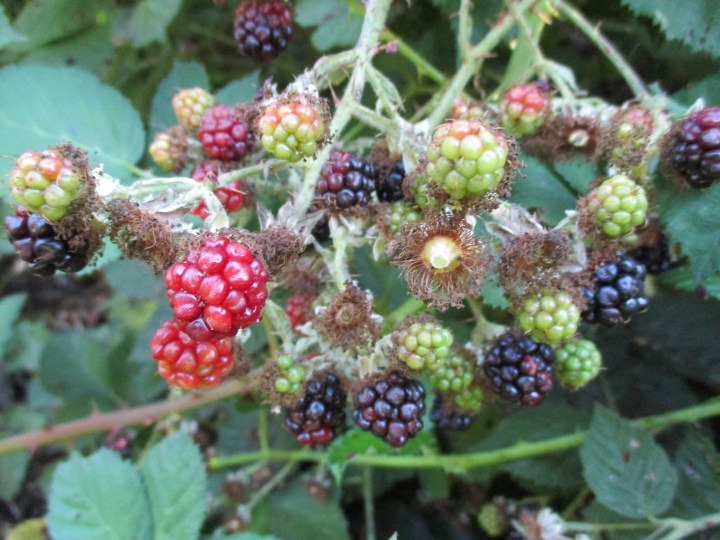
5. Himalayan blackberry is one of the worst and most invasive of the exotics weeds here. It develops huge canes that arch over and drop on top of other plants in the landscape. The wickedly sharp prickles (technical term for their thorns) are tortuous when trying to remove the canes. Even picking their berries is nasty business! There are a few berries ripening now, and they happen to be pretty good, but they are sooooooo not worth it.P80728++++

6. Chips needed to be dispersed into the newly landscaped areas that are partially visible in the background of this picture. These chips were free. They are made of recycled wood waste. For our purposes, they are sufficient. However, they include a few large chunks of wood and bits of metal. The chunk of metal in this picture is a short section of rebar. Some of the chips have paint on them. Some seem to be bits of old furniture. It makes one wonder where some of this material came from.P80728+++++

By the way, the bloom in the first picture #1 is merely a fist full of deadheaded white zonal geranium flowers all pressed together. White zonal geraniums do not readily drop their faded blooms like other zonal geraniums do, so they need to be deadheaded.

This is the link for Six on Saturday, for anyone else who would like to participate:

https://thepropagatorblog.wordpress.com/2017/09/18/six-on-saturday-a-participant-guide/

Six on Saturday: New Landscape


Yes, we have another new landscape. It is not much bigger than the last one, and is not very far away. In fact, although it is associated with two different buildings, it is located adjacent to the opposite corner of the same building that the last landscape was constructed for. https://tonytomeo.wordpress.com/2018/04/07/six-on-saturday-rock-concert/

These six pictures were taken prior to the installation of wood chip mulch, so ground cloth is visible below. It was quite dry and dusty at the time. All of these six plants were newly installed after being procured from nurseries, so none were relocated from other landscapes, or from our storage nursery. They were blooming nicely when installed, but are actually not blooming so nicely now, and some were damaged by the sudden warmth immediately after installation. They would have been fine if only the warmth did not arrive so suddenly, or if it had arrived a few days later. Well, we can not control the weather.

Large stones and bare soil prior to the installation of the landscape were shown in this previous Six on Saturday post, https://tonytomeo.wordpress.com/2018/06/16/six-on-saturday-rock-on/

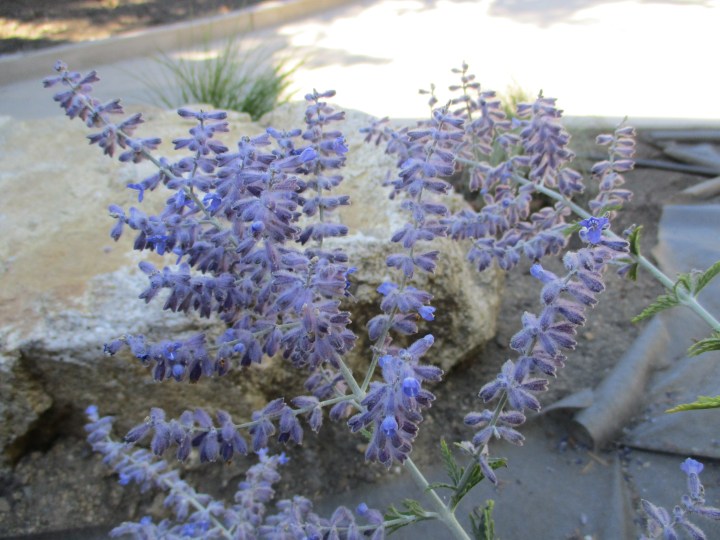
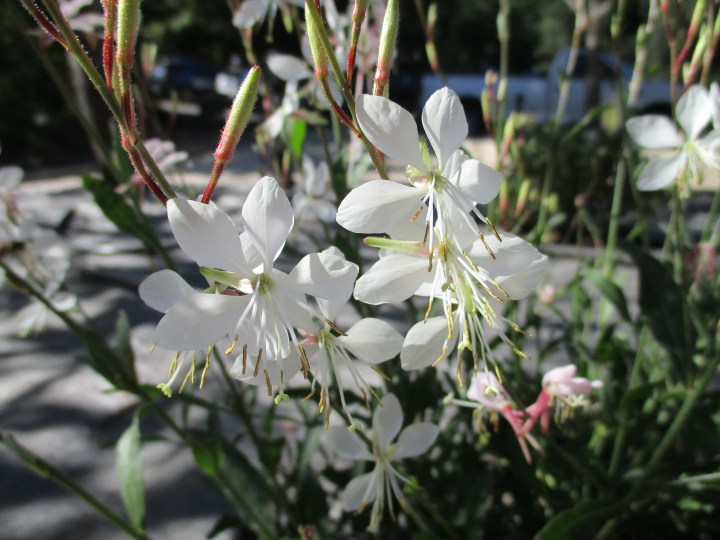
1. fernleaf yarrow, Achillea filipendulina, Most of these are white. A few are rusty red. A few are yellow like this one, which might be ‘Moonshine’. These did not show symptoms of heat stress right away, but have since gotten rather crispy. I could not find a picture like this one now. Fernleaf yarrow has been popular here for as long as I can remember because it supposedly does not need much water, although most get watered regularly.P805212. Russian sage, Perovskia atriplicifolia, That sounds like ‘piroshki’. These and the rockrose #4 were 5 gallon plants, so are somewhat bigger than most other plants in the new landscape. They were not bothered by the change of the weather. Their faded denim blue flowers continue to bloom nicely. This is a plant that has been popular for a while, but that I have never grown. I tend to avoid trendy plants. However, my colleagues do not.P80521+3. gaura, Gaura lindheimeri, The common name is ‘white gaura’, but some are pink and some are darker pink that is almost red. I do not know if they are merely cultivars of ‘white’ gaura, or different specie. It seemed appropriate to omit ‘white’ from the name. Besides, that is how I learned it. This one can self sow enough to be an annoyance. Individual plants do not live very long, so a few feral seedlings can be selected to replace them.P80521++4. rockrose, Cistus cretisus, When I learned about rockrose back in the 1980s, we learned only two specie. One was white rockrose. The other was pink rockrose; and the pink rockrose did not look like this one. Now, there are too many to remember. Most do not have species name, but merely cultivar names. I really do not know if this really is Cistus cretisus. It just happens to look like it. I suppose I should have looked at the label.P80521+++5. chocolate coreopsis, Coreopsis ‘Chocolate’, As I implied for #4, nomenclature is not what it used to be. It was standardized to simplify things, but is difficult to keep track of now with all the breeding and hybridizing, and botanists wanting to make a name for themselves by changing a name to something supposedly more accurate. I really do not know the species name of the chocolate coreopsis. It is known merely by the cultivar name.P80521++++6. milkweed, Asclepias tuberosa, This one wilted rather badly in the warmth, but did not get roasted too much. The shriveled flowers in this picture are the worst of the damage. It is blooming more profusely now, and is developing strange seed pods. Milkweed is another trendy plant that caters to the butterfly gardening fad. I am not certain if I like the idea of planting something that is expected to get munched. It sure is colorful for now.P80521+++++This is the link for Six on Saturday, for anyone else who would like to participate:

https://thepropagatorblog.wordpress.com/2017/09/18/six-on-saturday-a-participant-guide/


Six on Saturday: Redwoods


Both coastal and giant redwoods, are the most excellent trees. The giant redwoods are endemic to isolated colonies in the Sierra Nevada. The coastal redwoods are endemic to the coastal region from the Oregon Border to San Luis Obispo County, which happens to include this region.

Coastal redwoods are so awesome that even the dead stumps from trees harvested a century ago are awesome. Most of the stumps in this region have been charred by forest fires. Yet, even after a century, they are still quite solid. They decay very slowly, which is why their timber is such a popular and important building material. Because the stumps are so big and would be difficult to get rid of, not many of us even try.

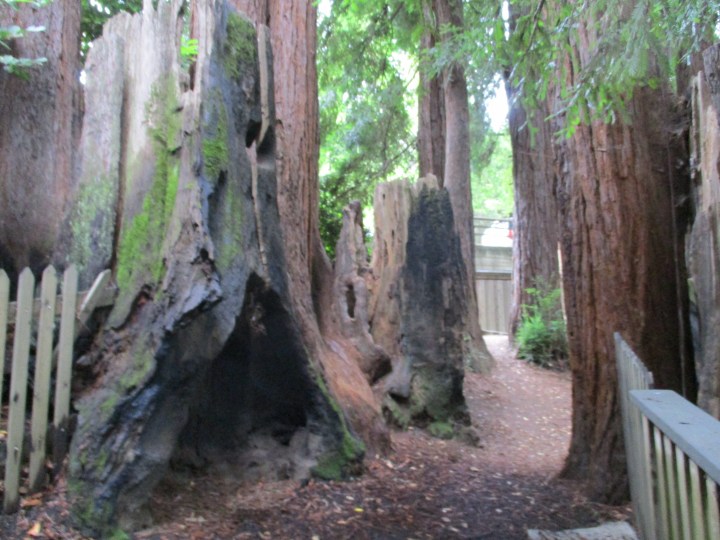
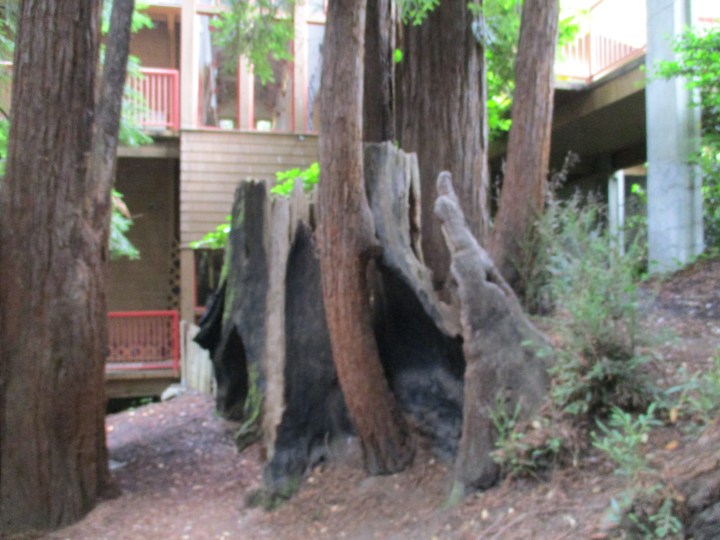
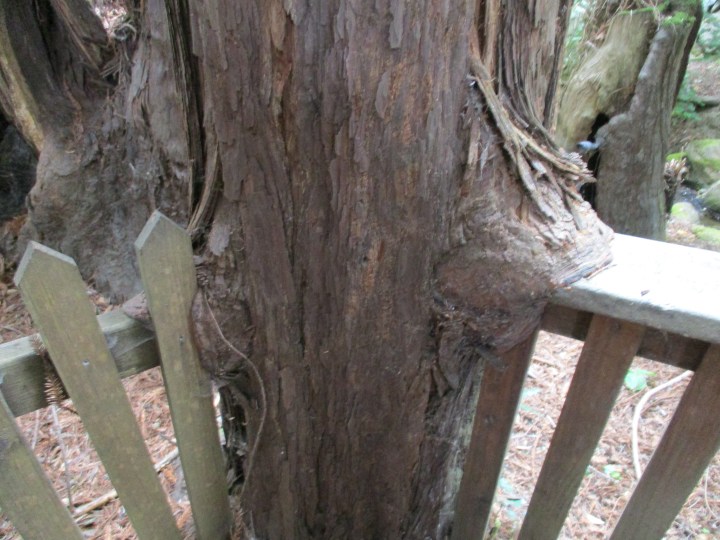
1. Compared to some of the tacky garden art that some people pay significant money for, this old redwood stump is strikingly sculptural. It stands so proudly out on this knoll on the edge of a small creek just above where it flows into Bean Creek. It is difficult to see in this picture, but a landscaper tried to obscure this stump with potato vine. Only a bit of twiggy growth can be seen at the top of the stump. The rest of the vine is now overwhelming the adjacent dogwood above. The trunk of the dogwood is to the right. Coastal redwood forests are innately shady. The potato vine is not very happy there. Even if it were happy, and were able to obscure the stump, would it really be an improvement?P80142. These two bigger stumps are just a short distance uphill and across the small creek. Old stumps are more often single, but surrounded by multiple trunks that emerged from the roots. Because almost all of the trees here had been harvested about a century ago, there are now many more secondary trunks per area than there would naturally be. It is not much of a problem yet, but these trunks will likely become more crowded as they mature.P8014+3. These are the same two stumps from the other side. This trunk coming up from within is likely from the same original root system. All trunks that develop from the same root system are genetically identical, so they look very similar from a distance. Some genetically identical groves can be quite broad, and include many trunks.P80714++4. This small coastal redwood trunk is not happy about the fence that is nailed to it.P80714+++5. This is more what you expect coastal redwoods to look like. It is impossible to determine from this picture if these trunks are genetically identical secondary trees that emerged from the same root system, but their proximity to each other suggests that they likely are.P80714++++6. This epiphyllum is the flower that I promised to those who expressed a concern than my Six on Saturday lacked adequate bloom. I shared a picture of this same epiphyllum earlier, but it has continued to bloom.P80714+++++

This is the link for Six on Saturday, for anyone else who would like to participate:

https://thepropagatorblog.wordpress.com/2017/09/18/six-on-saturday-a-participant-guide/