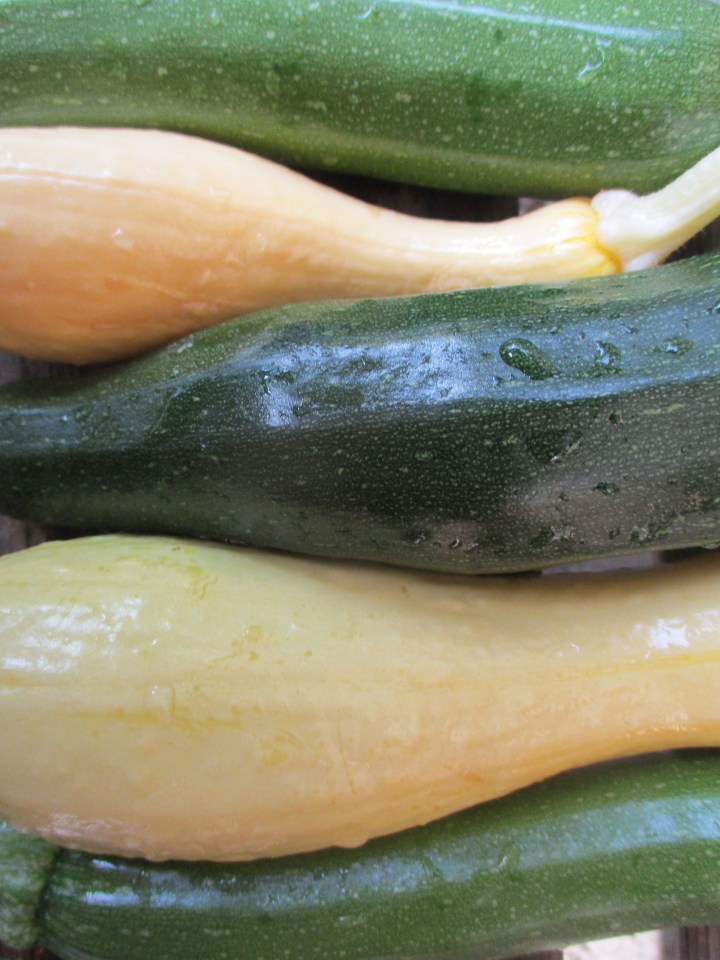
Summer Squash Excel All Summer

00701thumb
Tender young summer squash are best.

Summer is for warm season vegetables like tomatoes, beans, corn, okra, and of course, summer squash. The name says it all. Summer squash are the sort of squash that develop and are ready for harvest through summertime. The season continues until the plants succumb to cooling autumn weather. The abundant squash fruits are best while young and tender, before they actually ripen.

Related winter squash grow through summer too. However, they ripen completely through the growing season before harvest in autumn. By the time they are ripe, their foliage will be succumbing to frost. They are much less perishable than summer squash are, so last for months if stored properly. Instead of producing abundant small fruits, winter squash plants produce only a few big fruits.

Summer squash plants can produce big fruits too, but at the expense of preferred tender juvenile fruits. They simply will not divert resources to new small fruits while concentrating their effort into a big fruit full of viable seed. After all, seed production is their priority. Regular harvest of juvenile fruits actually stimulates the production of more fruits. It forces the plants to redirect their resources.

There is certainly nothing wrong with summer squash fruits that have matured a bit more than they should. Stuffed zucchini is merely medium sized zucchini sliced in half lengthwise, hollowed out, stuffed and baked. Some people actually prefer to leave the last summer squash fruits of the season out in the garden to get as big as they can before frost. Such fruits are tough, but not too bad.

Common zucchini and its varieties are the most poplar of the summer squash. They are generally the most reliable and most productive. Crookneck squash are likely the second most popular of summer squash locally. They are slightly less productive, but provide variation of flavor. Pattypan squash have good flavor, and a slightly firmer texture that is an advantage for soups and freezing.

Other interesting varieties of summer squash are too numerous to list. Each exhibits its own distinct characteristics.
Horridculture – Neglected Seedling

P00603-1
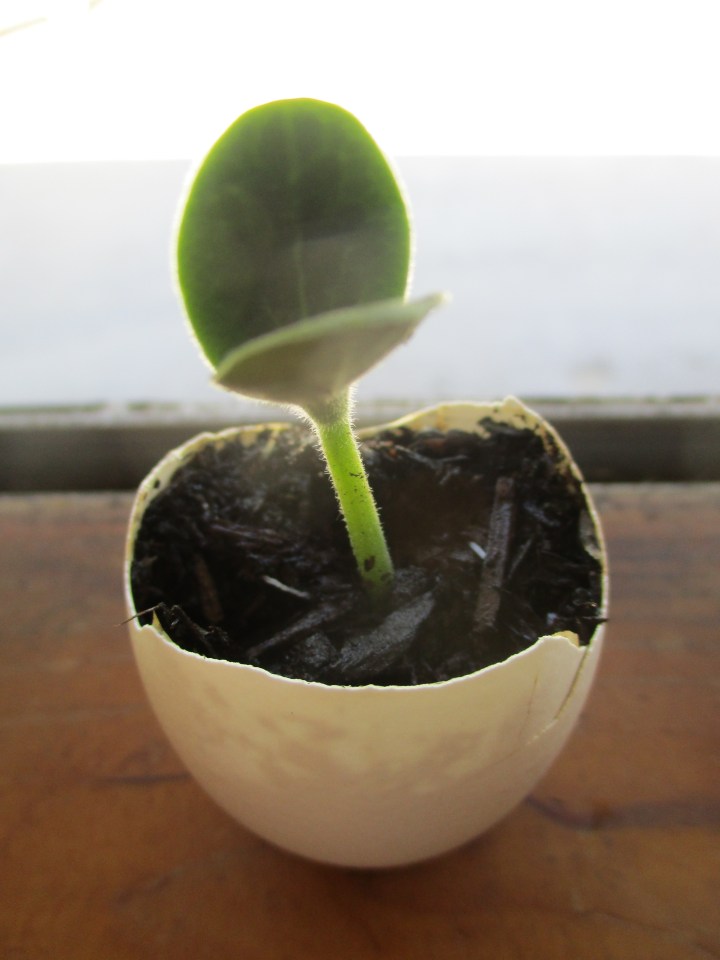
They are so cute when they are young.

This was not planned very well. Actually, it was not planned at all. While sorting through the seed for a vegetable garden, I found a can of seed for winter squash that was a few years old. They might be close to five years old. I really do not remember. I did not expect them to be viable, but did not want to discard them without at least trying to test them for viability.

Rather than just put them in damp rag for a few days, I plugged a few seed into a spider plant on a windowsill, and forgot about them. I really did not expect to see them again. When the first one emerged, I though it was a weed, so plucked it out. When I realized what it was, and that it came out intact, I felt badly for it, and like the original seed, could not discard it.

I do not remember why, but at the time, I did not want to go out to can it in a real pot. Nor did I want to plug it into the garden while I was still getting other seed situated. I therefore planted into an empty eggshell from those drying for coffee. I scraped a bit of medium from a potted bromeliad. It was happy on the windowsill for maybe a few weeks.

The other seed germinated too, but were more carefully removed and plugged into the garden. Since the seed was still viable, I sowed more around the junipers outside. Somehow, in the process, I neglected to put the little seedling in the eggshell out into the garden with them. It has not been happy in here, so has not grown much at all.

Now that the winter squash are already growing well outside, and the summer squash are already producing, this unfortunate seedling still needs to go out to join them.

If I were to grow seedlings inside again, I would do so in some of the cell packs that we recycle from work. They are more efficient, less wobbly, and they do not look so ridiculous.

P00603-2
Now it wants out!

Pumpkin

91030It really would be nice to be able to transform a pumpkin into a chauffeured coach to ride to the ball, just by waving a magic wand over it. A Buick would be even more excellent! Over the years, as the variety of new Buicks has diminished to not much more than a few SUVs that are scarcely more stylish than pumpkins, the variety of pumpkins has grown crazily. Form is not following function.

You see, for longer than anyone can document, pumpkins were grown merely for food. They still make much better pie than other winter squash would. Many varieties produce nicely edible seeds and bloom. In fact, some types are grown specially for their hullless seeds, which are known as pepitas, or for pumpkin seed oil. Nowadays though, pumpkins are more ornamental than culinary.

Decades ago, bright orange pumpkins with relatively thin shells became more popular than the more brownish orange and thicker shelled culinary types. They are more colorful, and more easily carved into Jack-O’-lanterns, but not quite as richly flavored. Since then, white, yellow, pink, red, green and bluish gray pumpkins have become available, in all sorts of shapes, sizes and textures.

Squash For Autumn And Winter

91030thumbWinter squash are not exactly the sort of cool season vegetables that their designation implies. They grow through the summer just like summer squash do. Both winter and summer squash are warm season vegetables that get planted early in spring. The difference is that summer squash get harvested regularly through summer, and winter squash get harvested only once after summer.

Zucchini, crookneck, pattypan and other summer squash are very productive as long as the weather is warm, and their fruit gets harvested. Fruit that stays too long and continues to mature gets big and tough, and consumes resources that would otherwise be diverted to newly developing fruit. Therefore, regular harvesting of the more desirable juvenile fruit actually promotes production.

Pumpkin, acorn, butternut and other winter squash grow all summer, but each plant should be allowed to produce only a few fruits each. Some pumpkin vines produce only one fruit each. Once the desired number of fruits are developing, fruits that start to develop later should be culled to concentrate resources into the primary fruits. These fruits mature all summer to get harvested after frost.

So, by the time that summer squash stops producing, winter squash is about ready for harvest. Where autumn weather is cooler, the tender foliage shrivels after frost, exposing the richly colored but formerly obscured ripe fruit. Winter squash is supposedly best if slightly frosted prior to harvest, which might take a bit longer here. After harvest, they should be left to cure for two weeks or so.

Winter squash vines are more rampant and somewhat shabbier than those of summer squash. Those that produce smaller fruit might be able to climb trellises or onto firewood piles that are not in use through summer anyway. Female flowers tend to shrivel sooner than male flowers, but all flowers that are big and turgid enough to bother with are edible. Bloom continues through summer.

If properly stored, even without canning or freezing, intact winter squash can last for months, until summer squash start producing the following season.

Pumpkin

41001Actually, it is a fruit; a rather BIG fruit. It happens to be one of the more familiar of winter squash, but is not too commonly eaten. Although it makes excellent pie, and provides edible seeds and flowers, pumpkin is more popularly known as jack-o’-lanterns or Cinderella’s ride to the ball. Pumpkin is not for every garden, since each big and coarsely foliated annual vine needs regular watering, rich soil and considerable space to grow all through summer to produce only one or two big fruit in autumn.
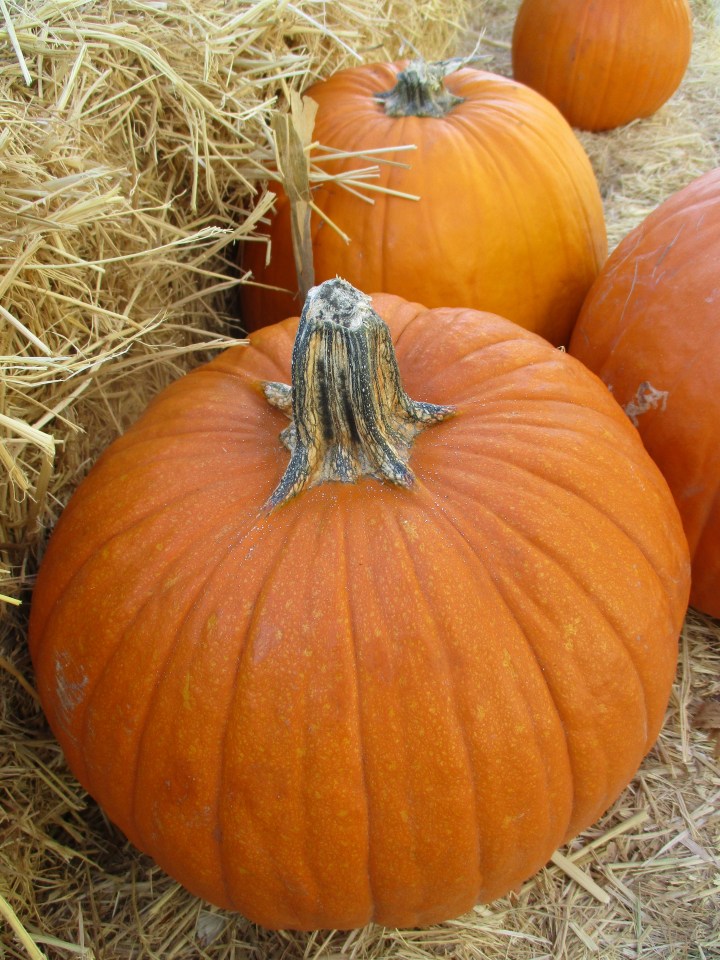
Most pumpkins are big and round, and have smooth and bright orange skin. Those grown for jack-o’-lanterns are brighter orange, and not quite as meaty. Those grown for pie are often a bit smaller and meatier, with a rustier orange color. The biggest pumpkins get too huge to move easily, but lack flavor. The flavors and densities of many weird modern varieties are as variable as the green, red, pink, yellow and white hues of their skins. Some pumpkins have been developed specifically for their seeds, which are known as pepitas, or are used for production of pumpkin seed oil.

Pumpkins Need Not Be Wasted

81107thumbThere is likely no other fruit that gets wasted quite like pumpkins. Almost all get hollowed and carved into Jack o’lanterns, illuminated from within for Halloween, and then discarded or added to compost within the next few days after Halloween. If they stay too long in the yard or on the porch, they mold or get partly eaten by squirrels. They were fun while they lasted, but the party is over.
Most people who use pumpkins for Halloween décor do not consider recycling them in the kitchen. Pumpkins carved into Jack o’lanterns are considered to be as disposable as cut flowers that have started to fade. Realistically, Jack o’lanterns that were carved several days prior to Halloween are probably too far gone by now to be recycled, and some are too sooty and toasted inside.

Of course, those that are not so deteriorated can be used in the kitchen like other winter squash. Sooty or toasted portions are easily cut away and discarded. The brightest orange pumpkins that were bred to make the best Jack o’lanterns, are not as meaty or as well flavored as those that are grown for culinary use, but they are not bad either. Their thinner shells are quick to bake or roast.

It seems that most pumpkins in supermarkets this year are not quite as bright orange as those that were developed specifically for Jack o’lanterns. They also seem to be more dense with thicker shells, as if bred to be recycled in the kitchen after Halloween. The smaller and more brownish pumpkins that are heavy with thick shells are probably still the best for pies, even if no fun to carve.

White, pink, green, yellow, red and bluish gray pumpkins are as variable as their colors are. Any are worth trying in the kitchen. Although some are quite bland, others have rather distinctive flavor. Those that are deeply furrowed or very lumpy are of course awkward to work with. Like other winter squash, pumpkins are very tough, so it is important to be careful when cutting them into pieces.

White Pumpkin

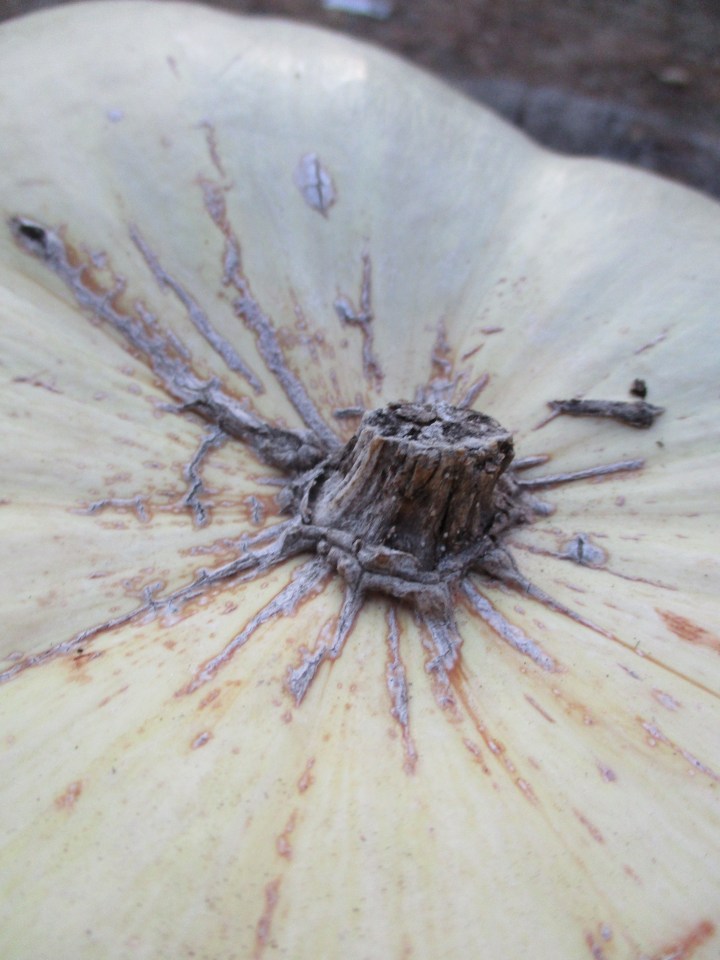
71004thumbTheir creamy white exteriors do not reveal much about the flavor within. They looks like they might taste like vanilla, or coconut, . . . or maybe Swiss cheese. Below the white skins, white pumpkins (Curcubita pepo) have orange flesh that really tastes like other pumpkins, but maybe a bit milder, like ‘pumpkin-light’. They are popular because they look so cool, and make great jack-o-lanterns.

They take a while to mature, so pumpkin plants should get into the garden as soon as weather is warm enough for them in spring. They can be grown from seed sown directly, or from seedlings. They want rich soil, and need to be watered regularly in order to grow evenly through summer. The annual vines sprawl on the ground, producing only one or a few fruits each, finishing by first frost.

Popular varieties of white pumpkin, like ‘Cotton Candy’, ‘Lumina’, ‘Casper’ and ‘Silver Moon’ can weight more than ten pounds. Less common ‘Full Moon’ can get to be seventy-five pounds! White pumpkins makes as many edible flowers as orange pumpkins make, but not as many seeds. ‘Baby Boo’ and ‘Gooligan’ weigh less than a pound, and are only a few inches wide, so are inedible.

Winter Squash Last For Months

IMG_20140301_073739With all the talk about replacing warm season vegetables and bedding plants with their cool season counterparts this time of year, we should also address the irony of summer squash and winter squash. Their designations suggest that they too grow in specific seasons; summer and winter. Duh. It would make sense that summer squash would be replaced by winter squash during autumn.

However, both groups are warm season vegetables that can get planted or sown as seed in early spring. The vines of both summer and winter squash grow through spring and summer, and then eventually succumb to the first frost. The difference is that summer squash start producing early and abundantly, and continue to produce through summer. Winter squash ripen slowly in autumn.

Summer squash, like zucchini, pattypan and crookneck squash, are very prolific. Zucchini can be overwhelmingly so. However, their fruits, which are incidentally considered by most to be culinary ‘vegetables’, are best fresh. Otherwise, they are quite perishable. They can be frozen or canned, but do not hold up well. Consequently, good summer squash are unavailable after the first frost.

Winter squash, like Hubbard, acorn, butternut, turban and spaghetti squash, as well as pumpkins, are not nearly as productive. Individual plants might produce only single large fruits, or only a few small fruits, depending on variety. These fruits develop and ripen so slowly that they are not ready until autumn, as the vines are withering. Supposedly, exposure to slight frost improves their flavor.

The advantage of winter squash is that the fruits are tough enough to be stored for months into winter, hence their designation as winter squash. Some pumpkins can be stored out of the weather for months after winter, although flavor and nutritional quality slowly deteriorate. If that is not long enough, the flesh of winter squash can be peeled, and then frozen or canned. Unfortunately, winter squash are no substitute for summer squash, and take more work to cook, but they are certainly worth growing.

Squash For Summer And Winter

80425thumbConsidering that some of the winter squash can last right through winter and into spring, there really is a squash for every season. By the time the last of the winter squash run out, the first of the summer squash will be ready later in spring. They get an early start here, and continue until frost. By that time, the earliest of the winter squash will be ready for autumn, and will last through winter.
However, they all get planted about now. There is no such thing as cool season squash. They are all warm season vegetables (actually fruits). The vines and foliage all grow like weeds while the weather is warm, and then succumb to frost at the end of their season. They all grow very easily from seed, but because each garden needs only a few plants, they are often planted as seedlings.

The main difference between summer and winter squash is that summer squash plants continue to produce many smaller fruits while the weather is warm, and winter squash plants produce only a few larger and firmer fruits that develop slowly while the weather is warm, and then finish ripening as the vines that produce them die in autumn and winter. One begins where the other finishes.

Zucchini is the most familiar summer squash here. It is most productive if regularly deprived of its tender juvenile fruit, and is notably less productive if the fruit is allowed to get bigger and tougher. Pumpkin is the most familiar winter squash here. It is expected to produce only a few big and firm fruit that take all season to develop. Extra juvenile fruit may get plucked to favor one or two fruits.

Summer squash deserve more prominent locations in the garden because the fruit gets harvested regularly. Zucchini grows as a large plant, but stays somewhat confined. Winter squash want the same sort of rich garden soil and watering, but can be put out of the way. Except for plucking a few extra fruit, not much more needs to be done to them. Some like to climb fences. Pumpkin vines can be directed to the edge or just outside of the garden.

Too Late For Pie

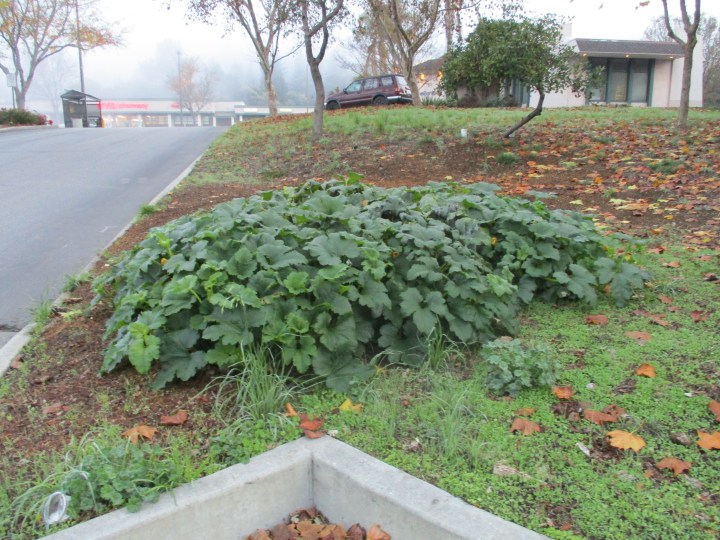
P71203Just a few feet downhill from where the old valley oak had lived for centuries (https://tonytomeo.wordpress.com/2017/09/11/goodbye-to-an-old-friend/), a pumpkin vine appeared shortly after the big oak stump was ground out. That was in late September, so was much too late for it to do much; or so I thought.
The vine grew very quickly! It is hard to say if it got water from a leaking pipe. A valve manifold that is visible in front of the stump in the original picture is completely obscured by the foliage of the vine in the second picture. With all the heavy work that was done right on that spot, it would have been very easy for a pipe or exposed valve to get damaged. (Water from a previously leaky pipe or valve could have contributed to the demise of the tree, by promoting the development of excessively heavy foliage that caused the large limbs to break and fall.)

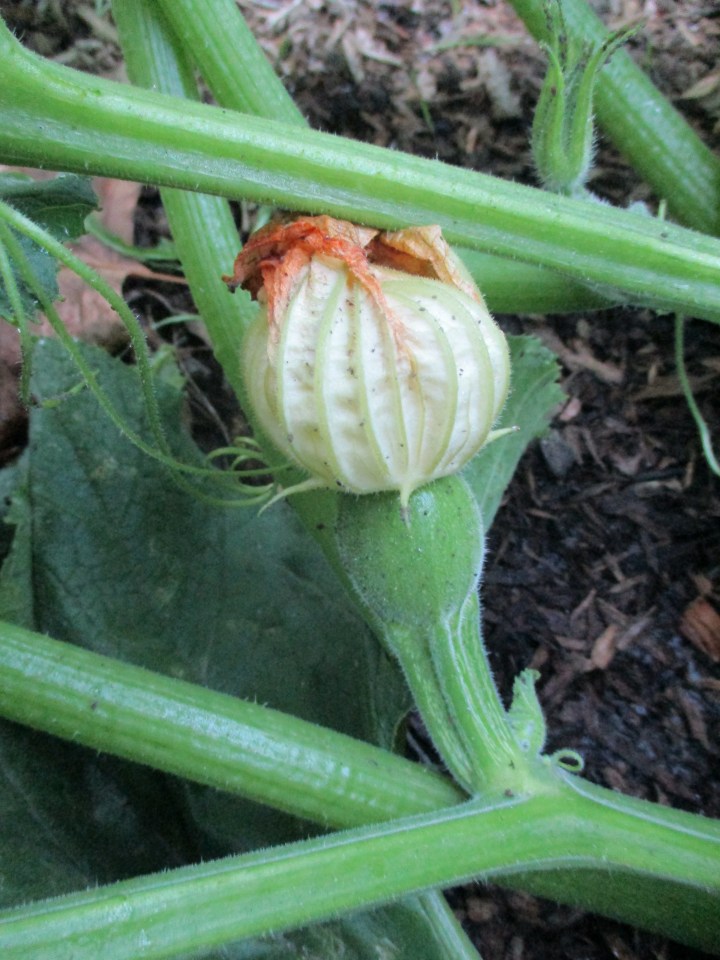
Despite the vigor and size of this remarkably healthy pumpkin vine, no fruit developed. Only a few undeveloped fruit can be found now, and the weather is getting too cool for it to mature. The foliage and flowers are already starting to succumb to mildew and decay, and will eventually get frosted. If there is any fruit obscured by the foliage, it will become visible when the foliage collapses.

Regardless, the pumpkin vine really seemed to have fun while it had the chance. How many of us get to grow pumpkin vines this big through an entire growing season? It got plenty of sunlight, and must have been getting water from somewhere. The soil is good there. As you can see in the picture, it had plenty of room to grow.

What is so special about that spot? If there is not a water leak that needs to be repaired, what else could be grown there next year?!P71203+