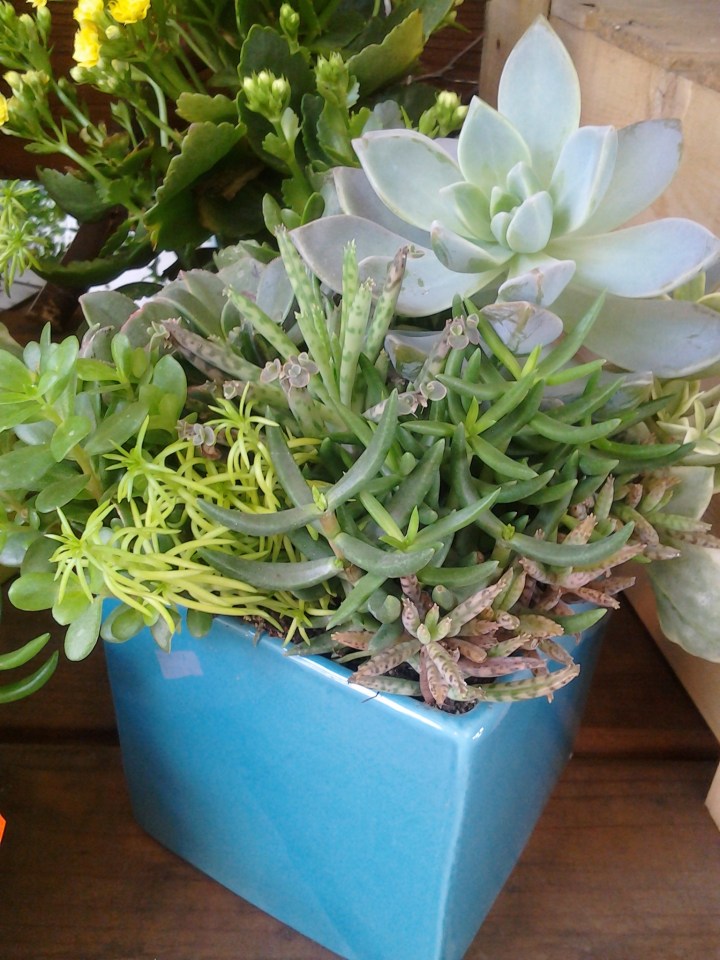
There are all sorts of succulent plants, ranging from finely textured small stonecrops to huge suguaro cactus. Because aloes and agaves are succulents, the closely related yuccas, such as Joshua tree and Spanish bayonet, are commonly considered to be succulents as well. Even begonias and impatiens could be considered to be succulents.
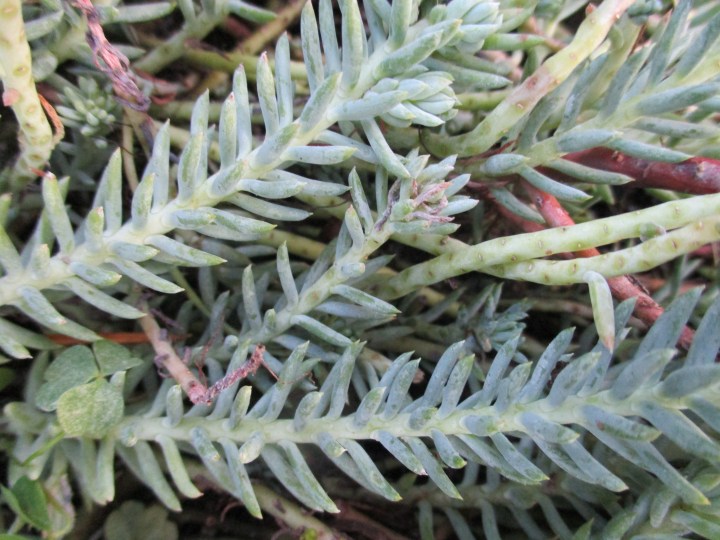
Succulent plants are some of the most distinctive plants available. Foliage can be various shades of green, as well as yellow, red, blue, orange, purplish, gray, bronze, nearly black or variegated. Leaves may be thick and fleshy like those of jade plants, or thin and neatly arranged in tight rosettes like those of aeoniums. Cacti have no real foliage, but some have flashy flowers.
Except for the larger sorts of cacti and some yucca, most succulents are very easy to propagate. Jade plants and iceplants grow very easily from stems simply stuck wherever new plants are desired. Aloes and hen-and-chicks grow just as easily from pups (sideshoots) separated from parent plants. Technically, even leaves can be rooted, and will eventually grow into new plants.
Because scraps from pruning can be used as cuttings, there is rarely any need to actually take cuttings from desirable growth. Where more Hottentot fig (freeway iceplant) is needed on a freeway, it simply gets ‘plugged’ (as cuttings) from scraps of debris from where established growth needs to be cut back to an edge. There is much more debris than can be used!
Pots of mixed succulents are ridiculously easy to grow simply be filling pots with potting soil, and then plugging bits of various succulents. All sorts of contrasting colors and forms can be mixed. As plants grow, those that dominate can either be pruned back, or given more space by removing slower plants. The removed plants need not be wasted, but can be plugged somewhere else.
Small succulents are just as easy to plug into informal walls of stacked stone or broken concrete. Some small succulents actually stabilize loose stone. Their docile and finely textured roots are not likely to do any damage.

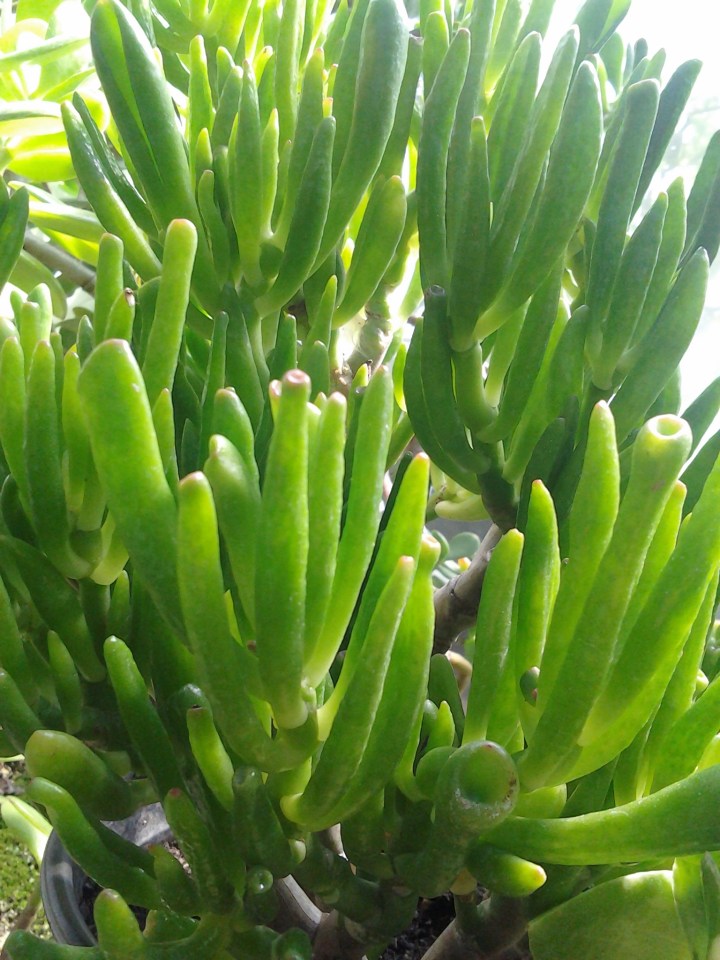
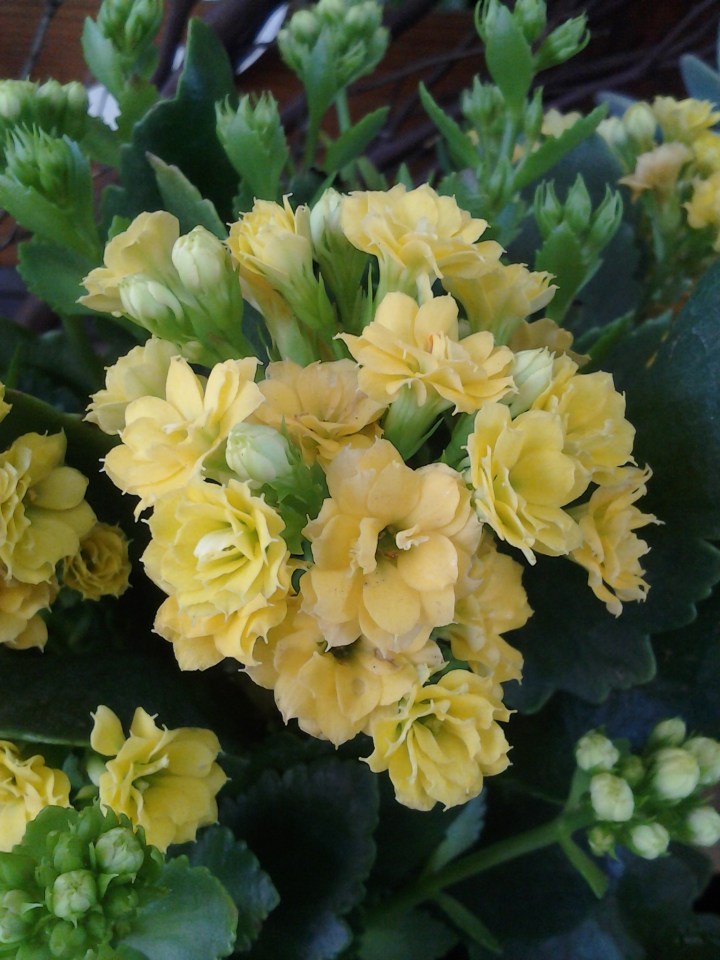 It is unfortunate that, like Easter lilies and poinsettias, most kalanches, Kalanchoe blossfeldiana, are enjoyed while actively blooming, and then discarded as their blooms fade. It is so easy to simply snip out the deteriorating flowers, and grow the small perennials plants for their appealing succulent foliage until they bloom again. They do not get much more than half a foot tall, so can stay in small pots indefinitely. They seem to prefer the porosity of clay pots. Because they can rot, they should be watered when the surface of the soil seems to be getting dry, and their drainage saucers should not be allowed to hold water too long. Kalanchoes like bright but indirect sunlight. They can be acclimated to direct sun exposure, but might seem to be somewhat stunted. If brought in before frost, they can be happy out on a patio. The clustered small flowers can be white, pink, red or bright or pastel shades of orange or yellow.
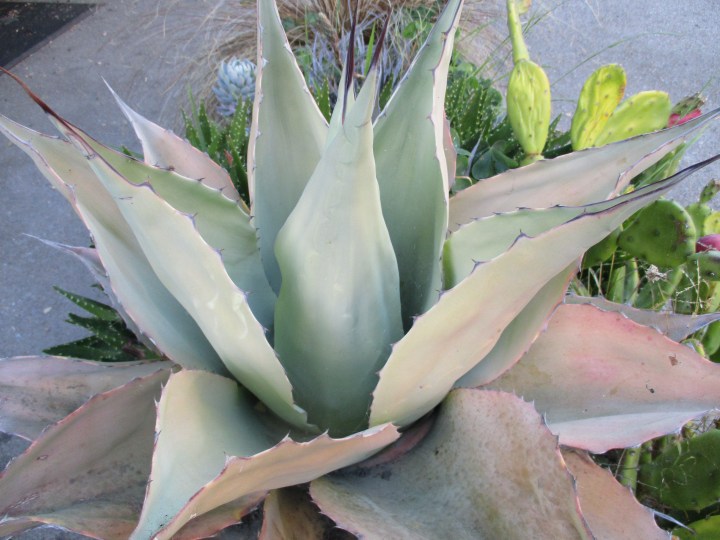
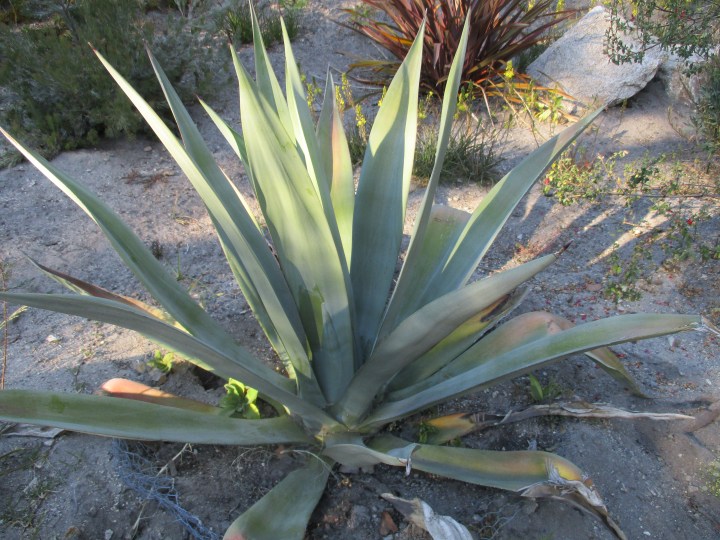
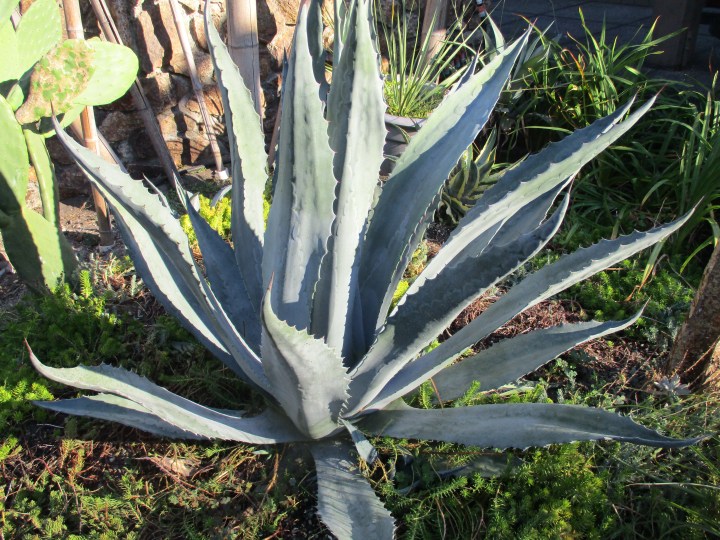
 Agaves are innately tough and undemanding. The main reason that they are not more popular in home gardens is that they are outfitted with nasty foliar spines. The worst of these spines are the distal tips of the large succulent leaves. Most agaves are also armed with shorter recurved spines on the margins of their leaves. Gardening with such well armed perennials can be dangerous.
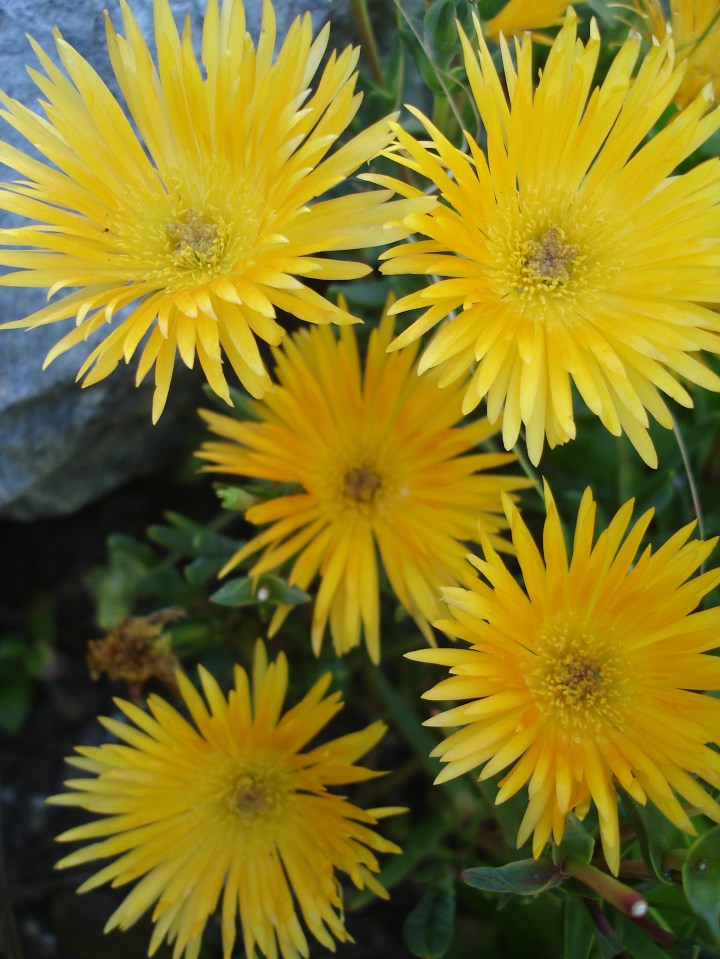 Bright pink bloom that can be profuse enough to obscure the succulent foliage below is nothing new for iceplant. Some bloom bright purplish pink. Others are reddish pink. A few are softer pink or white. What is unexpected is iceplant that blooms bright yellow, orange or gold, like Lampranthus aureus does. (Freeway or beach iceplant that blooms soft yellow or pink is not a true iceplant.)
 In this situation, the point is that all those pointed tips of the leaves of this awkwardly floppy century plant, Agave americana, are extremely sharp, extremely rigid and EXTREMELY dangerous. Those shorter teeth on the margins of the leaves are just as sharp and rigid, and are curved inward to maximize injury to anyone trying to get away from an initial jab. With tips that impale, and marginal teeth that slash, this is one very hateful perennial!
 The dark bronze and variegated varieties of tree houseleek, Aeonium arboreum, are so much more popular than the simple species, that the simple species with plain green foliage is now rather rare. The succulent stems do not stand much more than three feet tall. They get about as broad, and can get even broader as lower stems develop roots and grow into new plants. The succulent rosettes of foliage of well watered plants can be fragile to handle. Mature plants can bloom in spring with unusual conical trusses of yellowish or chartreuse flowers.




 Tony Tomeo