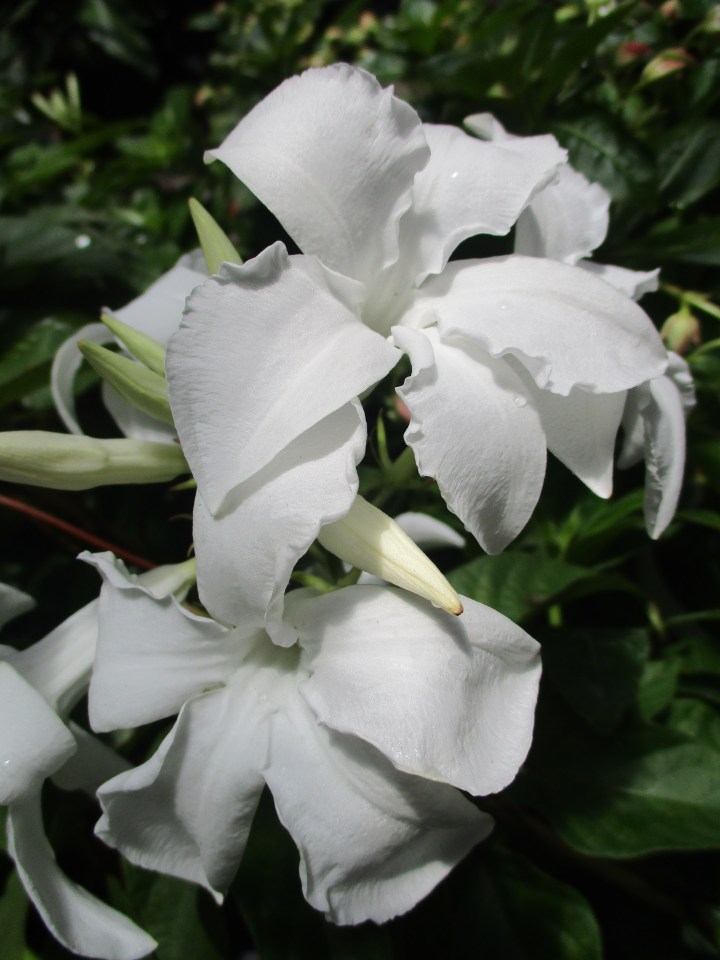
 This is not just another mandevilla. Well, maybe it is. Mandevilla laxa is special though. It is known as Chilean jasmine because, unlike other mandevillas, it is so delightfully fragrant, particularly on warm summer evenings. Some say the fragrance is similar to that of gardenia, but not as strong. Others say it has a bit of vanilla mixed in. Sporadic bloom continues through most of summer.
The two inch long pure white flowers flare out to be a bit wider than long, and are a bit more relaxed than the neatly tailored flowers of other mandevillas. They bloom sequentially in small groups, with new flowers replacing the old for quite a while. The glossy rich green leaves can get almost twice as long at the flowers. Foliage last better on the coast, but is mostly deciduous elsewhere.
Chilean jasmine grows fast in spring, especially if pruned well after winter, but is surprisingly tame. It can grow past downstairs eaves, but should not reach upstairs eaves. It is satisfied with a light duty trellis. If carefully pruned out and removed each winter, it is one of the few vines that is complaisant enough for lattice. Light frost can kill stems to the ground, but they usually recover in spring.
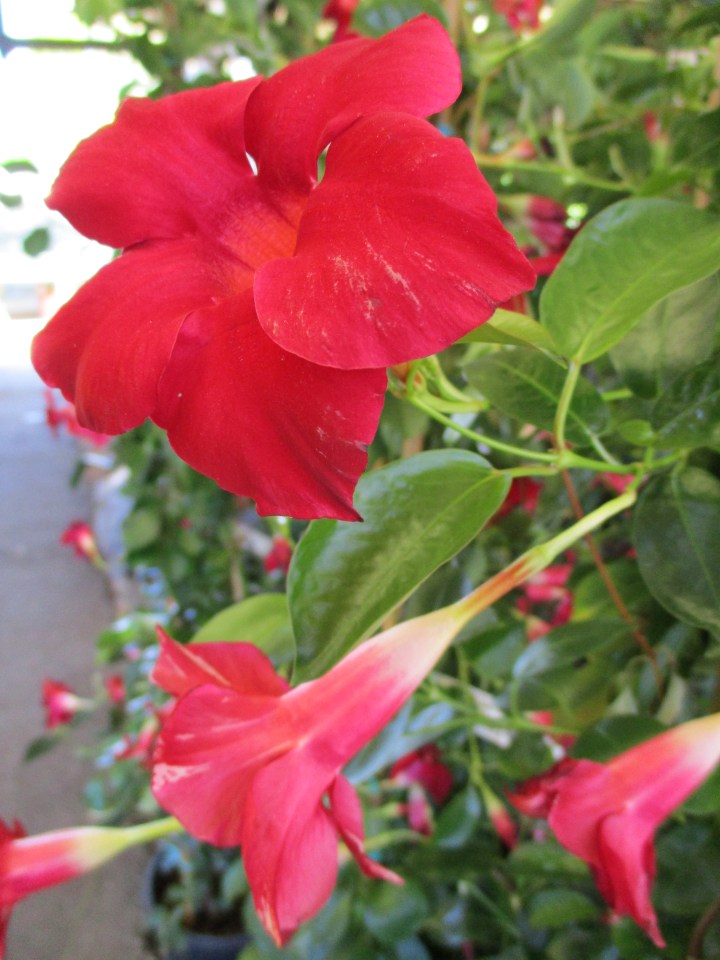 ‘Alice Dupont’ mandevilla that was so popular through the 1980’s was already a cool vigorous but not too overwhelming vine, with big clear pink radial flowers. It grows rather vigorously to upstairs eaves, and tends to get bunched where it reaches the top of its support. Modern cultivars with red, white or bright pink flowers are more compact and tame, and can stay below downstairs eaves.
 Urban homes are innately close to other urban homes. Newer homes are even closer to each other than older homes are, and are more imposing. Establishing or maintaining privacy can be a challenge, especially for high windows in narrow spaces. Even though home builders prefer to place windows strategically, some windows invariably face into neighboring windows or gardens.
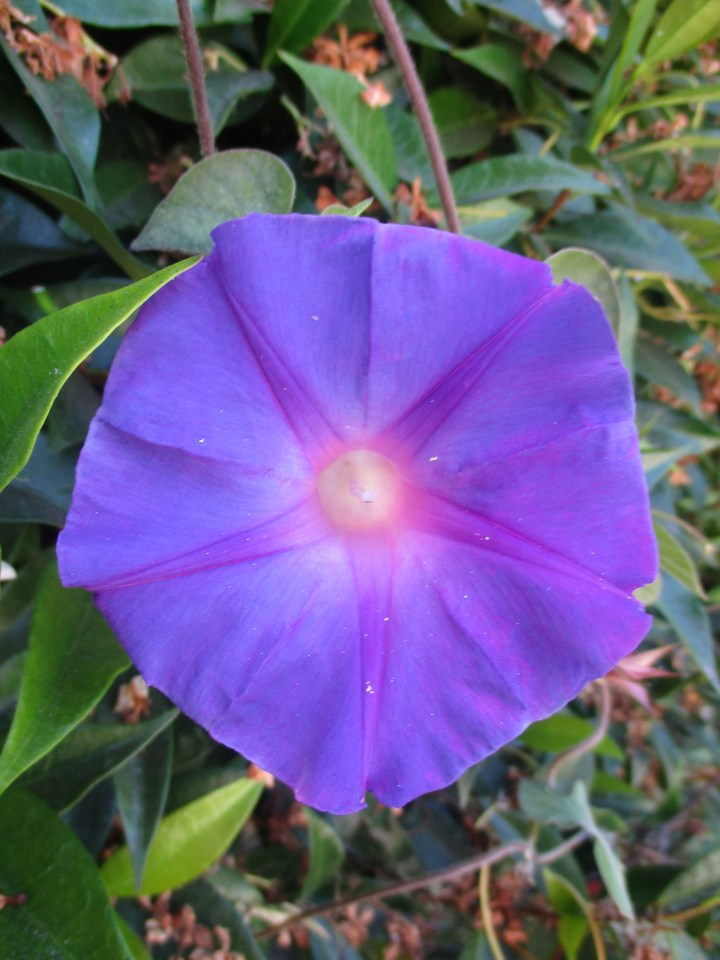 A landscape designer would have more fun describing both the modern and the good old fashioned varieties of morning glory. Their vivid colors are so resplendent. Their rich green foliage is so luxuriant. Their delicate vines are so elegant. Hey, perhaps this is not so difficult. Anyway, the popular garden varieties of morning glory are descendents of various species of the genus Ipomea.
 Most of the familiar vines really are exploitative bullies. They shade the same trees and shrubs that they climb for support. Some will even strangle and kill those who make it possible to get where they want to be. If they do not find trees or shrubs to victimize, they are likely to climb walls and ruin the paint, stucco or siding. Their aggressive nature can be a problem in landscape situations.
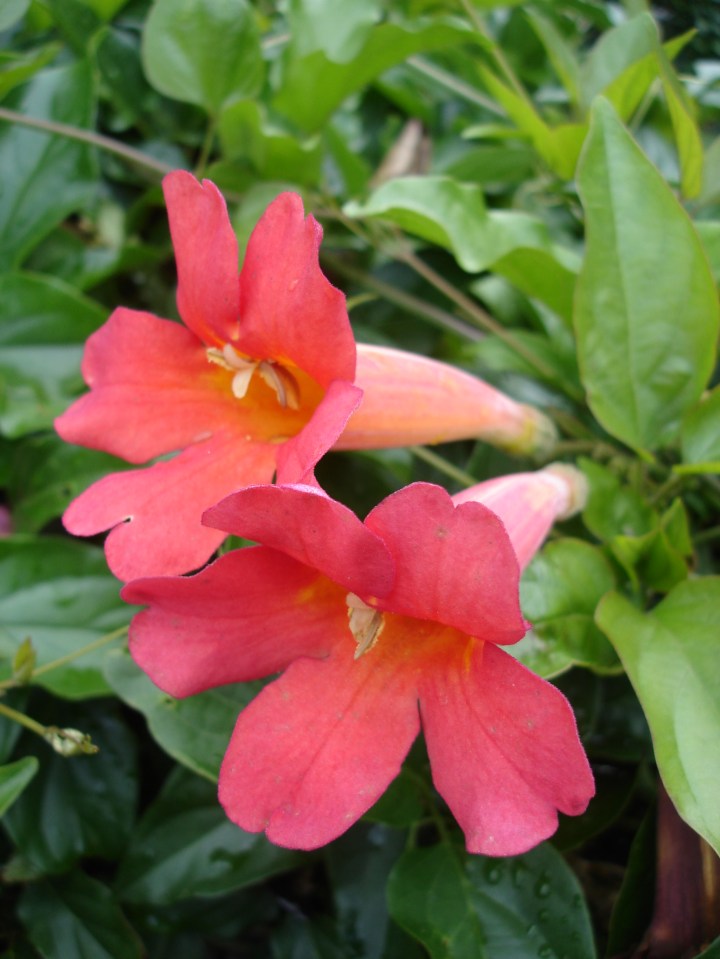 Red trumpet vine, Distictis buccinatoria, is more green than red. The tubular orangish red flowers with yellow throats are pretty while weather is warm, but not too abundant. Slightly distressed plants tend to bloom more abundantly. Each evergreen compound leaf is a pair of leaflets with a sneaky central tendril that will grab onto anything while holdfast discs get a more permanent grip.
 If more of us knew how vines compete in the wild, fewer of us would grow them in our home gardens. Understory plants that are satisfied with the sunlight that reaches them through a higher forest canopy are the most passive. Taller trees compete for sunnier exposure above. Vines are the most aggressive as they climb and overwhelm trees to get the best exposure on top of everything.
 English ivy, Hedera helix, is probably the nastiest and most aggressively invasive exotic species that I work with. It climbs high into redwood trees and overwhelms understory plants (that live below the trees). It invades many of the landscapes, and worst of all, it climbs building where it ruins paint and causes rot. It grows faster than we can keep up with it.