
Bloom and colorful foliage provide most of the color besides green within home gardens during spring and summer. Deciduous foliage becomes more colorful for autumn. Winter berries and a few other lingering fruits become more colorful as deciduous foliage sheds through winter. All this color adheres to precise schedules within a collective ecosystem.
Many plants exploit wildlife. It is how they compensate for their immobility. Many provide incentive for the services that they desire from the wildlife that they exploit. For example, after enticing pollinators with fragrance or color, flowers happily exchange extra pollen or nectar for pollination. Many plants provide edible fruits in exchange for seed distribution.
It is no coincidence that so many different winter berries ripen through autumn for winter. They provide sustenance to many migratory birds who rely on them. Overwintering birds who compete with migratory birds appreciate their efforts as well. Such winter berries are small but abundant, for ‘grab and go’ convenience. Bright color is the best advertisement.
Some people appreciate how winter berries attract birds and squirrels into their gardens. Some appreciate the seasonal color of such berries more than the wildlife. Unfortunately, wildlife decides the outcome, and such outcomes are variable. It is impossible to predict if berries will disappear as they ripen, or linger as they deteriorate through most of winter.
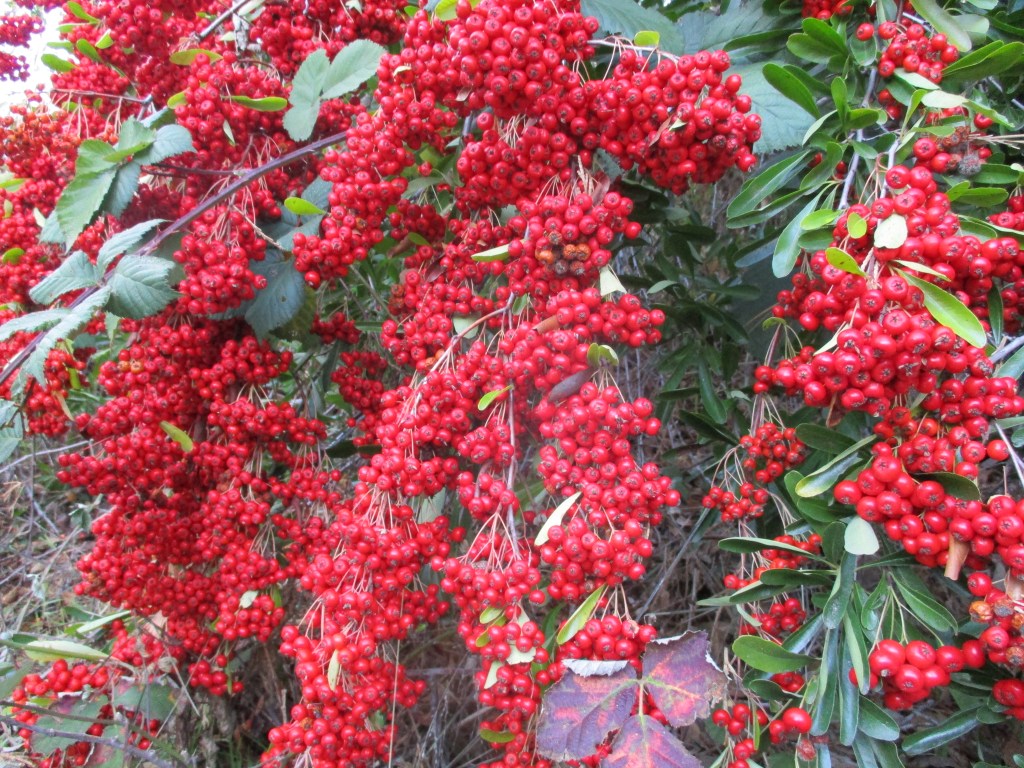
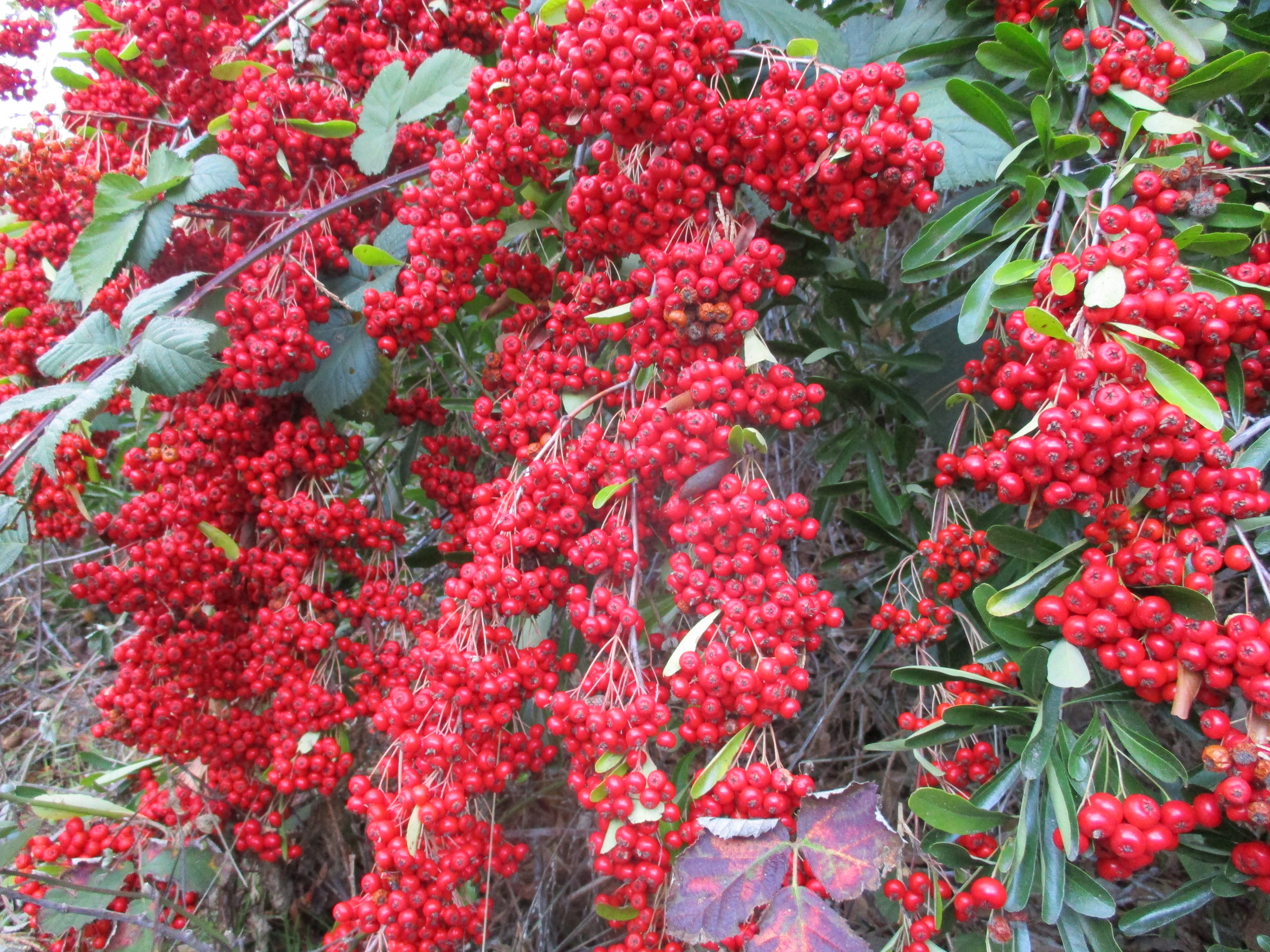
Firethorn is likely the most familiar of the winter berries here. It seems to be more prolific with its brilliant red berries than any other species. Some old fashioned cultivars produce bright orange or perhaps even bright yellow berries. Some sorts of cotoneaster resemble firethorn, but with subdued rusty or orangish red display for less refined woodsy gardens.
Toyon, or California holly, is most prolific with winter berries where it grows wildly without pruning. It gets big though. Real hollies, which are more popular in other regions, do not produce many berries locally, particularly since male pollinators are uncommon. English Hawthorn is a small deciduous tree that displays berries that resemble those of firethorn, but on bare stems.
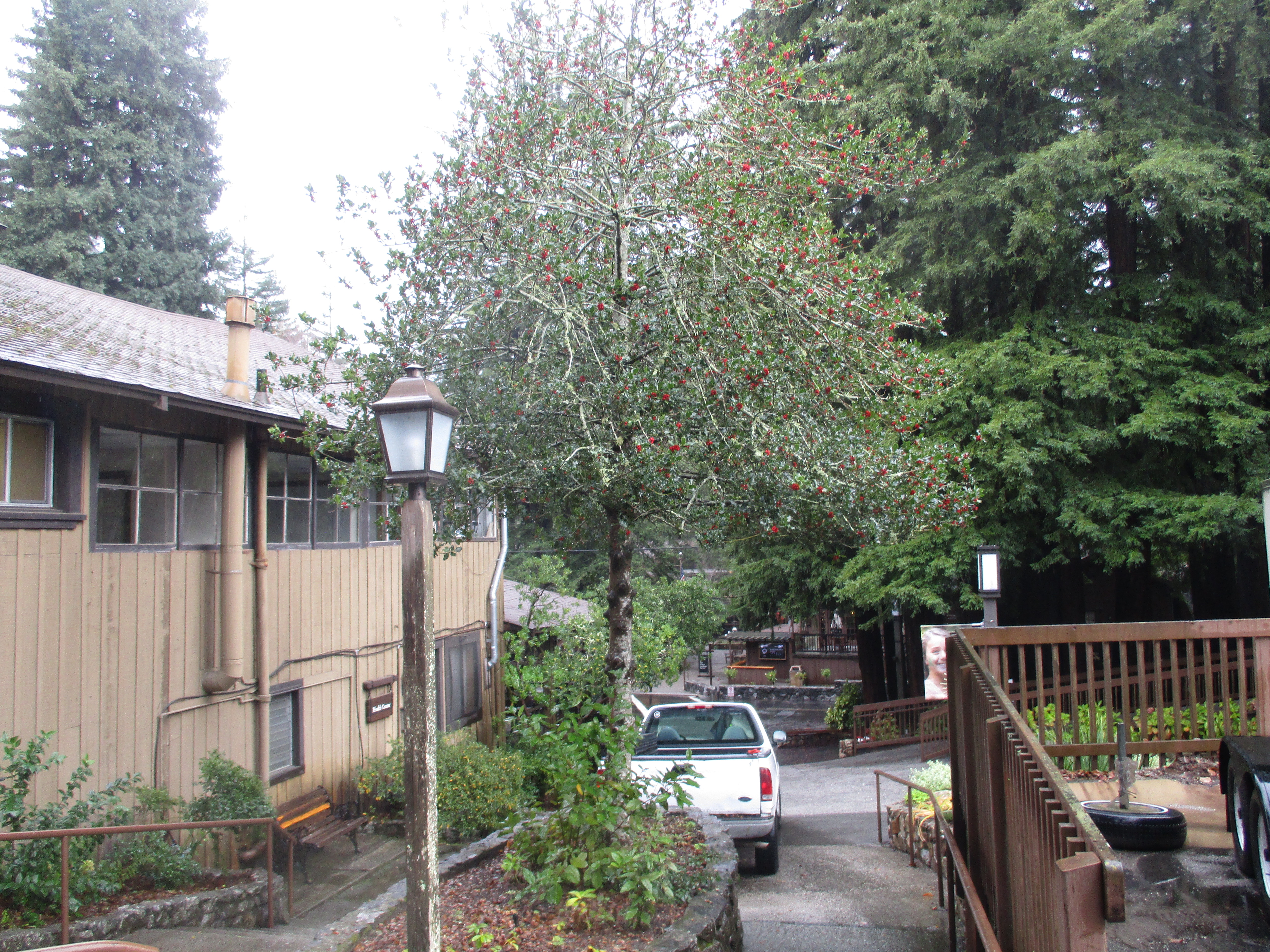 English holly is politely naturalized here. This means that, although naturalized, it is not aggressively invasive, and does not seem to be too detrimental to the ecosystem. It is only annoying to see out in forests, far from the landscapes that the seed escaped from, and wonder if it has potential to significantly compete with native vegetation. It would be better if it were not there.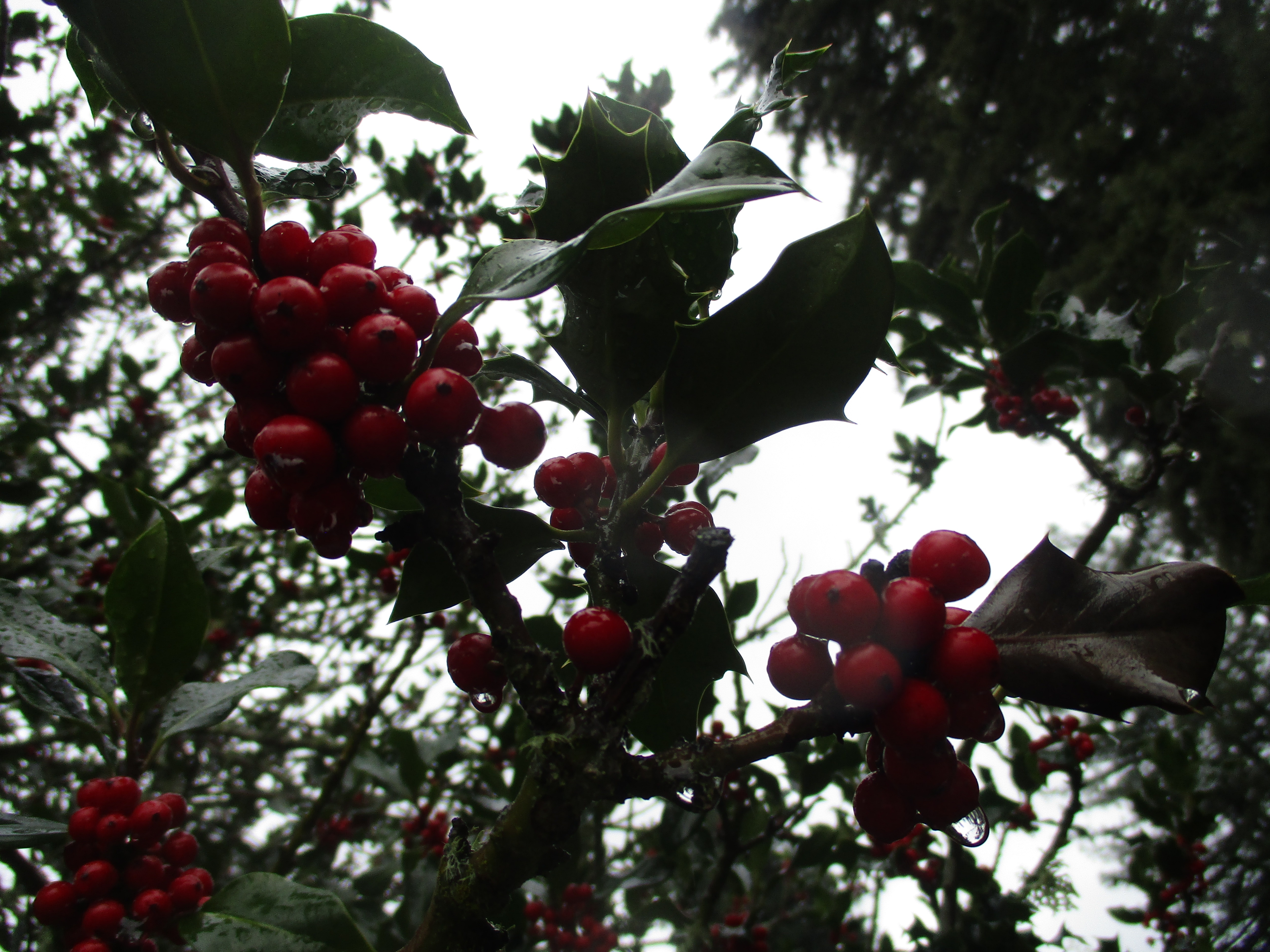
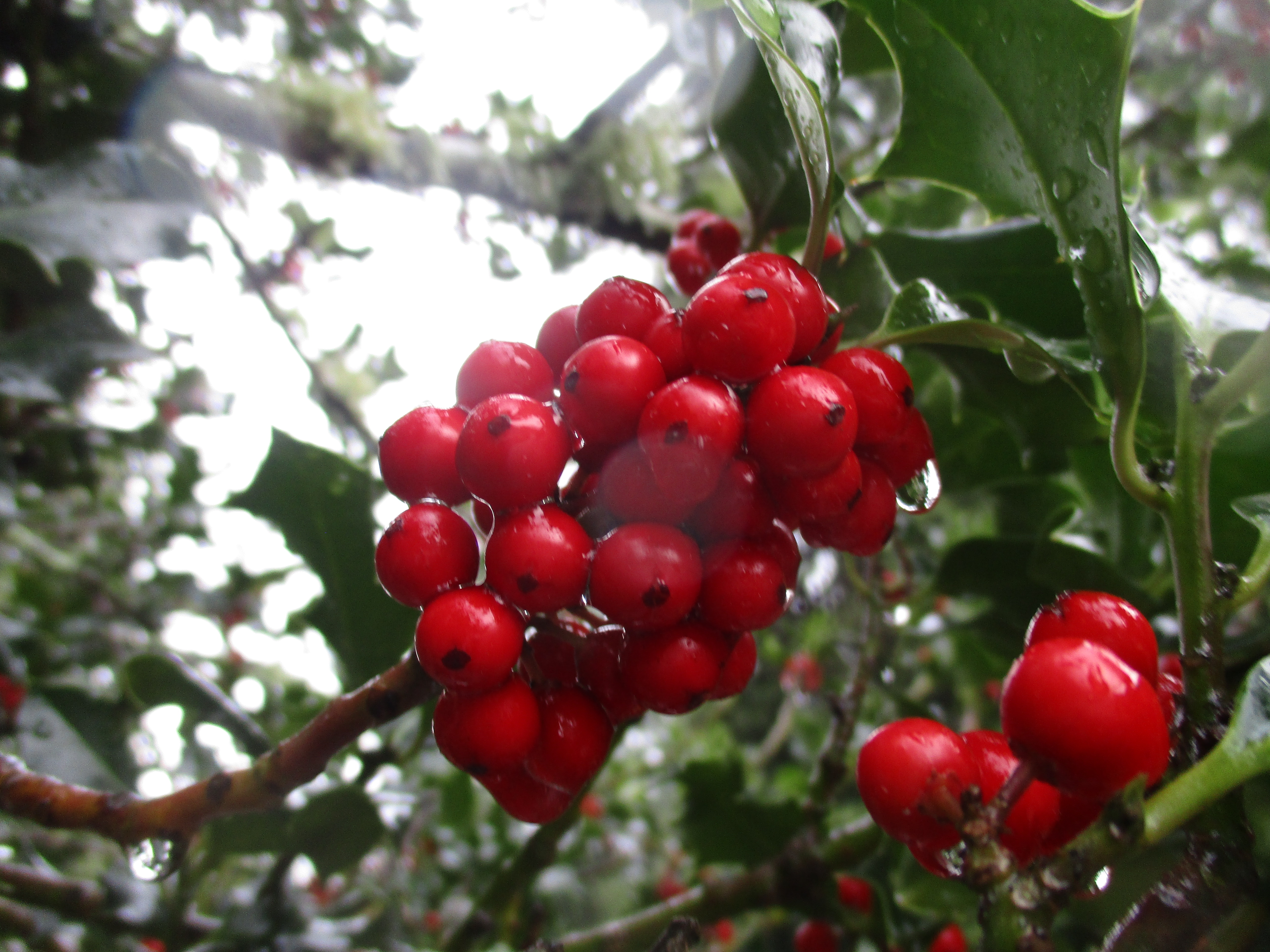
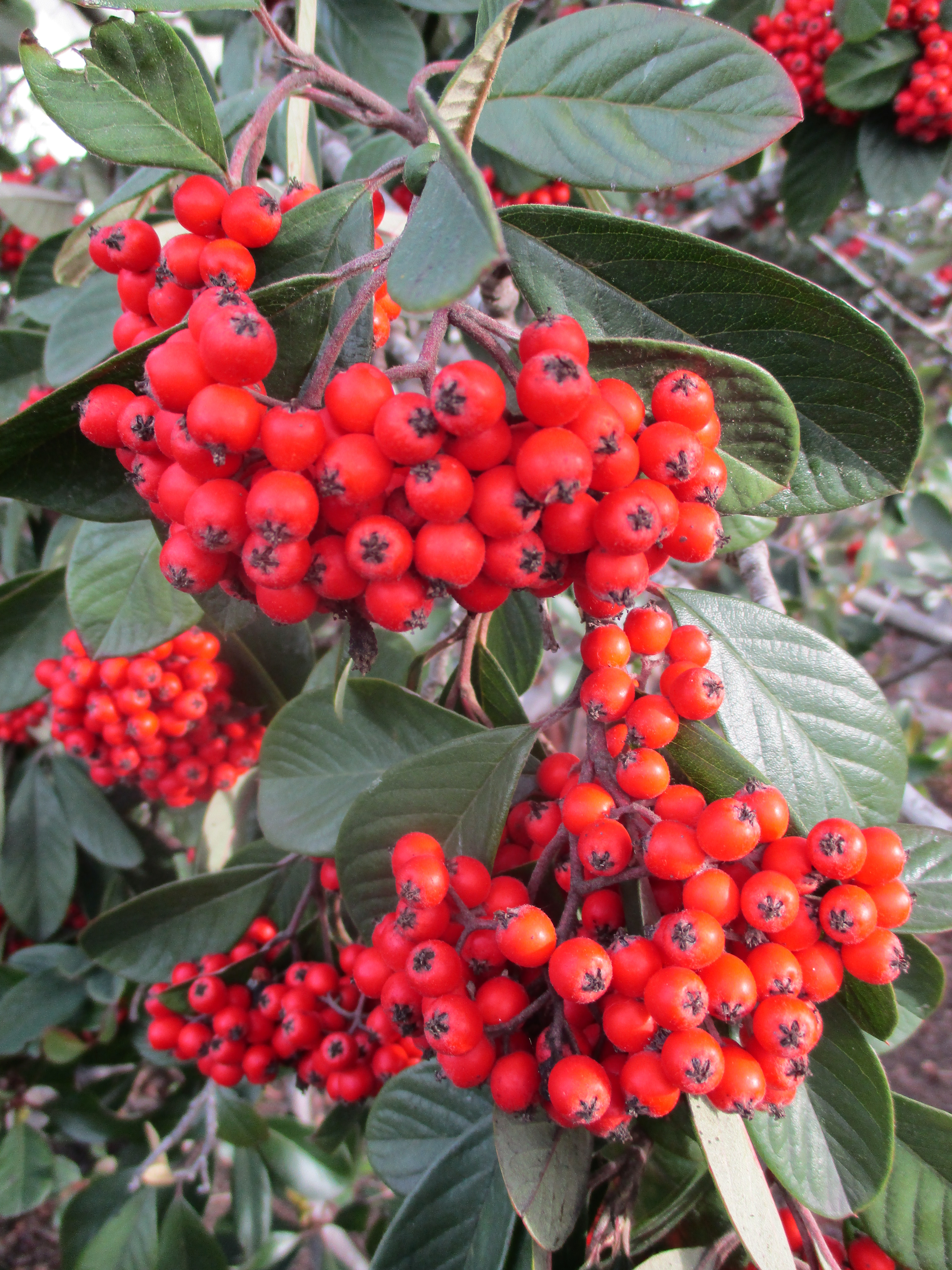 Nothing lasts forever. Spring flowers fade. Summer fruit gets eaten. Fall color falls from the trees and gets raked away. Berries and other small fruits that ripen to provide a bit of color through late autumn get eaten by birds and squirrels through winter. Every type of berry and every season is unique. It is impossible to predict how long particular berries will last through any particular season.
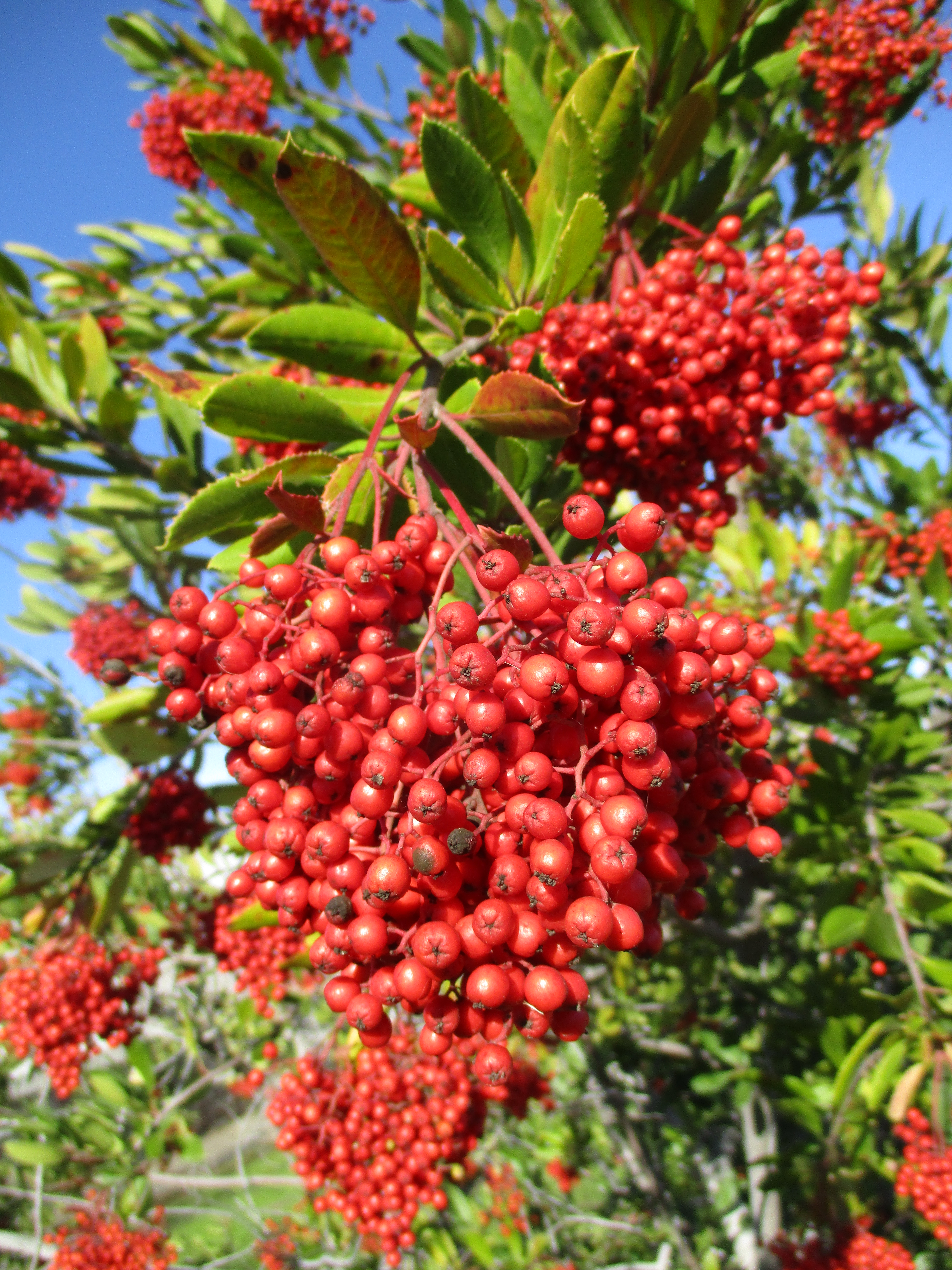 Botanists took a while to contrive an identity for toyon, which is also known as Christmas berry and California holly. It was classified as a species of Crataegus, two different specie of Photinia and two other specie of Heteromeles before it was finally identified as Heteromeles arbutifolia. Meanwhile, the town named after it changed its name only once from Hollywoodland to Hollywood.
 There is much more to the landscapes at work that I wrote about earlier this morning at
 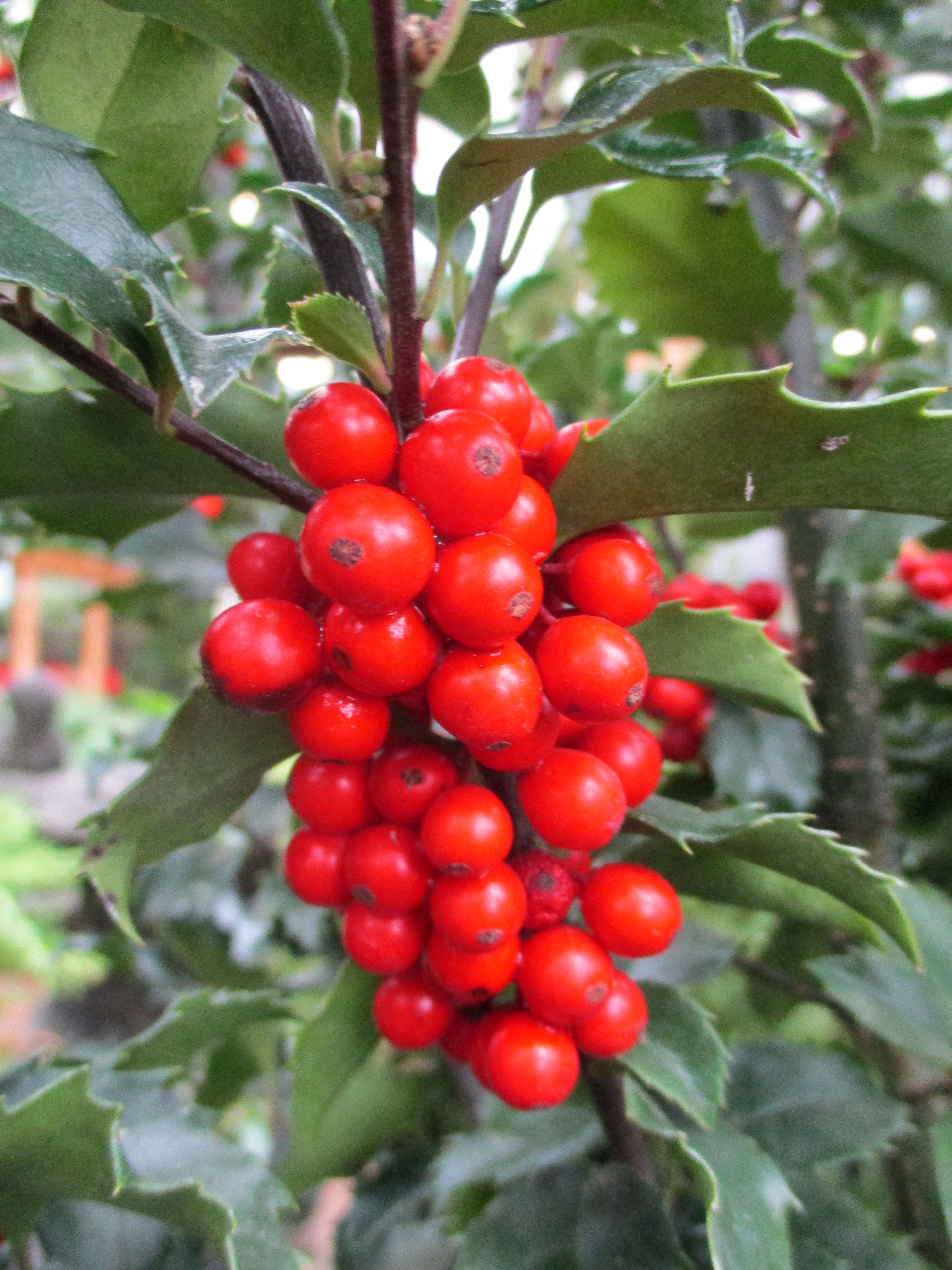 We all know that holly is famous for holly berries, but in modern gardening, English holly, Ilex aquifolium, is appreciated, or despised, for its distinctively glossy but very prickly evergreen foliage. Like countless tiny thorns, the foliage is too prickly to handle for those who despise it. Those who appreciate it know there is no substitute for the elegantly polished sheen and handsome texture.
 The first specie to be imported to North America from Europe were utilitarian plants that produced fruits, vegetables or other horticultural products. English hawthorn, Crataegus laevigata, was likely one of the first ornamental specie to be imported merely because those who were familiar with it appreciated the delightful white spring bloom and the rich red berries in autumn and winter.
 In milder climates of California, where many of us expect at least a few flowers to bloom right through winter, autumn foliar color and colorful winter berries are not appreciated quite as much as they are where autumn and winter arrive earlier, and are cool enough to prevent lingering bloom. Coincidentally, the same mild weather that allows winter bloom here also limits autumn foliar color.
 Just last Saturday, in the first of my two ‘Six on Saturday’ posts, I mentioned that I had never before seen the berries of barberry.
  Tony Tomeo